Kathmandu
Tuesday, July 21, 2026





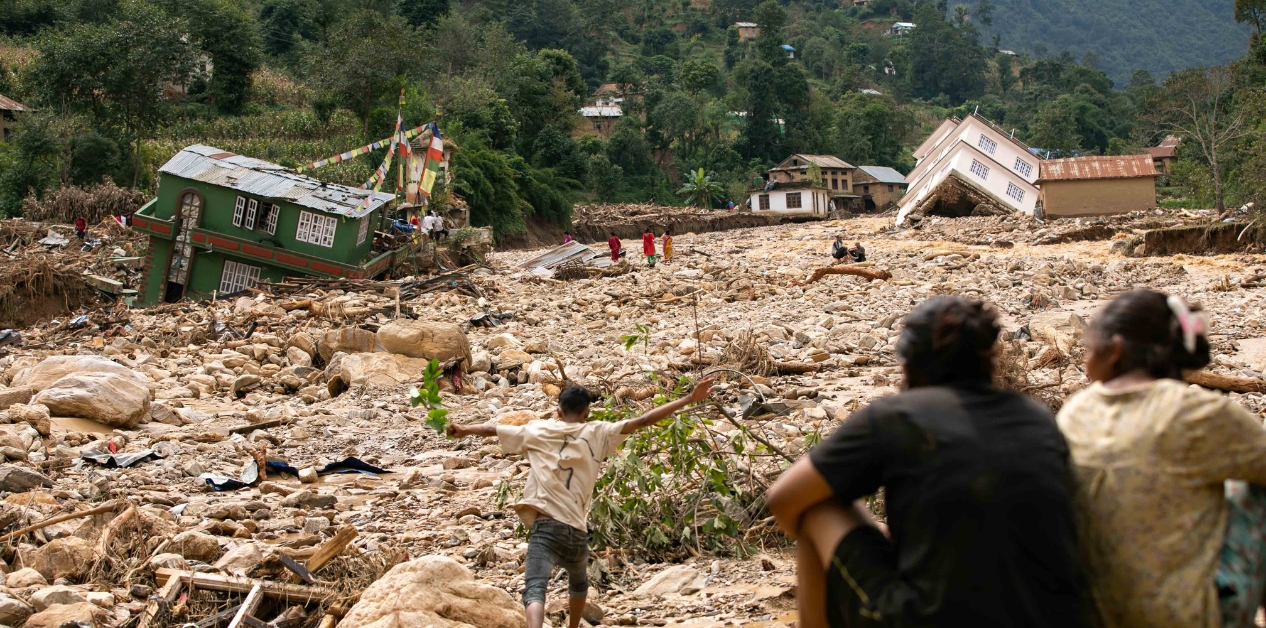
KATHMANDU: Until a few decades ago, in a village in Arghakhanchi, water used to flow musically through the natural springs.
The forests were lush and green. However, today the situation has changed. Due to the impact of climate change, the weather patterns have shifted. Snow has stopped falling in the winter, and extreme events of little or no rainfall have increased.
The traditional cycle of rain has changed; during the monsoon, torrential rain pours down in a short period as if it will wash away the entire hillside. Sometimes the monsoon starts late, and sometimes heavy rain occurs prematurely.
This altered weather system has not only affected the geography but is also severely impacting the bodies and dreams of thousands of women like Setimaya (name changed) from the village.
Nepal’s geography is diverse. In some places, there are mountains touching the sky; in others, sloping hills or the flat plains of the Terai. Climate change has brought different crises to all three regions. In the village where Setimaya lives, water sources are drying up these days. Previously, since the spring was only a 15-minute distance away, managing drinking water was easy for her. Since that dried up, she now has to walk uphill and downhill for two hours for water.
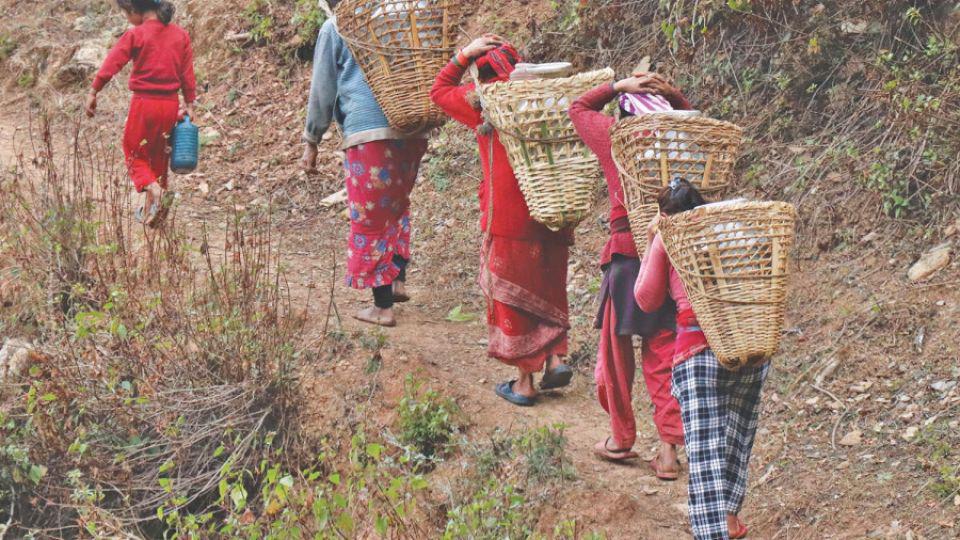
Women fetching and carrying water from distant sources as nearby water springs have dried up.
Setimaya is seven months pregnant. Even in this condition, she is forced to carry water in a heavy pot. Only she and her mother-in-law are at home. Her husband drives a vehicle in Dubai. Carrying heavy loads poses a high risk of uterine prolapse. The problem of uterine prolapse has become a common issue for women in the hilly regions. Recently, the water crisis triggered by climate change has further exacerbated this problem.
The Constitution of Nepal mentions that reproductive health is a fundamental right of women. However, when a landslide occurs in the village and the road to the only health post is blocked, that right remains limited to paper. It is a bitter reality that in Nepal, 151 mothers still lose their lives for every 100,000 births. One of the main reasons for this is climate-related disasters.
When roads are blocked by floods or landslides, many pregnant women or new mothers lose their lives on the way because they cannot reach the hospital in time.
We think that climate change is only about melting ice or rising temperatures, but the way it is playing with women’s reproductive systems is terrifying. In the Terai, extreme heat has led to increased dehydration among pregnant women and problems with premature births. Nowadays, Dengue and Malaria have started appearing in the hills. Such diseases caused by mosquito bites have put pregnant women and their unborn children at even greater risk. According to the report of the Intergovernmental Panel on Climate Change (IPCC), the impact of climate change on reproductive health is twice as high in developing countries. According to a report by the United Nations Population Fund (UNFPA) Nepal office, about 25% of women of reproductive age require special health services during disasters.
Women in Melamchi, Sindhupalchok, still shudder when they remember the floods of 2021. The flood did not just wash away houses; it also affected women’s privacy and health. While living in temporary camps, due to the lack of clean water, many girls suffered from reproductive organ infections because they couldn’t wash the clothes used during menstruation. The question of whether to feed their stomachs or protect their modesty tormented the women there. During that displacement, access to safe abortion services and contraceptives became almost zero, leading to an increase in unintended pregnancies.
Nepal in the furnace of climate change
Although Nepal is not a cause of global climate change, it ranks at the forefront of countries most victimized by its effects. The statistics above clarify Nepal’s negligible contribution and the heavy price it has to pay in return.
Greenhouse gases, specifically carbon emissions, are considered the main cause of global climate change. Primarily, the use of coal, petroleum products, deforestation, and industrial activities have increased greenhouse gas emissions. Nepal’s share in carbon emissions is only 0.027 percent. Since Nepal mainly depends on renewable energy (hydroelectricity) and lacks large industries, our carbon emissions are negligible. However, like being punished without committing a crime, Nepal is paying the price for the industrial development of other nations.
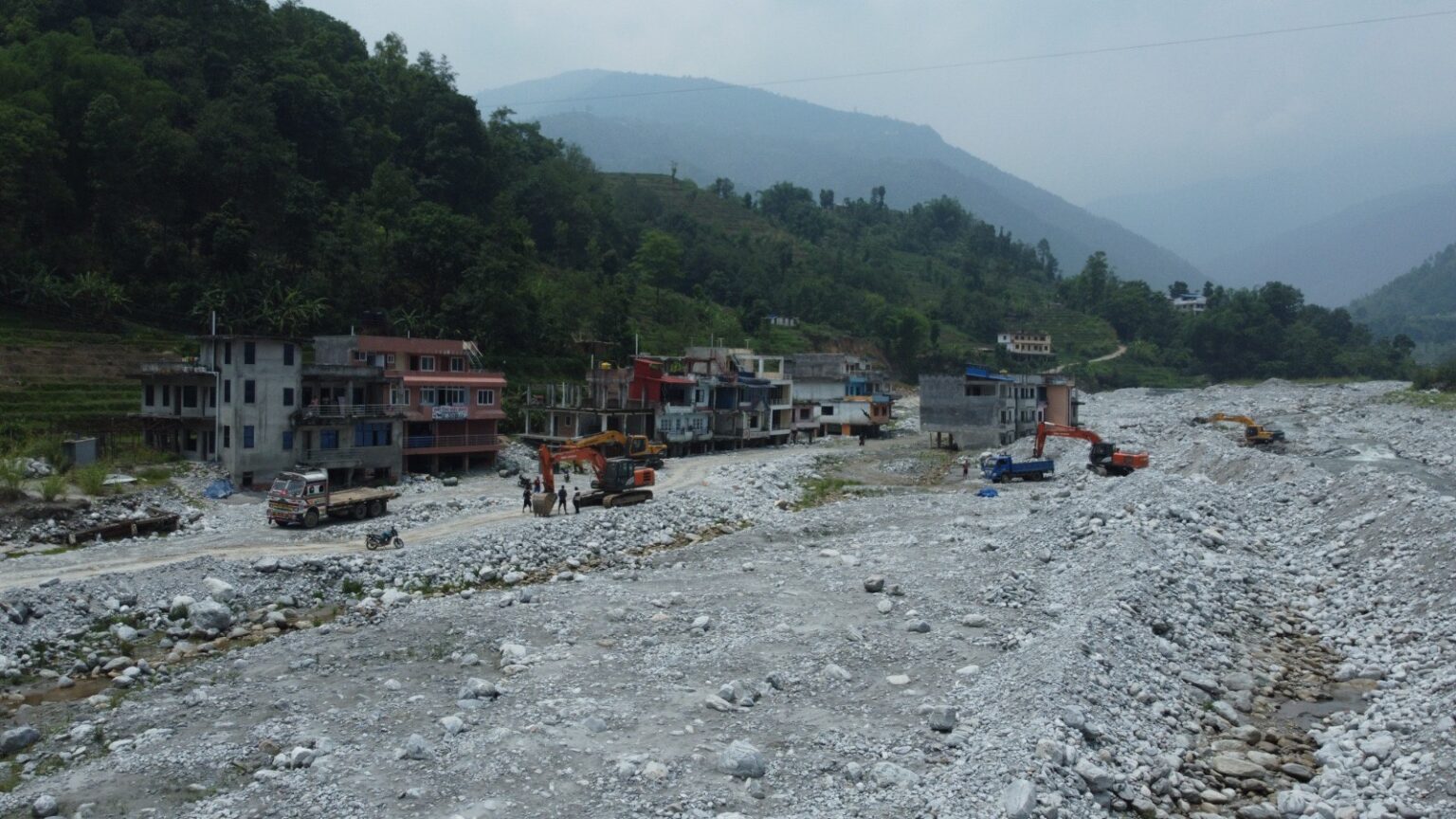
Impact on settlements after the Melamchi River flooded into the area in 2021.
Nepal’s two large neighbors, China and India, are among the world’s largest carbon emitters. Due to rapid industrialization and coal combustion in these countries, carbon and other pollutants are directly affecting the atmosphere of the Himalayan region.
Regarding rapid temperature rise, scientific studies show that the temperature in the Himalayan region is rising much faster than the global average rate. As a result, our white mountains are turning into black rocks, glacial lakes are at risk of bursting, and there are unusual changes in the monsoon rain cycle.
Due to climate change, Nepal suffers an average annual economic loss of Rs 2.78 billion. This loss is specifically related to the decline in the agricultural sector, damage caused by floods and landslides to infrastructure, and expenses for medical treatment.
According to data, climate-related disasters and their long-term effects are causing a decline of about 0.08 percent in Nepal’s Gross Domestic Product (GDP). Although this size seems small, it is a very large loss for a least-developed nation like ours.
Being an agrarian country, even a minor disturbance in the monsoon hits the livelihoods of thousands of farmers and negatively impacts the overall national economy.
These statistics prove that Nepal is a victim of “Climate Injustice.” On one hand, our contribution to climate change is near zero, while on the other hand, we have to bear billions in losses annually because of it. For this, it appears Nepal must make a strong claim for the Climate Loss and Damage Fund on international platforms.
Discriminatory sting
As technical as climate change sounds, its impact is equally inhuman and discriminatory. it acts like rubbing salt and lemon into the wounds of existing inequality in our society. Even under the same sky, its sting varies according to location, gender, and economic status.
When it doesn’t rain or when it rains excessively, the impact or pain in the lives of Pemba, who lives in the high altitude of Solukhumbu, and Ramkali, who lives in a flat village in Rautahat, is not equal. Pemba is worried about the glacial lake above his village bursting. The snow has melted, and the mountains have started looking black. For him, climate change is the fear of his ancestral home and existence being erased.
Ramkali, however, is troubled by the annual floods and inundation in the Terai. The cold wave in winter makes her body shiver and destroys her crops. Thus, geographical location itself determines what kind of injury and harrowing situation you will have to face.
In terms of fighting climate change, it is not enough to just talk about reducing the temperature; we must also break down the walls of existing inequality in society.
Even more serious is that many women’s reproductive health has deteriorated due to carrying heavy loads and excessive physical labor at a young age. Receiving safe maternity services during a disaster is like a dream for them. Since men often move to cities for employment, the responsibility of holding together the desolate village hit directly by the climate falls on the women. For those who are marginalized in society, the impact of climate is even more ruthless. Take the Raute community, for example. For them, the forest is home and life. As vegetation and wild animals are destroyed by climate change, the traditional knowledge and culture of this community are in crisis.
In some countries, certain communities are forced to live in unsafe places based on skin color, where there is neither clean air nor embankments to protect them from floods. This is called “Environmental Injustice.”
A person living in a luxury house in the city can turn on the “AC” when it is extremely hot. For them, climate change is just a news item. But for a laborer crushing stones, driving a rickshaw, or carrying loads on the city streets, that heat becomes a painful daily experience. In the Terai, some even lose their lives due to the hot wind waves (Loo).
When a flood washes away a house, a wealthy person can rise again. But for a landless squatter, that destruction crushes them for generations.
Climate change has not put everyone in the same boat. Some are on a strong and safe ship, some are in a small wooden boat, and some are just floating in the ocean relying on a single plank. Therefore, in fighting climate change, we must break down the walls of inequality. Until those being crushed in the millstone of inequality receive justice, climate action will have no meaning.