Kathmandu
Tuesday, July 21, 2026





How do interns with the research group Inclusion Economics at Yale University spend their summers? The answer used to be “doing economics” or statistics. With me, however, Inclusion Economics decided to try something new: using statistics to tell stories.
After completing the first year of my two-year master’s degree in public policy at Yale, I’d developed the understanding of economics and statistics expected of a junior Inclusion Economics researcher. But Jenna Allard, the group’s associate director of research and policy, noticed another part of my resume. Before coming to Yale, I’d spent the better part of a decade working as a reporter. She was looking for an intern comfortable with both data analysis and communications, which is how I ended up in Nepal last summer.
Inclusion Economics’ Nepali arm, conveniently named Inclusion Economics Nepal, was promoting an initiative to elect more Nepali women to local office and wanted my help. The research group has been studying whether female candidates could improve their chances at the ballot box by organizing themselves into inter-party networks. Inclusion Economics hopes that through these networks, female politicians can trade advice and help one another overcome the challenges of Nepal’s male-dominated party politics. And according to studies, once women are in office, they tend to support better policies for their female constituents.
Before I could publicize this work, I had to understand it. As soon as I arrived in the Kathmandu Valley last May, I sat down with Chandra Bhandari, Inclusion Economics’ senior research manager in Nepal, and Aarya Shrestha, the research associate handling the day-to-day work of the project on women’s networks. Chandra gave me a high-level understanding of the political dynamics: from gender bias to financial constraints, Nepal’s female candidates face ever-greater challenges at the voting booth, with women’s share of deputy mayorships declining by 20 percent after the 2022 general elections. Meanwhile, Aarya walked me through how Inclusion Economics designed the survey it would conduct to determine whether the women’s networks were working; the survey would compare how candidates fared in areas with the networks versus those without. I spent many of my early days looking over Aarya’s shoulder as she coded parts of the survey in Stata, the same statistical software I’d learned in my Yale core classes.
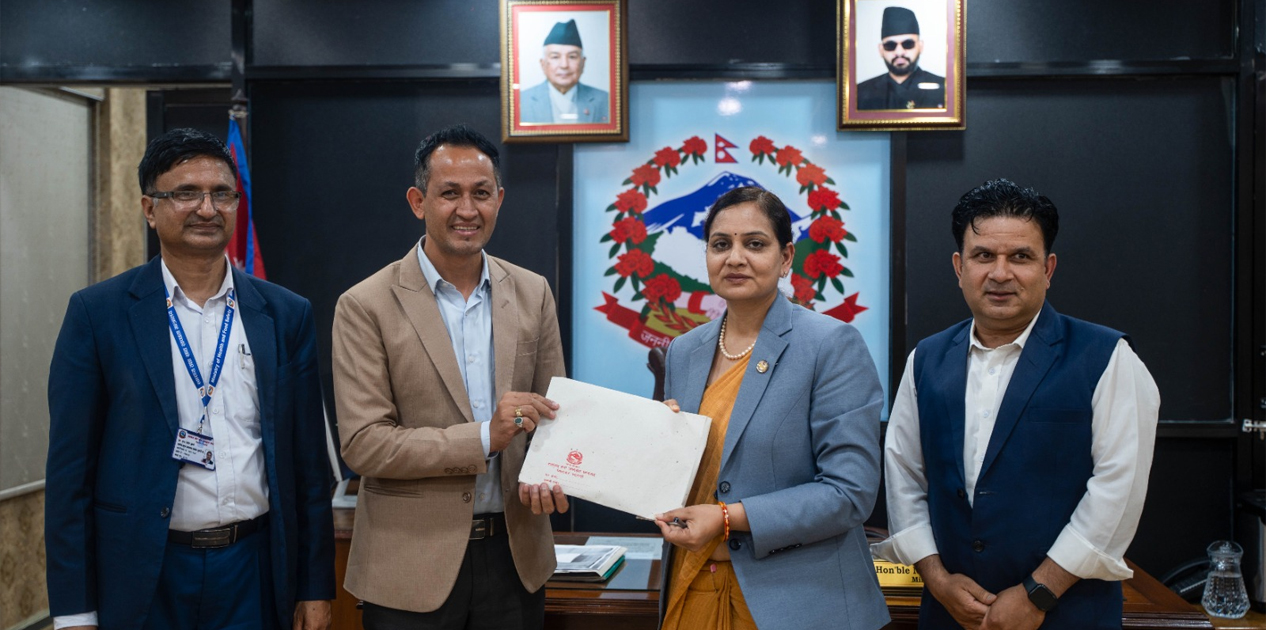
But as a former reporter, I knew I needed to go a step further and speak with female politicians, who formed the heart of this story. I held these conversations over Zoom, in hotels, and at lawmaker’s houses, always with a serving of milk tea. Chandra arranged for me to meet with leading female politicians from three of Nepal’s largest political parties (he and I spent most of one morning zipping in and out of dusty Kathmandu alleys looking for one lawmakers’ house, me clinging to the back of his motorbike, looking forward to more milk tea):
Despite coming from different parties and backgrounds, all three women emphasized the importance of collaborating to elect more female candidates. They cited the example of the Women’s Caucus, a onetime coalition of female lawmakers that secured gender quotas in Nepal’s 2015 constitution. While Inclusion Economics is focusing on local offices, these women—some of the country’s most powerful national officeholders—want this project to succeed.
I’ve been using what I learned to write the stories of Inclusion Economics’ work, from a new webpage on the women’s networks to a profile of Aarya, the research associate. In the process I’ve seen how, yes, economics and statistics are key to what Inclusion Economics does; otherwise, why would the research group have economics in its name? But my internship underlined how it is no less important to help the public, from policymakers to lay readers, understand what economics and politics mean for them. Storytelling convinces them to care.
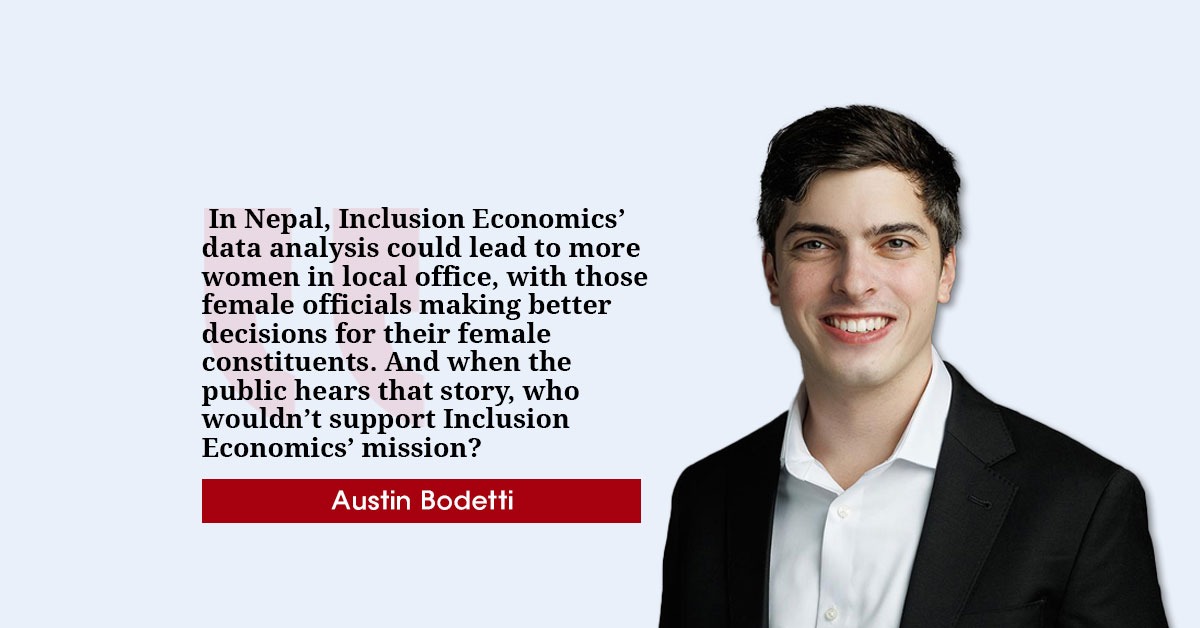
In Nepal, Inclusion Economics’ data analysis could lead to more women in local office, with those female officials making better decisions for their female constituents. And when the public hears that story, who wouldn’t support Inclusion Economics’ mission?
(—Austin is a recent graduate of the Master of Public Policy program at Yale University and a former intern with the think tank Inclusion Economics Nepal (IEN)