Kathmandu
Tuesday, July 28, 2026





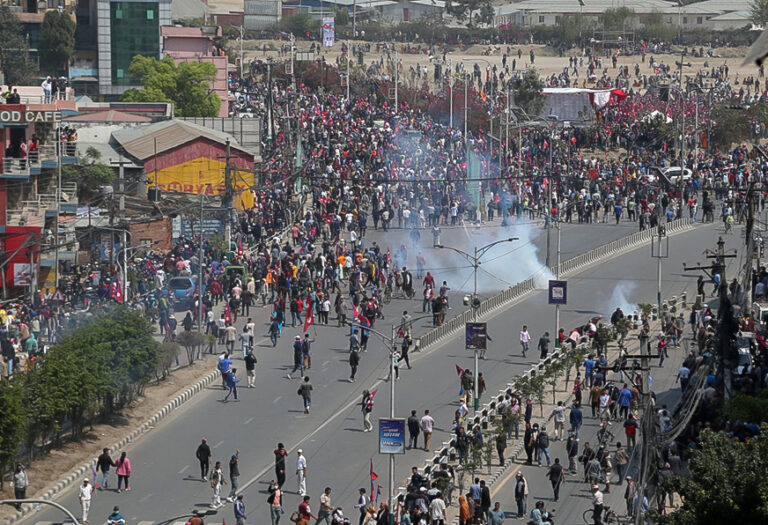
KATHMANDU: A high-level inquiry commission led by former high court judge Gauri Bahadur Karki has uncovered an extensive web of real-time communication among Nepal’s top political and security leadership during the Gen-Z protests of September 8–9, 2025, pointing to a centrally coordinated crackdown.
According to the commission’s 898-page report obtained by Nepal News, more than 500 phone calls were exchanged among senior officials of the Nepal Police, Armed Police Force, Nepal Army, the Ministry of Home Affairs, the Prime Minister’s Office, and the National Investigation Department (NID) at the height of the protests.
The commission has recommended disciplinary action against then-Prime Minister KP Sharma Oli, former Home Minister Ramesh Lekhak, the Chief Secretary, senior police leadership, and the Army Chief, concluding that a “central command” was actively directing operations on the ground.
Call Detail Record (CDR) analysis in Chapter 12.6 of the report reveals intense communication among key figures, including DIG Bishwa Adhikari, DIG Om Rana, former IGP Chandra Kuber Khapung, Armed Police Force IGP Raju Aryal, NID Chief Hutaraj Thapa, Home Secretary Gokarna Mani Duwadi, and Kathmandu CDO Chhabi Rijal.
The network extended to political aides, including those of the Prime Minister and Home Minister, as well as Chief of the Army Staff (CoAS) Ashok Raj Sigdel.
Then Kathmandu police chief SSP Bishwa Adhikari alone made over 100 calls during the protests, contacting multiple senior officials, including 53 calls to DIG Om Rana and 42 to former IGP Khapung. His communication also included repeated contacts with Army personnel and administrative leadership, underscoring a high level of coordination.
Similarly, DIG Om Rana maintained dozens of calls with Adhikari and other top officials, while former IGP Khapung’s call records show connections across political, military, and administrative leadership—including direct contacts with the Home Minister and the Prime Minister’s office.
Armed Police Force chief Raju Aryal and NID head Hutaraj Thapa were also in frequent contact with key decision-makers, further reinforcing the existence of a coordinated command structure.
The commission concluded that the volume, frequency, and timing of these calls demonstrate that directives to manage-and escalate-the response to protests were issued from the center.
It states that this “phone chain” played a direct role in the violence, including shootings and casualties reported during the demonstrations in Kathmandu. The findings suggest that decisions were not made independently by field commanders but were influenced-or instructed-by top security and administrative leadership.
“The pattern of communication indicates centralized direction and close coordination between political leadership and security agencies,” the report notes.
The report’s release has triggered strong reactions from both ruling and opposition parties, while families of those killed or injured during the protests have demanded immediate accountability.
Analysts say the detailed CDR trail marks an unprecedented level of transparency in Nepal’s investigative history, exposing real-time coordination at the highest levels of government during a national crisis.
The commission ultimately concludes that responsibility for the violent suppression of Gen-Z protesters lies not only with personnel on the streets but with decision-makers operating from the country’s power centers, including Baluwatar and Singha Durbar.