Kathmandu
Monday, July 27, 2026





Shekhar Koirala’s five-point proposal for party unity left in limbo

KATHMANDU: Dr. Shekhar Koirala, considered a centrist leader within the Nepali Congress, made public a five-point proposal on past Monday evening in the name of party unity. The proposal primarily centers around the objective of immediately putting a halt to the party’s membership dispute.
Koirala’s five points include a proposal to hold the 15th National Convention based on the active memberships renewed and distributed after the 14th National Convention, without making the immediate updating of active memberships mandatory. Similarly, he has proposed merging the Central Working Committees of both the 14th National Convention and the Special National Convention into a single body. Although Koirala has proposed forming the Performance Committee in a way that gives a majority to the President’s faction, he suggests that other committees—such as the election, active membership scrutiny, discipline, and statute committees—should be formed through mutual consensus.
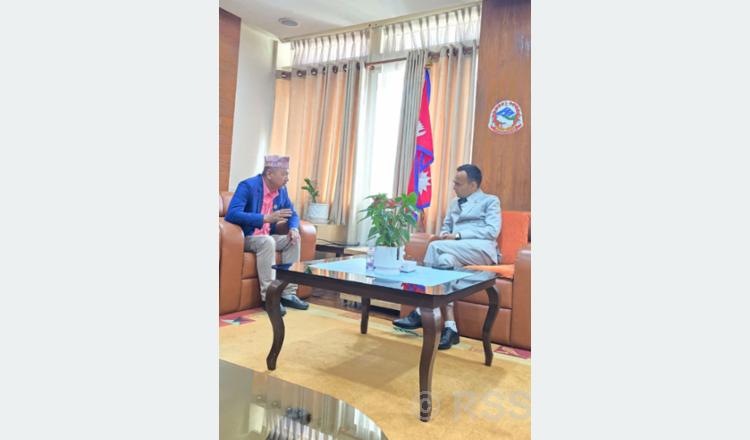
Koirala had submitted the five-point proposal to President Gagan Thapa on May 5. Koirala’s personal secretary, Dinesh Chandra Thapaliya, states that the five-point proposal was handed over during a meeting with Thapa at his contact office in Baluwatar. According to him, Koirala had told President Thapa that he put forward the five-point proposal as a key step toward strengthening party unity before heading into the 15th National Convention. Thapaliya claims that Thapa had agreed to it at that time.
However, there has been no dialogue between Gagan and Shekhar since then. “The President took the five points, but has not contacted us since,” Thapaliya says, quoting Koirala. “He had said he would consult on it, but the President has since been unreachable.”
Thapaliya claims that after Thapa failed to make contact for three weeks, Koirala was compelled to make the five-point proposal public through the media. He says, “We don’t know what the President did for such a long time; he did not make contact either. After various rumors began circulating in the media, Koirala made the five points public.”
According to him, in the Nepali Congress—where membership distribution and renewal have long been a core issue of dispute—Koirala believes that moving forward based on the membership of the 14th National Convention, without making the immediate updating of active memberships mandatory, will halt the dispute. The Nepali Congress has already issued nationwide instructions to mandatorily complete the active membership distribution, missed renewals, and update work by June 4. Even though the faction of former President Deuba has boycotted it, the work has not completely stopped.
Koirala claims that adjusting the dual structures from the 14th National Convention and the Special National Convention will dissolve the “two centers” currently forming within the party. While accepting the arrangement that allows the President a majority in the Performance Committee, Koirala appears to be attempting to prevent unilateral control by proposing that various sensitive committees be formed through consensus.
Maintaining his stance that unity must be sought through these five points, Koirala stated that he will not bring forward any other proposals for the time being. Koirala’s understanding is that at a time when the leadership should move forward by taking even the Deuba faction into confidence through consensus, the President’s reluctance to hold discussions has fueled doubts regarding party unity.
Gagan’s stance: No going beyond the statute
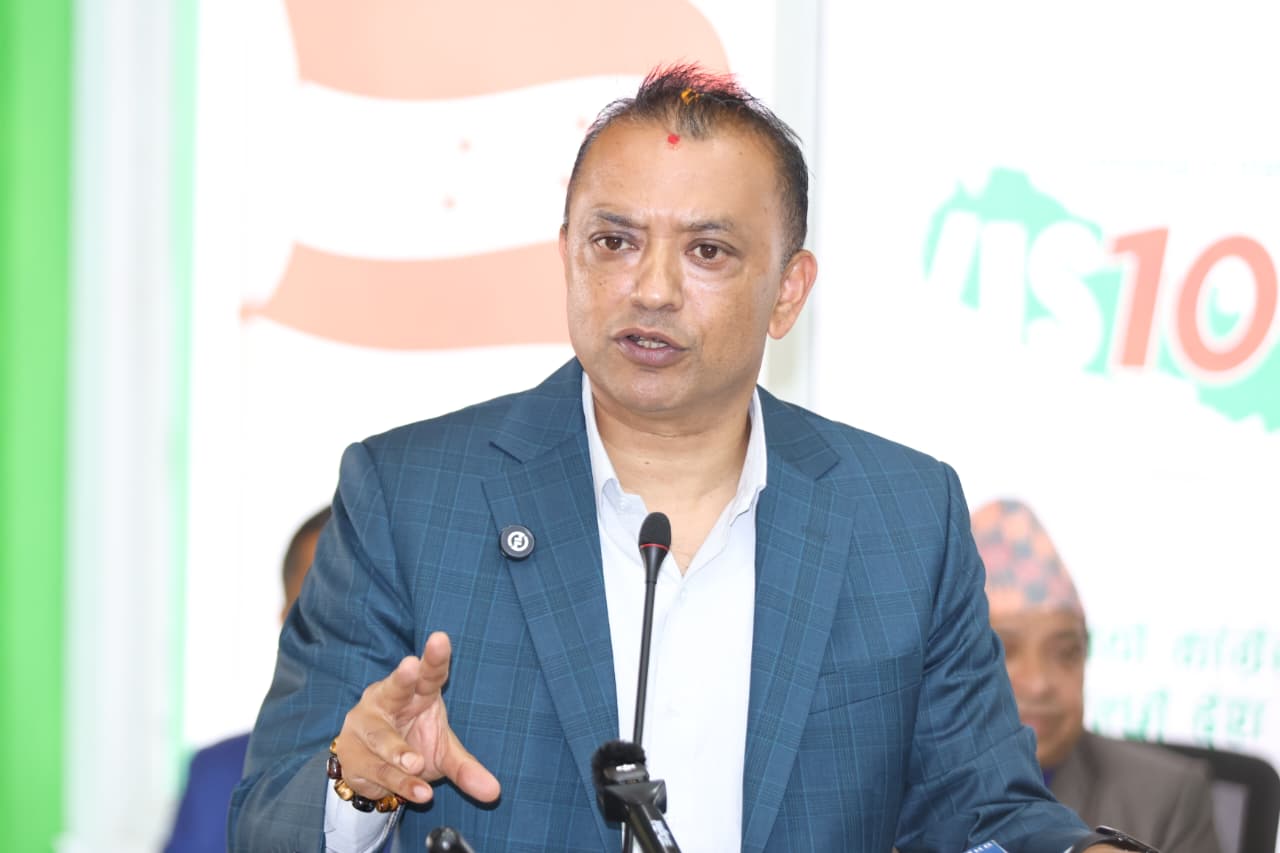
President Thapa, however, appears reluctant to discuss Koirala’s five-point proposal, stating that it cannot be implemented. Thapa particularly disagrees with the idea of merging the working committees of the 14th National Convention and the Special National Convention.
The provision in the old statute of the Nepali Congress, which mandated a 168-member Central Working Committee, was amended by the Special National Convention. The amended provision stipulates a 195-member Central Working Committee, comprising 134 elected and 61 nominated members. Thapa argues that accommodating the working committee of the 14th National Convention would require going beyond the party statute. “A party that abides by the statute and the constitution cannot afford to move forward by creating a Central Working Committee of three to four hundred members,” says Nepali Congress Spokesperson Dev Raj Chalise. “The solution must be found within the framework of the statute, and all factions need to be flexible on this.” However, Koirala stands firm on the adjustment, arguing that the overall unity of the party is more vital than the strict letter of the statute.
Meanwhile, Nepali Congress General Secretary Pradeep Paudel states that he is not even aware of the authenticity of the five points. “I came to know about it only after he made it public; I do not know if he officially handed it over to the President,” Paudel says. “Bringing the Deuba faction along might be his bottom line. But bringing one faction on board does not guarantee that all sides will agree. They haven’t brought forward a joint proposal either.”
Paudel argues that since both sides have already accepted the Special National Convention, they must respect the committees formed through due process. “Removing an elected committee with executive powers to form another committee would not be lawful. Once you accept the Special National Convention, you must also accept the committee elected by it,” Paudel states. “As far as including everyone is concerned, there is no reason why it cannot be done practically while remaining under the jurisdiction of the statute.”
Koirala’s condition
To foster unity within the party—which has been in a near-fragmented state since the Special National Convention—General Secretary Paudel had reached Koirala’s residence in Baluwatar on April 5. During that meeting, he had proposed that Koirala become the Senior Leader. On May 5, Gagan repeated the same proposal to Koirala. Koirala claims that at the time, he stated he was not looking for the title of senior leader, but was instead emphasizing party unity.
However, he expresses dissatisfaction over the leadership’s unusual propaganda regarding the division of power. He says, “Rumors of a 60/40 power-sharing deal are being spread outside. We don’t want any power-sharing; I am talking about party unity.”
Nepali Congress Spokesperson Chalise emphasizes that the party should not remain entangled in internal disputes. He says, “The leadership might have proposed giving the Senior Leader position. Trusting a leader is a political matter. However, an environment of trust must be built first. The primary goals are to hold the 15th National Convention unitedly and to secure maximum votes in the elections by becoming stronger. At a time when the party is weak, spending energy on internal disputes is not correct.”
President Thapa is preparing to hold the 15th National Convention by this upcoming October. In an attempt to bring both the Koirala and Deuba factions into consensus, he nominated members to the Central Committee on May 11. Out of the 19 added Central Committee members, 11 belong to the Deuba faction and eight belong to the Koirala faction. Both Koirala and the Deuba group have expressed dissatisfaction, stating that the nominations were made without consulting them.