Kathmandu
Saturday, June 13, 2026





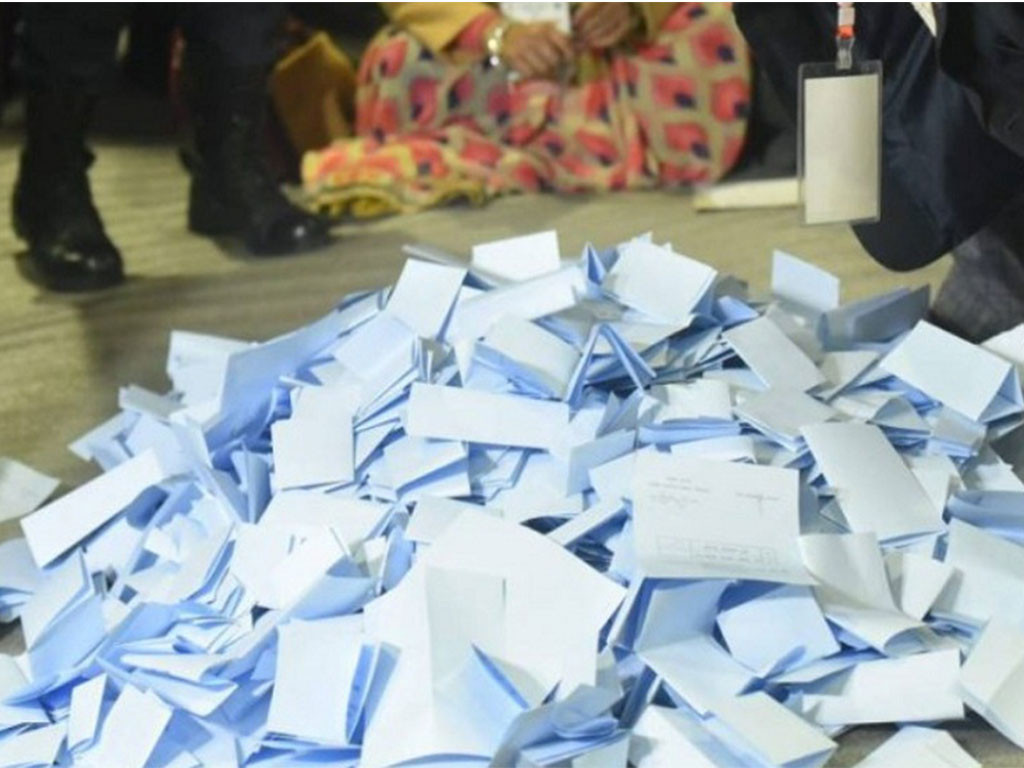
KATHMANDU: Thousands of votes were declared invalid across several districts during the March 5 (Thursday) House of Representatives election, with Myagdi recording a higher invalid vote rate than in the previous election, while Kaski and Dang reported declines.
In Myagdi, the invalid vote rate increased in both electoral systems. According to the Office of the Chief Election Officer, 3,176 direct votes and 1,710 proportional representation votes were invalid.
At least 46,336 direct votes were cast in the district, of which 43,160 were valid, meaning nearly 7 percent were invalid. Similarly, out of 47,261 proportional votes, 45,906 were valid, leaving roughly 3 percent invalid, according to District Election Officer Bimal Gautam.
The invalid vote rate was lower in the 2022 election. At that time, 49,699 direct votes were cast, of which 2,085 votes (4.2 percent) were invalid and 47,614 were valid. For the proportional system, 50,378 votes were cast, with 2,646 votes (5.25 percent) declared invalid.
Officials attribute the rise in invalid votes mainly to insufficient voter education. Although the District Election Office Myagdi mobilized volunteers to conduct voter education programs in all 45 wards, the efforts were found to be ineffective.
Election Officer Gautam said votes were invalidated for reasons such as marking more than one election symbol, placing the stamp outside the designated area, or leaving ballots blank. Out of 86,397 registered voters, about 54 percent participated in the election.
In Kaski, the situation was different, with the invalid vote rate declining compared to the previous election.
In Kaski 1, 71,806 votes were cast, including 69,954 valid and 1,852 invalid ballots.
According to Rudra Neupane, Information Officer at the Provincial Election Office Pokhara, a total of 4,698 votes were invalidated out of 191,425 votes cast across the district’s three constituencies. This represents an invalid vote rate of 2.45 percent, with 186,727 votes declared valid.
In Kaski 1, 71,806 votes were cast, including 69,954 valid and 1,852 invalid ballots. In Kaski 2, 53,395 votes were cast, of which 52,187 were valid and 1,208 invalid. In Kaski 3, 66,224 votes were cast, including 64,586 valid and 1,638 invalid ballots.
To reduce invalid voting, election officials conducted voter education programs in all 72 wards of the district from February 15 to March 1.
During the 2022 election, the district recorded a significantly higher invalid vote rate of about 5 percent, with 8,464 invalid votes out of 178,806 ballots cast.
Neupane said ballots were typically invalidated due to stamping multiple symbols, placing the swastika stamp outside the designated box, folding ballots incorrectly, or stamping outside the election symbol.
“The invalid vote rate is much lower this time compared to the previous election,” Neupane said. “The voter education programs conducted across the wards helped reduce the number, though it appears that voter education still has not reached everyone.”
Election Office Dang, 10,698 votes were declared invalid out of 251,368 votes cast across the district’s three constituencies, representing 4.25 percent.
In Dang, more than 10,500 votes were invalidated during the election.
According to Gehendra Kunwar, Information Officer at the Lumbini Provincial Election Office Dang, 10,698 votes were declared invalid out of 251,368 votes cast across the district’s three constituencies, representing 4.25 percent.
The highest number of invalid votes was recorded in Dang Constituency 1, where 4,057 votes were invalid out of 80,446 cast. In Constituency 3, 3,776 votes were invalid out of 88,617, while 2,865 votes were invalid out of 82,305 votes cast in Constituency 2.
Despite the large number, the district saw a decline in invalid votes compared to the previous election. In 2022, 14,709 votes were invalid out of 414,956 ballots cast, representing 5.92 percent.
Kunwar said the decrease may partly be due to the absence of confusion over party symbols that had emerged during previous electoral alliances, although he noted that the overall reduction remains limited.