Kathmandu
Saturday, July 25, 2026






KATHMANDU: On March 28, 2026, former Prime Minister KP Sharma Oli of CPN-UML and former Home Minister Ramesh Lekhak of Nepali Congress were arrested early morning over their alleged negligence during the violent suppression of Gen Z-led anti-corruption protests in September 2025.
The unrest, triggered by a social media ban amid deep public anger over corruption, unemployment and economic woes, left 76 dead and thousands injured. A high-level inquiry commission’s report, implemented by the new government under PM Balendra Shah sworn in just a day earlier, recommended criminal prosecution.
The arrests have sparked immediate political tensions in Nepal.
Who are KP Sharma Oli and Ramesh Lekhak, and why exactly were they arrested this morning?
KP Sharma Oli, 74, is the three-time former Prime Minister of Nepal and current Chairman of the CPN-UML, Nepal’s largest communist party. Ramesh Lekhak, 62, is a senior Nepali Congress leader who served as Home Minister in Oli’s last government. Both were arrested early on Saturday, March 28, 2026, from their respective residences in Bhaktapur district (Oli from Gundu and Lekhak from Suryabinayak/Katunje).
The arrests stem directly from their alleged roles in the deadly crackdown on Gen Z protests on September 8-9, 2025. Protesters accused the government of corruption, nepotism and economic mismanagement; security forces opened fire, resulting in 76 deaths and over 2,300 injuries, plus widespread arson.
The new Balen Shah-led government acted swiftly on a cabinet decision to implement the findings of a High-Level Inquiry Commission, which held Oli (as then-PM) and Lekhak (as then-Home Minister) criminally negligent for failing to prevent excessive force or de-escalate the situation.
Police executed the arrests with heavy deployment, describing it as the start of accountability rather than political targeting. Oli, who has undergone two kidney transplants, and Lekhak have denied ordering lethal force, but the commission found their inaction constituted culpable negligence under Nepal’s penal code.
This dramatic development comes just 18 hours after Balendra Shah’s swearing-in, signaling the new administration’s commitment to delivering justice for the victims’ families who had long demanded prosecution.
On what specific legal and factual basis were Oli and Lekhak arrested?
The arrests are based on the recommendations of the government-appointed High-Level Inquiry Commission (often referred to as the Karki Commission) into the September 2025 Gen Z uprising. The panel investigated the police firing, leadership decisions and chain of command during two days of violent protests that ultimately forced Oli’s resignation and triggered snap elections.
It concluded that Oli, ask Prime Minister, and Lekhak, as Home Minister responsible for internal security, showed “reckless” and “negligent” handling by not intervening to stop hours of firing on largely peaceful youth demonstrators. The commission invoked sections of Nepal’s Penal Code related to criminal negligence and culpable homicide (potentially Sections 181/182), recommending up to 10 years imprisonment for the trio including the then-Police Chief Chandra Kuber Khapung.
A formal complaint from the Home Ministry triggered the police action. The factual basis includes eyewitness accounts, video evidence of unprovoked firing, autopsy reports confirming gunshot deaths, and failure to follow standard operating procedures for crowd control.
Police spokesman Om Adhikari confirmed the arrests followed the commission’s explicit call for prosecution, emphasizing that no one is above the law. Critics within UML argue the report is biased and ignores violence by protesters (e.g., burning of police stations and killing of officers), but the commission’s findings were formally accepted by the new cabinet on March 27-28, 2026, making the arrests legally binding pending court proceedings.
What was the broader context and impact of the September 2025 Gen Z protests that led to these arrests?
The Gen Z protests erupted on September 8, 2025, initially against a government decision to shut down social media platforms amid rising public discontent over corruption scandals, soaring unemployment, economic stagnation and political nepotism.
What began as youth-led demonstrations quickly swelled into nationwide unrest, with thousands taking to the streets in Kathmandu and other cities.
On September 8-9, security forces responded with live ammunition, rubber bullets and tear gas, killing at least 76 people—including a school-uniformed teenager—and injuring over 2,300.
Protesters retaliated by setting fire to government buildings, police stations and vehicles, leading to chaos that forced Oli’s government to resign.
The violence toppled the administration, prompted early parliamentary elections in March 2026, and gave a landslide victory to Balendra Shah’s Rastriya Swatantra Party. Families of the deceased and human rights groups demanded an independent probe, resulting in the High-Level Inquiry Commission.
The commission’s report, submitted earlier, held top leadership accountable for the “messed-with-the-wrong-generation” crackdown, as one headline described it.
This event reshaped Nepal’s politics, empowering youth and independent parties while eroding trust in traditional leaders like Oli. The arrests now represent the first major accountability measure by the new government, fulfilling campaign promises for justice and marking a shift from impunity in protest-related deaths.
Where are Oli and Lekhak being held right now, and what immediate steps have been taken post-arrest?
Following their arrests early Saturday morning, both leaders were transported to the Kathmandu District Police Office (also referred to as Kathmandu Valley Police Office) in Bhadrakali for initial processing and documentation.
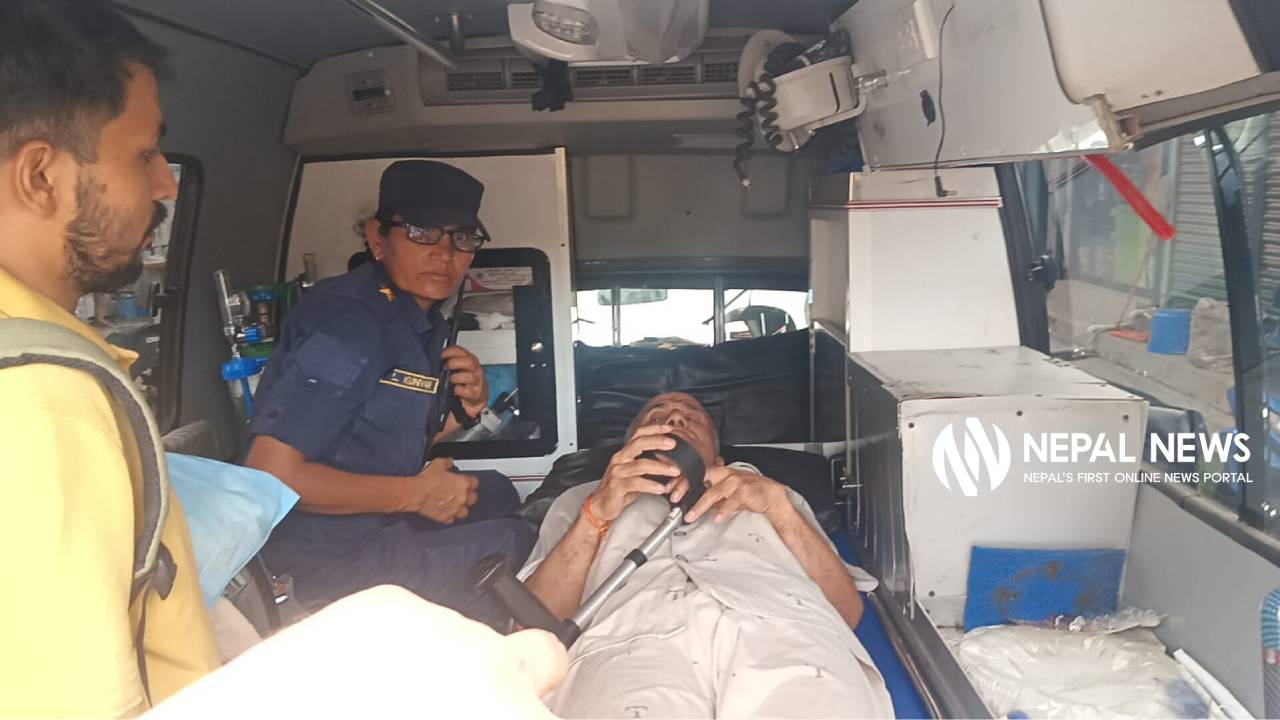
As standard procedure for high-profile detainees, they underwent mandatory health examinations. Due to Oli’s advanced age (74) and medical history—including two kidney transplants—he was immediately shifted to a hospital in Kathmandu (reports mention Tribhuvan University Teaching Hospital) for further evaluation and monitoring. He remains under police custody there pending results.
Lekhak, also subjected to health checks, is believed to be held at the police office or a secure facility. No formal charges have been filed yet; they are in preventive detention for investigation.
Police sources indicate both are likely to remain in custody over the weekend, with production before a district court expected on Sunday, March 29, 2026. Heavy security surrounds the police office and hospital to prevent any unrest. Their lawyers have already challenged the necessity of detention, arguing there is no flight risk, but authorities insist on following due process as per the commission’s directives. Updates are being closely monitored by media and political parties.
What have security forces, police and the Home Ministry said about the arrests?
Nepal Police and the Home Ministry have maintained a firm, apolitical stance. Kathmandu Valley Police spokesman Om Adhikari stated: “They were arrested this morning and the process will move forward according to the law.”
He emphasized that the action was taken strictly on the basis of the High-Level Inquiry Commission’s recommendations, with no deviation from legal protocols. Home Minister Sudan Gurung announced the arrests via social media, declaring, “No one is above the law. We have taken former Prime Minister KP Sharma Oli and former home minister Ramesh Lekhak under control. This is not revenge against anyone, it is just the beginning of justice.”
Gurung, along with new Prime Minister Balendra Shah, has reiterated that the move fulfills promises to deliver accountability to the families of the 76 protesters killed. Security deployment was heavy but described as routine for high-profile operations to ensure public order.
Officials have rejected claims of political motivation, pointing out that the commission was formed under due process and its report accepted by the cabinet. Police sources added that further investigation will include recording statements from the accused, witnesses and experts before any chargesheet is prepared.
This measured response aims to project the new government’s commitment to the rule of law while avoiding escalation.
How has the CPN-UML party reacted to the arrest of its chairman KP Oli?
CPN-UML has strongly condemned the arrests as “political revenge” and “vendetta politics” orchestrated less than 24 hours after the new government’s formation.
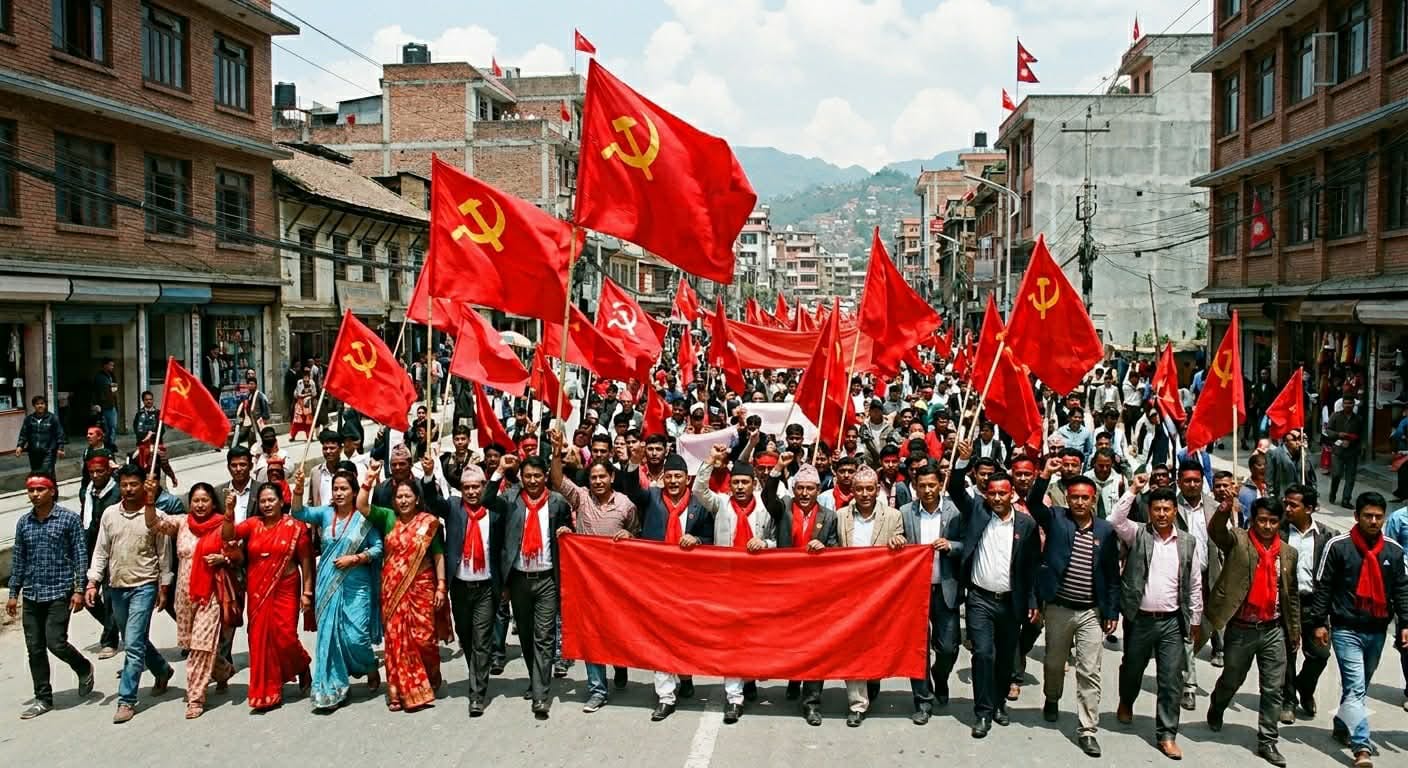
UML cadres took to streets and scuffles with police broke out in various locations of Kathmandu valley. The party convened an emergency Secretariat meeting at its Chyasal headquarters immediately after the news broke, summoning all office-bearers to strategize a response.
Senior leaders like Pradeep Gyawali called it “unjustifiable” and “political revenge against our chairman,” while Bishal Bhattarai described the Karki Commission report as “biased” and “politically motivated,” ignoring protester violence such as the killing of police officers.
UML leaders argue the report lacks sufficient grounds and was prepared with “an intention” to target opponents. The party has announced nationwide protests, street demonstrations and parliamentary agitation.
Cadres have already taken to the streets in Kathmandu and other districts, burning effigies and raising slogans against the “new government’s retaliation.”
UML has vowed to fight the case both legally (through courts) and politically, urging dialogue with other parties. Deputy General Secretary Yogesh Bhattarai and others have warned of strong counter-measures, framing the arrests as an attack on democratic norms and an attempt to destabilize the main opposition.
The party’s unified front suggests this could become a major rallying point against the Shah government.
What is the Nepali Congress party’s reaction to the arrest of its own leader Ramesh Lekhak?
In contrast to UML’s vocal outrage, the Nepali Congress has remained largely silent and has not issued any immediate official statement or called a formal meeting.
Former president Sher Bahadur Deuba faction convened a meeting this evening and decried the arrest of Oli and Lekhak. The faction also vowed to fight political and legal battle against the government.
Party insiders report that internal consultations have begun among senior leaders following Lekhak’s arrest, as he is a prominent Congress figure and former Home Minister. However, no public condemnation or support for the arrests has emerged yet.
A party official told media that an official position would likely be announced only after the ongoing parliamentary orientation programme for newly elected lawmakers. This muted response reflects Congress’s complex position: while Lekhak is one of their own, the party is not in government and may be wary of appearing to defend actions linked to the deadly protests.
Some analysts interpret the silence as strategic caution amid the new political landscape dominated by Balen Shah’s party.
Mixed reactions among individual Congress cadres have been noted privately, with some expressing concern over the precedent of arresting former ministers while others privately acknowledge the need for accountability.
The party is expected to balance support for its leader with broader calls for justice, but as of now, Congress has avoided escalating the issue publicly, unlike UML.
What is the further legal procedure and possible timeline for Oli and Lekhak after their arrest?
Post-arrest, the procedure follows Nepal’s Criminal Procedure Code. After initial detention at Kathmandu Police Office and mandatory health checks (completed), they will be produced before the Kathmandu District Court, likely on Sunday, March 29, 2026.
The court will decide on remand for investigation (typically 7-14 days initially) or grant bail if applied for. Police will record their statements, collect evidence from the commission report, and prepare a chargesheet within the statutory period (usually 60-90 days for such cases).
The case falls under criminal negligence provisions, with potential penalties of 3-10 years imprisonment. Lawyers for Oli have already termed the detention “illegal and improper” due to no flight risk, signaling early bail motions. If charged, the case could proceed to full trial at the district court, with appeals possible to higher courts.
The former Police Chief is also slated for similar action. Throughout, the accused retain rights to legal representation, cross-examination and fair trial. Political observers expect prolonged litigation, possible interim bail, and significant public and parliamentary scrutiny. The outcome could set precedents for accountability in protest-related deaths in Nepal.
Have Oli or Lekhak personally commented on their arrests, and what is their defense?
KP Sharma Oli has not made a detailed public statement immediately after arrest due to being in custody and undergoing medical checks, but he had previously rejected the commission’s findings outright.
In an interview with Annapurna Post before the arrests, Oli called the report “character assassination and hate politics.” His lawyers have strongly defended him, arguing the arrest is “illegal and improper” because there is “no risk of him fleeing or avoiding questioning.”
They emphasize Oli’s long public service record and health vulnerabilities. Ramesh Lekhak has similarly vowed to fight the case both politically and legally, describing the arrest as “politically motivated and biased.” He has maintained that as Home Minister he followed lawful orders and that the commission ignored contextual violence by protesters.
Both leaders and their parties assert the arrests are selective and vindictive, timed to weaken the opposition right after the new government’s formation. Their defense centers on lack of direct evidence of ordering firing, contradictions in the commission report, and the political timing.
Expect formal statements or court submissions once produced before the judge, where they will likely plead not guilty and seek bail on humanitarian and legal grounds.
What are the wider political implications of these arrests for Nepal’s stability and future governance?
The arrests represent a historic test for Nepal’s young democracy, signaling that even former prime ministers and ministers can face accountability for human rights violations during protests—a rare occurrence in the country’s turbulent politics.
For the new Balen Shah government, it fulfills a core campaign pledge of “justice for the Gen Z martyrs,” boosting its image among youth who propelled its landslide victory. However, it risks deepening polarization: UML’s street and planned parliamentary protests could destabilize the fragile post-election environment and lead to confrontations.
Nepali Congress’s cautious stance may evolve into broader opposition unity against perceived overreach. Long-term, successful prosecution could strengthen rule of law and deter future crackdowns, but failure or perceived bias might erode public trust and fuel conspiracy theories of revenge politics.
Economically and socially, prolonged instability could affect investor confidence and ongoing reforms. Internationally, it highlights Nepal’s commitment to accountability but invites scrutiny over judicial independence.
Overall, this episode underscores the tension between justice and political stability in a nation still recovering from the 2025 crisis, potentially reshaping alliances ahead of future elections and setting a precedent for transitional justice in South Asia.
Analysts warn that mishandling could escalate into broader unrest, while fair proceedings might heal wounds from the September tragedy.
![Young doctors protest alleged labor exploitation in health institutions [Photo Feature]](https://english.nepalnews.com/wp-content/uploads/2026/07/Doctor-Protest-Maitighar-4.jpeg)