Kathmandu
Monday, July 20, 2026





Even before recommendation committees formally began their work, names for top academy posts circulated widely, raising fresh doubts over whether political influence still outweighs transparency and merit.
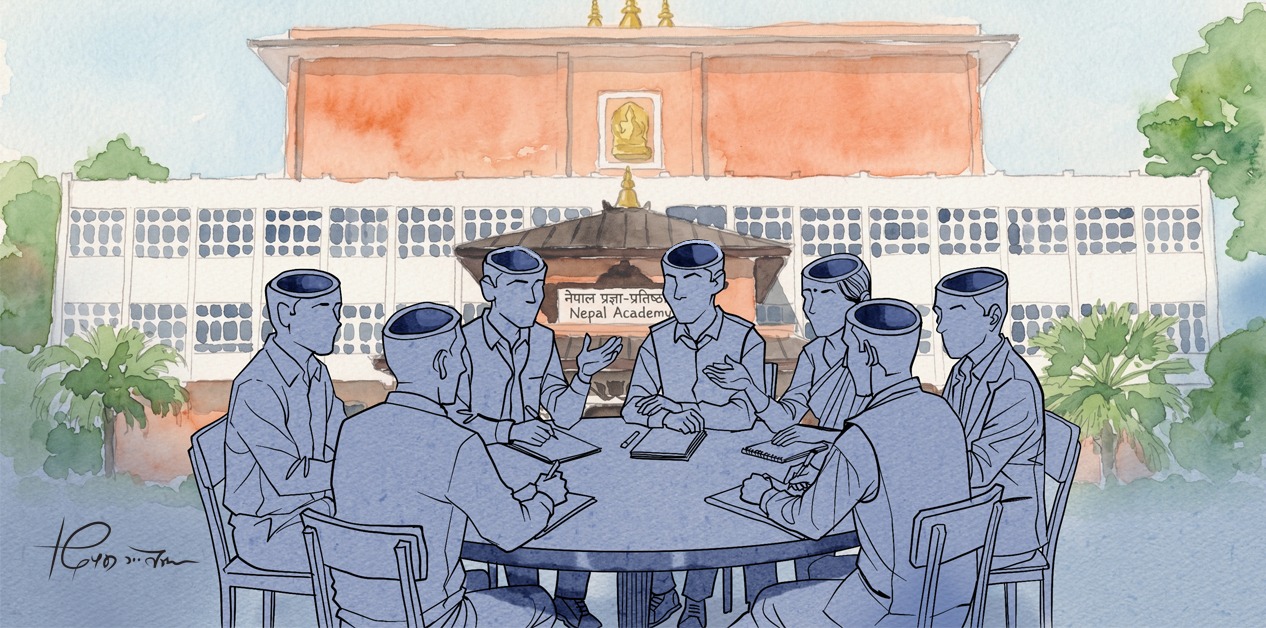
KATHMANDU: Prime Minister Balendra Shah nominated members to a recommendation committee on July 17 to recommend names for vacant official positions and assembly members in three academies. With the formation of the recommendation committee, the Nepal Academy, the Nepal Academy of Music and Drama, and the Nepal Academy of Fine Arts—which have been vacant for three months—are set to receive new officials and academicians. However, after the current government claimed that old parties had politicized every sector and pledged to replace them with new appointments, the question of what kind of people it will appoint to these academies has become a matter of widespread interest.
After the RSP government, formed on March 27, issued the ‘Ordinance on Special Provisions Regarding the Dismissal of Public Officials, 2026’ on May 2, officials and members of all three academies, along with several other agencies, were dismissed. They lost their positions while their tenures were still remaining.
On February 16, 2023, the then-government had appointed Bhupal Rai as Chancellor, Bimal Nibha as Vice-Chancellor, and Dhan Prasad Subedi as Member-Secretary, along with other members of the Nepal Academy. Similarly, Nisha Sharma was appointed as Chancellor, Shambhu Rai as Vice-Chancellor, and Kusma Mahara as Member-Secretary of the Nepal Academy of Music and Drama. For the Nepal Academy of Fine Arts, Narad Mani Hartamchhali was appointed as Chancellor, Lalkaji Lama as Vice-Chancellor, and Palsangmo Lama as Member-Secretary, along with other members. Following their removal, the government has already initiated the process to appoint new officials to the vacant positions. Writer Bimal Acharya states that looking at the ongoing activities to appoint new people to the academies—places of academic dignity—the current power structure seems more focused on finding supporters and sycophants rather than distinguishing right from wrong. He says, ‘There seems to be no significant difference between the old regime and the new regime.’
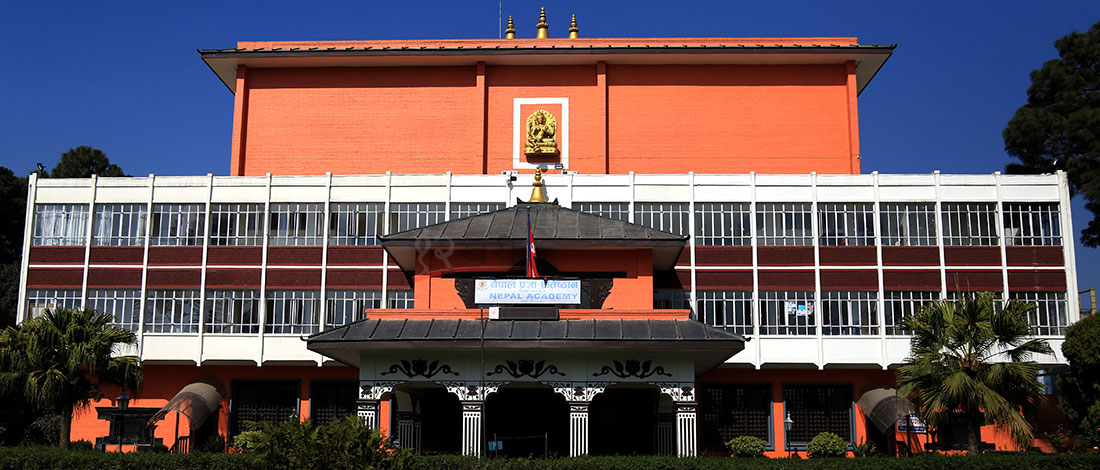
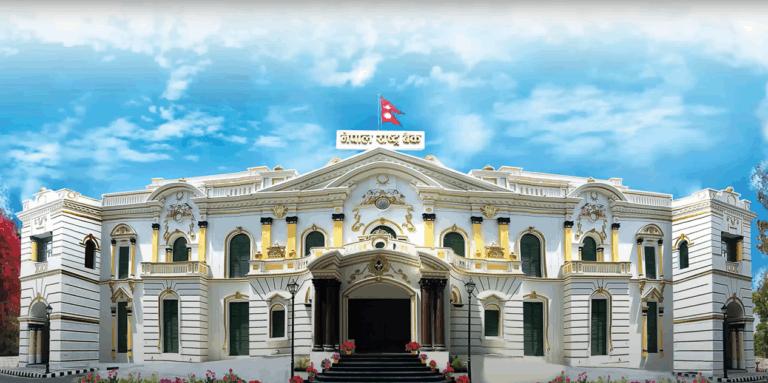
The Nepal Academy building located in Kamaladi. File photo
The primary task of an academy should be the deep study, research, and discourse of language, literature, art, and culture. However, in recent times, academy officials have not been found to be deeply serious about such matters. Instead, history is full of examples where officials engaged in sycophancy toward the ruling power to secure appointments and extend their tenures.
King Mahendra established the ‘Nepali Literature and Art Academy’ on June 22, 1957, with the objective of preparing and promoting socially useful works through research in language, literature, culture, and philosophy, as well as honoring and respecting scholars and talents in this field. When the Act was issued on February 13, 1958, its name was changed to just ‘Nepal Academy.’ Later in 1962, the name was changed to ‘Nepal Rajkiya Pragya-Pratishthan’ in Nepali and ‘Royal Nepal Academy’ in English.
During the monarchy, the academy used to conduct deep research into language and culture and publish books. It would formulate five-year plans and deploy academicians to research the language and culture of different regions of the country. At that time, under the folk culture survey program led by Satya Mohan Joshi, Sthir Jung Bahadur Singh, Bihari Krishna Shrestha, Prof. Chudamani Bandhu, and Pradeep Rimal were assigned to study the folk culture of the Karnali region. They spent about a year preparing a book in five volumes. That text, titled ‘Karnali Lok Sanskriti,’ won the Madan Puraskar in 1971.
The academy, which once published books after conducting such extensive research, has recently focused on formal programs such as organizing poetry festivals (competitions) and celebrating Prithvi Jayanti. Not only is there no deep debate on the country’s language and culture within the academy, but there is also a lack of proper discussion with committee members before making important decisions, according to Vishnu Bhandari, who was appointed as a member of the academy’s literature department during 2014–2015 but resigned midway. He says, ‘Since they wouldn’t call me to meetings, didn’t hold discussions, and only asked me to sign off on decisions, I resigned. Even after that, no improvement was seen in the academy.’
After the monarchy collapsed and the country entered a republic, the government in 2007 split the Nepal Academy into three entities to look after language-literature, music-drama, and fine arts. In the academy, where officials and members favored by the palace were appointed during the active monarchy, political parties and leaders turned it into a place to manage their cadres after the political change of 1989. Furthermore, after the establishment of the republic, three academies were created to expand the recruitment ground for political workers.
After the new constitution was promulgated in 2015, the country adopted federalism with seven provinces. However, there is no provision for provincial representation in the academy. Although the issue of restructuring the academy has been raised repeatedly, the government has not paid attention to it. Even the RSP government, which came to power through elections following the Gen Z protest, seems to be trying to run the academy in the style of the old parties. Former member Bhandari states that just as the old parties used to recruit writers and literature figures close to them into the academy, the RSP government, which claims it will select qualified and capable people through competition, is adopting the same style. He notes that the structure of the academy and the existing law are not favorable to federalism. He says, ‘The structure is old, and the laws are old. As long as there is a provision where the minister recommends people of their liking, reform is impossible.’
Rumors of officials before the committee forms
Recent events are enough to understand that the government’s style of working to appoint officials in the academy is not much different from that of the old parties. Writer Narayan Dhakal and resistant writer and researcher Archana Thapa, who have been harsh critics of the Nepal Academy, were busy searching for potential officials and members for the Nepal Academy on July 14. They were calling writers and literati to make proposals.
Writer Bina Theeng also received a call from Dhakal. According to Theeng, Dhakal requested her to join as a departmental member of the academy, but she flatly refused. Speaking to Nepal News, she said, ‘I disagree with this government’s behavior toward the landless and the poor, and its actions that weaken democracy. In such a situation, I have no interest in sitting in the academy.’
Other writers and literati contacted by Nepal News also confirmed that Dhakal and Thapa had proposed they become academicians. One writer, wishing to remain anonymous, said, ‘My heart did not allow me to accept an appointment from this government, which seems against democracy. I rejected it.’
While they were searching for officials and members of the academy in this manner, Dhakal and Thapa had not even been formally nominated to the recommendation committee. Yet, even before being nominated, not only were they operating as the recommendation committee, but the names of the officials they allegedly recommended were already leaked extensively in the market. The day after Dhakal and Thapa searched for potential officials, news was published that Kumar Nagarkoti was recommended for Chancellor of the Nepal Academy, Avinash Shrestha for Vice-Chancellor, Ramlal Joshi for Member-Secretary, and Tirtha Gurung, Rajan Mukarung, Pragati Rai, Deepak Sapkota, Nabin Abhilashi, Pratisara Sayami, and Krishnaraj Sarbahari for academicians.
Among those whose names were made public, Mukarung wrote on social media that he is not preparing to become an academician, while the rest remain silent. Mukarung was appointed as an academician during the KP Sharma Oli government. He was dismissed by the ordinance brought by the Balendra government on May 2.
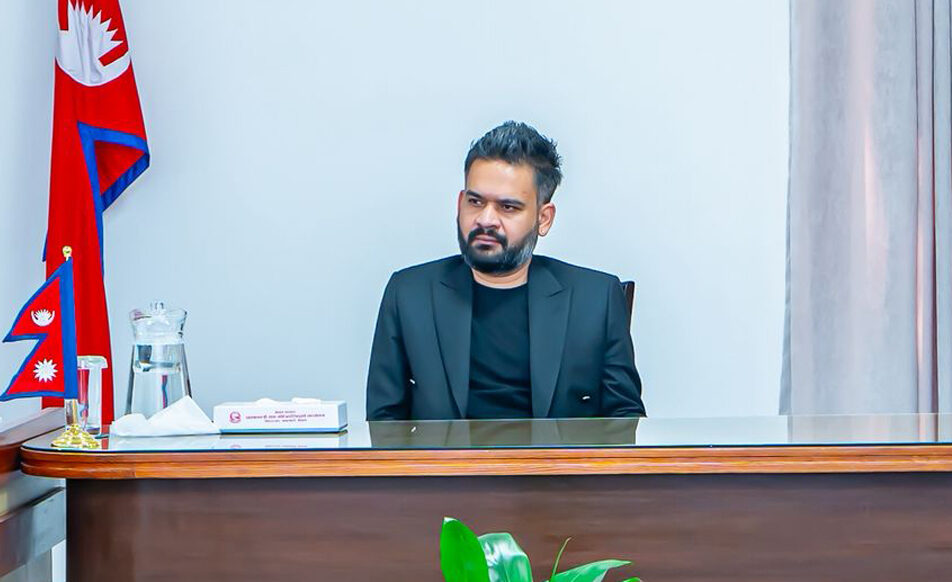
Prime Minister Balendra Shah. File photo
Section 8 (1) of the Nepal Academy Act, 2007, mandates the formation of a three-member recommendation committee to appoint officials and assembly members. The committee is chaired by the Minister of Culture, Tourism, and Civil Aviation, while the remaining two members are designated by the Prime Minister from among individuals of high repute in the fields of language, literature, culture, and philosophy. Minister of Culture Khadak Raj Paudel (Ganes) is also a writer.
Under this provision, the news of Dhakal and Thapa being nominated as members by Prime Minister Shah was made public on July 16. However, they have not received their appointment letters yet. Speaking to Nepal News on Sunday, July 19, Dhakal said, ‘We have received word that the letter is being prepared, but we haven’t received it yet. The criteria for recommendation have not been set either; we are just in the process. No one’s name has been recommended.’
The Prime Minister is supposed to appoint the officials and members of the academy based on the recommendations made by the committee. However, everyone has been left confused after news emerged that the officials were recommended two days before the formal committee was even set up. Avinash Shrestha, who was said to be recommended for Vice-Chancellor, also mentioned he only found out after it appeared in the news. He said, ‘Ministry staff had called earlier asking to create a roster. But I was shocked to see that I was recommended in the news.’
The news of the recommendation showed, on one hand, that the style the government is adopting to select academicians for a high academic body is superficial. On the other hand, it is unclear what the criteria for recommending individuals are. This indicates that the selection process of the new government, which previously opposed the old government’s practice of politicization and quota sharing in appointments, will not be any different.
Prime Minister Shah has also nominated committee members to recommend names for officials and assembly members in the Nepal Academy of Fine Arts and the Nepal Academy of Music and Drama. Batsa Gopal Vaidya and Lok Bahadur Chitrakar have been nominated to recommend for Fine Arts, while Anup Baral and Lochan Rijal have been nominated for Music and Drama. They have not started the recommendation work either. However, there are rumors in the market that Brajesh Khanal has been recommended for Chancellor of the Music and Drama Academy, and singer Jhuma Limbu is also rumored to be on the list. Lok Bahadur Chitrakar, a nominated member of the recommendation committee, said, ‘I found out about my nomination through the news. I have not received an official letter.’
Revolutionary when denied opportunities
The fact that appointments and operations within the academy are not proper and systematic is not new. At one time, writer Parijat had also protested against this issue.
In recent days, many senior writers and literati have been strongly protesting, stating that there is no system in the academy. One of those protesting is writer Narayan Dhakal. He has repeatedly commented through articles and interviews that the academy still functions in the Panchayat style. Let’s look at an example.
In March 2018, journalist Deepak Sapkota asked Dhakal, ‘What would you do if you were offered the position of Chancellor of the academy?’
Dhakal’s response was, ‘The way the academy is formed is incorrect. It is better for writers like us not to go to a place afflicted by a bloated party system and disgusting quota sharing.’ About eight years and four months after this interview was published in Annapurna Post’s ‘Fursad,’ the same writer, Dhakal, has become a member of the committee that recommends academy officials, while Sapkota, the person who asked the question, is rumored to have been recommended by him as an academician member. Dhakal, however, claims he still believes the academy remains in the Panchayat style. He says, ‘I am still in favor of restructuring the academy.’
Dhakal had told journalist Yagyesh in Naya Patrika’s Saturday supplement ‘Jhan Naya’ on May 10, 2008, ‘For me, the existence or non-existence of the academy holds no meaning. In my view, the country’s property is being misused in the name of the academy.’ But how did he, who was once a member of the cultural department of the CPN (UML) and a harsh critic of the academy, agree to sit on the recommendation committee to choose academy officials during the RSP government? To this question, he said, ‘I will speak after making the recommendations; do not ask now.’
There has been a history of writers and literati appearing revolutionary when they do not get opportunities, but not hesitating to praise the regime when they get a chance. Nowadays, many writers and literati do not speak or write about the government’s ongoing suppression of the landless and the poor. They wait for opportunities that come from the ruling power.
According to sources, Rajan Mukarung, who has been raising his voice for identity politics, was initially lobbying to become the Chancellor of the academy. However, his name appeared only for an academician position. Furthermore, it is said that he stepped back after rumors circulated that his ex-wife Rai was also recommended for the same position. On the other hand, Jhuma Limbu, who is running a campaign to preserve indigenous music, is also being discussed for the Academy of Music and Drama.
However, there is a vast difference between the issues raised by the current government and those raised by Rajan, Jhuma, and others. The Balendra government, which bypasses democratic methods and processes in the name of fast work and results, does not prioritize issues like identity, originality, and inclusivity. The declared policy of the RSP government is ‘meritocracy’—that is, making appointments based on merit, capability, experience, and competition. Writer Bimal Acharya says, ‘Identity, inclusivity, progressiveness, Marxism, creative anarchy, indigenous, Khuwalung, democracy, and this government’s core value of merit are completely opposite things. They cannot go together. When forced to choose one, they might have abandoned everything else and chosen merit.’
Prime Minister Balendra and Minister of Culture Khadak Raj Paudel (Ganes) are both poets and writers. If they want, they have the opportunity to make the academy a truly wise and intellectual space for debate, a center for study and research, and an institution that all writers and literati can be proud of. However, the current maneuvering to turn the academy into a recruitment center for people close to the party and the minister, much like it operated under the favor and direction of the palace during the Panchayat era, shows no signs of reform.
Writer Bina Theeng states that the academy has always been known as a place dominated by the ruling power, and the current situation is no different. She says, ‘Until the mindset of those in power changes, the academy will not change either. There is not much room to hope for a lot from the new government.’