Kathmandu
Friday, July 17, 2026






KATHMANDU: On April 14, 2026, the government led by Prime Minister Balendra Shah (Balen) released the “National Commitment” document. This 18-point plan brings together the election manifestos, pledges, and commitments from the six nationally recognized political parties that took part in the March 5 general election.
It follows the Gen Z protest for better governance and anti-corruption. The commitment will guide the government’s annual policies, programs, and budgets starting from fiscal year 2026/27.
Ministries will include it in their work plans, with monitoring by the Prime Minister’s Office. The goal is to create shared ownership among parties and focus on practical reforms for economic growth, good governance, and citizen welfare.
What does the National Commitment say about economic stability and reform?
The commitment aims to turn Nepal’s young population into a strength for economic growth and raise the country to middle-income status. It positions the private sector as the main driver for jobs, goods supply, revenue, and investment, while the government acts as a regulator and facilitator.
Liberal policies will encourage innovation and creativity in business. Public services like education, health, transport, housing, and social security will help share national income more fairly.
The plan ends rent-seeking, policy misuse, cartels, unhealthy competition, and artificial shortages to build a business-friendly environment that supports healthy competition and entrepreneurship.
Business protection and a fear-free investment climate will make the private sector a key engine of national prosperity. Inclusive growth will expand production sectors and ensure minimum living wages for labor.
Progressive taxation, fair use of state resources, balanced regional development, and promotion of entrepreneurship will reduce inequality in opportunities, income, and wealth. Public-private partnerships will drive innovation and inclusive policies.
Irrelevant laws will be changed or new ones made to improve the business environment, create jobs, promote social harmony, equal opportunities, and environmental balance.

AI-generated image of Nepal’s Economy
Over the next five years, political parties will build national consensus on key economic issues to achieve 7% average annual growth, push per capita income toward USD 3,000, and bring GDP close to USD 100 billion.
Digital economy will grow as a major area for higher productivity and quality jobs. Tax rates and rules will stay stable for 10 years with legal guarantees.
All industry registration and renewal processes will become paperless and hassle-free through simplified digital systems. The informal economy will gradually become formal with better knowledge, information, and services.
Domestic private investment capacity will increase, while foreign investment will link to production, technology transfer, and job creation. A balanced model among private, cooperative, and public sectors will reduce economic and social inequality and bring multidimensional poverty down to 10% in five years.
Self-reliant economy campaigns will connect everyone to production, manufacturing, and innovation. Labor and voluntary contribution will become mandatory in these efforts. Direct foreign investors will get investor-friendly laws and a welcoming environment. The tax system will become simpler, more scientific, and fair.
Nepal will exit the FATF grey list through financial transparency, anti-money laundering measures, and regulatory reforms with a time-bound action plan. Capital markets will turn more transparent, safe, and attractive for small, domestic, and institutional investors, with stronger investor protection and stable, business-friendly policies.
How will the commitment honor agriculture and achieve self-reliance?
Agriculture will gain respect as a dignified and secure profession through policy, legal, and customs reforms that support import substitution. Production of crops possible inside Nepal will increase, especially via better trade agreements with India.
Agricultural enterprises and industries will receive special priority with tax exemptions, customs concessions, and investment incentives. Land use plans will be reviewed to utilize fallow farmland, promote land consolidation, and run cluster farming programs.
Farmers will get credit cards, insurance, and concessional loans. Landless, small, and marginalized farmers will receive protection and direct economic subsidies on produce. A contribution-based farmer pension and farmer identity card system will ensure only genuine farmers get subsidies, loans, services, and social security.
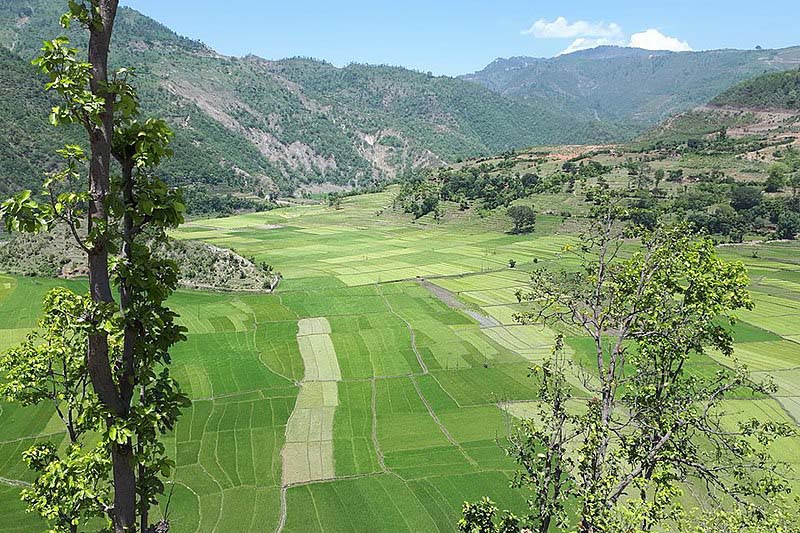
Arable land in Dadeldhura. File photo
Indigenous and improved nutrient-rich seeds will be made available to guarantee quality production and markets. Fertilizer data will be updated regularly to fix purchase and distribution problems. Every local level will set up community seed banks to protect and promote local and indigenous seeds. High-value cash crops will be promoted in hilly and Himalayan pocket zones, with special grants and tax benefits for herb and fruit processing industries in high mountains.
Commercial agri-food processing corridors will develop along highways, and fruit-tree planting campaigns will run in community forests. A chemical fertilizer factory will be established with private sector partnership and dedicated electricity supply.
In collaboration with provinces and local levels, national pride irrigation projects will complete on time to bring irrigation to an additional 300,000 hectares of arable land within five years. Soil fertility will improve through wider use of organic methods, while production costs decrease, climate adaptation strengthens, and value chains develop.
What plans exist for tourism and civil aviation development?
Tourist arrivals and average stay will increase to double per-person spending within five years by diversifying tourism into nature, culture, and community-based models with a new ecosystem.
Special infrastructure will promote religious and cultural sites like Pashupatinath, Lumbini, Kathmandu Valley heritage, Devghat to Muktinath Hindu-Buddhist circuit, and Janakpur.
In 2027, the country will celebrate “National Health Year” with broad programs involving all three government levels, private sector, and communities to develop wellness tourism. Tourism packages will highlight Nepali civilization, lifestyle, local dress, indigenous food, and crafts, including homestays.
Adventure and entertainment tourism will expand with the “Clean Himalaya: Safe Climbing” campaign and new destinations. Key religious sites such as Salpa Silichung, Bouddha, Swayambhu, Namobuddha, Lumbini, Muktinath, Halesi Mahadev, Pindeshwor, Dantakali, Gosainkunda, Pashupatinath, Pathibhara, Mukumlung, Sumnima Paruhang and others will be declared religious tourism centers.
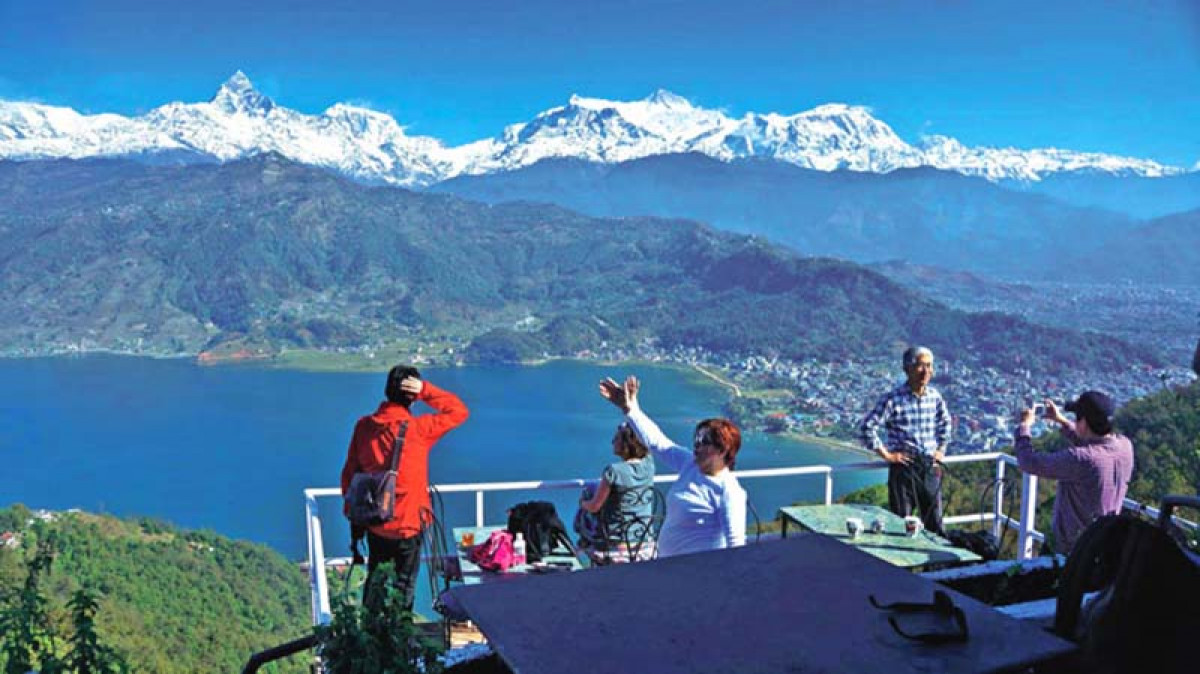
Phewa Lake in Pokhara. File photo
Training programs on tourism and hospitality will run at provincial and local levels. Off-season packages and special events will boost year-round tourism. New mountains will open for mountaineering. Public-private partnerships will operate hotels, resorts, adventure services, and eco-tourism.
The Civil Aviation Authority of Nepal (CAAN) will be split into two autonomous bodies, one for service provision and one for regulation, to strengthen air safety.
Pokhara and Bhairahawa airports will run at full capacity with direct flights from major world cities. Branding of Nepal’s unique features will happen globally through infrastructure development, market promotion, air service expansion, internal security, and new destinations.
How does the commitment address energy development and utilization?
In the next decade, installed electricity capacity will reach 30,000 MW through legal amendments on land, forest, and environment plus policy reforms. The government will provide viability gap funding and prioritize large reservoir and semi-reservoir projects like Budhigandaki and Dudhkoshi.
Energy-based large industries such as steel, cement, herb processing, data centers, and fertilizer plants will be attracted. Private sector participation in storage, transmission, and distribution will be encouraged with friendly policies and laws. The government itself will arrange transmission lines to industries to boost domestic consumption.
An integrated energy plan will guide public-private partnerships for production and resource mobilization. Internal and cross-border transmission lines will complete on schedule.
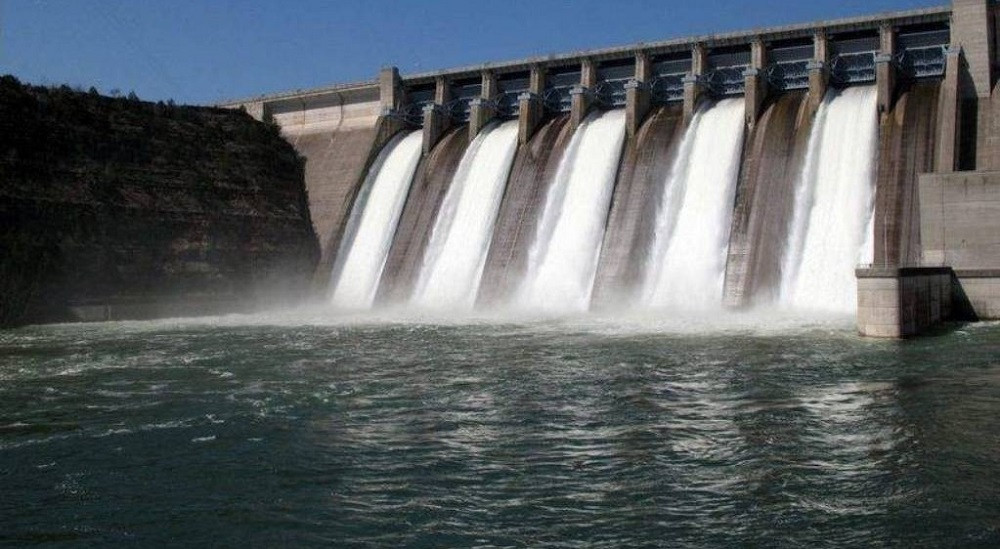
Sanibheri Hydropower project. File photo
Energy diplomacy will strengthen bilateral and regional cooperation for power trade with India and Bangladesh. Nepal will develop as South Asia’s clean energy export hub with increased state investment in clean production, transmission, and distribution.
Beyond traditional hydropower, green hydrogen production and rare earth metal exploration will get priority to position Nepal as a green energy user and exporter. Necessary steps will prepare the country for a formal “energy-friendly nation” declaration.
What is planned for mines and minerals sector?
Investor-friendly mining policy and laws will be created, along with a public-private partnership investment model. A Mines and Minerals Authority will regulate construction materials extraction, production, supply, and use, with effective monitoring.
Scientific study and mapping of mineral resources will attract investment in valuable minerals extraction and processing. Local communities will receive a share of benefits from mining. Stone, gravel, and sand extraction will follow environment-friendly methods for domestic use and export.
Problems in the sector will be solved through new laws that set measurable, implementable standards covering environmental, engineering, economic, and social aspects.
How will infrastructure development be improved?
Projects will be properly classified and inter-agency coordination strengthened for planning, prioritization, resource mobilization, budgeting, and implementation.
Government projects will run in “mission mode” with clear targets. Project chiefs and staff will not be transferred until completion to ensure quality and timely finish.
National pride projects will have result-oriented, time-bound action plans. Budget allocation based only on access rather than study, need, priority, and resources will end; only nationally aligned, result-focused projects will proceed.
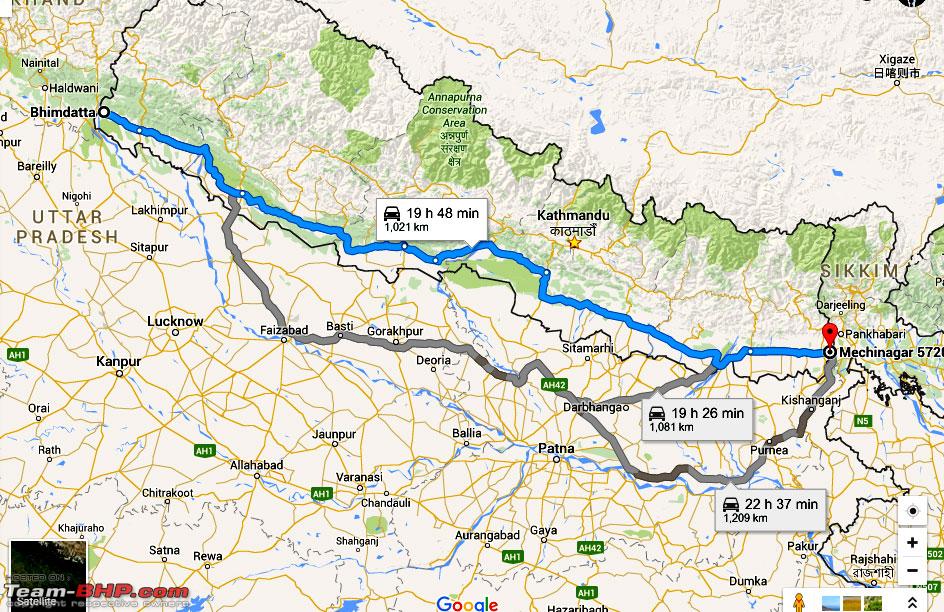
Multi-modal transport systems will integrate roads, waterways, and airports. The Mahendra Highway (East-West Highway) will upgrade to international standards within three years. Cross-border waterways with India and access to sea ports via agreements with China will expand international trade.
North-south highways will accelerate. Infrastructure will adapt to climate change while protecting natural environment. Transport will become dignified and accident-free with better resources, technology, and training.
What approach will create employment as the foundation of prosperity?
Legal and policy changes will allow Nepalis to work remotely for foreign companies and promote digital jobs and cross-border service exports. Priority sectors like IT, construction, tourism, and commercial agriculture will see policy reforms for more job opportunities.
A “Big Push” campaign will complete infrastructure, solar/wind energy, and waste management projects to boost green jobs. Technical manpower in medicine, nursing, engineering, agriculture, forestry, and IT will be encouraged to work and do business inside the country.
Local levels will survey labor demand and supply, record it, and run skill development programs. In five years, 1.5 million jobs will be created by treating employment as a permanent base, not temporary relief.
Digital economy will receive resources and public-private investment for growth and quality jobs. Agriculture modernization and traditional skill upgrading with branding will link generational knowledge to modern technology and large industries.
Compulsory labor culture will connect everyone to work. Rural employment programs and private sector job fairs will run. Labor market reforms will end cheating, wage arrears, and exploitation for a safe, dignified, and fair system.
Coding, data, AI, and cyber security skills will enter school curricula from early levels. “Earn while you learn” models will develop through university, CTEVT, and private partnerships. Overseas Nepalis’ skills will be used as “brain gain.” STEM education will become practical, research-oriented, and job-linked.
A national skill development campaign will make skills compulsory for work. Foreign employment will become voluntary with pre-departure information, training, rights protection, and security.
Fraud in recruitment agencies will face strict action. Returnee workers’ skills and capital will link to national development, and remittances will turn into safe investments with technical support.
In what ways will education and health see major improvements?
Public education quality, access, and competitiveness will improve with significant investment over two decades. School education will gradually become compulsory and free, including pre-primary, ensuring equal access for all children.
Basic education will use local mother tongues, with moral education included. Government and community schools will receive investment in teachers, infrastructure, and equipment. Performance-based extra grants will go to schools, and teacher performance will link to student learning.
The quality gap between private and government schools will narrow by upgrading public ones. Private education will undergo review to become more service-oriented and quality-focused.
At least one ultra-modern inclusive model school per province will set standards, making all schools fully accessible and inclusive. Life-skills and practical education will apply. Four days a week will focus on production, innovation, sports, music, arts, literature, and hands-on labor activities for personal and national development.
Higher education will restructure to become competitive, research-oriented, and employment-focused. Academic calendars will be followed strictly. Technical and “study while earning” programs will reduce brain drain.
Tribhuvan University will become a national university and center of excellence. Universities will gain academic, administrative, and financial autonomy with merit-based appointments, promotions, and evaluations.
Political affiliation of teachers and professors will be banned, and all educational institutions freed from party politics. At least two model schools per local level and one public library per district will promote reading culture.
Guru-chela (Teacher-student) tradition-based scholarships and training will revive cultural skills. Nepal will develop as an international center for peace studies, yoga, Ayurveda, meditation, mental health, and Eastern philosophy.
Health systems will reform with minimum standards and an integrated model. Structures across federal, provincial, and local levels will reorganize with clear categorization of staff, equipment, buildings, and service quality. Each province will have one advanced rehabilitation center for disabilities.
Burn victims will get free quality treatment, and mental health services will reach citizens. Rural and remote areas will get priority expansion, including telemedicine. Primary health centers will have at least one MDGP doctor, nurse, lab, and pharmacy.
Home-based basic health services will reach elderly and disabled citizens. Poor, laborers, farmers, and disabled people will access insurance or free treatment. Compulsory laborers will get free health services. Health budget share will reach 8% by 2031. Health insurance will expand to a stronger, quality, universal model.
Every citizen will have one digital health profile, and scattered benefits will integrate into social security. Non-communicable diseases will focus on prevention over treatment. A national campaign “I am healthy, my family is healthy” will promote clean environment and active lifestyle.
Ayurveda, natural healing, and yoga will integrate into services, with wellness zones and yoga labs in tourist areas. Medicine pricing will become effective for affordability, Nepal Medicine Limited will strengthen, and private pharma industries will get incentives for self-reliance in drug production.
What commitments cover forests, environment, and climate change?
Nature, forests, and environment will be protected, managed, and used sustainably for national prosperity with intergenerational responsibility. Modern technology and digital systems will support sustainable forest management.
Green economy will be promoted for environmental protection. Forest resources, biodiversity, and species will be conserved while meeting public needs and expanding economic activities based on forest products like herbs. Industries, offices, and businesses will adopt environment-friendly practices.
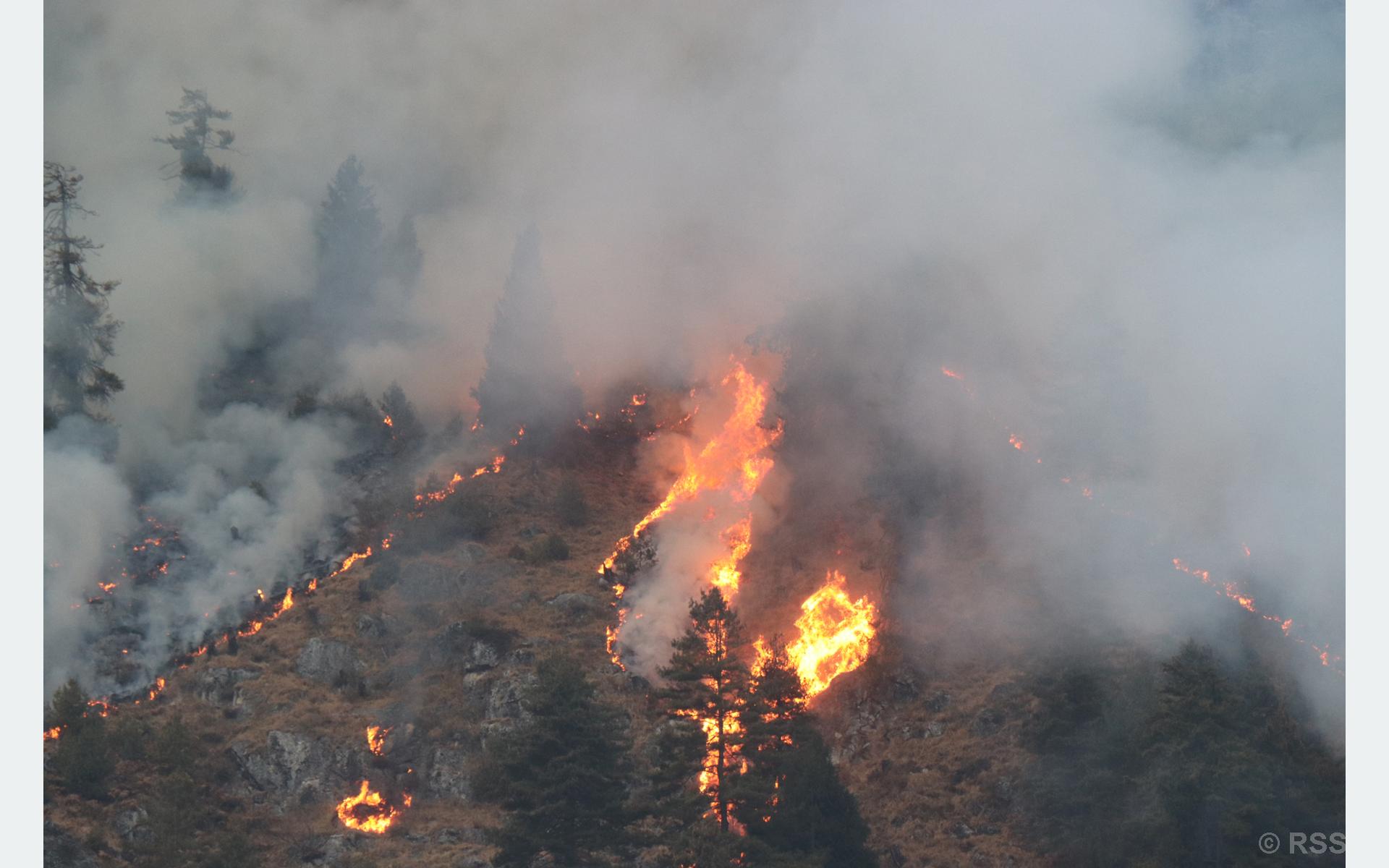
Manang forest fire reported at 379 places on February 1, 2025. File photo
Real-time monitoring of forest fires will use drones and satellites through a high-alert center. Policy and legal reforms will enable commercial use of community and national forests to reduce timber imports by facilitating local wood supply and sales.
Watershed and water source protection will ensure climate-resilient sustainable development. Rainwater and river water management through scientific ponds in mid-hills and Chure areas will break flood-drought cycles. Uncontrolled extraction of stone, gravel, and sand in Chure will be controlled with scientific guidelines.
The Integrated Chure Conservation Authority will gain more powers and shared responsibility across three government levels. Safe drinking water will be guaranteed for all, with an arsenic-free Terai campaign. Traditional ponds, wells, and taps in Madhesh will be revived scientifically to improve groundwater and reduce desertification risks.
Traditional ponds, stone spouts, and springs will be preserved along with natural geography. Air pollution will be brought within WHO standards through multi-stakeholder plans. Environmental impact assessments and procedures for infrastructure will be simplified.
National climate finance strategy will help secure global funds and compensation through strong diplomacy. Climate justice will be raised powerfully at international forums, and legal/institutional frameworks for carbon trade will be prepared.
How will good governance and corruption control be strengthened?
The property of public office holders since 1990 will be investigated transparently according to law. Constitutional bodies will be institutionally strengthened, and policy decisions by the cabinet will be clearly defined. Laws will protect and encourage whistleblowers on corruption and manage conflict of interest.
Roles and powers of political and administrative leadership will be legally defined. Public service will become free from political pressure, impartial, capable, responsive, and committed to service. Investigation and regulatory bodies will be reformed and empowered.

Google Gemini AI-generated image illustrating the misuse of power and entrenched corruption in Nepal
Party affiliation among civil servants will end through policy and legal measures, and partisan trade unions in government service will be abolished. A modern civil service with fewer but highly capable, efficient, and competitive staff will be built.
Appointments will include integrity and ethics testing. Judges will be appointed on merit and competitive basis. Rule of law, quick and quality services, and control of irregularities, delays, and all forms of corruption will be ensured.
The National Vigilance Center will gain full powers. Middleman practices in policy, law-making, and decisions will end completely. Service providers will be linked to good governance indicators so citizens can evaluate offices.
What reforms are proposed for administration and service delivery?
The number of federal ministries will be kept at 17. The Prime Minister and Cabinet Office will transform into a results-oriented center for inter-ministry coordination, climate change, and direct monitoring of large projects.
The National Planning Commission will become a data- and monitoring-focused think tank, while the Policy Research Institute will be restructured. A high-level administrative structure review commission will examine federal, provincial, and local administration to improve coordination, establish merit-based systems, remove duplication, and create competitive public administration. Roles and powers of political and administrative leaders will be clearly defined by law. Within five years, 25% new capable manpower will enter government service.
Performance-based civil service law will include clear indicators, evaluation, promotion, and career development for result-oriented administration. Inappropriate allowances will be replaced by reasonable, regular, and timely basic salary revisions.
Citizens will no longer run between offices or face unnecessary harassment and middlemen. Traditional paper-based and multi-layer comment systems will end gradually. Time cards will apply in public service delivery.
How will e-governance and technology drive progress?
Information technology will be declared a national strategic industry, and an IT Promotion Board will be formed. Digital economy will be developed as a key driver for growth, productivity, and quality jobs. Investment priority will go to communication infrastructure, data centers, cloud services, cyber security, data privacy, and high-speed connectivity for overall digital economy building.
Public procurement policy will be reformed to encourage development of government software and apps locally. Within five years, Nepal will transform into an exporter of artificial intelligence and computing power.
Domestic data centers, AI computing, and digital service industries will connect to the world economy. “From Nepal to the World” campaigns will make Nepali IT companies globally competitive. All digital infrastructure will meet international standards.
Multinational tech companies will be attracted to set up development and innovation centers. IT companies will receive tax concessions. Local IT firms will get ensured participation in government digital projects through procurement reforms.
Nepal’s own satellite will ensure basic telecom and digital connectivity in rural and remote areas. Sovereign large language models based on AI and generative AI will be developed with high priority.
Digital Nepal Framework will be updated, and the citizen app turned into a super app. Digital skills investment will rise, and digital literacy including AI and content moderation will become compulsory up to class 12.
National programs will skill youth in emerging technologies like AI, data science, cyber security, fintech, biotech, and renewable energy. Incubation centers and IT parks will promote digital entrepreneurship, with an innovation fund providing mentoring, investment security, and support to young entrepreneurs. Invention centers and commercialization of innovations will get priority.
What does the commitment promise for social justice and inclusion?
The government will formally apologize on behalf of the state for historical injustice, insult, exploitation, and exclusion faced by certain communities due to social structure, laws, policies, and practices over generations.
Structural discrimination will end through concrete legal, policy, and institutional reforms. Inclusive audits will check effectiveness of participation in government and public bodies.
Proportional and inclusive participation of Dalits will be ensured in constitutional and state structures, with additional special facilities for their upliftment and mainstreaming.
Meaningful participation of women and equal pay for equal work will be guaranteed in all state organs. Madhesi, Tharu, Muslim communities’ identity, language, and culture will be protected with equal access to state mainstream.
Oppressed communities will receive resources and skills to modernize their traditional occupations, knowledge, and technologies. Inclusive policies will ensure employment, health, free education, and social integration for sexual and gender minorities.
A specialized national body will promote comprehensive development and rights of persons with disabilities. Care centers will provide education, health, and support for disabled, helpless, oppressed, marginalized, and orphan children. Rights of indigenous, Janajati, Khas Arya, Madhesi, Dalit, Muslim, and minority communities will be ensured in all state organs.
No discrimination will occur on grounds of community, language, color, religion, gender, culture, tradition, occupation, ideology, or sexual identity. Upliftment of women, persons with disabilities, indigenous groups, Madhesi, and Tharu will be prioritized.
How will international diplomacy and foreign relations be handled?
Nepal’s sovereignty, territorial integrity, and national interest will remain supreme. Balanced and dynamic diplomacy will turn changing global geopolitics and neighboring powers’ rise into development opportunities. Performance audit systems will measure activity and results of diplomatic missions.
Nepal will transform from a “buffer state” to a “vibrant bridge” through tripartite economic partnerships and connectivity while remaining independent, neutral, and non-aligned based on world peace. No military alliances, arms races, or wars will be supported; equal distance and equal closeness with all will guide policy. “Nepal First: Nepali First” will center all diplomacy. Economic diplomacy will be promoted, and programs like Sagarmatha Dialogue will continue.
Nepal will strongly raise climate change, Himalaya conservation, mountain issues, and landlocked country concerns at international forums. Coordination with the international community will protect rights, security, and social security of Nepali workers abroad.
What utilization is planned for the Nepali diaspora’s knowledge, skills, and capital?
Constitutional and legal arrangements will ensure continuity of non-resident Nepali citizenship, ancestral property rights, and voting rights. “Once a Nepali, always a Nepali” will be guaranteed, using diaspora knowledge, skills, and experience as “brain gain.” Non-resident Nepalis will receive “supreme organic investor” status. An annual diaspora bond of one trillion rupees will encourage investment in infrastructure and export-oriented industries. Diaspora capital and knowledge will diversify projects in international sports cities, advanced research centers, specialized health services, and cultural tourism, built on fast-track models. Bilateral agreements will end double taxation with countries having large Nepali populations. A retirement return package will encourage first-generation diaspora to come back to the motherland.
How will sports be developed under this commitment?
Sports will develop as the backbone of national unity, human development, national pride, and economic prosperity. Incomplete stadiums will complete on time, and ultra-modern, fully accessible sports infrastructure will be built in all seven provinces. Political appointments in sports administration will end completely; professional leadership and transparent budgeting will apply. Talent identification from school level will make school sports an integral part of curriculum. Adventure sports and ultra-marathons with Nepal’s unique potential will be promoted as national pride with private investment encouragement. Nepal will become a destination for adventure sports. Disability-friendly infrastructure will get priority. Sports will develop as an industry. Tribhuvan University international cricket ground will upgrade to international standards. Nepal will be established as South Asia’s sports hub.
Bilateral, regional, and international sports events will promote sports tourism. Sports as soft power will improve Nepal’s image and expand diplomatic ties, including through cricket diplomacy. Sports will become a profession with regular leagues, timely fair pay, and prizes to stop player migration. Periodic competitions at school, provincial, and national levels will produce excellent athletes. Training will become scientific, technical, and result-oriented with high priority. Women and inclusive sports will be promoted.
What measures are outlined for disaster management?
Nepal faces multi-dimensional disaster risks, so a preparedness-focused safety policy will be adopted. Updated risk mapping of high-risk areas, early warning systems, identification of flood and landslide prone zones, safe and integrated settlement relocation, and empowerment of the National Disaster Risk Reduction and Management Authority will occur. An effective, inclusive, and responsive system will integrate risk reduction, preparedness, immediate rescue, and rehabilitation using evidence-based policy, capable institutions, and community participation. Capacity building will help provinces and local levels in program formulation, implementation, and review. Development projects will consider disaster risks and management.
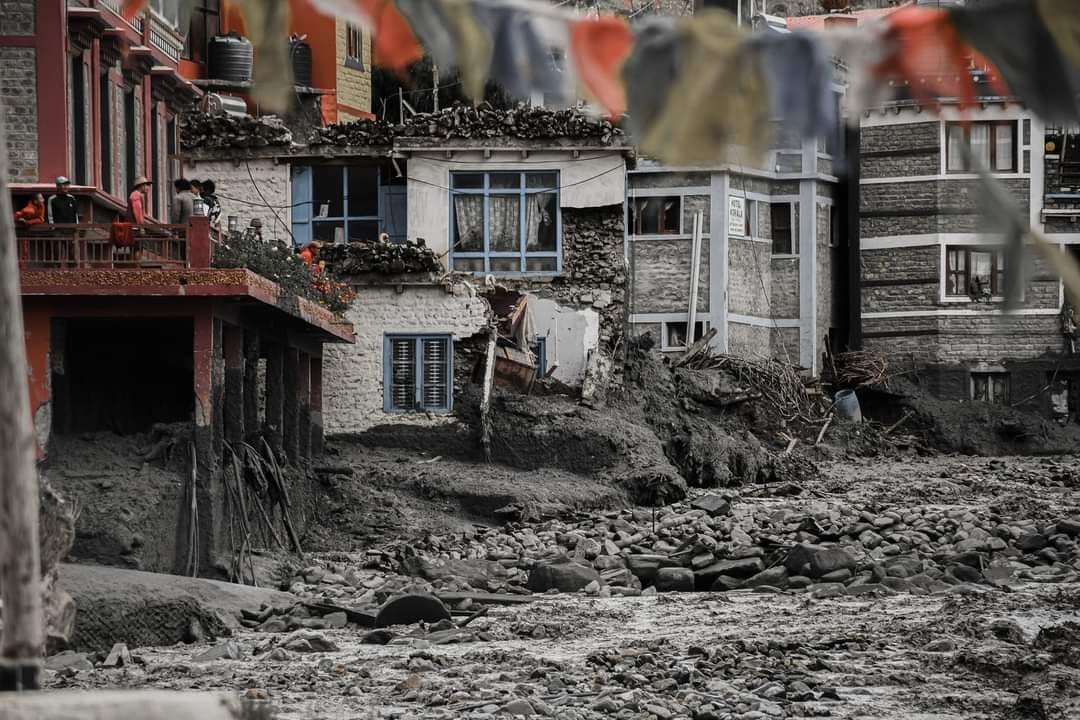
Kagbeni during the rainy season. File photo
Innovative technology-based early warning, risk mapping, and dissemination will be made efficient. AI and digital systems will reduce loss of life and property from natural disasters. School and university curricula will include climate change, disaster management, and risk reduction to attract youth innovation and participation.
How will cooperatives and microfinance be regulated and strengthened?
Uncontrolled and weak regulation of cooperatives and microfinance will be replaced by bringing the non-bank financial sector under direct and powerful supervision of Nepal Rastra Bank. Cooperatives and microfinance will link to credit information centers for lending based only on real capacity, focusing on productive, collateral-free group-guaranteed, and local skill-based entrepreneurial loans. The federation will set regulations and standards, while provinces and local levels will handle registration, records, and effective governance. Registration, reporting, monitoring, and information systems will become fully digital. Commercialization, branding, quality certification, and e-commerce will expand national and international market access. Youth, women, workers, and marginalized-focused cooperatives will create employment and self-employment. An integrated savings protection fund will secure depositors’ earnings and prioritize payments in troubled institutions. Predatory interest and unfair lending will be defined as economic crimes, with judicial investigation of all past deeds and promissory notes. Free legal aid and psychosocial counseling will support victims of usury and microfinance harassment at local units.