Kathmandu
Thursday, July 16, 2026





Political instability, inclusion of projects without guaranteed funding, and lack of preparation severely hinder Madhesh Province's budget execution, leaving around Rs 20.53 billion of its Rs 46.983 billion allocation unspent
DHANUSHA: Even though the Madhesh Province Government brought the largest budget in eight years, it has spent only 56.31 percent of it in the fiscal year 2025/26.
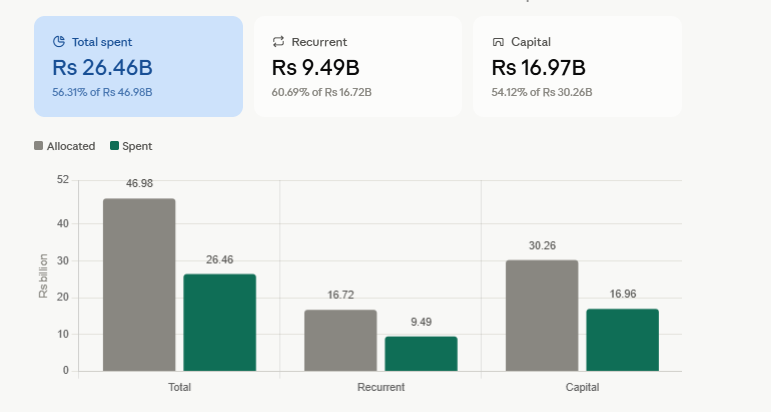
The provincial government had allocated Rs 46.983 billion for the current fiscal year. The Provincial Treasury Controller Office stated that Rs 26.456 billion has been spent till July 9, 2026.
According to this, around Rs 20.53 billion of the allocated budget remains unspent. Under the current heading, 60.69 percent of the allocated budget, which amounts to Rs 9.491 billion, has been spent. The expenditure of the capital budget, which is directly linked to development construction, is even lower. Under the capital heading, only 54.12 percent, which amounts to Rs 16.965 billion, has been spent.
The expenditure percentage may increase slightly when the payments made after July 9 this year are included in the final accounting. However, looking at the budget implementation of the province over eight years, the capacity to spend does not seem to have improved in line with the increased size of the budget.
After the federal government presents the budget, ministers of Madhesh have been complaining that the province has been discriminated against and that adequate financial transfers have not been made based on population. However, the provincial government itself has not been able to satisfactorily spend the budget it allocated. For the upcoming fiscal year 2026/27, the Madhesh Province Government has brought a budget of Rs 41.138 billion, reducing the size by around 13 percent compared to the current year.
No steady improvement seen in expenditure
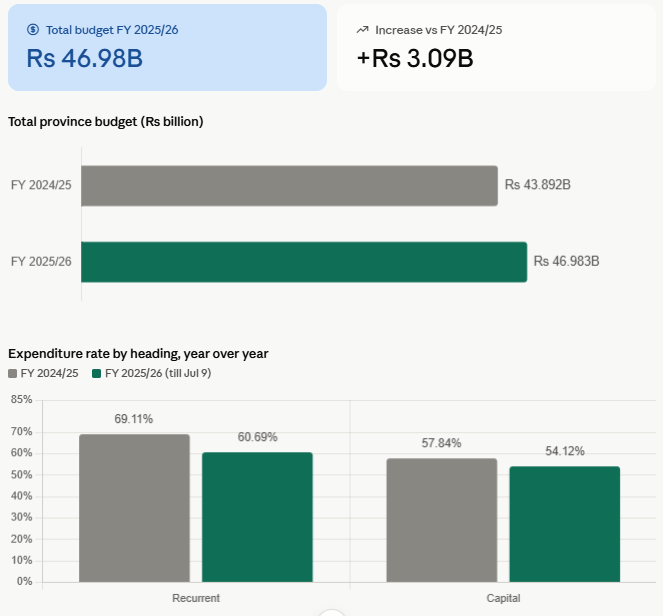
In the fiscal year 2025/26, Madhesh Province had allocated Rs 16.72 billion under the current heading and Rs 30.262 billion under the capital heading. This budget, totaling Rs 46.983 billion, is the largest since the establishment of the province.
In the previous fiscal year 2024/25, the budget totaled Rs 43.892 billion, with Rs 15.946 billion under the current heading and Rs 27.945 billion under the capital heading.
Compared to the previous year, the budget of the current fiscal year is more than Rs 3.09 billion. However, the expenditure did not increase in line with the increased size of the budget.
In the fiscal year 2024/25, at least 69.11 percent of the current budget was spent. Until July 9 of the current fiscal year, that has been limited to a decline of 60.69 percent.
Capital expenditure is also lower than the previous fiscal year. In the fiscal year 2024/25, at least 57.84 percent of the capital budget was spent. Until July 9 of the current fiscal year, only 54.12 percent has been spent.
Since its establishment, Madhesh Province has been allocating more budget under the capital heading compared to the current heading. In the seven years from the fiscal year 2018/19 to 2024/25, an average of 56.42 percent of the total budget was allocated for capital expenditure and 43.58 percent for current expenditure.
Even though the capital share was prioritized in the structure of the budget, no steady improvement has been seen in the actual expenditure.
In the fiscal year 2018/19, at least 55.46 percent of the allocated current budget was spent. It was 54.62 percent in the fiscal year 2019/20, at least 61.32 percent in the fiscal year 2020/21, at least 67.47 percent in the fiscal year 2021/22, at least 51.05 percent in the fiscal year 2022/23, at least 49.12 percent in the fiscal year 2023/24, and 69.11 percent in the fiscal year 2024/25.
Under the capital heading, 47.15 percent was spent in the fiscal year 2018/19. It was 64.48 percent in the fiscal year 2019/20, 68.70 percent in the fiscal year 2020/21, at least 60.04 percent in the fiscal year 2021/22, at least 63.36 percent in the fiscal year 2022/23, at least 52.87 percent in the fiscal year 2023/24, and 57.84 percent in the fiscal year 2024/25.
The data of eight years shows that there has been no steady improvement in expenditure. Even if expenditure increases in one year, it decreases again the next year. This shows that budget implementation depends more on the stability of the government, the priority of the minister, and decisions made toward the end of the fiscal year rather than an institutional system.
Health spending is the highest
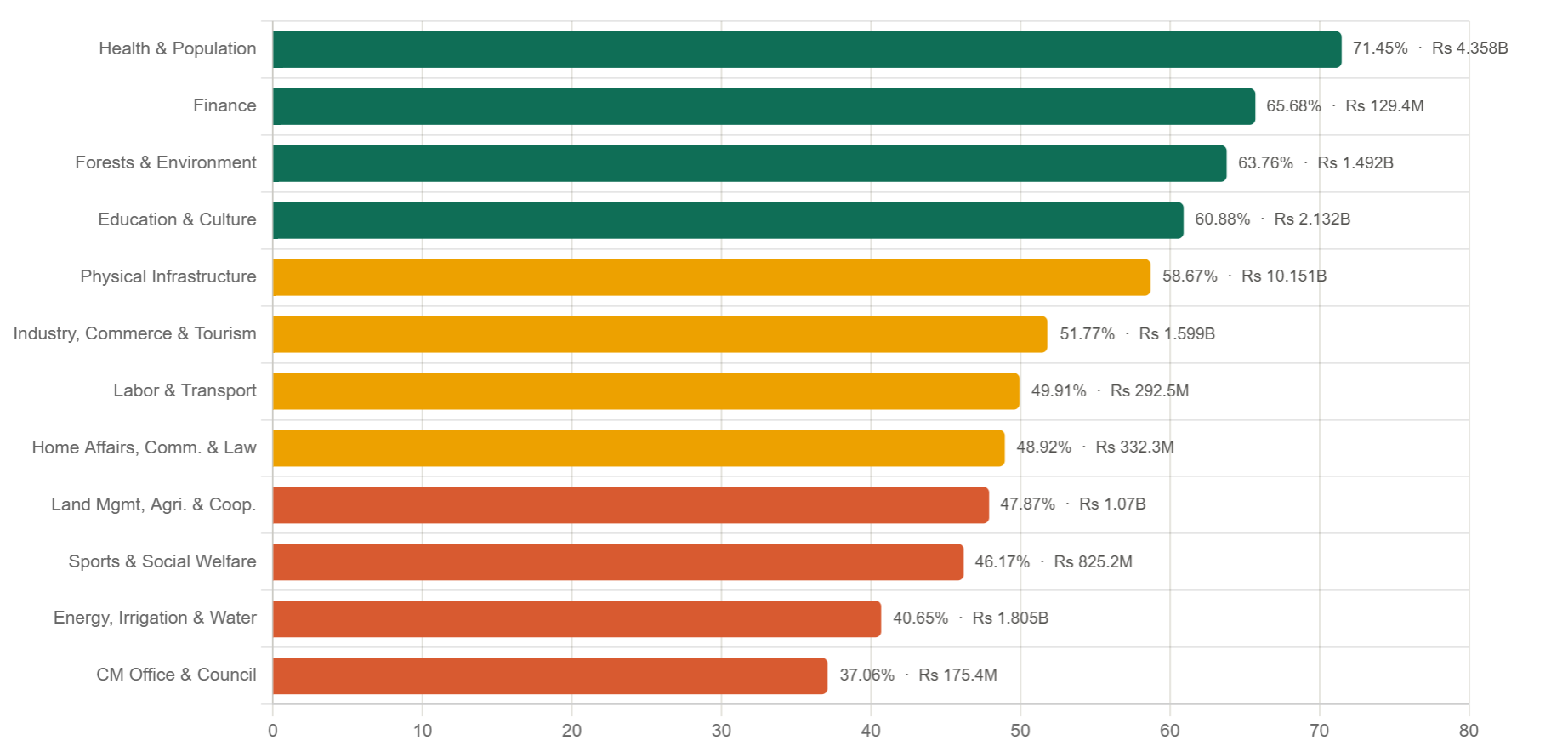
Ministry-wise, the Ministry of Health and Population has spent the highest budget, and the Office of the Chief Minister and Council of Ministers has spent the lowest budget.
Out of the Rs 6.099 billion allocated for the Ministry of Health and Population, 71.45 percent, which amounts to Rs 4.358 billion, has been spent.
Out of Rs 197 million, the Ministry of Finance has spent 65.68 percent, which amounts to Rs 129.4 million.
The expenditure of the Ministry of Forests and Environment is 63.76 percent. Out of the Rs 2.34 billion allocated for the ministry, Rs 1.492 billion has been spent.
Out of Rs 3.502 billion, the Ministry of Education and Culture has spent 60.88 percent, which amounts to Rs 2.132 billion.
The Ministry of Physical Infrastructure Development, which received the largest development budget of the province, has spent 58.67 percent out of Rs 17.303 billion. The Provincial Treasury Controller Office stated that the ministry has spent Rs 10.151 billion.
Although the expenditure percentage of the ministry is slightly higher than the average of the province, since the allocated amount is large, the unspent amount also falls among the highest.
Out of Rs 3.09 billion, the Ministry of Industry, Commerce, and Tourism has spent 51.77 percent, which amounts to Rs 1.599 billion.
The expenditure of the Ministry of Labor and Transport is 49.91 percent. Out of Rs 586 million, the ministry has spent Rs 292.5 million.
Out of Rs 679.5 million, the Ministry of Home Affairs, Communications, and Law has spent 48.92 percent, which amounts to Rs 332.3 million.
Out of Rs 2.25 billion, the Ministry of Land Management, Agriculture, and Cooperatives has spent 47.87 percent, which amounts to Rs 1.07 billion.
The expenditure of the Ministry of Sports and Social Welfare is limited to 46.17 percent. Out of the Rs 1.787 billion allocated for the ministry, Rs 825.2 million has been spent.
Out of Rs 4.442 billion, the Ministry of Energy, Irrigation, and Water Supply has spent 40.65 percent, which amounts to Rs 1.805 billion.
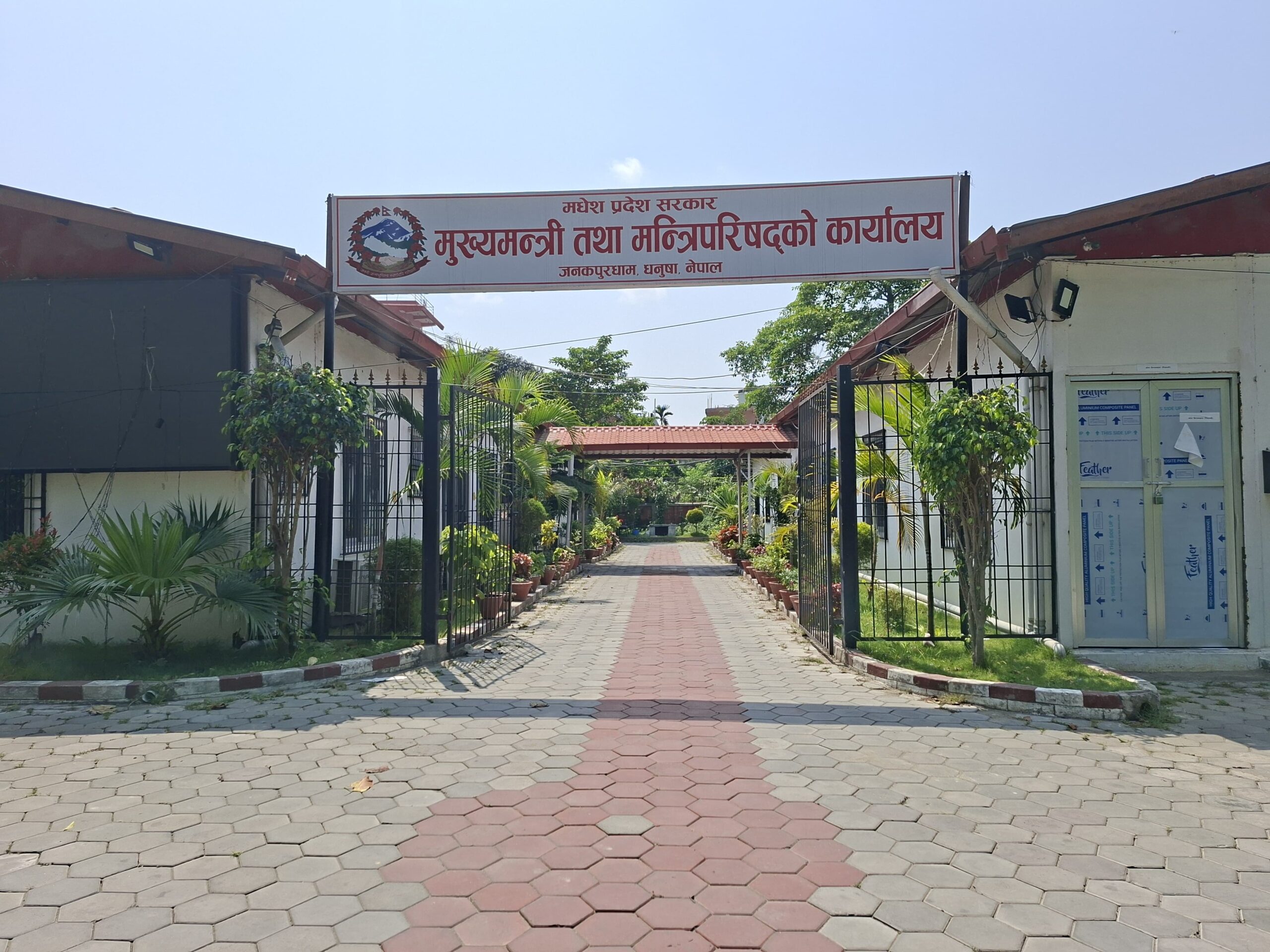
The expenditure of the Office of the Chief Minister and Council of Ministers is the lowest at 37.06 percent. Out of the Rs 473.3 million allocated for the office, only Rs 175.4 million has been spent.
The fact that the office that leads the province government and coordinates between ministries has the lowest expenditure raises questions about the role of political and administrative leadership in budget implementation.
Impact of political instability
Economist Bhogendra Jha says that considering the impact of recent political developments, the expenditure of the current fiscal year cannot be called completely unnatural. However, he says that the low expenditure of even the current budget indicates a problem in the budget formulation and allocation process itself.
“The impact of political developments has fallen on budget implementation,” Jha says, “but the inability to spend even the current budget raises questions about the budget formulation process and allocation.”
According to him, it can be considered satisfactory only if more than 75 percent of the allocated budget is spent. The expenditure of Madhesh Province is around 19 percentage points lower than that limit.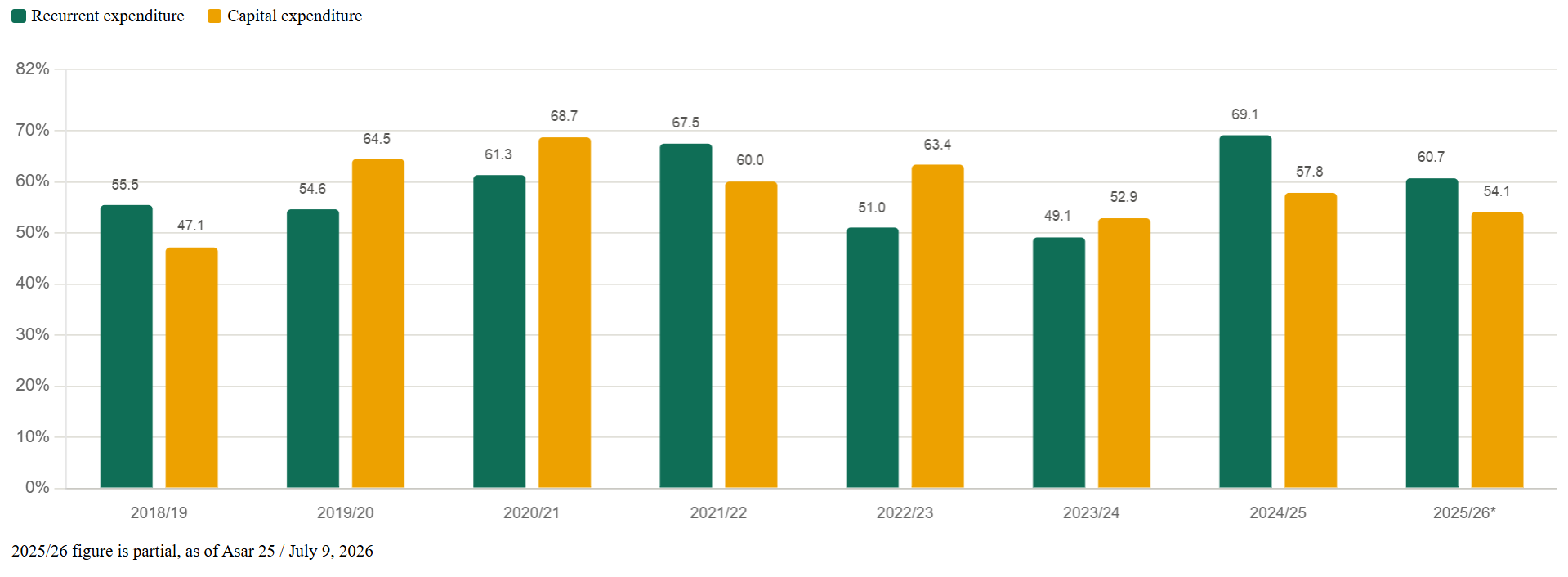
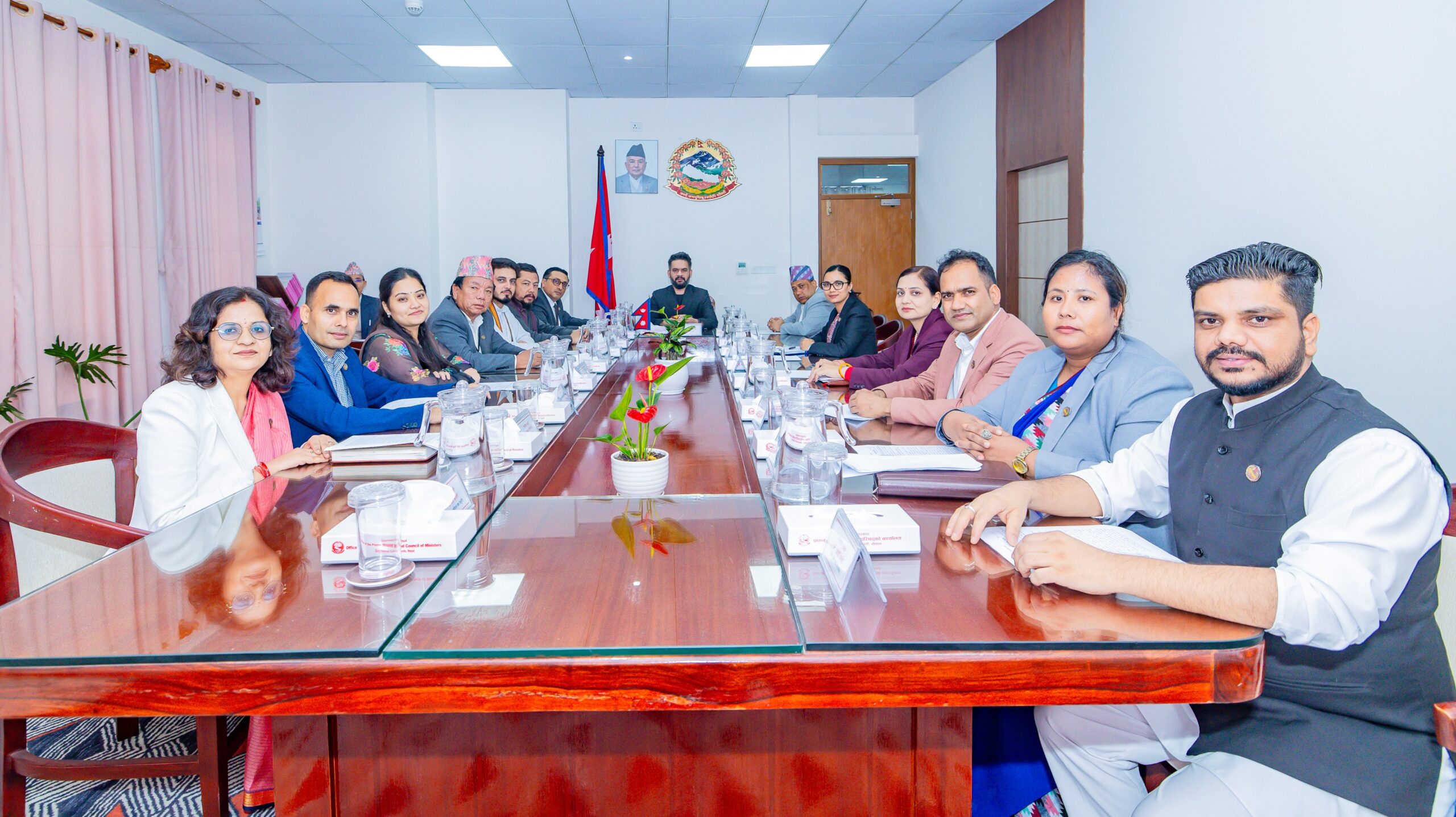
Government formation and reorganization, changes in ministers, and disputes between ruling parties have affected the work of approving programs, giving responsibilities to employees, advancing the contract process, and monitoring projects.
However, Jha says that political instability cannot be considered the only reason for weak expenditure. He states that the tendency to include projects in the budget that do not have preparation for implementation, to not ensure sources, and to select projects based on political access is equally responsible. “The non-expenditure of the budget is also linked to planning formulation and the willpower of the political parties participating in the government,” he added.
‘Conflict of interest in budgeting’
Former Finance Minister Sanjay Kumar Yadav says that problems in implementation arise when the budget is made by prioritizing political and personal interests over public needs.
He states that when interests dominate from project selection to budget mobilization, a large amount cannot be spent even by the end of the fiscal year. He says that the tendency to include programs for cheap popularity without paying attention to their sources, preparation, and implementation capacity has brought problems.
“The way the budget has come now by integrating fragmented plans will bring problems later,” Yadav says, “but instead of thinking about that, the government is leaning toward gaining cheap popularity.”
Another former finance minister, Shailendra Sah, says that before formulating the budget, the source and implementation must be ensured.
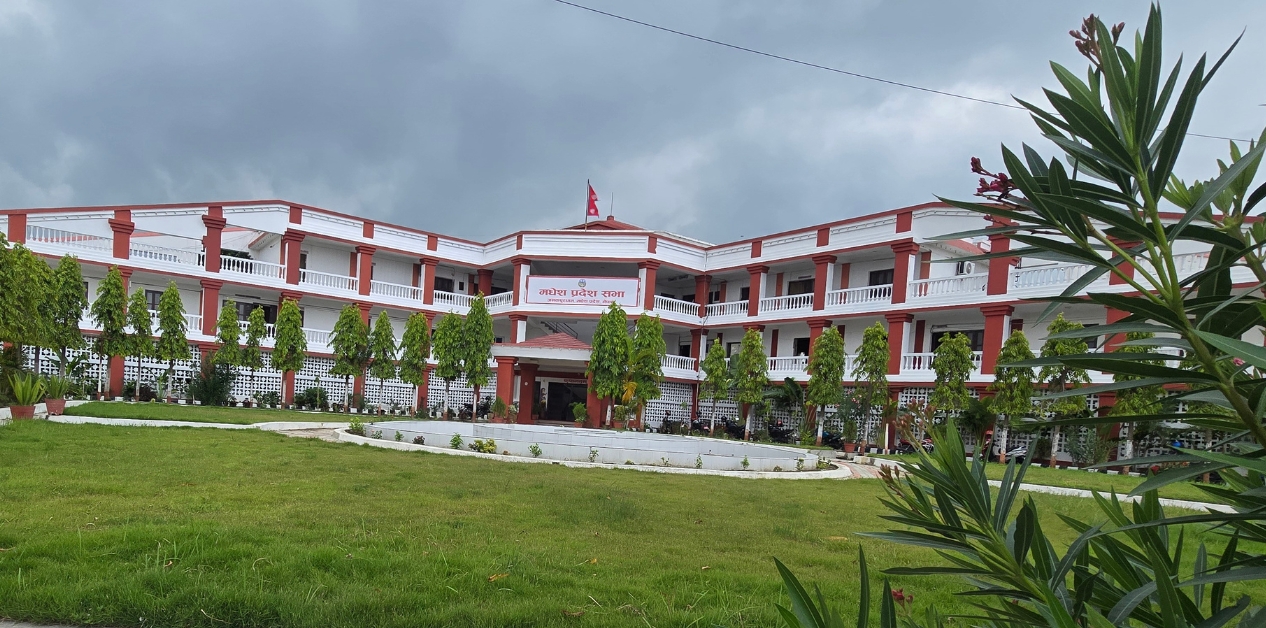
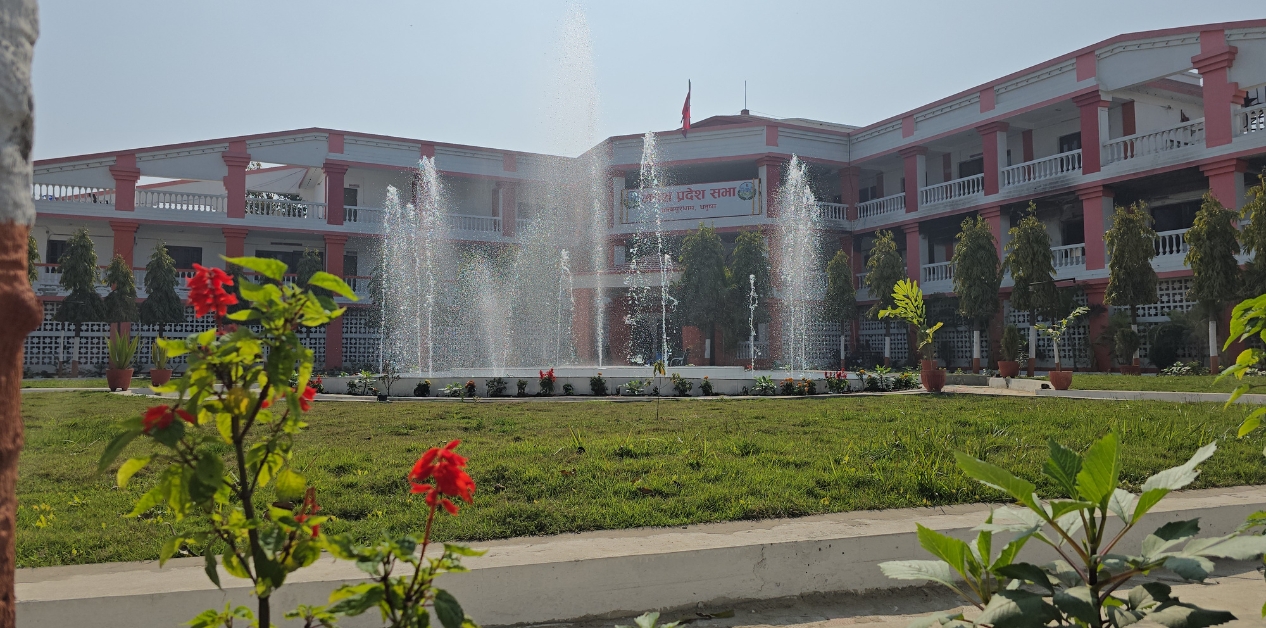
Madhesh Province Assembly Building. Photos: Birendra Raman
“If plans are made by ensuring the source of the budget, problems will not arise from mobilization to expenditure,” Sah says, “but if interest is hidden in budget formulation itself, its impact is seen in expenditure as well.”
He says that the practice of placing plans based on political access, including projects in the budget that have not had feasibility studies and giving more programs than the capacity of the implementing agency, weakens expenditures.
Finance minister says government spending exceeded expectations
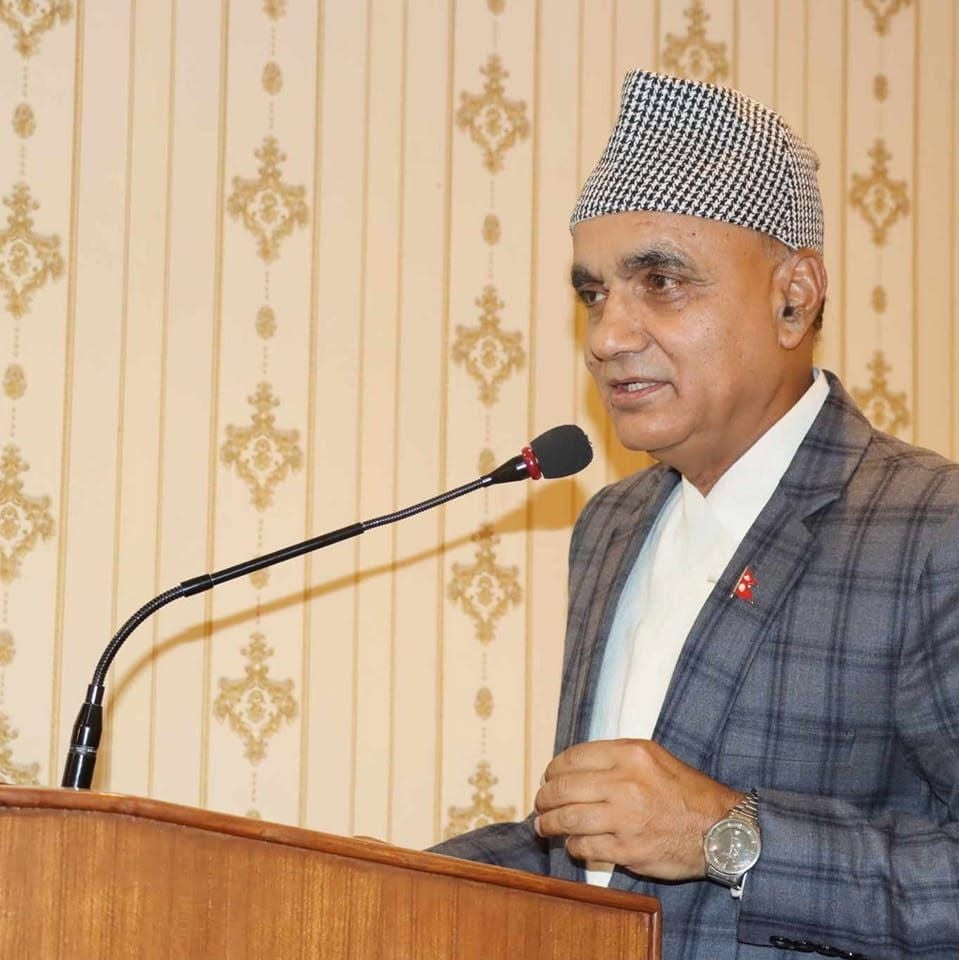
Finance Minister Yubraj Bhattarai, however, claims that based on the state of available sources and the budget, the expenditure was higher than expected.
According to him, the budget of the province was large compared to the estimated income and available sources. He states that due to sources not being ensured, it was not possible to implement all the allocated programs.
“This was a deficit budget. We tried to tighten expenditure a lot,” Finance Minister Bhattarai says, “when it is a deficit budget, it cannot be expected that all the allocated amount will be spent.”
He says that expenditure on low-priority programs, including training and seminars, was controlled. He argues that the performance evaluation of the government should not be done by looking only at the expenditure percentage.
However, the statement of the finance minister that the budget could not be spent because it was a deficit budget and sources were not ensured raises questions about the credibility of the budget formulation itself. If the size of the budget were increased by estimating sources that would not be available, the allocated plans run the risk of not being implemented from the beginning.