Kathmandu
Thursday, June 11, 2026





From Lionel Messi's possible farewell and Cristiano Ronaldo's final chapter to a record 48-team field and major off-field controversies, this is the World Cup at a glance
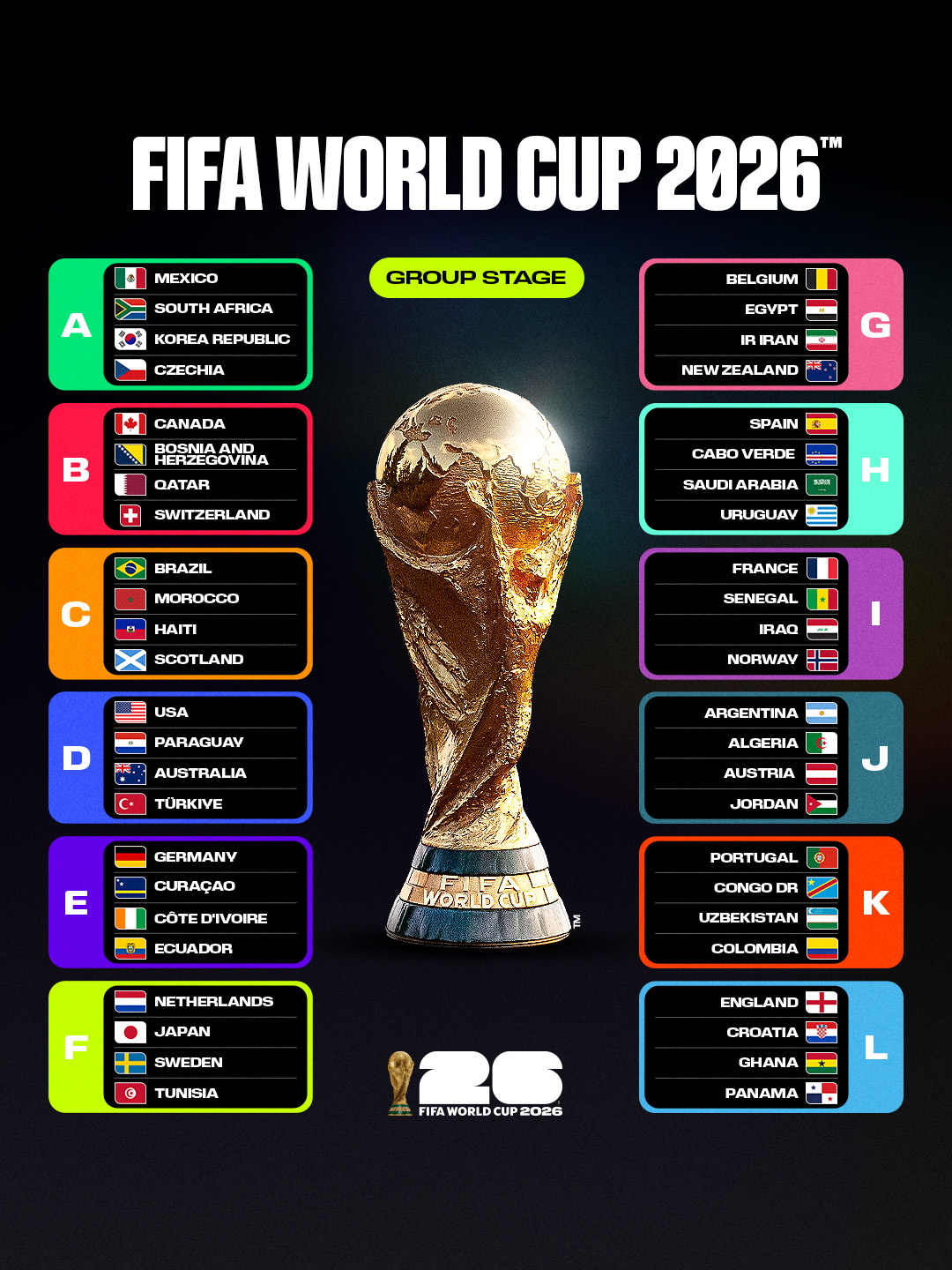
KATHMANDU: The 2026 FIFA World Cup, the 23rd edition of the sport’s most watched global tournament, kicks off on June 11, 2026 and runs through July 19.
Jointly hosted by three nations — the United States, Canada, and Mexico — the tournament is the largest in World Cup history, featuring 48 teams competing across 16 cities in 104 matches over 39 days.
For Nepali fans, matches are primarily scheduled between 12:45 AM and 9:45 AM Nepal Standard Time (NST), requiring late-night and early-morning viewing. Himalaya Sports HD television channel and DGO mobile application hold the official broadcasting rights in Nepal.
Who are the favourites? Which teams are making history? Why is this World Cup different? Here’s a Nepal News’ comprehensive guide to the largest tournament football has ever seen.
When exactly does the 2026 FIFA World Cup begin, and what time should Nepali fans keep in mind?
The tournament officially begins on June 11, 2026, with the opening match between hosts Mexico and South Africa at the historic Estadio Azteca in Mexico City. For viewers in Nepal, which observes Nepal Standard Time at UTC plus 5 hours and 45 minutes, the opening match kicks off at 12:45 AM on June 12 (Nepali date).
This time difference means most group stage matches fall in the late-night to early-morning slot for Nepali audiences, with kick-off times typically ranging from 12:45 AM to 9:45 AM NST depending on the venue. The tournament final is scheduled for July 19 at MetLife Stadium in East Rutherford, New Jersey, which translates to 12:45 AM NST on July 20 in Nepal.
Fans across the country are encouraged to check confirmed local times rather than US Eastern time listings, as the date-and-time gap means what is a Sunday afternoon in New York is already Monday morning in Kathmandu.
How many teams are participating, and how does this compare to previous editions?
For the first time in the tournament’s history, 48 national teams are competing in the FIFA World Cup, marking a significant expansion from the 32-team format that had been in place since the 1998 edition in France. Before that, the tournament featured 24 teams from 1982 to 1994, and just 16 before the first expansion.
The three host nations — the United States, Canada, and Mexico — qualified automatically, while the remaining 45 teams earned their berths through two years of continental qualification campaigns across FIFA’s six confederations. The expanded field plays out in 12 groups of four teams each, compared to eight groups of four in the previous 32-team format.
A total of 104 matches will be played across the tournament, the highest number in World Cup history, making this edition by a wide margin the most expansive football competition the world has ever staged.
What has fundamentally changed about the tournament format in this edition?
The 48-team format introduced several structural changes that alter how the tournament progresses from the group stage to the final. After the group stage, the 32 qualifying teams — the top two from each of the 12 groups plus the eight best third-placed finishers — advance into a brand-new knockout stage called the Round of 32.
This is an entirely new round that did not exist in any previous edition. The Round of 32 runs from June 28 onward before the field narrows to the Round of 16, then the quarterfinals, semifinals, and the final.
Additionally, FIFA introduced a bracketing pathway designed to keep the top-seeded teams on separate sides of the draw, meaning the highest-ranked teams should not theoretically meet until the later stages if they each win their groups.
France, ranked first, and defending champion Argentina are drawn into opposite pathways. The same separation applies to Spain (ranked second) and England (ranked fourth).
Who are the players the world will be watching most closely during this tournament?
Several players carry the weight of global expectation into the 2026 edition. Kylian Mbappe of France is one of the tournament’s most anticipated figures — the reigning world-class forward leads a powerful French squad alongside Ousmane Dembele, Rayan Cherki, and William Saliba.
Erling Haaland of Norway brings the tournament’s most prolific goalscoring record from club football, having finished as the top scorer in UEFA qualifying with 16 goals. Lamine Yamal of Spain, still only a teenager but already one of the most electrifying players in world football, will be watched closely as his country enters the competition as a favourite.
1670434428.webp)
Kylian Mbappe of France
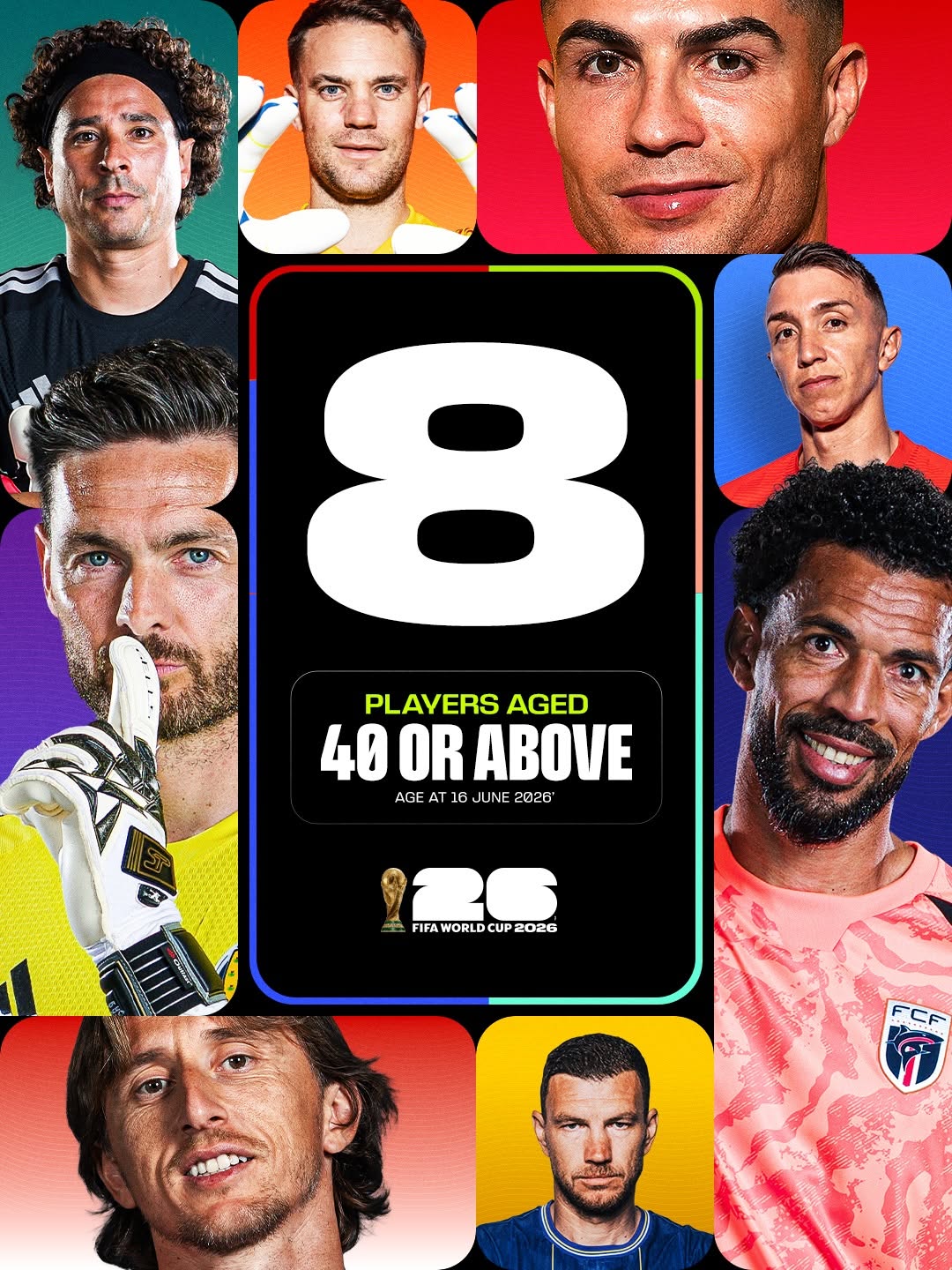
Vinicius Junior of Brazil leads a South American squad desperate to end a long wait for the trophy. Cristiano Ronaldo of Portugal, now in what is almost certainly his final World Cup, adds a chapter-closing narrative.
Harry Kane of England and Bruno Fernandes of Portugal also carry enormous expectations for their respective nations.
Which is considered the Group of Death at this tournament?
With 12 groups instead of the usual eight, identifying the single most fearsome group is more nuanced, but most analysts and FIFA rankings point to Group I as the tournament’s unofficial Group of Death.
It contains France, Senegal, Norway, and Iraq — a combination that produces the highest average FIFA ranking of any group at the tournament. France, ranked first in the world, are among the outright title favourites. Senegal are considered one of Africa’s strongest teams, boasting players including Sadio Mane, Pape Matar Sarr, and Iliman Ndiaye.
Norway, featuring Erling Haaland and Martin Odegaard, are widely regarded as genuine dark horse contenders. Iraq are returning to the World Cup after a 40-year absence and are the group’s least-fancied side.
1655111544.jpeg)
Erling Haaland
All three of the other teams could realistically win any given match against each other, meaning none of France, Senegal, or Norway can take qualification for granted. The France-Norway clash — potentially pitting Mbappe against Haaland on the same pitch — is among the most anticipated group stage fixtures.
Which teams are being tipped as the dark horses of the 2026 World Cup?
A dark horse is a team that enters without top-tier status but has a realistic chance of making a deep, unexpected run. Several teams fit that description in 2026. Norway are perhaps the most commonly cited, given Haaland’s ability to carry a team on his own and their impressive qualifying campaign in which they eliminated Italy.
Colombia, built around the attacking talent of Luis Diaz, Jhon Duran, and the experienced James Rodriguez, enter the tournament with ambition and depth. Morocco, despite no longer being complete outsiders after their 2022 semifinal run, remain outside the innermost circle of favourites and could once again advance deep into the knockout rounds.
Japan, who beat England at Wembley in March in a pre-tournament friendly, are considered genuine contenders to reach the quarterfinal stage for the first time.
Uruguay under Marcelo Bielsa, with a well-organised squad featuring Ronald Araujo, Manuel Ugarte, and Giorgian de Arrascaeta, are another team that could exceed expectations.
Which nations are making their first-ever appearance at the FIFA World Cup in 2026?
The expansion to 48 teams opened the door for nations that had never before qualified for a World Cup. Among the tournament’s debutants are Cape Verde, Curacao, Jordan, and Uzbekistan.
Curacao, the small Dutch Caribbean island territory, became the smallest nation by population ever to qualify for a FIFA World Cup.
Jordan qualified from the Asian confederation, marking a historic first for a country with a modest football tradition.
Uzbekistan, participating in the expanded Asian qualification rounds, also reached the global stage for the first time.
Cape Verde, a West African island nation with a population of fewer than 600,000 people, has steadily built a football reputation in recent years and their qualification represents a proud achievement.
These first-timers bring entirely new football cultures to the tournament and stand as perhaps the most visible proof that the expanded format is opening the World Cup to a broader world.
Which major footballing nations missed out on qualification?
The expanded 48-team field meant fewer traditional powerhouses would be absent, but notable exclusions still occurred. Italy, a four-time world champion, failed to qualify for the 2026 World Cup — their third consecutive absence from the tournament after also missing 2018 and 2022.
Italy lost to Bosnia and Herzegovina in a UEFA playoff final on penalties on March 31, 2026, completing an extraordinary collapse for a nation once synonymous with World Cup success.
The repeated failure of the Italian national team to qualify for consecutive editions has sparked serious conversation within the country about domestic football development, coaching structures, and the pipeline of talent from youth level to the senior squad.
Italy’s absence means the tournament proceeds without one of football’s all-time most decorated nations for the third straight edition — a fact that speaks to how significantly the competitive landscape of European football has shifted.
What is the visa controversy clouding this tournament?
The decision to host the 2026 World Cup primarily in the United States created significant complications arising from the Trump administration’s immigration and travel policies. A wide range of countries — including several that qualified for the tournament — found their players, officials, federation staff, journalists, and fans facing visa denials, delays, or severe restrictions.
Iran’s football federation was denied visas for senior officials ahead of the tournament draw in Washington, prompting the federation to boycott the ceremony entirely. Iraq’s forward Aymen Hussein was temporarily held upon arrival in the United States.
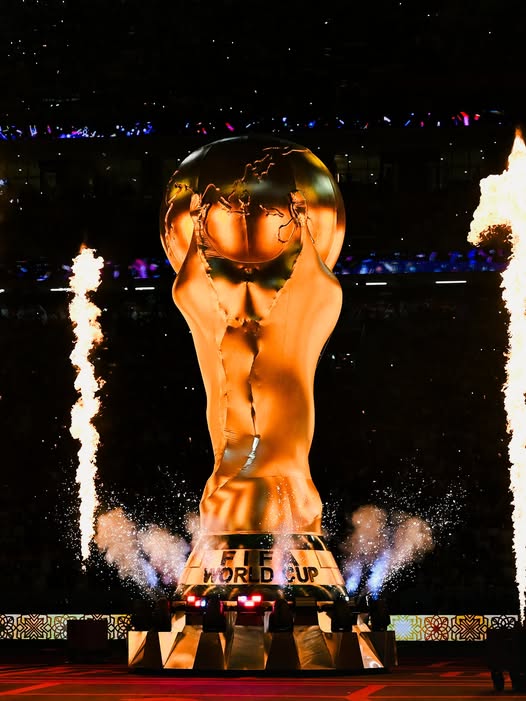
Opening ceremony of FIFA
The Iran squad was required to base itself in Mexico rather than the United States and could only enter the country on matchdays. Journalists from multiple countries reported single-entry visa restrictions or outright rejections.
Fans from Morocco and Nigeria faced widespread rejections despite holding match tickets. Critics described the situation as fundamentally at odds with the inclusive spirit of a global sporting tournament hosted in the name of football’s universality.
What happened with the Somali referee controversy?
Among the most discussed controversies before the tournament was the case of Omar Abdulkadir Artan, a 34-year-old Somali referee selected as one of FIFA’s 52 official match officials.
Artan was not only the best-rated male referee in Africa according to the Confederation of African Football for 2025 but was also set to make history as the first Somali official ever to referee at a World Cup.
He arrived at Miami airport with a valid US visa and all required documentation, only to be denied entry by US Customs and Border Protection on unspecified “vetting concerns.” Somalia is included on the United States government’s travel ban list.
FIFA confirmed in a formal statement that Artan would be unable to officiate at the tournament. The case drew widespread condemnation from human rights organisations and football governing bodies, who said it represented a personal injustice for Artan — who had worked in dangerous conditions in Mogadishu to reach football’s highest level — and a systemic failure of the host country’s obligations to a global tournament.
What is the economic scale of this World Cup, and what do participating teams earn?
The 2026 FIFA World Cup is the most financially significant sporting event in history by several measures. FIFA estimates revenues of approximately $8.9 billion from the tournament, contributing to a four-year cycle target of $13 billion.
The total prize fund stands at a record $871 million, representing a 65 percent increase over the $440 million distributed at the 2022 tournament in Qatar. Every qualifying nation receives a $10 million qualification payment and a $2.5 million preparation grant, guaranteeing even the earliest-eliminated teams a minimum payout of around $12.5 million.
The tournament champions will receive $50 million in prize money — up from $42 million in 2022. Runners-up earn $33 million. Teams eliminated in the Round of 32 take home $11 million and those exiting in the group stage still collect $9 million.
The prize money flows to national football associations rather than directly to players, and each federation distributes shares to the squad based on pre-arranged bonus agreements made before the tournament.
Are there financial controversies beyond the visa issues?
Yes. One significant financial controversy concerns taxation. Unlike in some previous World Cup editions where the host country negotiated comprehensive tax exemption agreements for participating nations, the majority of teams at the 2026 World Cup are required to pay US federal taxes on the prize money awarded by FIFA.
Many national federations will effectively face double taxation — once in the United States and again in their home countries — on their earnings from the tournament.
Additionally, FIFA introduced dynamic ticket pricing at a World Cup for the first time, a system where prices adjust in real time based on demand.
Critics argued the approach made attending the most popular matches prohibitively expensive, particularly for fans from lower-income countries who had already cleared the visa hurdle.
The combination of visa barriers, taxation issues, and expensive ticketing led some analysts to describe the 2026 edition as the most commercially exclusive World Cup in the tournament’s history.
What is the broader history of the FIFA World Cup leading up to this edition?
The FIFA World Cup was first held in 1930 in Uruguay, where the host nation won the inaugural title. The tournament has been held every four years since, with the exception of the 1942 and 1946 editions, which were cancelled due to the Second World War.
Brazil holds the record for the most titles with five, followed by Germany and Italy with four each, and Argentina and France with three each. The tournament expanded from 16 to 24 teams in 1982, then to 32 teams in 1998, and now to 48 teams in 2026.
The 2022 edition in Qatar marked the first time the tournament was held in the Middle East. Argentina, led by Lionel Messi, defeated France in the final on penalties to lift the trophy, ending Messi’s long wait for a winner’s medal and triggering scenes of celebration across the footballing world.
Argentina enter 2026 as defending champions and among the title favourites, with Messi’s participation adding an emotional layer to what is widely expected to be his final World Cup.
Who are the outright favourites to win the 2026 World Cup?
According to bookmakers and football analysts, the leading contenders entering the tournament are Spain, France, England, Brazil, Argentina, Portugal, and Germany. Spain enters ranked second in the FIFA world rankings and come with a young, technically gifted squad that includes Lamine Yamal.
France, despite some squad injury concerns, are among the strongest overall sides given their blend of attacking talent and defensive depth. Argentina, as defending champions, carry the extra weight of expectation that comes with holding the title.
Portugal’s case for the trophy rests on a midfield that many consider the strongest in the world, featuring Bruno Fernandes, Joao Neves, and Vitinha alongside a forward line with both experience and youth.
England, despite not winning a major international trophy since 1966, have the depth and squad quality to make a serious run in the knockout rounds.
Brazil, with Vinicius Junior and a renewed attacking core, are determined to end what has become a painfully long barren stretch for the sport’s most trophy-laden nation historically.
What are the other controversies and issues surrounding this edition?
Beyond the visa saga and taxation concerns, the 2026 World Cup has generated debate on several other fronts. The tournament’s expanded structure has drawn criticism from those who argue the 48-team field dilutes the quality of group-stage football, as many matches will involve significant mismatches between elite nations and smaller debutants.
Others counter that inclusion is itself a football value and that the format creates more meaningful opportunities for football development across smaller confederations. The simultaneous hosting across three large countries created logistical difficulties, with FIFA coordinating across 16 cities, multiple time zones, and differing entry requirements for fans moving between the three host nations.
Italy’s third consecutive absence from the tournament also sparked its own controversy within European football. Concerns about stadium preparation conditions arose in the lead-up to the tournament.
And the political backdrop of the Trump administration’s immigration stance cast a sustained shadow over a tournament that FIFA brands, in its own messaging, as a celebration of global unity and inclusion.