Kathmandu
Friday, June 26, 2026





A century-long journey from football’s arrival in Rana-era Nepal to FIFA recognition, regional milestones, corruption scandals, court battles and state intervention has culminated in the June 24, 2026 suspension of ANFA.
KATHMANDU: Nepal’s football story began as a tale of growth and aspiration: the founding of the national association, entry into Asian and global football bodies, landmark victories and the rise of domestic tournaments.
But, ANFA’s history has also been marked by chronic governance disputes, corruption allegations, court interventions and clashes with the state. Those tensions deepened in recent years over finances, elections and autonomy, finally pushing Nepali football into uncharted territory when FIFA suspended ANFA on June 24, 2026, over third-party interference.
This timeline traces the key moments that shaped Nepali football’s governing body and explains how decades of sporting progress and recurring governance turmoil led to its gravest crisis yet.
1921: Football is introduced in Nepal during the Rana regime, brought in by young players who had learned the game abroad.
1934: The Ram Janaki Cup, one of Nepal’s earliest organized football tournaments, begins.
1947: A nationwide pro-democracy movement disrupts football activity across the country for a period.
1948: The Tribhuvan Challenge Shield knockout tournament is established.
1950: Following the restoration of democracy, the Nepal Police force wins consecutive Tribhuvan Shield titles.
1951: The Nepal Football Association, later renamed the All Nepal Football Association, is formally established, with General Nar Shumsher J.B.R. as its first chairman, Dr. Trailokya Nath Upreti as secretary, and Janaki Prasad as treasurer.
1951: The first Tribhuvan Challenge Shield under the new association is won by the Jaleshwor-11 team.
1954: ANFA becomes a founding member of the Asian Football Confederation.
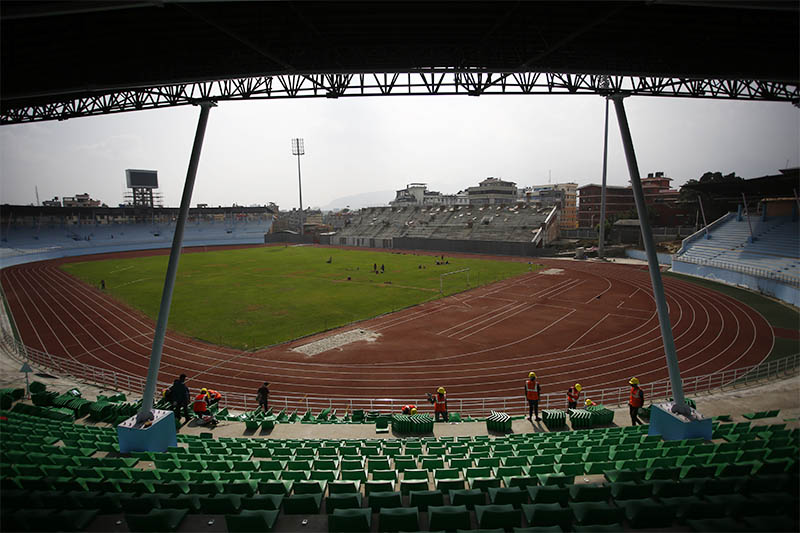
Dasarath Rangasala stadium/Photo: Skanda Gautam
1956: Dasharath Rangashala, later Nepal’s main international football venue, is built.
1963: Nepal plays its first international match away from home at the Aga Khan Gold Cup.
1972: ANFA is formally affiliated with FIFA.
October 13, 1972: Nepal plays its first official FIFA-recognized international match, losing 2-6 to China at the Merdeka Tournament in Malaysia.
1982: Y.B. Ghale scores Nepal’s first international goal, against the Philippines at the King’s Cup in Bangkok.
1984: Nepal qualifies for the AFC Asian Cup, its only appearance in the tournament to date.
1984: Nepal wins a home tournament gold medal, beating Bangladesh 4-2 in the final.
December 1993: Nepal enters the FIFA World Rankings for the first time, peaking at 124th.
1993: Nepal wins South Asian Games football gold under captain Raju Kaji Shakya, defeating India on penalties.
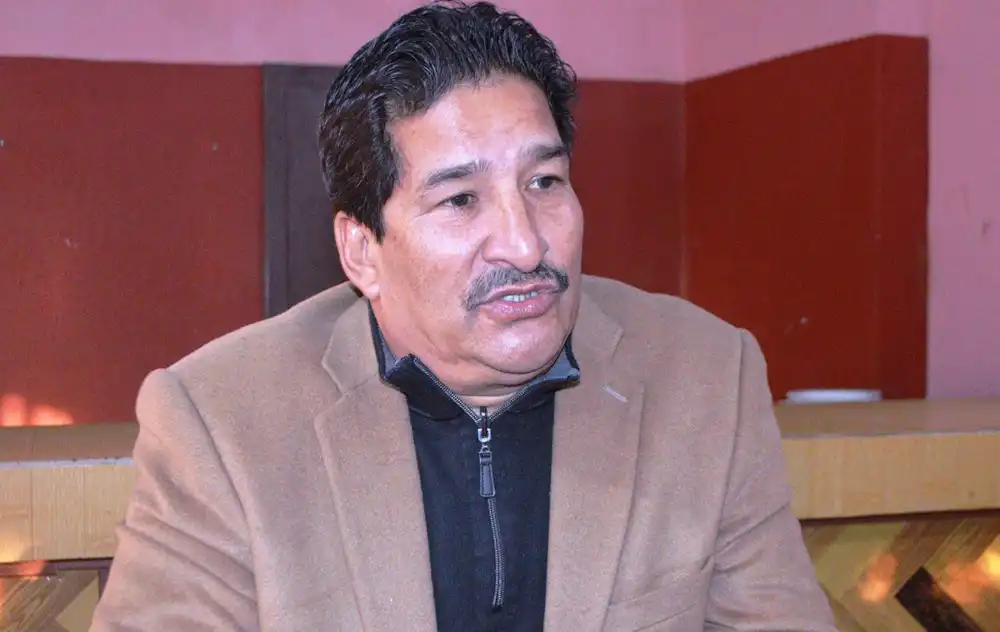
Ganesh Thapa/ File photo
1995: Ganesh Thapa becomes president of ANFA, beginning a tenure that would last roughly two decades.
1997: ANFA becomes affiliated with the South Asian Football Federation.
1999: Nepal faces Ghana’s under-23 side at the Bangabandhu Cup, one of its rare matches against a team from outside Asia.
2000: The ANFA Complex, including its headquarters and a 6,000 capacity stadium, is built in Satdobato, Lalitpur.
2001: A dispute between a government-backed faction and a FIFA-backed faction over control of ANFA begins, eventually leading to Nepal’s suspension from international competition for roughly two years.
2002: Nepal records some of its best ever World Cup qualifying results, beating Macao and Iraq during the qualification campaign for the 2002 FIFA World Cup.
January 2003: Nepal plays its 100th international match, against Bangladesh at the SAFF Championship.
2003: Nepal suffers a 0-16 defeat to South Korea during AFC Asian Cup qualifying, among the heaviest losses in its international history.
2009: According to FIFA’s later disciplinary findings, Ganesh Thapa solicits and accepts a cash payment connected to that year’s FIFA Executive Committee election at the AFC Congress.
2011: FIFA later finds that Thapa again solicits and accepts payment in connection with the 2011 FIFA Executive Committee election.
July 13, 2012: An audit of AFC’s finances by PricewaterhouseCoopers is completed, later leaked, revealing payments from a corruption-accused AFC president to Thapa’s son.
2012: FIFA selects ANFA for a KPMG Central programme financial audit covering the year, which produces unsatisfactory findings of unappropriated cash movements.
2013: FIFA’s ethics committee secretariat opens an investigation into ANFA’s finances based on the 2012 audit findings.
September 2014: Parliament’s Public Accounts Committee directs Nepal’s anti-corruption body, the CIAA, to investigate Thapa following a complaint from ANFA’s own vice presidents.
October 2014: Thapa steps down as ANFA president, beginning what is described as a four-month voluntary suspension.
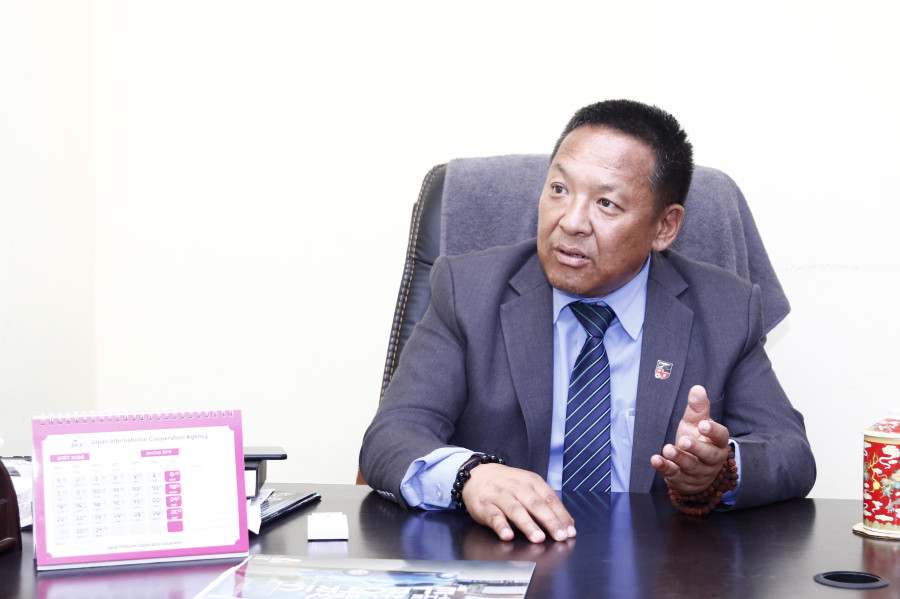
Karma Tsering Sherpa
October 22, 2014: ANFA vice presidents Karma Tsering Sherpa and Bijay Narayan Manandhar write to FIFA Secretary General Jerome Valcke and ethics chief Michael Garcia seeking details of the audits.
October 24, 2014: Reuters reports that senior ANFA officials say they had no knowledge of the FIFA-ordered audits into the association.
Early 2015: Thapa returns to the ANFA presidency after his four-month voluntary suspension ends.
April 16, 2015: FIFA’s eventual ten-year ban on Thapa is later dated by FIFA as having taken effect from this day.
April 25, 2015: A major earthquake strikes Nepal, badly damaging Dasharath Stadium and setting back its use for years.
September 2015: The CIAA puts its domestic corruption case against Thapa on hold, citing insufficient evidence.
November 16, 2015: FIFA’s Ethics Committee publicly announces a ten-year ban and a fine of 20,000 Swiss francs against Thapa for bribery, corruption, and related violations of the FIFA Code of Ethics.
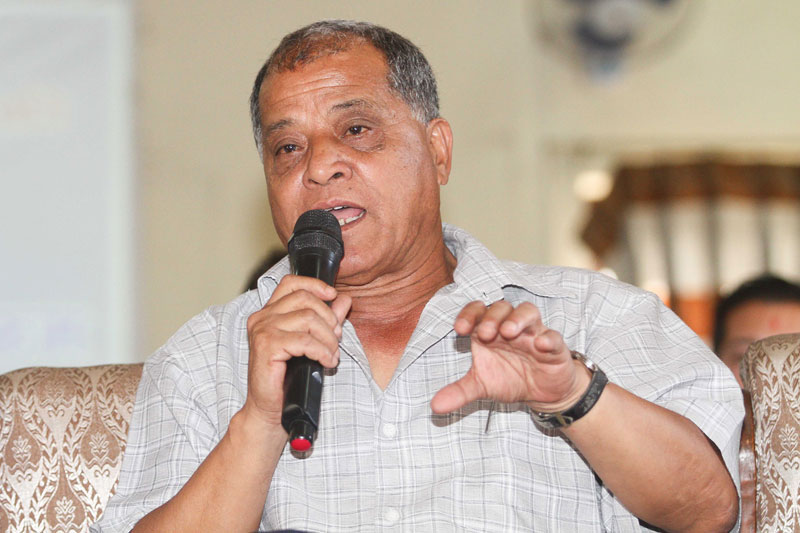
Narendra Lal Shrestha/File photo
2016: Acting president Narendra Lal Shrestha leads ANFA following Thapa’s ban, after the previous acting president, Lalit Krishna Shrestha, dies after being electrocuted.
October 21, 2016: The Patan High Court clears the way for ANFA to proceed with a presidential election.
October 24, 2016: ANFA holds its presidential election, contested between Narendra Lal Shrestha and Karma Tshiring Sherpa.
2016: Nepal wins the AFC Solidarity Cup, defeating Macau 1-0 in the final held in Bhutan, its first continental title.
May 5, 2018: Karma Tsering Sherpa is elected ANFA president, running on a “Change ANFA” platform alongside Pankaj Bikram Nembang, who is elected vice president.
January 2021: ANFA’s revised statutes are sanctioned, with Kiran Rai serving as coordinator of the drafting committee.
March 2021: FIFA imposes a financial control restriction on ANFA, citing irregular cash movements and a lack of transparency, beginning a four-year period of oversight.
2021: Nepal reaches its first ever SAFF Championship final, losing 0-3 to India in the Maldives.
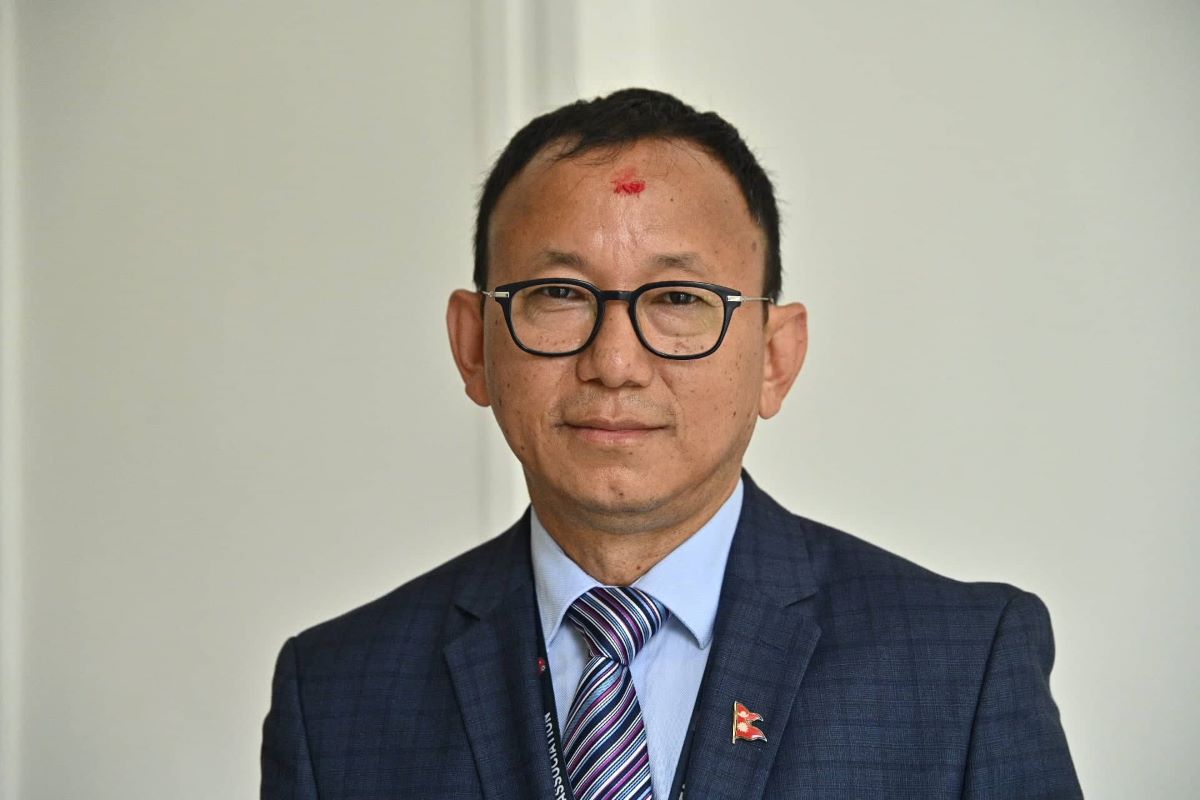
Pankaj Bikram Nembang/File photo
June 21, 2022: Pankaj Bikram Nembang is elected ANFA president, defeating incumbent Karma Tsering Sherpa 45 votes to 39 at the 21st ANFA Ordinary Congress in Budhanilkantha.
June 22, 2022: Nembang and the newly elected executive committee are sworn in at the ANFA Complex in Satdobato.
2019: Nepal narrowly misses qualification for the 2019 AFC Asian Cup after drawing with the Philippines and Yemen and losing twice to Tajikistan.
2019: Nepal competes in the second round of 2022 FIFA World Cup qualifying against Australia, Kuwait, Jordan, and Chinese Taipei, recording a single win, 2-0 away to Chinese Taipei.
September 11, 2023: A group of 49 dissatisfied ANFA members, including former officials and club representatives, files a no-confidence motion against President Nembang and General Secretary Kiran Rai.
November 9, 2023: ANFA holds an Extraordinary Congress in Hetauda, where Nembang survives the no-confidence motion by 52 votes to 1, with one vote invalid.
October 2024: ANFA is named the AFC’s Member Association of the Year in the gold category for 2024.
Early July 2025: FIFA’s Governance, Audit and Compliance Committee lifts the four-year financial control restriction imposed on ANFA in March 2021.
April 15, 2025: Ganesh Thapa’s ten-year FIFA ban officially comes to an end.
April 17, 2025: Thapa publicly announces that his ban has been lifted.
April 17, 2025: ANFA’s Disciplinary Committee, invoking its own statute, issues a fresh decision barring Thapa from football activity, recorded under the Nepali calendar date Baisakh 4, 2082.
April 29, 2025: ANFA’s Ethics Committee issues a parallel decision under Article 24(3)(e) of the ANFA statute, recorded as Baisakh 16, 2082, reinforcing the restriction on Thapa.
May 9, 2025: Despite an interim court order, Thapa is denied entry to ANFA’s General Assembly.
May 13, 2025: Thapa files a writ petition at the Patan High Court challenging ANFA’s restriction, recorded as Baisakh 31, 2082.
August 25, 2025: The Patan High Court rules in Thapa’s favor, finding ANFA’s renewed restriction unlawful since FIFA’s own sanction period had already expired.
August 28, 2025: Coverage of the court’s full written verdict confirms ANFA must not obstruct Thapa, though ANFA separately sends a notice to the club that had nominated him.
October 12, 2025: Nepal beats Laos 1-0 in the first leg of the preliminary round of joint 2026 World Cup and 2027 Asian Cup qualifying.
October 17, 2025: Nepal draws 1-1 with Laos in Vientiane, advancing 2-1 on aggregate to Round 2 of qualifying.
November 16, 2025: Nepal opens Round 2 of qualifying with a 4-0 away defeat to the United Arab Emirates in Group H.
November 21, 2025: Nepal draws 2-2 with Yemen at Dasharath Stadium in Kathmandu.
December 2025: ANFA’s executive committee decides to hold its election nearly three months ahead of schedule, before its four-year term was due to end in June 2026.
January 16, 2026: FIFA and the AFC send a joint letter to ANFA confirming the early election plan has their approval and warning against outside interference.
January 18, 2026: The Patan High Court issues an interim order directing that all election-related activity remain at status quo pending a final decision.
February 11, 2026: The originally planned date for ANFA’s Ordinary Congress and executive election in Jhapa, later postponed.
February 2026: The National League and the Martyrs’ Memorial Women’s League are postponed because of visa issues for foreign players and scheduling conflicts.
March 13, 2026: FIFA and the AFC send an earlier warning letter to ANFA regarding third-party interference, later cited by ANFA in its defense.
March 24, 2026: The National Sports Council issues ANFA a 24-hour ultimatum demanding clarification on why disciplinary action should not follow.
March 25, 2026: The National Sports Council suspends ANFA’s entire executive committee for three months under Section 29(2) of the Sports Development Act.
March 26, 2026: The council’s suspension decision is widely reported, and ANFA issues a formal clarification rejecting the allegations.
March 27, 2026: The rescheduled ANFA election date in Jhapa is postponed because of the council’s suspension.
March 2026: The Nepal Football Players Association stages protests demanding a clear and stable league schedule.
March 2026: Players at several A-Division clubs go on hunger strike over repeated league postponements.
April 5, 2026: FIFA and the AFC send a joint letter giving the National Sports Council seven days to revoke its suspension of ANFA.
April 6, 2026: Nepali media widely report the FIFA-AFC ultimatum and its seven-day deadline.
April 9, 2026: Reports describe Nepali football as effectively paralyzed, with international participation and funding both at risk.
Mid-April 2026: FIFA and the AFC hold a virtual meeting with Nepali authorities, reiterating the suspension warning to the National Sports Council.
April 12, 2026: Nepal’s scheduled FIFA Series fixture against Congo in Thailand is thrown into doubt and the team ultimately withdraws.
April 15, 2026: Nepal’s second scheduled FIFA Series fixture in Thailand is similarly affected by the withdrawal.
May 2026: Nearly two dozen ANFA office bearers, committee members, and staff are reportedly placed on a government travel watch list tied to a financial investigation.
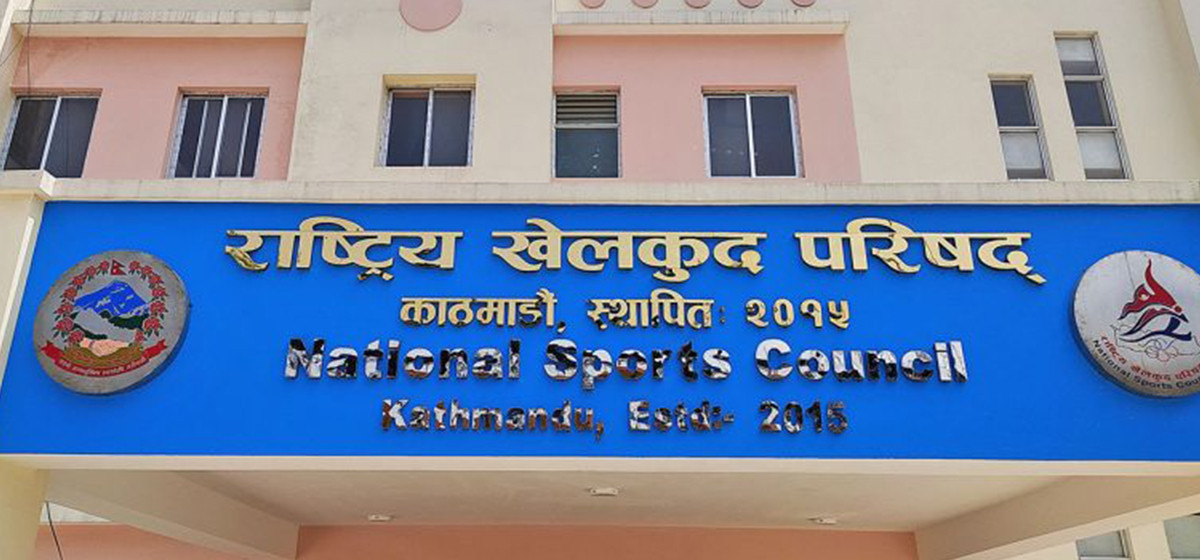
May 15, 2026: The National Sports Council formally writes to FIFA and the AFC revoking its March 25 suspension under Section 29(3) of the Sports Development Act.
May 16, 2026: Nepali media confirm ANFA’s domestic suspension has been lifted following a ministerial-level meeting led by Education and Sports Minister Sasmit Pokharel.
May 25, 2026: The SAFF Women’s Championship begins in Goa, India, with Nepal’s women’s team taking part after the suspension threat was cleared.
June 5, 2026: FIFA and the AFC send a letter to ANFA stating that several directives from the March 25 decision remain unresolved despite the council’s reversal, and set a June 11 deadline for full written confirmation.
June 6, 2026: The SAFF Women’s Championship concludes in Goa and Nepal performs dismally.
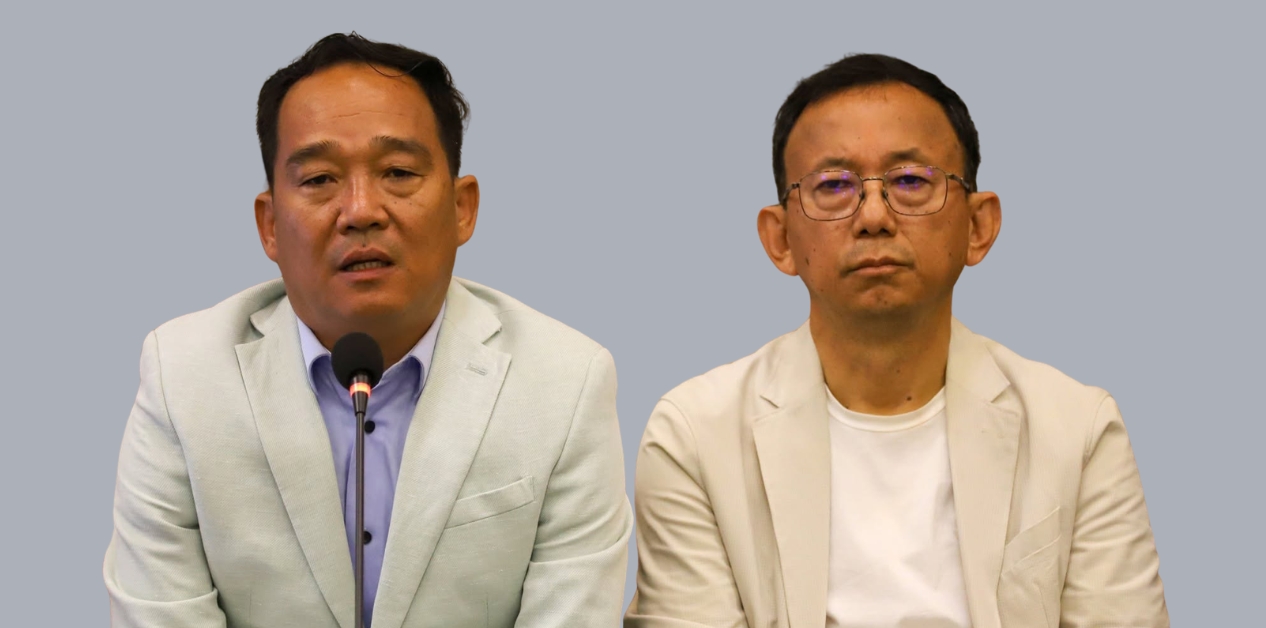
Respectively, ANFA General Secretary Kiran Rai and President Pankaj Bikram Nembang. Photo Source: ANFA’s Facebook
June 9, 2026: ANFA President Pankaj Bikram Nembang and General Secretary Kiran Rai are stopped at Tribhuvan International Airport and barred from travelling to Mexico and the United States for events linked to the FIFA World Cup.
June 11, 2026: FIFA’s deadline passes for the National Sports Council to confirm in writing that every element of its March 25 decision has been revoked.
June 11, 2026: The 2026 FIFA World Cup formally opens in North America.
June 18, 2026: The four-year term of the Nembang-led ANFA executive committee was originally due to end on this date, without a completed election having taken place.
June 24, 2026: The FIFA Council Bureau suspends ANFA’s membership with immediate effect, citing a serious and unresolved violation of FIFA’s statutes on third-party interference.