Kathmandu
Sunday, July 26, 2026





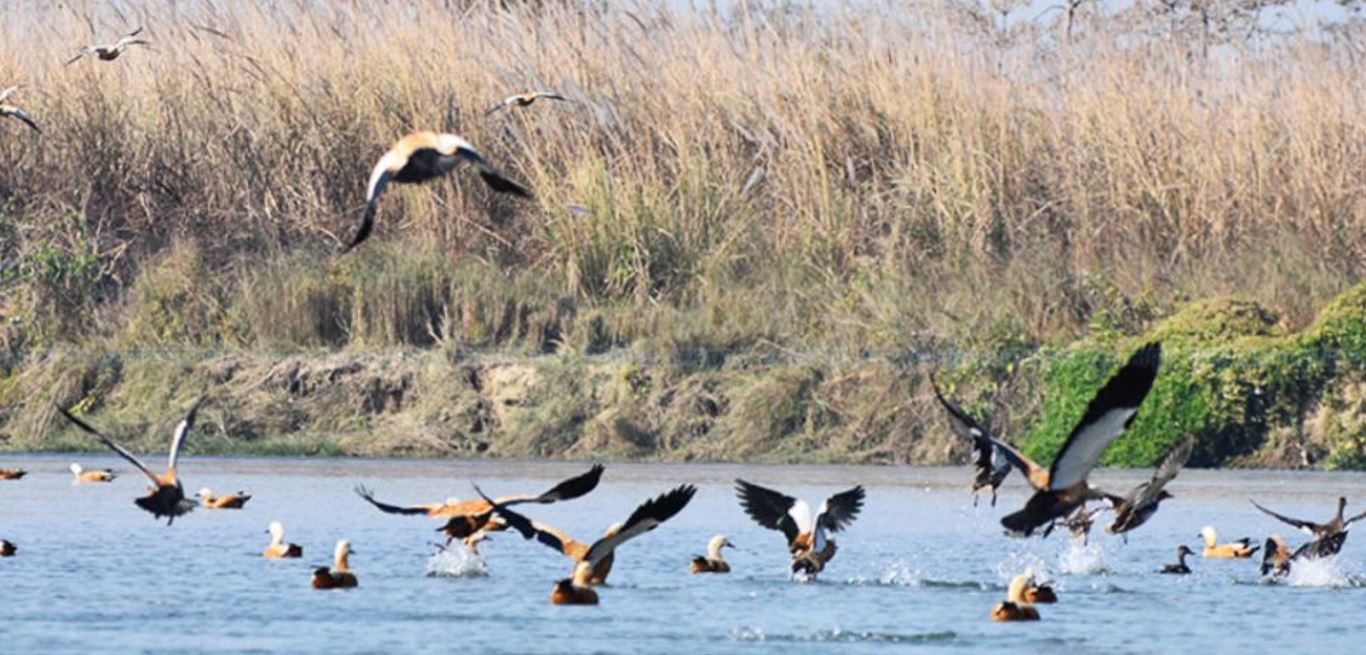
CHITWAN: Migratory birds that travelled here from trans-Himalayan countries to escape harsh winter are returning to their original habitat.
The Siberian birds which usually come here at the onset of the winter (October) are flying back now with the steady rise in temperature.
Birds belonging to the duck species come to Chitwan National Park and its surrounding wetland areas to avoid harsher winter.
According to Basu Bidari, President of the Nepal Ornithological Society, Bagmati Province, the birds that started returning last week of February will leave here by the end of March.
Birds come here from countries, including Mongolia, Russia, Malaysia, Uzbekistan, Pakistan, and China. The ducks escaping the cold had reached Chitwan via the Kaligandaki Valley, it is stated.
Duck species such as Kyangkurung, Chhakewa (Ruddy Shelduck), Suiropuche (Pintail), Malak (Mallard), Khadkhade (Gadwall), Bijula, Gairi, along with hawks and kites, come here in search of warmer climate.
Bidari mentioned that forest-dependent species like Chachar, Chuiya, and Bhardwaj also come here in the winter season.
These birds settle along the river banks and lakes here. According to him, 12 to 15 species of ducks from outside Nepal enjoy the Narayani River, Rapti River, and Riukhola.
Around 150 species of migratory birds come to Nepal as winter visitors. These birds return from south to north after six months for the breeding season.
Birds are commonly found in wetlands, grasslands, forests and farmlands in Nepal, experts said. Chitwan National Park is considered an ideal habitat for birds.
Visitors enjoy the birds along the Rapti and Riu rivers flowing through the park, as well as in the lakes and forest areas within the park.
The park, buffer zones and community forests are also good areas for bird roaming.Nepal is a home to 902 bird species, out of which 652 species are found in Chitwan alone.
He said, “Birds that came to escape the cold have started returning, while birds that come in summer have begun to arrive.”Summer birds lay their eggs here and usually return when the cold season begins.