Kathmandu
Sunday, June 7, 2026






As soon as the results of the House of Representatives (HoR) election began to trickle in on the evening of the 5th of March, it became clear that Nepali politics was headed for a massive earthquake. Constituency after constituency, the same symbol was displayed prominently at the top of the results: the ‘bell’ of the Rastriya Swatantra Party (RSP). At first, this seemed like an early trend, which usually does not hold up as the results come in. However, the trend continued, and continued, which revealed that something rather peculiar was going on: the RSP was not just doing well, but seemed to be sweeping the elections.
Of course, one had anticipated that the RSP had the potential to become the largest party, or even achieve an absolute majority. The mood of the electorate had been restless for years, simmering just below the surface of Nepal’s political calm. However, the possibility of the RSP achieving a clean sweep had seemed rather far-fetched, until the results began to say otherwise.
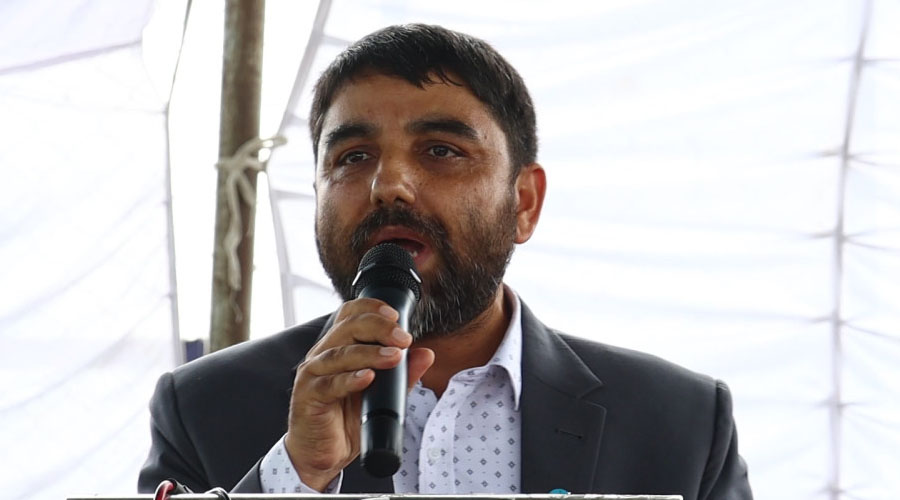
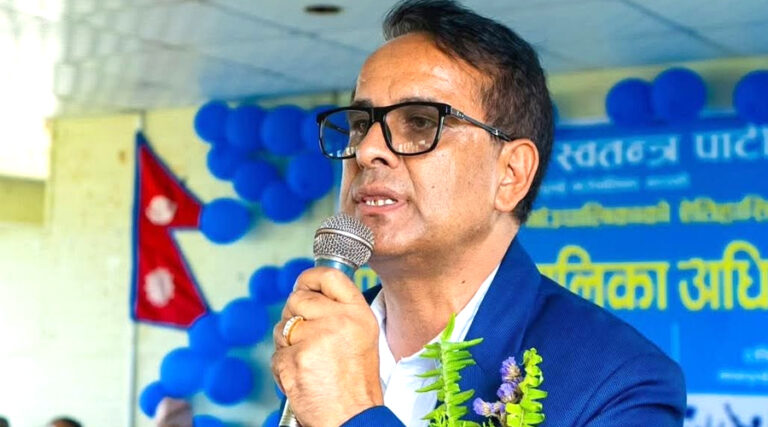
The clues had been there, scattered across the country in the months before the election. But after Kathmandu’s former mayor Balendra Shah (Balen) joined the RSP and was nominated as the party’s candidate for the post of prime minister, there was a groundswell for the party; Balen’s name became a political movement.
In tea shops, bus parks, and markets, people started saying ‘chup chap, ghanti chhap’ (quietly, stamp the bell). By the time Balen was scheduled to give a speech in Janakpur, the shift had become visible. In village after village in the Madhes, Balen’s presence, sometimes real and sometimes symbolic, was the main topic of discussion. When asked how and who they would vote, from a farmer to a laborer working on a daily wage -almost everyone – seemed to have a readymade answer – “Abki baar, Balen sarkar’ (This time, a Balen government), the RSP’s catchy slogan, particularly devised to woo Madhes voters.
Everyone’s reasons why Balen would win were similar: He is young, he is fearless, and he would not steal.
For some in the Madhes there was an additional layer of hope: the possibility of Nepal’s first Madhesi prime minister. But the appeal of Balen’s candidacy went far beyond his and identity. The excitement around him had more to do with the nationwide frustration against the so-called old parties than ethnicity.
For years, Nepal’s state institutions had become disconnected from the people they were meant to serve. The government was everywhere, in offices, processes, signatures, and stamps. But what it had to offer was no longer service, but suffering. Corruption had grown, profiteering had thrived, and equality had remained an elusive dream. People had been dealing with their government every day, but had never felt truly protected by it.
This disillusionment culminated with last year’s Gen Z protests. These protests were, in fact, protests against performance. Young Nepalis were no longer protesting for any political ideology; they were protesting for efficient state institutions and services.
In many ways, this protest movement marked the beginning of a new chapter in Nepali politics. And in this new chapter, Balen emerged as the unlikely hero for an overwhelming majority in the country.
As the mayor of Kathmandu, he had established a reputation as a politician not afraid to take on the status quo. The RSP saw the political capital in this image and chose to center their campaign around him. Their manifesto was written in a clean, simple style, with promises of actual administrative changes. It also tried to assuage the charge of being anti-federal, and the Madhes issue was skillfully integrated.
But the campaign was not driven by the manifesto. The campaign was driven by Balen and his massive popularity.
Balen’s popularity transcended the traditional social and geographical fault lines in Nepal. In the Madhesis, he had support because he was one of them. In the hills, he had support, but it was for a completely different reason. It was not about identity politics; it was about the hope for good governance.
The critics of Balen and RSP did try to incite communal division among the voters just before the election by saying that Balen was not actually a ‘Shah’, a Thakuri caste of hill origins, but a ‘Sah’, a caste from the Tarai-Madhes. They also tried to hold him responsible for the 76 deaths and massive destruction during the Gen Z revolt. But what they seemed to have forgotten was that Nepalis had given even the Maoists, who are held responsible for around 17,000 deaths during the armed insurgency, the benefit of the doubt in the 2008 Constituent Assembly elections, electing the former rebels as the largest party.
This election, if the trends hold, may have quietly dismantled several familiar narratives. The feared polarization between Madhesi and Pahadi voters did not materialize. Madhes-based parties that had long built their politics on identity found their influence suddenly exposed.
Instead, the election appears to have been framed along a different line altogether. Not Madhesi versus Pahadi. Not left versus right. But young versus the rest.
For decades, politics in Nepal has been dictated by the notion, voiced as loudly in living rooms as in classrooms and party conventions, that one person is incapable of effecting change. Rather, it is argued, it is the role of massive institutions, strong parties, and strong networks.
But if the results of the March 5 election are any indication, perhaps the voters this time around have other ideas.
The reason is, of course, if the RSP does indeed go on to win as resoundingly as the early results indicate, it will be hard to see how this is possible if one measures the party’s organization, still in its formative stages, and its grassroots organization, still in its infancy, against its rivals.
What the RSP does have, though, is a single figure with widespread appeal – a figure whose popularity crossed districts, classes, geography and ethnic identity
In the end, the story of this election may not simply be about a party victory. It may be about how the political gravity of an entire country briefly tilted around one person – Balen – and how millions of voters decided that perhaps, just perhaps, one person can indeed change something.