Kathmandu
Wednesday, June 17, 2026





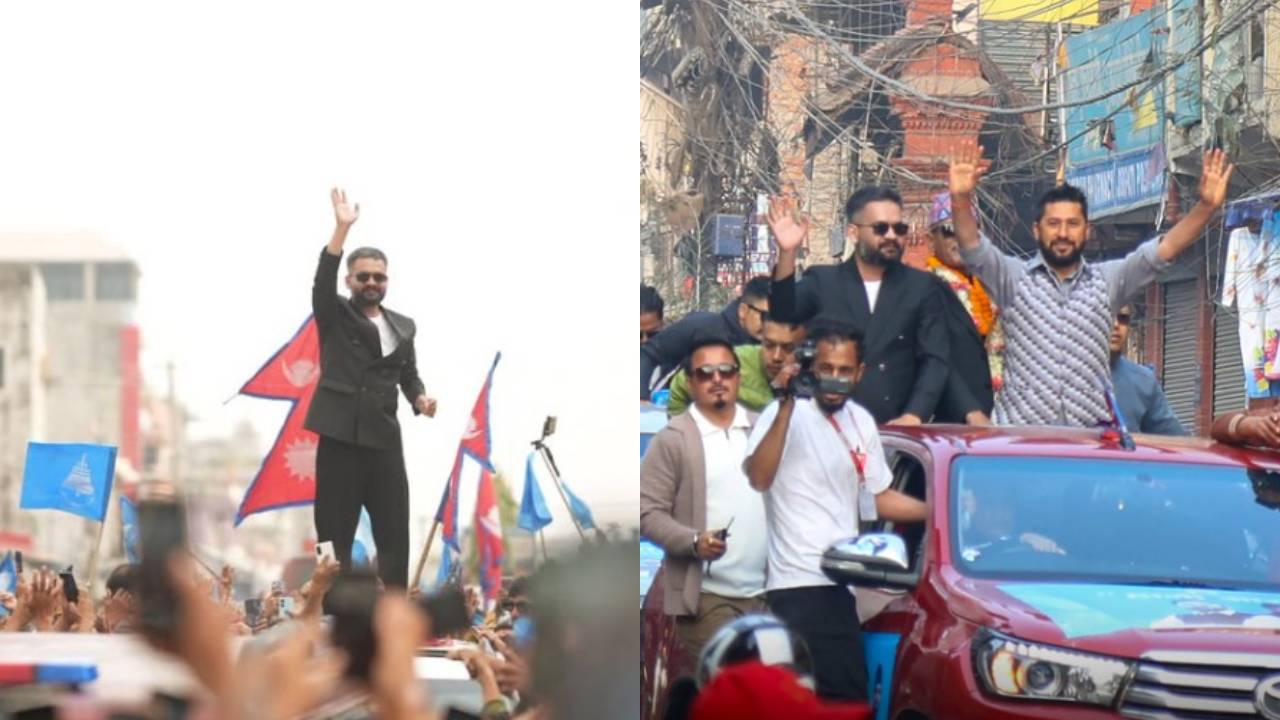
Nepal’s political instability has long frustrated citizens, whose discontent deepens in a context of weak economy, geographic constraints, and cultural transition. The recent election, following youth protests and unrest, has delivered a two-thirds majority to the Rastriya Swatantra Party-a rare chance for stable governance.
A strong majority offers both promise and peril. Nepalis have long yearned for decisive government after decades of fragile coalitions, party splits, and frequent leadership changes. Yet winning the streets does not equate to running the state. Governance demands policy-making, resource management, and compromise, complexities that street politics cannot capture.
Beyond policy, a full majority reshapes political psychology. Citizens now expect swift decisions, clear policies, and continuity. But democracy is not merely arithmetic: institutional checks, dissent, and internal party debate remain essential. Without them, majority rule risks degenerating into closed-door politics and overconfidence.
History warns that populist surges are often fleeting. The Maoist insurgency once promised radical change but ultimately failed to deliver enduring prosperity. The Rastriya Swatantra Party now faces a similar challenge: translating electoral triumph into lasting governance. Here is you need to know about the recent election results.
What happened in Nepal’s March 5 parliamentary election?
Nepal’s March 5 parliamentary election marked a dramatic shift in the country’s political landscape. The Rastriya Swatantra Party (RSP), a relatively new party formed in 2022, surged to a commanding position, securing nearly a two-thirds majority in parliament. Traditional political powerhouses, including the Nepali Congress, CPN-UML, and Nepali Communist Party (NCP), suffered heavy losses, with many senior leaders failing to retain their constituencies, sending shockwaves through Nepal’s political establishment.
The results from all 165 direct constituencies under the first-past-the-post system have been officially announced. The RSP secured 125 seats, establishing itself as the dominant force in the new parliament. The Nepali Congress won 18 seats, followed by the CPN-UML with 9 seats and the NCP with 8 seats. The Shram Sanskriti Party (Labour and Culture Party) won 3 seats, while the Rastriya Prajatantra Party (RPP) and an independent candidate each won 1 seat.
Amid RSP’s nationwide surge, another new political force also emerged from eastern Nepal. The Shram Sanskriti Party, founded just four months ago and led by former Dharan Sub-Metropolitan City mayor Harka Sampang, managed to win representation in parliament, demonstrating the continued appeal of local grassroots leaders even in the face of a nationwide political wave.
Overall, the March 5 election highlighted a major political realignment in Nepal. Voters clearly expressed their desire for new leadership and alternatives to traditional parties, while also showing that recently formed regional parties can secure meaningful representation at the national level.
Why did the Rastriya Swatantra Party (RSP) win a historic majority in Nepal?
The Rastriya Swatantra Party (RSP)’s landslide victory reflects deeper societal shifts rather than a sudden wave. Decades of frustration with traditional parties, combined with migration, digital connectivity, and a young, globally aware electorate, created strong demand for alternatives. Early successes of movements like Bibeksheel and leaders such as Balendra Shah showed that non-traditional candidates could win, paving the way for RSP under Rabi Lamichhane.
The party’s triumph represents the convergence of diaspora influence, social media activism, generational change, and anti-establishment sentiment, resulting in a decisive two-thirds majority. Yet the real challenge lies ahead: governing effectively, maintaining internal discipline, and avoiding the factionalism and stagnation of old parties. RSP’s ability to transform electoral support into responsible, accountable governance will define whether this moment becomes a true turning point for Nepal.
Why was Balendra Shah crucial to the RSP’s historic victory?
Balendra Shah, the former mayor of Kathmandu, was central to the Rastriya Swatantra Party’s (RSP) unprecedented success in the March 5 House of Representatives election. While the RSP itself is a relatively new political force, Balen’s popularity-particularly among urban voters and the youth—provided a strong magnet for support. Many voters were drawn less by party ideology and more by confidence in Balen’s image as an independent-minded leader committed to transparency, accountability, and efficient governance. His candidacy became the embodiment of the public’s desire for a break from entrenched political elites, corruption scandals, and decades-old patronage networks. By nominating him as its prime ministerial candidate, the RSP was able to translate his personal credibility and appeal into votes, energizing youth-driven political activism and amplifying the party’s reach.
Balen represents generational change, accountability, and a departure from the inefficiencies of Nepal’s traditional political elite. His candidacy resonated with a broad demographic, particularly young voters, who have grown increasingly engaged in political activism, including the rise of Gen Z movements. Voters have signaled a clear preference for governance that delivers tangible improvements in public service, transparency, and reform across state institutions. In this sense, Balen is more than a prime ministerial candidate—he embodies the promise of a revitalized, youth-aligned, and citizen-focused political agenda.
How does Balen’s victory reflect broader voter sentiment?
Balen’s rise reflects a generational shift and a demand for clean, effective governance in Nepal. The electorate, especially young voters, rejected the old parties’ entrenched practices, internal disputes, and inability to address everyday concerns. His leadership embodies the voters’ desire for transparency, accountability, and practical solutions to corruption, unemployment, and economic stagnation. The March 5 election signals that Nepali citizens remain active participants in shaping their political future, ready to reward reform-minded leaders and hold them accountable for delivering meaningful change.
What responsibilities come with Balen leading the RSP government?
A likely Balen-led RSP government, moving toward a two-thirds majority in the 275-member House of Representatives, carries enormous responsibility. With such a mandate, the party can pass significant legislation and even consider constitutional amendments. However, voters expect careful, patient, and competent governance that focuses on clean administration, economic revival, public service improvement, and strengthening institutions. Success will depend not only on popular appeal but on translating promises into tangible reforms, demonstrating respect for democratic norms, and maintaining transparency and accountability.
How did Balen Shah enter national politics and transform himself into a major political force?
The political rise of Balen Shah did not begin in Parliament but in the streets and institutions of Kathmandu. Trained as an engineer and known publicly as a rapper, Balen initially operated outside Nepal’s party system. His first serious step into politics came during the 2022 mayoral race in Kathmandu, where he ran as an independent candidate, positioning himself as an outsider challenging the traditional political establishment and won surprisingly.
His campaign relied heavily on digital mobilisation rather than conventional party machinery. Young voters, urban professionals and social-media networks amplified his message of transparency, urban reform and administrative accountability. The victory that followed transformed him from a cultural figure into a governing authority.
Once in office, Balen used the mayoralty as a platform to build a broader political identity. His administration focused on municipal governance issues such as education reform, urban management and enforcement of local regulations. At the same time, his public communication-often blunt and direct-allowed him to cultivate an image of a leader willing to challenge entrenched political interests.
For many young Nepalis, the rise of Balen Shah-known simply as Balen-feels personal. Long before entering politics, he criticised the system through rap music and social media. As mayor of Kathmandu, he cultivated a reputation for visible, hands-on reforms, from clearing illegal structures to promoting skills programmes for young people. Admirers describe his style as blunt, practical and impatient with bureaucracy.
As mayor of Kathmandu Metropolitan City, Balen gradually built a strong public reputation and more popular than Nepal’s traditional poltical parties senior leaders. His governance style-often communicated directly through social media-drew attention nationwide. He publicly criticized federal government interference in municipal affairs and frequently commented on national political issues on Facebook. These statements steadily expanded his support base beyond Kathmandu.
His political profile grew even more prominent due to escalating confrontations with national leaders, particularly former prime minister KP Sharma Oli, chairman of the Communist Party of Nepal (Unified Marxist–Leninist). Their disputes ranged from bureaucratic appointments in the Kathmandu metropolitan administration to broader governance issues. The conflict intensified as Balen continued to challenge personally with Oli and federal authorities over urban management, infrastructure issues, and municipal autonomy.
His rise also reflects a broader generational mood. During the 2025 Gen-Z protests in Nepal, thousands of young people took to the streets after the government attempted to restrict popular social-media platforms. Anger spilled online through memes and the viral “Nepo Kids” trend mocking political dynasties. The same digital spaces that once carried protest have now amplified celebration. Balen’s support breakthrough the Gen-Z protests success to landing into forming of interim government, in that sense, looks less like a sudden upset than the political expression of a restless younger generation.
This approach steadily expanded his influence beyond municipal politics. As dissatisfaction with traditional parties grew, Balen’s outsider narrative began to resonate nationally. His later alignment with the Rastriya Swatantra Party provided the organizational vehicle for that momentum, converting personal popularity into electoral power.
In effect, Balen’s entry into national politics followed an unconventional route: cultural recognition, independent local leadership, and then rapid expansion into parliamentary politics. The trajectory illustrates how a figure initially dismissed as a celebrity outsider managed to channel urban frustration and generational change into a formidable political movement.
How did so many senior political leaders lose by huge margins in Nepal’s parliamentary election?
The recently concluded election to Nepal’s House of Representatives produced an unprecedented political shock, as many of the country’s most powerful and senior leaders were defeated-often by massive vote margins. In constituency after constituency, veteran politicians who had long dominated the political landscape were decisively rejected by voters.
These results show that many of Nepal’s most influential political figures were not merely defeated but lost by overwhelming margins. The scale of the defeats reflects a strong electoral wave favoring new political alternatives, dramatically reshaping Nepal’s political landscape and signaling a significant shift in voter sentiment.
The biggest upset came in Jhapa-5, where former prime minister and chairman of the Communist Party of Nepal (Unified Marxist–Leninist), KP Sharma Oli, was defeated by Balen Shah of the Rastriya Swatantra Party (RSP) by an enormous margin of 49,614 votes. Balen received 68,348 votes, while Oli managed only 18,734 votes.
Similarly, the president of the Nepali Congress, Gagan Thapa, lost in Sarlahi-4 to RSP candidate Amaresh Kumar Singh by nearly 11,000 votes. Singh secured 35,688 votes, while Thapa received 22,831 votes.
Congress General Secretary Pradeep Paudel suffered one of the heaviest defeats in Kathmandu-5. He was defeated by RSP’s Sasmita Pokharel by more than 21,000 votes. Pokharel received 30,737 votes, while Paudel secured only 9,159 votes. Another Congress General Secretary, Gururaj Ghimire, lost in Morang-4 to Santosh Rajbanshi by about 28,000 votes. Rajbanshi won 40,833 votes, while Ghimire received 12,818 votes.
Several assistant general secretaries of the Nepali Congress also faced heavy defeats. Farmullah Mansur lost in Bara-3 to RSP’s Arbind Sah. Sah won with 40,697 votes, while Mansur secured only 10,052 votes, a margin of more than 30,000 votes. Uday Shumsher Rana lost in Lalitpur-1 to Buddharatna Maharjan, who received 23,373 votes compared to Rana’s 13,520 votes. Yogendra Chaudhary lost in Dang-1 to Devaraj Pathak, who secured 42,602 votes, while Chaudhary received 15,280 votes.
Among UML leaders, Vice-Chairperson Bishnu Paudel lost heavily in Rupandehi-2 to RSP candidate Sulav Kharel. Kharel secured 56,550 votes, while Paudel managed 12,861 votes, losing by more than 43,000 votes. Another Vice-Chairperson, Prithvi Subba Gurung, lost in Lamjung to Dharma Raj KC. KC received 33,898 votes, while Gurung secured 16,876 votes, a margin of over 17,000 votes.
UML Vice-Chairperson Gokarna Bista lost narrowly in Gulmi-2 to Govinda Panthi. Panthi received 16,967 votes, while Bista secured 16,406 votes, losing by 561 votes.
The party’s General Secretary Shankar Pokharel also suffered a massive defeat in Dang-2 to RSP candidate Bipin Acharya. Acharya received 43,559 votes, while Pokharel secured 15,287 votes, losing by more than 28,000 votes.
Other senior leaders also lost by substantial margins. Former Speaker Devraj Ghimire was defeated in Jhapa-2 by RSP leader Indira Rana Magar by 48,742 votes. Rana Magar secured 60,110 votes, while Ghimire managed only 11,368 votes.
Former UML senior vice-chairperson Ishwar Pokharel finished third in Kathmandu-5 with 4,701 votes, far behind winner Sasmita Pokharel’s 30,737 votes.
Former deputy general secretary Pradeep Gyawali was defeated in Gulmi-1 by RSP candidate Sagar Dhakal. Dhakal won 29,642 votes, while Gyawali received 15,181 votes.
Senior leaders from other political parties also faced decisive defeats. Former prime minister Madhav Kumar Nepal lost in Rautahat-1 to RSP’s Rajesh Kumar Chaudhary. Chaudhary secured 28,946 votes, while Nepal received only 7,669 votes.
Likewise, Narayan Kaji Shrestha lost in Sarlahi-3 to Narendra Sah Kalwar. Kalwar won 46,890 votes, while Shrestha secured 13,338 votes.
Leaders of other parties were also defeated. Rajendra Lingden, chairman of the Rastriya Prajatantra Party, lost in Jhapa-3 after receiving 17,294 votes, while RSP candidate Prakash Pathak won with 38,674 votes.
Similarly, Kamal Thapa lost in Kathmandu-5 with 1,922 votes, while Sasmita Pokharel won with 30,737 votes.
Prominent Madhes-based leaders also faced major defeats. Upendra Yadav lost in Saptari-3 after receiving 15,239 votes, while RSP candidate Amarkant Chaudhary won with 32,875 votes. Rajendra Mahato lost in Sarlahi-2 with 5,992 votes, while Rabin Mahato won 42,512 votes. CK Raut lost in Saptari-2 with 9,880 votes, while Ramji Yadav secured 28,404 votes.
How did young leaders make history in Nepal’s March 5 election?
The March 5 parliamentary election marked a remarkable generational shift in Nepalese politics, with around 37 percent of directly elected MPs (61 out of 165 constituencies) under 40 years old. This unprecedented surge of youthful representation was largely driven by the Rastriya Swatantra Party (RSP), which fielded predominantly young candidates, securing 52 of these 61 victories. Other parties like the Nepali Congress, CPN-UML, and Rastriya Prajatantra Party contributed a few younger MPs, but the RSP’s approach set the trend. With additional young representatives expected through the Proportional Representation system, the election narrows the gap between Nepal’s median age of 26 and its legislative body, signaling a dramatic cultural and political shift.
Historically, Nepal’s political scene was dominated by septuagenarians and sexagenarians, and even party leadership offered little space for youth, despite young people comprising 42.5 percent of the population. The disconnect had fueled protests, notably the Gen Z demonstrations, highlighting the need for leaders who understand contemporary issues like digital governance, education, climate action, and employment. The previous government’s restrictions on international social media further alienated youth, making the arrival of younger MPs a symbolic and practical step toward bridging this gap.
This new cohort includes high-profile figures such as the 36-year-old prime ministerial hopeful Balendra Shah and 25-year-old Prashant Upreti, alongside alternative politics leaders like Ranju Neupane. Their entry promises a more youth-oriented agenda, but they face challenges in navigating entrenched bureaucratic practices and avoiding the pitfalls of social media populism. Their long-term impact will depend on their ability to pursue research-driven reforms, uphold integrity, and translate youthful energy into substantive policy change. The March 5 election has shattered the age ceiling in Nepalese politics, but the ultimate test lies in whether these young leaders can become architects of a meritocratic and revitalized democracy.
Why is the result considered historic?
If the final results confirm the trend, the RSP would become the first party in nearly seven decades to secure a two-thirds majority. The last time such a strong mandate was achieved was in 1959, when the Nepali Congress under BP Koirala won 74 of the 109 parliamentary seats in Nepal’s first democratic election. The result is particularly striking because Nepal’s mixed electoral system, introduced in 2015, was widely believed to make such overwhelming mandates almost impossible.
Why is the Rastriya Swatantra Party’s (RSP) election success being compared to the Nepali Congress victory of 1959?
The strong performance of the Rastriya Swatantra Party (RSP) in the recent parliamentary election has reminded many observers of Nepal’s 1959 general election, when the Nepali Congress won a historic landslide. In that election, the Nepali Congress secured 74 out of 109 seats, effectively achieving a two-thirds majority and dominating the first democratic parliament. Other parties were far behind, making it one of the most decisive electoral mandates in Nepal’s history.
A similar situation appears possible in the current election. RSP has already won 125 of the 165 direct (first-past-the-post) seats. Even with a moderate share of the 110 proportional representation seats, the party could reach around 183 seats in the 275-member House of Representatives, which would amount to a two-thirds majority after one independent candidate like Mahabir Pun. Because such a commanding position is rare in Nepal’s multiparty politics, the result is being compared to earlier historic mandates.
Nepal’s political history shows that voters have repeatedly given strong mandates to parties when they seek change. For example, in the 2008 Constituent Assembly election, the Maoists emerged as the largest force with 229 seats, reflecting public support after the end of the civil conflict. Similarly, the 2017 election produced a near two-thirds majority for the left alliance of CPN-UML and Maoist Centre, which later merged to form the Nepal Communist Party (NCP). However, that government eventually collapsed due to internal disputes and political infighting.
In more recent years, Nepal has experienced frequent coalition governments, as no single party secured the 138 seats required for a majority. The 2022 election produced a fragmented parliament where the Nepali Congress, CPN-UML, and Maoist Centre remained the largest parties, while RSP emerged as a new political force. Coalition politics, leadership struggles, and corruption allegations gradually eroded public trust in traditional parties.
The current surge of RSP reflects a broader pattern in Nepal’s democracy: voters often shift their support when they become dissatisfied with established parties. Throughout history-from the early democratic elections to the post-2006 political era-Nepali citizens have repeatedly experimented with new political alternatives in search of better governance and stability.
Ultimately, the comparison with 1959 highlights not only the scale of RSP’s possible mandate but also a key lesson from Nepal’s political history: large electoral victories create high expectations. If political parties fail to meet those expectations, voters have shown they are willing to shift their support to new alternatives in the next election.
What does Nepal’s new full majority government mean for the country?
Nepalis have long desired a stable majority government, and with the Rastriya Swatantra Party (RSP) securing an overwhelming mandate, that goal has finally arrived. But a majority is not just about stability-it tests how power is exercised. Nepal’s history of unstable coalitions and frequent government changes makes the transition from opposition to governance particularly challenging. Running a government requires more than popular rhetoric; it demands policy-making, resource management, administrative coordination, and balancing competing interests, far beyond the simplicity of street politics.
A full majority also brings political psychology: after decades of short-lived governments, citizens expect swift decisions, policy continuity, and effective administration. Yet such power carries the risk of centralization and overreach. Democracy depends on institutions, checks and balances, and respect for dissent. With one party dominating, internal debate and civic oversight can weaken, making responsible governance essential.
Managing public expectations is another challenge. Electoral victories raise hopes for rapid change, reduced corruption, and economic progress, but Nepal’s federal system is still maturing, and bureaucratic limitations persist. The government must implement policies realistically, respecting judicial independence and oversight mechanisms, while maintaining transparency and strategic discretion in domestic and foreign affairs.
Ultimately, the success of a full majority government will be measured not by seats alone but by how it uses power responsibly. Humility and adherence to democratic norms can strengthen Nepal’s democracy; arrogance or unchecked authority could threaten it. This historic majority is both an opportunity and a test—to deliver decisive governance while maintaining accountability, public trust, and institutional balance.
What explains the defeat of the old parties?
Observers say the poor performance of the traditional parties reflects deep public frustration built up over years. Many voters were disillusioned with what they saw as an entrenched political class that failed to deliver on promises of development, governance and stability. The heavy-handed response of the state to the Gen Z-led protest movement last year also alienated younger voters. At the same time, the entry of Balendra Shah into the RSP as a senior leader energized the party and helped convert public dissatisfaction into electoral support.
Which major leaders lost the election?
The election saw a string of defeats for prominent political figures. Nepali Congress president Gagan Kumar Thapa lost his race in Sarlahi-4. Several other senior Congress leaders-including general secretaries Gururaj Ghimire and Pradeep Poudel and joint general secretaries Uday Shumsher Rana, Farmullah Mansur and Prakash Snehi-were also defeated. On the UML side, party chairman KP Sharma Oli lost to Balen Shah in Jhapa-5. Senior UML leaders such as Bishnu Paudel, Gokarna Bista, Shankar Pokharel, Mahesh Basnet, Bhanubhakta Dhakal and Rajan Bhattarai also failed to secure seats.
How did the defeated leaders respond?
Leaders from the defeated parties publicly acknowledged the setback and called for internal reflection. Nepali Congress vice-president Bishwa Prakash Sharma said the party would undertake a serious review of its performance and proceed with its regular general convention. UML vice-chairman Bishnu Paudel urged party cadres not to lose morale, describing politics as a long journey with ups and downs and promising to review mistakes and reform the party in line with public expectations.
Why did the RSP perform so strongly?
Analysts attribute the RSP’s rise to a combination of factors, including its image as a fresh alternative to the traditional political establishment and its strong appeal among young voters. The party also benefited from the popularity of Balendra Shah, widely known as Balen, whose leadership helped generate a wave of support across different regions and social groups. The party’s campaign focused heavily on governance, service delivery and economic opportunity, themes that resonated strongly with voters.
What does Balendra Shah’s victory mean for Nepal?
Balendra Shah’s victory in the March 5 election represents a decisive endorsement of his leadership and the promise of a five-year stable government. The electorate has given him a mandate to lead, reflecting a nationwide desire for generational change, political stability, and governance free from the inefficiencies and infighting that have plagued previous administrations. Shah, a young prime ministerial aspirant, symbolizes a break from the old political order and a leadership style aligned with the aspirations of the youth and broader population.
Shah’s leadership is a unifying force across Nepal. It fulfills the aspirations of the Gen Z movement, which sought representation and reform, and signals a break from governments that frequently changed, causing economic and social costs. His victory also sets expectations for clean, effective governance, swift justice for past injustices, and reforms across state institutions. How he navigates these responsibilities will shape the credibility of both his government and the RSP in the eyes of the public.
What challenges could Shah face as prime minister?
While Shah enjoys overwhelming public support, his biggest challenges are likely to come from within his own party, the Rastriya Swatantra Party (RSP). Internal rivalries or ego clashes could jeopardize his leadership, similar to what happened to the former Nepali Communist Party (NCP), whose near two-thirds majority collapsed in 2021 due to internal disputes. Maintaining party unity and ensuring the RSP delivers on its promises will be crucial for Shah to complete his full term.
What happened to the Madhesh-based political parties?
The election proved particularly devastating for parties that built their politics around Madhesh identity and regional issues. Prominent leaders such as Upendra Yadav and CK Raut lost their constituencies, and several candidates from Madhesh-based parties failed even to secure enough votes to recover their election deposits. Analysts say the projection of Balendra Shah as a potential Madheshi prime minister reshaped political dynamics in the region and drew support away from traditional Madhesh parties.
Does the result signal a shift away from identity politics?
Many political observers believe the election reflects a broader change in voter priorities. Identity politics played a major role in Nepal after the 2006 peace process and during the drafting of the constitution. However, analysts say the latest election suggests voters are now focusing more on governance, economic development, job creation and public services rather than identity-based agendas.
What do analysts say the old parties should do next?
Political analysts argue that the Nepali Congress and the UML must undertake major reforms if they want to regain public trust. This could involve leadership changes, stronger internal democracy and a comprehensive restructuring of party organizations. Some observers believe senior leaders should step aside to allow younger leaders to take charge and reconnect with a new generation of voters.
What does this election mean for Nepal’s political system?
The results suggest that Nepal’s electoral system can still produce a decisive mandate despite concerns that the mixed system would always lead to fragmented outcomes. Analysts say the election outcome highlights problems not with the electoral system itself but with the performance and credibility of the political parties that dominated Nepal for decades.
What challenges lie ahead for the RSP?
Despite its sweeping victory, the RSP now faces high expectations from voters who supported it as a symbol of change. The party will be under pressure to deliver tangible improvements in governance, economic growth and job creation. Whether the current wave of public support continues will depend largely on the new government’s ability to meet those expectations.