Kathmandu
Wednesday, June 17, 2026





A government probe is examining a controversial Rs 48.7 million tender that critics say was tailored for a single bidder, while a dispute over payments has pushed the broadcaster’s potential liability to Rs 51.5 million
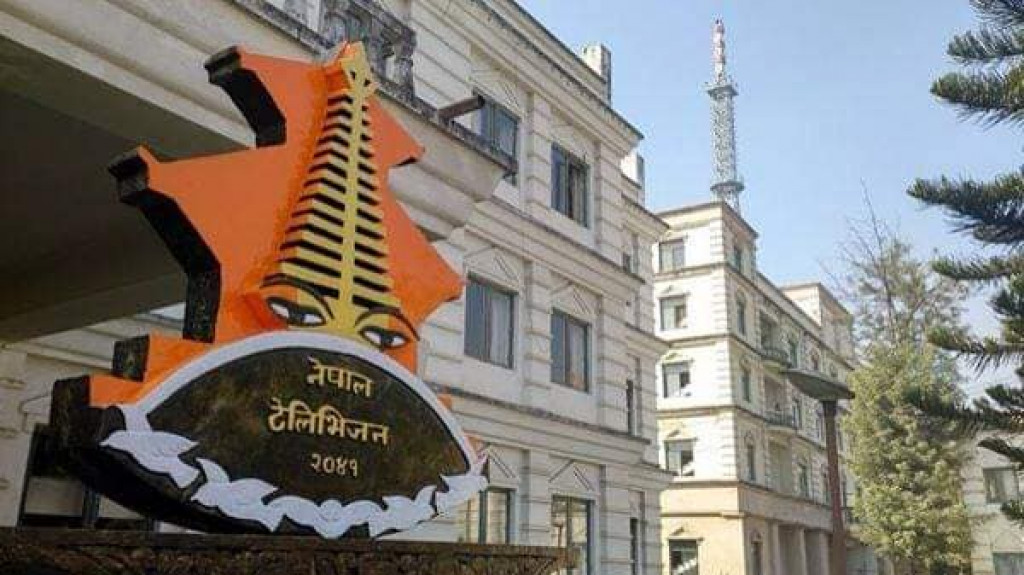
KATHMANDU: A ministerial probe committee formed on June 15, 2026, has opened a fresh chapter in Nepal Television’s long and troubled history of procurement irregularities.
The four-member panel has been tasked with examining a range of equipment and software purchases at the state broadcaster, including a particularly murky Rs 48.7 million contract that critics allege was structured to benefit a single pre-selected company, while allegedly diverting funds meant for an entirely different purpose.
This is the second probe committee the ministry has formed in quick succession, coming just weeks after another panel was set up to investigate the satellite procurement case at the same institution.
This Nepal News explainer will break down the key contracts under scrutiny, the allegations surrounding procurement practices, and what the new investigation signals for accountability at the state broadcaster.
What exactly has the Ministry of Communication and Information Technology done, and on what date?
Through a ministerial-level decision dated June 15, 2026, the Ministry of Communication and Information Technology formally constituted a four-member committee to examine the equipment and technology procurement processes at Nepal Television across different time periods. The committee operates under the coordinatorship of Dr. Sudip Bhattarai.
Its mandate is to conduct a factual study of complaints, reports, and matters of public concern related to various equipment, software, and digital systems procured by Nepal Television and to submit its findings along with concrete recommendations to the ministry within 21 days.
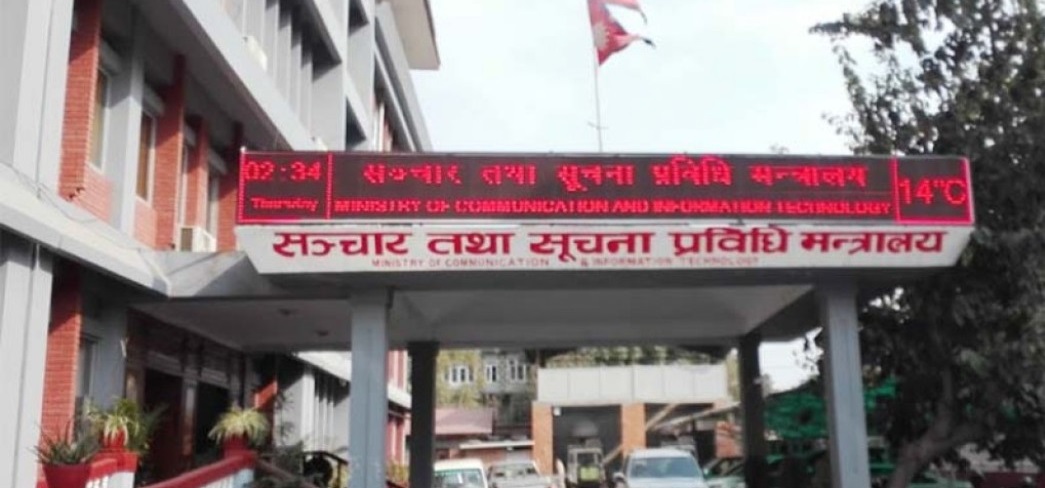
Ministry of Communication and Information Technology
The ministry has framed the inquiry as an internal information-gathering exercise, meaning it serves to give the ministry a clear picture of what occurred before deciding what further action to take.
What specific items are under investigation?
The committee has been given an explicit list of procurement areas to examine. These are: graphics systems used in on-air broadcast production; new media or digital platform services covering NTV’s online and digital presence; audio and video equipment; digital transmitters used for terrestrial signal broadcasting; and the Playout Automation System purchased specifically for the Itahari channel, NTV’s regional station in Sunsari.
Each of these represents a distinct technology purchase made during Nepal Television’s modernization drive over recent years.
Complaints about each of these categories have reportedly been filed with various state agencies, and the ministry says the committee was formed specifically because those complaints needed to be consolidated, verified, and documented internally before a formal response could be determined.
What is the most specific and documented allegation among those under probe?
The most detailed allegation relates to a tender Nepal Television issued in fiscal year 2022/23 worth Rs 48.7 million under the head of “Audio/Visual Equipment and Accessories.” The core problem was that the budget from which this money was drawn had actually been allocated by the government for digital archiving, not audio/visual equipment.
Rather than spending the digital archive budget on a digital archive system as intended, NTV management changed the expenditure head and invited tenders for audio/visual gear. Only one company, Soheto Nepal Private Limited, applied for this tender and was awarded the contract.
That company submitted its bid at 99.38 percent of the estimated cost, meaning it bid Rs 48.4 million against the Rs 48.7 million estimate. A bid arriving at virtually the full ceiling amount from a single applicant is widely considered a strong indicator of prior collusion, as a genuinely competitive market process almost always drives bids meaningfully below the estimated price.
How severe were the alleged financial irregularities in this audio/visual contract?
The figures reveal a striking gap between what NTV paid and what the equipment was actually worth. An independent market assessment of all the goods covered by the tender showed their combined market value to be approximately Rs 21.5 million. This included audio/visual equipment worth Rs 11.2 million, camcorders and accessories worth Rs 5.25 million, AV accessories for all channels at Rs 900,000, an audio system at Rs 700,000, and microphone stands at Rs 750,000.
Yet the contracted payment obligation stood at Rs 48.4 million. On top of this, citing dollar rate fluctuations and cost increases, NTV management was pushing to pay an additional Rs 3 million, bringing the total liability to Rs 51.5 million.
Photo courtesy: Nepal Television
The gap between the market value of the equipment at Rs 21.5 million and the total amount sought at Rs 51.5 million implies alleged corruption of more than Rs 30 million.
The ministry itself declined to approve the budget head change when NTV sought its permission, directing the broadcaster to spend only within the originally allocated budget title.
How was the budget misused, and what did the ministry do when it found out?
The government had allocated Rs 48.7 million in the fiscal year 2022/23 budget specifically for digital archiving at Nepal Television. Digital archive and audio/visual equipment are distinct technology categories with different purposes, costs, and procurement processes.
Rather than using the budget for its intended purpose, NTV changed the expenditure head and invited tenders for audio/visual gear. After the contract was awarded and the goods were reportedly procured, the broadcaster tried to retroactively seek ministry approval for the head change so it could process the payment.
According to senior engineers at NTV, the ministry said no and instructed NTV that money allocated under a specific budget head must be spent on that head only. They acknowledged that the budget came under the digital archive title even though the demand was for audio/visual equipment.
As a result of the ministry’s refusal, NTV found itself unable to legally process the payment, and the contract became mired in internal dispute over how to resolve the liability it had already created.
What does “99.38 percent bid” mean, and why does it indicate rigging?
In public procurement, a competitive tender process is supposed to bring in multiple bids from different companies that have independently estimated the cost of supplying the required goods or services. When genuine competition exists, bidders typically come in at significantly varying prices, and the winning bid tends to be meaningfully below the government’s estimated cost.
A company that bids at 99.38 percent of the ceiling estimate, meaning it submitted virtually the maximum amount the government was willing to pay, has either arrived at that price without any information about what others might bid, or it already knows it is the only bidder and has no incentive to come in lower.
In this case, only one company applied, which eliminated any competitive pressure entirely.
Critics also pointed out that the tender specifications grouped together unrelated equipment into a single package in a way that effectively ensured only a company with prior knowledge of the exact specifications could have submitted a credible bid in the available time, a hallmark of specification manipulation in rigged procurement.
Who called on the CIAA to investigate NTV’s procurement, and what specifically did they allege?
On February 27, 2023, Rajendra Raj Timilsina, then chief of NTV’s Itahari channel, publicly called on the Commission for the Investigation of Abuse of Authority (CIAA) through a Facebook post to investigate Nepal Television’s procurement practices. His post came after the CIAA had moved against irregularities at the Security Printing Press, and he demanded that NTV be subjected to the same level of scrutiny.
Timilsina alleged that Nepal Television had purchased unnecessary equipment worth tens of millions of rupees, acquired incomplete automation systems and later extracted additional spending to complete them.
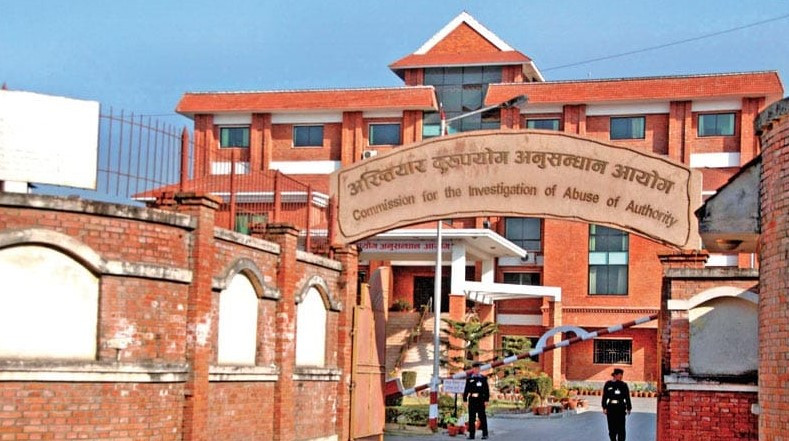
CIAA headquarters/file photo
He further alleged that tenders were repeatedly cancelled and re-issued in a deliberate pattern designed to eventually land contracts with pre-arranged companies.
In the Facebook post, he wrote: “Hey, CIAA! Look over here! Even in places without roads, there are bridges; once a road is built, rivers can be crossed. But equipment worth tens of millions was purchased in the name of opening Nepal Television bureaus and has been left packed away for years; the equipment is now outdated. Such flex banners have been hung up just to mislead the Commission. Without even opening packages worth millions of rupees, a tender has again been called to purchase the same items worth millions.”
Timilsina had recently been transferred to head the Itahari station and was described as having a reputation for integrity within the institution, where he was already working to curb unnecessary spending and tighten discipline among staff.
What explanation has been offered regarding the budget classification and cost structure of Nepal Television’s audio/visual and digital archive procurement?
The procurement process related to Nepal Television’s audio/visual equipment has been linked to ambiguity in the classification of budget allocations between audio/visual and digital archive requirements. The Ministry of Finance’s budget documentation reportedly included both components under the same appropriation, which contributed to confusion over the correct budget head for the purchase.
After the contract was processed, clarification was sought from the Ministry of Communications regarding the applicable budget category, but a response was not received before the relevant administrative period concluded.
In this context, it was also noted that if the funds were ultimately confirmed under the digital archive head, internal budget provisions could still be used for audio/visual equipment, while a separate proposal would be required to initiate the digital archive system.
It was further stated that the original request was for Rs 48.7 million for audio/visual equipment, but the allocation was received under the digital archive heading.
The establishment of a full digital archive system for Nepal Television was estimated to cost around Rs 300 million in total, with initial annual allocations of approximately Rs 120 million to Rs 140 million required for phased implementation.
What happened after the ministry refused to approve the payment?
With the ministry blocking the budget head change and refusing to authorize the payment, the current leadership at Public Service Broadcasting Nepal, which took over after NTV and Radio Nepal merged in November 2024, refused to accept the goods from Soheto Nepal and halted payment.
However, the contractor continued to press for settlement. Meanwhile, there were allegations from within the institution that some senior PSB Nepal officials were lobbying to process the payment anyway. Staff members alleged that a team including high-ranking officials was pushing to pay Soheto Nepal Rs 48.4 million plus an additional Rs 3 million in dollar adjustment claims, bringing the total to Rs 51.5 million.
Separately, a representative of Soheto Nepal confirmed that discussions with Nepal Television management were ongoing, while declining to provide further details. Some board members of PSB Nepal argued that since the contract violated the Public Procurement Act 2007, the CIAA could investigate and the payment should not be made.
That internal division between those pushing for payment and those blocking it is one of the immediate pressures the current probe committee will have to navigate.
What is the Playout Automation System controversy at the Itahari channel?
The Playout Automation System purchased for NTV Itahari is one of the specific categories named in the current probe committee’s mandate.
A playout automation system controls the scheduling and broadcast of all content on a television channel. The allegation is that an incomplete automation system was purchased, and then additional money was subsequently extracted from the institution on the pretext of making the incomplete system functional.
This is a classic procurement fraud pattern where a vendor deliberately supplies below-specification equipment under a contract, then secures further contracts or payments to supply the missing components that should have been included originally.
Similarly, it has been alleged that PIN codes for the system were shared with an Indian company, enabling file bloating where a 50-kilobyte video file was being stored or transmitted as a 50-gigabyte file, wasting storage resources and potentially generating inflated costs for data handling.
Was a similar committee formed before this one at PSB Nepal?
Yes. Earlier in June 2026, the same ministry formed a separate four-member committee to examine procurement irregularities in PSB Nepal’s satellite transmission contracts, an issue with roots going back to 2002. That committee is coordinated by Engineer Dr. Avas Maske.
The satellite procurement probe focuses on allegations that PSB Nepal’s predecessor, Nepal Television, repeatedly expanded foreign satellite bandwidth contracts without competitive re-tendering, added new channels to existing deals, transitioned from standard definition to high-definition transmission without fresh bidding, and maintained a complementary contract whose terms drew scrutiny.
The current committee examining equipment and technology procurement is therefore the second ministerial probe at PSB Nepal within a single month, suggesting the ministry is conducting a broader audit of the state broadcaster’s accumulated procurement history.
What happened at the Public Accounts Committee in June 2016 over earlier NTV corruption?
Nepal Television’s procurement controversies are not new. In June 2016, the Public Accounts Committee of Parliament convened to discuss corruption at NTV involving allegations of around Rs 90 million in fake bank guarantees used to fraudulently receive advertising revenues.
That PAC meeting descended into bitter exchanges between lawmakers of Nepali Congress and CPN (UML), with UML member Bikash Lamsal directly accusing then-former Communications Minister Dr. Minendra Rijal (in office from February 25, 2014, to October 12, 2015, under then Prime Minister Sushil Koirala), of having failed to act on the findings of multiple earlier probe committees that had identified NTV officials as guilty.
Rijal, who was present at the meeting as a PAC member, pushed back sharply, warning that unsubstantiated allegations would make the committee nonfunctional.
Then PAC Chairperson Janardan Sharma directed that those named guilty by earlier probe panels be relieved from their posts and formed a sub-committee under member Dor Prasad Upadhaya to investigate why those earlier reports had been shelved rather than implemented.
UML member Mamata Giri argued the matter had already been dealt with by the CIAA and should be closed, while Congress member Usha Gurung countered that two separate committees had confirmed corruption occurred and withdrawing from scrutiny would undermine the committee’s purpose entirely.
What does Nepal’s Public Procurement Act say about what happened at NTV?
Nepal’s Public Procurement Act 2007 establishes clear rules that public institutions must follow when spending government funds on goods, services, or works. Among the most basic rules is that money allocated under a specific budget head must be spent for that purpose and not diverted to a different expenditure category without proper authorization.
It also requires competitive bidding above specified financial thresholds and prohibits deliberate manipulation of technical specifications to favor a particular vendor. Inviting tenders with specifications so narrowly written that only one company can qualify is a violation.
Awarding a contract to the sole bidder at virtually the maximum estimated price, without any competitive market pressure, compounds the problem.
A senior official at NTV acknowledged that the contract violated the Public Procurement Act 2007, which is precisely why some board members argued the payment should not be processed and the matter referred to the CIAA.
What is the institutional background of Nepal Television and PSB Nepal?
Nepal Television was established on January 30, 1985 as the country’s first television broadcaster. Over four decades it expanded into a multi-channel operation running NTV, NTV Plus, NTV News, NTV Kohalpur, and NTV Itahari, all broadcasting in high definition since January 2019.
The Itahari channel launched on January 30, 2020, coinciding with NTV’s 35th anniversary, and was built as a dedicated regional channel for Koshi Province.
In September 2024, Parliament passed the Public Service Broadcasting Act, mandating that NTV and Radio Nepal merge into a single entity. That merger formally took effect in November 2024, with Dr. Mahendra Bista appointed as PSB Nepal’s first Executive Chairperson.
The procurement controversies now under investigation took place during NTV’s pre-merger phase, but their legal and financial consequences have been inherited by PSB Nepal, making the current leadership responsible for resolving liabilities created under previous management.
What role can the CIAA now play, and what would that process look like?
The Commission for the Investigation of Abuse of Authority is Nepal’s constitutional anti-corruption body empowered to investigate and prosecute abuse of public authority. If the current probe committee’s report establishes credible evidence of procurement fraud at Nepal Television, the ministry can formally refer the matter to the CIAA.
Alternatively, any citizen or official can file a complaint with the commission directly, and the CIAA can also initiate investigations on its own. The CIAA’s process involves registering the complaint, conducting a formal investigation with powers to examine documents, summon witnesses, and trace financial flows, and if it builds a sufficient case, filing a chargesheet at the Special Court.
The CIAA had previously investigated NTV in 2015 over advertising-related bank guarantee fraud and eventually cleared former General Manager Laxman Humagain in that case, though broader accountability remained incomplete.
Whether the current allegations, particularly the documented gap between the equipment’s market value of Rs 21.5 million and the contracted cost of Rs 48.4 million in the audio/visual tender, are strong enough to sustain a criminal prosecution is what an independent CIAA investigation would determine.
What should the public watch for as this investigation proceeds?
The probe committee has 21 days from its June 15, 2026 formation to deliver its report. Several things will indicate whether this inquiry translates into genuine accountability or follows the pattern of previous NTV probe committees whose reports went unimplemented.
First, watch whether the committee submits on time and whether the ministry makes its findings public rather than treating the report as an internal document.
Second, watch what happens to the Soheto Nepal contract specifically, whether the payment of Rs 51.5 million is blocked permanently or eventually pushed through under some administrative arrangement.
Third, watch whether the ministry refers the case to the CIAA or the Public Accounts Committee of Parliament for independent scrutiny, or whether it simply issues procedural recommendations and moves on.
And fourth, watch whether PSB Nepal uses this probe as the basis for structural reforms to its procurement processes, including mandatory multi-member tender evaluation committees, independent specification reviews, and enforced competitive bidding requirements for all major technology purchases going forward.