Kathmandu
Wednesday, June 17, 2026






KATHMANDU: Nepal News presents today’s snapshot of Nepal’s economic activities. Get quick updates on major market movements, policy shifts, and financial developments shaping the economy of Nepal. Here are the key economic highlights for today:
NRB Collects Rs 45 Billion Deposit via Liquidity Management Floating
The Nepal Rastra Bank (NRB) successfully executed a liquidity collection operation on Wednesday, absorbing Rs 45 billion from the domestic financial system. Managed by the Monetary Management Department, the capital float proceeded through a prompt digital auction platform starting at 3:00 PM, with final interest percentages determined directly via competitive bidding. Participation in the liquidity tool was legally limited to registered financial organizations holding official Class A, Class B, and Class C corporate licenses from the central bank, enabling commercial banks to manage structural funds efficiently.
NEPSE Increases by 0.08 Points with Rs 3.63 Billion Turnover
The Nepal Stock Exchange (NEPSE) rose slightly by 0.08 points on Wednesday, closing at 2,705.53 points after remaining volatile throughout the session. Trading volume declined compared to the previous day. On Tuesday, NEPSE had fallen by 6.31 points, while on Monday it had dropped by 12.26 points. The Sensitive Index declined by 0.20 points to 464.43 points. A total turnover of Rs 3.63 billion was recorded from 8.37 million shares of 352 companies through 44,542 transactions, lower than Rs 4.04 billion on Tuesday and Rs 4.41 billion on Monday. Out of traded companies, prices of 125 increased, 132 fell, and 14 remained unchanged, while sectoral performance remained mixed across the market.
Finance Minister Wagle Expresses Real Estate Regulatory Relief Readiness
Finance Minister Swarnim Wagle confirmed the government’s readiness to accept facts-based feedback from the private sector during an interactive budget session held on Wednesday. Addressing the Nepal Chamber of Commerce, he stated that import tariffs on manufacturing raw materials are structurally kept lower than finished imports to drive domestic factory output. Acknowledging current sluggishness in real estate transactions, Swarnim Wagle stated that the state will gradually relax property land ceiling rules to mobilize locked capital and will coordinate with the central bank to embed real estate credit support mechanisms within the impending monetary policy.
Finance Ministry Increases Budget Expenditure Target
The Ministry of Finance has upwardly revised its total budget expenditure estimate for the current fiscal year (FY 2025/26) to Rs 1.696 trillion, an increase of Rs 8 billion from its mid-term review. This ambitious adjustment comes despite the government spending just 68.56% (Rs 1.346 trillion) of the total Rs 1.964 trillion budget with only one month remaining. While current expenditure stands at 76.91% and debt servicing at 81.47%, capital (development) spending has lagged significantly at just 32.53% (Rs 132.66 billion), falling behind last year’s performance of 40.69% for the same period. On the revenue front, the government has collected 73.06% (Rs 1.081 trillion) of its annual Rs 1.480 trillion target.
Tea Factories and Plantations to Shut Indefinitely, Exports to India Halt
Tea industrialists have announced an indefinite shutdown of tea factories and plantations from June 18, citing a deepening crisis after exports to India were disrupted by a new Standard Operating Procedure (SOP) introduced by the Tea Board of India. The decision was announced by the Nepal Tea Producers Association at a press conference in Bhadrapur, Jhapa, after tea shipments to India stalled. Industry representatives said Nepal exports tea worth around Rs 5 billion annually to India out of the sector’s total annual turnover of Rs 12–14 billion. They urged the government to intervene and explore alternative export markets, including Bangladesh and Pakistan. The tea industry supports around 60,000 workers and contributes about Rs 1 billion in annual government revenue.
NRB Circulates New Rs 500 Notes with Governor Poudel’s Signature
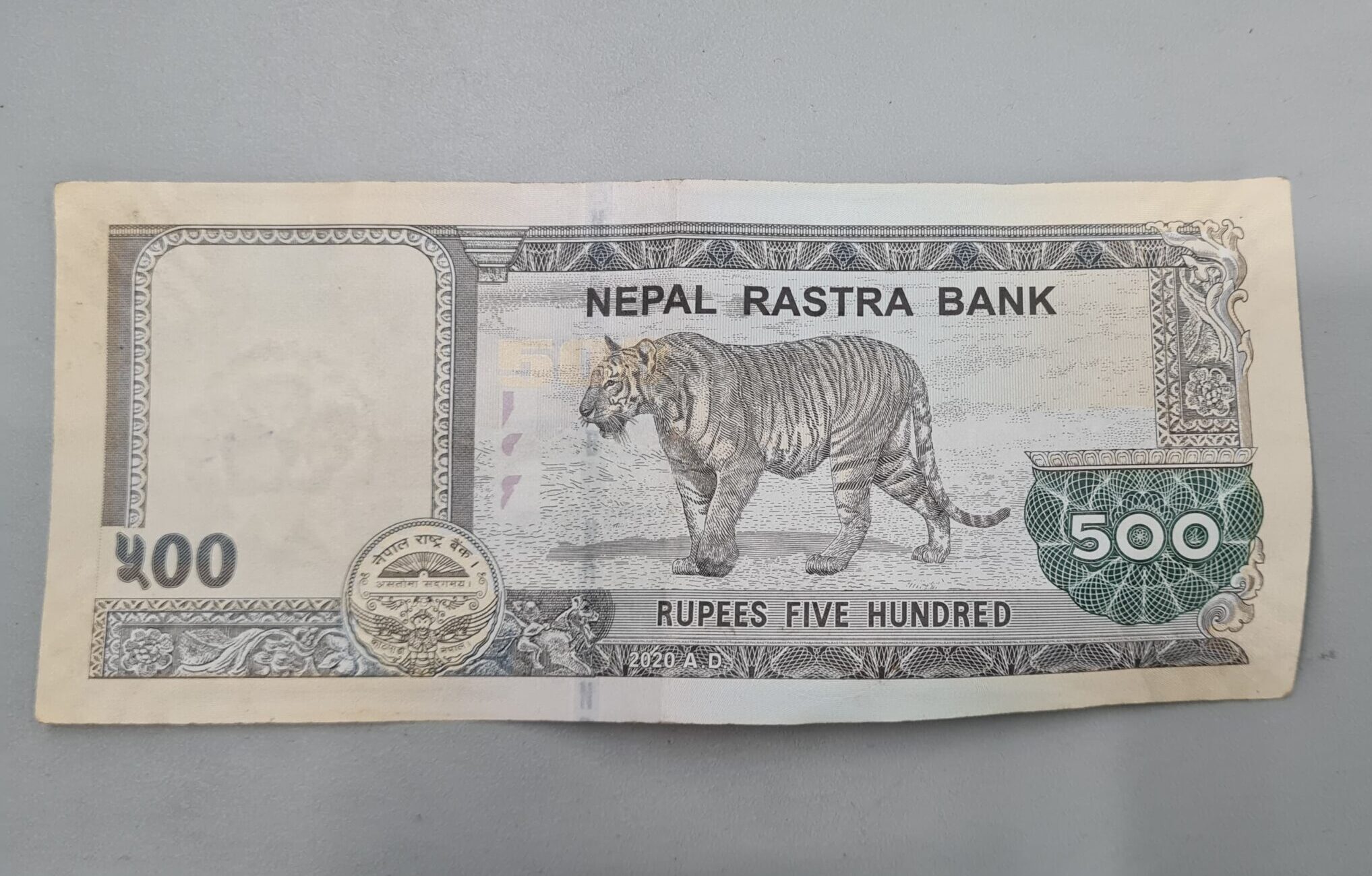
Nepal Rastra Bank (NRB) has brought 3 million new Rs 500 denomination banknotes into circulation from Wednesday, bearing the signature of Governor Biswo Nath Poudel. In a notice, the NRB said the newly issued notes carry serial numbers ranging from Jha 38 000001 to Taa 83 999999. The front side of the note features an image of Mount Everest, a rhododendron watermark, tactile identification marks for visually impaired users, and a color-shifting image of Kubera that appears golden when viewed directly and green at an angle. The note also includes a 3.5-millimeter security thread that changes from red to green depending on the viewing angle. The reverse side carries an image of a Bengal tiger with the inscription “Nepal Rastra Bank” above it. NRB had previously issued 348,000 Rs 500-denomination banknotes on December 24, 2021.
Land Offices Collect Over Rs 5 Billion Revenue in a Month
Land administration offices across the country accumulated Rs 5.244 billion in public revenue during a one-month window spanning from May 15, 2026, to June 14, 2026. Financial statements from 138 land registries confirmed that service tax processing accounted for Rs 286.6 million, while standard registration fees brought in Rs 2.785 billion. Capital gains tax generation yielded Rs 2.123 billion, showing a minor decrease from the Rs 6.263 billion gathered in the prior month.
Foreign Aid Funds Over Half of New Renewable Energy Alternative Budget
The government earmarked Rs 2.627 billion for renewable energy and efficiency programs for the coming fiscal year, drawing 54.42% of its capital from international assistance funds. The external funding pool comprises Rs 1.43 billion, while internal allocations provide Rs 1.197 billion. Channeled via the Alternative Energy Promotion Centre, the development program intends to supply 2.5 megawatts of off-grid solar and small hydropower to isolated villages, alongside providing 250,000 homes with electric cookstoves, biomass systems, and large institutional waste-to-energy generation facilities.
Indo-Nepal Siliguri-Jhapa Petroleum Pipeline Project Moves Forward
The government advanced procedural work on its second regional cross-border energy venture, calling for public feedback on the environmental impact assessment for the Siliguri-Jhapa petroleum pipeline. Funded via technical grants from the Indian Oil Corporation, the project requires an overall investment of Rs 12.447 billion. The development framework incorporates a 49.6-kilometer transit line coupled with an 18,900-kiloliter storage terminal in Charali spanning over 23 bighas of land. The system will feature custom carbon steel piping equipped with specialized SCADA leak control to shift local fuel transport away from tanker trucks.
Nepal, Germany Conclude G2G Talks with EUR 37.6 Million Pledge
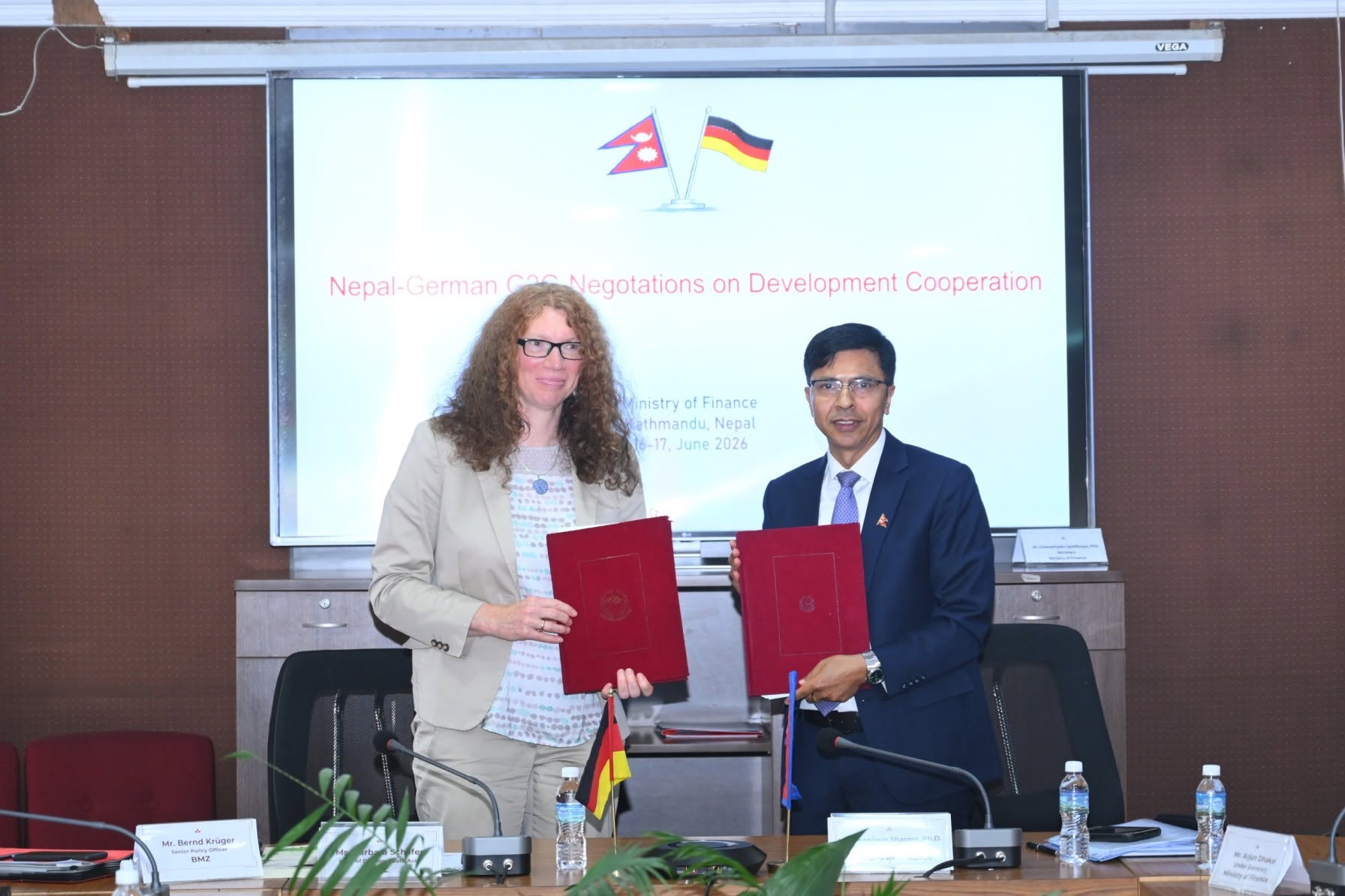
The Nepal–Germany Government-to-Government (G2G) development cooperation negotiations concluded in Kathmandu on June 17 with Germany pledging EUR 37.6 million for projects over the next two years. Held from June 16 to 17, the talks reviewed ongoing cooperation and set new priorities in energy, health, economic development, and civil society sectors. The agreement focuses on strengthening the national power grid, expanding clean energy systems, improving healthcare access, and supporting health insurance and digital health services, including support for Paropakar Maternity and Women’s Hospital. It also targets job creation for farmers, youth, and entrepreneurs, while supporting civil society work on human rights, social cohesion, and local development.
Lawmakers Propose Raising NRB Deputy Governors to 3
Lawmakers from both ruling and opposition parties have registered 18 amendments to the Nepal Rastra Bank (Third Amendment) Bill, proposing an increase in deputy governors from two to three. The amendments, submitted by MPs from the Rastriya Swatantra Party, Nepali Communist Party, and Rastriya Prajatantra Party, suggest that one post be reserved for external experts outside the central bank system. The government has also proposed allowing executive directors to be eligible for appointment 30 days before a vacancy arises. The parliamentary secretariat will now consolidate the amendments before the bill moves to clause-by-clause discussion and final approval.
10 State Industrial Districts Record Missing Lease Dues
Data from Industrial Districts Management Limited showed that 621 factory tenants operating inside ten designated state manufacturing sectors failed to settle Rs 1.038 billion in rental fees. The unpaid liabilities cover land leases, building rents, electricity services, and public water consumption. The Balaju industrial zone holds the highest outstanding default, with 151 businesses owing Rs 439.8 million, while the Hetauda and Bhaktapur zones show deficits of Rs 209 million and Rs 171.1 million, respectively. Authorities issued a strict seven-day notification warning tenant companies of legal contract cancellation if the balances remain unpaid.
Co-operative Management Panel Recovers Over Rs 12 Million
The Problematic Co-operative Management Committee recovered Rs 12 million in loan assets and returned Rs 5.9 million to retail depositors during a one-month operational push. The systematic disbursement returned funds to 1,452 individual savers holding balances under Rs 10,000 across eight distressed credit institutions. Operating under newly enacted restructuring guidelines, the state asset recovery body resolved Rs 5.1 million in claims via deposit matching schemes. Personnel are checking 44,000 outstanding claims and tracing property assets owned by fraudulent board directors to settle outstanding consumer liabilities.
Nagdhunga–Naubise Tunnel Set for Mid-July Opening After Delays
The Nagdhunga–Naubise tunnel highway is preparing to open for traffic by mid-July, aiming to ease congestion on the main entry route to Kathmandu. Project officials said internal works in the 2,688-meter tunnel are complete, while emergency response drills and final safety preparations are underway. Remaining works include landslide risk mitigation outside the tunnel. Originally scheduled for completion in April 2023, the project faced repeated delays due to construction issues and local disruptions. The system will use a multi-mode toll collection setup, including cash, QR payments, and automated sticker-based scanning. Toll rates will vary by vehicle type, ranging from Rs 60 to Rs 600, with all revenue directed to the Department of Roads.
Valley Traffic Collects Nearly Rs 2 Million in 24 Hours
The Kathmandu Valley Traffic Police Office registered 2,535 regulatory citations during a massive check sweep, depositing more than Rs 1.9 million inside the national treasury. Official road statistics confirmed that 101 drivers faced penalties for operating vehicles under the influence of alcohol, 129 for unauthorized ride-sharing activities, 106 for ignoring signal lights, and 138 for driving at excessive speeds. Furthermore, the single-day traffic enforcement campaign penalized 81 motorists for failing to maintain lane discipline, 141 for blowing horns inside prohibited urban zones, and 117 for illegal sidewalk parking across capital streets.
Statistics Office Urges Remaining Firms to Complete Economic Census
The National Statistics Office issued an urgent administrative appeal directing missing industrial, commercial, and service-oriented firms to register before the concluding phase of the National Economic Census 2082. Running from April 15 to June 21, the data-gathering initiative has deployed 3,606 surveyors to compile profiles across 1.2 million active firms. Disconnected enterprises are asked to call the toll-free line 1178 to guarantee exact representation, building precise baseline indicators for gross domestic product projections and long-term private sector infrastructure planning under the Statistics Act.
FNCCI Urges Diplomatic Moves to Clear Stalled Tea Exports
The Federation of Nepalese Chambers of Commerce and Industry (FNCCI) requested immediate government action to remove non-tariff trade blockades disrupting Eastern tea exports. The federation highlighted that unilateral operating procedures deployed by the Indian Tea Board enforce mandatory quality inspections at border transit nodes, delaying critical shipping containers for 20 to 25 days. This logistics freeze threatens an enterprise sector driving Rs 12 billion to 14 billion in annual trades, Rs 5 billion in cross-border sales, and 60,000 direct jobs, causing severe corporate cash crunches.
Mt. Everest Power Launches IPO Worth Over Rs 140 Million
Mount Everest Power Development Company opened its Initial Public Offering (IPO) to general public investors on Wednesday, offering 1.4 million shares. The capital issuance represents the final retail batch of a total 2.5 million share flotation approved from the company’s Rs 860 million corporate capital base. The energy firm previously distributed 860,000 shares to local project-affected residents and 172,000 units to overseas workers. Individual applications ranging from 10 to 10,000 units can be submitted via financial platforms up to June 22 with sales managed by NIMB Ace Capital.
Gold Traded at Rs 297,300, Silver at Rs 4,980 Today
The Federation of Nepal Gold and Silver Dealers’ Association reported a drop in the prices of precious metals today. The price of gold decreased by Rs 1,200 per tola (11.66 grams), bringing the current trading rate down to Rs 297,300. This follows Tuesday’s closing price of Rs 298,500 per tola. Similarly, the price of silver dropped by Rs 10 per tola, moving from Tuesday’s rate of Rs 4,990 to Rs 4,980 today.