Kathmandu
Tuesday, July 28, 2026





Despite a steady decline in public support over the past 18 years, Dahal still casts himself as a ‘lion’ of Nepali politics
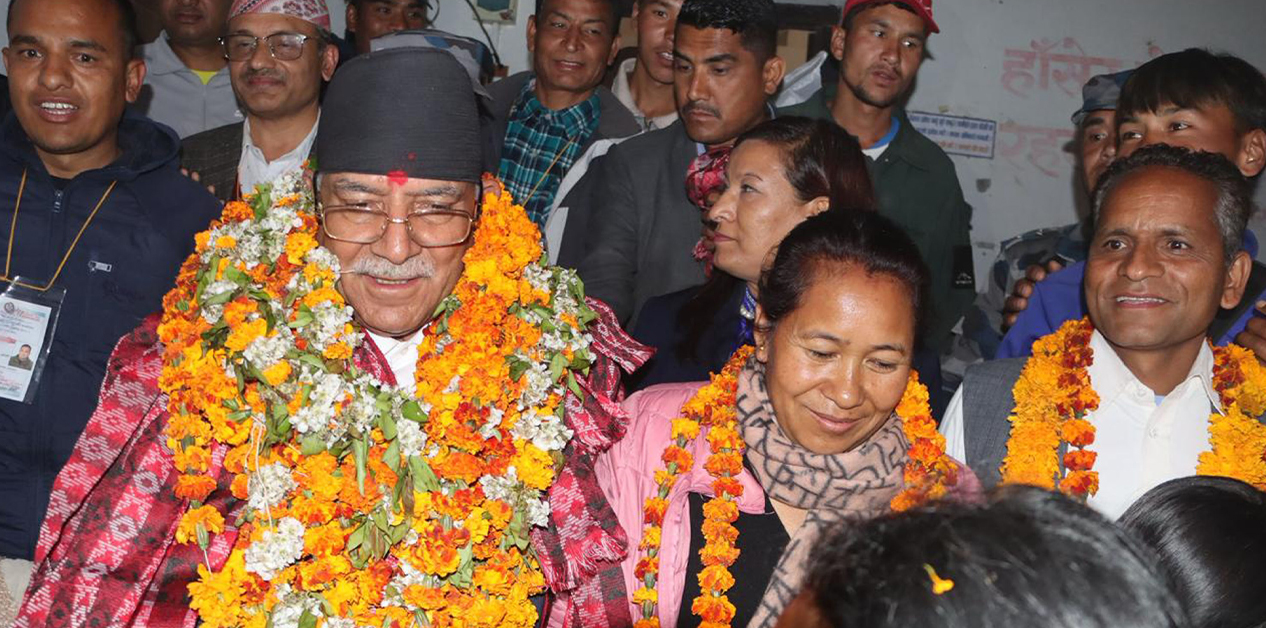
KATHMANDU: “Don’t dare underestimate Prachanda just because he won fewer seats. Everyone knows what happens to others when a lion walks through the jungle…. A strange situation has emerged where I am the only one among former prime ministers to have been elected. For that reason, I will have to carry history on my shoulders as well.”
These are the words of former Prime Minister and Nepali Communist Party (NCP) Coordinator Pushpa Kamal Dahal ‘Prachanda’, spoken at a public gathering held in Musikot on March 7, after winning the House of Representatives election from Rukum East.
Compared to the weak performance of traditional heavyweights Nepali Congress (NC) and CPN (UML) and the defeat of their top leadership, it may not be strange for Dahal, who did win, to claim the title of “lion.” When the NC and the UML shrank to just 18 and 9 directly elected seats respectively, winning 7 seats and receiving over 7 percent in the proportional vote is an achievement for the NCP. It is not unnatural for Coordinator Dahal to take pride in these parliamentary numbers.
But Dahal’s swagger, representing a former Maoist party that was once the largest force and has been steadily shrinking ever since, is nothing more than a defensive tool to paper over reality.
After last September’s Gen Z movement, when demands for leadership change in old parties grew louder, it is no secret that then-CPN (Maoist Center) chairman Dahal made every effort to establish his own relevance. Known for his skill in adapting to changing times and circumstances, he stepped up his activity in the new environment to preserve his political existence. In an attempt to steer national politics in his favor after the movement, he claimed to be the true guardian of the Gen Z movement, and tried to take credit by saying the movement had risen around the very demands he had raised.
Saying that the movement had created a new political situation and that the party must embrace it, he convened the party’s central committee meeting faster than the NCor the UML. He announced that a general convention would be held soon for new policies and leadership. He dissolved the central committee and formed a general convention organizing committee under his own coordination. He announced he would not take on executive responsibility after the upcoming convention. But in the midst of all this, he cleverly changed course; he brought together various left-wing factions and leaders to form a new party, the NCP, pushed the convention back, and in order to preserve his own political existence, abandoned Maoism altogether.
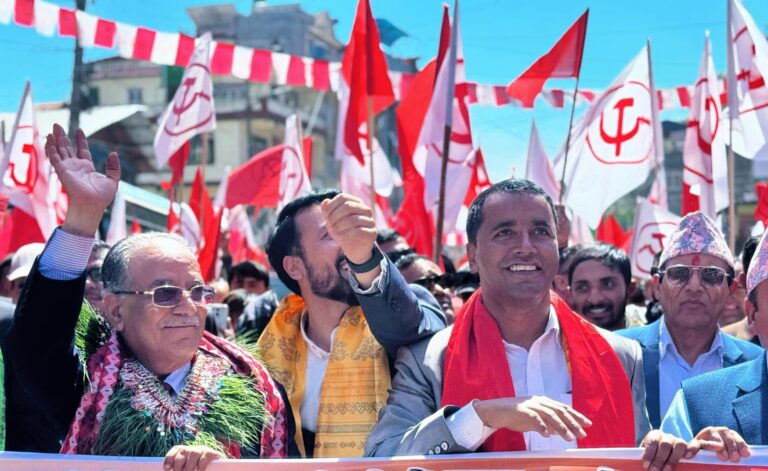
Yubaraj Dulal, the winning MP from Sindhupalchowk 2, with Prachanda during the election campaign. Photo: Dulal’s Facebook page
The formation of the NCP after the House of Representatives election had already been announced was a strategy Dahal used to secure himself in the election. In it, 25 small left-wing factions, including Madhav Kumar Nepal-led CPN (Unified Socialist), themselves seeking survival, were joined together.
The NCP, dominated by former Maoists and entering the election with the claim of becoming the largest party, could not deliver the expected results. It won only seven seats in the direct election. Agni Prasad Sapkota, a secretariat member of NCP’s election management committee, admits the results fell short of expectations. “This time’s result is far weaker than what we had hoped for,” says Sapkota. “We will hold a meeting within a few days to review why this situation came about.”
All the constituencies where NCP won are places that were Maoist base areas during the armed insurgency.
In the proportional vote, NCP, placed fourth, had received more than 773,000 votes at the time this report was prepared, which is slightly over seven percent of the total votes counted.
In the 2022 House of Representatives election, the then-Maoist Center alone had received 11.13 percent of the proportional vote. Having formed a coalition with parties including the Nepali Congress, the party had won 18 seats in the direct election. With 14 more seats from the proportional vote, it had a total of 32 seats in the House.
The other party absorbed into the NCP, the Unified Socialist, had won 10 direct seats in the 2022 election but failed to become a national party as it could not cross the three percent threshold in the proportional vote. In this election, the performance of the former Unified Socialist faction was even worse. Of the seven constituencies NCP won, Dhan Bahadur Budha, elected from Dolpa, is the only leader with a Unified Socialist background. All other winners are former Maoists.
As the party’s grip has been slipping, Dahal has been moving from place to place in every election searching for a safe constituency to protect himself. This time too, rather than contesting in Gorkha-2 where he had won in 2022, he went to Rukum East, a Maoist stronghold. By going to Rukum East, Dahal secured his own seat in parliament, but the party’s performance remained weak. Most leaders including NCP co-coordinator and former Prime Minister Madhav Kumar Nepal have been defeated. Nepal finished fourth in Rautahat-1. In Kathmandu district, all of the party’s candidates lost their deposits.
Political analyst Shyam Shrestha says that the NCP’s vote share fell because it failed to understand the times, the environment, and public aspirations.
“People wanted economic and social change, but the NCP and other parties did not make that a priority. Even though they led major political changes, they appeared weak when it came to pushing forward important issues,” he says.
When the results of all 165 constituencies were made public, NCP candidates finished second in only 17 of them. All the constituencies where NCP won are former Maoist base areas from the armed insurgency period. The NCP won in Sindhupalchok-2, Rolpa, Rukum East, Rukum West, Salyan, Kalikot, and Dolpa.
After the then-CPN (Maoist), which had fought a 10-year armed insurgency, entered the peace process, the votes it received in the first Constituent Assembly election of 2008 openly reflected the people’s desire for a peaceful end to the war and their aspirations for a “New Nepal.” At that time, the Maoists won 120 of the 240 directly contested seats. Similarly, with 29.28 percent (3,144,204 votes) in the proportional vote, it became the first party, winning 100 of the 333 proportional seats. At that time, Dahal was an established figure commanding tremendous prestige and influence.
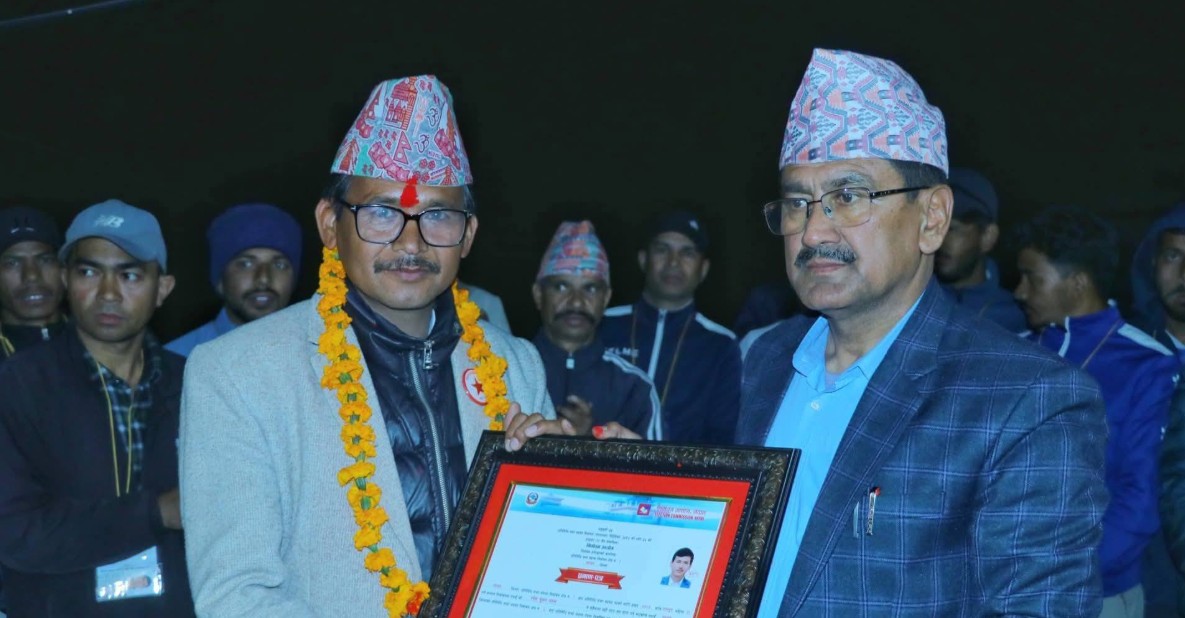
Ramesh Malla (left) receiving the certificate. Photo: Amrit Budhathoki
But by the time of the 2013 Constituent Assembly election, the Maoists had been unable to hold onto their earlier popularity and public support. In that election, the Maoists shrank to third place, winning only 26 direct seats and 54 proportional seats for a total of 80. Their proportional vote had fallen sharply to 15.21 percent.
After the constitution was promulgated, the Maoist Center formed an electoral alliance with UML in the first House of Representatives election of 2017. Both parties had announced they would merge after the election. Contesting under the slogan of left unity, stability, and economic prosperity, the Maoists won 37 seats in the direct election, but their proportional vote had further declined to 13.66 percent.
After the 2017 election, the UML and the Maoist Center united to form the NCP. But the unity did not last long. The party split on 7 March 2021.
In the 2022 House of Representatives election, there was a five-party alliance including the Nepali Congress, Maoist Center, and Unified Socialist. Although the Maoists won 18 seats in the direct election through the alliance, their proportional vote fell even further than before; they received only 9.37 percent in the proportional vote.
Analyst Shrestha says that after the Maoists entered government, they forgot which class they came from, and so voters also forgot the party at the polls. “The Maoists could not represent the working class. After elections, the Maoists forgot to even address that class, and as a result, people forgot them at the ballot box,” he says.
After entering the peace process, the Maoists spent most of their time in power. Of the four times the party led the government, Dahal himself became Prime Minister three times.
Having come from armed insurgency into parliamentary politics, Dahal had established himself as a player in power politics. He now claims to be a political guru for everyone. After his electoral victory in Rukum East, he said, in what appeared to be a reference to the RSP: “I already witnessed a wave like yours back in 2008. Based on that experience, I am ready to work together with everyone. On the basis of history, I can be a guru for all.”
Even as Dahal has kept winning by cleverly finding safe constituencies election after election, the party under his leadership has been steadily eroding, and as a result, its influence and grip on national politics has been weakening.
Despite Dahal’s claim of working with everyone, the arithmetic of parliament is not in his favor. In the new parliament, he will not hold that kind of standing. Unlike in the dissolved House of Representatives, where Dahal claimed to hold the “magic number” without which major parties could not form a government, he will not have that leverage this time. For someone who has always been in power since entering the peace process, the new term of parliament looks set to be his most difficult yet.