Kathmandu
Monday, July 27, 2026





Key reasons why voters gave unexpected support to Rabi–Balen
Nepal has adopted a mixed electoral system since the 2008 Constituent Assembly election. Under this system, both the first-past-the-post (direct election) and proportional representation (PR) systems are practiced. In countries with mixed electoral systems, it has generally been believed that a single party rarely wins a clear majority. However, in this election for the House of Representatives, the Rastriya Swatantra Party (RSP) broke that assumption by securing a near two-thirds majority. Out of the 275 members in the House of Representatives, RSP won 125 seats out of 165 direct constituencies. Likewise, in the proportional representation category, the party secured around 48 percent of the total valid votes (5,167,429 votes). Based on this, RSP is expected to receive 57 seats out of the 110 proportional seats.
There is not just one reason behind RSP receiving votes close to a two-thirds majority. According to political scientists and analysts, the result reflects both frustration with old parties and hope for a new political force, along with several other factors. According to Amrit Kumar Shrestha, an associate professor of political science at Tribhuvan University, it seemed as if voters across the country had collectively decided to vote for RSP.
Indeed, in Madhesh Province, RSP candidates won 30 out of 32 constituencies. In Kathmandu district, the party achieved a clean sweep in all 10 constituencies. Voters in many hill districts also placed their trust in RSP.
Political scientist Dev Raj Dahal says that citizens, frustrated by the incompetence, inefficiency, and poor governance of traditional parties, turned to RSP while searching for an alternative political force.
Analyst Rajendra Sharma, however, believes that voters mainly punished traditional and Madhesh-based parties. According to him, the electoral wave reflected more anger toward old parties than trust in RSP itself.
Various factors contributed to the wave in favor of RSP. The major ones are as follows:
Reason One: Disillusionment with traditional parties
Traditional political parties that had governed the country for a long time became more focused on power struggles than on the welfare of the country and its citizens. The top leaders of the three major traditional parties continued playing “musical chairs” with power. Corruption, political interference in state institutions, power-sharing in appointments, and transactional politics became almost institutionalized practices. Their parties largely remained silent witnesses to the actions of their leaders. As a result, public frustration and dissatisfaction grew sharply against these parties and leaders. This anger erupted during the September 8 and 9 Gen Z protest movement last year. In the political environment following the Gen Z movement, the election became an opportunity for voters to punish the stagnation and incompetence of traditional parties and leaders.
Political scientist Dahal says that traditional party leaders became power-centric and ignored public expectations, which increased public frustration. He says, “Leaders had no vision or policy about how to move the country forward. Even the policies they had were not implemented. Governments became unstable, and people eventually became frustrated and chose an alternative.”
Analyst Sharma says traditional parties created a nexus between bureaucrats, businessmen, and politicians, which led to irregularities. He says, “They could not spend more than about 20–22 percent of the development budget, the country entered the FATF grey list, disputes emerged over several treaties and agreements, and diplomacy failed. These various failures were ultimately reflected in the election results.”
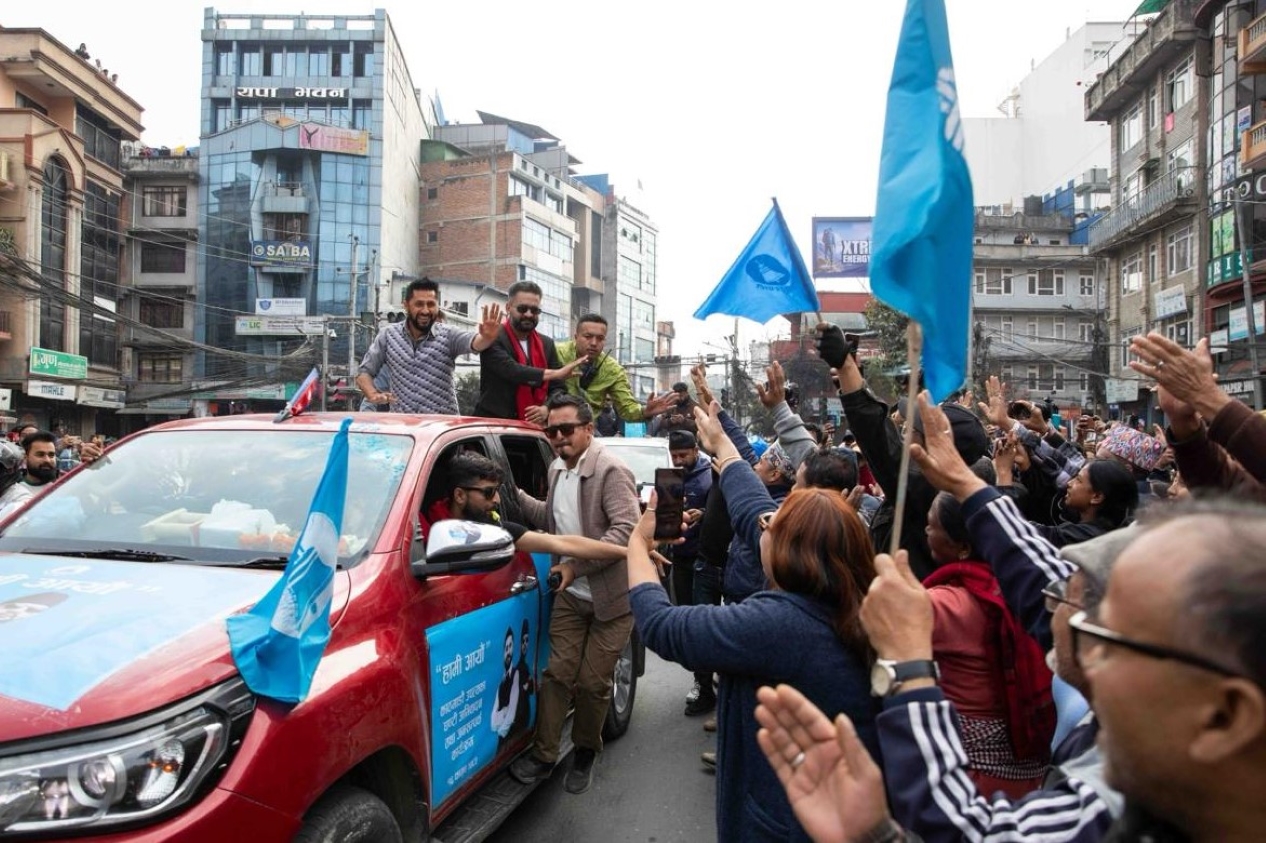
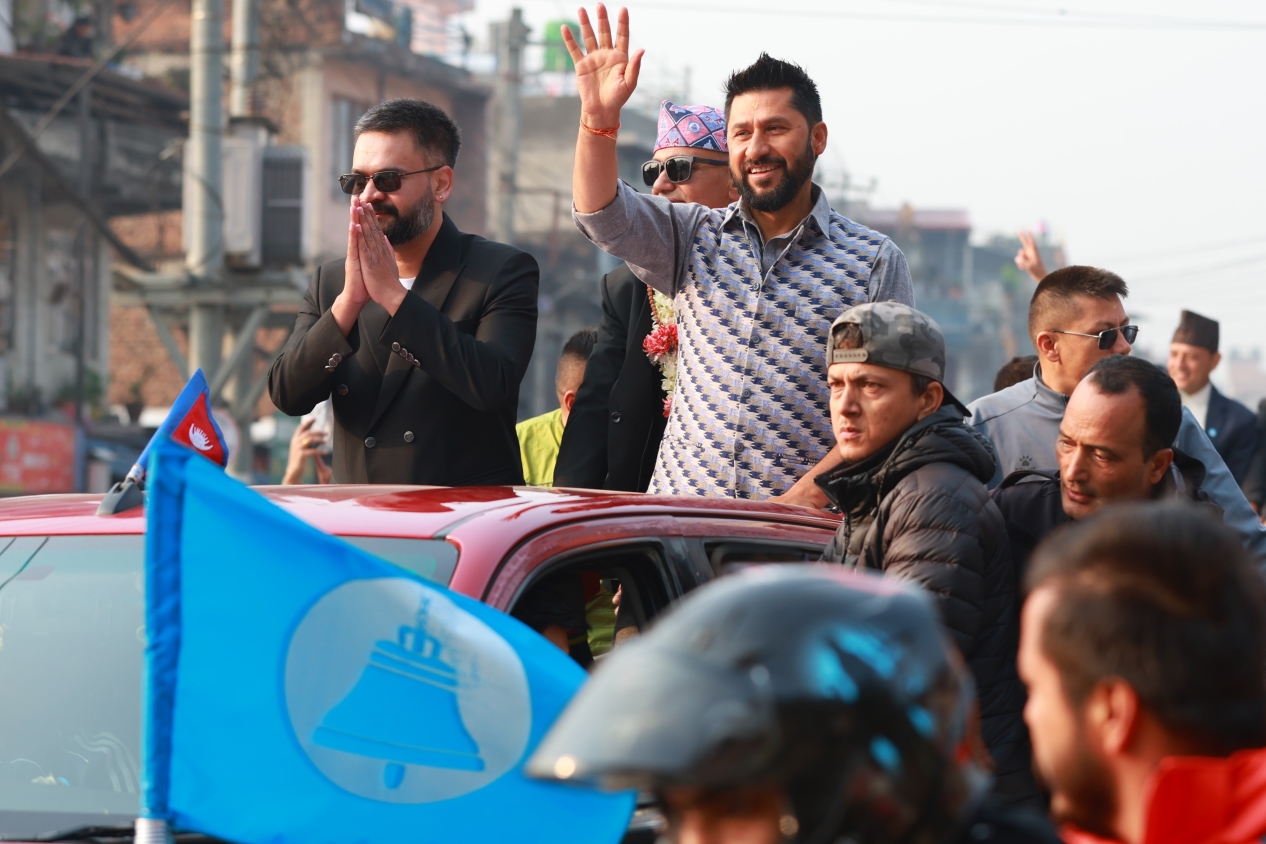
RSP President Rabi Lamichhane and Balendra Shah waving to supporters. Photo: Nepal Photo Library
Reason Two: Search for an Alternative Force
In every election, voters sometimes made communists the largest party and sometimes the Nepali Congress. However, regardless of which party came to power, the living standards of citizens did not improve.
The Communist Party of Nepal (Maoist) had launched an armed insurgency with a 40-point demand for radical transformation. After entering the peace process, it became the largest party in the 2008 election. However, the Maoists, who campaigned with the slogan of “New Nepal,” also failed to transform the country or fulfill public expectations. Leaders who spoke about the liberation of the proletariat and working class became immersed in power, privileges, and luxurious lifestyles. They forgot their original agenda and focused mainly on forming governments, sometimes with the UML and sometimes with the Nepali Congress. Since earlier elections, voters had been searching for an alternative political force. After the 2015 constitution, Baburam Bhattarai, who left the Maoist party, formed Naya Shakti in 2016, claiming to represent an alternative force. Other groups such as Bibeksheel Nepali also emerged. However, voters did not fully trust them.
In contrast, the Rastriya Swatantra Party (RSP), which contested the parliamentary election just five months after its formation in 2022, managed to attract voters looking for an alternative. It won 20 seats (7 direct and 13 proportional), surprising traditional political forces. Even after this warning sign, traditional parties neither felt alarmed nor corrected themselves. The governance style of the three major traditional parties continued against public sentiment. As a result, hope and trust in an alternative political force continued to grow stronger. Finally, in the parliamentary election held three years later, RSP defeated parties that had long relied on political strongholds, family legacies, and caste-based vote banks. Associate professor Shrestha says, “Since other parties failed to reform themselves, people searched for an alternative. They chose the RSP as that alternative.”
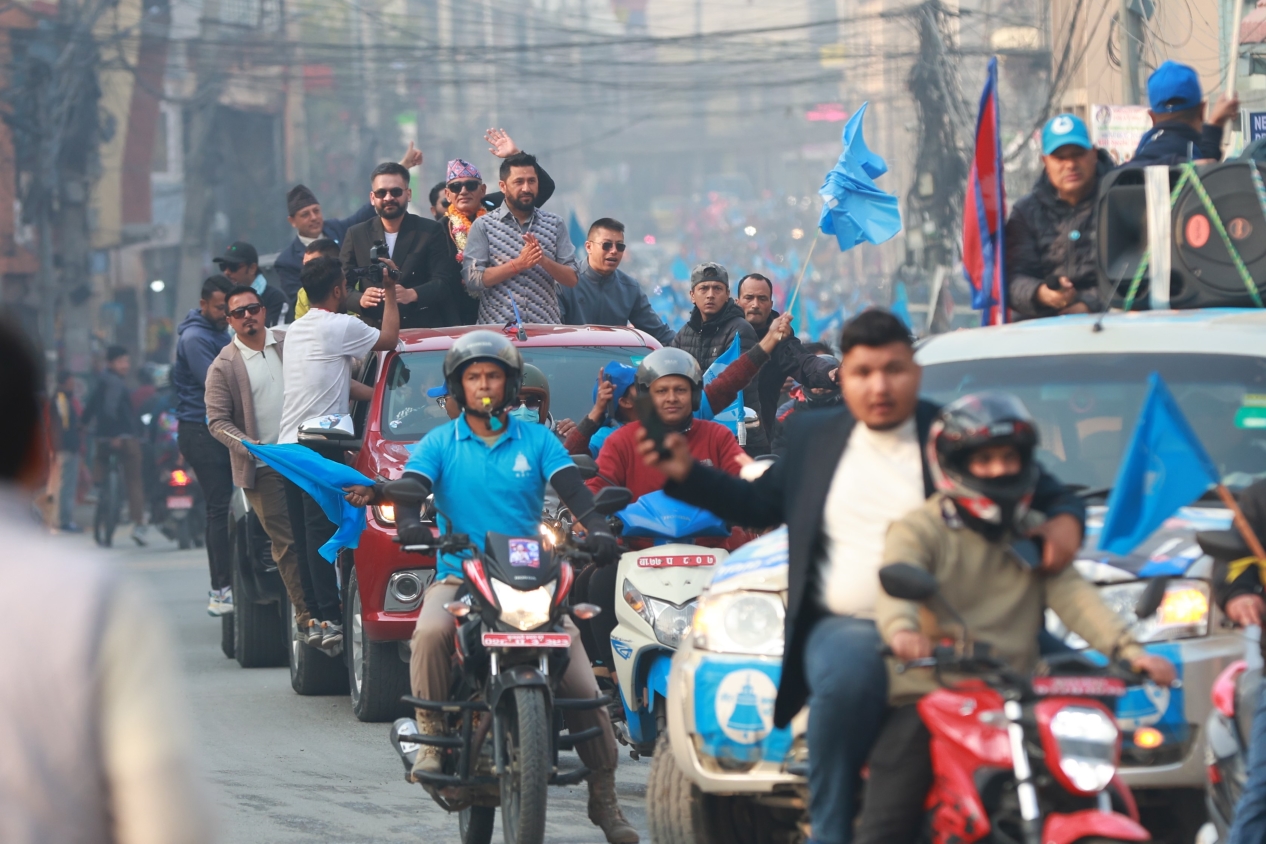
RSP President Ravi Lamichhane and Balendra Shah with supporters during the election campaign. Photo: Nepal Photo Library
Reason Three: Anger toward electoral alliances
Traditional parties created distortions in politics in the name of electoral alliances. It is natural for parties to form alliances after elections if no party obtains a clear majority. However, traditional parties began forming pre-election alliances even with groups whose ideologies and principles did not match. In power-centered politics, their main goal became ensuring electoral victory at any cost.
Before the election alliances were formed, which even created situations where voters could not vote for the election symbol of the party they preferred. Political parties had been running the country like a syndicate through alliances both before and after elections. Sometimes the Maoists and the Nepali Congress would join hands; sometimes the Maoists would ally with the UML; at other times the Nepali Congress and UML would cooperate. Voters did not like this situation. Even while the first and second largest parties in Parliament, the Nepali Congress and the UML, were governing together, the Gen Z movement took place on September 8.
Analyst Rajendra Sharma says the party syndicate had been strengthening since the new constitution was promulgated in 2015. He says, “The party syndicate that lasted for a decade reached its peak by 2025. They were united by self-interest. As a result, public support flowed toward the RSP.”
Reason Four: The Balen craze
Balendra Shah (Balen), who had been known among the youth since his days as a rapper, gained nationwide attention after winning the Kathmandu Metropolitan City mayoral election as an independent candidate in 2022. He even became a headline in international media.
Previously, through rap music he had spoken against political distortions, which made him popular among young people. He had also frequently protested against political party syndicates and corruption.
After becoming mayor, Balen worked on preserving culture and heritage and promoting local identity in Kathmandu. He established an image of speaking little but working effectively. When the parliamentary election was announced on March 5, he resigned as mayor and entered the electoral race. The Rastriya Swatantra Party (RSP) presented him as its prime ministerial candidate and campaigned accordingly. His decision to contest against former Prime Minister KP Sharma Oli in Jhapa-5 attracted huge attention and created a wave in favor of the RSP. The idea of a “son of Madhesh” becoming prime minister led to the slogan “This time, Balen Government” echoing across the Madhesh region.
Previously, through rap music he had spoken against political distortions, which made him popular among young people. He had also frequently protested against political party syndicates and corruption.
Political scientist Dahal says that Balen’s personality factor also contributed to RSP’s rise. He says, “The work Balen did as mayor of Kathmandu was widely publicized. But there was also a perception that traditional parties did not allow him to work properly. That made many people angry. When Balen joined the RSP, the party received many votes.”
With Balen’s entry, the RSP suddenly gained support from Madhesh. Since the party presented him as a future prime minister, a wave emerged calling for a prime minister from the Madheshi community for the first time. As a result, despite having almost no organizational presence in Madhesh, the RSP won 30 out of 32 seats in the province. Analyst Sharma says, “The wave that ‘a son of Madhesh is becoming prime minister’ swept away all Madhesh-based parties. Their votes shifted entirely toward the RSP.”
Reason Five: Support for Rabi
In the past, Rabi Lamichhane, through television programs, had strongly spoken out against political distortions. He also helped rescue Nepali migrant workers who faced problems abroad. He gained attention for working as both a journalist and activist, addressing the problems of citizens that the government had ignored.
At the peak of his popularity, he left journalism, founded the Rastriya Swatantra Party, and entered politics. In the 2022 election, the RSP led by Rabi won 20 seats. Elected from Chitwan-2, he even became Deputy Prime Minister and Home Minister. However, traditional parties brought forward controversies regarding his citizenship and cooperative funds. After a court case related to citizenship, he lost both his ministerial and parliamentary positions. Yet his popularity did not decline. Many ordinary citizens felt that he had been unfairly targeted. In the 2023 by-election, he again contested from Chitwan-2 and won with even more votes than before.
However, traditional parties brought forward controversies regarding his citizenship and cooperative funds. After a court case related to citizenship, he lost both his ministerial and parliamentary positions.
Later, he faced accusations of misusing funds from cooperative institutions, and complaints were filed against him at police offices. Amid those allegations, he became Home Minister in the government led by Pushpa Kamal Dahal. When the Dahal government was about to lose a vote of confidence, RSP withdrew from the government. Rabi was charged with fraud involving funds from seven cooperatives, and cases were filed against him in multiple districts. He was even arrested, taken to various district courts for statements, and kept in custody.
Although leaders from the UML and the Nepali Congress were also involved in cooperative controversies, action was taken mainly against Rabi. This created a perception among citizens that the government was taking revenge against him. Political scientist Dahal says Nepali society tends to be “victim-oriented”, meaning people sympathize with those perceived as victims. He says, “There are people in other parties who have done worse than Rabi. But when only Rabi was targeted and taken around courts across the country, public sympathy shifted toward Rabi and the RSP.”
Reason Six: Desire for a majority government
Traditional political parties had been forming alliances even before elections and running the country like a syndicate. They repeatedly promoted the narrative that no single party could win a majority under the current system.
In the 2022 election, the RSP won 20 seats and became the fourth-largest party. It had no option but to join other parties to form a government, eventually entering the government through the UML–Maoist alliance. During that time, the work of ministers such as Home Minister Rabi Lamichhane and Education Minister Sumana Shrestha was widely discussed. However, RSP successfully conveyed to voters that they could not implement major changes because they did not have a majority. Analyst Sharma says many voters supported the RSP this time with the belief that the party could achieve real change if it had a majority government.
In the 2022 election, the RSP won 20 seats and became the fourth-largest party. It had no option but to join other parties to form a government, eventually entering the government through the UML–Maoist alliance.
Citizens also understood the need for a majority government through the issues RSP lawmakers raised in parliament and the efforts they made while serving as ministers. Associate Professor Shrestha says the RSP managed to convince voters about the importance of a majority government, which is why it received so many votes in this election. He says, “Although there has been a belief that a clear majority cannot emerge under the current electoral system, many people voted for the RSP because they believed the party needed a majority. This might not happen again in future elections.”
Reason Seven: The Gen Z movement
The Gen Z movement that took place on September 8 and 9 last year also became another factor that increased public support for the RSP. The protest on September 8 was directed against the distortions and corruption created by traditional political parties. After the then government led by KP Sharma Oli shut down social media platforms, angry young people organized protests demanding an end to corruption, generational change in politics, and other reforms. When the government used force against the protesters, several people, including school students, lost their lives. The following day, on September 9, protests escalated further. Government buildings including the Parliament building, Singha Durbar, courts, leaders’ residences, and even business establishments were attacked, set on fire, and vandalized.
According to analyst Rajendra Sharma, the government failed to show sensitivity toward the deaths of young protesters and did not issue an apology, which further angered citizens. The ruling coalition partners at that time – the UML and the Nepali Congress – labeled the protesters as “terrorists.” Political scientist Dahal says voters ultimately boycotted traditional parties in the election because those parties tried to hide their own weaknesses by blaming others.
The RSP had supported the Gen Z movement from the beginning. After the protests, RSP members of parliament were the first to resign. The then Kathmandu Mayor Balen Shah had also openly supported the movement. According to Associate Professor Shrestha, the role RSP leaders played during the movement and their strong voice against traditional parties helped increase voters’ trust in the party.
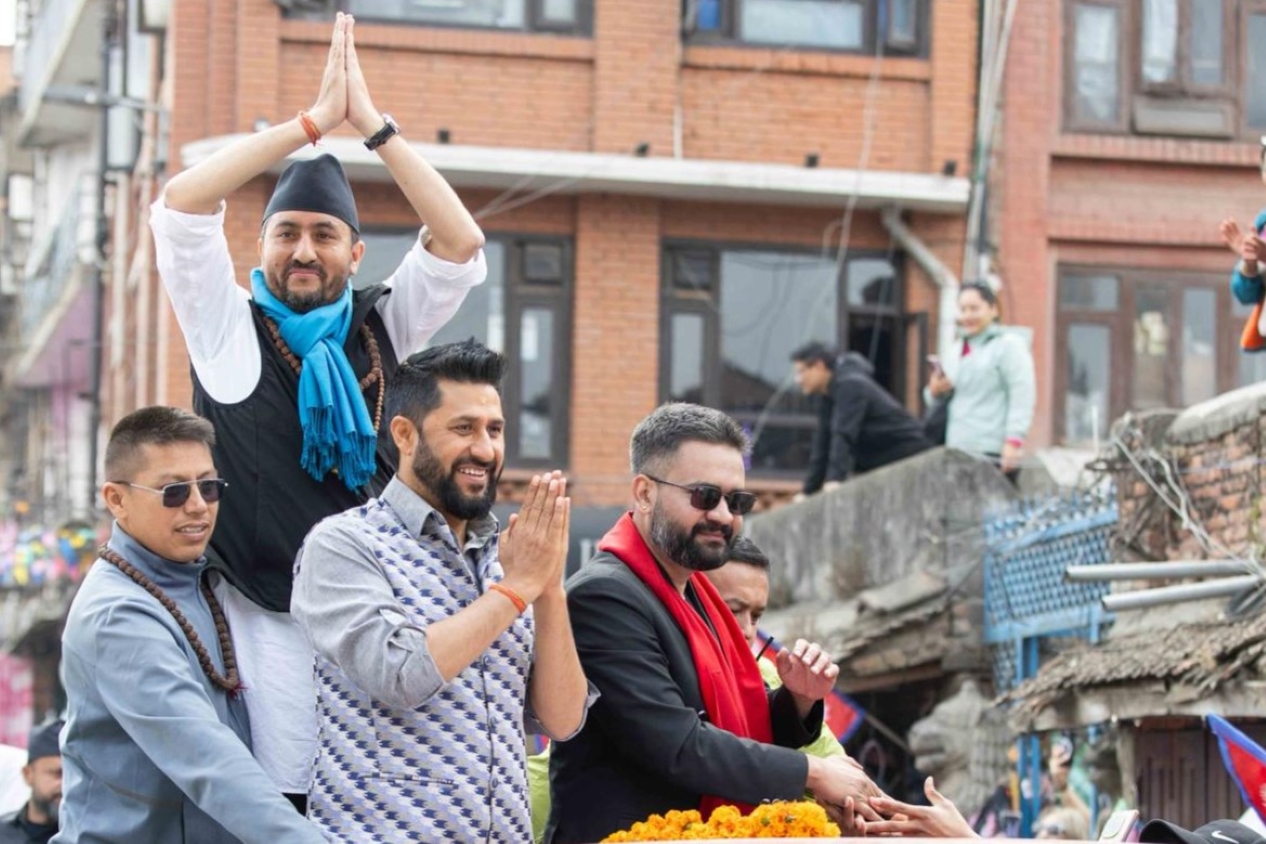
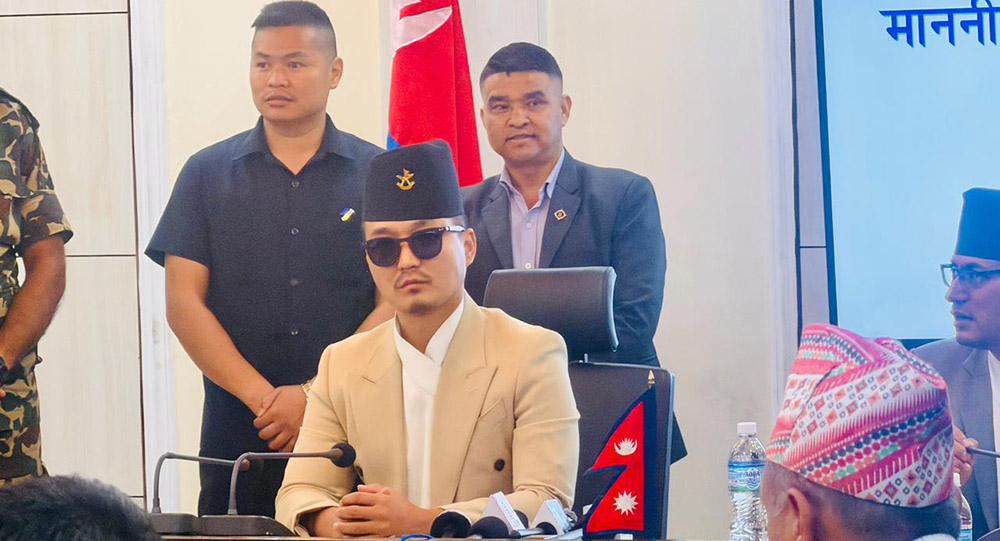
Rabi Lamichhane (center), Balendra Shah (right) and Jagdish Kharel (back). Photo: Nepal Photo Library
Reason Eight: Influence of Nepalis living abroad
Political parties that had been in power for a long time failed to create employment opportunities within the country. At a time when Nepal had a large youth population, instead of mobilizing this youth force for national development, policies pushed them toward foreign employment. Many Nepalis were exploited by middlemen before going abroad, and even the remittances they sent back were not effectively used for the country’s overall development.
Young people who went abroad for work or study saw the development and progress of other countries. In contrast, they observed that in Nepal citizens still had to pay bribes to receive government services, stand in long lines, and face exploitation from intermediaries everywhere. These youths repeatedly urged traditional leaders to reform and demanded generational leadership change.
In contrast, they observed that in Nepal citizens still had to pay bribes to receive government services, stand in long lines, and face exploitation from intermediaries everywhere.
According to political scientist Dahal, when leaders failed to change despite these calls, Nepalis living abroad pressured their families back home to vote for political change. He says, “Traditional parties reduced subsidies that should have supported agriculture, privatized and dismantled state-owned industries, and adopted policies that pushed young people abroad. Those youths were frustrated. Their pressure eventually directed votes toward the RSP.”
Reason Nine: RSP’s strong desire to transform the country
Since its establishment, the RSP has consistently advocated for good governance. The party publicly committed to reforming government services, and during its previous participation in government it attempted to implement such reforms. Unlike other parties, the RSP repeatedly published election commitments and pledges before elections.
Through social media, it clearly communicated its plans for the country and successfully explained them to voters. The party also practiced financial transparency by publishing its income and expenditure details on its website. Analyst Sharma says that the RSP’s public commitments raised hope among ordinary citizens. He says, “Some of the RSP’s public commitments are quite ambitious, but many of them are realistic reforms that could improve the system. People voted with hope in those agendas and promises.”
Reason Ten: Disillusionment with old ideologies
Political ideology plays an important role in shaping what kind of country a nation wants to build, because ideology forms the foundation of politics.
Traditional political parties were once guided by their ideological principles. In Nepal, there were mainly two major ideological streams: the democratic Nepali Congress and the communist parties. However, in recent years, these parties abandoned their ideological commitments. Parties with vastly different ideological positions joined together for the sake of political interests and formed governments. They collectively misused state resources, and ordinary citizens could no longer see a meaningful difference between the Nepali Congress and communist parties. Political scientist Dahal says traditional parties began practicing politics based on regional and ethnic slogans rather than ideology, simply to serve their interests. He says, “Political parties are supposed to compete in elections based on ideology, policies, and leadership. But they abandoned ideology altogether. When ideology declined, public trust in them also decreased.”
Analyst Sharma says both the communist parties and the Nepali Congress no longer represent their original ideological forms. In fact, the RSP itself does not have a clearly defined ideology. Political scientists say that ideological politics has been declining globally in recent years. Some describe the RSP as a neoliberal party, while others call it a populist party with unclear ideological foundations. Sharma argues that the collapse of ideology within traditional parties also pushed voters toward new political forces. He says, “The younger generation does not care much about ideology; they mainly want development. The older generation also realized that ideology alone does not bring results. As a result, votes shifted toward the RSP.”