Kathmandu
Tuesday, July 28, 2026





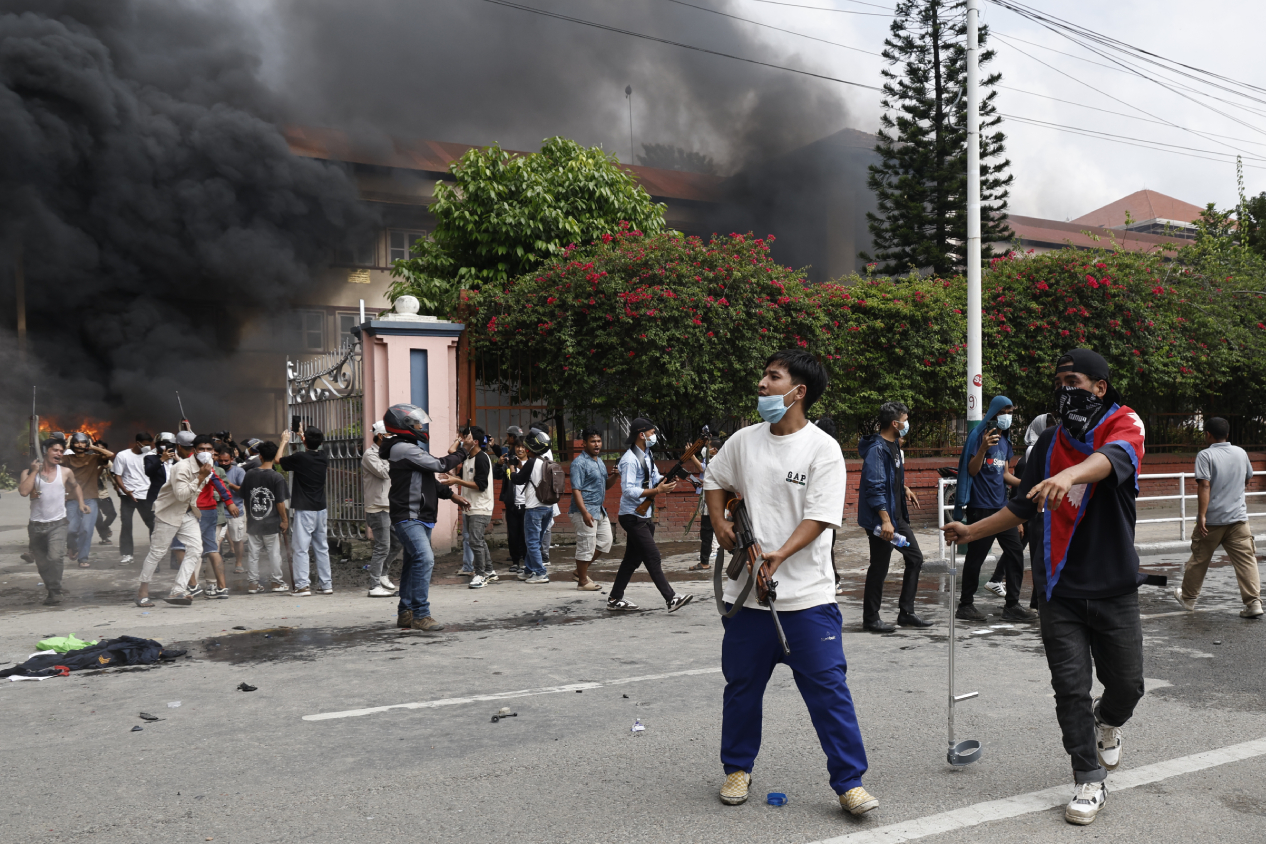
KATHMANDU: The confidential investigative report by a high-level inquiry commission led by former judge Gauri Bahadur Karki, which remains classified by the government but was recently accessed by Nepal News, has revealed chilling details of the systematic destruction that occurred on September 9 (Bhadau 24).
The 907-page document details how historical monuments, government installations, and private businesses were targeted using professional sabotage techniques, leading the commission to recommend a high-level specialized probe to identify the masterminds. According to the report, the attacks on “Vital Installations”-including Singha Durbar, the Federal Parliament, the Supreme Court, and the President’s Residence-were not random acts of mob violence. Instead, investigators found evidence of the use of specialized flammable substances and strategic targeting of specific judicial chambers where sensitive cases were pending.
A pattern of professional sabotage:
The inquiry commission’s field visits revealed a uniform and clinical modus operandi across nearly all sites of the uprising. Attackers followed a specific sequence of destruction that began with the immediate disabling of surveillance systems to eliminate visual evidence. This was followed by neutralizing building defenses, where water tanks were emptied and dismantled, and fire extinguishers were discharged to ensure that any subsequent fires could not be easily extinguished. In government offices, attackers specifically targeted Data Centers and computer labs to destroy digital records before moving on to burn physical documents and loot property. To maximize the destruction, gas cylinders were often ignited and hurled into buildings, or in cases where cylinders were unavailable, petrol bombs and Molotov cocktails were used to ensure the structures were engulfed in flames.
The report highlights that the arson at prestigious locations like Kantipur Publications, Hilton and Hyatt hotels, Bhat-Bhateni Superstores, and major corporate warehouses involved advanced accelerants and chemical agents. In a grim detail, the report notes that several looters died inside Bhat-Bhateni stores and private residences after becoming trapped in the very fires they helped ignite.
The search for evidence: BTS data and digital footprints:
A major hurdle for the commission was the deliberate destruction of recording devices and digital archives in government offices. The report states that solid evidence sufficient for criminal prosecution has not yet been collected because the perpetrators systematically destroyed the proof. Furthermore, the commission noted a total lack of supporting intelligence reports from either state or non-state agencies. Due to its limited mandate and timeframe, the commission could not finalize individual indictments, but it has handed the government a significant lead in the form of a comprehensive list of mobile phone numbers present at the riot sites. By analyzing Base Transceiver Station (BTS) data from Nepal Telecom and Ncell, the commission tracked individuals physically present at the Parliament, Singha Durbar, and the Supreme Court during the peak of the violence.
The commission concluded its findings by urging the government to immediately form a specialized investigative team including forensic and digital experts. This team is tasked with cross-referencing the raw BTS data with available social media footage and surviving CCTV snippets to bring the perpetrators to justice. The report suggests that without such a deep-dive investigation, the true extent of the coordinated effort to destabilize the state’s administrative and judicial heart remains unknown.