Kathmandu
Monday, June 15, 2026





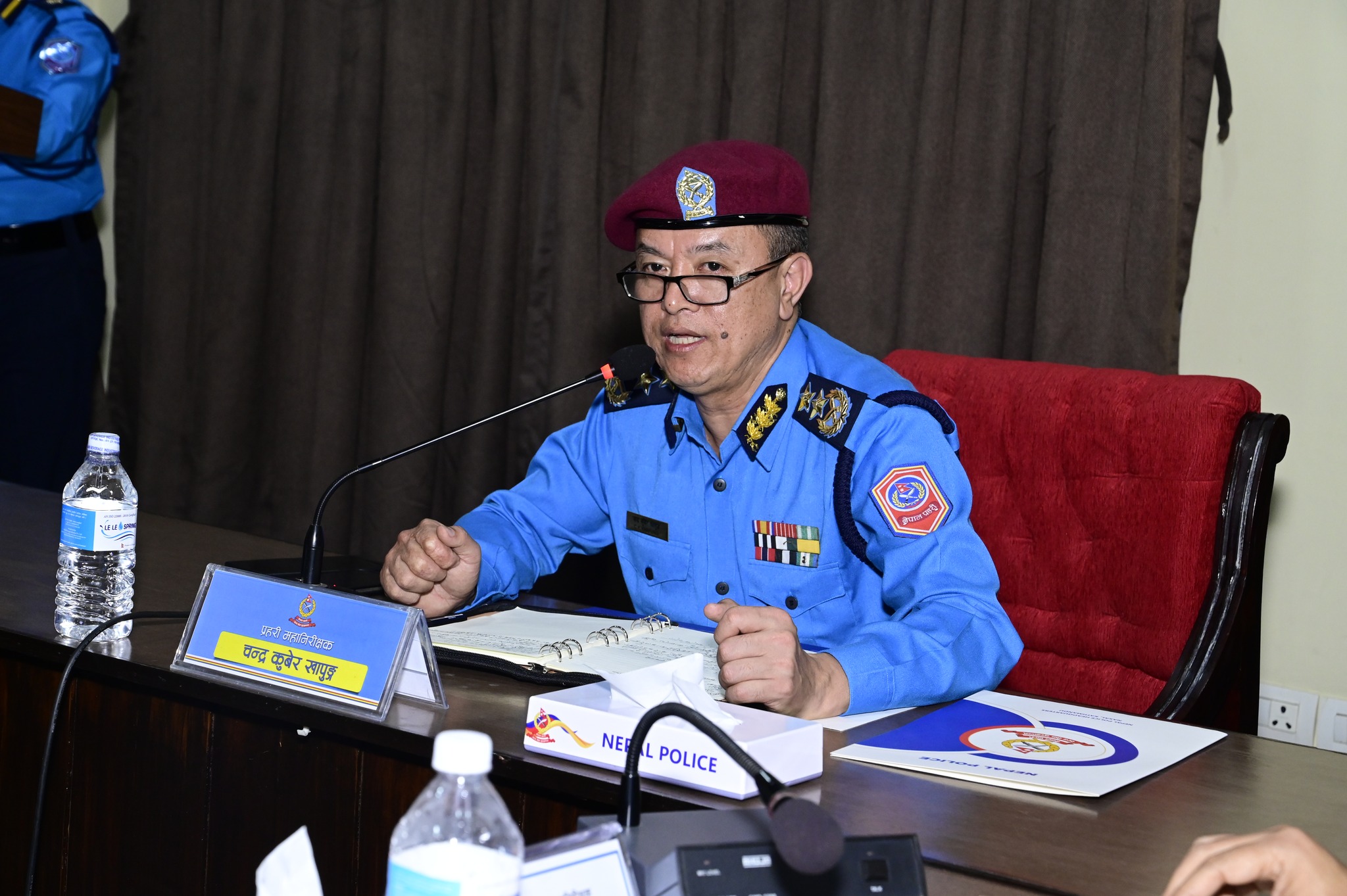
KATHMANDU: The then-Inspector General of Nepal Police, Chandra Kuber Khapung, has warned that the events of September 08 and 09 could have resulted in an unimaginable massacre if police personnel had been incited to open fire. Khapung made the remarks in his statement to the Commission to investigate the September 8–9 Gen Z Movement.
He clarified that once the District Administration Office in Kathmandu issues a curfew, its enforcement follows established procedures, and the IGP does not play a direct role in that process. Khapung further explained that police deployed on the ground have the legal authority to open fire if the situation warrants, and there is no requirement to seek prior approval from headquarters for each instance.
“If there had been incitement to open fire, an unimaginable massacre would have certainly occurred. Under the circumstances at that time, the [issued] order was appropriate,” the statement to the Commission reads. “One might speculate that different results could have followed had central approval been mandatory for all types of fire, but practically and legally, it is not possible to control every situation in that manner.” He also mentioned that the Inspector General does not hold the authority to issue “special orders” [outside of legal frameworks].
He admitted to giving policy-level instructions to use minimum force. “When the perimeter wall of the federal parliament building was demolished, arson was committed at the west and south gates, the premises were breached from various directions by scaling the walls, attempts were made to snatch weapons from personnel stationed at security posts, and posts were set on fire alongside stone-pelting at security forces-at that point, field officers felt the risk of losing security control.” Additionally, Khapung noted that according to the Police Act, 2012, surrendering weapons or government property to attackers is a serious offense; therefore, the situation must be evaluated with focus on field risks and the protection of police lives.
“I have not intentionally given any illegal orders. As I do not have clear information regarding the policy and procedures of the Nepali Army’s mobilization, I do not deem it appropriate to comment on that. Inter-agency coordination was active from the District Security Committee to the Central Security Committee, although the effectiveness varied according to the situation,” the statement mentions.
His statement further notes that on September 09, after attacks, vandalism, arson, and even the start of killings of police personnel began at most police offices, the immediate manpower available at those offices was insufficient to control the situation.
“Because all offices were under attack, it was not possible to mobilize immediate reinforcements. It appeared that if the existing manpower there had started firing, there was no alternative to massive human loss; similarly, if detainees were kept locked up during the arson, a grave and unpleasant situation could have arisen. For these reasons, only the order for minimum force was given,” the statement reads. “If there had been incitement to open fire, an unimaginable massacre would have certainly occurred. Under the circumstances at that time, the order was appropriate.”
He also disclosed that there was preliminary information that the September 09, 2025 demonstration was being conducted with permission for a peaceful program. It was assessed that the situation could become provocative due to the infiltration of some unruly elements, but an analysis that vandalism and arson would occur specifically at the Federal Parliament House was not initially made.
“Information regarding discussions and preparations on platforms like Discord had been received from the Police Headquarters Operations Department and the Cyber Bureau. That matter was presented during the meeting of the heads of security agencies. Before the Government of Nepal took the decision to shut down social media, no formal opinion or advice was sought from the Nepal Police regarding the security challenges that could arise from it; however, after the shutdown, alertness was maintained regarding potential challenges,” the statement says.
The statement clarifies that after receiving reports that the procession was breaking through prohibited zones and advancing toward the Federal Parliament House, instructions were given to coordinate with the Chief District Officer (CDO) for necessary management. Khapung’s statement mentions that instructions were given to “ventilate” the procession and keep the situation under control, but the protesters broke through the security cordon and entered the Parliament premises. “This is my understanding of how it should be,” the statement said.
Here is a full translation of the testimony of then Inspector General of Police (IGP) Chandra Kuber Khapung:
The reporting system established at the Police Headquarters in Naxal serves as the primary basis for obtaining information regarding the actual situation of any movement or crowd control. Information is exchanged and directives are managed through the Chain of Command involving officers such as AIGP, DIGP, SSP, and SP, following reports received from the respective areas and provinces via the Police Headquarters (PHQ) Operations. In special circumstances, there is also a practice of obtaining general information directly through the heads of relevant departments or offices as needed.
Initial information indicated that the demonstration organized by the Gen-Z youth generation on September 08, 2025 was intended to be a peaceful program with prior approval. Although it was estimated that the situation could become provocative due to the infiltration of some unruly individuals, there was no initial analysis suggesting that vandalism and arson would occur at the Federal Parliament building.
The Operations Department and Cyber Bureau of the Police Headquarters had received information regarding discussions and preparations taking place on platforms like Discord, and this matter was presented during the meeting of the heads of security agencies. The Government of Nepal did not seek a formal opinion or consultation from the Nepal Police regarding the security challenges that could arise before making the decision to ban social media; however, alertness was maintained regarding potential challenges after the ban was implemented.
On that same day, after receiving a report that the procession was advancing toward the Federal Parliament building by breaching the restricted zone, I issued directives to coordinate with the Chief District Officer (CDO) to make necessary arrangements. I had instructed them to engage the procession and keep the situation under control. Upon receiving information that protestors had entered the Parliament premises by breaking through the security cordon, I directed the mobilization of police with restraint, in accordance with the Local Administration Act. I wish to mention the fact that the Inspector General of Police does not have a direct role in the implementation of a curfew, as the District Administration Office, Kathmandu, follows its own methods and procedures once a curfew order is issued.
Police personnel deployed in the field hold the legal authority to fire shots as required by the situation according to the law, and there is no legal obligation to seek prior approval from the Center in every instance. While one might speculate that different outcomes could occur if central approval were made mandatory before any use of fire, it is practically and legally impossible to control every situation in that manner. The Inspector General of Police does not have the authority to completely ban “Live Fire” or issue a specific “Ceasefire” order.
Policy-wise, I had given instructions to use minimum force. However, in the context of protecting vital installations, self-defense, and implementing a curfew, there is a provision that live ammunition may be used based on the field situation, remaining within the ambit of the Local Administration Act.
When the perimeter wall of the Parliament building was demolished, arson occurred at the western and southern gates, the premises were entered by scaling the walls from various directions, attempts were made to snatch weapons from personnel deployed at security posts, and arson and stone-pelting were directed at the posts and security personnel-it is my understanding that the officers in the field must have felt a risk that security control could be lost.
I have received information that approximately 21 people died in the incident on September 08, 2025. Details regarding injured protestors and police personnel were received through regular reporting. The use of live rounds is not a normal circumstance: in a complex situation involving a charging crowd, thousands of rounds fired, and hundreds injured, it is possible that some protestors unfortunately died after being hit by bullets in sensitive areas such as the chest, head, face, neck, and abdomen. Although the situation came under control immediately after the use of ultimate force within the Parliament premises, information was received the next day that the situation had become more aggressive. It is my belief that firing occurred only after the curfew order. I believe it was certain that further damage would have occurred to the Parliament building had ultimate force not been used in a situation where the compound wall of the Parliament building had already been breached, arson had occurred at the gates and security posts, and vandalism had begun inside the premises.
I do not believe that human loss is merely the result of one person’s decision on a single day. How the peaceful demonstration of Gen-Z youth reached a violent level, which elements infiltrated, or which factors escalated the outrage can only be clarified through deep investigation. It is my opinion that the security personnel deployed in the field at that time merely became targets of the outrage directed toward other agencies. State agencies involved in information collection, analysis, and dissemination appear to be responsible to a greater or lesser extent.
Since the incident was extremely tragic, I had briefed all provincial police chiefs in the evening, anticipating that its impact could spread across the country, and directed them to manage security with restraint. They were asked to conduct local security assessments, anticipating risks of potential attacks, and threats to public property and political leadership. On the morning of September 09 (Bhadra 24), a briefing was held for the Prime Minister at Baluwatar along with security chiefs, where grief was expressed over the heavy human loss and there was discussion regarding the formation of an investigation committee.
I had no information regarding how Rabi Lamichhane, Chairman of the Rastriya Swatantra Party, who was in Nakkhu Jail, came out; after he was out, contact was made via D.P. Aryal’s WhatsApp number.
I reject the allegation that the outcome was directly determined by whether or not I issued a specific order. In law enforcement, the role of the prevailing situation is decisive. I have information that bullets recovered from the bodies of the injured and the deceased have been sent for forensic examination; however, I did not have clear information regarding the collection of empty shell casings. By the time of my retirement, the identification of 12 individuals was still pending; reports were received stating that although DNA testing was attempted, it was not possible in all cases.
According to the Police Act, 2012 (1955), it is a serious crime to surrender weapons or government property to attackers; therefore, an assessment must be made keeping in view the risk in the field and the protection of the lives of police personnel. I have not knowingly given any illegal orders. I do not consider it appropriate to comment on the mobilization of the Nepali Army, as I do not have clear information regarding their policy and procedures. Inter-agency coordination was active from the District Security Committee to the Central Security Committee, although its effectiveness varied according to the situation.
On September 09, 2025, after attacks, vandalism, arson, and even the murder of police personnel began at most police offices, the existing manpower at the offices could not control the situation alone. Since attacks were occurring at all offices, it was not possible to mobilize additional reinforcements immediately. Seeing no alternative to large-scale human loss once the existing personnel began firing, and considering that a catastrophic situation could arise if detainees were kept locked up during arson, only an order for the use of minimum force was issued. Had there been an incitement to fire, an unimaginable massacre would certainly have occurred. Given the circumstances at the time, the said order was appropriate.
An amount of 1.0 to 1.5 million rupees each was provided to the families of the three “Immortal” police personnel who attained martyrdom in the line of duty; two police employees were granted a one-level promotion, and others were given cash rewards. A departmental investigation committee has been formed regarding employees who appeared to neglect their duties, and action will be taken as per the recommendation of that committee.
I had expressed concern that taking statements from police personnel by lining them up during television interviews could affect morale; that was not intended against the spirit of the Inquiry Commission. The intent was that it is not appropriate for the police to become the center of outrage directed toward other agencies.
I have pointed out the need to make risk assessment, information exchange, training, and inter-agency coordination more effective to prevent such situations from recurring in the future. Overall, the sequence of events was not the result of a personal decision but was the product of an extremely complex, rapid, and multi-dimensional security situation, where decisions had to be made while balancing legal limits, field realities, and human sensitivities.