Kathmandu
Monday, July 27, 2026






KATHMANDU: As the last day of Chaitra 30, 2082 BS (April 13, 2026) draws to a close, Nepal pauses to take stock of twelve extraordinary months that redrew its political map, tested its people’s endurance, and ultimately delivered a sweeping democratic mandate for change.
The year 2082 BS will be remembered as one of the most consequential in Nepal’s post-monarchy era — punctuated by the roar of youth on city streets, the crackle of flames engulfing historic government buildings, the silence of grief in thousands of homes, and ultimately the hopeful sound of ballots being cast by a politically awakened citizenry.
The year began with familiar political turbulence under the coalition government of the then Prime Minister KP Sharma Oli. It continued with economic milestones, mountaineering records, a landmark climate conference, and a natural resource discovery of historic proportions. Then, in the searing heat of Bhadra (September), everything changed.
A leaderless generation — empowered by social media and driven to fury by decades of corruption — poured into the streets in what became the defining political upheaval of the decade. By the time the dust settled, a government had fallen, a parliament dissolved, and Nepal’s first woman Prime Minister, former Chief Justice Sushila Karki, had been sworn in to oversee a transition to fresh elections.
Those elections, held on Falgun 21, 2082 (March 5, 2026), delivered another seismic shock: a near-two third for the Rastriya Swatantra Party (RSP) and the elevation of Balendra “Balen” Shah — rapper, structural engineer, and former Kathmandu Mayor — as the country’s youngest elected Prime Minister in modern history.
(Baisakh 1, 2082 / April 14, 2025)
The Nepali New Year 2082 BS dawned on Monday, April 14, 2025, with colourful street processions, cultural programmes, and a nationwide sense of fresh possibility. Tourism officials launched the “Nagarkot Visit Year 2082” campaign and the “20th Fewa New Year Festival 2082” in Pokhara, hoping to revive a sector still recovering from post-pandemic lulls.
The government announced 28 official public holidays for the year — in addition to 52 Saturdays — covering festivals from Dashain and Tihar to Maghi, Ubhauli, Yomari Punhi, and Christmas, reflecting Nepal’s constitutional commitments to its extraordinary diversity.
Prominent Deaths
(Baisakh 13, 2082 / April 26, 2025)
Former Health State Minister Tirtha Ram Dangol passed away on April 26, 2025. Days later, on May 6, 2025 (Baisakh 23, 2082), left-wing political veteran and former minister Pradeep Nepal also died.
On June 16, 2025 (Asar 2, 2082), former Minister Dhoondiraj Shastri passed away. These losses marked a broader symbolic passing of Nepal’s post-1990 political old guard.
Teachers and Civil Servants End 29-Day Strike
(Baisakh 17, 2082 / April 30, 2025)
Teachers and civil servants called off a 29-day nationwide protest after the government signed a nine-point agreement addressing demands for salary adjustments and job security. The prolonged strike had paralysed thousands of schools and government offices across Nepal’s 77 districts.

Teachers heading from Maitighar toward New Baneshwor during the teachers’ protest on 30 April 2025. Photo: Nepal Photo Library
New Nepal Rastra Bank Governor Appointed
(Jestha 6, 2082 / May 20, 2025)
Dr. Biswo Nath Poudel was appointed as the new Governor of Nepal Rastra Bank. His appointment came as the economy grappled with sluggish growth, a fragile balance of payments, and post-pandemic liquidity stress in the banking sector.
The Visit-Visa Human Trafficking Scandal
(Jestha 7, 2082 / May 21, 2025)
The then Immigration Department Joint Secretary Tirtharaj Bhattarai was arrested in connection with a sprawling visit-visa human-trafficking scandal — the alleged fraudulent issuance of visit visas used to traffic Nepali workers, many of them women, into exploitative conditions abroad.
The then-opposition RSP disrupted House proceedings for weeks demanding the Home Minister’s resignation. A high-level probe committee was formed on June 24, 2025 (Asar 10, 2082).
Kami Rita Sherpa Breaks His Own Everest Record — Again
(Jestha 13, 2082 / May 27, 2025)
In a burst of national pride, 55-year-old Sherpa guide Kami Rita — the “Everest Man” — scaled Mount Everest for the 31st time, once again shattering his own world record for the most summits of the world’s highest peak. He reached the summit via the southeast ridge route as lead guide to a 22-member Indian Army expedition, accompanied by 27 other Sherpas. The Department of Tourism had issued permits to 468 climbers from 57 countries for the spring 2025 season — one of the busiest on record.
That same season, young Sherpa Tashi Gyalzen Sherpa, aged 29, set another remarkable record: four Everest summits in just 15 days. The spring 2025 season closed with just five fatalities on Everest and Lhotse — historically low, credited to dramatic high-altitude rescues by Nepali guides. Nepal also announced that from September 2025, Everest royalties for foreign climbers would rise from USD 11,000 to USD 15,000.
Sagarmatha Sambaad: Nepal on the Global Climate Stage
(First week of Jestha, 2082 / Mid-May 2025)
On May 16-18, 2025, Kathmandu hosted the first-ever Sagarmatha Sambaad — a landmark international climate conference that brought together heads of state, ministers, scientists, and youth activists from dozens of countries.
Named after Nepal’s name for Mount Everest, the conference centred on the theme “Climate Change, Mountains and the Future of Humanity.” Over 300 participants participated across three days, culminating in the adoption of a 25-point “Sagarmatha Call for Action.”
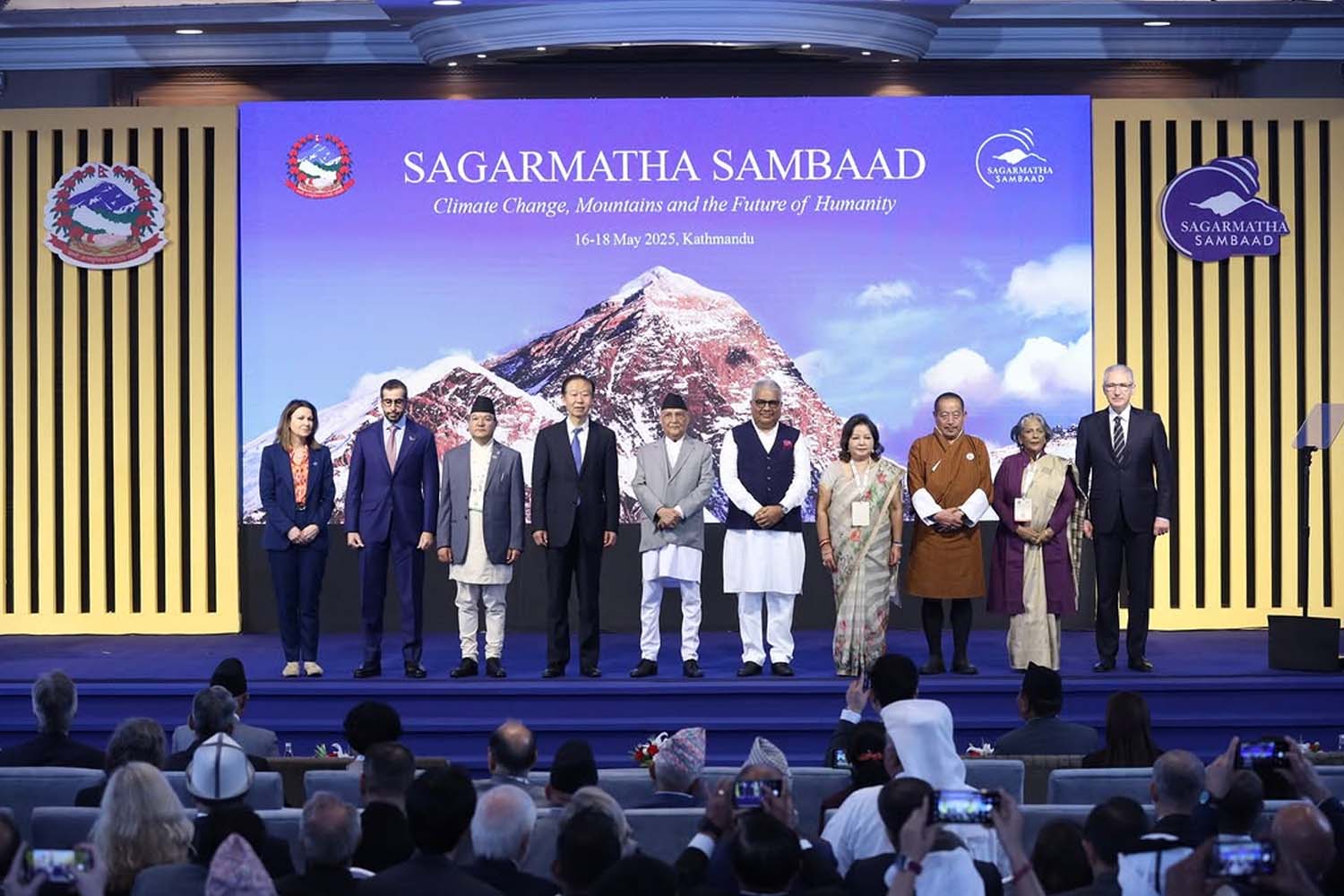
Leaders and climate experts from around the world gathered in Kathmandu for the Sagarmatha Sambaad. Photo courtesy: Sagarmatha Sambaad Secretariat
The declaration emphasised limiting global warming to 1.5°C, increased climate finance for developing nations, a dedicated climate fund for mountain countries, and meaningful inclusion of youth, women, and indigenous peoples in climate decisions. Nepal successfully placed the distinctive vulnerabilities of Himalayan ecosystems — glacial lake outburst floods, accelerating ice melt, erratic monsoons — on the global agenda.
The National Budget for FY 2082/83 (FY 2025/26)
Jestha 15, 2082 / May 29, 2025
The then Finance Minister Bishnu Prasad Paudel presented a Rs 1.964 trillion (approximately USD 14.8 billion) budget for fiscal year 2082/83 — a 5.6% increase over the previous year.
The budget allocated Rs 1.180 trillion (60.1%) to recurrent expenditure and Rs 407.89 billion (20.8%) to capital expenditure. Key priorities included digital transformation, infrastructure, social protection, and expanded electricity exports.
Electricity Export to Bangladesh Begins
(Asar 1, 2082 / June 15, 2025)
Nepal achieved a historic milestone in regional energy cooperation: the Nepal Electricity Authority (NEA) formally began commercial export of 40 megawatts of electricity to Bangladesh, in US dollars, via India’s grid infrastructure.
The power — from the Trishuli (18.60 MW) and Chilime (21.40 MW) hydropower projects — was transmitted through the Dhalkebar–Muzaffarpur 400kV line and onward into Bangladesh at 6.40 US cents per unit. This was the first time Nepal sold electricity to a third country in foreign currency.
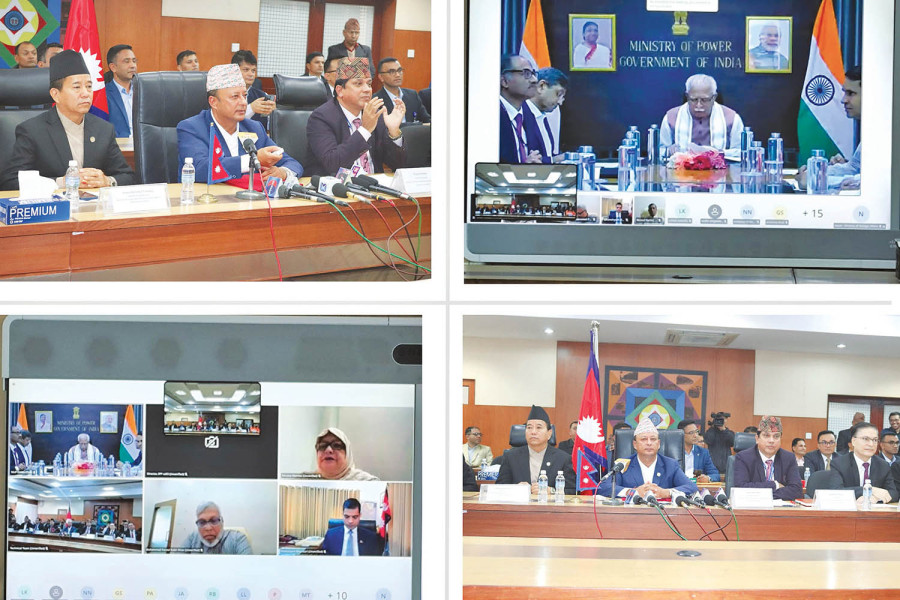
This collage of screenshots shows officials in Kathmandu, New Delhi and Dhaka during the virtual inaguration of electricity export. Photo courtesy: Dipak Khadka/X
On the inauguration day, the NEA received USD 28,160 for 11.30 hours of export. Nepal had earned Rs 17.46 billion from electricity exports to India and Bangladesh in fiscal year 2024/25 combined, a 3.31% increase in value and 21% increase in volume over the previous year.
Landmark Natural Gas Discovery in Dailekh
(Asar 5, 2082 / June 19, 2025)
Nepal’s Department of Mines and Geology announced a potentially game-changing discovery: preliminary surveys by the China Geological Survey and CNPC Xibu Drilling Engineering Company confirmed the presence of an estimated 112 billion cubic metres of methane (natural gas) in the Jaljale area of Bhairabi Rural Municipality in Dailekh district, Karnali Province.
Drilling had reached 4,013 metres. Officials said the volume — if commercially viable — could supply Nepal’s gas needs for up to 50 years, potentially ending the country’s annual USD 1.5 billion petroleum import bill. Three additional likely petroleum-rich zones were identified nearby.
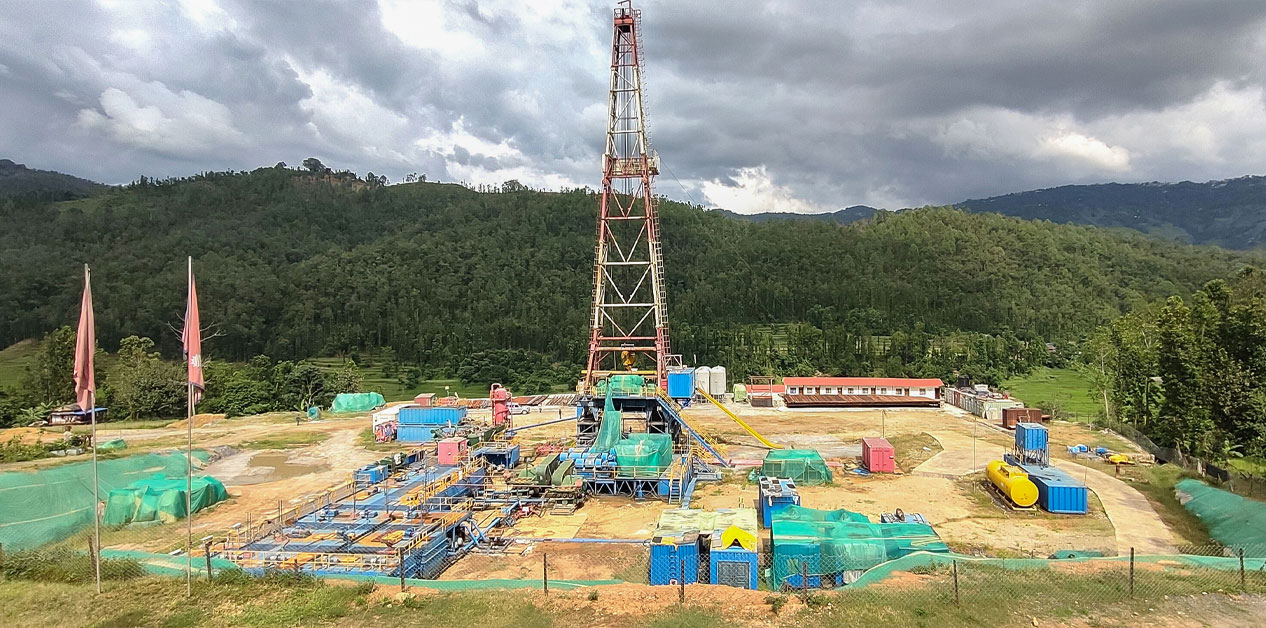
Petroleum exploration site located in Jaljale, Bhairavi Rural Municipality–1, Dailekh.
Photo: Ratna Shrestha/RSS
A final commercial viability report was expected from China by December 2025. The Chinese government had invested approximately Rs 2.5 billion in the exploration project.
Civil Service Bill Controversy
(Asar 15, 2082 / June 29, 2025)
Parliament passed the controversial Federal Civil Service Bill amid allegations of bureaucratic lobbying and procedural irregularities. The most contentious provision was a “cooling-off period” clause restricting senior civil servants from joining the private sector for a set period after retirement.
Critics alleged the version passed was significantly diluted from the original draft under pressure from influential bureaucratic networks.
Flash Floods in Rasuwa
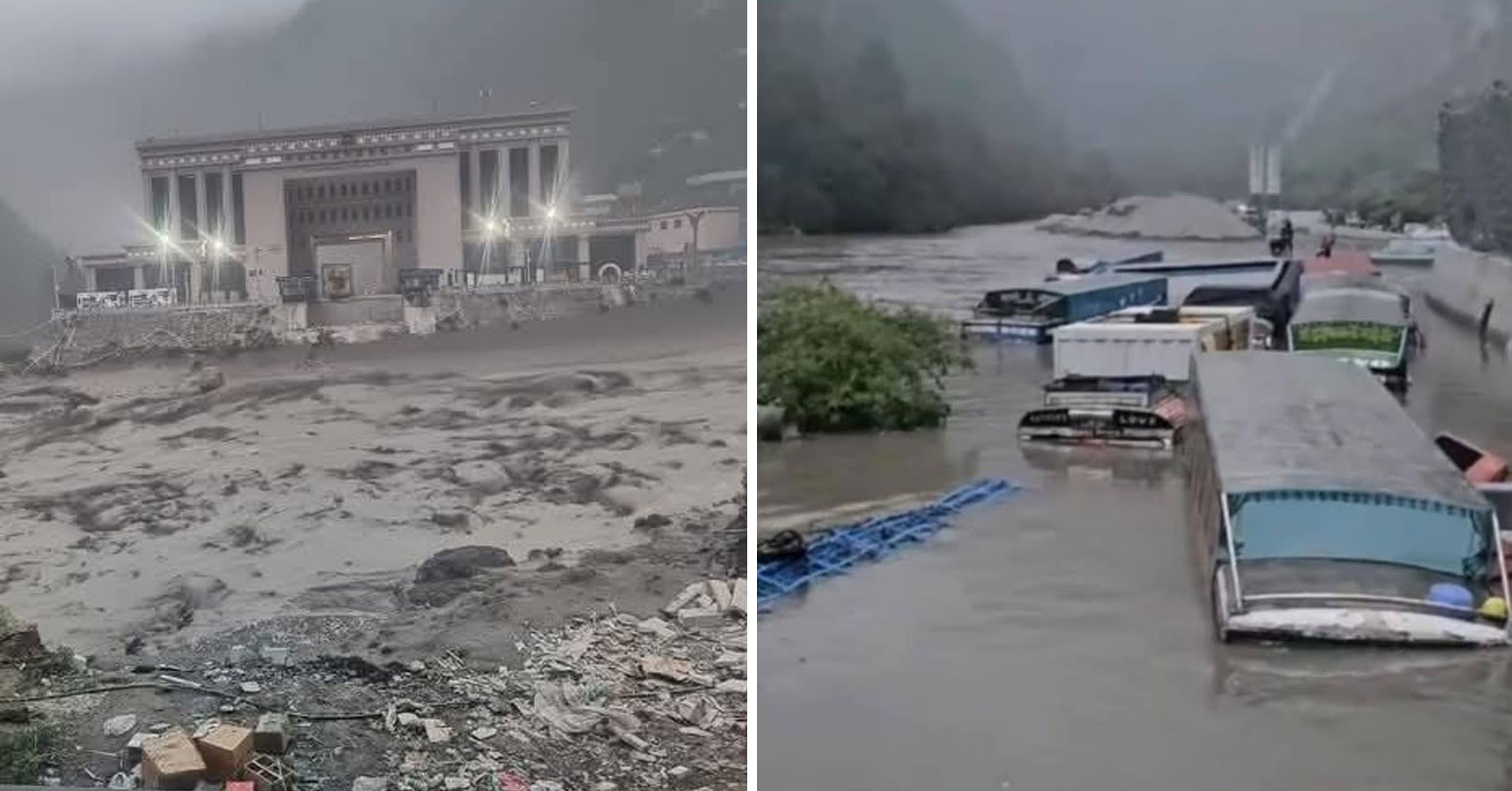
A massive flooding of the Bhotekoshi River in Rasuwagadhi swept away the Miteri Bridge (Friendship Bridge), a crucial trade link between Nepal and China
(Asar 24, 2082 / July 8, 2025)
Flash floods struck Rasuwa district’s Lhendekhola, claiming nine lives and leaving 19 people missing — an early warning of the brutal monsoon season ahead.
Repatriation of Nepali Women from Iran
(Shrawan 9, 2082 / July 25, 2025)
The government successfully repatriated 47 Nepali women detained in Iranian prisons, many of them alleged victims of human trafficking networks. The repatriation highlighted the ongoing scale of Nepal’s migration crisis and the vulnerability of young Nepali women to exploitation abroad.
The Government Bans 26 Social Media Platforms
(Bhadra 19, 2082 / September 4, 2025)
On September 4, 2025, the Government of Nepal ordered the shutdown of 26 major social media and messaging platforms — including Facebook, Instagram, X (Twitter), YouTube, WhatsApp, LinkedIn, Reddit, Signal, and Snapchat — citing regulatory non-compliance. Officials claimed the platforms had failed to register under new Ministry of Communications rules; critics alleged the ban was primarily designed to silence political dissent and enforce a new Digital Services Tax.
The ban ignited immediate fury. Nepal had approximately 48% social media penetration — among the highest in South Asia — and for its overwhelmingly young population (median age: 25), these platforms were not merely entertainment but means of livelihood and identity.
Concurrent with the ban, a social media trend had been exposing the lavish lifestyles of the children of senior politicians — sarcastically dubbed “Nepo Kids” — while ordinary citizens faced youth unemployment above 20% and average annual incomes of just USD 1,400. The ban gave a generation that was already seething a trigger point for open revolt.
September 8, 2025 — The Day the Flood Gates Broke
(Bhadra 23, 2082 / September 8, 2025)
At 9:00 a.m. on September 8, 2025, thousands of young protesters began gathering at Maitighar Mandala in central Kathmandu. Many were school and college students in uniform, carrying banners reading “Youth Against Corruption.” They were coordinated largely through Discord servers — one hosted by youth NGO Hami Nepal had over 145,000 members — and Instagram channels that had become digital command centres for a leaderless generation’s fury.
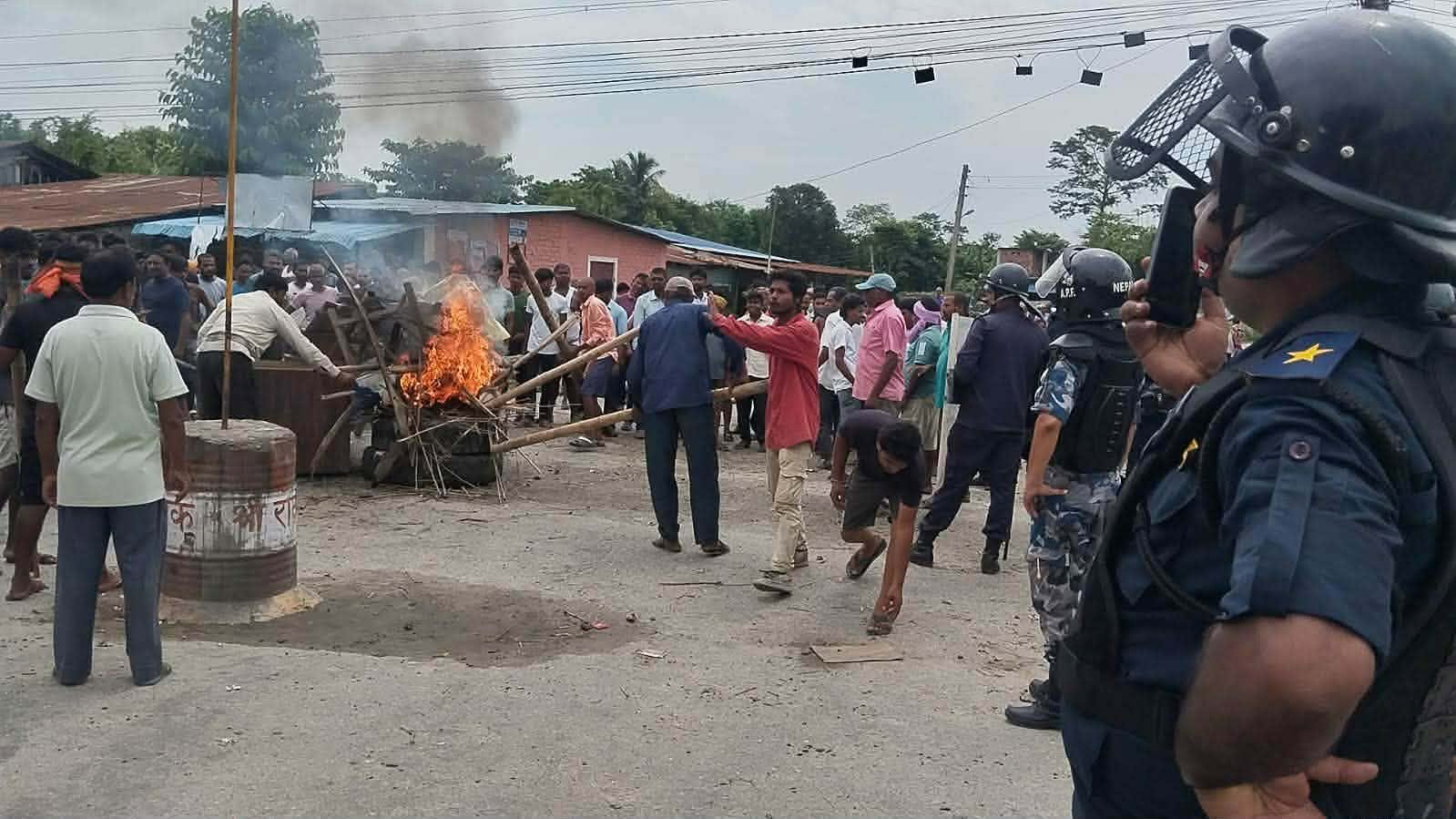
What began peacefully devolved into violence when protesters overran a police barricade near the Federal Parliament building in New Baneshwar. Security forces responded with what Human Rights Watch later characterised as “disproportionate and indiscriminate force,” firing live ammunition, water cannons, and tear gas into crowds that included teenagers in school uniforms.
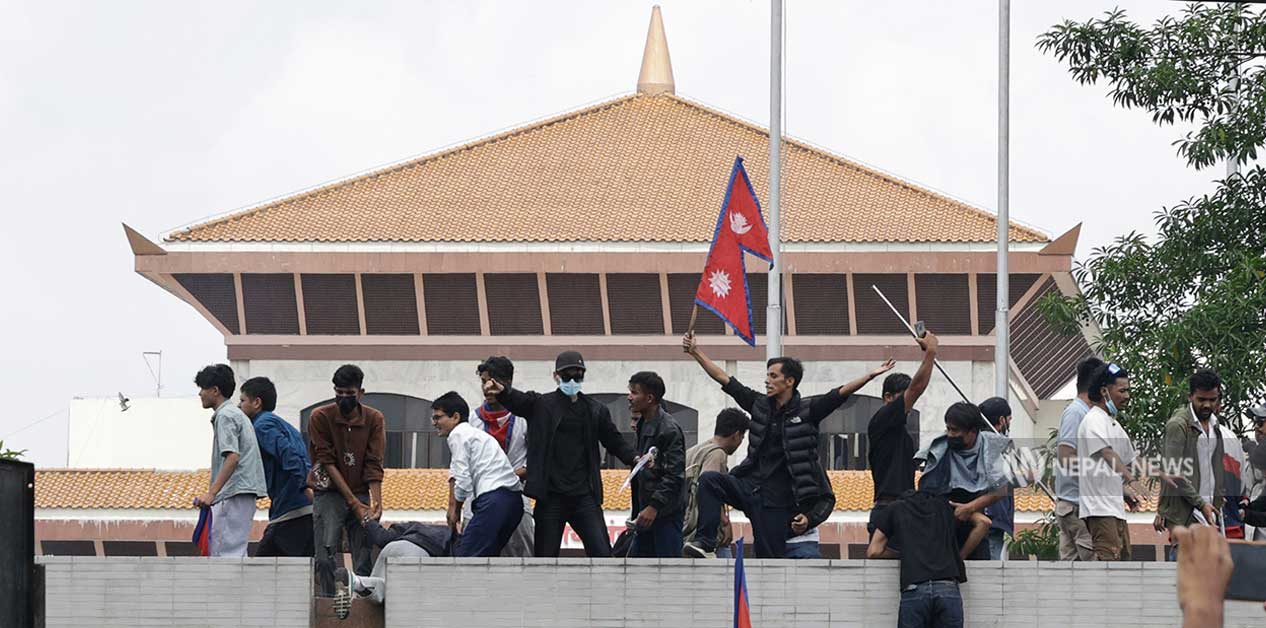
Protesters at the Federal Parliament building during the Gen Z protest on September 8. Photo: Bikram Rai
19 protesters were killed in Kathmandu alone on September 8. Protests simultaneously erupted in Pokhara, Dharan, Chitwan, and dozens of other cities across Nepal’s 77 districts.
By evening, Home Minister Ramesh Lekhak resigned at 8:00 p.m. The social media ban was lifted that same night at 11:25 p.m. — but the damage was done. The killings had transformed a protest over digital freedom into a full-scale popular uprising.
September 9, 2025 — Singha Durbar in Flames
(Bhadra 24, 2082 / September 9, 2025)
On the morning of September 9, Agriculture Minister Ramnath Adhikari resigned at 10:07 a.m., followed by Health Minister Pradeep Poudel at 10:45 a.m. Prime Minister Oli resigned his own office without addressing the corruption allegations against him — then reportedly fled to a military barracks outside the Kathmandu Valley by helicopter.
By afternoon, groups of protesters — some organised, some opportunistic, some possibly infiltrated by political actors — moved on Nepal’s most iconic government buildings.
The Supreme Court was set ablaze between 2:00 and 2:30 p.m. after men were seen removing and burning files in the parking area. By 4:25 p.m., the presidential palace of Sheetal Niwas was on fire.
The sprawling Singha Durbar complex — a historic 1908 palace that had housed Nepal’s government ministries for over a century — erupted in flames. Photos of protesters waving the Nepali flag atop the burning Singha Durbar circled the globe, drawing comparisons to Bangladesh’s 2024 youth uprising.
The Parliament building was stormed and torched. The Prime Minister’s official residence at Baluwatar was ransacked and burned. Former PM Sher Bahadur Deuba’s private residence was attacked. Police stations were overrun, Bhatbhateni supermarkets looted, the Hilton Hotel set on fire.
Tribhuvan International Airport briefly closed. The Ministry of Health and Population was destroyed, including the National Health Emergency Operation Centre. Over 3,000 inmates broke out of Central Jail at Sundhara between 8:00 p.m. and 10:00 p.m.; the national total of escaped prisoners reached 11,505.
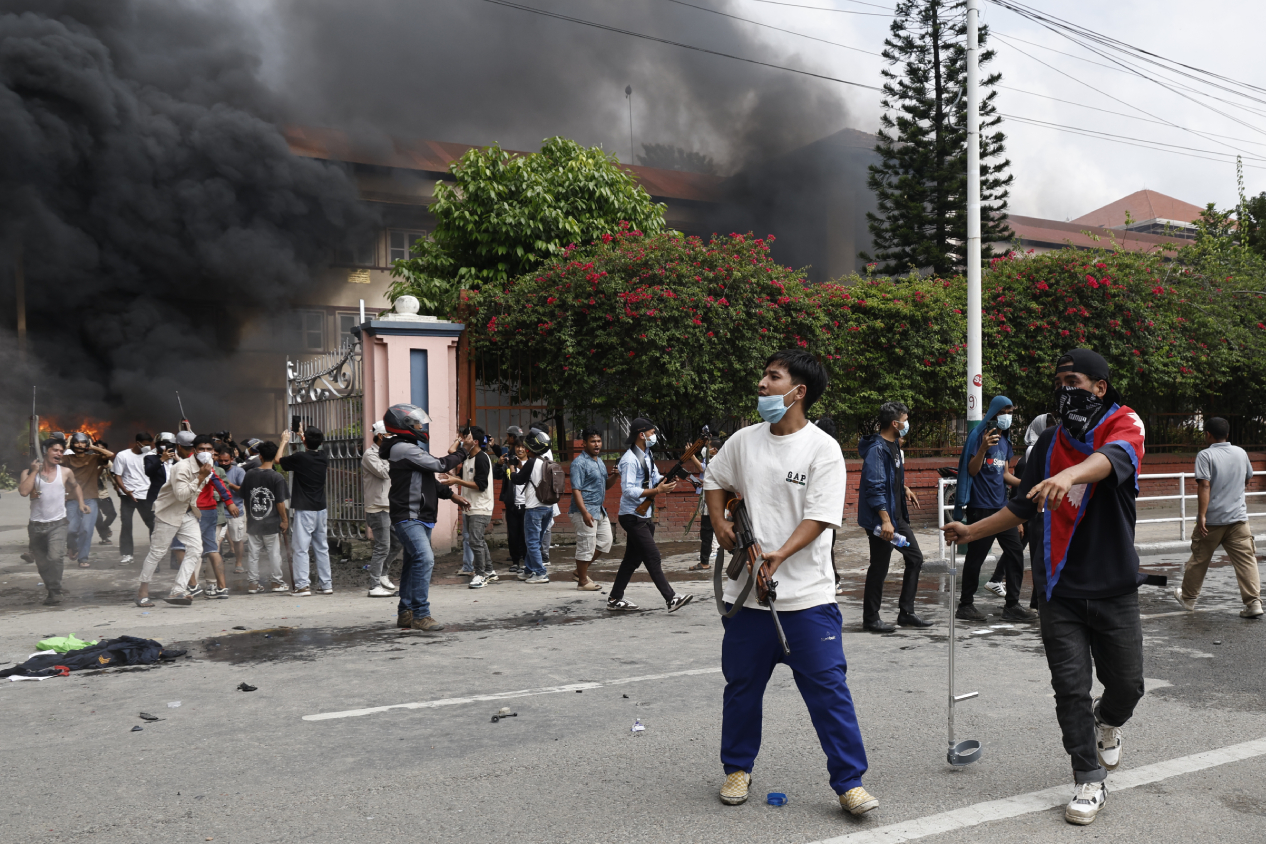
Protesters who seized weapons from security personnel after setting a fire inside the Supreme Court on September 9. Photo: Bikram Rai.
The final death toll across September 8–13: 76 people, comprising 22 protesters (per Nepal Army figures), 3 police officers, 10 prisoners shot during jailbreaks, and others killed in fires, beatings, and clashes. More than 2,113 people were injured. The government estimated combined public and private property damage at approximately Rs 76 billion.
UN Secretary-General António Guterres said he was “deeply saddened by the loss of life” and called for restraint and a thorough investigation.
“Watching Singha Durbar burn is nothing short of heartbreaking,” wrote cultural heritage advocate Hrishav Raj Joshi. “With it, we lose not just bricks and mortar, but irreplaceable records, memories, and the last fragments of our history reduced to ashes.”
Nepal Chooses Sushila Karki
(Bhadra 25–27, 2082 / September 10–12, 2025)
In the tumultuous days following Oli’s resignation, the question of who should lead Nepal’s transition became critical. In an unprecedented act of digital democracy, protesters on the Hami Nepal Discord server held an online poll. Five names were offered; 73-year-old former Chief Justice Sushila Karki emerged as the clear winner.
Karki, born June 7, 1952 in Biratnagar, had become Nepal’s first woman Chief Justice in 2016 and made landmark rulings against corruption during her 2016–17 tenure. The government had attempted to impeach her — the UN labelled that effort “politically motivated.” She had since retired, written a memoir titled Nyaya (Justice), and stayed deliberately removed from active politics. That distance paradoxically made her the perfect choice for a generation that wanted anyone but a career politician.
On September 12, 2025 (Bhadra 27, 2082), President Ram Chandra Paudel appointed Karki as Prime Minister under Article 61 of the Constitution, simultaneously dissolving the House of Representatives. She was sworn in as Nepal’s first woman Prime Minister in the nation’s modern history — making history twice in one lifetime.
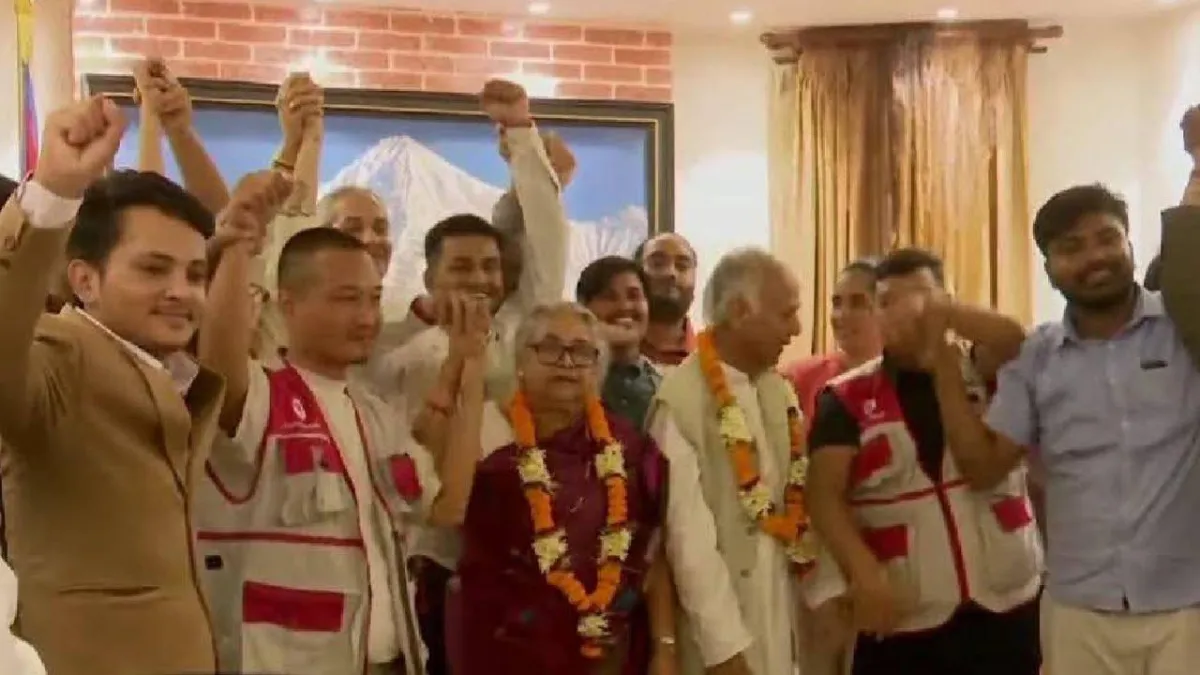
Screenshot of former interim prime minister Sushila Karki with supporters after taking oath of office
“I did not come to this position because I had sought it,” she said in her first public remarks, “but because there were voices from the streets demanding that Sushila Karki should be given the responsibility.”
She immediately announced elections for March 5, 2026, declared the protest victims “Good-Governance Martyrs,” and vowed: “We will not stay here more than six months in any situation.”
The Interim Cabinet Takes Shape
(Bhadra 30, 2082 / September 15, 2025)
On September 15, Karki unveiled her initial cabinet of technocrats: Om Prakash Aryal (prominent human rights lawyer) as Home Minister, Rameshore Prasad Khanal (former Finance Secretary) as Finance Minister, and Kulman Ghising (former NEA managing director who had ended Nepal’s chronic load-shedding crisis) as Energy Minister.
Four more ministers followed on September 21 (Ashoj 5, 2082). The cabinet was widely praised for comprising reform-minded figures with records of integrity.
Her early actions included: repealing the Cybersecurity Act amendments that had enabled the social media ban; ordering the release of detained protesters; declaring 45 protest victims “Gen Z Good-Governance Martyrs”; announcing Rs 1.5 million compensation per family of the deceased.
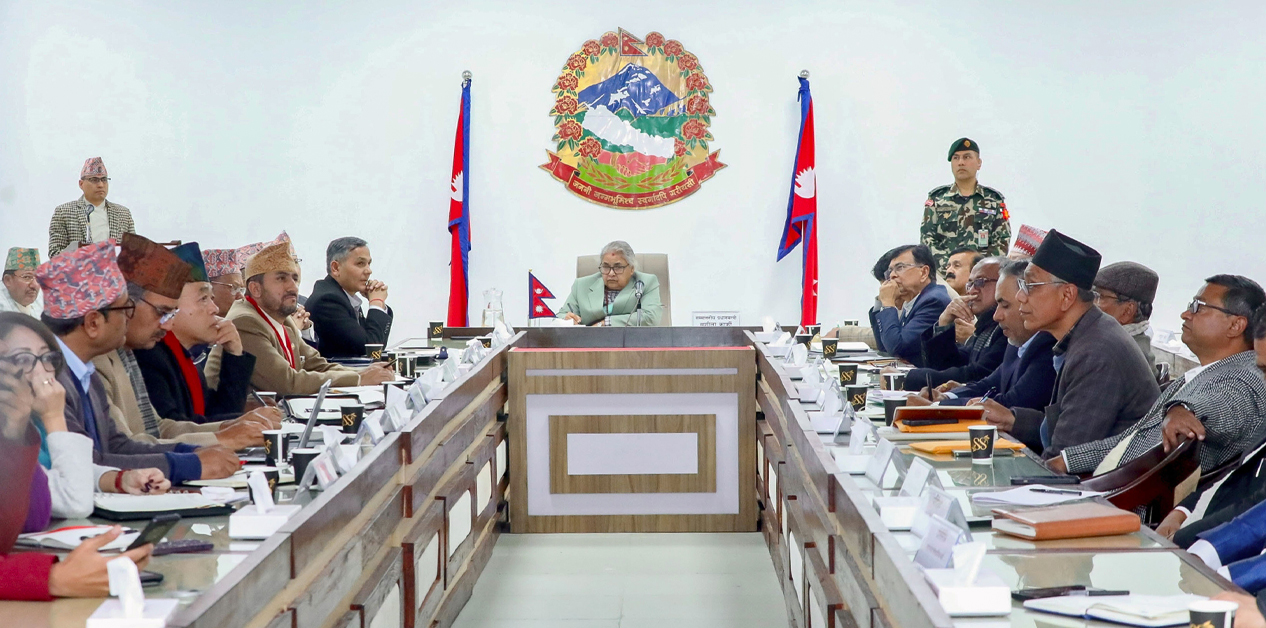
PM Sushila Karki in discussions with political parties and public representatives regarding the election, law and management of members of the House of Representatives. Photo: Ratna Shrestha/RSS
A high-level judicial inquiry commission was constituted on September 21 (Ashoj 5, 2082) — headed by retired judge Gauri Bahadur Karki — to investigate the September 8–9 events.
On September 24 (Ashoj 8, 2082), the government announced sweeping austerity measures to redirect resources toward reconstruction and election preparations.
Catastrophic Floods Devastate Eastern Nepal
(Ashoj 17–19, 2082 / October 3–5, 2025)
Just as Nepal was trying to stabilise after September’s upheaval, another catastrophe struck. Beginning October 3, a low-pressure system from the Bay of Bengal intensified monsoon activity over eastern Nepal. For three consecutive days, eastern Nepal — particularly Ilam district — was deluged.
On October 5 (Ashoj 19, 2082), the Himali Gaun station in Suryodaya Municipality, Ilam, recorded 332.6 mm of rainfall in a single day — the highest ever at that station, surpassing a 40-year-old record of 320.6 mm.
The deluge triggered catastrophic landslides, many striking at night while villagers slept. Six members of a single family were killed when a landslide crushed their home before dawn. Ilam recorded 38–39 deaths from landslides alone.
Across Nepal, the toll reached at least 53 dead and dozens missing. Seventeen bridges were destroyed. Mechi, Koshi, Araniko, Kanti, and Narayangadh-Muglin Highways were all damaged or closed. All domestic flights were grounded on October 4; the government declared October 6 and 7 public holidays for recovery operations.
The floods struck at the worst possible time — coinciding with the return of hundreds of thousands of Nepalis from home villages after Dashain celebrations, creating severe transportation gridlock. Thirty-two hydropower projects across 10 districts were damaged.
Road and bridge reconstruction costs alone were estimated at Rs 10.68 billion. Despite the scale, the Karki government was praised for its rapid response: early warning systems were credited with keeping the death toll far below the 224 fatalities recorded in similar October 2024 floods. Indian Prime Minister Narendra Modi offered condolences and reaffirmed India’s commitment as a “first responder.”
Supreme Court Upholds Parliament Dissolution
(Kartik 12, 2082 / October 29, 2025)
The Supreme Court of Nepal rejected interim orders sought against the dissolution of the House of Representatives — a crucial legal ruling that cleared the constitutional path for the interim government to proceed with election preparations. Eight political parties had protested the dissolution. The ruling vindicated the transition framework and effectively ended legal challenges to Karki’s government.
Left-Wing Unity Efforts
(Kartik 19, 2082 / November 5, 2025)
Ten left-leaning political parties announced a formal unity pact ahead of the March elections. The CPN (Maoist Centre), under Pushpa Kamal Dahal “Prachanda,” prepared for a special convention after its devastating political setback; key leaders Janardan Sharma and Sudan Kirati had already resigned, criticising the leadership’s direction. The Maoist Centre subsequently rebranded itself as the Nepali Communist Party (NCP) — though the rebranding did little to revive its political fortunes.
A High-Level Agreement with Gen Z
(Mangsir 25, 2082 / December 11, 2025)
The cabinet ratified a 10-point agreement with Gen Z representatives, formally acknowledging the uprising’s demands for good governance. A high-level political dialogue committee was formed on December 15 (Mangsir 29, 2082) to facilitate communication between parties, the interim government, and civil society.
Party Conventions
(Poush, 2082 / December 2025-January 2026)
CPN (UML) held its 11th National Convention from December 14-16, 2025, re-electing KP Sharma Oli as party chairman despite the devastating loss of credibility following September. Intra-party debate about generational transition produced no structural change.
The Nepali Congress held its second special general convention from January 11-13, 2026, electing reformist leader Gagan Kumar Thapa as president and sidelining the establishment faction of Sher Bahadur Deuba, who expressed public dissatisfaction.
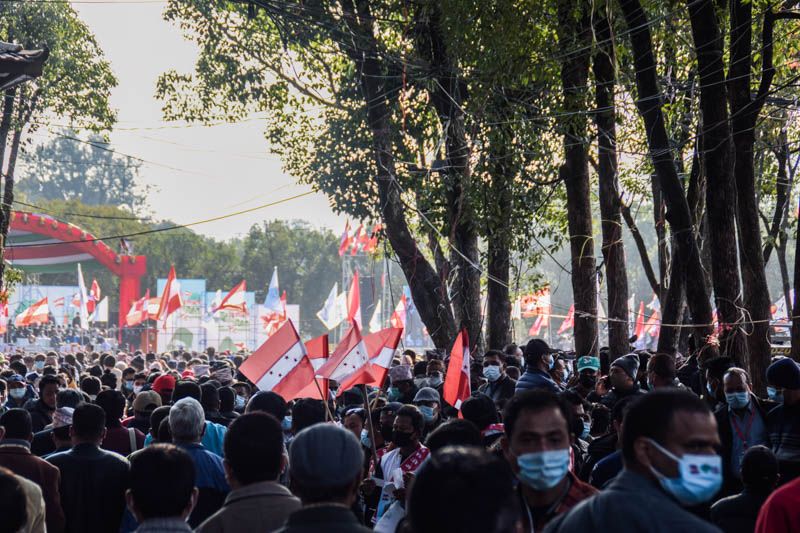
Nepali Congress14th General Convention: Leaders and cadres busy seeking votes. File photo
The Election Commission granted legitimacy to Thapa’s team on January 16, 2026 (Magh 2, 2082). A legitimacy dispute between the Deuba and Thapa factions was placed before the Supreme Court.
Balen Shah Joins RSP
(Poush 13, 2082 / December 28, 2025)
A pivotal seven-point agreement was signed between RSP Chairman Rabi Lamichhane and Kathmandu Mayor Balendra “Balen” Shah: Lamichhane would lead the party while Shah would be its prime ministerial candidate.
On January 18, 2026 (Magh 4, 2082), Shah resigned as mayor and formally joined the RSP. His first campaign rally in Janakpur on January 19 (Magh 5, 2082) — where he presented himself as a son of Madhes — electrified the national political scene.
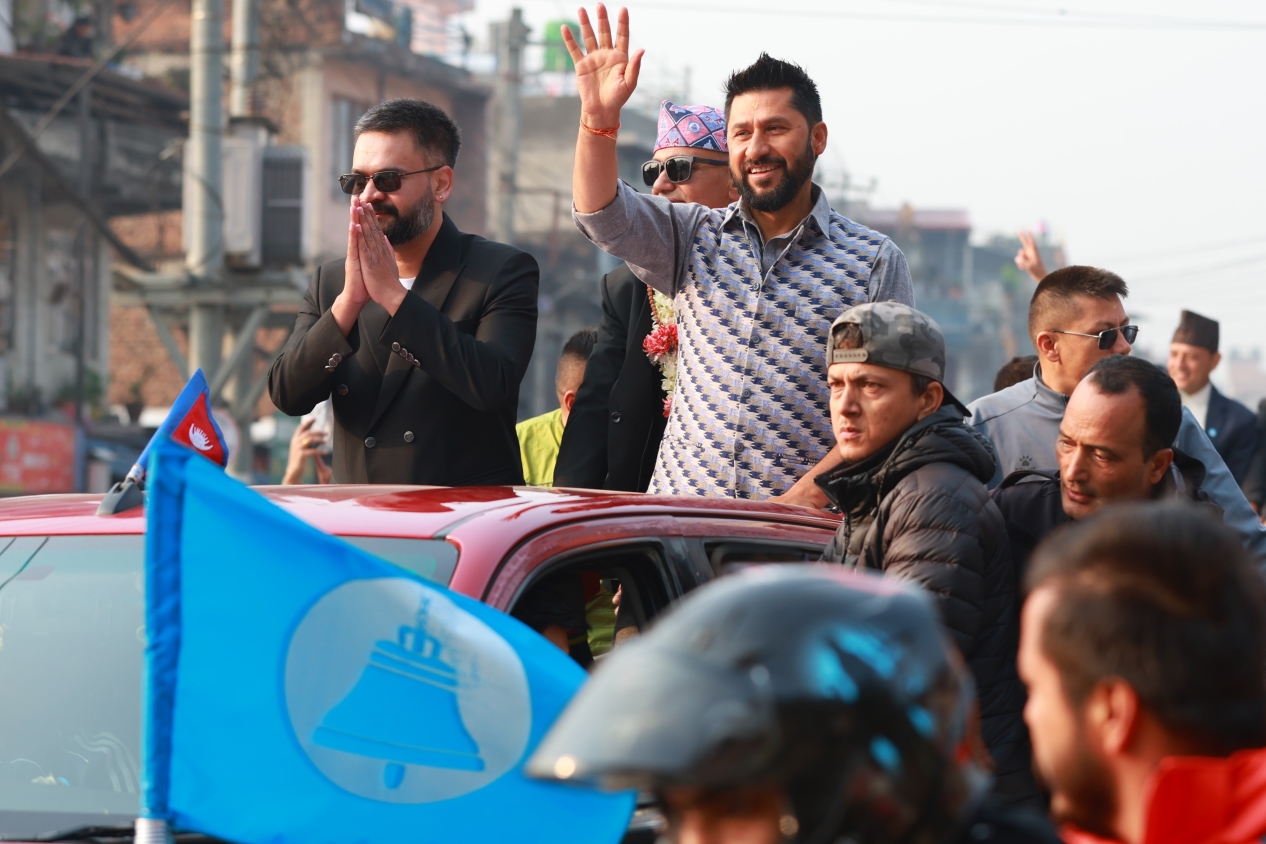
RSP President Rabi Lamichhane (right) and Balendra Shah during an election campaign in Kathmandu. Photo: Nepal Photo Library
Shah’s biography was unlike any previous Nepali Prime Minister: born in Mahottari in the Terai, raised in Kathmandu, educated as a civil engineer with a master’s in structural engineering, a rapper who had drawn inspiration from Tupac Shakur and 50 Cent, and the first independent candidate ever elected Mayor of Kathmandu (in 2022). He chose to contest the Jhapa-5 constituency directly against KP Sharma Oli — who had won that seat at every election since 1991 except one.
The Historic Election — Falgun 2082/ March 2026)
Final Preparations
The Election Commission of Nepal faced an immense logistical challenge: conducting a full parliamentary election within six months of the September upheaval. It deployed 23,112 polling centres and over 320,000 security personnel.
The voter roll, updated after multiple registration deadline extensions, was swelled by nearly one million new registrations compared to 2022 — including approximately 800,000 first-time voters. The government declared a three-day public holiday to allow citizens to travel home and vote.
Falgun 21, 2082 / March 5, 2026 — The Election
Polling stations across all 77 districts opened at 7:00 a.m. and closed at 5:00 p.m. The atmosphere was charged but largely peaceful — a stark contrast to the violence of six months earlier. Voter turnout was estimated at 60–70%, among the highest in Nepal’s post-2015 constitutional history.
As results trickled in over four days, the scale of the RSP’s victory became staggering. The party won 182 seats in total — the first single-party majority in Nepal’s House of Representatives since the 1999 election, and the first ever under the 2015 Constitution.
The RSP swept all 15 seats across the three cities of the Kathmandu Valley, 30 of 32 FPTP seats in Madhesh Province, and dominated semi-urban, internet-connected constituencies nationwide.
The most-watched individual contest was in Jhapa-5, where Balen Shah faced KP Sharma Oli directly. The result was a seismic repudiation of the old order: Shah received 68,348 votes — the highest vote total ever recorded in any Nepali parliamentary election in history — against Oli’s 18,734 votes.
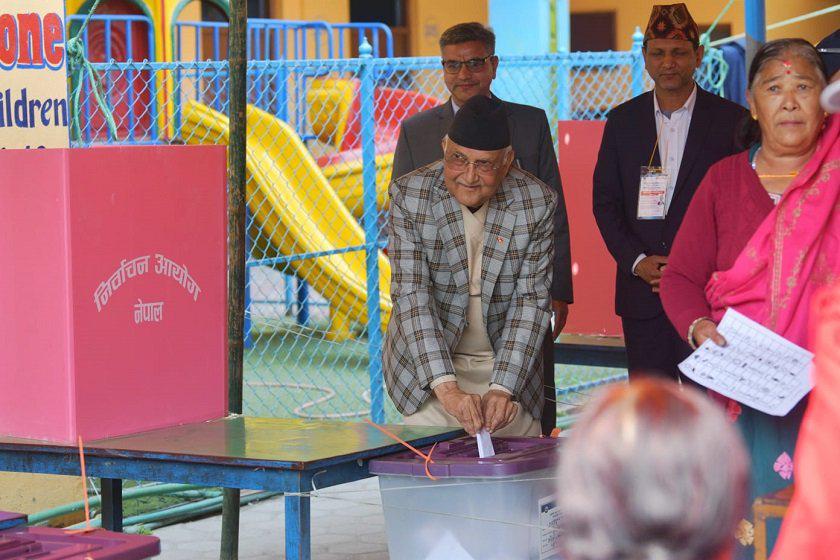
On March 5, CPN-UML Chairman KP Sharma Oli casts his vote at Mahendra Shanti School polling center in Balkot, Bhaktapur, during the House of Representatives election
Oli had set the previous record himself, winning 57,139 votes in that same constituency in 2017. He conceded gracefully: “Balen Babu, congratulations to you for the victory! May your five-year tenure be smooth and successful.”
Five former Prime Ministers — KP Oli, Madhav Nepal, Jhalanath Khanal, Baburam Bhattarai and Sher Bahadur Deuba — were all displaced from parliament in a single election. (Oli, Nepal lost the elections, Deuba, Khanal and Bhattarai did not contest.)
The Election Commission certified the final results on March 20, 2026 (Chaitra 6, 2082).
Karki Commission Submits Gen Z Probe Report
Falgun 24, 2082 / March 8, 2026)
The Gauri Bahadur Karki-led commission investigating the September 8–9 Gen Z movement killings and damage submitted its report to the government. Prime Minister Sushila Karki said the Cabinet will study the findings and consider both implementation and public release of a summary. The report also indicted KP Sharma Oli and Ramesh Lekhak.A New Government Is Formed — Chaitra 2082
Lawmakers Sworn In
(Chaitra 12, 2082 / March 26, 2026)
Newly elected members of the House of Representatives took their oaths at the new Federal Parliament building inside Singha Durbar because the Parliament building in Baneshwar was set ablaze six months earlier and is still undergoing reconstruction.
Nepal’s Youngest Prime Minister
(Chaitra 13, 2082 / March 27, 2026)
At precisely 12:34 p.m. — an auspicious time selected through Vedic astrology — 35-year-old Balendra Shah was sworn in as Prime Minister of Nepal under Article 76(1) of the Constitution, appointed by President Ram Chandra Paudel as leader of the majority parliamentary party.
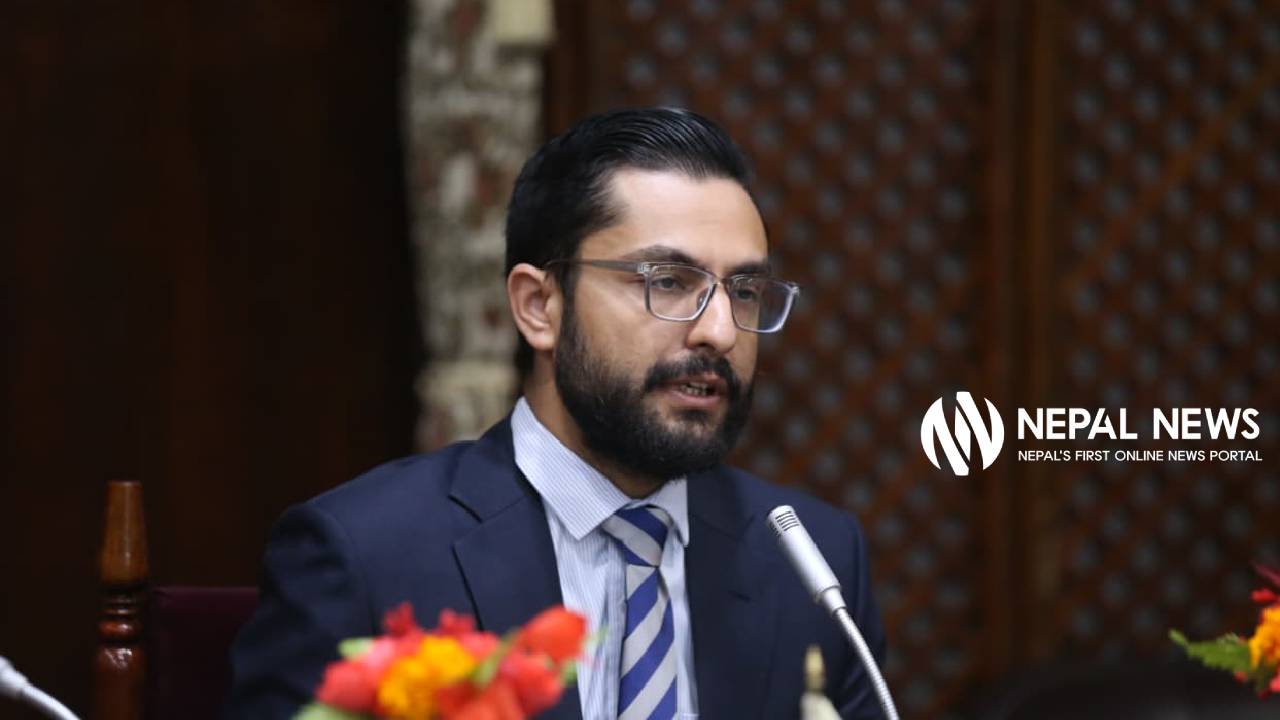
Shah, in his white kurta and signature black rectangular glasses, embraced outgoing interim Prime Minister Sushila Karki in an image that captured something essential about 2082 BS: a 73-year-old woman who had spent her life fighting for justice passing the torch to a 35-year-old man whose political journey began with rap music and ended with a mandate to lead a nation.
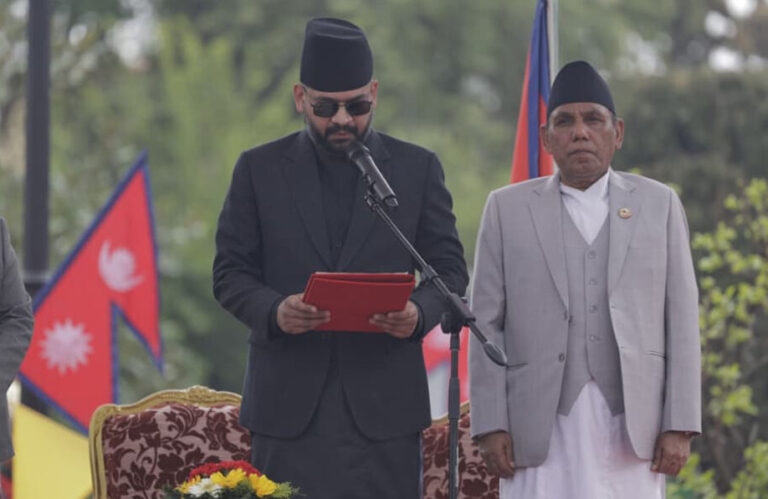
Prime Minister Balendra Shah. Photo: Bikram Rai/Nepal News
At 35, Shah became the world’s youngest serving state leader. He was also the first Madhesi-origin Prime Minister of Nepal — born in Mahottari — a fact of enormous symbolic significance in a country where Terai communities had long felt politically under-represented.
The Cabinet: Compact, Young, and Purposeful
Within hours of his swearing-in, Shah appointed a 15-member cabinet — well within the 18-member ceiling the RSP had promised voters, and far leaner than Nepal’s bloated multi-party coalition cabinets of recent years. Key appointments:
Sudan Gurung (Home Minister) — who had risen to prominence during the Gen Z movement as a negotiator between protesters and the military
Swarnim Wagle (Finance Minister) — RSP vice-chair and economic policy expert, twice elected from Tanahun-1
Shishir Khanal (Foreign Minister) — head of RSP’s foreign affairs department
Sobita Gautam (Law, Justice and Parliamentary Affairs) — a legal expert who had defeated former Bharatpur Mayor Renu Dahal in Chitwan-3
Gita Chaudhary (Agriculture, Livestock, Forest and Environment) — an advocate elected under proportional representation
Sita Badi (Women, Children and Senior Citizens)
Nisha Mehata (Health and Population, Water Supply)
Biraj Bhakta Shrestha (Energy, Water Resources and Irrigation)
Sunil Lamsal (Physical Infrastructure, Transport and Urban Development)
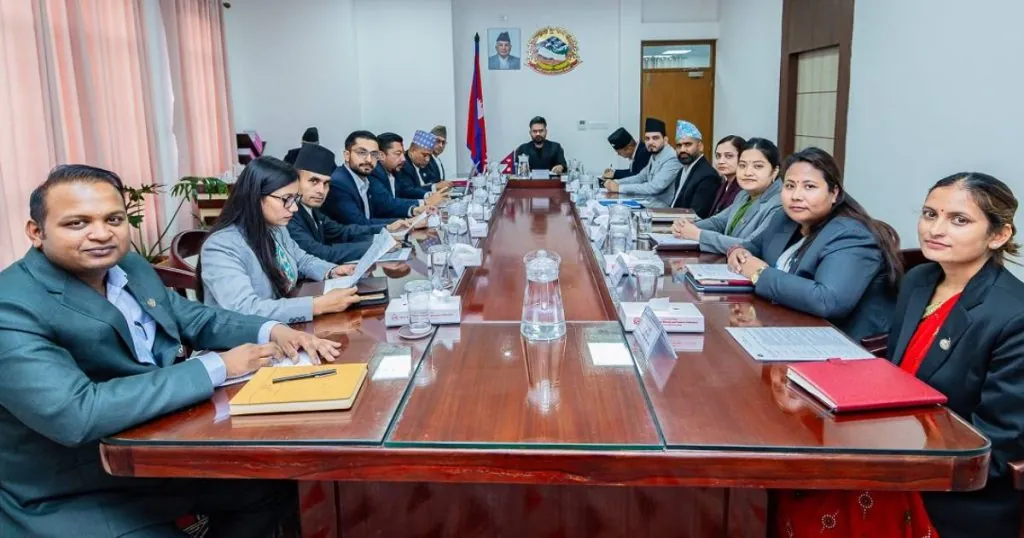
Prime Minister Balen Shah holds an emergency Cabinet meeting with ministers in Kathmandu(file photo)
Women held more than 33% of ministerial positions — fulfilling the RSP’s campaign commitment. A majority of ministers were under 40, making it one of the youngest cabinets in Nepal’s history.
The 100-Point Reform Agenda
(Chaitra 14, 2082 / March 28, 2026)
Prime Minister Shah presented a 100-point immediate reform agenda to the cabinet. Key points included:
–A complete ban on student unions and political activity within university campuses.
–Establishing a high-level commission to investigate the assets of all former ministers and senior bureaucrats since 1990.
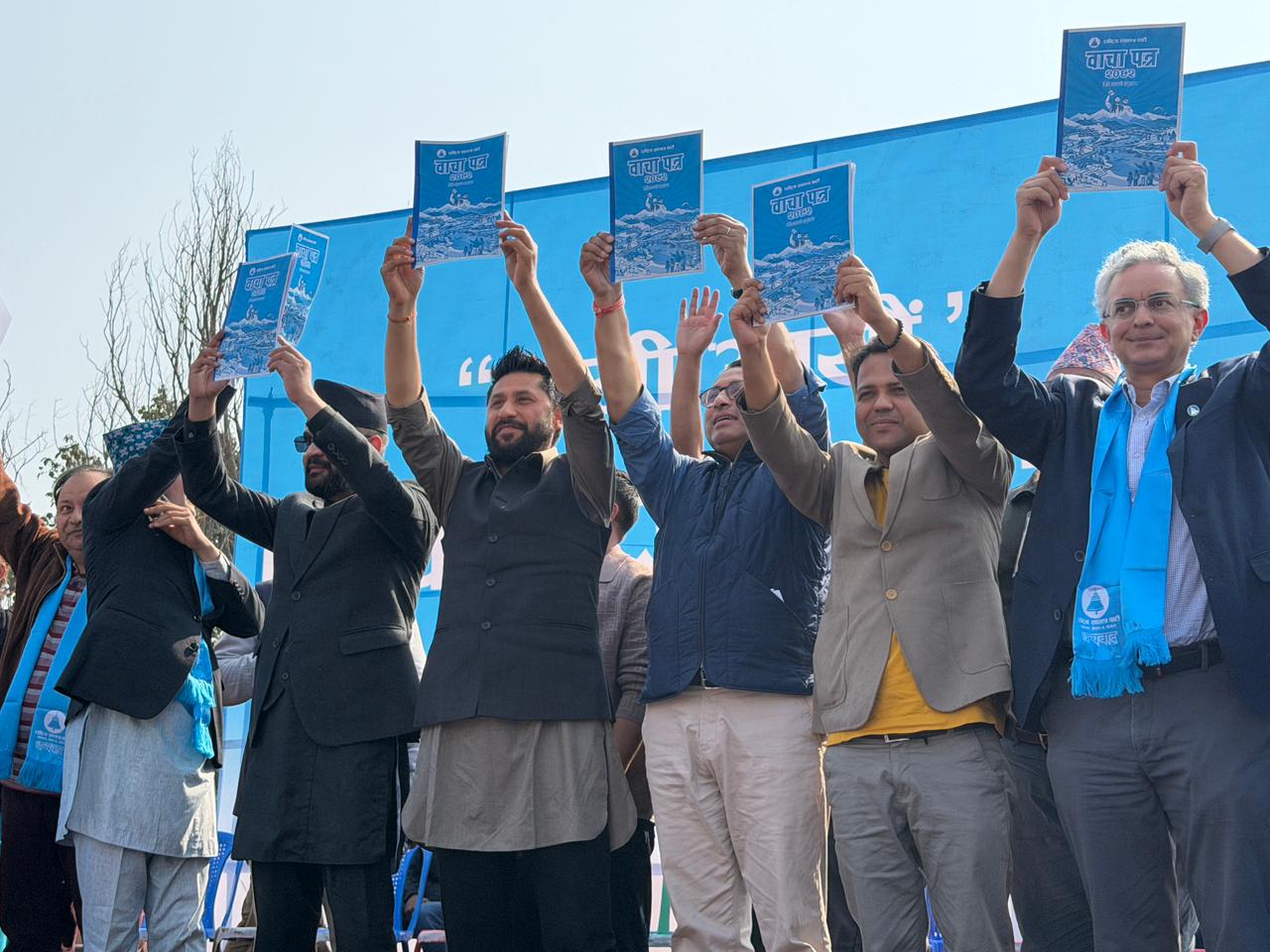
RSP unveiled a 22-page manifesto outlining 100 policy commitments, promising sweeping reforms from governance to the economy. File Photo
–Digital service delivery for all major government functions (IDs, passports, licenses) within 12 months.
–An immediate freeze on new vehicle purchases for government officials.
KP Oli and Ramesh Lekhak Arrested

Former PM Oli being escorted by security personnel after his arrest on March 28. Photo courtesy: Nepal Photo Library
(Chaitra 14, 2082 / March 28, 2026)
Former Prime Minister KP Sharma Oli and former Home Minister Ramesh Lekhak were arrested from their residences on charges of responsibility for the killings during the September 8 Gen Z protest, as indicted by the Karki Commission.
Parliament Elects New Speaker
(Chaitra 22, 2082 / April 5, 2026)
The House of Representatives elected RSP lawmaker Dol Prasad (DP) Aryal unopposed as Speaker.
CIAA Files Case Against Krishna Bahadur Mahara
(Chaitra 26, 2082 / April 9, 2026)
The Commission for the Investigation of Abuse of Authority (CIAA) filed a case against the former House Speaker Krishna Bahadur Mahara with smuggling gold hidden in electronic cigarettes. A veteran of four and a half decades in politics and once vice-chair of the CPN (Maoist Centre), Mahara held multiple ministerial posts after the Maoists joined the peace process and was a key negotiator.
Parliament Elects New Deputy Speaker
(Chaitra 27, 2028 / April 10, 2026)
Rubi Kumari Thakur of Shram Sanskriti Party was elected as the Deputy speaker of the House.Balendra Shah and Cabinet Publish Full Personal Asset Declarations
(Chaitra 29, 2082 / April 12, 2026)
Prime Minister Balendra Shah and his entire cabinet released detailed personal asset declarations through the Prime Minister’s Office as part of a transparency initiative. The move aligns with the Rastriya Swatantra Party’s reform agenda aimed at strengthening public trust and reducing corruption. The disclosures include information on cash holdings, land, gold and silver, company shares, vehicles, and outstanding debts.
KP Oli Undergoes Gallbladder Surgery
(Chaitra 30, 2082 / April 13, 2026)
Former Prime Minister and CPN-UML Chairman KP Sharma Oli successfully underwent gallbladder surgery at Tribhuvan University Teaching Hospital, where doctors removed a 22 mm stone without complications and confirmed his condition is now stable.
The procedure was carried out after prior medical evaluation, following his earlier arrest from his residence in Gundu and subsequent hospitalization. His wife, Radhika Shakya, had filed a habeas corpus petition at the Supreme Court over his detention, after which he was released for treatment and surgery.
The Year Ends: Chaitra 30, 2082 / April 13, 2026
As the clock strikes midnight on the final day of 2082 BS, Nepal is a fundamentally different country than it was 365 days ago. The “old” Nepal — defined by its 1990 political class and the civil war generation — has been displaced by a “new” Nepal led by its digital natives.
The challenges ahead are immense: a shattered infrastructure to rebuild, a polarized society to heal, and the daunting weight of expectations placed upon a young, largely untested government.
But for the first time in a generation, the dominant national mood is not one of cynical resignation, but of watchful, demanding hope.
The year 2082 BS was the year Nepal’s youth stopped asking for a seat at the table and decided to build a new table entirely. As 2083 BS begins, the world watches to see what they will do with it.