Kathmandu
Sunday, June 14, 2026





Despite years of planning, Bharatpur’s waste management remains in limbo, hindered by land shortages and slow implementation
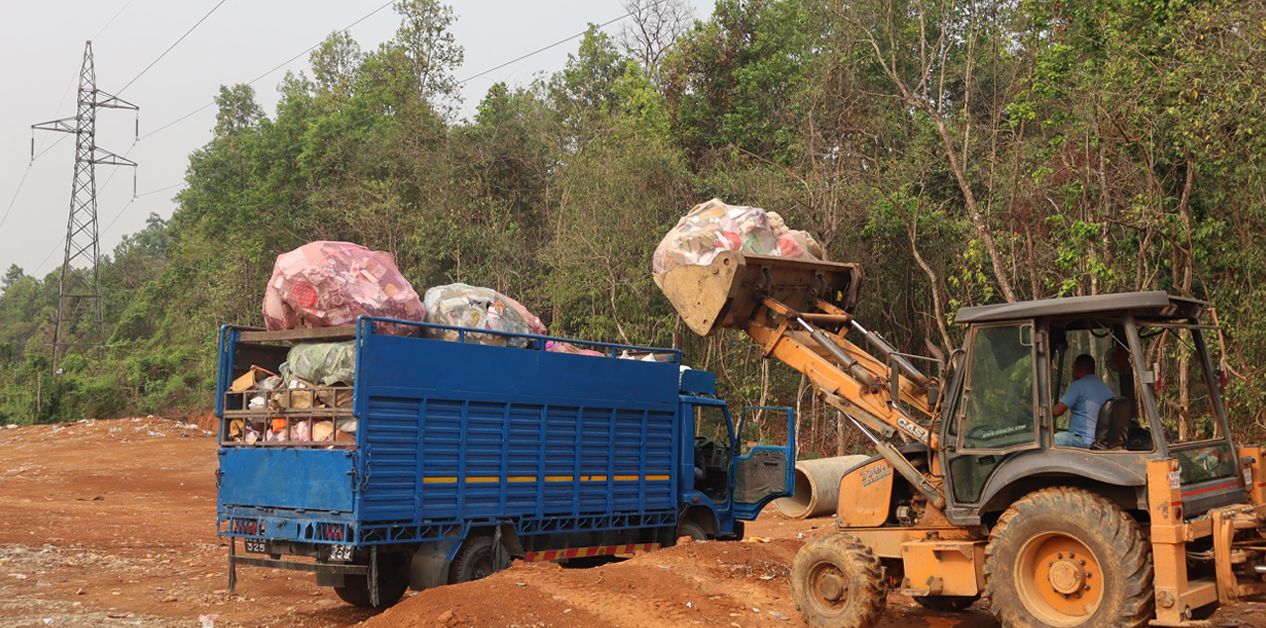
CHITWAN: Bharatpur Metropolitan City, set between the Narayani and Rapti rivers, is naturally picturesque. Rapid urban development has further sharpened its appeal, with clean, paved roads lending the city a modern, orderly look.
Yet beneath this polished exterior lies a persistent strain. Bharatpur continues to grapple with a deepening waste management crisis, one that has evolved into a complex and stubborn challenge driven primarily by the absence of a permanent landfill site.
Waste collection across the metropolitan area remains regular, keeping visible garbage piles largely out of urban sight. According to Birat Ghimire, chief of the Environment and Disaster Branch, collection is carried out on daily, weekly, and monthly schedules, depending on volume and local needs.
On average, 78.15 tons of waste are collected each day, accounting for about 60 percent of the city’s total output. The remaining 40 percent is managed independently by residents. Of the waste collected, roughly 15 percent is biodegradable, 75 percent non-biodegradable, and 10 percent recyclable.
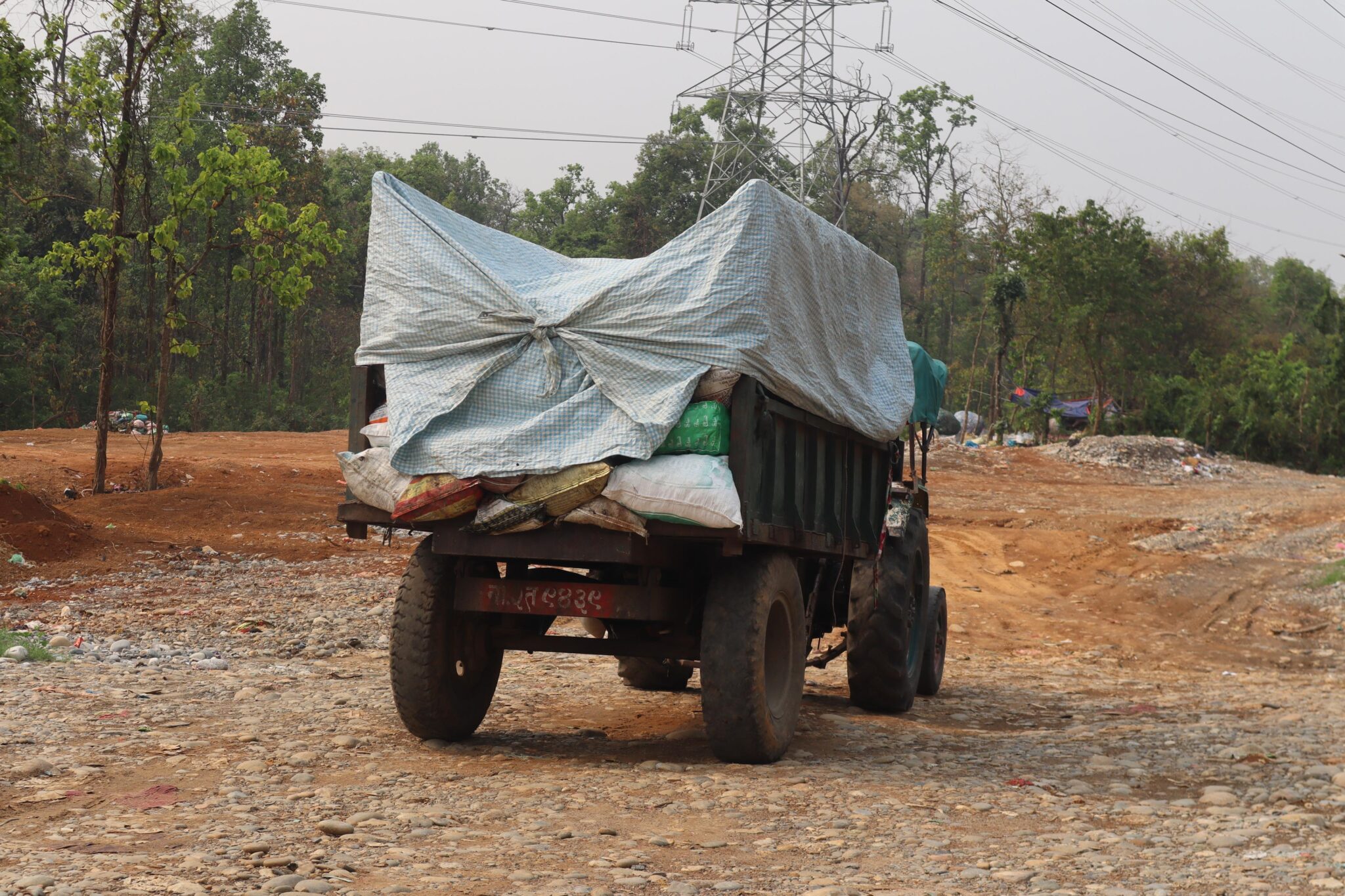
A tractor carrying city waste to the dumping site
Despite these efforts, the city still lacks a permanent site for final disposal. “Acquiring land for a dumping site alone took years,” Ghimire says. “Waste management has proven to be far more complicated than anticipated.”
Failed collaboration with Korea
Efforts to bring structure to Bharatpur’s waste management began seven years ago through a partnership with the South Korean government to develop a landfill site. As the metropolis advanced its land acquisition process, officials were optimistic that this collaboration would offer a lasting solution.
In September 2018, Bharatpur Metropolitan City signed an agreement with the Sudokwon Landfill Site Management Corporation of South Korea. Under this arrangement, South Korea’s Ministry of Environment, along with the Korea Environmental Industry and Technology Institute, prepared a comprehensive master plan in 2019 for municipal waste management in Bharatpur and Biratnagar.
At the time, Bharatpur’s population stood at roughly 280,000. Despite the groundwork, the project failed to progress to the infrastructure phase. According to Environment and Disaster Branch chief Birat Ghimire, the initiative was ultimately derailed by the COVID-19 pandemic.
“It was a government-to-government project facilitated through Korea’s Ministry of Environment,” Ghimire says. “Two phases had already been completed over three years. Just as we were entering the final stage of infrastructure construction, the pandemic struck.”
The nationwide lockdown that followed brought all activity to a halt, including work on the landfill site, which remained stalled for an extended period. With deadlines unmet, the Korean side eventually withdrew. “Once the work stopped, the project was called off,” Ghimire says. “In many ways, the pandemic became an unfortunate turning point for Bharatpur’s waste management efforts.”
A 17-year quest for land
Although Bharatpur Metropolitan City has long pursued plans to develop a landfill site, land acquisition has remained the central obstacle. The city owns no suitable land of its own, while purchasing private property is prohibitively expensive and the process of securing government land is slow and bureaucratic.
According to Environment and Disaster Branch chief Birat Ghimire, efforts to lease forest land in Ward 11 for a waste processing center have now reached the final stage. “The land acquisition process is nearly complete. About 95 percent of the work has been finished,” he says.
The timeline, however, underscores the scale of the delay. It has taken 17 years since initial efforts began. An agreement with the Ministry of Forests was signed in fiscal year 2011 and 2012, but even reaching that point required three years of preparation. “In total, it took 17 years just to secure land for waste management,” Ghimire says.
So far, the metropolis has spent Rs 51.9 million on land usage rights, including lease payments, plantation requirements, and associated costs. The 9.9 hectares site carries an annual lease fee of Rs 30,000 per hectare over 14 years, with an additional Rs 30 million still projected.
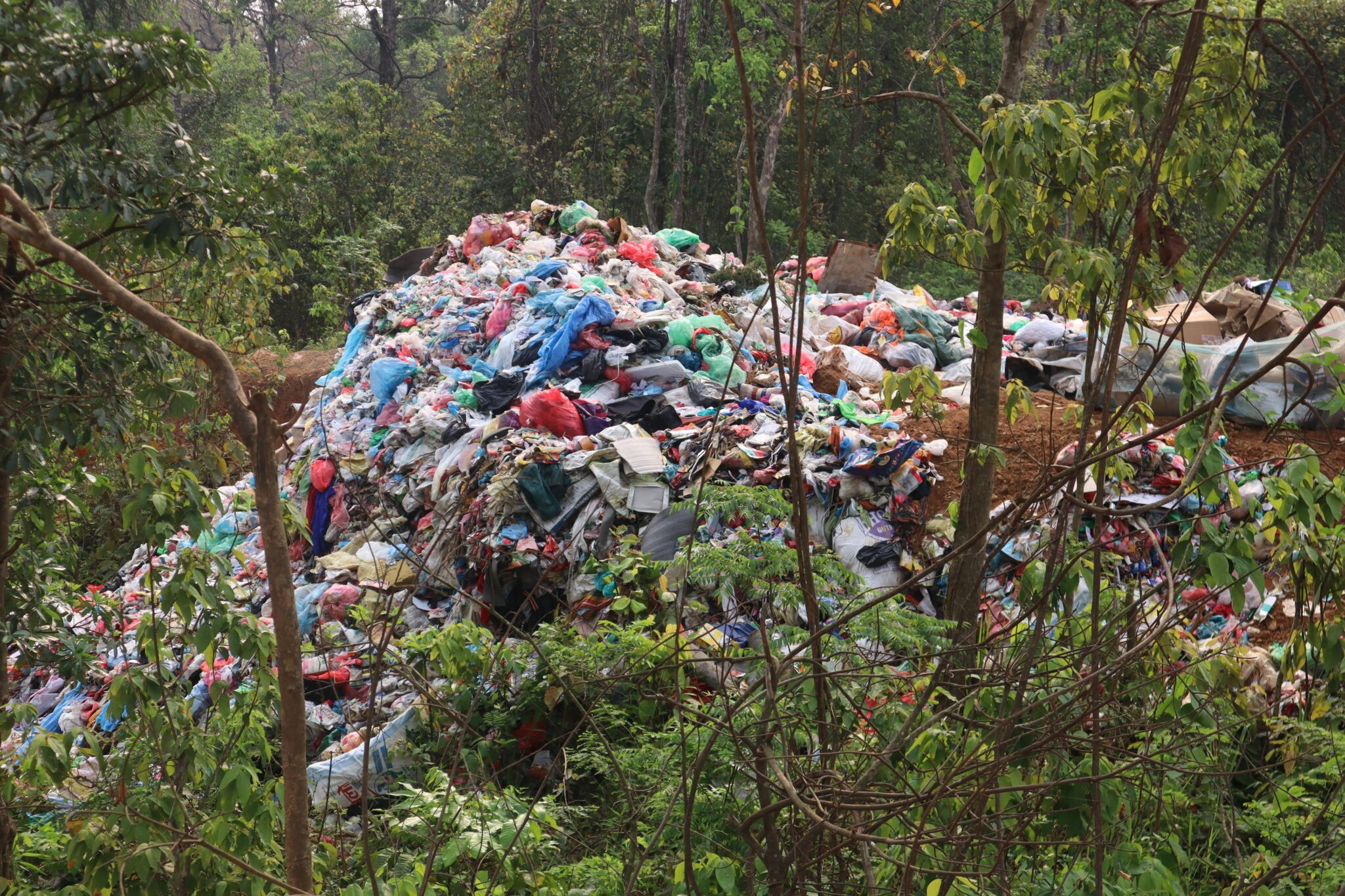
Garbage piled up in a landfill site
Officials say the city is now complying with all conditions set by the Ministry of Forests, noting that earlier delays in meeting these requirements prolonged the process. Required data and documentation for the Environmental Impact Assessment have already been submitted.
Once the assessment is approved, tree felling can proceed following clearance from the Department of Forests. After marking and removal are completed by the Division Forest Office, the metropolis will gain full access to the 9.9 hectares site, paving the way for a structured landfill facility.
Challenges in building the processing center
Even with land nearly secured, developing a functional waste processing center presents another layer of difficulty. Sagar Karki, founder of Better Chitwan, argues that the crisis persists because waste management has not been treated as a priority and key actions were delayed.
He warns that infrastructure development will take time, leaving waste management even more strained in the interim. “What exists now is limited to collection, transport, and dumping,” Karki says. “Even these basic steps fall short of minimum standards.”
Karki adds that outsourcing waste management alone does not absolve the metropolis of responsibility. Poor disposal practices, particularly dumping in forests, streams, and riverbanks without proper burial, have led to waste spreading and even being carried into settlements by animals.
Last month, the metropolis submitted its environmental impact assessment report for the proposed solid waste processing and management center to the Bagmati Province Ministry of Forests and Environment. The plan outlines a two year construction timeline with an estimated cost of Rs 817.8 million.
The proposed facility would handle up to 5,000 tons of waste, converting organic material into fertilizer while allocating four landfill cells for nonrecyclable waste. Preconstruction work will include land preparation, regulatory approvals, engineering design, and contractor selection.
During construction, activities will cover site clearing, excavation, structural development, and plantation. Once operational, the facility will focus on waste segregation, soil covering, odor control, leachate treatment, groundwater monitoring, and routine maintenance.
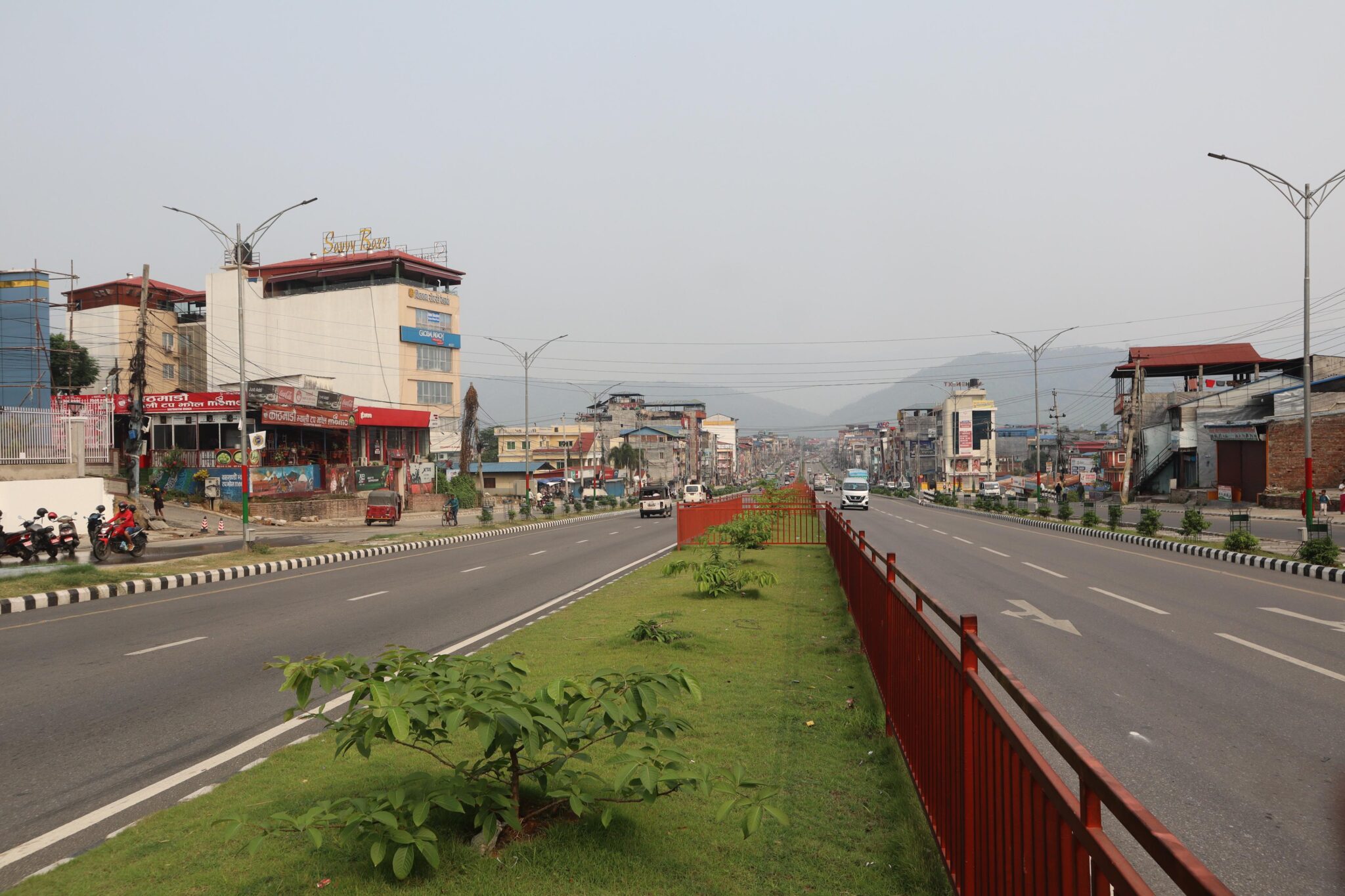
The main road from Bharatpur Heights to Narayanghat market
The project will require the removal of 2,506 trees, including 1,622 ‘sal’ trees (Shorea robusta), with a commitment to plant 29,020 saplings in return. The ministry has invited public feedback before granting final approval.
Even if clearance is secured, financing remains a significant hurdle. “Mobilizing resources is now our biggest challenge,” Ghimire says. “The metropolis alone cannot bear such a large cost. We will first finalize the land and clear the site, then move ahead with funding. Discussions with potential donor agencies are already underway, and we will decide on a development partner accordingly.”
How is waste being managed?
Even under an accelerated timeline, Bharatpur is still several years away from building a permanent landfill site. In the interim, the metropolitan city has put in place temporary measures to manage its growing waste burden.
A three years contract worth Rs 76.1 million, excluding VAT, was awarded on November 15, 2024 to NK International Construction for waste collection and transportation. Valued at roughly Rs 75 million in official terms, the deal marks the first time the metropolis has consolidated collection and transport under a single contractor.
Alongside the contract, the city revised its service fees. Households now pay a monthly charge based on collection frequency: Rs 160 for six days a week, Rs 130 for three days, Rs 80 for two days, and Rs 50 for once a week. Separate rates apply to hotels, resorts, department stores, and retail businesses, with the contractor responsible for fee collection. According to Environment and Disaster Branch chief Birat Ghimire, operations are being carried out at sites designated by the metropolis.
Waste disposal, however, remains ad hoc and contested. Earlier, garbage was dumped in the Jaldevi Community Forest in the Barandabhar area, but protests over environmental risks and the lack of proper infrastructure forced a halt. Disposal was then shifted to a metropolitan forest area in Ward 4, on an island formed by the Narayani River, where dumping continued for over a decade, eventually creating large mounds of waste. Renewed opposition on environmental grounds led to another shutdown.
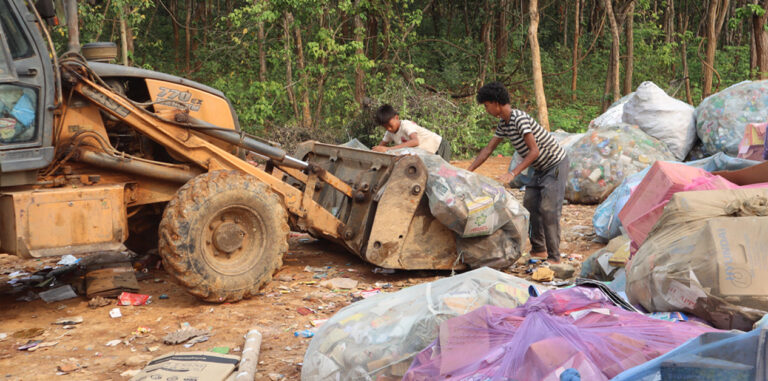
Young teens loading garbage at the landfill site
At present, waste from the city is being diverted to the Jaldevi forest area in Ward 11, the proposed site of the processing center, as well as to Dhruba in Ward 24. Waste from central market wards is routed to Jaldevi, while western areas rely on the Dhruba site.
Fault lines in collection and policy
Environmental advocates argue that the problem begins at the point of collection. They stress the need for segregation at source, noting that current efforts focus largely on managing waste after it is produced rather than reducing its generation.
Jeevan Chhetri, a physician and environmental activist, says the broader approach remains reactive. “Until society works to reduce waste at its source, a lasting solution will remain out of reach,” he says.
He also points to weak policy prioritization. Waste management, he argues, has been reduced to a narrow debate over whether to dump, burn, or bury waste, with little attention to its wider impacts. “We need to examine how waste contributes to air pollution, affects public health, drives chronic illness, increases healthcare burdens, and ultimately reduces productivity,” Chhetri says.
Policy gaps, particularly around plastic use, remain a concern. Chhetri advocates stricter regulation, including higher pricing and taxation to discourage consumption. While the government has announced measures on plastic use in the past, enforcement has been inconsistent.
Activists also highlight the potential of organic waste. Converting biodegradable material into compost could ease pressure on landfills while reducing reliance on chemical fertilizers. “Organic waste from households and forests should be composted, not burned,” Chhetri says. “Even redirecting a fraction of current fertilizer subsidies toward composting could address both waste management and fertilizer shortages.”
He adds that collecting forest litter for compost could also help prevent wildfires, reduce health risks, and support more sustainable agriculture. With a more integrated approach, he argues, waste management could evolve from a public burden into a viable, job creating sector.