Kathmandu
Thursday, June 25, 2026





The greatest strength of Seto Dharti is that it makes us realize how terrifying society was when seen through the eyes of a girl.
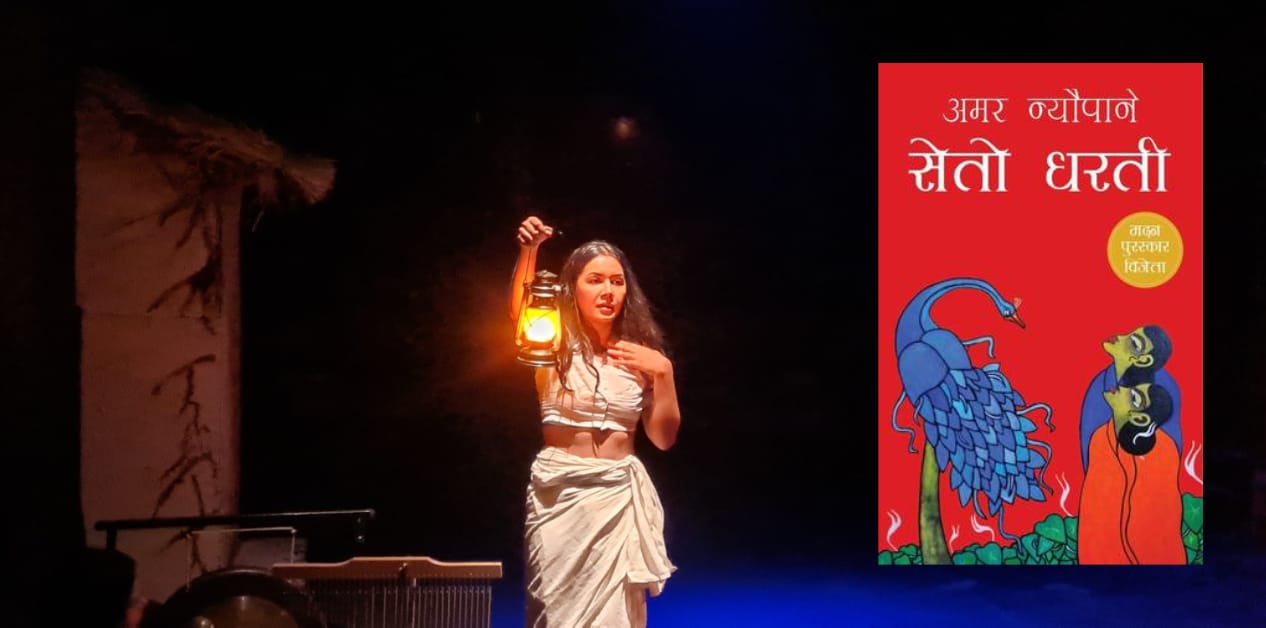
KATHMANDU: “What did the butterfly dream in its fleeting flight?
A vermilion vow—one stroke, a lifetime lost to fate’s quiet rite. ”
Fourteen years ago, while reading these lyrics within the chapter titled “The Bird’s Song and the River’s Music” in the novel Seto Dharti , I hummed them, filling them with my own melody.
Driven away not by detachment but by neglect and insult, Tara is currently treading toward Devghat, blending into a group of strangers. While walking through the middle of the forest, Tara hears a grass-cutter singing this very song from afar, making the forest echo. Hearing the song, she reflects, “I wonder who is singing? My heart echoed more than the forest.”
While reading Seto Dharti , I had created different images of the main character, Tara, not just through this song or context. An innocent Tara forced into child marriage at seven; a teenage Tara whose youthful playfulness was snatched away by social rules declaring her a child widow; and an elderly Tara living in a silent rebellion against fate in search of existence.
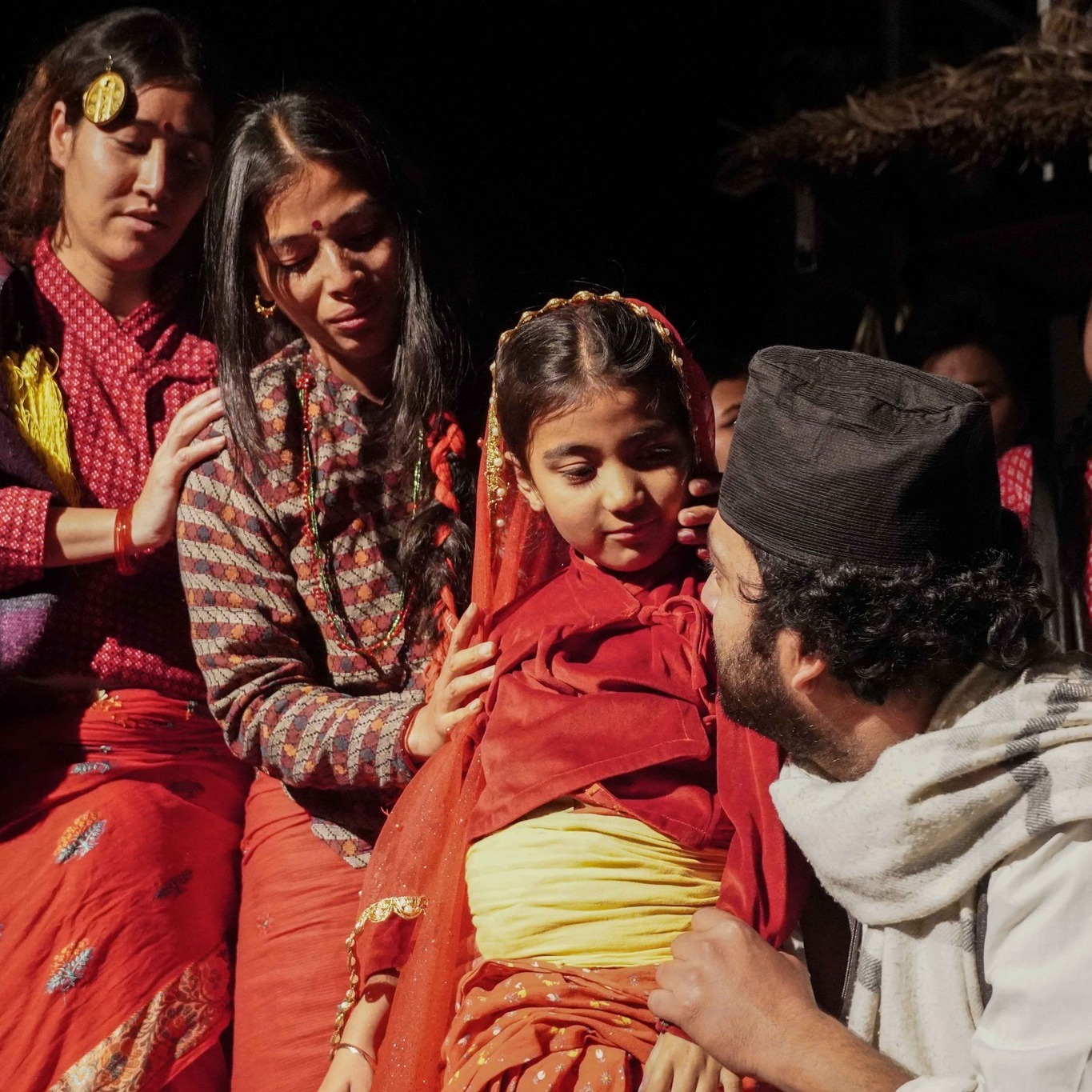
Years after reading Amar Neupane’s celebrated novel Seto Dharti with a heavy heart, I had the chance to meet all three Taras on the stage of Kantipur Theatre. The characters from the fiction descended onto the stage, their gestures and eyes retelling the same tragic story of experience. In the final scene of the play, seeing the three Taras of different ages in the same house felt like witnessing Tara’s life journey once again.
Adapting a nearly 400-page fiction—loved by many readers and recipient of the Madan Puraskar—into a play is a challenging task for director Sundar Dhital. He succeeds in showcasing all three stages of Tara—at age 7, 16, and old age—on stage in about an hour and a half.
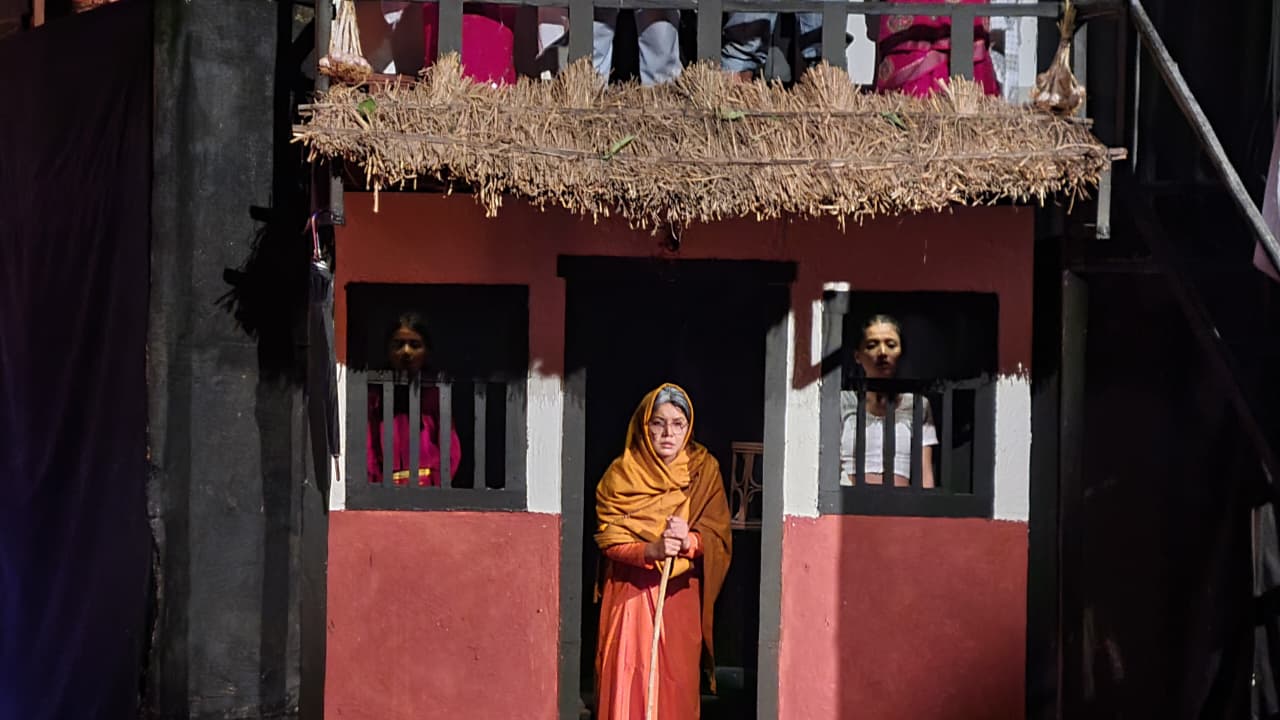
In the play, every effort has been made to realistically portray the cultural environment, social customs, and malpractices post-1930s. These efforts are reflected in the costumes, dialogues, and the setting depicted on stage.
The story of the play Seto Dharti begins with “It is said.” “It is said that I got married… it is said that two years later, I became a widow…”
For the young Tara, who falls asleep during her wedding, the meaning of marriage is no more than playing childish games with friends. For her, the death of her husband was no different than the passing of a stranger.
Despite being unaware of the events or accidents happening in her life, Tara has to pay a harsh price for them all. That is what shapes Tara’s life.
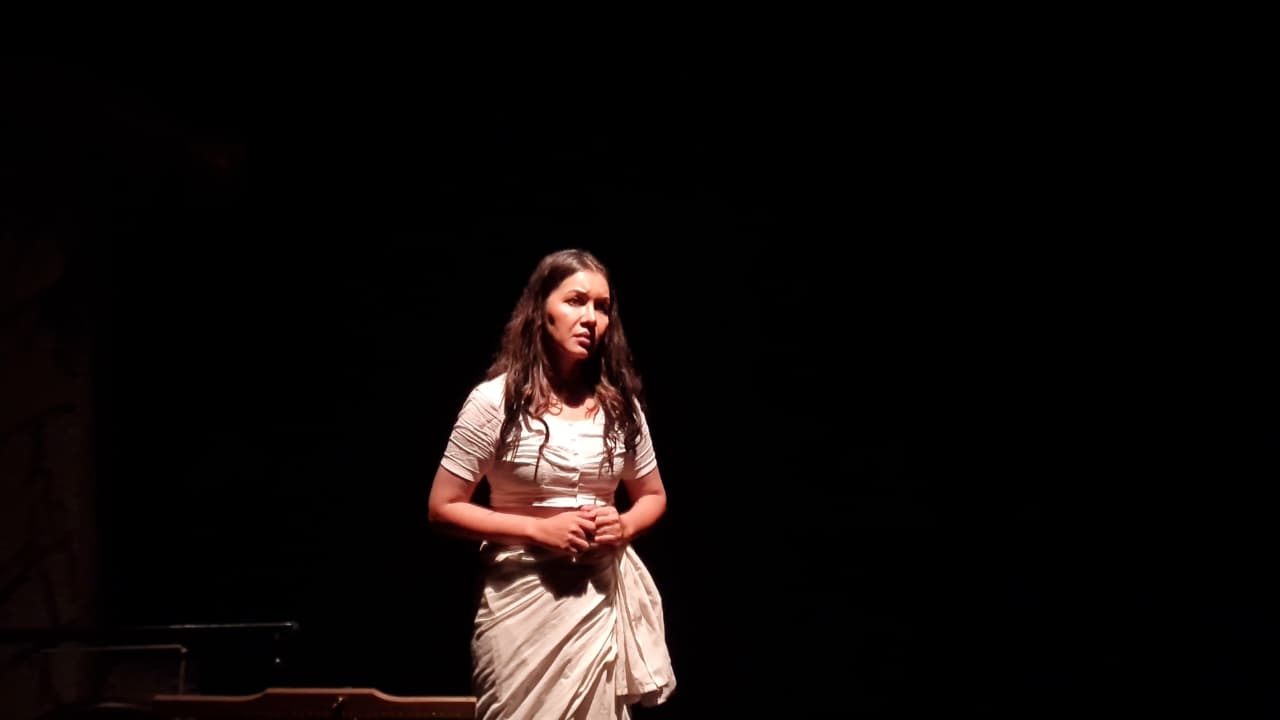
In the society of that time, there was a belief that even seeing a widow on the street brought bad luck. Laughing or talking with a man was considered a crime. In such an environment of social prohibition, Tara neither fits in her husband’s house nor can she stay in her parental home. Unable to remain alone and helpless for long, she sets out on an inner journey and reaches Devghat.
The play begins with a scene from Devghat. On the left of the stage is the world of the elderly Tara, while on the right, her childhood home is visible. Actress Benisha Hamal, who plays the role of Tara, serves as the narrator. Tara’s story is presented by connecting present and past events or emotions. This style of creating conflict between the present and the past to make the story dynamic feels effective.
Production design, including stage decoration, color, sound, music, and lighting, are important aspects that enhance the emotional impact of the play. The work of production design in Seto Dharti catches the audience’s attention in various places. Specifically, the lighting and live music by the ‘Phokto’ group have brought the characters’ emotions to life according to the mood.
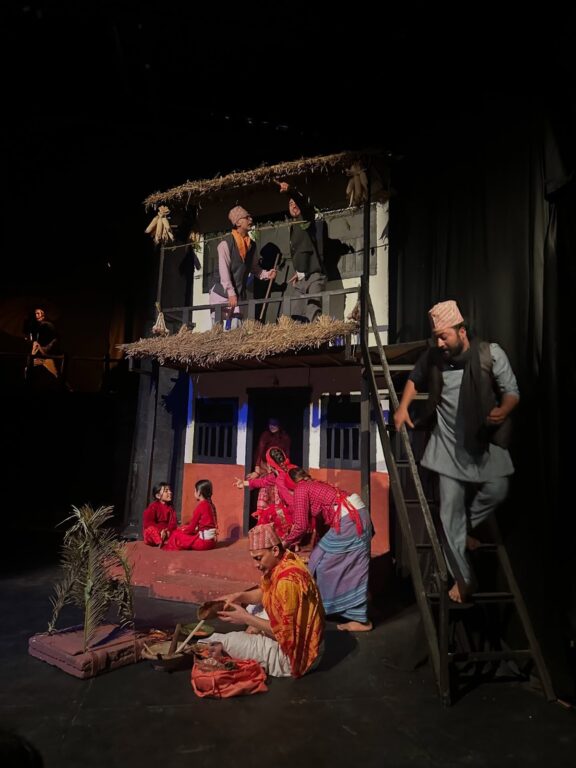
Like the name Seto Dharti (White Earth), everything in Tara’s world is plain, where even the red color of her own blood bothers her when she has her first period seven years after her husband’s death. Seeing Tara on stage in white clothing with red-stained hands makes the audience feel uncomfortable.
Amidst the constant sorrow, some pleasant moments also appear in the play. Specifically, the moments childhood Tara spends with Govinda and other friends are portrayed enjoyably. While playing games as children, Tara and Govinda always become the bride and groom. That game turns into something like attraction and love by the time they reach adolescence. Just as the heart rejoices when a balloon flies in the air for a moment, both are thrilled. However, the journey and destination for both Tara and Govinda are different. Although not close, Tara carries Govinda in her memory.
Besides Govinda, Tara’s only friend in life is Yamuna. Tara can even ask Yamuna about the most private details of her romantic relationship with her husband.
Even though society keeps her away from men after she becomes a widow in childhood, it is not that age-related curiosity toward men or sexual desires do not grow in Tara. Such teenage impulses of Tara are revealed through dialogues with Yamuna. Tara excitedly asks Yamuna about private moments and intimacy with her husband; Yamuna teasingly satisfies Tara’s curiosity. On one side is the lonely Tara, and on the other, the romance between Yamuna and her husband. This scene, involving the use of a lantern, feels artistic and bold in its ‘juxtaposition’ of white and red colors.
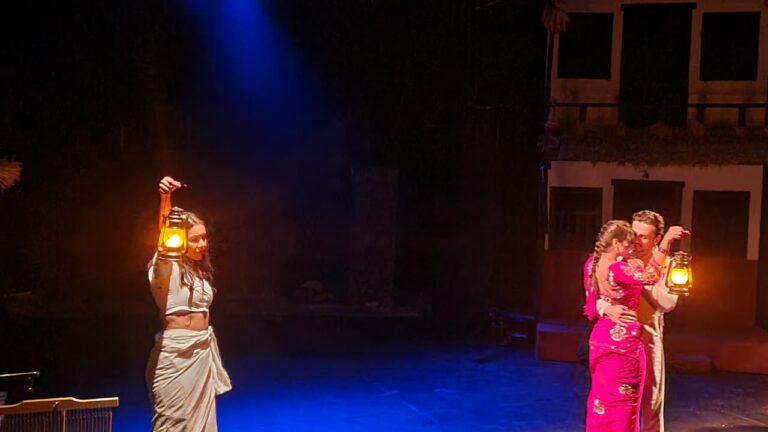
Watching such scenes in the play, it feels like the difference between Tara and Yamuna is the politics of color. The play clearly illustrates how strong the gap between white and red colors was in yesterday’s society in the name of tradition. And it demands a review of the insults and injustices faced by child widows or widows in the past. Realizing how terrifying society was from a woman’s perspective is the greatest strength of Seto Dharti .
Whether it is the literary work or the play, Seto Dharti is a story of grief. Except for a few artistic scenes and some pleasant moments, grief dominates most scenes in the play. However, in the novel, grief appears as emotion, feeling, philosophy, and perspective. In the play, it feels disappointing at many points where the understanding seems to be that grief simply means crying loudly.
However, theatre has a special characteristic. A play turns words into visuals and makes inanimate characters and moments come alive.
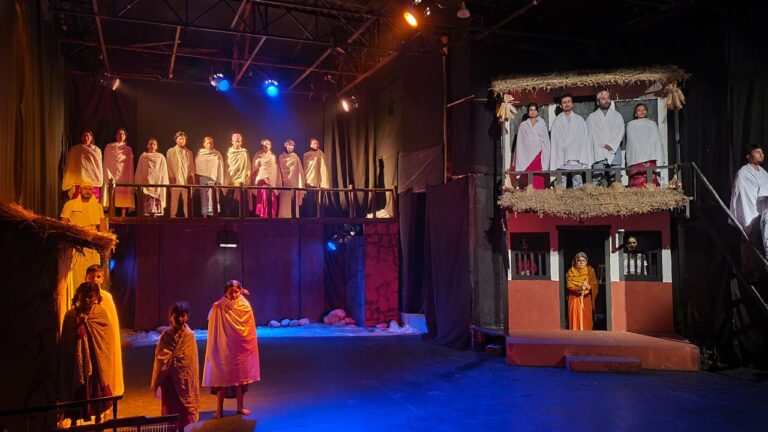
Seto Dharti gave me and many audience members like me the chance to see, meet, hear, and feel the Tara we had decorated in our minds years ago, right there on the stage.
While receiving the Madan Puraskar for the fiction Seto Dharti , author Amar Neupane spoke about the distinction between experience-oriented and feeling-oriented fiction. According to his analysis, being experience-oriented is a raw form of feeling, like fresh butter that hasn’t been clarified. But feeling-oriented fiction is refined life experience, which subtly emerges from a character’s journey as a gentle philosophy of life.
Comparing the play and the book here, the play directed by Dhital has only reached the level of being experience-oriented. If it had been able to grasp the life philosophy of the fiction more deeply, perhaps the play would have become feeling-oriented.