
Kathmandu
Monday, June 22, 2026





Academic and author Ashok Swain warns that while the rise of Balen Shah marks a rejection of the old guard, the new leadership must pivot from "spectacle-driven" enforcement toward structural reform
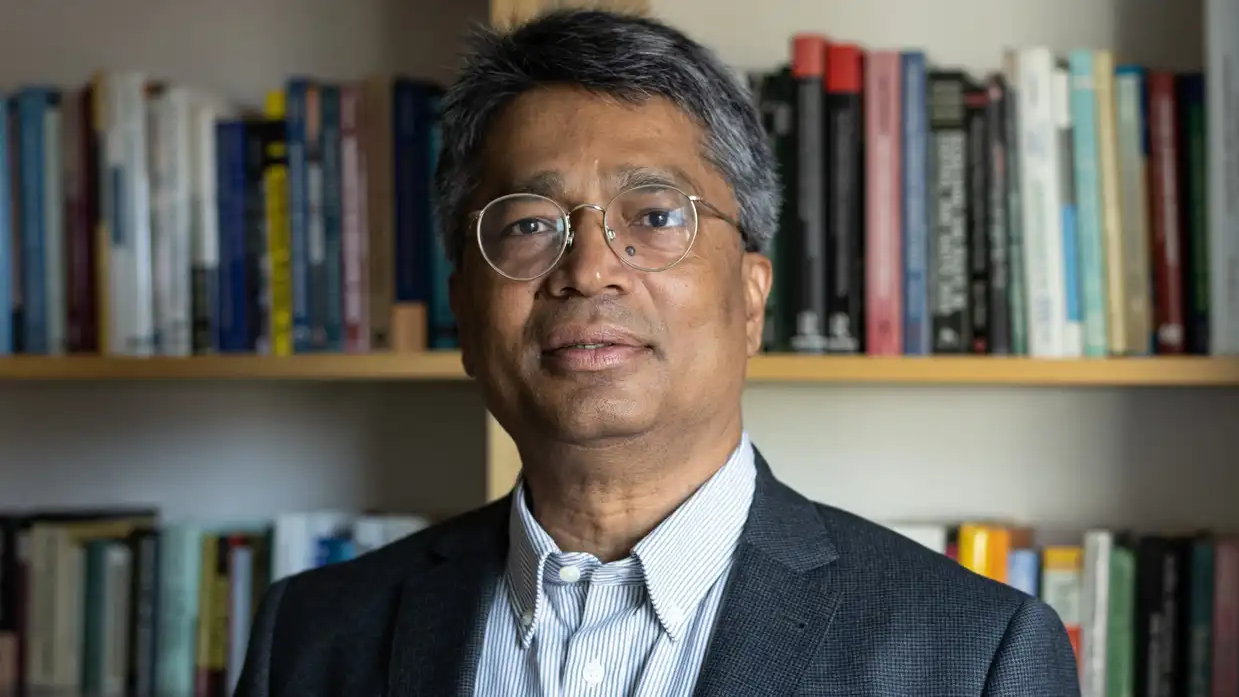
KATHMANDU: Ashok Swain is a professor and head of the Department of Peace and Conflict Research at Uppsala University, Sweden, where he also holds the UNESCO Chair on International Water Cooperation and serves as director of the Research School of International Water Cooperation.
After earning his Ph.D. from Jawaharlal Nehru University in 1991, he has held various fellowships and professorships at institutions including Stanford, McGill, and the University of Chicago. He is the founding Editor-in-Chief of the Environment and Security journal and the author or editor of numerous books, such as Managing Water Conflict: Asia, Africa and the Middle East (2004) and Climate Security (2025). His research focuses on transboundary water cooperation, climate change, and emerging security challenges.
Binod Dhakal of Nepal News conducted an email interview with him on May 6. Excerpts follow:
Nepal has gone through massive youth-led protests in 2025 followed by a fresh election and new leadership under Balen Shah. In your recent writings, you described this as a potential referendum on democracy in South Asia. How optimistic are you that this moment can deliver real political renewal rather than recycled instability?
Nepal’s 2026 election, coming within months of the youth-led protests, represents one of the most hopeful democratic moments South Asia has witnessed in recent years. Unlike Bangladesh, where a major political party was barred from taking part in the election, Nepal managed to channel public anger into an inclusive electoral process that allowed citizens, particularly the younger generation, to reclaim political agency through democratic means rather than violence.
The rise of Balen Shah and a new political force reflects a deep rejection of the entrenched political elite, corruption, and endless factionalism that have dominated Nepali politics for decades. At the same time, the scale of the mandate also creates understandable apprehension.
The new leadership lacks administrative experience, institutional depth, and clear ideological direction, which could make governance vulnerable to improvisation, populism, and internal fragmentation.
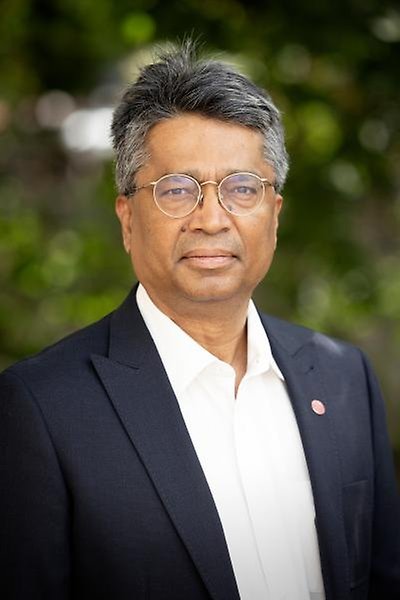
Ashok Swain
Political renewal in Nepal will therefore depend not only on the energy of the protest movement but also on whether the new leadership can strengthen democratic institutions, maintain inclusivity, and deliver tangible governance reforms without reproducing the instability that has repeatedly undermined democratic transitions in South Asia.
You recently commented critically on the forced demolition of thousands of homes of landless settlers in Kathmandu under the current government. With over a million landless people in Nepal, what risks does this “bulldozer approach” without proper rehabilitation pose for urban peace, social cohesion, and public trust in the state?
The forced demolition of thousands of homes belonging to landless settlers in Kathmandu reflects a deeply troubling “bulldozer approach” to governance that prioritizes coercive state power over humanity, legality, and social justice.
In a country where more than a million people remain landless, evictions carried out without credible rehabilitation plans, legal safeguards, or meaningful consultation risk intensifying urban insecurity and social alienation rather than solving the structural problem of informal settlement. Such actions undermine public trust in democratic institutions.
From both a humanitarian and legal perspective, governance cannot be reduced to demolition alone; the right to shelter, due process, and dignified resettlement are essential components of democratic legitimacy.
If the government continues to rely on spectacle-driven enforcement without addressing inequality, unemployment, and affordable housing, it could deepen social polarization, provoke urban unrest, and weaken the fragile social cohesion that Nepal’s democratic transition still depends upon.
Nepal sits in a sensitive geopolitical triangle between India and China. How do recent border tensions, such as the Lipulekh dispute, affect Nepal’s ability to pursue an independent foreign policy and stable relations with its neighbors?
Nepal’s foreign policy challenge has always been shaped by the difficult reality of being geographically and strategically sandwiched between two large countries, India and China, whose rivalry is becoming increasingly intense.
Disputes such as Lipulekh exposed not only unresolved border sensitivities with India but also the structural vulnerability of Nepal’s sovereignty in a highly polarized regional environment. While Nepal seeks to pursue an independent and balanced foreign policy based on non-alignment and sovereign equality, every major diplomatic move is often interpreted through the lens of competition between New Delhi and Beijing.
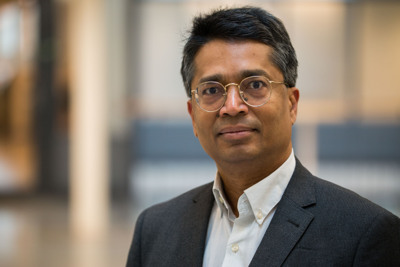
Ashok Swain. Photo courtesy: Uppsala University/Website
This creates constant pressure on Kathmandu to “choose sides,” even when its national interest lies in maintaining constructive relations with both neighbours. The danger is that domestic political instability and weak institutional capacity can make Nepal more susceptible to external influence, transactional diplomacy, and nationalist mobilization around border issues.
Sustainable foreign policy independence for Nepal therefore requires political stability at home, economic diversification, and a consistent diplomatic strategy that avoids both overdependence on India and unrealistic expectations from China.
Climate change is hitting Nepal hard — through GLOFs, erratic monsoons, drying water sources, and glacier melt. From a security perspective, how might these changes interact with existing political and social tensions to create new risks in the coming years?
Climate change is rapidly emerging as one of Nepal’s most serious non-traditional security threats because its impacts are no longer confined to the environmental sphere but are increasingly interacting with existing political, economic, and social vulnerabilities.
The growing risks of glacial lake outburst floods (GLOFs), erratic monsoons, landslides, prolonged droughts, and drying water sources threaten livelihoods, food security, hydropower production, and rural survival across large parts of the country.
In a fragile political environment marked by inequality, weak governance, unemployment, and uneven development, these climate stresses can intensify local grievances, accelerate migration to already overburdened urban centres and foreign countries, and deepen competition over land, water, and state resources.
Climate-induced displacement and resource scarcity may also fuel social tensions between regions and communities, particularly where the state is perceived as absent or ineffective in disaster response and adaptation planning.
From a security perspective, the danger lies not in climate change alone but in its ability to act as a threat multiplier that amplifies existing instability, weakens public trust in institutions, and creates conditions for political unrest, social fragmentation, and governance crises in the years ahead.
Nepal’s post-conflict transitional justice process has remained incomplete for nearly two decades. How can unresolved issues around land, displacement, and resource rights from the Maoist insurgency period be meaningfully addressed to support genuine reconciliation and lasting peace?
Nepal’s transitional justice process cannot achieve genuine reconciliation or lasting peace unless it moves beyond symbolic political agreements and addresses the deeper structural grievances that fueled the Maoist insurgency in the first place, particularly around land inequality, displacement, exclusion, and resource rights.
Nearly two decades after the conflict, many victims still lack truth, accountability, compensation, and secure access to livelihoods, while conflict-era displacement and contested land ownership continue to generate local tensions and distrust toward the state.
In a fragile political environment marked by inequality, weak governance, unemployment, and uneven development, these climate stresses can intensify local grievances, accelerate migration to already overburdened urban centres and foreign countries, and deepen competition over land, water, and state resources.
A meaningful process therefore requires more than legal closure; it demands restorative justice that combines credible accountability mechanisms with social and economic reforms. This includes transparent land reform policies, rehabilitation and restitution for displaced communities, recognition of marginalized groups’ rights over land and natural resources, and stronger local-level reconciliation initiatives that involve victims rather than political elites alone.
Sustainable peace in Nepal ultimately depends on whether the state can transform the post-conflict order into one based on justice, inclusion, and equitable governance rather than merely the absence of war.
Hydropower projects and water resource management are central to Nepal’s development ambitions. As an expert on transboundary rivers, how can Nepal convert its upper riparian advantage into genuine regional cooperation with India and China, rather than a source of future conflict?
Nepal can convert its upper riparian advantage into regional cooperation only if it treats water not merely as a commodity for hydropower export, but as a foundation for shared security, climate resilience, and interdependence with both India and China.
Its Himalayan rivers give Nepal strategic leverage, but unilateralism or narrow nationalism could easily turn that leverage into suspicion and geopolitical tension. For Nepal to successfully pursue a cooperative and sustainable water diplomacy strategy, constructive engagement and mutual cooperation from both India and China are essential.
Without the willingness of the two larger neighbors to support transparent and rules-based regional water governance, Nepal’s ability to balance development ambitions with regional stability will remain limited. Nepal should therefore promote benefit-sharing arrangements that include hydropower trade, flood forecasting, sediment management, irrigation, ecological protection, disaster risk reduction, and climate adaptation.
With India, cooperation must move beyond project-specific bargaining toward basin-level planning that addresses downstream flood concerns while ensuring Nepal receives fair economic returns and sovereign policy space.
With China, Nepal should strengthen scientific collaboration and data-sharing on glacier melt, GLOFs, and upstream environmental risks.
The broader challenge is to prevent Himalayan water resources from becoming trapped in strategic rivalry and instead frame them as regional public goods capable of fostering clean energy production, economic connectivity, and long-term regional stability.
Climate-induced migration, rural distress, and urban land pressures are rising rapidly in Nepal. How can the country manage these internal movements to prevent new conflicts over resources, particularly in the context of water stress and informal settlements?
Nepal must treat climate-induced migration not as a temporary humanitarian problem but as a long-term governance and security challenge. As drying water sources, erratic monsoons, floods, landslides, and rural livelihood decline push people toward towns and cities, unmanaged movement can intensify competition over land, water, housing, jobs, and public services. This is especially dangerous where informal settlements are treated through eviction and demolition rather than rights-based planning.
To prevent new conflicts, Nepal needs early-warning systems for climate displacement, investment in rural adaptation and water security, and urban policies that recognize informal settlers as citizens with rights rather than encroachers to be removed.
With China, Nepal should strengthen scientific collaboration and data-sharing on glacier melt, GLOFs, and upstream environmental risks.
Local governments should expand affordable housing, secure tenure, water access, sanitation, and livelihood support while ensuring that host communities are not neglected. Conflict-sensitive planning is essential: relocation, rehabilitation, and resource allocation must be transparent, participatory, and legally grounded.
If managed with inclusion and dignity, internal migration can become part of Nepal’s adaptation strategy; if handled through coercion, neglect, or unequal access to resources, it risks producing new urban conflicts and further weakening public trust in the state.
Your research often links environment, democracy, and sustainable development. What practical steps can Nepal take — especially at the local and federal levels — to strengthen environmental governance and make its democratic institutions more resilient amid ongoing political volatility and climate shocks?
Nepal can strengthen environmental governance and democratic resilience by treating climate adaptation as a core function of the state, not a donor-driven side agenda. At the central level, this means creating clearer laws, stable funding, transparent climate budgets, and stronger coordination among ministries responsible for water, land, energy, forests, disaster management, and local development.
At the local level, administrative units must be empowered with resources and technical capacity to map climate risks, regulate land use, protect watersheds, manage waste, prepare for floods and landslides, and support vulnerable communities before disasters strike. Democratic resilience also requires participation: women, youth, indigenous groups, minorities, landless settlers, farmers, and migrants must be included in decisions over land, water, forests, housing, and infrastructure.
Environmental governance will fail if it becomes centralized, technocratic, or captured by political and business interests. Nepal should therefore strengthen accountability mechanisms, independent environmental assessments, anti-corruption safeguards, and community-based monitoring of hydropower, roads, mining, and urban expansion.
In your book Climate Security, you highlight how environmental stress acts as a threat multiplier. Looking at the world today, what global lessons on climate-induced conflicts and environmental peacebuilding stand out for you, and how relevant are they for vulnerable Himalayan nations?
In Climate Security, I argue that climate change rarely causes conflict in isolation; rather, it acts as a threat multiplier that intensifies existing political, economic, and social vulnerabilities. The global lesson today is that societies facing weak governance, inequality, exclusion, and poor resource management are far more vulnerable to climate-induced instability than those with inclusive institutions and effective adaptation systems.
From the Sahel to the Middle East and South Asia, we see how droughts, floods, food insecurity, displacement, and water stress can deepen local grievances, fuel migration pressures, and erode trust in the state when governments fail to respond fairly and effectively.
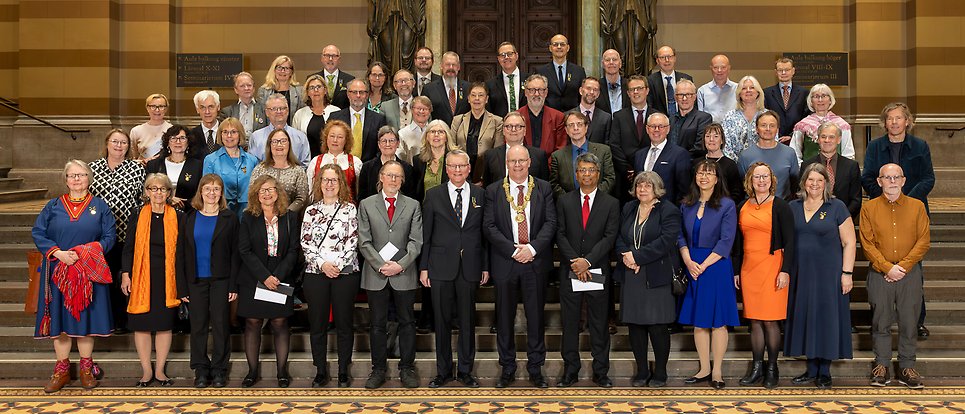
On 26 April 2024, Professor Ashok Swain received the “For Zealous and Devoted Service of the Realm” award in recognition of 30 years of dedicated service in the public sector. Photo courtesy: Uppsala University/Website
At the same time, there are also important lessons in environmental peacebuilding: shared ecosystems and transboundary rivers can become platforms for cooperation, trust-building, and regional integration when managed through inclusive and science-based institutions. These lessons are highly relevant for vulnerable Himalayan nations such as Nepal, Bhutan, and parts of northern India, where glacier melt, erratic monsoons, water insecurity, and climate disasters are accelerating rapidly.
The Himalayas are not only an ecological hotspot but also a politically sensitive region shaped by poverty, fragile infrastructure, geopolitical rivalry, and uneven development. Without regional cooperation, equitable adaptation policies, and stronger democratic governance, climate stress could magnify both domestic tensions and interstate distrust.
But if environmental challenges are approached cooperatively, the Himalayas could also become an important example of climate resilience and peacebuilding in an increasingly unstable world.
As UNESCO Chair on International Water Cooperation, what are the biggest emerging challenges in transboundary water governance amid rising geopolitical tensions, and where do you see the greatest opportunities for cooperation?
As UNESCO Chair on International Water Cooperation, I see the greatest challenge in transboundary water governance arising from the dangerous convergence of climate change, rising nationalism, geopolitical rivalry, and weakening multilateralism.
Across many river basins, shrinking water availability, glacier melt, extreme weather events, and growing energy and food demands are increasing pressure on shared rivers at a time when trust between states is declining.
Water is increasingly being securitized and drawn into broader geopolitical competition, whether in South Asia, the Nile Basin, Central Asia, or the Middle East. The risk is not simply “water wars,” but the gradual erosion of cooperative institutions, data-sharing mechanisms, and legal norms that have historically prevented tensions from escalating.
Yet the greatest opportunity also lies in the same reality: no country can manage climate-driven water insecurity alone. Shared rivers create unavoidable interdependence, and this can become a basis for cooperation in areas such as flood forecasting, hydropower trade, disaster management, glacier monitoring, ecological protection, food security, and climate adaptation.
Technological advances, regional scientific collaboration, and growing recognition of water as a shared ecological and human security issue offer important openings for environmental peacebuilding.
In regions such as the Himalayas, successful transboundary water cooperation could not only reduce future conflict risks but also strengthen regional stability, sustainable development, and climate resilience for millions of people.

![Repair of smart streetlights intensified along Jadibuti-Suryabinayak road section [Photo Feature]](https://english.nepalnews.com/wp-content/uploads/2026/06/Sadak-Batti-Marmat_NPL-4-768x512-1.jpeg)