Kathmandu
Monday, June 22, 2026





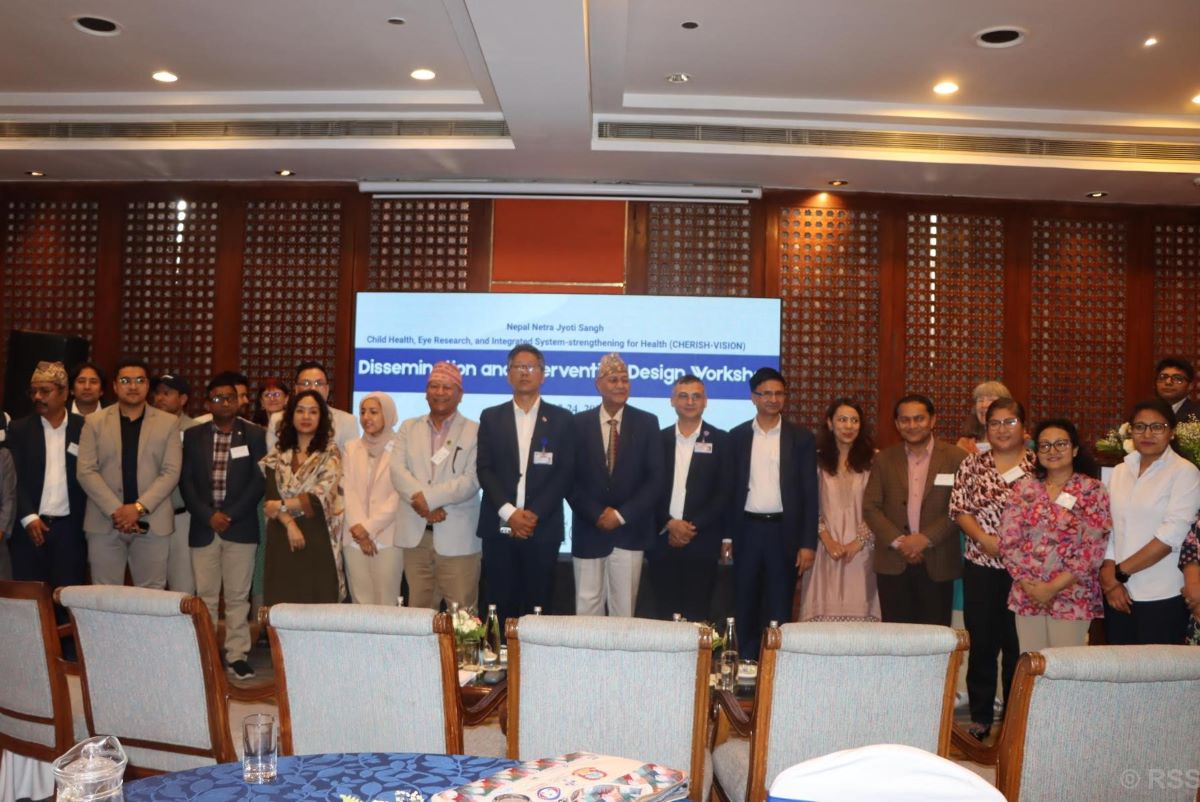
KATHMANDU: Nepal Netra Jyoti Sangh (NNJS) has, in collaboration with the Ministry of Health and Food Safety, officially launched an integrated programme aimed at improving child health, advancing eye health research, and strengthening Nepal’s health system.
The programme is being implemented in partnership with the Ministry of Health and Food Safety, the World Health Organization, UNICEF, Dhulikhel Hospital, International Centre for Eye Health, and the London School of Hygiene & Tropical Medicine (LSHTM).
The programme was jointly inaugurated by NNJS Chairman Prof. Dr. Chet Raj Pant, Chief Guest and Director General of the Department of Health Services Dr. Anuj Bhattachan, and Dr. Aeesha Malik, from the London School of Hygiene & Tropical Medicine.
Speaking at the inauguration, NNJS Executive Director Dr. Shailesh Kumar Mishra said that the programme aims to improve eye health outcomes among children under five years of age by strengthening the primary healthcare system’s capacity to identify, treat, and appropriately refer eye-related conditions at an early stage.
He noted that the project will conduct research and pilot interventions to assess the feasibility, need, and effectiveness of integrating eye health into Nepal’s existing Integrated Management of Neonatal and Childhood Illness (IMNCI) programme.
The initiative seeks to generate evidence that can inform future policy and programme decisions, ultimately contributing to better eye health outcomes for children across the country.
Addressing the programme, Dr. Gunanidhi Sharma, Chief of the Policy, Planning and Monitoring Division at the Ministry of Health and Food Safety, highlighted the importance of integrating eye health into child health services. He stated that such integration would support the early identification of vision-related problems among children, enabling timely intervention and reducing the risk of long-term visual impairment.
Similarly, Dr. Madan Upadhyaya, Director of the Family Welfare Division, emphasized that the project would provide an important foundation for expanding eye health services through Nepal’s existing maternal and child health service delivery system. He expressed confidence that the evidence generated through the programme would contribute to strengthening service delivery and improving child health outcomes.
Chief Guest Dr. Anuj Bhattchan, Director General of the Department of Health Services, noted that Nepal’s successful implementation of the IMNCI programme has played a significant role in reducing child mortality. He stated that integrating eye health into this well-established system is both timely and necessary.
“Early detection, treatment, and referral of eye conditions can significantly contribute to preventing visual impairment and blindness among children,” he said. “The Ministry remains positive about exploring opportunities to expand this initiative in the future based on the evidence and findings generated through the research.”
Speaking on behalf of NNJS, Secretary General Bharat Bahadur Chand said that the programme’s primary objective is to develop a sustainable and effective service delivery model by integrating child eye health into basic healthcare services. He emphasized that research-driven interventions and strong partnerships can create meaningful and lasting improvements in children’s eye health.
NNJS Chairman Prof. Dr. Chet Raj Pant highlighted the organization’s longstanding contribution to expanding access to quality eye care services throughout Nepal. He stated that the integration of eye health into child health services represents an important step toward ensuring early diagnosis, timely treatment, and the protection of children’s vision.
“Nepal Netra Jyoti Sangh has played a pivotal role in advancing eye health services in Nepal for decades. This programme will further strengthen efforts to safeguard children’s vision and ensure that eye health becomes an integral part of child healthcare services,” he said.
According to Senior Researcher Dr. Khem Pokharel, the project is expected to generate valuable evidence and practical experience to support policy and programme improvements. He noted that the initiative will help identify effective approaches for integrating eye health into child health services and strengthening the overall health system.The project is being implemented in 15 districts spanning all seven provinces of Nepal.
During the workshop, participants reviewed preliminary research findings and engaged in detailed discussions on implementation strategies, health system strengthening, and programme scale-up. It is expected that the recommendations and insights generated through the programme will provide a strong foundation for improving the accessibility, quality, and sustainability of child eye health services in Nepal.
Nepal Netra Jyoti Sangh is Nepal’s leading eye health service provider. Through its nationwide network of 28 eye hospitals and 226 eye Care centres, the organization delivers eye care services to millions of people across the country and continues to play a vital role in the prevention of avoidable blindness and visual impairment.