Kathmandu
Tuesday, July 21, 2026





To prevent national infrastructure projects from being permanently stalled by legal battles, the ministry has received recommendations to form a dedicated judicial body focused entirely on development disputes
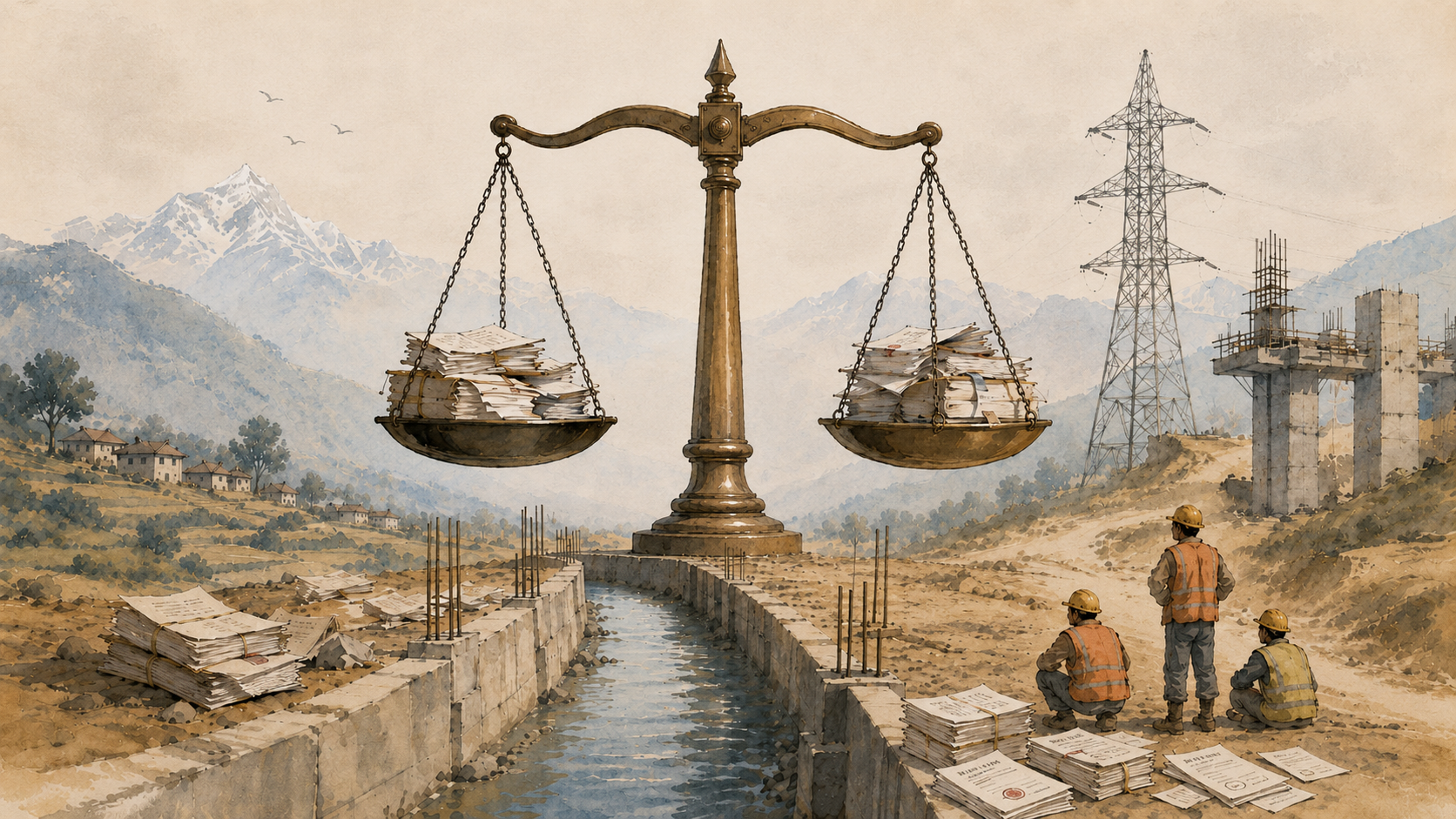
KATHMANDU: The Duduwa Branch Canal Dam project, which started construction with the objective of providing irrigation facilities to 16,000 hectares of arable land in the Banke District, had an agreement to be completed by mid-April, 2027. The project, for which the construction contract agreement was signed with MS Coastal and Pappu JV on June 20, 2016, was approved at an estimated cost of Rs 1.916 billion, with 55 percent of the amount to be spent by the Saudi Fund for Development and 45 percent by the government.
In the 18 months since the contract started, only 2 percent of the work was completed. When the process to terminate the contract was advanced after there was no progress in the work, the construction entrepreneurs filed a case in court in November/December 2018. The construction work, which was halted since then, started only after mid-June of last year.
Due to a decade of delay in canal construction, farmers were not only deprived of irrigation facilities, but a study conducted by the Ministry of Law, Justice and Parliamentary Affairs has also assessed that around Rs 9 billion in production cost has been lost. According to the study, the implementation cost of the project seems to increase from Rs 1.48 billion to Rs 10.48 billion.
Such disputes related to compensation, land acquisition, and protected areas linked with development projects exist across the country. Due to legal problems connected with tree cutting, compensation, and contract management in electricity projects, projects of national importance such as Tamakoshi-Kathmandu and Marsyangdi Corridor are also affected.
The work on the Tamakoshi-Kathmandu 400/200 KV transmission line has been stopped for six years. Locals have not allowed the work to proceed after being dissatisfied with the compensation during land acquisition. Due to the continuous obstruction by local landowners over the compensation dispute, the construction work of four towers has been stopped.
There is also a land acquisition and compensation dispute in the Palungtar and Lamjung sections of the Marsyangdi Corridor 220 KV transmission line. Because of that very reason, tower construction in the forest area is affected. Another project affected by the compensation issue is the Kalimati-Nagdhunga (Tribhuvan Highway) road expansion. Although a verdict has been passed on the case filed in the Supreme Court by 47 individuals, including Sanu Shrestha, the project has been left stranded due to slow implementation.
The expansion work of the Satdobato-Godawari road in Lalitpur has been stopped after locals filed a case in the High Court demanding compensation, while the expansion of the Dhangadhi-Dadeldhura highway has also been stopped after 13 individuals, including Dhana Joshi, filed a case in the High Court, Dipayal, demanding compensation. Both cases are sub judice in court.
Meanwhile, the study committee formed by the Ministry of Law has proposed the formation of an infrastructure tribunal comprising expert judges to resolve such cases related to infrastructure and development construction swiftly and efficiently.
The committee proposed the tribunal after the study showed that lawsuits regarding land acquisition, compensation determination, and contract processes in infrastructure construction and development project processes excessively increase the time and cost of projects.
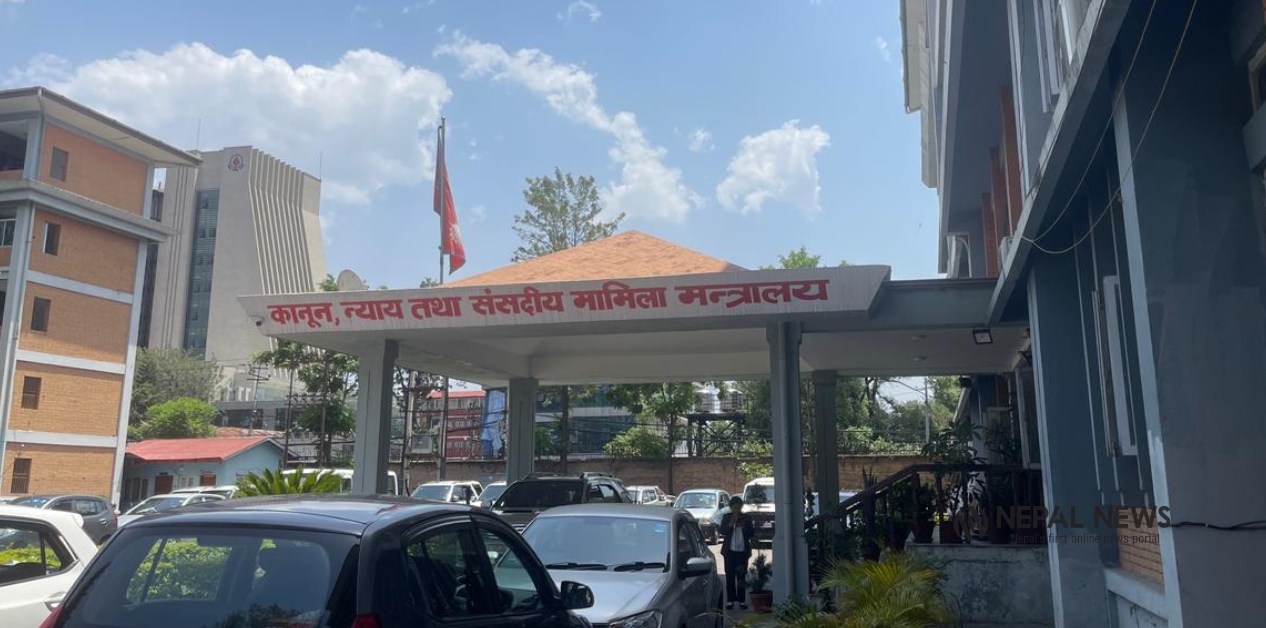
Ministry of Law, Justice and Parliamentary Affairs. Photo: Bhasha Sharma
The committee has suggested making arrangements to resolve such cases through the tribunal within three months. If that happens, the tribunal will decide disputes including joint venture partners, bank guarantees, and royalty sharing. It has been suggested to include experts in project management, finance, and engineering as well in the tribunal, which will be formed under the chairmanship of a judge. For the sake of checks and balances, it has been suggested to make an arrangement where an appeal can be made to the Supreme Court against the verdict of the tribunal.
The nine-member committee, formed under the coordination of Ministry Secretary Parashwar Dhungana for policy, legal, and institutional reforms to complete infrastructure and development projects on time, had submitted the report to Minister Sobita Gautam on April 23.
The committee had studied about cases related to infrastructure construction and development projects being registered in court and the work being stopped. The committee has mentioned in the report that 31 projects have been affected because cases related to 13 projects across the country were not settled on time and court orders could not be implemented.
According to the study, it takes time for projects to even start when a case is filed in court during or immediately after awarding the contract, and the cost of the project increases when the verdict does not come on time. In addition, when many government agencies are made opponents in the writ petition, the court procedures, including written responses, get prolonged, taking time for the verdict to come.
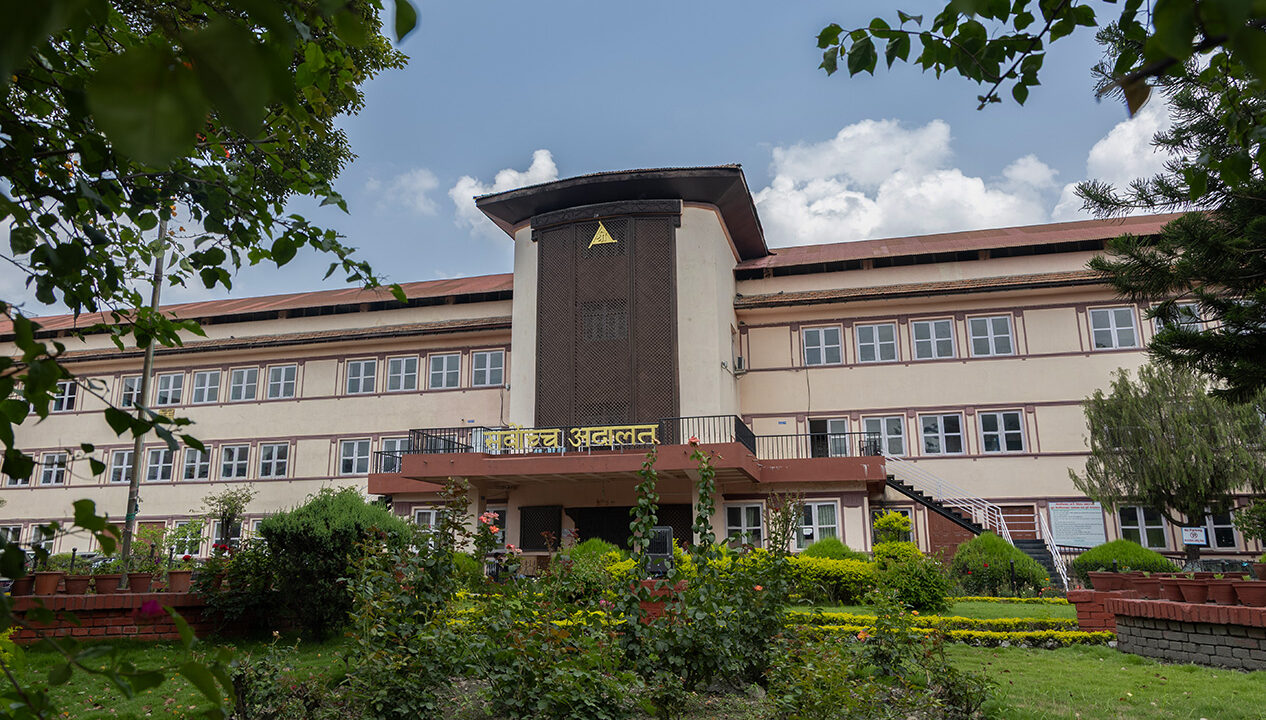
Supreme Court. Photo: Bikram Rai
To solve such problems, the report has suggested modifying the regulations of the Supreme, High, and District Courts to form a separate bench. The committee’s suggestion is to determine a limit by assigning an infrastructure bench to cases filed in court so that the hearing is completed within 60 days from the date of registration. Since the problem of work being continuously stopped and cases not being settled has been seen when only interim or short-term interim orders are issued, it has also been suggested to make arrangements for a final order to come within two months for that.
For that, it seems existing laws need to be amended. To make infrastructure and development-related work fast and effective, the Arbitration Act, 1999, will have to be amended. Not only that, but the Public Procurement Act, 2007, and the Civil Code, 2017, will have to be amended.
The report has suggested making arrangements not to stop the project work even while the case is ongoing. Suggestions ranging from forming a dispute resolution board at the project level itself to implementing time-bound arbitration have been included in the report.
“Since contracts are continuously under consideration in arbitration-court-arbitration-court, developing a vicious cycle, a final settlement has not been reached for a long time,” the report states. “Different decisions coming according to the level of the court in contracts and verdicts being passed without knowledge of facts have created further complexities in implementation.”
The study committee has pointed out the need for orientation for judges who look into disputes, cases, and writ petitions related to development projects. The point of suggestion states, “It is necessary to clarify that the general citizens are the party most affected when development projects are not completed on time. For that, orientation about the projects seems essential for judges.”