Kathmandu
Tuesday, July 21, 2026





Unsanitary kitchens, non-edible additives, and repeated food safety violations across several hotels and restaurants in Madhesh prompt fines and strict government action
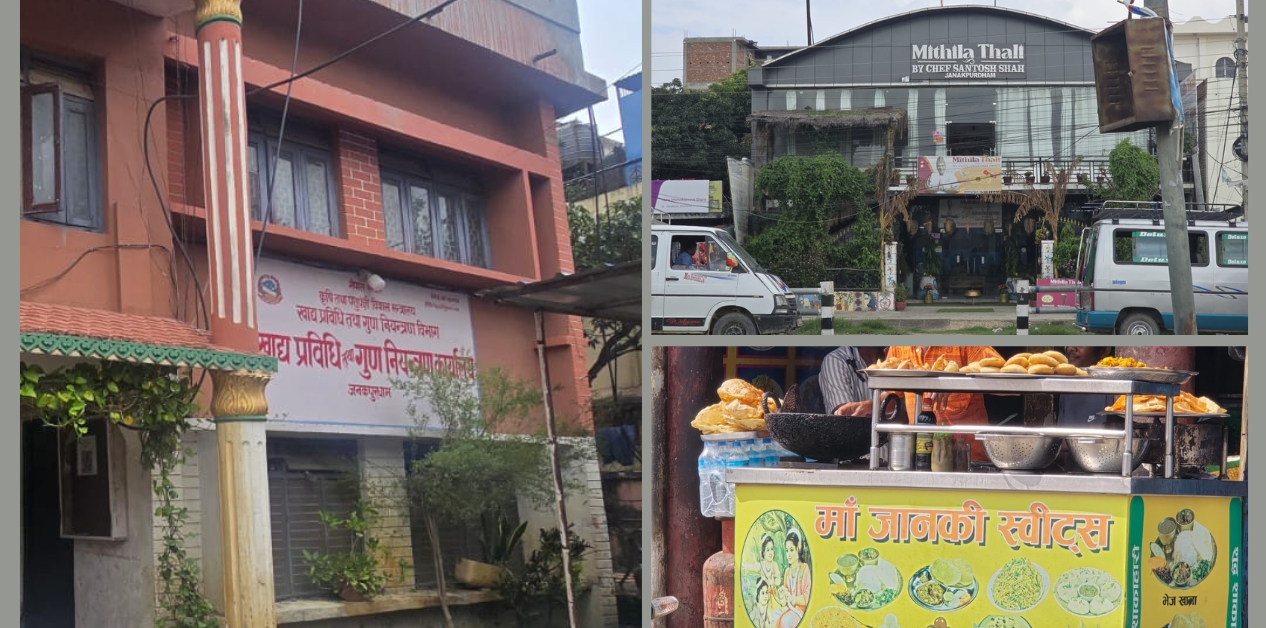
DHANUSHA: Mithila Thali Restaurant, located at the busy Ramanand Chowk in Janakpurdham, is known for local Mithila dishes. The Mithila artwork placed at the entrance and the interior decor reflect local art and culture. Customers reach there daily to taste Mithila food.
However, the government monitoring team’s conclusion is that the restaurant’s kitchen condition does not match the outer attraction.
According to the Food Technology and Quality Control Office, Janakpurdham, a complaint was filed stating that a dead fly was found in the restaurant’s food. After that, in the monitoring conducted on June 18, the possibility of flies entering the kitchen was seen, and a written instruction was given to improve sanitation, the office stated.
When monitoring was conducted again on June 25, after improvements were not made according to the instruction, written instructions were given to the restaurant once again.
On July 6, a joint team of Madhesh Province Home, Communication, and Law Minister Phakira Mahato, the local administration, and the Food Technology and Quality Control Office reached the restaurant for a third time.
During that sequence, it was found that non-edible color was mixed in the flour batter prepared for making Buniya (a traditional sweet made from deep-fried gram flour pearls soaked in flavored sugar syrup), the office stated. The monitoring team destroyed about 5 kg of batter.
During the inspection, the sanitation of the kitchen was found to be weak, the cooking and dishwashing areas were found to be in the same place, and previous instructions were found not to have been followed, according to the Office.
According to the Consumer Protection Act, 2018, the restaurant was fined Rs 25,000 through the Assistant Chief District Officer.
Fish and meat fail quality inspection
Bauwa Hotel, located at Lalgadh in Dhanusha, is known for fish and meat dishes. Because it falls on the East-West Highway, long-distance travelers as well as locals stop there to eat food.
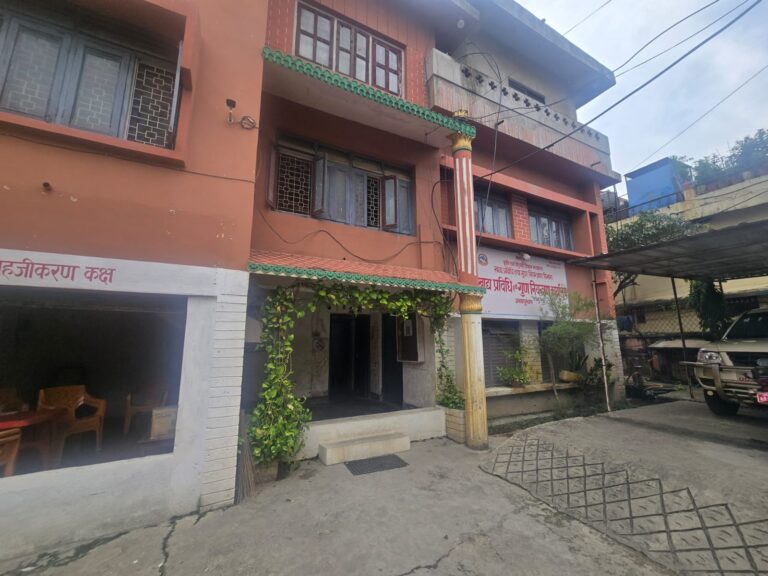
Food Technology and Quality Control Office in Janakpurdham
However, in the monitoring conducted on July 1, problems were seen in the quality of the oil being used in the hotel and the fish and meat kept for sale, the Food Technology and Quality Control Office stated.
According to the Office, preliminary testing was conducted on about 15 kg of fish and meat kept for sale. After testing, those food items were deemed unfit for sale and consumption, according to the Office.
After that, the hotel operator was fined Rs 25,000. During the monitoring, the trend of cooking dishes by repeatedly heating the same oil in hotels and restaurants was also seen, the office stated. Doctors say that the use of oil heated for a long time or repeatedly can increase health risks.
29 hotels fined in nine days
According to the Food Technology and Quality Control Office, between June 30 and July 8, at least 68 hotels and food establishments were monitored in various locations across Madhesh. Out of those, 29 were fined over Rs 1 million.
On June 30, when monitoring nine hotels in Mithila Municipality, one hotel was fined Rs 25,000. On July 1, although eight hotels were monitored in Mithila Bihari Municipality, no hotel was fined. On July 2, some 10 hotels in Mithila Municipality, Laxminiya Rural Municipality, and Janakpurdham Sub-Metropolitan City were monitored. Among them, four hotels were fined a total of Rs 150,000, the office stated.
On July 3, among nine hotels in Janakpurdham, five were fined a total of Rs 195,000. On July 6, when monitoring eight hotels in Janakpurdham, two were fined at the rate of Rs 25,000 each, totaling Rs 50,000.
On July 7, at least 14 hotels in Lalbandi and Hariwan of Sarlahi were monitored. Among them, nine were fined a total of Rs 397,000, the office stated.
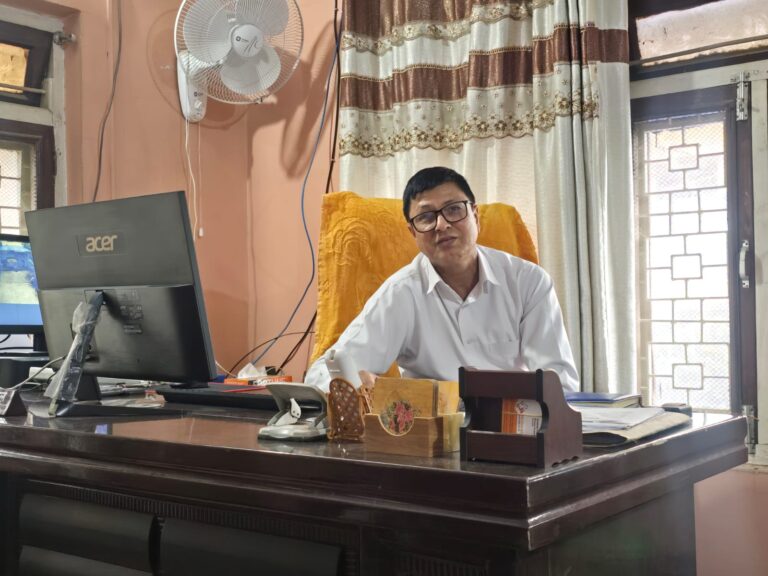
Office Chief Bimal Kumar Dahal
On July 8, among 10 hotels in Malangwa, eight were fined a total of Rs 270,000.
During the monitoring, problems were seen in kitchen sanitation, food storage, the oil being used, and the manner of keeping cooked dishes, according to the Office.
Uncovered food, filthy kitchens
In several hotels in Madhesh, cooked dishes are kept out in the open, the monitoring team stated. Food kept this way carries the risk of coming into contact with dust, flies, and other pollution.
Shyam Purbe of Janakpurdham Sub-Metropolitan City-3 says that when he went to eat food at a hotel on Hospital Road, it looked dirty. “I informed the hotel operator about sanitation,” he says, “but he replied, ‘Eat if you want to, or else leave.'”
According to Bimal Kumar Dahal, Chief of the Food Technology and Quality Control Office, Janakpurdham, in many monitored hotels, food was kept in the open and kitchen sanitation was found weak.
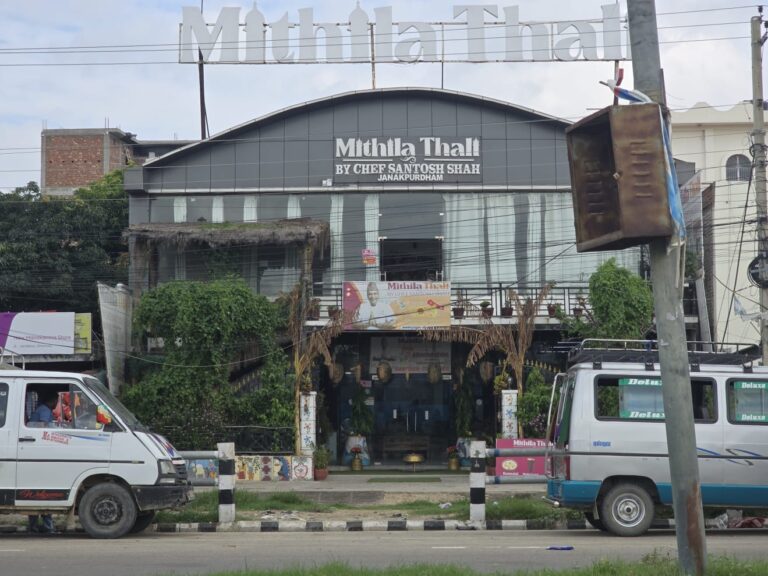
Mithila Thali Restaurant
“Kitchens in many hotels are dirty. When attention is not given to hygiene while cooking food, problems can arise in consumer health,” he says, “We give instructions for improvement the first time. If improvements are not made even after that, we take action including fines.” He says that even after giving repeated instructions, some hotels have not paid attention to improvement.
In several small and medium hotels, adequate distance was not found between the toilet and the cooking area, the monitoring team stated. Problems with flies, rats, and cockroaches were also seen in some kitchens, according to the team.
Dahal says consumers also need to look at hotel sanitation, kitchen conditions, and food placement methods.
“Consumers must also be aware of whether a hotel is clean,” he says, “Food prepared in dirty places can increase the risk of disease.”
Health risks of repeatedly reheated oil
Doctor Dr Bijay Kumar Singh says that unhealthy eating habits increase risks to the digestive system, heart, and other health areas. According to him, regular consumption of dishes made by repeatedly heating the same oil to high temperatures can be harmful to health. “Unhealthy eating plays a role in stomach-related problems, gastric issues, and heart diseases,” he says, “Especially, the use of repeatedly heated oil should be avoided.”
He says hotel operators must also pay attention to the temperature, storage period, and condition of fish and meat kept in the refrigerator or deep freezer for long periods. Doctors say that spoiled food items do not become safe just by using spices or colors, so regular checks of expiration dates, odor, color, and storage conditions are necessary.
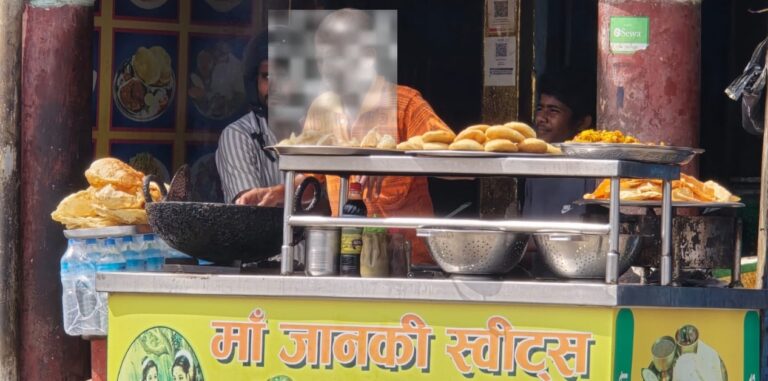
Open-air street food stalls at Ramanand Chowk in Janakpurdham
According to Dr Jamun Singh, Chief of Janakpurdham Provincial Hospital, a large number of patients come to the hospital daily with stomach-related problems. He says unhealthy eating habits and contaminated water are among the major causes of stomach-related problems.
The hospital does not have separate data on how many patients reached the hospital specifically due to eating hotel food. However, doctors say that when attention is not paid to food hygiene and safe water, the risk of diarrhea, stomach pain, vomiting, and other infections increases.
Madhesh Province Home, Communication, and Law Minister Phakira Mahato says that monitoring is focused on hotels along highways, hospital areas, and places with high human density.
“During monitoring, non-edible items and weak sanitation conditions were seen in many hotels,” he says, emphasizing that no one has the liberty to play with the health of citizens. “We give instructions to make improvements the first time. If improvements are not seen the second time as well, stricter action will be taken.”