Kathmandu
Tuesday, July 21, 2026





Competing power centers, rival BP Memorial Day events, and disputes over the next general convention have left the party consumed by internal battles while its role in national politics continues to weaken.
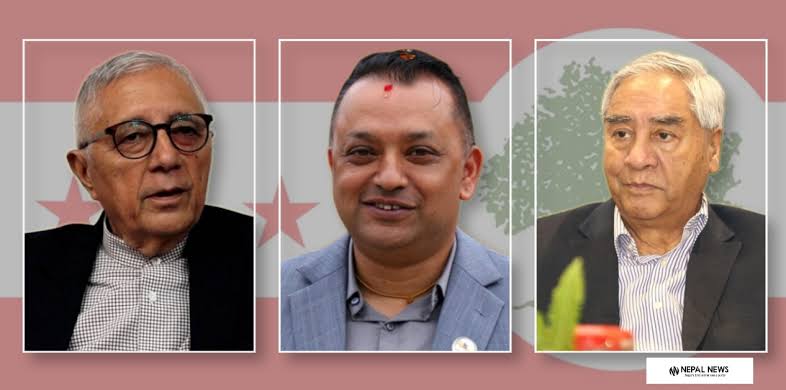
KATHMANDU: July 22 (Tomorrow) marks the 44th Memorial Day of BP Koirala, the founding leader of the Nepali Congress and the promoter of democratic socialism. On the very day to remember BP—a champion of the political culture of reconciliation and party unity—the Congress will not stand together on a single stage.
Officially, the Congress has not split, but in practice, it is divided into two factions. The establishment side is organizing a ‘Green Run’ marathon as an official program in Sanepa, Lalitpur. On the following day, July 23, it has scheduled a symposium program at the Nepal Academy.
Former President Sher Bahadur Deuba’s group aims to send a message about its political presence with the conclusion of calling a national gathering alongside a separate program. Both sides consider BP their ideological inspiration. However, the platforms for remembering BP are different.
This scene recalls the Congress of 24 years ago in 2002, when Girija Prasad Koirala and Sher Bahadur Deuba ran separate factions of the Congress. That division persisted until October 2007. At that time, the split was official. Now, the name and flag remain the same, but the political journeys run parallel.
According to General Secretary Gururaj Ghimire, the BP Memorial Day program organized by the Congress establishment side at the party central office in Sanepa is the official one. While the establishment side prepares to honor BP in Sanepa, the Deuba group does not wish to limit it merely to Memorial Day. Going one step ahead of the establishment, it is sending a political message by gathering at the Nepal Academy on Memorial Day itself. Through the program organized by the Bagmati Provincial Committee, the Deuba group seeks to link BP’s memory with its own display of strength by announcing a national gathering.
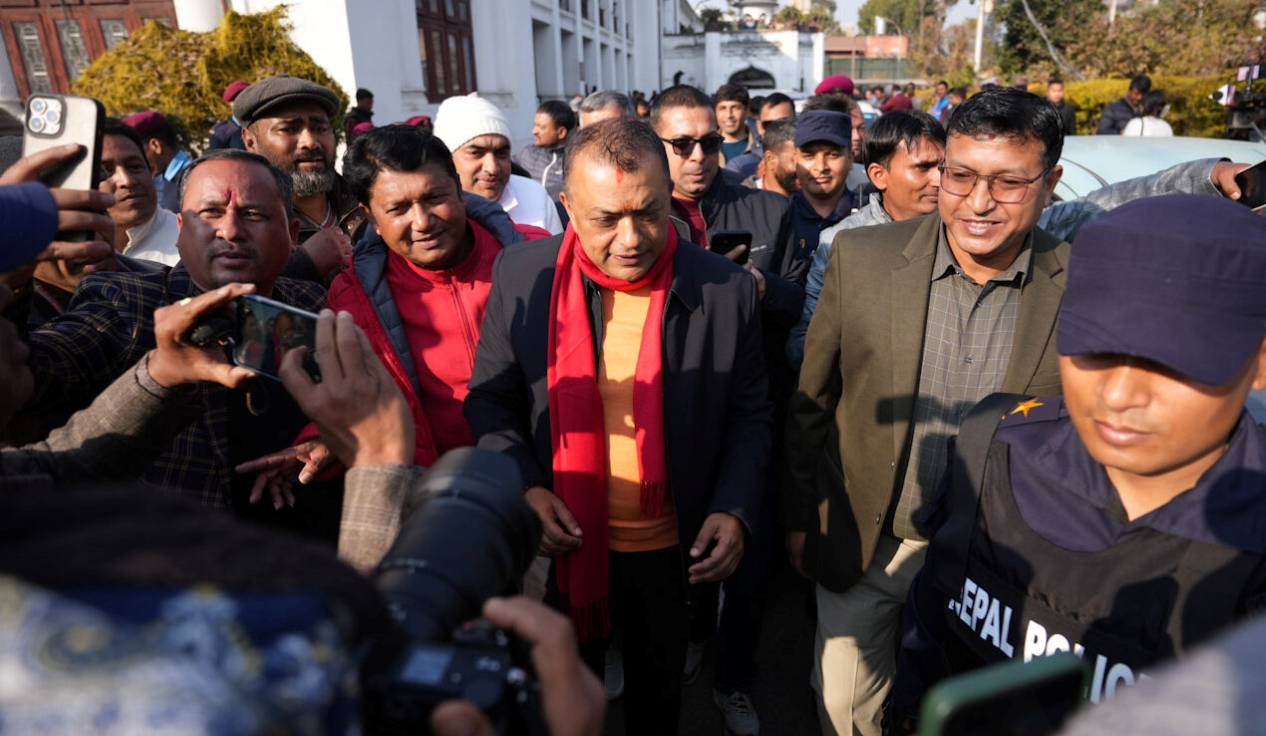
Newly elected Congress President Gagan Thapa from the special general convention returning after submitting an application at the Election Commission to update the party’s details on January 16. Photo: Nepal Photo Library
In preparation for this, a Bagmati province-level gathering was called on July 18, at the contact office in Chundevi. There, former General Secretary Prakash Man Singh’s directive was clear: the day to remember BP must be transformed into an opportunity to showcase organizational strength. He told cadres, ‘This is not just BP Memorial Day; it is the time to show how much strength we have. You all must engage in gathering maximum participation.’
According to leader Singh, Congress is currently passing through the most serious internal conflict in its history. The debate over regular and special general conventions has birthed a parallel polarization within the party. Amid this dispute, there are doubts over whether the upcoming 15th general convention will be fair. Therefore, Singh states that pressure must be created on the leadership for a unity general convention that encompasses both factions.
‘The elected president holds a majority in every committee, but past presidents built a practice of making unanimous and universally accepted decisions,’ he says. ‘Gagan Jee must also continue that political culture.’
General Secretary Ghimire argues that BP is not the property of any single group. According to him, all Congress members have the right to remember BP. ‘Even groups holding different ideas and views across various periods of history have considered BP an ideal,’ he says. ‘The official program of the Congress, however, is the one organized by the establishment side.’
BP’s son Shashank Koirala stands with the Deuba group to remember his father. Centrist leader Shekhar Koirala is joining the Deuba group to mark Memorial Day. Thus, this year’s BP Memorial Day appears set to establish itself more as a political stage to gauge the balance of power within Congress than as a mere tribute.
According to analysts, BP remains the shared ideological center for all factions within Congress today. Political stages, slogans, and leadership ambitions differ. Everyone claims to be the heir to BP’s ideology. However, analyst Puranjan Acharya asserts that those making such claims are merely fake followers of BP. He says, ‘None of the current Congress members are followers of BP; they merely practice idol worship of BP. They lay wreaths on Memorial Day just to commercialize BP’s photograph.’ According to him, there is no cadre left in Congress that discusses BP’s ideology, sacrifice, struggle, or the Nepal he envisioned.
According to another political analyst, Deepak Lohani, BP Koirala’s political philosophy centered around the poor, helpless, and citizens struggling for a livelihood. In today’s Congress, not even a faint trace of that ideology is visible. ‘There are many who take BP’s name, but no leadership is seen translating his principles and political culture into practice,’ says Lohani. ‘In that sense, current Congress leaders are not real, but merely nominal followers of BP.’
Those BP and Subarna Shamsher; this Gagan
The second special general convention has become the primary reason positioning Congress into two clear camps. On January 11, the group led by Gagan Thapa completed a special general convention and formed a new central working committee under its own leadership. However, leaders and cadres favoring the regular 15th general convention did not participate in that process. Since then, although Congress remains formally a single party, it is divided into parallel power centers in practice.
The leadership formed through the special general convention has faced accusations of prioritizing the consolidation of its own structure over integrating the dissenting faction. The group advocating for a regular general convention also considers itself the legitimate stream of the party and continues parallel activities. Consequently, two distinct political rhythms have developed under the same flag.
In Congress history, special general conventions have occurred only twice. The first special general convention took place on May 23, 1957, in Biratnagar. The context then was different from now. At that time, amid King Mahendra’s stalling tactics regarding elections, BP exerted pressure using Subarna Shamsher Rana as a instrument. During the sixth general convention held in Birgunj from January 23 to 27, 1956, Koirala put forward Subarna Shamsher to make him president.
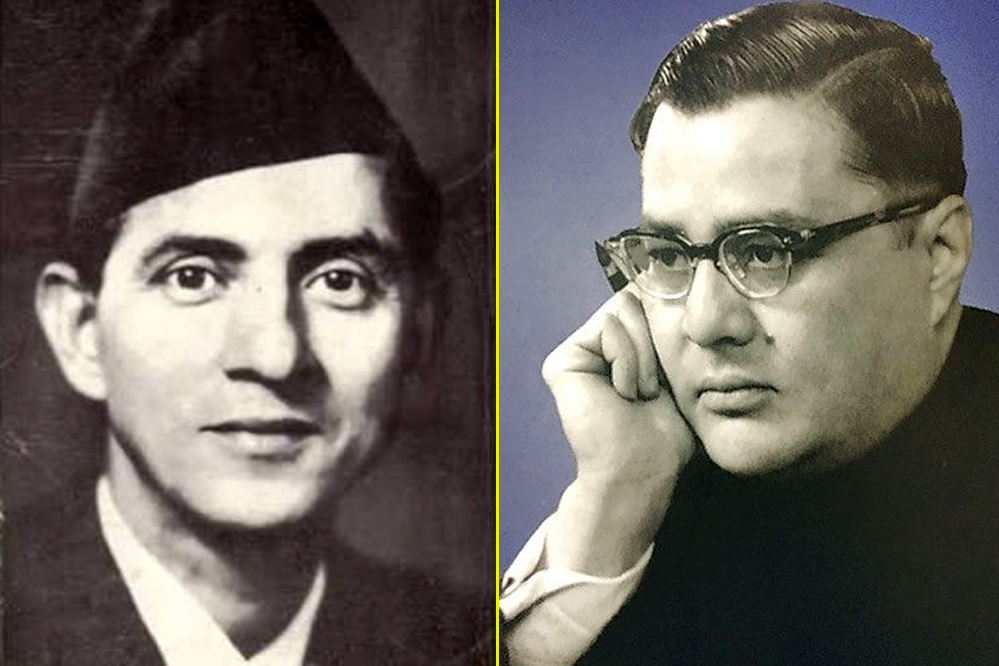
BP Koirala and Subarna Shamsher.
However, even after making Subarna president, Mahendra was not ready to hold elections and did not yield. Following this, Subarna and BP changed strategy. Subarna merged Matrika Prasad Koirala’s Nepal Praja Party into Congress. Stating that BP should lead the unified party, Subarna resigned from the presidential post.
One year after being elected president, Subarna dissolved the old working committee and parliamentary board on November 29, 1956. On December 17, 1956, he formed a central working committee incorporating second-generation leaders, excluding top leaders. On March 21, 1957, he organized a two-day conference of district presidents and secretaries. Finally, Subarna passed a proposal to hold a special general convention in Biratnagar. Following this, the special general convention commenced in Biratnagar on May 23, 1957. BP Koirala became president through that special general convention.
Thereafter, Congress launched a two-month civil disobedience movement against then-King Mahendra’s tactics of delaying elections. After other parties joined in as well, Mahendra announced parliamentary elections. Starting from February 18, 1959, the 45-day election resulted in a two-thirds majority for the Nepali Congress.
Author and Congress researcher Jagat Nepal states that the Congress of BP and Subarna Shamsher’s era and today’s Congress cannot even be compared. He says, ‘Back then, it was a matter of democracy and morality. Today, it is a fight for power and self-interest, a clash of egos.’ According to Nepal, post-Gen Z protest geopolitics has also disrupted the internal life of parties. ‘Although international powers took an interest in Nepal’s political parties in the past, it was not like today. Now, Indian and American interest is higher,’ he says.
He states that even the current objective of the establishment and other Congress factions remains ambiguous. ‘The old guard doesn’t know what to do, the so-called youth Congress is engaged in propaganda and publicity, today’s Congress relies on money and muscle,’ he says. ‘Ultimately, no matter how it is run, the factions in Congress have no political capital other than showcasing BP. There was no one in Congress like BP, which is why everyone remembers him.’
On September 8 and 9, 2025, the Gen Z protest occurred in Nepal. Following the uprising, claiming the old party leadership had failed, then Party General Secretary Gagan Thapa ran a signature campaign for a special general convention. Leading a faction, he completed the special general convention. The Election Commission granted recognition to the special general convention.
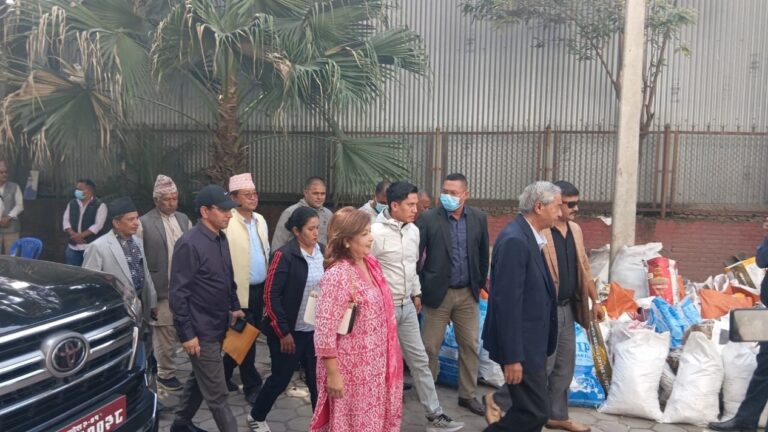
Former President Sher Bahadur Deuba and his wife Arzu Rana arriving at the headquarters in Sanepa on October 14, 2025, to address the Congress Central Working Committee meeting. Photo: Nepal News
The newly elected Congress from the special convention immediately entered the House of Representatives elections on March 5, 2026. Thapa distributed tickets to both new and old leaders under his own signature. However, the Congress led by Thapa failed to secure even half the public mandate achieved by the former Congress in the previous election. None of the office bearers, including the president elected from the special general convention, won an election.
The Deuba Congress had won 89 seats in 2022. In 2026, the Gagan Congress was reduced to 38 seats. The Deuba group has been accusing Thapa of being responsible for such a severe electoral defeat. Leader Bhimsen Das Pradhan says, ‘Gagan Ji did not give tickets even to those who were winning. Not a single office bearer among them won an election. Both Kathmandu and the Terai were devastated.’ Thapa had denied tickets to outgoing President Sher Bahadur Deuba, Ganesh Man Singh’s son Prakash Man, and BP’s son Shashank Koirala, who had been consistently winning elections.
After receiving a severe blow from the public mandate, Thapa technically accepted defeat but failed to hold himself to moral standards. He announced his resignation from party leadership. Stating that the Central Committee did not approve it, he returned to the president’s chair in a roundabout manner. Following the party’s defeat, his steps toward serious review and party unity have not been effective. He remains focused on how to establish his leadership through the upcoming 15th regular general convention.
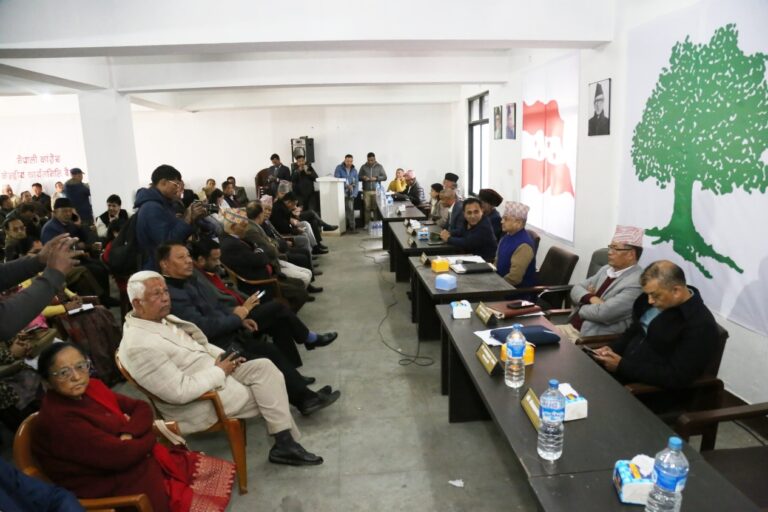
Congress Central Working Committee meeting held on December 1, 2025. Photo: Nepal Photo Library
General Secretary Ghimire states that the current leadership will not step back from facing challenges to maintain its continuity in the 15th regular general convention. ‘This leadership emerged amidst challenges. It will not back down from facing challenges. Leadership development amidst challenge is a sign of maturity. There is no hesitation.’
In the words of analyst Acharya, proponents of the special general convention do not remember BP. The history of BP is completely unknown to today’s young Congress members. “Today’s young Congress members do not even know what BP did under what circumstances. A sentiment of ‘we are all that matters’ is visible among the youth,” Acharya says.
Ineffective in national politics
Within months of concluding the special general convention, the entire focus of the Nepali Congress has shifted toward the 15th regular general convention. Currently, the biggest agenda within the party has become updating, renewing, and distributing active memberships, but disputes persist regarding this very process.
The Congress is preparing to hold the 15th general convention by mid-October. In preparation, the party focused on updating, newly distributing, and renewing its memberships. The membership distribution initiated on May 15 was concluded by July 18. The July 18 deadline was fixed after extending the timeframe four times.
Even after this deadline passed, the Congress has been unable to release exact details regarding the status of membership updating, distribution, and renewal. Acting Chief Secretary Krishna Prasad Dulal says, “The work of updating is being done from the center, while active membership renewal and new distribution are taking place across districts. We will release the details after the BP Memorial Day program concludes on July 22.”
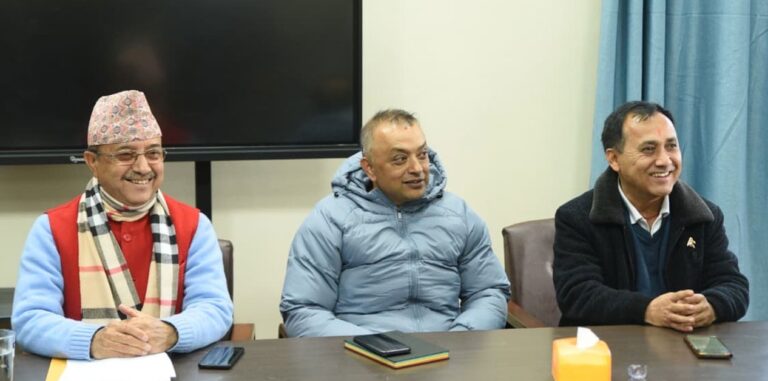
Then-Acting President Purna Bahadur Khadka and General Secretaries Gagan Thapa and Bishwa Prakash Sharma at the Nepali Congress Central Work Performance Committee meeting on January 2, 2026. Photo: Nepal Photo Library
Although the establishment side cites July 22, the main dispute regarding membership updating remains unresolved. Neither the Deuba nor the Koirala group is participating in the update process. Although there are assertions about dialogues taking place with the non-participating factions, continuous delays have led the opposing side to conclude that forming a new party is the ultimate option. Labeling it a final effort for unity, the Deuba group released a five-point proposal on July 18.
Among the five points, the first proposes that office bearers and members from the 14th general convention’s committee be integrated into the central working committee alongside the special general convention’s committee to give it full shape. The second point proposes forming a working performance committee where President Gagan Thapa maintains a majority, while the third point proposes that the first meeting of the reconstituted central working committee publish the schedule for the 15th general convention.
Similarly, the fourth proposal states that various committees related to the general convention should be formed while maintaining a majority for the current establishment side. The fifth point mentions that since active membership is the vital foundation for the general convention, all active members finalized by the committee headed by Thapa prior to intra-party disputes should automatically be allowed to participate in the 15th general convention. The Deuba group proposes that digital entries of such members should proceed continuously and that digital entry should not be linked with barrings from participating in the convention under the guise of renewal. Leader Min Bahadur Bishwakarma says, “We are attempting unity until the very last moment; we are ready to give and take to achieve unity. If that does not happen, forming a new party is our final option.”
However, the establishment side rejects the first of these five points. General Secretary Ghimire states that the party’s constitution rejects the proposal in the first point, and implementing it would require amending the constitution. “To amend the constitution, we must call either a General Committee meeting or a general convention. We can discuss the other points among the five,” he says.
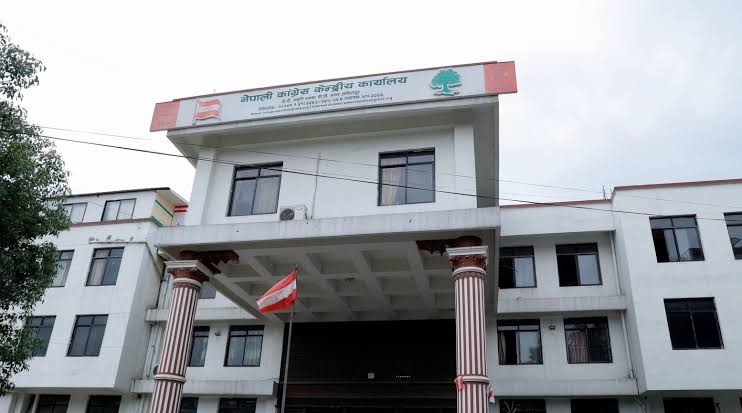
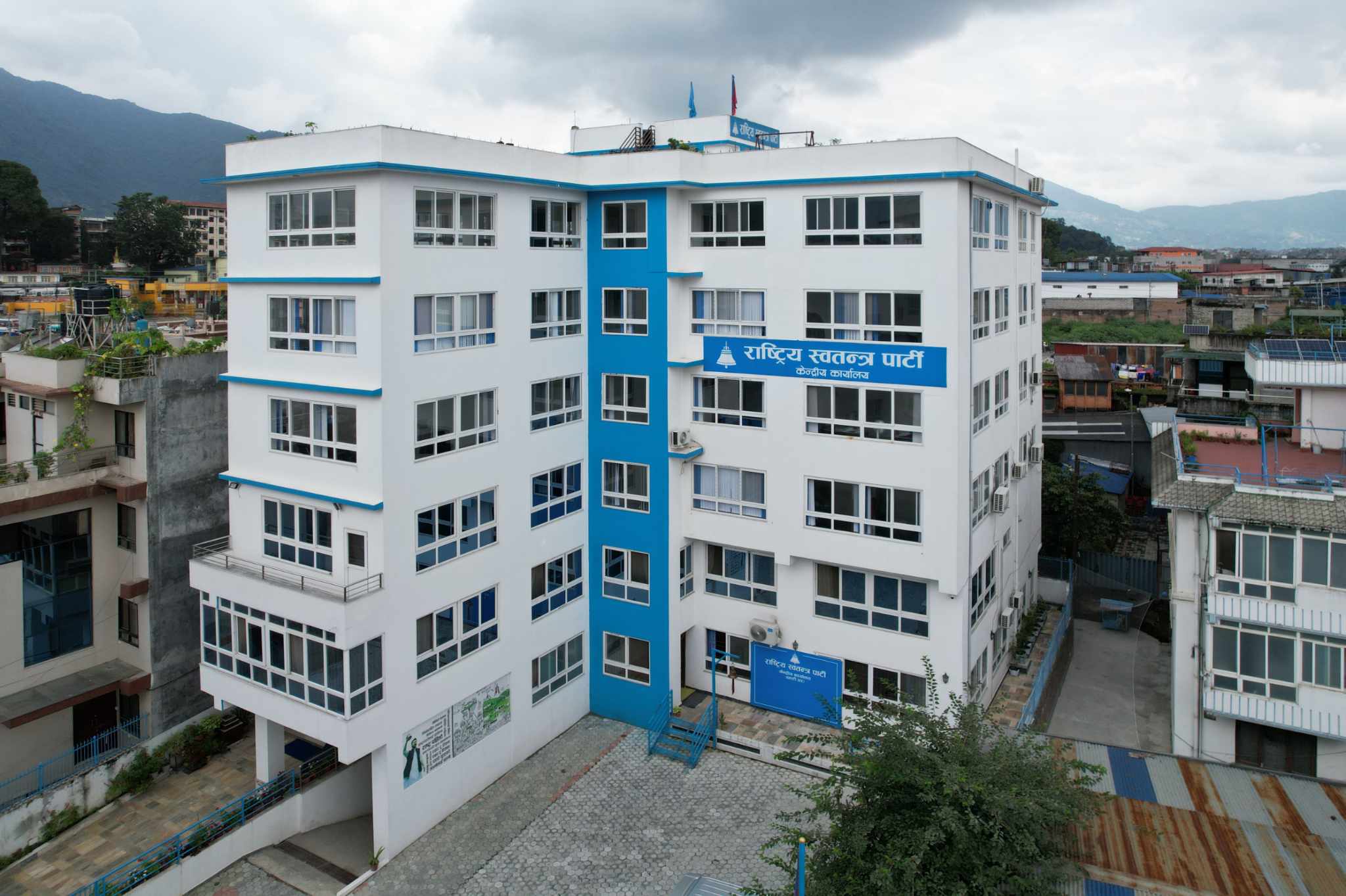
Nepali Congress party headquarters located in Sanepa, Lalitpur.
According to him, the leadership does not hold the view of refusing to listen to the opposing group. Ghimire mentions that talks have occurred across various stages and levels, but concrete conclusions have yet to be reached. “We are making efforts,” he says. General Secretary Ghimire mentions that he met and talked with senior leaders, including outgoing Vice President Purna Bahadur Khadka. “It is not another party where an announcement of formal talks is needed. It is the same party; there is no need to form a talks committee. This is a matter among members of the party family. The party will unite; I have confidence,” Ghimire says.
In history, despite bearing the same name, the special general convention of 1957 had united the party to face external challenges. The special general convention of 2026 has created new polarization and parallel leadership within Congress itself. “It has not taken an organized shape yet, but Congress is emotionally divided. Technically, it is not divided. But it is moving in that direction,” analyst Acharya says. “This is a process that started a year or two ago. There was no leadership capable of carrying the burden of a large Congress in Nepal. When a river cannot contain its water, a new branch breaks off.”
As Congress remains entangled in internal power struggles, its presence on national issues has progressively weakened. Thapa’s influence, which surged after the special general convention, is now declining. Striving in opposition, President Thapa himself remains outside the House of Representatives, where he previously appeared assertive both in parliament and on the streets. Congress appears to have failed to play an effective opposition role on national agendas, including the economic slowdown, landless settlers’ problems, youth self-immolation cases, and controversial government actions. Analyst Acharya comments that today’s Congress leadership lacks the morality to define national priorities and agendas or inspire those joining the organization tomorrow. “This has become more of a legal party than a political party,” he says.