Kathmandu
Tuesday, July 21, 2026





The draft Air Services Authority Bill addresses a key international demand by separating airport operations from regulation. But governance, funding and oversight gaps could keep Nepal's aviation credibility grounded.
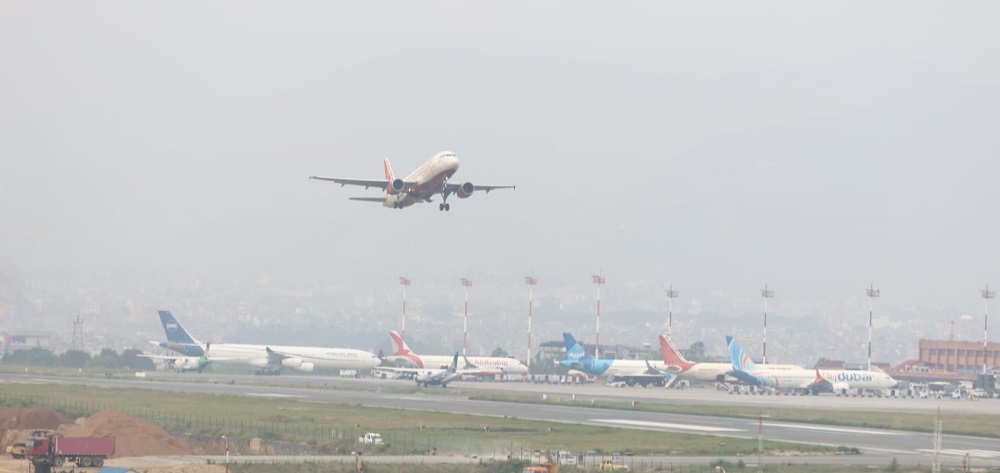
KATHMANDU: Nepal has been talking about splitting airport operations from aviation safety regulation since roughly 2014, when the International Civil Aviation Organization first flagged the conflict of interest baked into having a single body, the Civil Aviation Authority of Nepal, both run the airports and police their own safety standards. More than a decade later, with Nepali carriers still sitting on the European Union’s air safety blacklist since 2013, the draft Nepal Air Services Authority Bill finally attempts the institutional surgery everyone agreed was necessary.
The question worth asking is not whether separation is the right idea in principle. International practice overwhelmingly supports it, and Nepal is genuinely late to this reform rather than ahead of it. The question is whether the specific architecture in this bill actually achieves the independence the split is supposed to deliver, or whether it simply creates a second bureaucracy answering to the same political chain of command as the first.
Start with the name itself, because it is a small but telling detail. The bill creates the Nepal Air Services Authority, abbreviated in English as A.S.A.N., based in Kathmandu, with a mandate to build and run airports, manage air navigation, coordinate search and rescue, and handle essentially all the operational machinery of civil aviation. A separate regulatory body, established under prevailing law, keeps safety oversight, licensing, and certification. On paper this mirrors the global standard the International Civil Aviation Organization pushes on member states precisely because having the airport operator also certify its own safety compliance creates an obvious incentive problem, the operator grading its own homework.
Since 2014, the International Civil Aviation Organization (ICAO) has urged Nepal to separate the regulatory and operational functions of its civil aviation authority. File photo
But separation on an organizational chart is not the same thing as separation of actual authority, and this is where the bill’s governance design deserves the sharpest scrutiny. The management committee running the new Authority is chaired by the Secretary of the Ministry overseeing civil aviation, with joint secretaries from that same Ministry, plus Home Affairs and Finance, sitting as members. The two outside experts nominated to bring technical depth are appointed by the government, not by any independent selection panel insulated from ministerial influence.
If the entire point of separating operations from oversight was to reduce the concentration of aviation authority in a single institutional chain, having the same Ministry secretary who oversees civil aviation policy also chair the operational Authority’s top governance body reintroduces a version of the very problem the bill claims to solve.
The regulator overseeing safety and the Authority running the airports may now be legally distinct entities, but if both ultimately answer to the same Ministry leadership through overlapping personnel and reporting lines, the independence ICAO is actually asking for, meaning functional and financial autonomy sufficient to prevent operational pressures from compromising safety oversight, is only partially achieved. Whether this satisfies ICAO’s Universal Safety Oversight Audit Programme criteria or the European Union Aviation Safety Agency’s blacklist review process is genuinely uncertain, and Nepal should not assume that simply having two organization charts instead of one is sufficient to move the needle on either front.
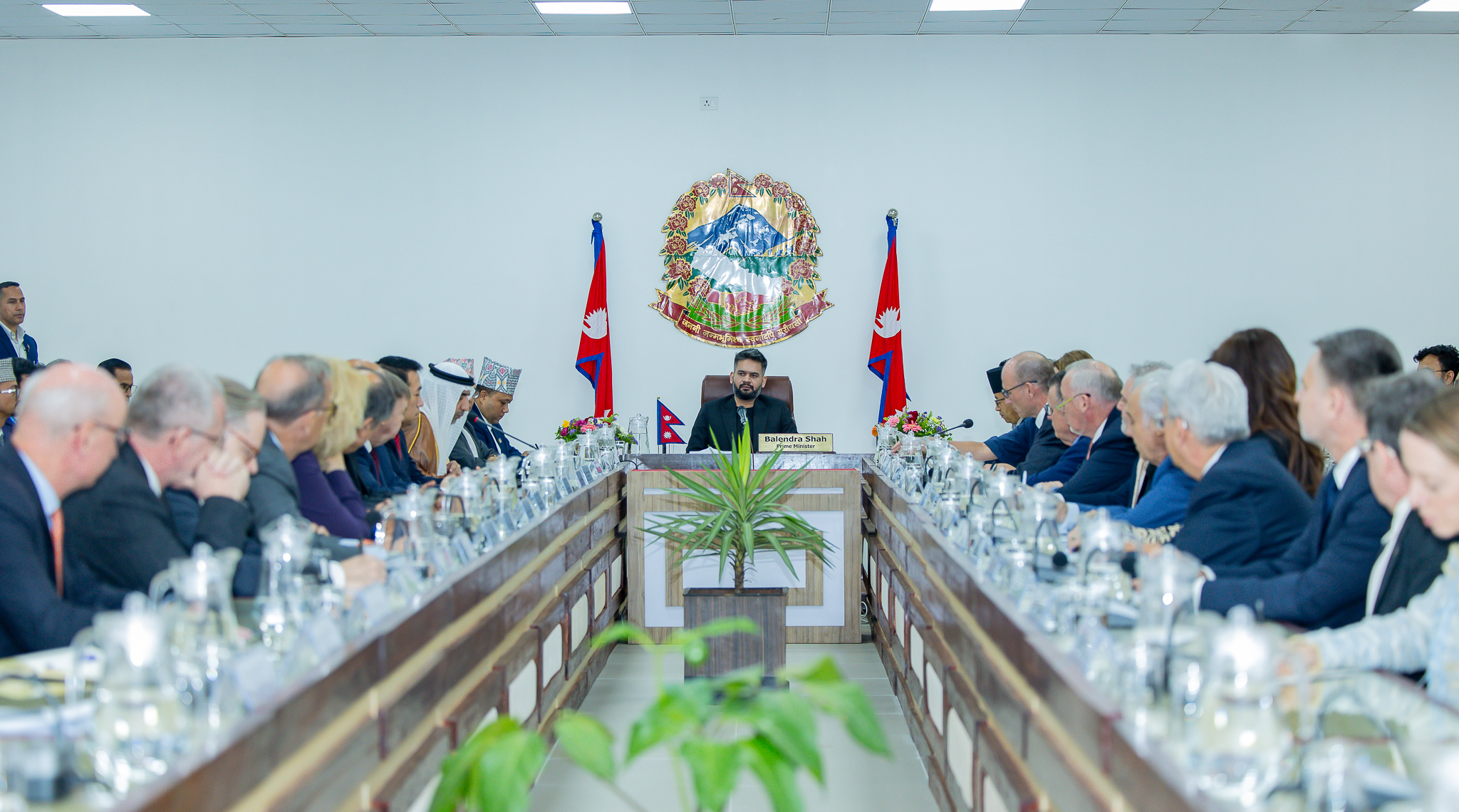
Prime Minister Balendra Shah met European Union envoys on May 26. Nepal’s prolonged inclusion on the EU Air Safety List was among the key issues discussed. File photo/PMO
What it does not do is fully insulate the selection from ministerial preference, since the recommendation committee still funnels its final choice through a government appointment, meaning political considerations can shape who becomes Managing Director even within a technically qualified pool. A four year term renewable once, with removal possible for incompetence or dishonesty after a chance to respond, gives reasonable job security balanced against accountability, though “poor performance” as grounds for removal is vague enough that a Managing Director who resists ministerial pressure on operational decisions could in theory find that vagueness used against them just as easily as it might be used against genuine underperformance.
The funding model is where the bill’s practical viability will actually be tested. Establishing a dedicated fund separate from general government revenue, drawing on landing and parking fees, passenger service charges, cargo and ground handling fees, fuel sales, terminal access and retail rent, is the standard airport authority revenue model used successfully in many countries, and it makes sense for Nepal to move toward genuine cost recovery and eventual self-sufficiency rather than permanent budgetary dependence.
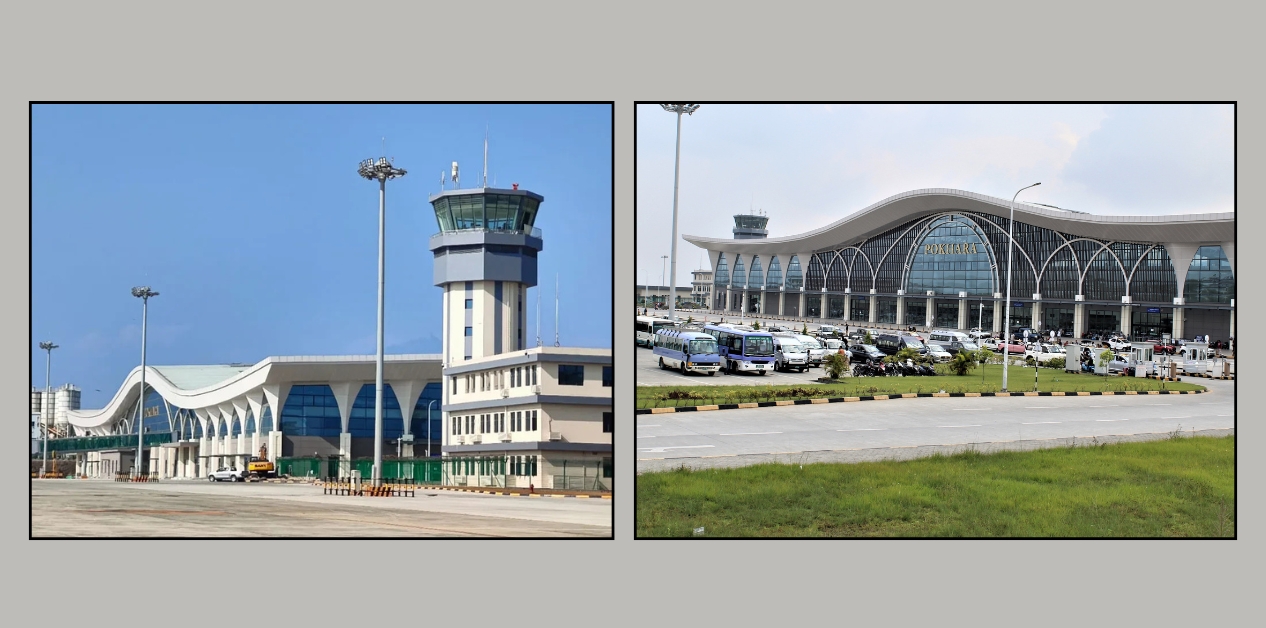
A photo collage of Gautam Buddha International Airport and Pokhara International Airport. File photo
The problem is that Nepal’s airport network outside Kathmandu’s Tribhuvan International Airport and the newer Gautam Buddha and Pokhara international airports remains thin on passenger volume, meaning the fee base available to fund operations at smaller regional airports will be modest for the foreseeable future. A national aviation authority funded primarily by user fees works when there is enough traffic across the network to cross-subsidize less profitable routes and airports. Nepal’s aviation geography, dominated by short domestic hops to mountain airstrips serving trekking and pilgrimage traffic, does not obviously generate that kind of surplus.
The bill’s fallback options, loans and grants from domestic or foreign sources subject to Finance Ministry consent, and direct government contributions, suggest the drafters know this, but relying on those fallbacks essentially recreates budgetary dependence through a different door, undermining the stated goal of establishing an autonomous, self-funding institution. Genuine financial independence for this Authority is more aspiration than current reality, and the bill would have benefited from a transitional funding formula, perhaps government-guaranteed operating support for a defined period while fee revenue scales up, rather than leaving that gap implicitly patched by discretionary grants.
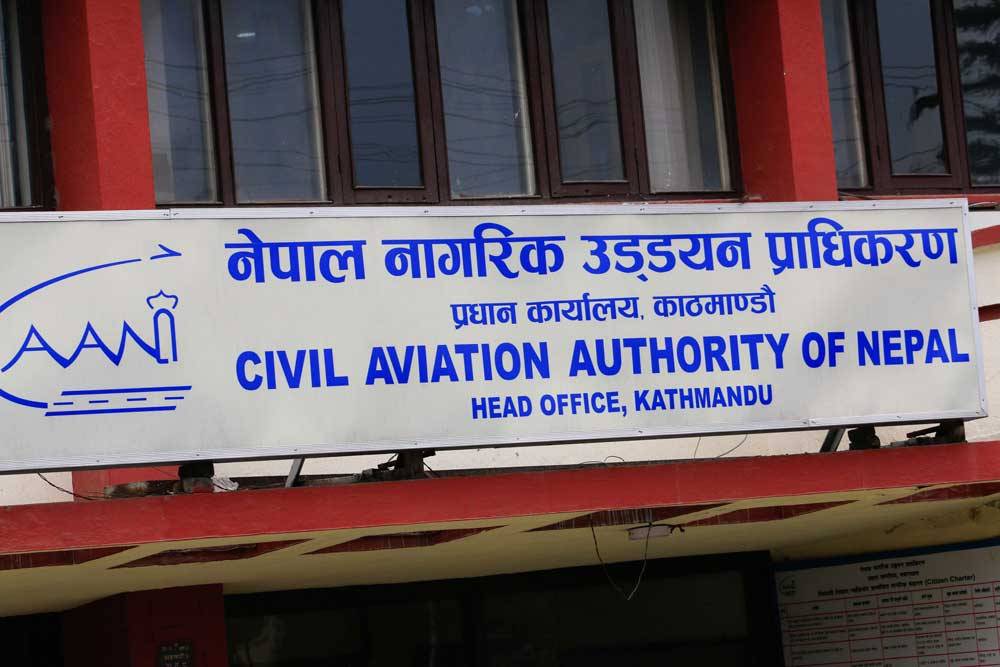
Civil Aviation Authority of Nepal. File photo
The staff transition provisions read as reasonably fair in structure but risky in execution. Automatic transfer of permanent CAAN staff into the new Authority, with a sixty day window to instead apply for placement in the regulatory body, followed by Ministry allocation based on seniority, qualifications, and experience, tries to balance individual choice against institutional planning needs.
In practice, staff transitions of this scale are where reform efforts frequently stumble, since employees uncertain about which body offers better career prospects, job security, or working conditions may make suboptimal choices under incomplete information, and the discretionary fallback allowing the Ministry to assign unapplied staff “based on competency and experience” introduces a layer of subjective judgment that could easily become a site of internal grievance, favoritism claims, or morale damage during exactly the period when operational continuity matters most.
Aviation safety during an institutional transition is not a moment where staff distraction or resentment is a trivial side effect, it is a genuine operational risk, and the bill’s summarized text offers no transitional oversight mechanism, ombudsperson, or appeal process for staff who feel misallocated beyond whatever general civil service grievance channels already exist.
The land acquisition mechanism for airport expansion shifts the burden entirely onto the Government of Nepal, which must arrange acquisition under prevailing law and bear the associated costs before making land available to the Authority.
The penalty structure for airport area offenses is, frankly, undercooked relative to the seriousness of what it is trying to deter. Fines ranging from Rs 10,000 to 50,000 for lesser violations and Rs 200,000 to 500,000 for serious ones, including unauthorized structures near runways or actions undermining airport security, are modest sums against the scale of harm a serious runway safety violation or security breach could cause. Given that repeat offenders merely face doubled punishment rather than escalating to criminal liability or imprisonment, there is a real question of whether these fines function as genuine deterrence or simply as a predictable cost of doing business for developers or landowners tempted to build structures that violate height restrictions near flight paths. The demolition power, requiring violators to tear down unauthorized structures at their own expense or have the Authority do it and recover costs, is a stronger enforcement tool than the fines themselves, and probably does more practical work than the monetary penalty schedule.
But, demolition after the fact still means a structure was built in violation long enough to require demolition, suggesting the bill’s ex ante prevention tools, permitting, inspection, height clearance enforcement before construction begins, matter more than the ex post penalty regime, and the bill’s summarized provisions are heavier on punishment mechanics than on proactive prevention infrastructure.
A plane takes off from Tribhuvan International Airport in Kathmandu. File photo
The land acquisition mechanism for airport expansion shifts the burden entirely onto the Government of Nepal, which must arrange acquisition under prevailing law and bear the associated costs before making land available to the Authority. This is sensible in the sense that land acquisition disputes in Nepal are notoriously slow and politically fraught, and keeping that friction with the government rather than the Authority avoids entangling day to day airport management in what can become years-long compensation and resettlement negotiations.
But, it also means the Authority’s own infrastructure expansion timeline is entirely hostage to a separate government process it does not control, with no binding timeline, coordination mechanism, or dispute resolution process specified for cases where land acquisition stalls. Nepal’s track record on land acquisition for infrastructure projects, from hydropower to road expansion, is not encouraging on the speed front, and an airport authority whose expansion plans depend on a historically slow-moving government process inherits that same risk without any apparent mitigation built into this bill.
Environmental and wildlife management responsibilities are split in a way that could easily become a gap rather than a shared responsibility. The Government of Nepal sets pollution standards, the airport operator controls birds, animals, and waste, and the regulator sets pollution standards the Authority must meet, meaning three different institutional actors touch this single operational domain. Bird strikes are one of the most well-documented and persistent hazards in aviation safety, and Nepal’s airports, several surrounded by open grazing land, waste sites, and agricultural activity, face genuine wildlife risk.

Wildlife often bears the brunt of airport construction and expansion. File photo
Security provisions raise a similar diffusion concern. Overall airport security responsibility sits with the Government of Nepal, while the Authority can arrange security personnel with government approval, and airport operators must adopt measures coordinated with relevant agencies following regulator standards. Layering government overall responsibility, Authority operational arrangement, and regulator standard-setting into a single security framework creates exactly the kind of multi-agency coordination challenge that has historically produced gaps in airport security globally whenever an incident later gets investigated and multiple agencies each assumed another was covering a particular vulnerability. Given that aviation security failures carry catastrophic consequences, this is an area where the bill’s diffusion of responsibility across three distinct actors, without a single named accountable authority for security outcomes, deserves more precision than the summarized text currently offers.
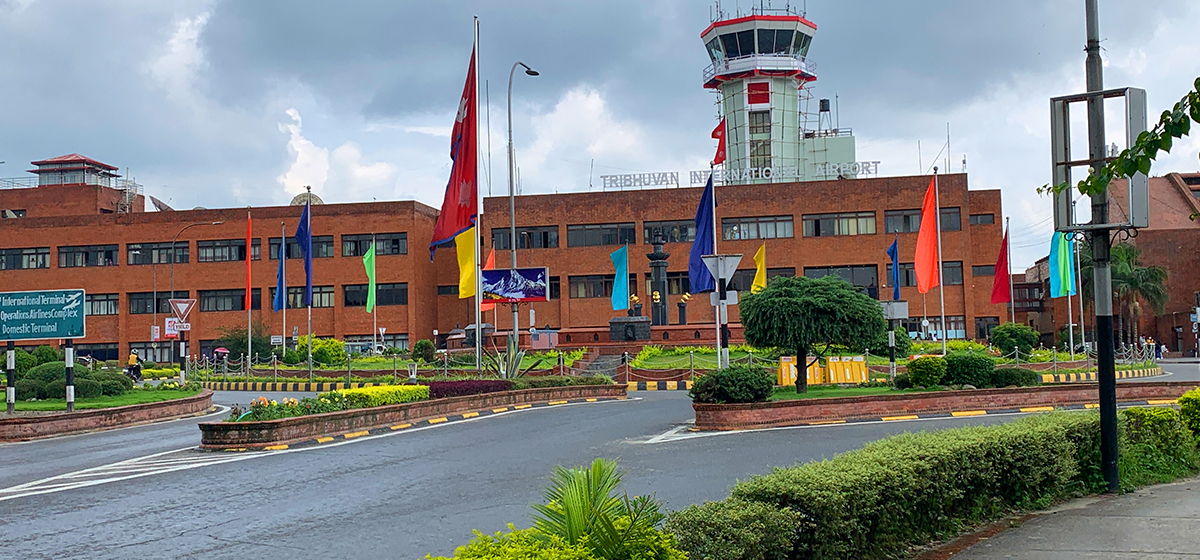
TIA. File photo
The appeal mechanism for penalties, allowing anyone fined by the Managing Director to appeal to the district court within thirty five days, is a reasonable due process safeguard and broadly consistent with similar provisions elsewhere in Nepali regulatory law. But a single appeal route through district courts, without any specialized aviation tribunal or fast-track mechanism, means disputes over airport penalties will move through the same general court system already handling everything else, with the delays that implies.
For a sector where operational disputes, say over a contested demolition order affecting an active business, can have real-time economic consequences while litigation drags on, the absence of any expedited review process is a missed opportunity to make this appeal right practically meaningful rather than merely formally available.
The retirement and pension provisions show the bill grappling honestly with a genuinely awkward transition problem. Employees already receiving CAAN retirement benefits keep them, new hires get a contribution-based scheme, and staff transitioning from permanent civil service positions who complete twenty years get to choose between traditional retirement benefits and lump-sum severance. This hybrid approach avoids the obvious unfairness of retroactively changing benefits for people who joined under different terms, but it also means the Authority will be running at least two, possibly three, distinct retirement benefit systems simultaneously for years, a genuine administrative complexity that the bill does not address in terms of funding adequacy or actuarial planning.
Taken together, the bill represents genuine progress on paper toward the functional separation international aviation bodies have been demanding from Nepal for over a decade, and the technical qualification requirements for leadership, the dedicated funding architecture, and the staff transition safeguards all suggest a drafting effort that took the underlying problem seriously.
Contribution-based schemes only work if contribution rates are set realistically against future liabilities, and the bill leaves those rates to be “set separately,” meaning the actual financial soundness of this new pension structure cannot be assessed from the bill itself and depends entirely on subsequent rulemaking that has not yet happened.
Perhaps the most telling provision in the entire bill is the oversight clause requiring the Ministry to assess implementation only after five years have passed, then again every five years after that, reporting findings to parliamentary committees. For a reform this structurally significant, meant to address an ICAO concern first raised over a decade ago and a blacklist status now in its second decade, a five year gap before the first formal implementation review is a strikingly long leash.
Given how much of this bill’s success depends on details still to be worked out through subsequent rules, funding adequacy, security coordination, environmental enforcement, a shorter initial review cycle, perhaps at the two or three year mark, would have given parliament and the public an earlier opportunity to catch structural problems before they calcified into entrenched institutional habits. Waiting five full years before the first formal check-in risks locking in whatever governance dynamics emerge in the Authority’s early years, good or bad, well before anyone with oversight authority is required to take a hard look.

A Nepal Airlines plane. File photo
Taken together, the bill represents genuine progress on paper toward the functional separation international aviation bodies have been demanding from Nepal for over a decade, and the technical qualification requirements for leadership, the dedicated funding architecture, and the staff transition safeguards all suggest a drafting effort that took the underlying problem seriously.
But, the persistent thread running through the governance structure, funding realism, security coordination, and oversight timeline is that separation on paper has not been matched by an equally rigorous effort to insulate the new Authority from the same ministerial chain of command whose entanglement with operations was the original problem ICAO identified.
Whether this bill actually gets Nepali carriers off the European Union’s safety list will depend less on the elegance of the organizational chart it creates and more on whether EASA auditors, examining the practical independence of safety oversight from operational pressure, conclude that a shared Ministry secretary chairing both institutions’ effective decision-making apparatus represents the substantive separation they have been asking for, or merely its appearance.