Kathmandu
Tuesday, July 21, 2026





PM Shah’s sudden engagement with business leaders, amid a falling stock market, weak capital spending and speculation over Finance Minister Swarnim Wagle’s future, may be more about political pressure than a genuine shift in economic policy

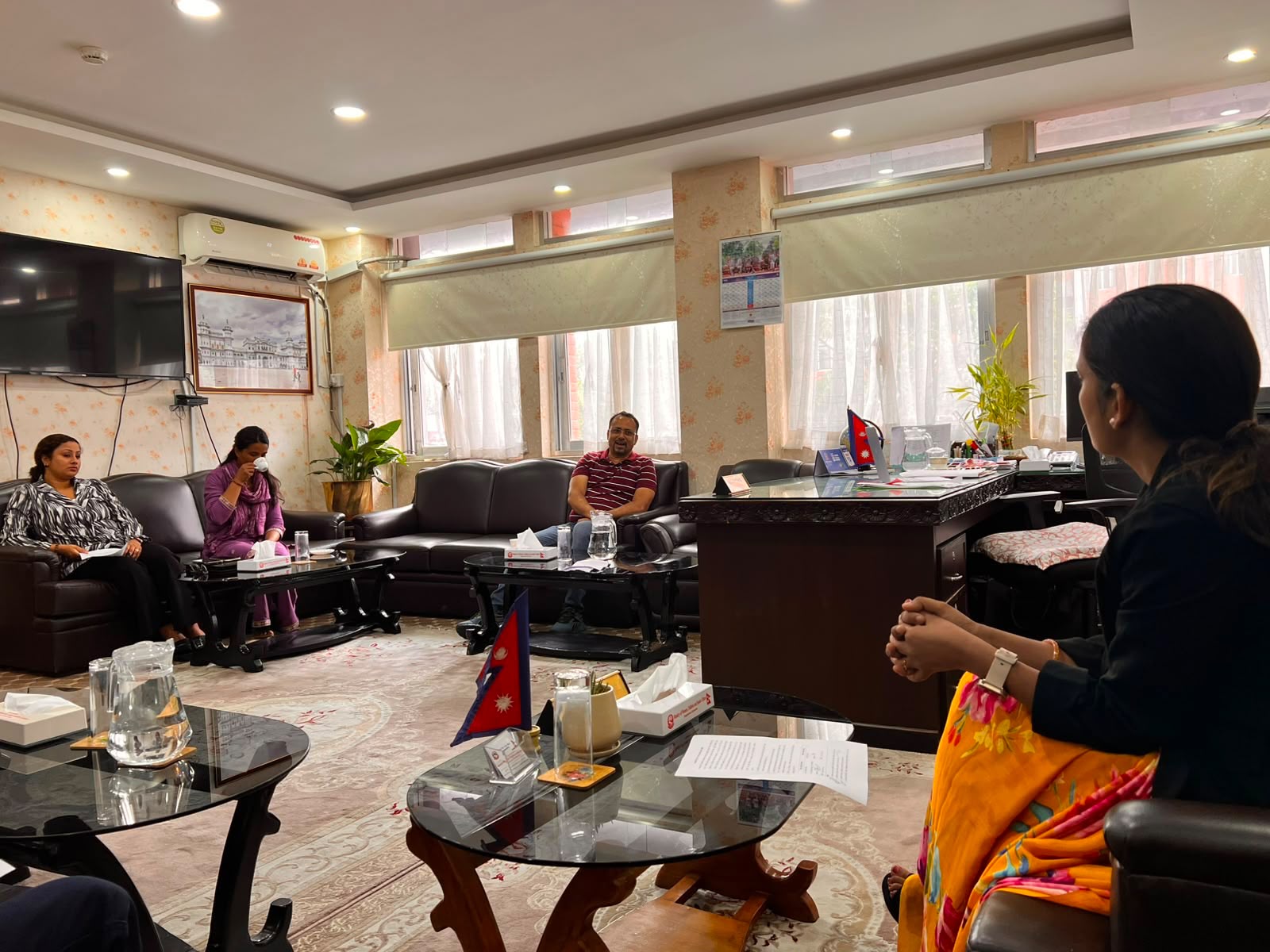
KATHMANDU: For nearly a hundred days, Prime Minister Balendra “Balen” Shah ran his government on a simple operating principle: minimize personal exposure, control every point of contact, and make people wait. That principle applied almost universally — to foreign ambassadors, to visiting dignitaries, to Parliament itself, and, most tellingly, to the country’s own business community. So when word came in mid-July that Shah had suddenly opened his office to the presidents of Nepal’s three largest business federations, followed a day later by a separate sit-down with construction contractors, it registered as news precisely because it broke a pattern he himself had built.
But the more revealing detail sits one layer beneath the headline: Finance Minister Swarnim Wagle was nowhere in that room. In a government where the prime minister and his finance minister are reportedly no longer on speaking terms in any functional sense, that absence is not a scheduling footnote. It is the story.
The architecture of withheld access
To understand what the business meetings signify, you have to first understand the governing style they interrupted. Shah’s approach to diplomacy since taking office on March 27 has been to strip away the personal, informal access that foreign envoys traditionally enjoyed with Nepali heads of government. Instead of the customary individual courtesy calls extended to newly arrived and departing ambassadors, his office gathered the entire Kathmandu diplomatic corps into a single group briefing and has since refused, as a matter of stated policy, to grant one-on-one audiences. His political advisor has openly defended this as a deliberate rupture with what he characterized as an unhealthy, overly casual culture of ambassadorial access to Nepal’s top leadership.
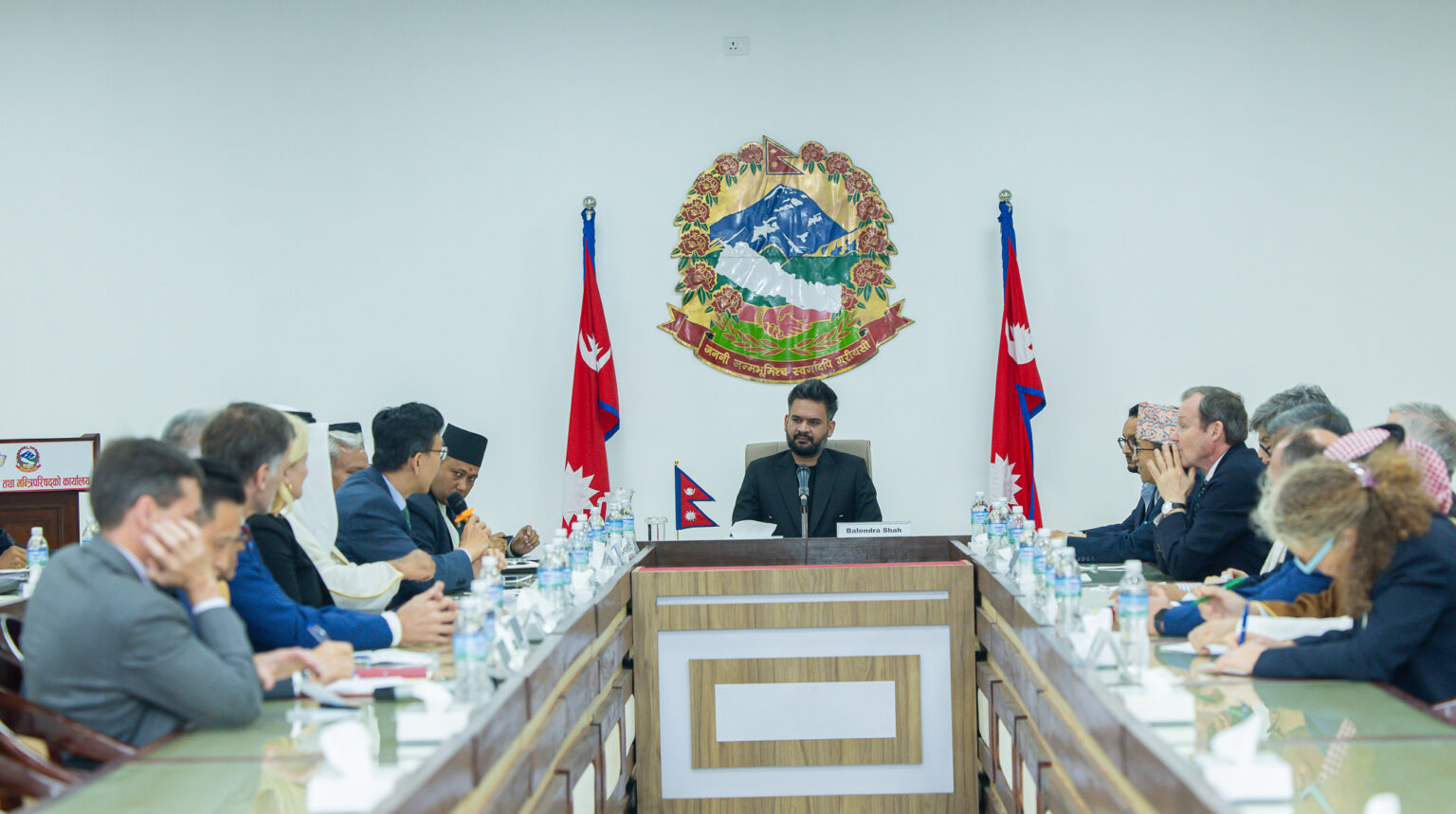
Prime Minister Balendra Shah during a meeting with ambassadors and heads of various diplomatic missions in Nepal on April 18, 2026. Photo Source: Prime Minister’s Secretariat
The real-world consequences of that stance have piled up. Sergio Gor, the Trump administration’s regional envoy, could not secure a meeting. Indian Foreign Secretary Vikram Misri’s planned Kathmandu trip was called off entirely after it became clear Shah would not receive him. Two full months into his premiership, Shah had not held a single individual sit-down with any diplomat stationed in Nepal, nor with any visiting foreign dignitary. Seventeen Nepali embassies abroad were sitting without confirmed ambassadors, honorary consuls had been suspended, and an unofficial clampdown on foreign travel by ministers and lawmakers had taken hold.
Domestically, the same instinct played out in front of a much larger audience. Shah appeared at a military academy event in April. When President Ram Chandra Paudel delivered the government’s policy and program to a joint sitting of Parliament, Shah walked out before it ended and did not return for the follow-up sessions. He skipped the ceremonial motion to open debate on his own government’s agenda and, breaking with every precedent, refused to personally field questions from lawmakers — leaving that job to Wagle while opposition MPs shut down proceedings in protest. Shah later appeared at the RSP’s general convention in Chitwan in June and then essentially vanished from public life. Critics inside and outside Parliament called it an abdication of basic accountability from a sitting prime minister.
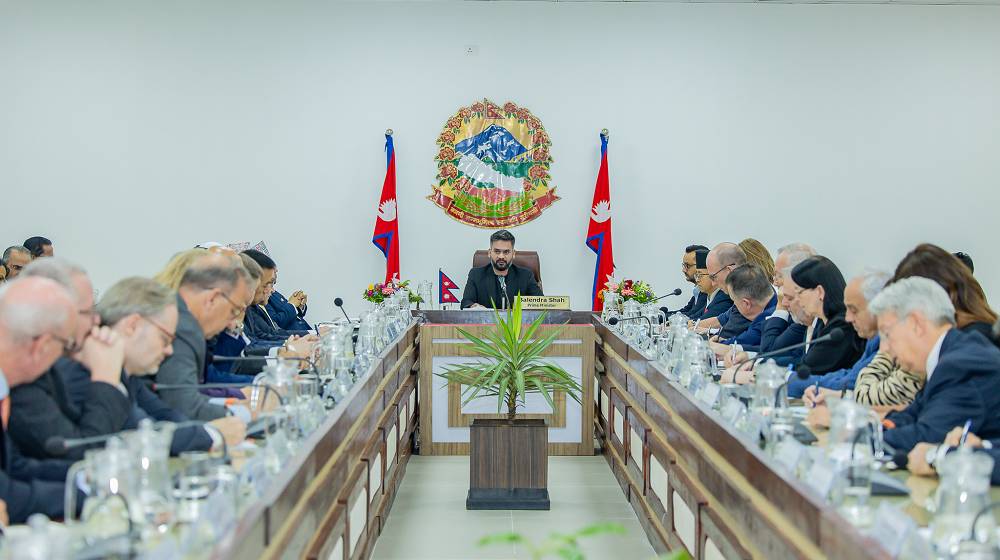
PM Shah’s meeting with EU Envoys. File photo/PMO
Set against that backdrop, the business meetings look less like a spontaneous outreach and more like a release valve opening under pressure. Trade bodies had reportedly been requesting time with the prime minister for a considerable stretch without success, and business morale had been visibly sagging under the weight of being ignored. When the meetings finally happened, several outlets described them in almost identical terms: an end to a long silence, arriving only after industrialists had spent a hundred days wondering whether this government intended to engage with them at all.
Inside the meetings themselves
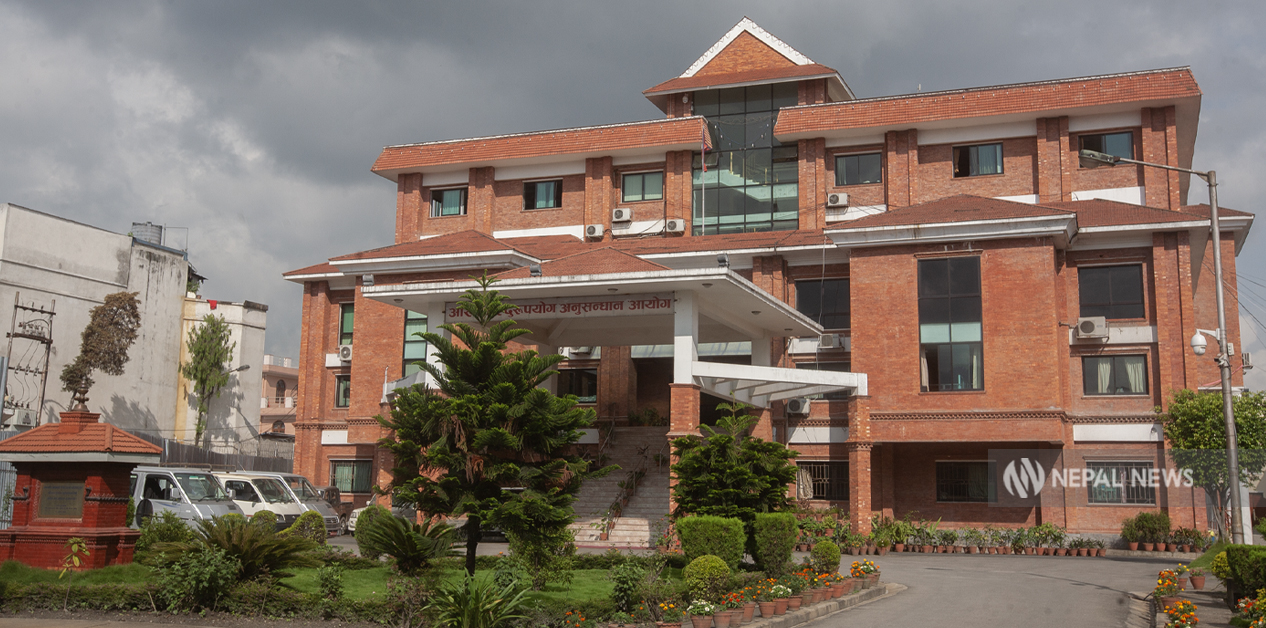
The timing was pointed. Nepal Rastra Bank had just published its annual monetary policy review when Shah convened the presidents and senior office-bearers of the Federation of Nepalese Chambers of Commerce and Industry, the Confederation of Nepalese Industries, and the Nepal Chamber of Commerce at Singha Durbar. FNCCI sent Anjan Shrestha and industry-committee chair Ujjwal Kumar Shrestha; CNI’s delegation was led by outgoing president Rajesh Kumar Agrawal and director general Ghanshyam Ojha; the Nepal Chamber of Commerce was represented by Kamlesh Kumar Agrawal and Deepak Malhotra. The next day, a separate meeting brought in the Federation of Contractors’ Associations of Nepal, led by president Nicholas Pandey, to discuss the mechanics of price adjustments on public construction contracts squeezed by inflation and material shortages.
What the business side actually asked for is worth sitting with, because it tells you what they think is genuinely broken. Their sharpest complaint was procedural, almost weary in tone: stop the pattern of detaining people first and investigating afterward, and build in anticipatory bail for economic-offence cases so businesspeople aren’t jailed before a case against them is even established. Contractors, more narrowly, wanted an agreed formula for adjusting contract prices given how much costs have risen. Shah’s answer, as relayed by people in the room, was noncommittal in the way these things usually are — an assurance that the concerns would be taken seriously and pushed through the relevant government machinery, framed as a partnership between state and private capital going forward.
None of that is unusual as a script. What is unusual is that the one cabinet member whose job most directly touches every item on that list — investment approvals, tax administration, arrests connected to financial crime, capital budget releases — sat out the conversation entirely.
Why Wagle wasn’t there
The rift between Shah and his finance minister appears to be substantive, not cosmetic. People close to the prime minister describe frustration on several fronts: that the stock market has deteriorated on Wagle’s watch, that Wagle’s own business associate was installed as chair of the Securities Board of Nepal in circumstances critics call a conflict of interest, that Wagle has leaned too heavily on foreign borrowing rather than building productive capital, and that his budget failed to generate any real optimism in the economy. Separately, a reported sit-down between Shah and RSP chairman Rabi Lamichhane amounted to an informal performance review of the cabinet, with Wagle singled out — though Lamichhane apparently pushed back by raising his own questions about members of PM’s secretariat viewed as Shah loyalists, suggesting this is as much an intra-party power struggle as a straightforward policy dispute.
That friction has now hardened into open reshuffle speculation. Multiple recent reports describe serious talk of an imminent cabinet reshuffle, with Wagle’s position specifically named as at risk, and at least one report links the business meetings directly to this backdrop, framing Shah’s choice to meet industrialists without his finance minister as a data point in the broader story of Wagle’s weakening standing. Investor opinion on Wagle himself is genuinely split — an early bump in sentiment after he met with brokers gave way to sustained pressure and criticism of some of his public remarks on the market, even as his secretariat has more recently tried to project a friendlier tone toward investors and voiced support for SEBON’s reform agenda.
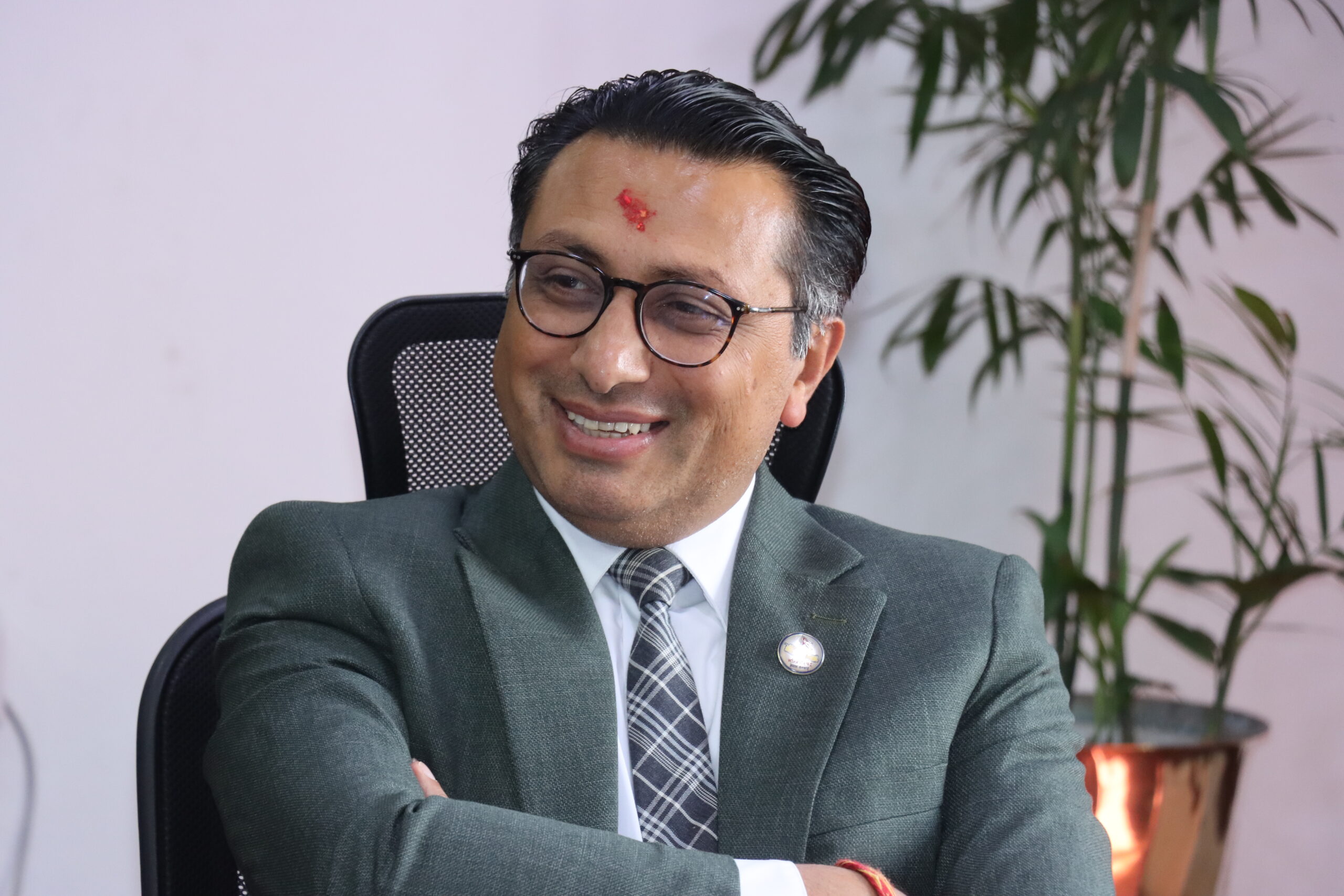
Finance Minister Swarnim Wagle. File photo
Read against this, leaving Wagle out of the room looks like a message aimed in three directions at once: to business leaders, that the prime minister himself — not the finance ministry — is now personally taking charge of fixing this relationship; to RSP’s internal factions, that Wagle’s standing is shakier than his title suggests; and possibly to Wagle himself, that he is being worked around rather than worked with. Whether that message reflects a real institutional shift in how economic policy gets made, or is simply theatre staged ahead of a reshuffle to let Shah look like the reformer while positioning Wagle as the one to blame, is the real question underneath this whole episode.
The numbers driving the urgency
Whatever the political motive, the economic backdrop explains why Shah could not stay silent toward business much longer.
Begin with the stock market, since both business leaders and the prime minister’s own circle have pointed to it directly. NEPSE stood at 2,950 points the day before Shah took office. By the middle of July it had fallen to roughly 2,570, a slide of more than 380 points, while total market value dropped from about Rs 5 trillion to around Rs 4.4 trillion — close to Rs 600 billion in investor wealth gone in under four months. Across 73 trading sessions during this stretch, the index closed lower on 47 of them and higher on only 26, a ratio market watchers read as sellers firmly in control. This is especially striking because the market had actually risen roughly 9 percent in the short window between the March election and the government’s formation — meaning whatever optimism voters and investors briefly shared about political change evaporated once Shah’s administration actually took the reins. The share investors’ association has been blunt about the mood: expectations of the new government went unmet, and fear rather than confidence has defined the period since.
That decline shows up directly in state revenue. Capital gains tax collected from share trading came in around Rs 9.5 billion over eleven months of the fiscal year, down from roughly Rs 15.3 billion in the same stretch a year prior, despite budget provisions meant to make trading simpler and more attractive. Total turnover on the exchange fell by roughly a fifth year-on-year over the same period. And the slide has shown no sign of stopping as the fiscal year closed out — one particularly bad week in early July wiped close to Rs 90 billion off market capitalization in five sessions alone, even as trading volume rose, a combination analysts interpret as panic-selling rather than any fresh buying interest. By the Monday Shah met the contractors, the index had broken through a key support level to hit its lowest close in over six months.
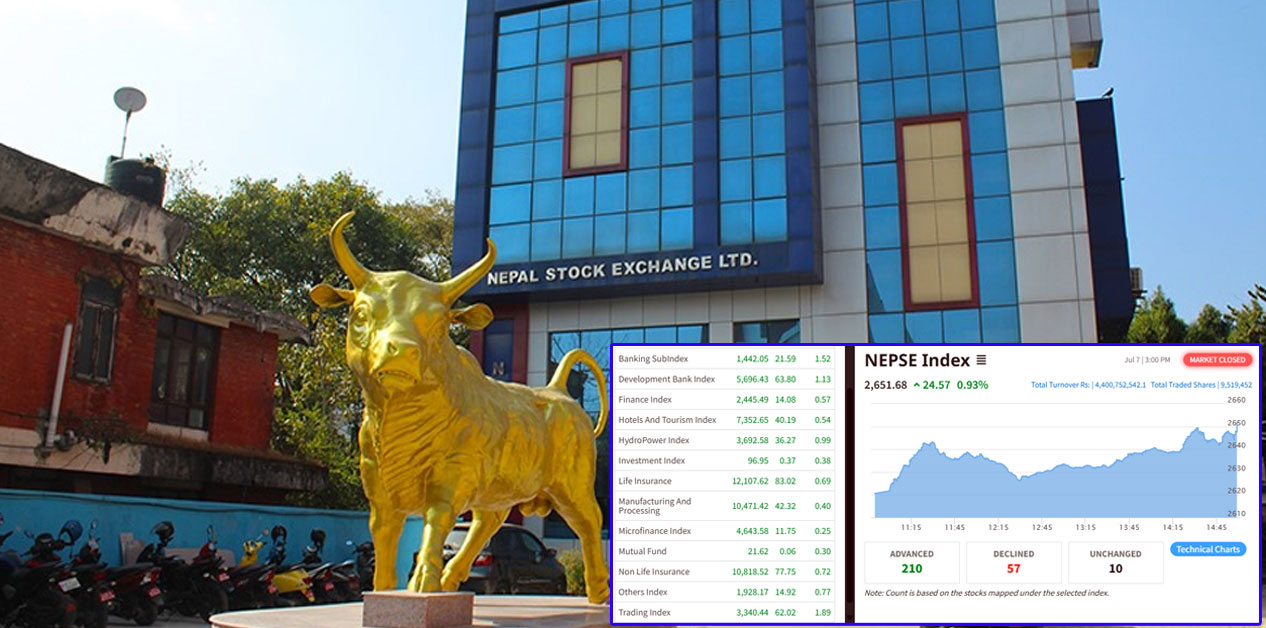
NEPSE on July 7, 2026
Curiously, this collapse in domestic investor confidence sits alongside a genuine boom in money flowing in from abroad — which only underscores how disconnected Nepal’s headline economic strength has become from confidence in its own capital markets. Remittances over the first eight months of the fiscal year jumped nearly 38 percent year-on-year in rupee terms, an acceleration from single-digit growth the year before, fueled by currency depreciation, Malaysia reopening its labor market, higher Gulf wages, and a large diaspora simply sending home more. By the ten-month mark, dollar-denominated remittances were up a third year-on-year. This has kept the country’s external accounts comfortably in surplus and reserves at healthy levels covering well over a year of imports. But money arriving from workers abroad has never historically converted into domestic investment enthusiasm in Nepal, and this cycle is no different — cash is flowing in even as capital flees the stock exchange.
Public debt, meanwhile, has kept climbing in the wrong direction for anyone hoping for fiscal breathing room. Total public debt crossed roughly Rs 2.93 trillion by mid-April, up over a quarter-trillion rupees since the fiscal year began, equivalent to roughly 48 percent of GDP. Debt servicing alone consumed close to Rs 260 billion in the first nine months of the year — nearly two-thirds of what was budgeted for the entire year — a pattern economists describe as a rollover trap, where new borrowing exists mainly to repay what’s already maturing rather than fund anything productive. The World Bank’s own outlook, published shortly after Shah took power, projected debt rising from under 44 percent of GDP to over 45 percent before easing in later years, driven partly by election costs, wage increases, and settling old obligations.
Capital expenditure is where the gap between rhetoric and reality is starkest, and it long predates Shah. Over the past decade, capital spending has averaged only about a fifth of total government expenditure, and even that limited share has typically gone under-spent — actual execution has averaged just under two-thirds of what was budgeted. Under the current government, that weakness has if anything gotten worse: only about 12 percent of the capital budget had been executed, with implementation further slowed by lingering disruption from last year’s unrest. By late May, with barely six weeks left in the fiscal year, the government had collected 70 percent of its targeted revenue while still sitting on roughly two-thirds of its unspent capital budget. This is precisely the frustration contractors carried into their meeting with the prime minister — an industry watching costs climb while the government that’s supposed to be its biggest client can’t get money out the door for work already approved.

Finance Minister presenting the busget of 2026/27
The new budget Wagle presented in late May, the very document tied up in the prime minister’s private grievances against him, doesn’t resolve this tension so much as restate it at larger scale. At just over Rs 2.12 trillion, it’s the biggest budget in the country’s history, a jump of roughly a quarter over this year’s revised figures, built on targets of 7 percent growth and inflation held under 6 percent. Yet nearly 60 percent of that total — about Rs 1.27 trillion — goes to salaries and routine government operation. Capital spending gets just over a fifth of the total, around Rs 431 billion, with a similar share again earmarked purely for debt repayment.
Commentary following the budget’s release captured this imbalance sharply, noting that a record-sized budget is still, structurally, mostly a payroll and debt-service document, with barely a fifth left over for the roads, power plants, schools, and hospitals that would actually count as development. That’s the fiscal reality underlying the confidence Shah is now asking business leaders to have: a headline number nearly a quarter larger than last year’s, built on a capital-spending share barely distinguishable from a decade of allocations that were themselves routinely under-executed.
So — book, or real?
Taken together, this doesn’t read as a coherent private-sector strategy so much as a prime minister responding, belatedly, to pressure arriving from several directions at once: a stock market his own allies were blaming on his finance minister, a construction industry paralyzed by the state’s inability to spend its own capital budget, business associations publicly airing grievances about arrests preceding investigation, and swirling reshuffle talk that made continued silence toward the private sector politically expensive. None of that required Shah to have actually worked out a coherent economic policy. It only required him to be seen in a room, saying reassuring things, before matters got worse or a reshuffle forced a messier reckoning.
Cutting Wagle out fits that reading better than it fits any genuine restructuring of how economic decisions get made. If Shah were formally reassigning ownership of investment-climate policy to his own office, you’d expect either a public explanation of that shift or a clearly designated alternative point of contact for business to follow up with inside government. Neither has appeared. Instead, what’s on record is an improvised, hastily arranged sequence of meetings run straight out of the prime minister’s secretariat, with the finance minister missing because he was, by several independent accounts, already the object of the prime minister’s private irritation. That looks far more like personal and factional politics than deliberate policy design.
Still, it would be too dismissive to write the meetings off as pure spectacle. The demands business leaders raised were concrete enough, and Shah’s commitment to route them through the relevant agencies specific enough in its limited way, that some real follow-through — an anticipatory bail provision, a workable contractor price-adjustment formula — is plausible within a matter of weeks. The contractors’ meeting in particular touched a live nerve: an industry entirely dependent on a capital budget this government has managed to spend at barely a tenth of its target through half the fiscal year.
But there’s a structural continuity between the diplomatic silence and the business silence that undercuts any generous reading of this as principled course correction. In both cases the pattern has been identical: withhold sustained individual access, let pressure build until silence becomes more costly than engagement, then stage a single tightly controlled group meeting that generates a news cycle of “outreach” without committing to any ongoing channel. The mass diplomatic briefing substituted for individual ambassadorial access; this single joint sit-down with FNCCI, CNI and the Nepal Chamber of Commerce substitutes for a sustained working relationship between the executive and private capital. Whether a second meeting follows, and a third, and eventually something resembling a standing consultative mechanism, will be the real test of whether this was substance or spectacle.

Excluding Wagle adds its own risk regardless of what Shah actually intended. Business confidence depends not just on hearing sympathetic words from the head of government but on knowing which minister genuinely controls the levers — tax policy, regulatory appointments, capital budget releases, contractor payments — that turn promises into outcomes. A private sector that senses its finance minister could be gone within weeks has every reason to discount commitments made in his absence, since the person meant to deliver on them may not hold the job by the time delivery is due. In that sense, sidelining Wagle from the very meeting meant to reassure business may have deepened rather than resolved the uncertainty that’s been driving capital out of the stock market and out of confidence in the government more broadly.
The honest verdict: this was mostly book, dressed in the language of reform, produced under duress from a collapsing market, an underspent capital budget, and internal party pressure over the finance minister’s conduct — but with just enough specific, trackable commitments inside it that a real, if modest, policy dividend can’t be ruled out.
What will actually settle the question isn’t this meeting but what comes after it: whether capital spending execution improves meaningfully as the new fiscal year opens, whether the anticipatory bail provision business leaders asked for actually shows up in law, what happens to the finance ministry’s authority if and when the reshuffle lands, and whether Shah ever meets these same three business bodies again without needing a market crisis to make him do it.
Until then, the Prime Minister has bought himself a news cycle of goodwill from an anxious private sector. He hasn’t yet bought their confidence.