Kathmandu
Monday, July 27, 2026





A new bill aims to fast-track roads, hydropower plants, transmission lines and other major infrastructure projects by temporarily overriding legal and bureaucratic hurdles, but critics warn it could weaken environmental safeguards and accountability
KATHMANDU: Nepal’s infrastructure story has long been one of ambition buried under paperwork. Roads drag on for decades. Hydropower plants sit half-built. A single tree-felling permit can hold up a billion-rupee project for years.
Now, Prime Minister Balen Shah’s government is preparing a law that would temporarily push aside the very rules creating these bottlenecks. It is being called the Sunset Law, and it could reshape how the country builds for the next decade.
Here is what it means, where the idea comes from, and why it matters right now.
What exactly is a sunset law in general terms?
A sunset law is a piece of legislation that carries an expiry date written into itself. Unlike ordinary laws that remain in effect indefinitely unless a parliament actively repeals them, a sunset law is designed from the start to switch off automatically after a fixed period.
Think of it the way a medicine prescription works: it is authorized for a specific duration, after which you need a fresh review before continuing. The name comes from the imagery of a sun setting, signaling the end of something. Once the designated time is up, the law simply ceases to operate unless the legislature takes a fresh decision to extend or replace it.
This built-in clock forces governments and parliaments to periodically revisit whether the law is still serving its intended purpose, rather than letting outdated rules pile up and go unchallenged for generations.
Where did the concept originate historically?
The roots of time-limited laws go surprisingly far back. In ancient Rome, the Senate would grant powers, such as the authority to raise armies or collect taxes, for fixed periods tied to specific offices. Those powers would expire when the mandate ended, a principle summed up in the Latin phrase meaning that what is allowed within a period is not permitted once that period passes.
The modern idea, however, took shape in the United States in the 1970s, largely driven by public frustration with bloated government agencies and political scandals like Watergate. Scholar and political theorist Theodore Lowi had proposed a concept he called a “Tenure of Statutes” in his 1969 book, arguing that laws should have to prove their worth rather than survive by default.
The reform group Common Cause popularized the idea under the catchier name “sunset legislation,” and Colorado became the first American state to formally enact such a law in 1976. From there, the model spread across other US states and eventually to governments worldwide.
How has the sunset concept been used globally over time?
Countries have applied sunset clauses in remarkably different ways depending on their goals. The United States used them to dismantle bureaucracies in the 1970s and later embedded them in controversial legislation like the PATRIOT Act after 9/11, where the temporary nature of the law helped gather bipartisan votes from legislators uneasy about its civil liberties implications.
In India, sunset clauses appear in tax policy and special economic zones, where benefits to developers and business operators were granted only up to specific dates to prevent indefinite subsidies. India’s constitution itself contains a sunset provision limiting the reservation of parliamentary seats to a ten-year window, subject to renewal.

National flag of Germany (left) and United Kingdom (right)
The United Kingdom and Germany have used them for regulatory review processes. Across these examples, the common thread is a government acknowledging that a particular legal arrangement is needed urgently but should not become permanent without fresh democratic scrutiny.
How does a sunset law differ from a regular law?
A regular law, once passed by parliament and signed into effect, continues to exist as part of the legal system until another law specifically removes or replaces it. There is no built-in pressure to review it, which is why legal systems across the world accumulate outdated provisions over decades, rules written for circumstances that no longer exist.
A sunset law flips this logic. It places the burden of proof on those who want the law to continue, not on those who want it removed. When the expiry date arrives, the law ends unless the government actively makes the case for renewal and parliament agrees.
In Nepal’s proposed case, the sunset law adds another dimension: it will temporarily override or relax provisions in other existing laws during its active period. So it is not just a law that expires; it is also a law that temporarily suspends parts of other laws, which is a more aggressive use of the concept than simply attaching an expiry date to a new rule.
What is Nepal specifically proposing and what is the formal name of this bill?
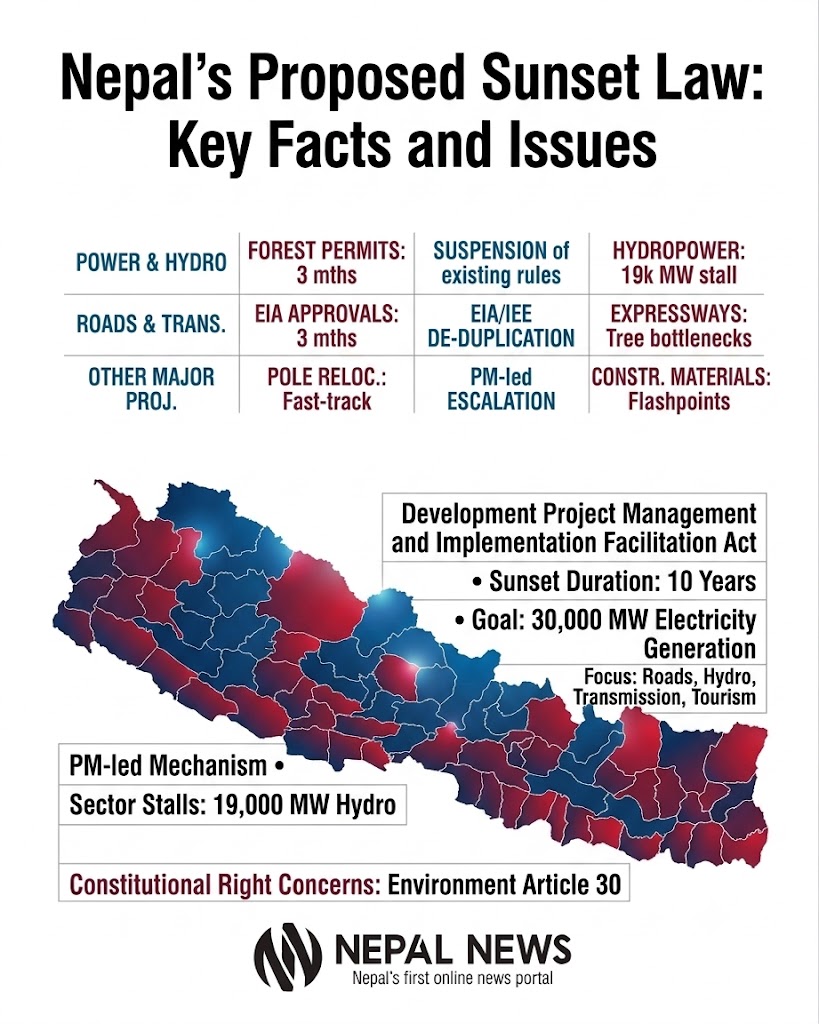
The proposed legislation is formally titled the Development Project Management and Implementation Facilitation Act, and the bill being tabled in parliament carries the name Development Project Management and Implementation Facilitation Bill, 2026.
At its core, the law would temporarily suspend or relax restrictive provisions found in several existing Nepali statutes, including the Forest Act, the Environment Protection Act, and the Land Acquisition Act, for a period of ten years. The objective is to remove legal obstacles that have routinely delayed major infrastructure projects: hydropower plants, transmission lines, roads, cable cars, industrial corridors, and tourism infrastructure.
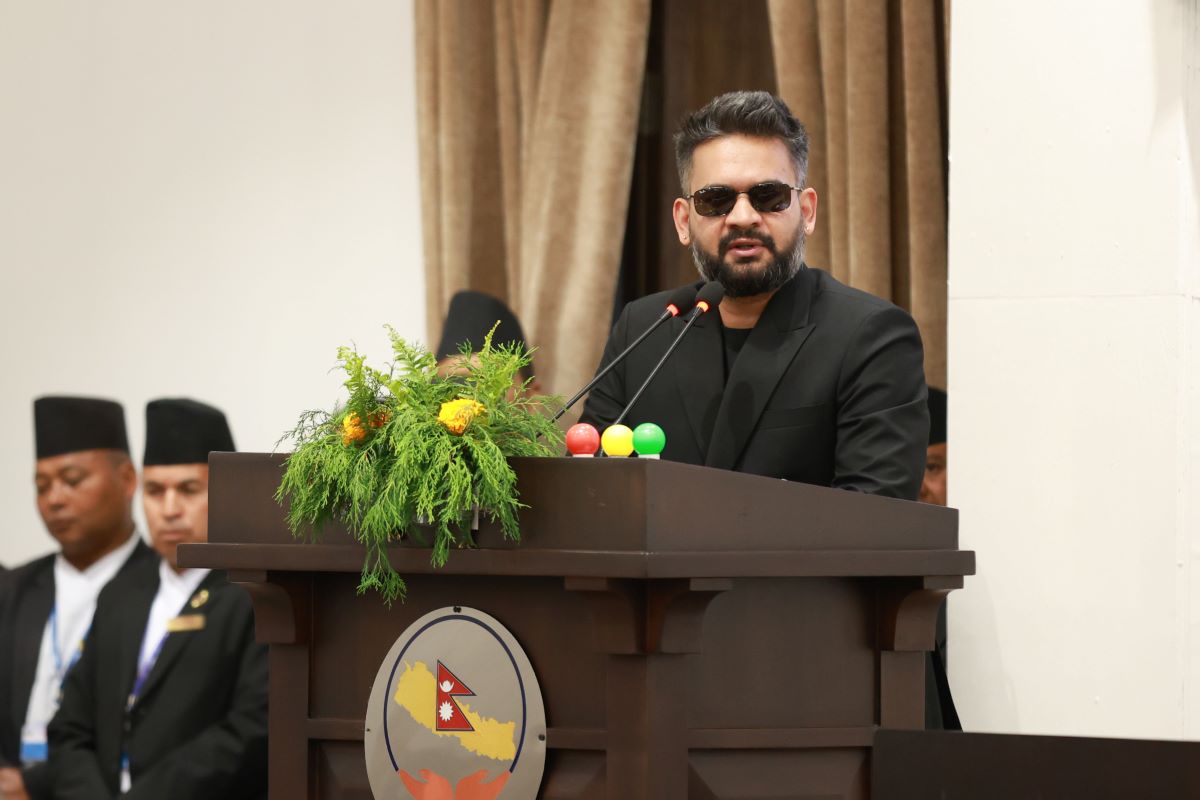
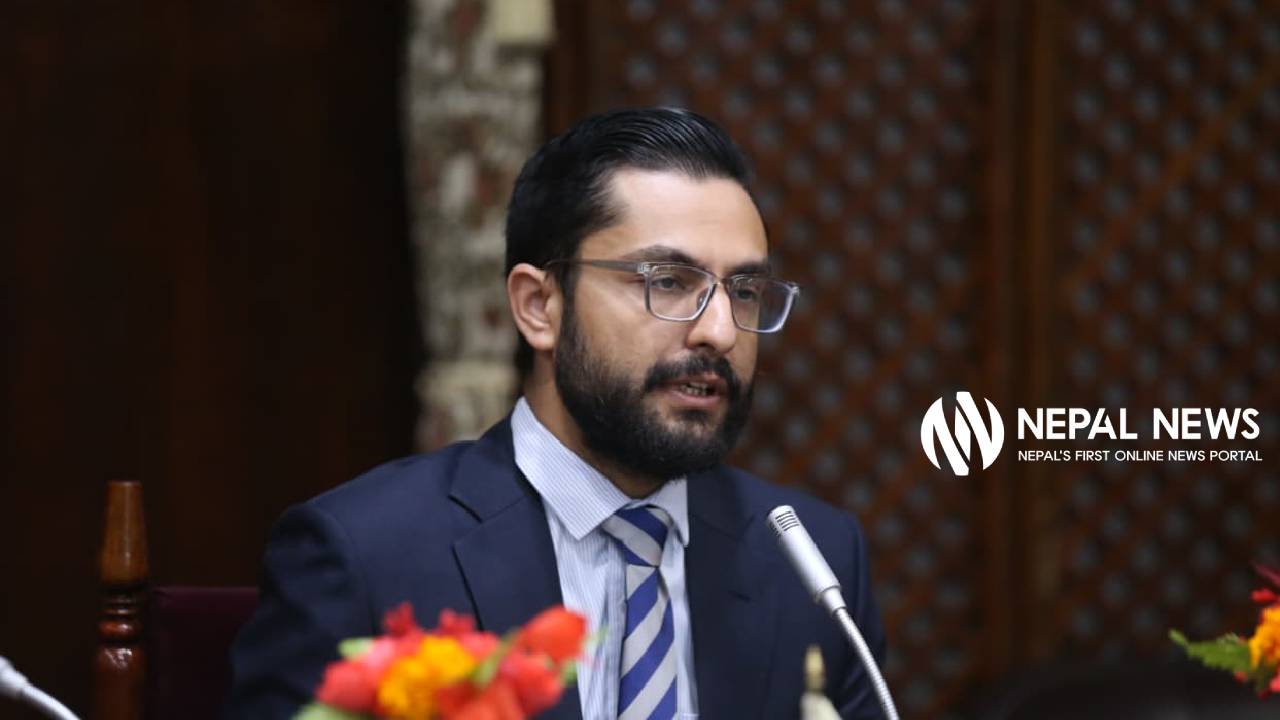
PM Balen. Photo: Nepal Photo Library
The draft has been prepared under the direction of Prime Minister Balen Shah, with a committee led by National Planning Commission member Arjun Jung Thapa coordinating the work. Finance Minister Swarnim Wagle had already announced in the annual budget that such a law would be tabled within the current fiscal year.
Why does Nepal feel this kind of extraordinary law is needed right now?
Nepal’s development record reveals a persistent pattern: projects conceived with grand ambitions end up trapped in procedural loops for years, sometimes decades. The reasons are not simply corruption or incompetence, though those are real concerns. The deeper problem is that multiple laws, each written at different times and for different purposes, now interact in ways that create impossible situations for project developers.
Getting approval to cut trees for a road requires a forest office permit. The forest office may refuse because the application touches a protected area. Another agency may have jurisdiction over the land. The environmental clearance may have been issued by one ministry but not recognized by another.
The result is that even fully funded, legally compliant projects with all required permits in hand can remain stuck for years because one small piece of paperwork sits in someone’s tray.
The sunset law is an attempt to break this cycle without having to negotiate dozens of individual law amendments that could take years to push through parliament.
What are some concrete examples of the delays this law is meant to address?
The scale of Nepal’s administrative bottlenecks became evident in late 2023 when the then Army Chief revealed before a parliamentary committee that the Kathmandu–Tarai Expressway had spent nine months waiting for permission to remove only four trees. The project’s EIA had already been approved and all formalities completed, yet the file remained trapped in a local forest office, delaying progress on one of the country’s most important infrastructure projects.
1644415683.png)
Another chronic source of delay is the EIA process itself: in Nepal, obtaining full environmental clearance can take anywhere from two to four years because the file must travel through forest offices, national parks authorities, local governments, and multiple ministries, each with the power to stall progress.
Similarly, construction materials like stone, gravel, and sand, which are essential for any infrastructure project, routinely become flashpoints between project developers and local governments over royalties and extraction permits.
Even relocating electricity poles for a road project can require lengthy public procurement procedures that freeze multi-billion-rupee works over a relatively small task.
What specific changes will the law introduce to fix these problems?
The proposed law includes several targeted mechanisms. First, it will introduce strict three-month deadlines for agencies to decide on forest land usage and tree-felling permits. If an agency fails to act within that window, the matter automatically escalates to a high-level committee chaired by the Prime Minister, which is empowered to make an immediate binding decision.
Second, the same escalation mechanism would apply to EIA approvals.
Third, for projects where the EIA report already specifies the source and quantity of construction materials like stone, gravel, and sand, no separate Initial Environmental Examination will be required, removing a layer of duplication. Developers would only need to pay royalties to local authorities.
Fourth, the Nepal Electricity Authority would be allowed to relocate utility poles using direct quotation methods rather than full public procurement procedures, preventing minor logistics from halting major projects.
Fifth, projects in or near national parks and conservation areas, through which many of Nepal’s rivers flow, would have a clearer pathway for renewable energy and infrastructure work.
Why is the hydropower sector especially vocal in demanding this law?
Nepal sits on extraordinary water resources. The government has set a target of generating 30,000 megawatts of electricity within the next ten years, an enormously ambitious goal that would transform the country from an energy importer to an energy exporter, sending power to India and Bangladesh.
However, the Independent Power Producers’ Association of Nepal has concluded that reaching this target is practically impossible under existing legal conditions. Hydropower projects require cutting through forests to lay transmission lines, building roads in remote river valleys, acquiring land in areas with complex ownership histories, and often passing through or near national parks, since Nepal’s rivers flow through ecologically sensitive terrain. Each of these steps is governed by a different set of laws.
About 19,000 megawatts worth of hydropower projects are reportedly stalled at various stages because of legal barriers, particularly in and around national parks and conservation areas. For these producers, the sunset law is not an abstract policy debate but an urgent practical necessity if Nepal’s energy ambitions are to have any chance of being realized.
Who is supporting the law and who has concerns?
Support has come from the private construction and infrastructure sector, with the Federation of Contractors’ Associations of Nepal calling the legislation urgently needed. Energy producers, particularly IPPAN, have strongly advocated for it, even submitting formal recommendations to the Prime Minister asking for the law to include tax exemptions and investment protection guarantees alongside the procedural reforms.
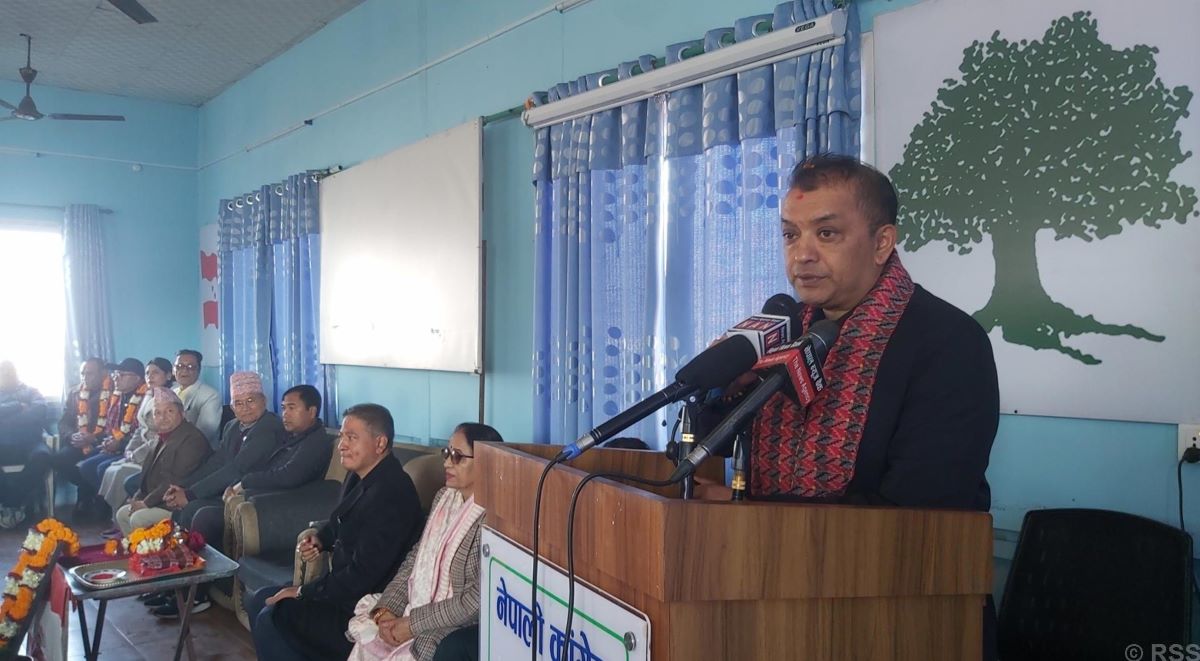
Gagan Thapa. File photo
Political backing for the measure extends beyond the government. While the ruling Rastriya Swatantra Party supports the bill, Nepali Congress President Gagan Thapa has earlier pointed out that Nepal’s development ambitions cannot be met without amending dozens of laws that currently slow project implementation.
On the concern side, legal scholars and environmental advocates have raised the risk that temporarily suspending environmental and forest protection laws, even for a worthy purpose, creates space for abuse.
Nepal’s constitution guarantees citizens the right to live in a clean environment under Article 30, and there are genuine questions about how a ten-year override of environmental clearance processes can be reconciled with those fundamental rights.
The other major risk flagged by analysts is that fast-tracked approvals without proper accountability could accelerate corruption rather than eliminate it, since the very oversight mechanisms being relaxed are also the ones that, however imperfectly, keep developers accountable.
What makes Nepal’s version of the sunset law different from the traditional use of the concept?
The classical use of a sunset law, particularly as developed in the United States, was essentially about government accountability: attach an expiry date to an agency or program so that it must justify its continued existence before parliament. It was largely a tool of restraint and review.
Nepal’s application is different in character. Rather than simply giving a law a time limit, the proposed legislation uses the sunset framework to temporarily override provisions in multiple other active laws. It is a law that exists to suppress other laws for a decade. This is closer to what some legal systems call an emergency ordinance or a special economic zone framework than to the traditional sunset concept.
The ten-year timeframe is also notably long compared to how sunset clauses are typically used in other countries, where three to five years is more common, precisely because longer periods reduce the sense of urgency that drives the law’s purpose in the first place. Nepal is essentially borrowing the name and the temporary nature of the concept while applying it to a structurally different problem.
What happens after the ten years are up, and what should citizens watch for?
Once the ten-year period expires, the overriding provisions of the Sunset Law would cease to operate, and the underlying laws, including the Forest Act and Environment Protection Act, would resume full force. Whether the projects launched during that window would be evaluated against the relaxed or the original standards is one of the legal questions that critics say the draft still needs to answer clearly.
Citizens should pay attention to a few things as this moves through parliament. First, does the high-level committee chaired by the Prime Minister have adequate checks against arbitrary decisions, or does it concentrate too much discretionary power in one office?
Second, are there transparency requirements for how exemptions are granted so that the fast-tracking mechanism does not become a tool for selecting politically connected projects?
Third, how will the law treat local communities and indigenous groups whose land, water, and forests are most directly affected by the projects it is meant to accelerate? These communities often have the least political voice in national legislative processes.
The law’s stated goal, getting Nepal’s stalled development moving, is broadly welcomed. Whether the drafting lives up to that goal without creating new problems will become clear only after parliament debates and potentially amends the bill.