Kathmandu
Wednesday, July 22, 2026





Seven questions with Rashmi Ranjan Parida regarding the Kathmandu Kalinga Literary Festival

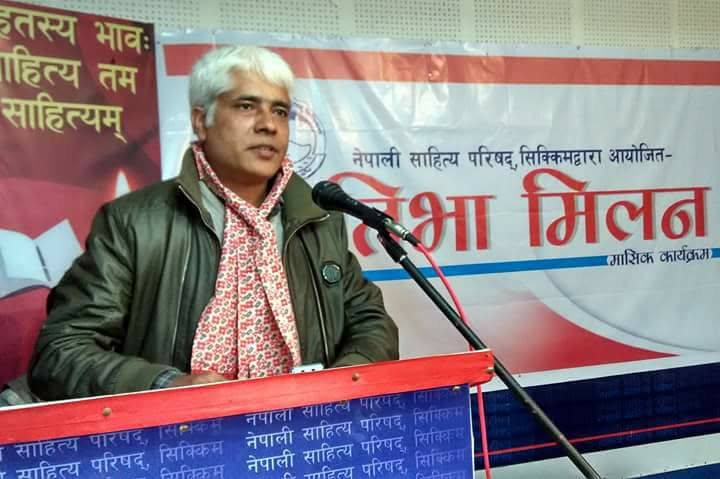
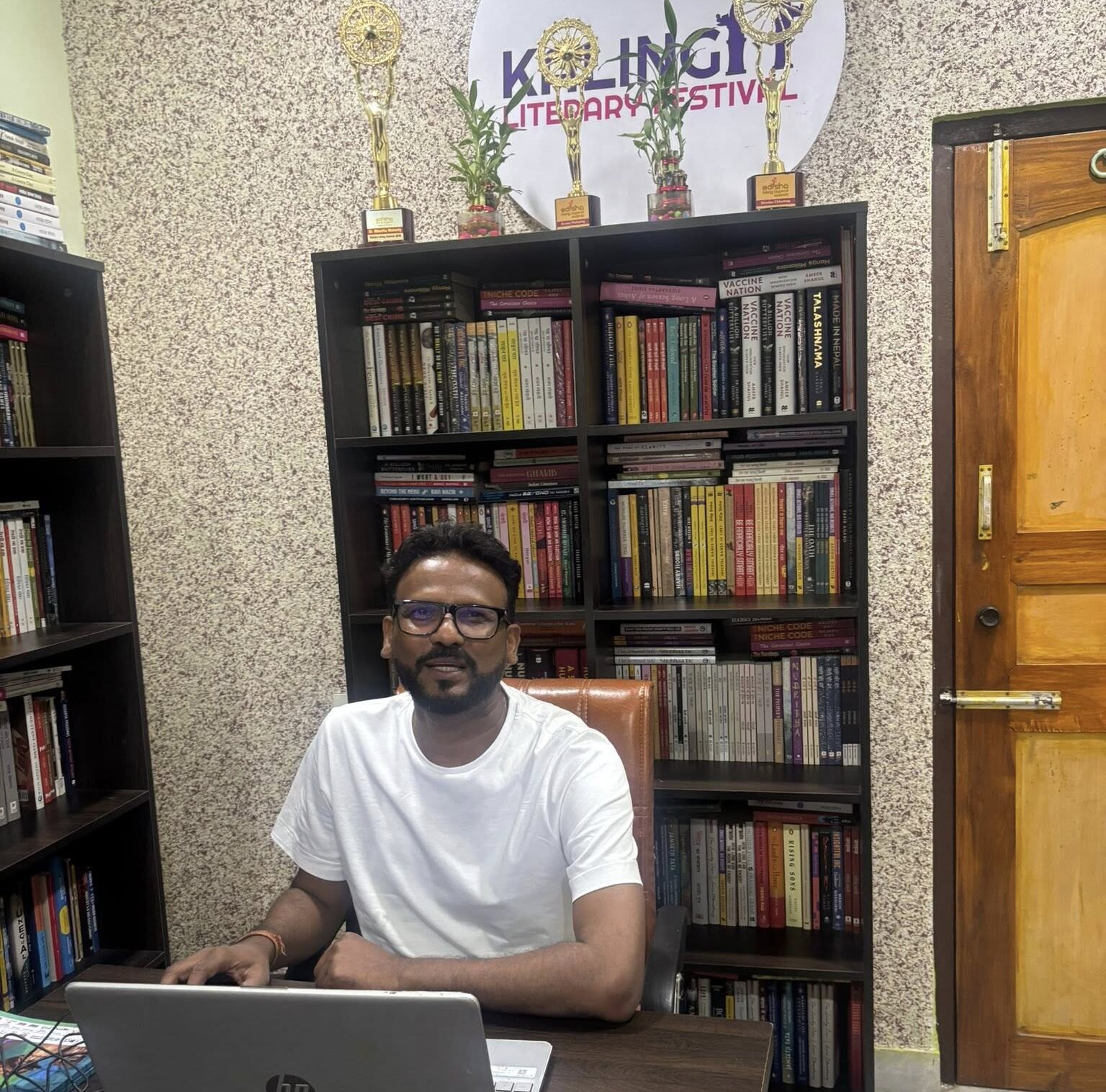
KATHMANDU: Rashmi Ranjan Parida is the founder of the International Kalinga Literary Festival, which started in Odisha, India, in 2014. Under his leadership, the fourth edition of the International Kalinga Literary Festival, which is also organized in Nepal, has commenced in Kathmandu today.
In the context of this two-day literary festival, which features the presence of distinguished writers, artists, and thinkers from Nepal, India, and South Asia, Nepal News caught up with Parida for seven questions:
How did the concept of organizing the shared Kathmandu Kalinga Literary Festival between Nepal and India develop?
In 2021, writers and cultural representatives from Nepal participated in the Kalinga Literary Festival held in Bhubaneswar, India. During that journey, discussions took place regarding the ancient relationship between Nepal and Kalinga, particularly between Kathmandu and the Jagannath culture.
For many, it was an emotional discovery that our religious, cultural, and literary ties are much older than modern political borders. That dialogue gave birth to the idea of creating a platform in Nepal that could be carried forward under the leadership and guidance of the Nepali literary circle itself.
What was the primary objective when starting the festival?
From the very beginning, the objective was not just to organize a literary event. It was to provide a contemporary platform for the literary, cultural, spiritual, and civilizational ties that have connected Nepal and India since time immemorial.
We wanted to gather writers, thinkers, translators, journalists, artists, and young readers in an environment where dialogue is more important than borders, and where shared cultural memory is respected alongside national identity.
How can the festival contribute, or how is it currently contributing, to connecting the art, literature, and culture of Nepal, India, and South Asia?
The greatest strength of South Asia is its diversity. However, sometimes this very diversity can cause distance due to a lack of dialogue. Literary festivals can bridge this distance.
This festival does not view the art and culture of South Asia merely as a heritage of the past; it delivers the message that they should be seen as a living, dynamic, and future-shaping force.
In our view, the relationship between Nepal and India is not merely diplomatic or economic. These are relationships built on songs, stories, folklore, pilgrimages, languages, festivals, families, and emotions. The festival has given a creative form to this living relationship.
In your view, what are the distinct characteristics of Nepali art, literature, and culture that give it a unique identity on the global stage?
The greatest characteristic of Nepali art, literature, and culture is its deep sensitivity. It possesses the height of the Himalayas as well as the intimacy of folk life.
In Nepali literature, one can see a wonderful coordination of nature, memory, struggle, spirituality, love, displacement, democratic consciousness, and social change.
Nepal’s cultural identity is multidimensional. Numerous languages, communities, traditions, faiths, and artistic expressions coexist here simultaneously. This diversity is not just coexistence but also a source of creation. Despite being local, it possesses the capacity to converse with global experiences.
Questions of mountains, borders, diaspora, memory, family, society, and identity are important across the world today. Nepali creators have been presenting these subjects with their own distinct sensitivity.
If translation, publication, digital dissemination, and international literary collaboration can be further encouraged, the global recognition of Nepali literature can become even more powerful.
In today’s digital age, what are the needs and limitations of such literary festivals? What kind of dialogue do you expect when bringing intellectuals and creators from Nepal, India, and other countries onto a single platform?
The digital age has brought both opportunities and challenges to literature. Today, a poem, story, or idea can spread across the world in just a few moments. New writers can reach readers without major institutional support. New digital possibilities have also opened up for regional languages.
On the other hand, people’s attention spans have decreased, and a race for superficial and quick reactions has ensued. Festivals like this inspire us to pause for a moment, think deeply, and understand the experiences of others through serious dialogue.
The exchange among writers, artists, and thinkers from Nepal, India, and other countries expands perspectives.
We expect a dialogue that is respectful, inquisitive, and critical, but not divisive. Our objective is not to build consensus, but to deepen our understanding.
How are the expenses and other resources required for organizing the festival managed?
Organizing a festival of this scale is a collective effort. It includes venue management, hospitality, travel, technical preparation, publicity, publication, cultural programs, volunteer management, and many other aspects.
Resources are mobilized through various channels. Institutional support, sponsors, cultural partners, local collaborations, well-wishers, and the contributions of volunteers are vital in this.
We always want the festival to be dignified, but we stay away from unnecessary extravagance. For us, financial support is important, but even more important is editorial freedom and literary credibility.
Our objective is not merely to increase attendance, but to foster meaningful participation. We want every session to generate substantive dialogue, encourage active audience engagement, and cultivate a long-term interest in literature. Criticism gives us an opportunity to improve, and we welcome it.
There is a criticism that while there are many sessions in the Kalinga Literary Festival, the audience-listener turnout is low in proportion. How do you view this?
This is a valid criticism, and we take it seriously. No festival should run away from self-evaluation.
To accommodate various languages, subjects, generations, and creative genres, we keep many parallel sessions at KLF. Because of these parallel sessions, the audience gets divided into different halls.
It is natural for some sessions to have more participants and some to have fewer. We prioritize meaningful and intimate dialogue over numbers.
Our understanding is that if we focus only on famous names and popular topics, many important but less-celebrated voices will be left out of the stage.
However, we must maintain a balance in the number of sessions, scheduling, selection of topics, speakers, audience participation, and collaboration with universities and reader groups. We are continuously striving for such a balance.