Kathmandu
Sunday, July 26, 2026





A quarter-century after the Narayanhiti Palace killings, fading evidence, missing witnesses, legal hurdles and political sensitivities continue to complicate efforts to uncover the full truth.
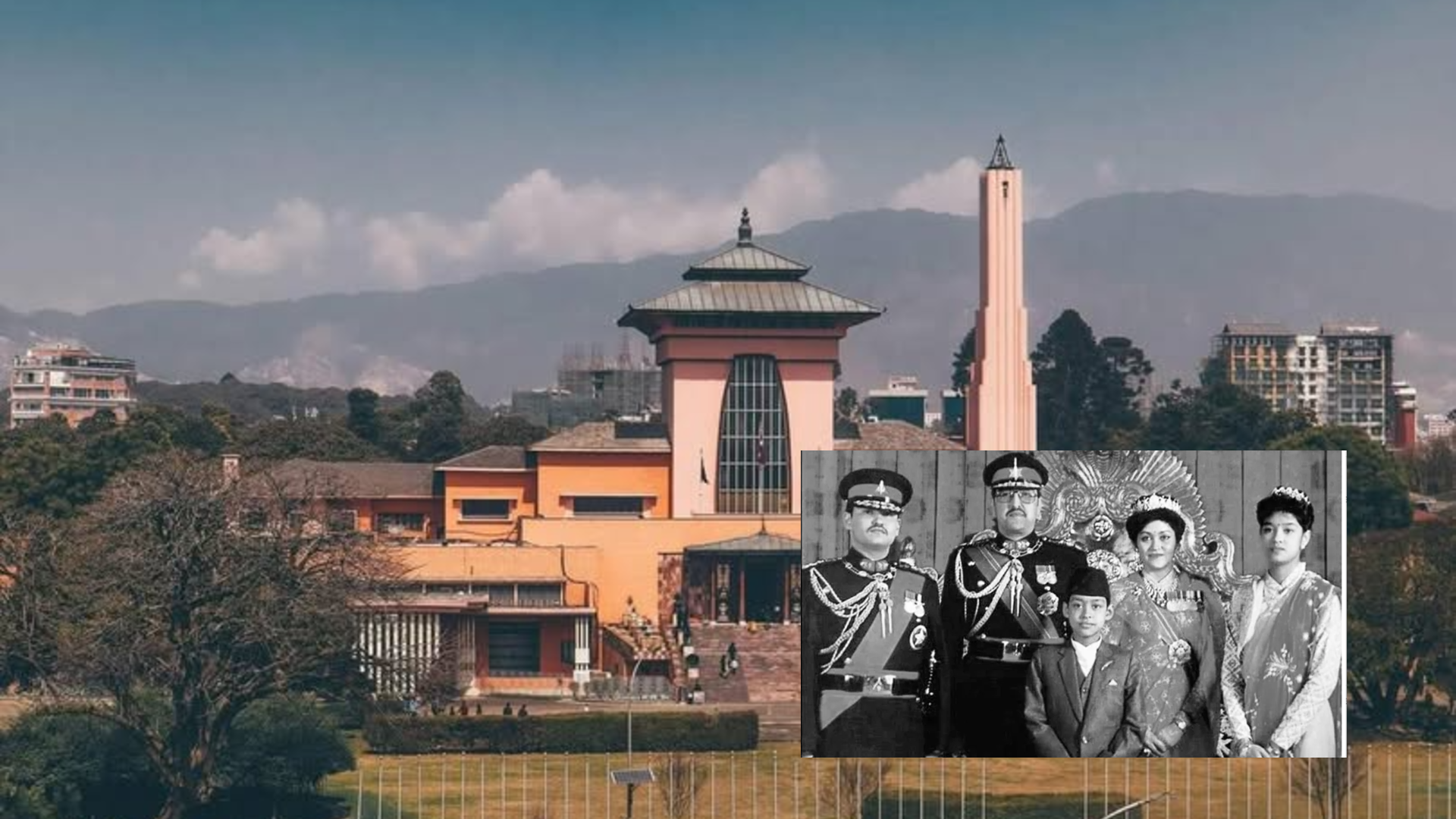
KATHMANDU: Twenty-five years after the single most traumatic night in modern Nepali history, the killings inside Narayanhiti Palace are back at the centre of national debate.
Sudhan Gurung — who returned to the Home Ministry on June 9, 2026 after a 48-day absence triggered by a personal controversy — declared as one of his first official acts that he would initiate a fresh investigation into the 2001 royal massacre by reviewing the previous inquiry reports.
The announcement immediately reignited questions that have never been put to rest about what truly happened on that June night, who was responsible, and whether Nepal’s institutions are capable of answering those questions now.
What happened at Narayanhiti Palace on the night of June 1, 2001?
On the evening of June 1, 2001, the royal family gathered for a regular social occasion at Tribhuvan Sadan, one of the residential buildings within the sprawling Narayanhiti Royal Palace complex in central Kathmandu. The gathering was a routine monthly family event.
At some point during the evening, Crown Prince Dipendra Bir Bikram Shah Dev reportedly behaved erratically, was sent away from the gathering by his father King Birendra, and returned later heavily intoxicated and armed with multiple weapons. He opened fire on the assembled family members.
King Birendra was shot and killed. Queen Aishwarya was killed. Prince Nirajan, Princess Shruti, and five other members of the extended royal family also died. Dipendra then walked into the palace garden and shot himself in the head.
In total, nine members of the royal family were killed. The crown prince was transported to hospital in a coma and — in a constitutionally perplexing move — was declared the new King of Nepal while unconscious. He died three days later on June 4, 2001. His uncle Gyanendra then ascended to the throne.
Who was Crown Prince Dipendra, and why was he considered an unlikely perpetrator?
Crown Prince Dipendra Bir Bikram Shah Dev was the eldest son of King Birendra and Queen Aishwarya, educated at Eton College in England and widely regarded in public as a composed, intelligent, and affable heir to the throne. He was known to have a warm public demeanour and a close relationship with his father.
His profile made the official account of the massacre — that he carried out the killings in a drunken and drug-induced rage before turning the gun on himself — extremely difficult for many Nepalis to accept.

Dipendra Bir Bikram Shah Dev
The doubt was deepened by several factors: the reported closeness between Dipendra and his father made patricide seem psychologically implausible to many who knew him. The sophisticated and coordinated nature of the attack — using multiple firearms, moving through rooms, targeting specific people — seemed inconsistent with the behaviour of someone described as barely conscious at the time.
His three-day coma and subsequent death made it impossible to question him directly, leaving only secondhand reconstructions and eyewitness accounts gathered under conditions that critics later questioned.
What was the official motive given for the massacre?
The investigation committee and subsequent public accounts pointed to a long-running family dispute over Dipendra’s romantic relationship with Devyani Rana, the daughter of a senior Nepali politician and member of a prominent aristocratic family.
Dipendra had reportedly wished to marry Devyani Rana for years, but the queen and members of the royal household were said to oppose the match, partly on dynastic grounds related to the Rana family’s historical political role in Nepal.
The committee’s report confirmed that Dipendra had spoken with Devyani Rana by mobile telephone multiple times on the night of the massacre, including a brief call shortly after 8 PM. The quarrel between Dipendra and his parents over the marriage question reportedly escalated dramatically that evening.
However, the committee’s report did not explicitly attempt to prove this motive in a forensic legal sense. Many observers found the proposed motive — that a prince educated at Eton would methodically kill nine family members over a marriage dispute — insufficient to explain the calculated and lethal nature of what actually occurred inside the palace.
What was the official investigation committee, and how was it constituted?
In the immediate aftermath of the massacre, the newly crowned King Gyanendra ordered the formation of a high-level inquiry committee. The committee was chaired by then Chief Justice of the Supreme Court Keshav Prasad Upadhyaya. Parliament Speaker Taranath Ranabhat was appointed as a second member.
Opposition leader Madhav Kumar Nepal, then head of the Communist Party of Nepal (Unified Marxist-Leninist), was also named to the committee but withdrew before the inquiry formally began, citing his party’s position that participation was not appropriate under the circumstances. The final inquiry was therefore effectively carried out by only two members.
The committee was given an extremely tight timeline — initially three days, later extended by four additional days — to examine the crime scene, interview survivors and eyewitnesses, review ballistics evidence, and produce a report.
Critics pointed out almost immediately that a two-member panel with a one-week mandate was wholly inadequate for an investigation of such national and historical gravity, regardless of the sincerity of the members themselves.
What did the investigation report conclude, and when was it submitted?
The inquiry committee submitted its 53-page report on June 14, 2001, approximately two weeks after the massacre. The report concluded that Crown Prince Dipendra was solely responsible for the killings and that he subsequently took his own life. It found no evidence of external involvement or any conspiracy.
The committee relied on a combination of eyewitness testimonies from members of the royal household, palace staff, and security personnel who were present that night, as well as a review of physical evidence including ballistics information.
The report confirmed the use of multiple firearms by Dipendra and noted that King Birendra had apparently made a last-minute attempt to return fire at his son.
The document was released publicly and presented at a Kathmandu press conference broadcast live on state television — a deliberate effort by the authorities to lend immediate credibility to the findings and pre-empt further speculation by placing the conclusions in the public domain as quickly as possible.
Why was the investigation controversial and widely disbelieved?
The report failed to convince large sections of the Nepali public and many independent observers for several intersecting reasons. First, the structural flaws of the investigation — two members, one week — made the conclusions appear rushed regardless of content.
Second, a former Supreme Court registrar who had worked closely with the committee later revealed that the panel had no formal legal mandate to actually identify a murderer; its terms of reference were limited to fact-finding rather than criminal attribution, making its naming of Dipendra as the sole perpetrator procedurally questionable.

Former King Gyanendra Bir Bikram Shah Dev addresses a press meet before leaving the Narayanhiti Royal Palace. Photo: Rajesh Gurung.
Third, multiple alternative theories circulated with varying degrees of plausibility, the most persistent concerning Gyanendra, who uniquely benefited from the massacre by ascending to the throne and he was the sole member from the immediate family who was absent from the gathering.
Fourth, the political climate of 2001 — Nepal was in the midst of a Maoist insurgency and the monarchy was a contested institution — made many Nepalis suspicious that the inquiry was designed to produce a predetermined conclusion rather than pursue an open-ended search for truth.
What was Madhav Kumar Nepal’s withdrawal about, and why did it matter?
Opposition leader Madhav Kumar Nepal’s decision to step down from the committee before its formal work began had significant consequences for the inquiry’s legitimacy. Nepal was at the time the head of the CPN (UML), one of Nepal’s major parliamentary parties.
His party took the position that participating in an investigation set up under the auspices of the new king — Gyanendra, who was himself a subject of suspicion in the public imagination — created an irresolvable conflict of interest and that the inquiry could not be genuinely independent under those conditions.
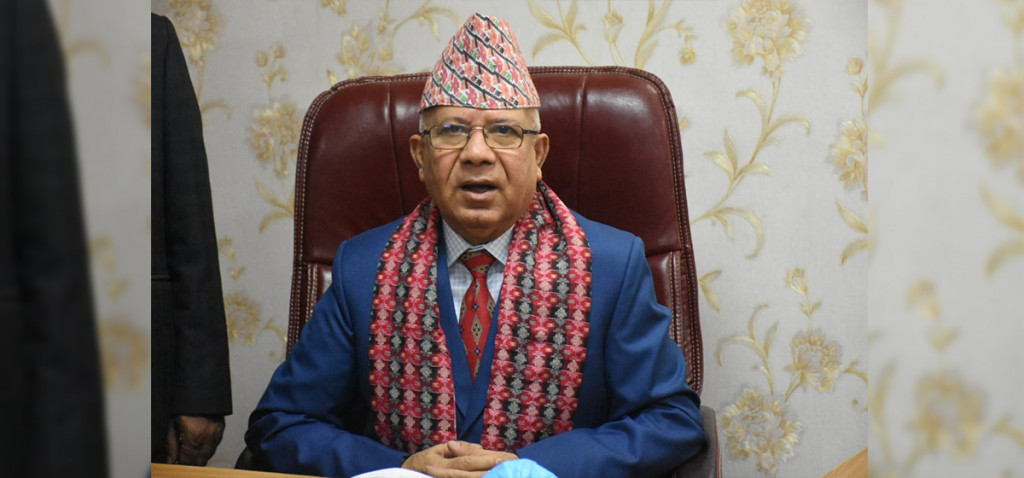
Madhav Kumar Nepal/ file photo
By withdrawing, Nepal and his party signalled distrust of the process. The withdrawal meant the committee lacked any meaningful opposition voice, removing the check that a credible opposition member’s presence would have provided.
It also served as a political marker that was remembered for years afterward: the very opposition leader invited to legitimise the findings chose not to participate, lending credibility to those who questioned whether the process had been independent from the outset.
What are the main alternative theories about who was responsible?
In the quarter century since the massacre, several alternative theories have been widely debated. The most commonly discussed centres on King Gyanendra, Dipendra’s uncle, who was the primary political and dynastic beneficiary of the night’s events. His immediate family was in the palace but fared differently from Birendra’s household, and his son Prince Paras was present during the shooting.
A second theory, articulated by former Supreme Court registrar Shree Prasad Pandit among others, points to foreign powers — the argument being that external actors with interests in destabilising the Nepali monarchy may have been involved.
A third line of questioning focuses on how Dipendra gained access to multiple high-powered firearms inside a heavily guarded royal palace on that particular night, and who may have assisted or enabled that.
A fourth set of questions concerns what actually happened in the garden where Dipendra was ultimately found with a self-inflicted gunshot wound — whether that wound was genuinely self-inflicted has been contested.
None of these theories has been substantiated with evidence sufficient for a formal legal case, but their persistence reflects the enduring public belief that the official account was fundamentally incomplete.
Who is Sudhan Gurung, and why is his return to the Home Ministry controversial?
Sudhan Gurung is a younger politician who rose to prominence through Gen Z protest in September 2025, becoming one of the recognized public faces of the broader movement that challenged established political structures.
He was appointed Home Minister and subsequently had to resign in April 2026 after it emerged that his public asset declarations had not disclosed investments he held in two micro-insurance companies.
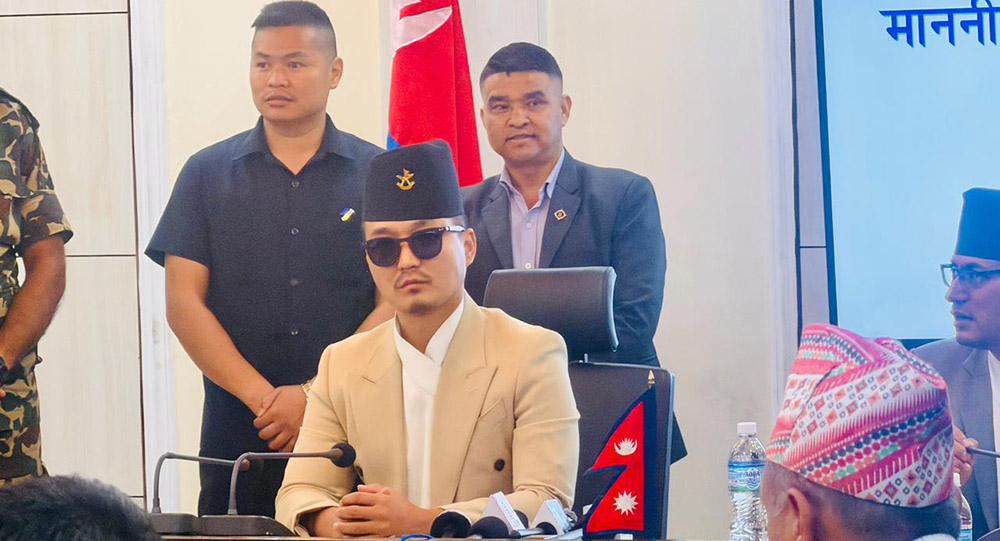
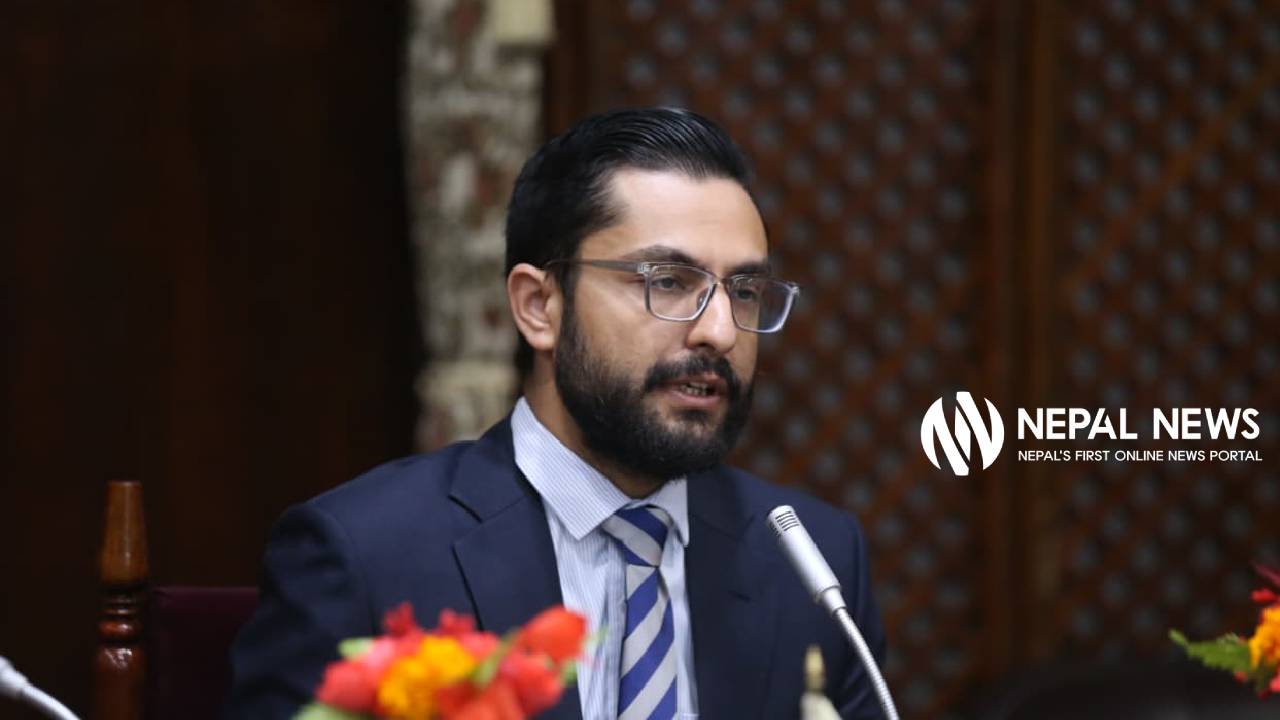
Sudhan Gurung
An investigation committee examined the allegations. Following that committee’s findings, a cabinet meeting on June 9, 2026 acknowledged the report and approved Gurung’s reappointment.
His return, 48 days after his resignation, was accompanied by four bold policy announcements, of which the pledge to reinvestigate the royal massacre was the second item — a list that also included plans to reopen all criminal files in the country and formation of a task force to assess whether charges against participants in the 2025 Gen Z protests could be legally withdrawn.
What specifically did Gurung say about the reinvestigation?
On his first day back in office, Sudhan Gurung announced that the process of further investigation into the 2001 Narayanhiti Royal Palace massacre would be carried out by studying and reviewing the previous investigation reports. He framed this as part of a broader commitment to reopening every criminal file in the country. His announcement was notably thin on specific operational detail.
Gurung did not name or propose a new investigation body. He did not specify a timeline, a budget, or any terms of reference for a fresh inquiry. He did not indicate whether a new investigation would be parliamentary, judicial, or executive in nature. He did not explain what legal mechanism would be used to initiate it or what new evidence or witnesses might be sought.
The announcement generated immediate political attention precisely because it touched on the most sensitive unresolved question in modern Nepali political history, but the absence of operational detail left observers divided over whether this was a genuine policy initiative or a high-profile political statement.
Why is reinvestigating the royal massacre so difficult now, a quarter century later?
The obstacles to a credible new investigation are formidable and stem from multiple directions simultaneously. Physical evidence from the crime scene in 2001 was not preserved to the forensic standard that a modern investigation would require, and 25 years have further compromised whatever remains.
Many of the key eyewitnesses, palace staff, and security personnel present that night have either died, aged significantly, or have had decades during which their recollections may have been shaped by the many competing versions of events that circulated publicly.
The primary suspect identified by the official inquiry — Dipendra — died in June 2001, meaning no criminal accountability can be directed at him regardless of any new conclusions. Any new inquiry that implicates a living person would face enormous legal, political, and evidentiary hurdles.
The Narayanhiti Palace complex itself was converted into a public museum after the abolition of the monarchy and the declaration of the republic in 2008, meaning the physical crime scene has been fundamentally altered and is now a heritage site visited by members of the public.
What is politically at stake if a reinvestigation were actually pursued?
The stakes of a genuine investigation are high enough that the announcement alone carries consequences. Nepal became a federal democratic republic in 2008 after the abolition of the monarchy, but Gyanendra Shah and his son Paras Shah remain public figures.
A visible royalist political movement has re-emerged in recent years, with segments of the population expressing nostalgia for the Shah monarchy and some voices calling for its restoration. A reinvestigation that produced credible evidence that the official 2001 account was inaccurate — or worse, that pointed toward a conspiracy — could reignite political conflict between republicans and royalists at a moment when that divide is already visible.
It could also create diplomatic sensitivity given theories involving foreign powers. For the government, the announcement carries obvious political value in terms of public attention and a reformist narrative, but a full reinvestigation that ends inconclusively or produces contradictory findings could prove more politically damaging than no reinvestigation at all.
What are the legal and institutional challenges to reopening the case?
Nepal’s current criminal justice framework operates under significantly different laws than those in place in 2001. Any new investigation would need a clear legal mandate — from parliament, the cabinet, or a court — specifying who has authority to investigate, under which statute, and with what scope.
The question of constitutional jurisdiction is also complicated: the massacre occurred when Nepal was a constitutional monarchy under a completely different political and legal order than the federal republic that exists today. Witnesses and surviving royal family members may have legal rights regarding compelled testimony.
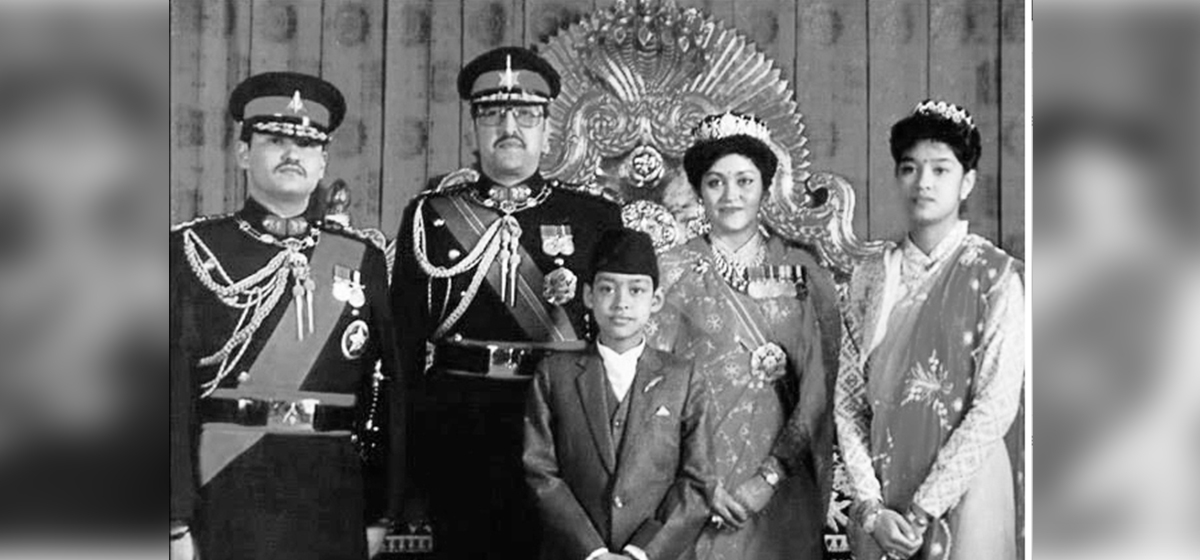
Prince Dhirendra, King Birendra Bir Bikram Shah Dev, Queen Aishwarya Rajya Lakshmi Devi Shah, Princess Shruti, and Prince Nirajan
Any case that approached criminal indictment would need to pass through the court system, which would scrutinise both the procedural legitimacy of the new investigation and the quality of the evidence produced.
There is also the issue of political will and stability: the dynamics of Nepali politics mean that any government initiating a serious investigation risks fracturing relationships with political actors who might be implicated or who have strong reasons to prefer the current state of ambiguity and historical closure.
What has been the public reaction to Gurung’s announcement?
The announcement generated significant public discussion and media attention in Nepal, drawing on decades of accumulated frustration over what many citizens regard as an inadequately explained national tragedy.
For Nepalis who were alive in 2001 and remember the shock of the massacre, the reopening of the question touches deeply personal memories of mourning and national disorientation.
For younger Nepalis who have only ever known the republic, the massacre is a historical mystery that was officially attributed but never convincingly resolved.
The broader context of Gurung’s return — after a controversy involving undisclosed financial interests — also shaped how observers read the announcement. Some welcomed it as a bold reformist move consistent with his image as an outsider politician willing to challenge entrenched institutions.
Others viewed it with scepticism, characterising it as a politically calculated gesture designed to dominate the news cycle on his first day back, with limited likelihood of producing a substantive investigation in practice. The absence of any operational detail in the announcement fed both the interest and the scepticism in roughly equal measure.
How might the case proceed from here, and what is realistically possible?
The realistic range of outcomes is wide. At one end, Gurung’s announcement could remain a political declaration with limited follow-through — no formal investigation body is constituted, the announcement fades from the news cycle, and the massacre remains in the same state of official ambiguity that has persisted for 25 years.
A more moderate outcome would see the government form a study committee to review the 2001 committee’s 53-page report, publicly release its findings or recommendations, and either reaffirm the original conclusions with fresh authority or identify specific gaps — a process that would carry historical and transparency value without necessarily requiring a full criminal re-inquiry.
A more ambitious outcome would involve a formally constituted parliamentary or judicial commission with genuine investigative powers, access to surviving witnesses, authority to request forensic re-examination of available evidence, and a mandate to produce a public report.
That last option would be the most consequential but also the most politically difficult to sustain through Nepal’s coalition dynamics.
What is almost certainly impossible, given the passage of time, the death of the primary accused, and the deteriorated state of the evidence, is a criminal trial with convictions.
What remains possible — and what many Nepalis would consider an overdue act of national accountability — is a more complete and credible historical truth.