Kathmandu
Thursday, June 11, 2026





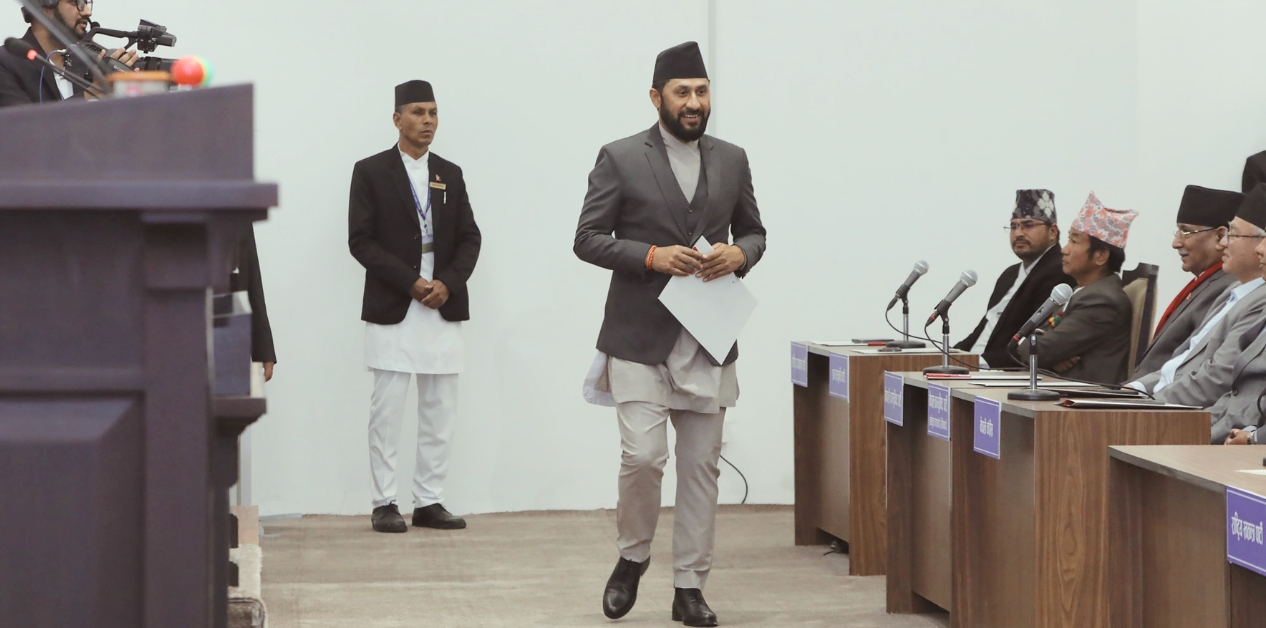
KATHMANDU: If the new House of Representatives Regulations had not been introduced, RSP Chairman Rabi Lamichhane’s status as a Member of Parliament could have been suspended. Despite the charges related to organized crime and money laundering being sub-judice in court, he was not suspended.
His MP post was saved after the provision regarding suspension in the regulations—passed by the Parliament where the RSP holds a convenient majority—paved the way for MPs who are not in custody for trial or have not been convicted of imprisonment by a court to remain in office. Following the registration of cases in organized crime and money laundering, he had to be suspended from the previous Parliament and was sent to prison for trial.
The government led by Sushila Karki had initiated the process to amend the prosecution, which had already entered the procedural phase after the registration of charges against Lamichhane, who was released on bail following the Gen Z protests. The then Attorney General Sabita Bhandari had decided to amend the prosecution of the cases against Lamichhane pending in four courts.
Taking Bhandari’s decision regarding the amendment of the charges as the primary basis, the Kaski and Parsa District Courts issued orders to amend the charges so that the claims regarding organized crime and money laundering against him would not remain valid. The case related to cooperative fraud, however, remains under consideration in court.
Charges related to cooperative fraud, organized crime, and money laundering were registered against Lamichhane in Kaski, Kathmandu, Rupandehi, and Parsa District Courts. Among them, Kaski and Parsa District Courts have already amended the charges regarding organized crime and money laundering while keeping the claims regarding cooperative fraud intact.
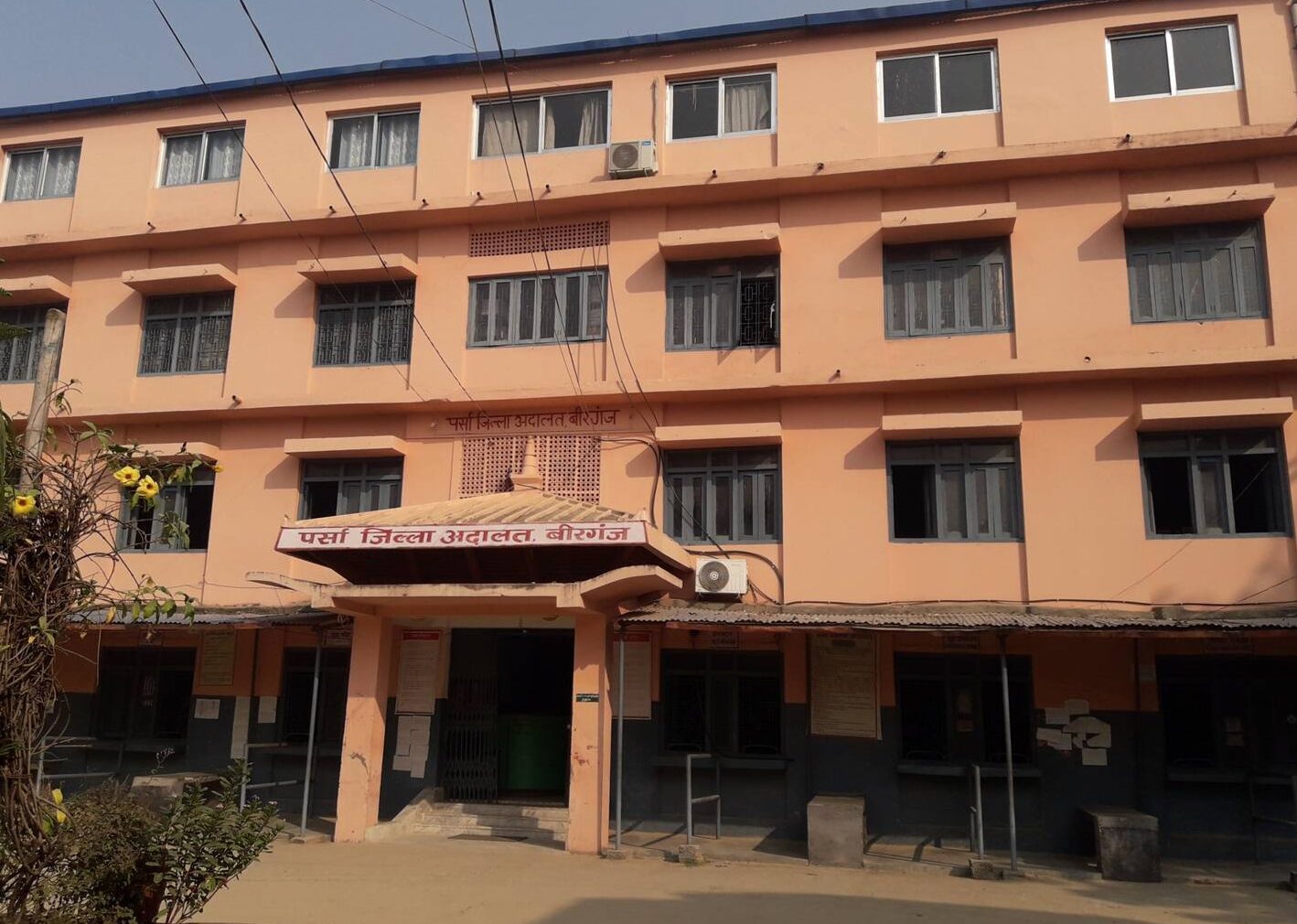
Parsa District Court. Photo source: Court’s website
On May 22, the Kaski District Court issued an order to amend the charges in the case involving Rabi Lamichhane. The bench of Judge Himlal Belbase issued the amendment order in the case where Lamichhane, along with Gitendra Babu (GB) Rai and Chhabi Lal Joshi, are co-defendants, stating that the claim regarding cooperative fraud would remain intact, but the charges and claims regarding organized crime and money laundering would not remain valid.
The court took the decision of the then Attorney General Sabita Bhandari regarding the amendment of charges as its primary basis. The order mentions that the charges were amended in accordance with Section 36 of the National Criminal Procedure Code, 2017.
Following that, on June 9, the Parsa District Court also issued an order in the same manner as the Kaski District Court. The bench of Judge Mohan Subedi issued an amendment order maintaining the charges regarding cooperative fraud while dismissing the charges and claims regarding organized crime against defendants including Lamichhane.
The Parsa District Court clarified that additions and subtractions were made to the charges and claims as per the decision made by the then Attorney General Bhandari on January 16, 2026.
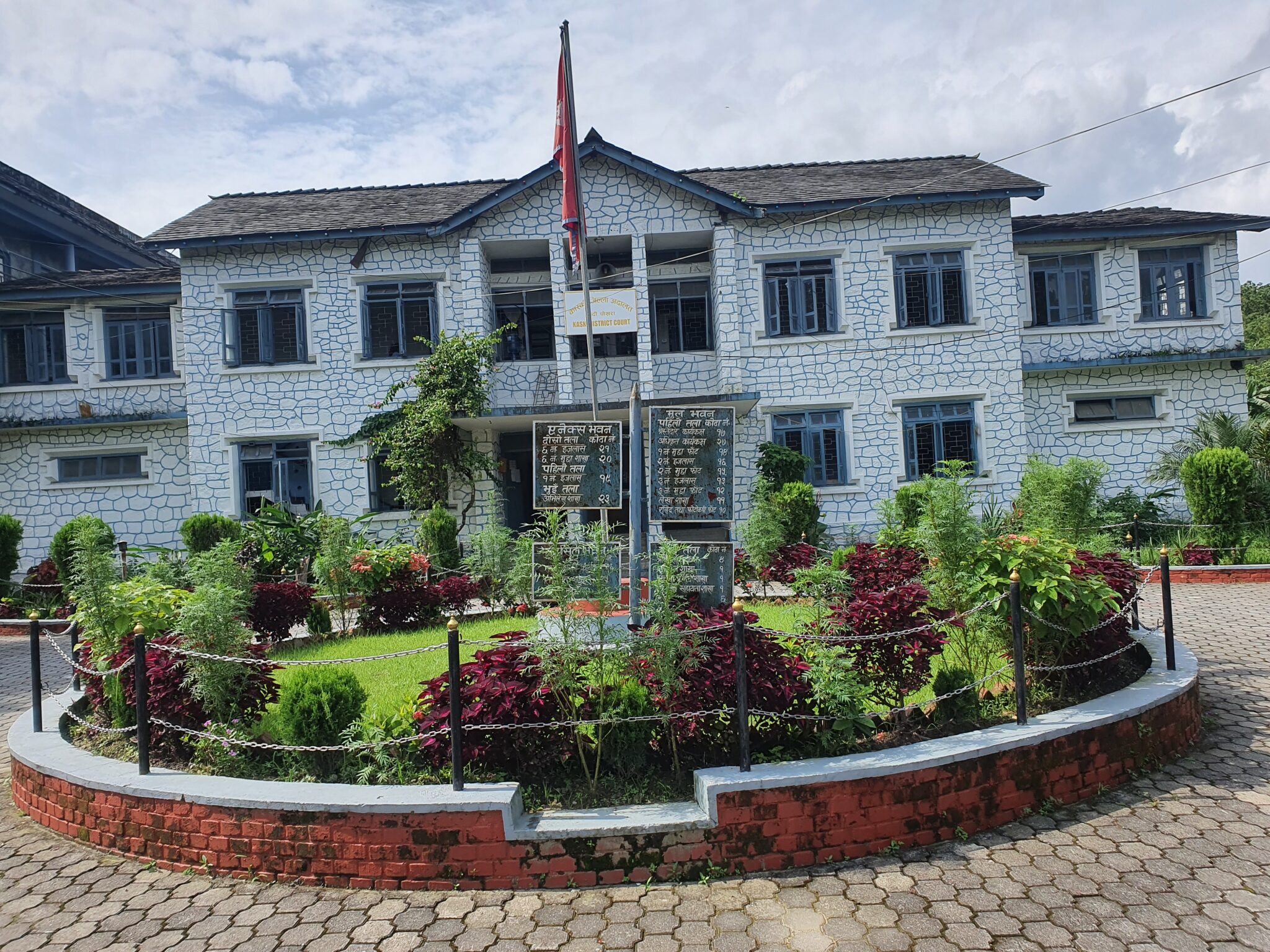
Kaski District Court. Photo source: Court’s website
The charges against Lamichhane regarding organized crime and money laundering are still under process in the Kathmandu and Rupandehi District Courts. The petition for the amendment of charges has already been registered at the Kathmandu District Court. Shiva Khatiwada, the information officer of the court, states that the petition registered on January 21, 2026, has not been able to be listed for hearing as the case file is currently in the process of retrieval.
On September 9, 2025, during the Gen Z protests, arson, looting, and vandalism took place at the Kathmandu District Court. Information Officer Khatiwada added that since fire was set specifically to the room where case files were kept, the file related to Lamichhane’s case is currently being reconstructed.
On the other hand, the Rupandehi District Court had issued an order on January 29, 2026, stating that since a writ petition filed on this matter in the Supreme Court is sub-judice, it should be presented only after its final adjudication. Following that, the case has not been listed for hearing, according to the court’s information officer, Padam Aryal.
The writ petition filed in the Supreme Court against Attorney General Bhandari’s decision is still under consideration.
Relief provided by the regulations
The new House of Representatives Regulations appear to have been decisive in preventing the suspension of Lamichhane’s MP post. After the arrival of the new Parliament, the House of Representatives Regulations were revised to form the ‘House of Representatives Regulations, 2026’.
The regulations were passed by the Parliament despite opposition from the main opposition party Nepali Congress, opposition parties CPN (UML), Nepali Communist Party, Shram Sanskriti Party, and Rastriya Prajatantra Party. The opposition parties had accused the ruling coalition of formulating the regulations to suit their own convenience.
Rule 247 of the regulations contains provisions regarding the arrest of a member. It mentions that if any MP is arrested in accordance with Clause 6 of Article 103 of the Constitution, the Speaker must immediately inform the House.
Sub-rule 3 of the same rule provides that a member against whom a prosecution has been filed in a criminal case carrying a prison sentence of three years or more or involving moral turpitude, and who is in custody for trial, shall remain suspended for the duration of the custody.
Section 33 of the Prevention of Corruption Act, 2002 provides that once a case is filed, the concerned public servant shall be automatically suspended until the disposal of the case. Similarly, Section 27 of the Money Laundering Prevention Act, 2008 also provides that if a case is filed against an official or employee, they shall be automatically suspended until the case is resolved.
Sub-rule 4 provides that a member who has been sentenced to imprisonment by a court judgment or is serving a prison sentence shall be deemed automatically suspended for that duration.
This provision opens up a pathway to protect MPs who are not in custody for trial or have not been found guilty by a court from suspension. For this very reason, Lamichhane has not been suspended despite the charges regarding organized crime and money laundering being sub-judice in court.
Another important provision added to the regulations is Rule 259. It states, “Notwithstanding anything contained in the prevailing laws, in the case of the House, committees, and members, these regulations shall exist as a federal law and shall apply as a special law.”
There was no such explicit provision in the previous House of Representatives Regulations. With the addition of this provision in the new regulations, a path has been cleared to bring the final interpretation regarding the suspension of a member within the jurisdiction of the Speaker. Such an interpretation is considered an internal proceeding of the House.
Regulation Drafting Committee chairman Ganesh Parajuli, however, had stated that this provision was not targeted at any specific individual. He argued that the Constitution has given Parliament the authority to frame regulations to conduct its business, maintain order in its meetings, and regulate the formation and procedures of committees.
Article 104 of the Constitution provides that each House of the Federal Parliament may frame regulations to conduct its business, maintain order in its meetings, and regulate the formation, functions, and procedures of committees.
However, the question remains as to how this provision aligns with the Prevention of Corruption Act and the Act related to Money Laundering.
Section 33 of the Prevention of Corruption Act, 2002 provides that once a case is filed, the concerned public servant shall be automatically suspended until the disposal of the case. Similarly, Section 27 of the Money Laundering Prevention Act, 2008 also provides that if a case is filed against an official or employee, they shall be automatically suspended until the case is resolved.
The new House of Representatives Regulations, however, have opened the path for a different interpretation in the case of MPs. This has once again brought the boundary between the autonomy of Parliament and public accountability into debate.
The court’s contention
The Parsa District Court has interpreted that one of the reasons for amending the charges was to facilitate the process of returning the savings amount to the victims of the cooperative.
The court’s order mentions that the core subject of justice dispensation is to easily and swiftly return the savings amount of the victim complainants. The court stated that even after the amendment of the charges, the claims regarding cooperative fraud will remain intact as per the complaints filed by the complainants.
The court interpreted that if the charges were not amended, the process of settlement between the complainants and the defendants, the return of the claimed amount, and the victims receiving their money could become more complicated.
The order of the Parsa District Court states, “As per the demand of the petition, the claims of cooperative fraud in the main, additional, and supplementary charge sheets have been kept intact, and an amendment order has been issued so that other claims regarding organized crime and money laundering shall not remain valid.”