Kathmandu
Saturday, June 20, 2026






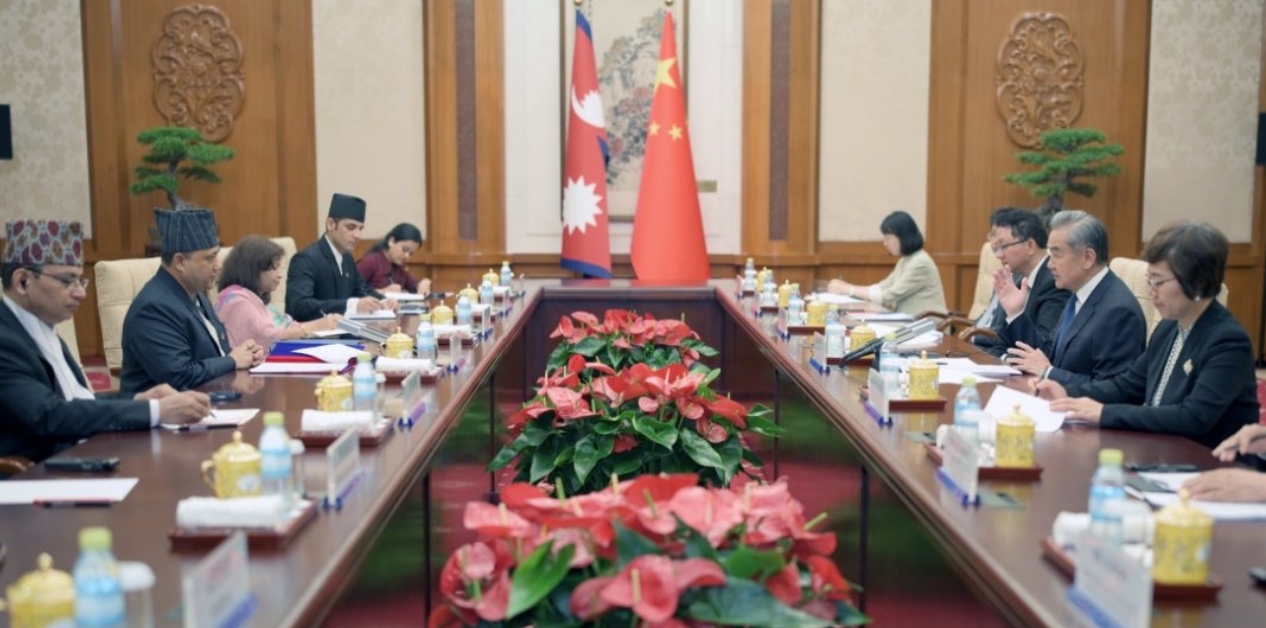
KATHMANDU: Foreign Minister Shisir Khanal has announced that the government is engaged in urgent diplomatic dialogues with India to resolve recent regulatory barriers holding up Nepali tea exports.
The issue was brought directly to the government on Thursday during a meeting with a high-level delegation from the Federation of Nepalese Chambers of Commerce and Industry (FNCCI), led by President Anjan Shrestha.
FNCCI leaders, alongside lawmakers Ganesh Parajuli and Rahabar Ansari, urged immediate high-level intervention to lift what local municipalities have termed a “non-tariff barrier.”
Shrestha emphasized that the tea sector generates an annual turnover of Rs 12 to 14 billion and its collapse would severely hit the national economy and the livelihoods of hundreds of thousands of people.
To secure a permanent, long-term solution, he stressed that Nepal must prioritize establishing its own internationally accredited testing laboratory.
In response, Minister Khanal assured the delegation that the government views the crisis with utmost gravity, has already initiated talks and expects a practical, bilateral solution from Indian authorities soon.
The intervention comes at a critical moment for Nepal’s orthodox tea industry.
Since May 1, 2026, the Tea Board of India has enforced a strict new Standard Operating Procedure mandating 100% laboratory testing for every individual truck entering the country—a sharp shift from previous lot-clearing practices.
Because samples from the Kakarvitta border crossing must be sent to a crowded central lab in Kolkata, testing results take upwards of 20 days.
During this time, premium “first flush” tea risks severe quality degradation inside warehouses.
This bureaucratic logjam has pushed the domestic sector to a breaking point.
Facing a combined stockpile of over one million kilograms of stranded tea and an unsustainable financial burden from testing fees, local producers have been forced into drastic collective action.
A total of 86 processing factories—56 in Ilam and 30 in Jhapa—have announced a complete halt to operations, cutting off nearly 3,000 regional farmers from their primary buyers at the absolute peak of the harvest season.