Kathmandu
Monday, June 22, 2026





Preparation to grant decisive authority to the Chairman in nominating the Central Committee and office bearers in the name of inclusivity

KATHMANDU: The Rastriya Swatantra Party (RSP) is preparing to further increase the authority of its Party Chairman through its first general convention.
Following the ongoing general convention in Chitwan, Rabi Lamichhane is highly likely to repeat as the Chairman. So far, no other leader has emerged to challenge Lamichhane for the position. RSP leaders interpret the speeches made by Chairman Lamichhane and Prime Minister and senior leader Balendra Shah during the opening session as a clear message that Lamichhane will focus on running the party while Shah focuses on running the government.
The RSP’s statute has also progressively made the position of the Chairman more powerful. In the initial statute, there was no provision for the Chairman to be directly elected. The provision required convention delegates from across the country to elect central committee members, who would then choose the Chairman from among themselves. Later, the statute was amended to allow the Chairman and central committee members to be elected simultaneously, and to authorize the Chairman to nominate office bearers.
Increased authority via statutory amendments
The RSP Statute of 2022 provided for a 121-member Central Committee. Of these, 99 members, including 49 from seven provinces, were to be elected through the general convention. From among the elected central committee members, party members would vote again, and anyone securing more than 50 percent of the votes would be elected Chairman.
Following that, the newly elected Chairman was authorized to nominate 22 additional members from among the party members to form the 121-member Central Committee. That statute did not authorize the Chairman to nominate office bearers. Instead, the Central Performance Committee, formed under the leadership of the Chairman, had the authority to nominate 10 office bearers from among the central committee members. The Chairman could reshuffle them as necessary.
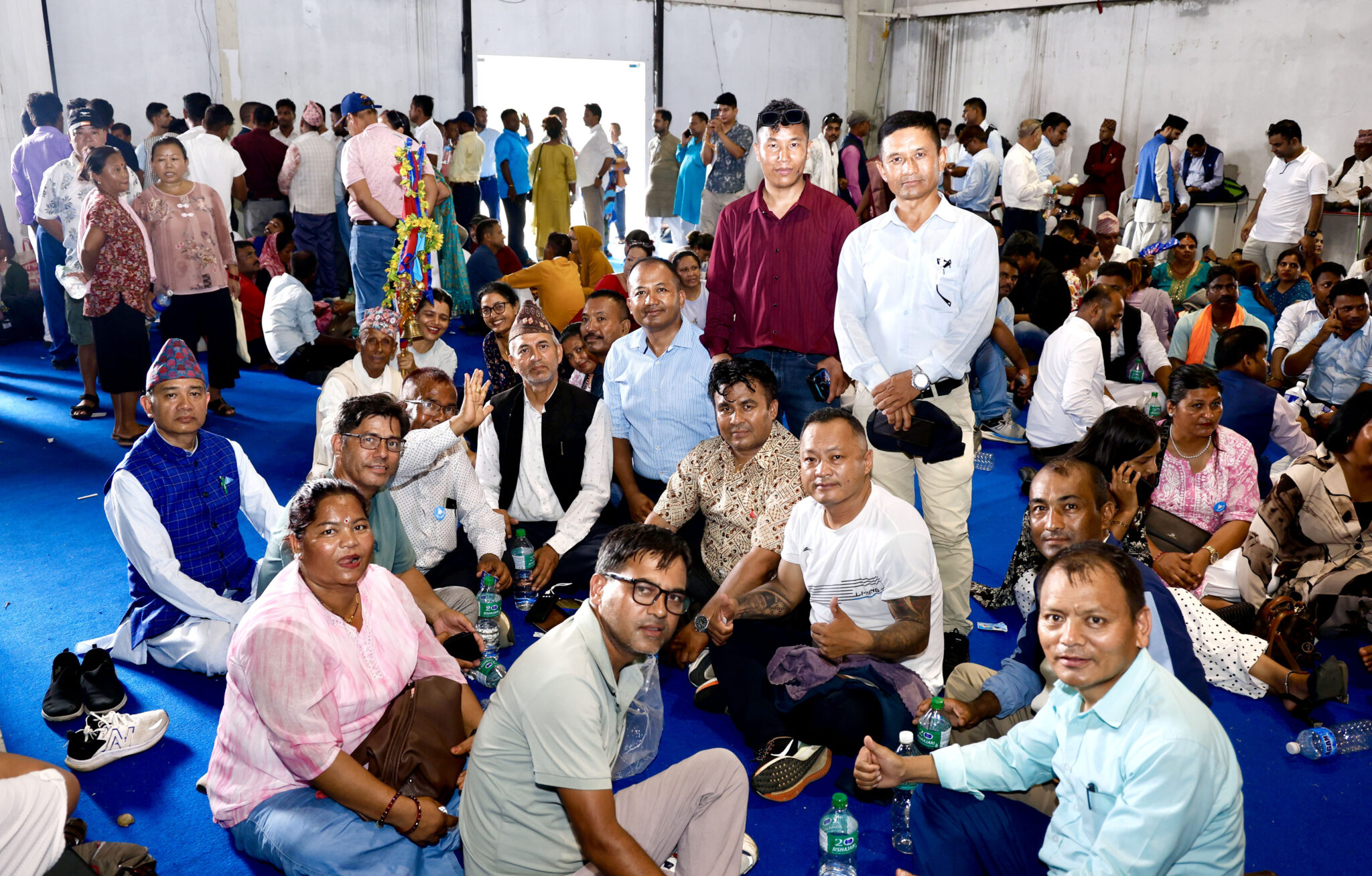
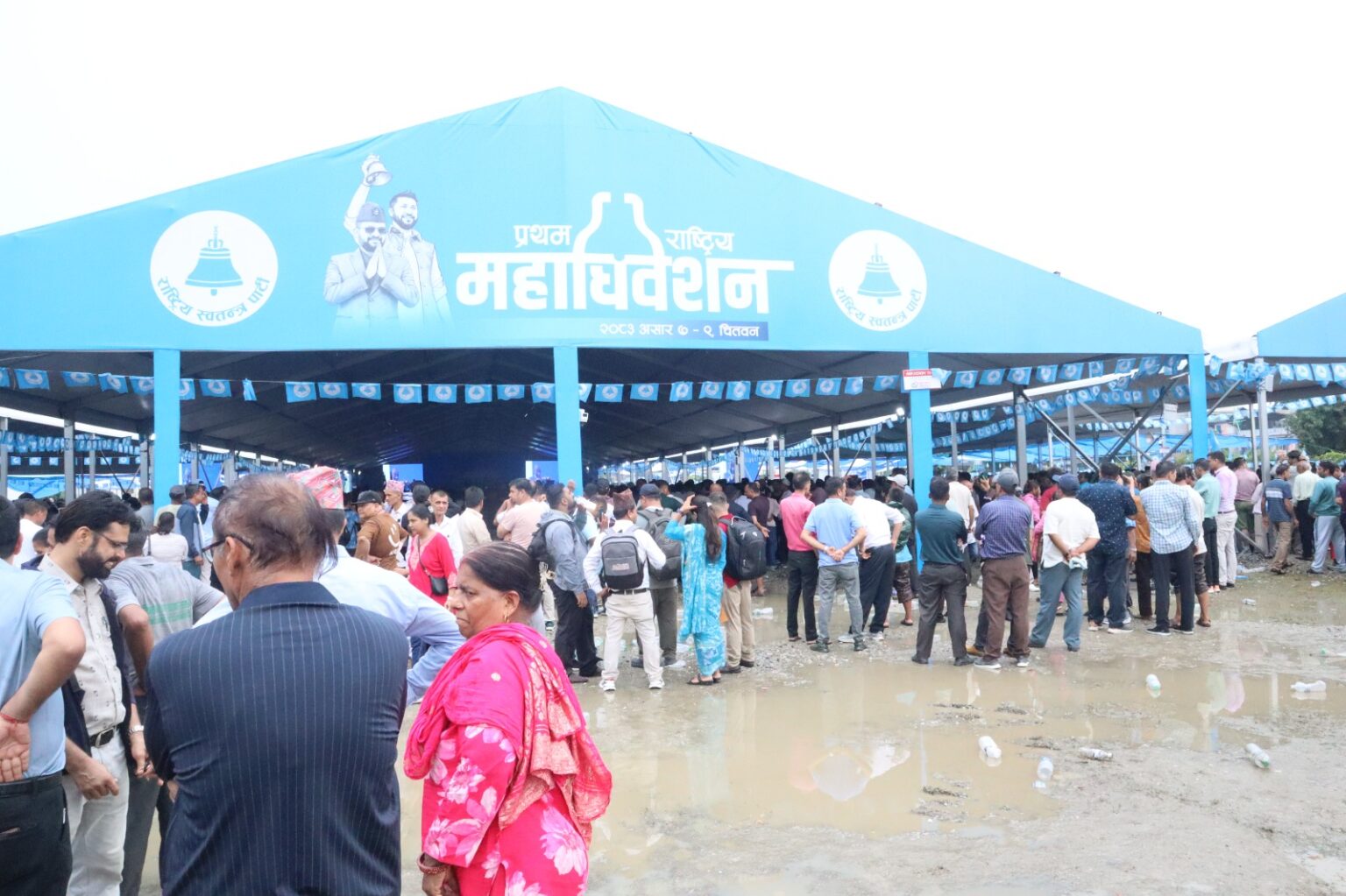
Increased activity at the exhibition center of the Chitwan Association of Industries in Bharatpur on Monday, ahead of the closed session of the ongoing first general convention of the Rastriya Swatantra Party (RSP) in Chitwan. Photo: Pradeep Raj Wanta/RSS
Subsequent amendments continuously expanded the Chairman’s authority. The third amendment of the statute, which is currently in effect, provides for a 129-member Central Committee. It dictates that one Chairman and 99 central committee members are to be elected through the general convention. While the previous provision required seven members from each province, the current one requires five. Additionally, the Chairman nominates 22 members, and the Chairmans of the seven provinces serve as ex-officio members. The Chairman also holds the authority to remove nominated members from their posts.
Furthermore, that statute provides for 12 office bearers: one Chairman, three Vice Chairs, one General Secretary, three Joint General Secretaries, one Treasurer, one Joint Treasurer, one Spokesperson, and one Joint Spokesperson. Among them, four positions—the Treasurer, Joint Treasurer, Spokesperson, and Joint Spokesperson (representing one-third of the office bearers)—are nominated by the Chairman. This structure places the party’s financial, information, and communication sectors under the direct influence of the Chairman.
Secretariat increases nomination authority further
The Statute Amendment Committee, formed under the leadership of Joint General Secretary Bipin Acharya to amend the statute during the first general convention, had initially proposed a 136-member Central Committee, including the Chairman.
In the proposed fourth amendment, the committee suggested that one Chairman and 99 central committee members be elected by the convention, the Chairman be allowed to nominate 29 members, and the seven provincial Chairs serve as ex-officio central committee members. Similarly, it proposed increasing the number of office bearers to 16, which would include one Chairman, three Vice Chairs, two General Secretaries, four Joint General Secretaries, one Spokesperson, three Joint Spokespersons, one Treasurer, and one Joint Treasurer. Out of the 16, nine office bearers would be chosen through elections, and six—one Spokesperson, three Joint Spokespersons, one Treasurer, and one Joint Treasurer—would be nominated by the Chairman.
However, the party secretariat was not satisfied with the Statute Amendment Committee’s proposal. A secretariat meeting held on June 18 decided to take a proposal to the general convention to expand the Central Committee to 158 members. In this structure, the number of members nominated by the Chairman has been set at 51.
The secretariat meeting also revised the committee’s proposal of 16 office bearers, increasing the number to 19. According to the secretariat’s decision, the proposed structure will include one Chairman, one Senior Leader, three Vice Chairs (including one woman), two General Secretaries, five Joint General Secretaries (including one woman), one Spokesperson, three Joint Spokespersons (including one woman), one Treasurer, and two Joint Treasurers (including one woman).
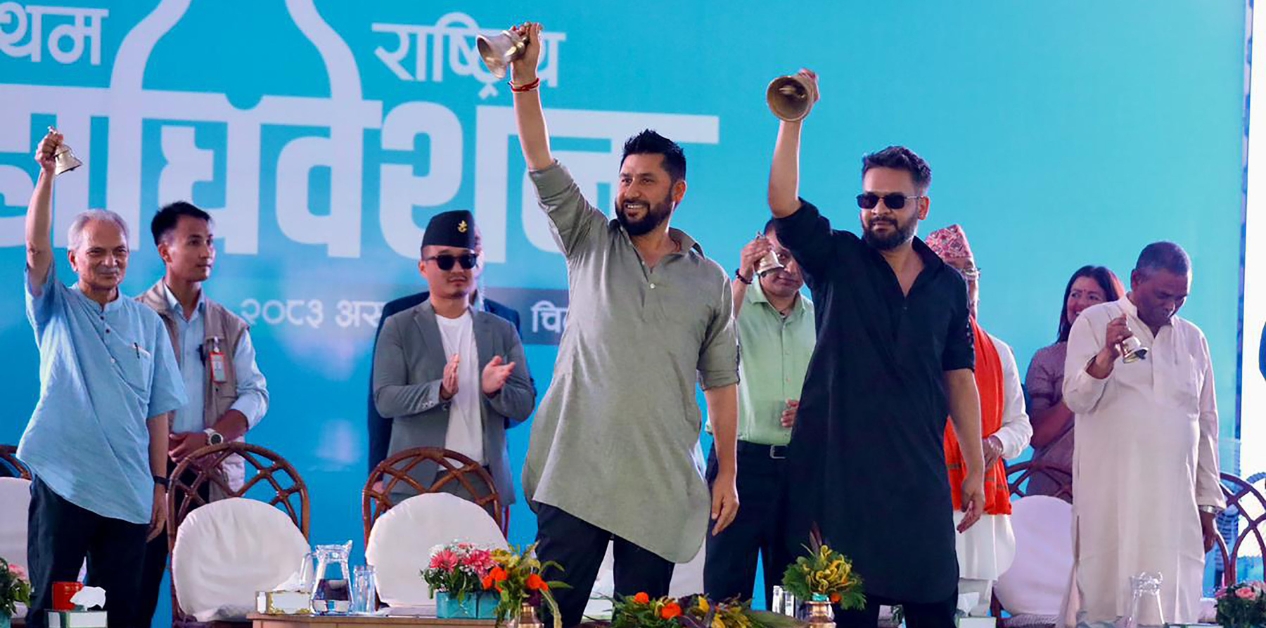
Chairman Rabi Lamichhane, Senior Leader Balendra Shah, and other leaders inaugurating the first general convention of the Rastriya Swatantra Party by ringing the bell. Photo: RSS
Among them, 11 office bearers—one Vice Chairman, one General Secretary, two Joint General Secretaries, one Spokesperson, three Joint Spokespersons, one Treasurer, and two Joint Treasurers—will be nominated by the Chairman. Consequently, roughly one-third of the Central Committee and nearly 58 percent of the office bearers will enter their positions through the Chairman’s nomination.
If the statute is amended according to this proposal, the RSP Chairman will become significantly more powerful.
Political analyst Prof. Krishna Pokharel states that looking at the RSP’s statute and recent decisions, it is clear that they are attempting to concentrate power in the hands of the Chairman. Such arrangements carry the risk of making leadership autocratic within political parties and jeopardizing internal democracy. “Looking at the activities and preparations so far, it appears to be intended for positive goals,” Pokharel says. “RSP must learn from the past and ensure power is not misused but utilized for good work.”
Inclusion tool or centralization of power?
RSP leaders, however, argue that granting such authority to the Chairman strengthens the party’s internal democracy. A central committee member explained that the nomination authority was given to the Chairman to prevent rising dissatisfaction among members who joined from various groups before the elections.
Prior to the elections, Balendra Shah’s group, a faction of the Bibeksheel Sajha Party, activists from the Tharuhat and Tharuwan movements, and some members of the Ujyaalo Nepal Party had merged into the RSP. Since members coming from these groups have less influence, their chances of being elected through the general convention are low.
The central committee member claimed that if these groups are not integrated into the Central Committee, internal dissatisfaction and factions could emerge. Therefore, the Chairman is being empowered to include those who fail to win elections.
The proposed RSP statute also includes a provision to induct the runner-up of the Chairman election into the Central Committee. RSP leaders have been maintaining that this provision is designed to prevent party splits.
The proposed fourth amendment introduces a clause under Section 22, Subsection 2(c) ensuring a position for the closest contender. It reads: ‘To strengthen internal democracy and maintain broad unity and balance within the party post-election, the closest contender who loses the chairman election but secures at least 10 percent of the total valid votes cast shall automatically become a member of the Central Committee.’
Claims of ensuring inclusivity
In the past, the RSP faced criticism for its lack of inclusivity in both its office-bearer lineup and the Central Committee. The proposed amendment, however, mandates an inclusive structure for selecting office bearers. According to this, 33 percent female representation will be guaranteed among the 99 members elected to the Central Committee. The proposed statute also outlines provisions to include other marginalized groups based on the principles of proportional representation.
Prakash Chandra Pariyar, a member of the Statute Amendment Committee, notes that if proportional representation is not fully achieved through standard elections as per the statute, it can be balanced via chairman nominations. He adds, “The nomination authority has been granted to the Chairman precisely to ensure all factions and groups are properly accommodated.”