Kathmandu
Thursday, June 25, 2026





The suspension of ANFA is not just about one election dispute. It is the outcome of years of governance failures, political interference, financial scrutiny and institutional conflict that now threaten the future of Nepali football.
KATHMANDU: All Nepal Football Association faces full FIFA suspension after months of conflict with the National Sports Council over delayed elections, leaving national teams, clubs and funding in limbo. The world body says government interference crossed a line it had warned about for months.
This is the first time FIFA has suspended ANFA’s membership outright, distinct from the funding freeze of 2021 to 2025 or the personal ban once imposed on former president Ganesh Thapa.
The action also follows ANFA officials being stopped at the airport before they could travel to the World Cup, adding to a year already marked by court battles, an unfinished election, and growing public frustration with Nepali football’s governance.
What exactly did FIFA decide on June 24, and what is ANFA?
The All Nepal Football Association is the body recognized by FIFA and the Asian Football Confederation as the sole governing authority for football in Nepal. It oversees the national men’s and women’s teams, domestic leagues such as the A Division, youth competitions, referee development, and Nepal’s relationship with regional and global football institutions.
On June 24, the FIFA Council Bureau decided to suspend ANFA’s membership with immediate effect. The decision was communicated to ANFA General Secretary Kiran Rai and was based on a finding that Nepal’s footballing affairs had suffered serious and repeated third party interference, in breach of FIFA’s own statutes governing the independence of member associations.
Suspension under FIFA rules is a severe administrative sanction, separate from any criminal proceeding, and it removes the association and everyone under its umbrella from FIFA’s family of competitions and benefits until the underlying problem is resolved and the suspension is formally lifted by the FIFA Council.
Why exactly did FIFA suspend ANFA this time?
FIFA’s stated reason centers on Article 13 of its statutes, which requires every member association to manage its own affairs without outside interference, particularly from government bodies. Nepal’s National Sports Council suspended ANFA’s elected leadership in March 2026 in the middle of an election process that FIFA and the AFC had already cleared.
Even after the council formally revoked that suspension in May, FIFA concluded that several underlying directives from March, including instructions to amend ANFA’s statutes and to hold fresh district level elections before the federation could proceed, remained in force and continued to shape ANFA’s internal affairs.
FIFA and the AFC had given Nepali authorities a series of deadlines through April and June to fully withdraw every trace of that interference. When the response by the council’s June 11 deadline was judged insufficient, the matter went to the FIFA Council Bureau, which concluded that the pattern of government involvement amounted to a serious and unresolved violation, triggering the suspension rather than another warning.
What is the immediate practical effect of the suspension on Nepali football?
A FIFA suspension cuts Nepal off from the entire formal structure of international football until it is lifted. The senior men’s and women’s national teams, along with youth sides, cannot play official matches, friendlies, or qualifiers against any other FIFA member, since other associations are themselves barred from engaging with a suspended body.
Nepali clubs lose access to AFC club competitions and cross border friendlies. Development funding and grant disbursements from FIFA and the AFC, which support coaching programs, youth academies, referee training, and infrastructure projects, are frozen for the duration of the suspension.
Domestically, any tournament organized by ANFA loses its standing as an internationally recognized competition, which complicates sponsorship, broadcasting, and player contracts tied to official status.
Football administrators, coaches, and officials affiliated with ANFA also lose any standing to take part in FIFA or AFC committees, courses, or congresses, effectively isolating Nepali football from the sport’s global decision making structures until the dispute is resolved.
Has FIFA ever suspended ANFA’s membership outright before this?
No. Nepali football has experienced serious sanctions in the past, but none amounted to a full suspension of ANFA as an organization until June 24, 2026. Between 2021 and mid 2025, FIFA placed ANFA under a financial control mechanism that restricted direct access to its grants because of concerns over irregular cash movements and weak transparency, but the association itself remained a recognized member throughout that period and continued fielding national teams.
FIFA and the AFC issued a joint warning on April 5 giving the council seven days to reverse course, and tension persisted through April with further FIFA Council level warnings.
Separately, in 2015, FIFA’s ethics committee banned individual office holders, most notably then president Ganesh Thapa, from all football activity over corruption findings, yet ANFA as an institution was not suspended at that time and matches continued.
Domestic commentators and analysts covering the March 2026 crisis specifically noted that an actual FIFA suspension of the association would be unprecedented in the federation’s often turbulent history, underlining how unusual and consequential the June 24 decision is compared to anything Nepali football has faced before.
What is the National Sports Council, and why does it keep clashing with ANFA?
The National Sports Council is the Nepali government’s apex authority for sports administration, established to regulate, fund, and coordinate national sports associations under the National Sports Development Act of 2020 and its accompanying regulations.
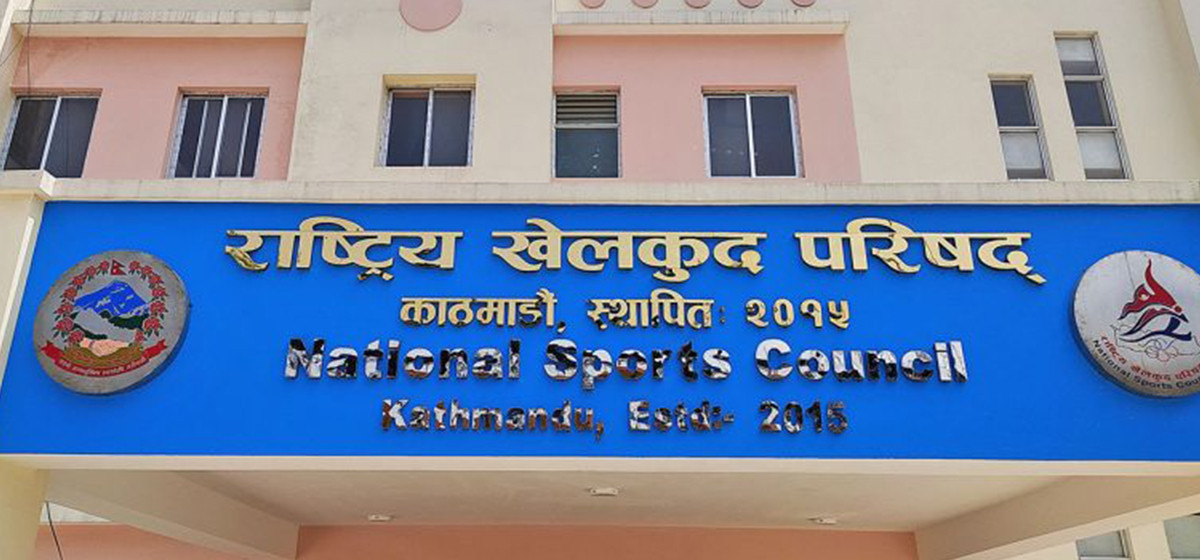
It has statutory power to direct federations on governance matters, including statute amendments and compliance timelines, and it can suspend an association for up to three months if it believes directives are being ignored. ANFA, like other Nepali sports bodies, depends partly on government recognition and facilities, yet it answers internationally to FIFA and the AFC, which require member associations to operate autonomously without state interference in elections or daily management.
This dual accountability creates a structural tension. The council tends to view itself as the legitimate domestic regulator entitled to enforce national law, while ANFA leadership argues that any attempt to dictate its election timing, internal statutes, or committee decisions amounts to interference that could itself trigger FIFA sanctions, leaving Nepali football repeatedly caught between two authorities that do not fully recognize each other’s reach.
Can you walk through the timeline of the 2026 crisis that led to the suspension?
The dispute traces back to December 2025, when ANFA’s executive committee, led by President Pankaj Bikram Nembang, decided to hold its election nearly three months early, originally scheduling it for February 2026 and later for March 27 in Jhapa, ahead of the committee’s term ending on June 18.
FIFA and the AFC had endorsed this plan. The National Sports Council objected, insisting on statute amendments and district level elections first, and on March 25 it suspended ANFA’s entire executive committee for three months under Section 29 of the Sports Development Act, prompting ANFA to postpone the Jhapa vote.
In its formal notice, the council accused ANFA of disregarding repeated instructions not to proceed with its early election and congress without prior approval, and of treating itself as fully autonomous while placing FIFA and AFC directives above domestic law.
FIFA and the AFC issued a joint warning on April 5 giving the council seven days to reverse course, and tension persisted through April with further FIFA Council level warnings.
In mid May, under ministerial pressure, the council revoked its suspension, allowing national teams to compete again, yet FIFA and the AFC said in a June 5 letter that other March directives remained unresolved, setting a June 11 deadline that ultimately led to the June 24 suspension.
What legal basis did the National Sports Council cite when it suspended ANFA in March?
The council relied on Section 29 of Nepal’s Sports Development Act, 2020, and its accompanying regulations from 2022. Under Section 29, the council can suspend any registered sports association for up to three months if that body fails to comply with directives issued under Section 28, which requires associations to follow conditions set by the Ministry of Youth and Sports and the council itself.
In its formal notice, the council accused ANFA of disregarding repeated instructions not to proceed with its early election and congress without prior approval, and of treating itself as fully autonomous while placing FIFA and AFC directives above domestic law.
It also directed ANFA to amend its statutes for consistency with other national federations, explicitly reference the Sports Development Act and its regulations, and guarantee elections every four years at all levels.
ANFA’s defense was that it had complied with Nepali law as an autonomous body and had already secured written clearance for its election timeline from both FIFA and the AFC before the council intervened.
How did FIFA and the AFC respond once the National Sports Council suspended ANFA in March?
FIFA and the AFC reacted quickly because the council’s move directly affected an election process the two bodies had already cleared. On April 5, they sent a joint letter to ANFA’s general secretary describing the council’s three month suspension as a clear case of third party interference under FIFA’s statutes, and they gave Nepali authorities seven days to revoke the decision and confirm in writing that ANFA’s electoral process could resume from where it had been halted.
The letter, signed jointly by FIFA’s chief member association officer and an AFC deputy general secretary, warned that failure to comply within that window would see the matter referred straight to the FIFA Council for ANFA’s immediate suspension, which would bar Nepal from all international competition, freeze development funding, and stop other member associations from engaging with ANFA in any capacity, including friendlies.
Through April, FIFA and the AFC continued pressing the issue in further correspondence and at least one virtual meeting with Nepali officials, repeatedly stressing that the council’s involvement in ANFA’s internal election timetable was unacceptable under global football governance rules.
The council eventually lifted its suspension in May, so why did the crisis continue toward a full ban?
The council’s reversal in mid May, ordered at a ministerial level meeting after weeks of pressure, removed the immediate three month suspension and allowed Nepal’s women’s team to travel for the SAFF Women’s Championship. However, FIFA and the AFC made clear in a letter dated June 5 that lifting the suspension itself was not enough.
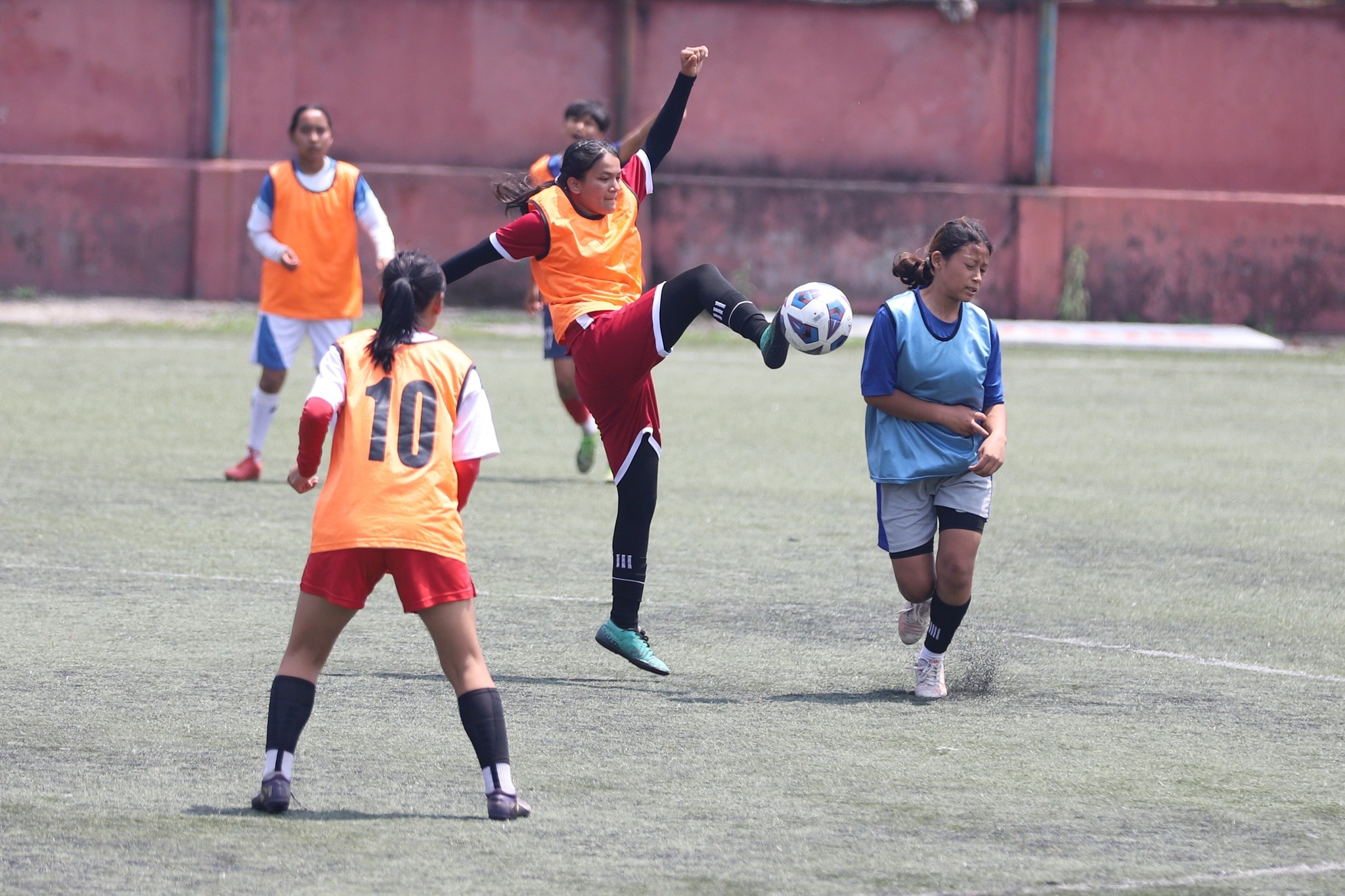
U-20 Women’s National Team Selection. Photo Courtesy: ANFA
They identified that several specific instructions issued by the council on March 25, including demands to amend ANFA’s statutes and to first complete district level association elections before any national poll, had never been formally withdrawn and continued to shape how ANFA was expected to conduct its affairs.
From FIFA’s perspective, partial relief did not equal full restoration of ANFA’s autonomy, since the underlying directives still represented government influence over an area that should belong solely to the federation and its FIFA approved processes.
FIFA set a June 11 deadline for written confirmation that every element of the March decision had been revoked, and when that confirmation either did not arrive or was judged insufficient, the dispute escalated to the FIFA Council Bureau, culminating in the June 24 suspension.
What has been the Nepali government’s overall role and position throughout this dispute?
The government’s role has run through two channels that have not always moved in step. The National Sports Council, operating under the Ministry of Youth and Sports framework and the Sports Development Act, has positioned itself as the legitimate domestic regulator entitled to demand statutory compliance, uniform rules across federations, and orderly elections, and it justified its March suspension on those grounds.
At the same time, ministerial level intervention in May, led by the sports minister at the time, ordered the council to revoke the suspension once it became clear that continued action risked a FIFA ban that would have jeopardized Nepal’s women’s team ahead of an international tournament, showing that political leadership above the council was willing to step in for damage control.
Their travel was stopped because of the unresolved financial investigation and the broader watch list affecting numerous ANFA figures, not because of any World Cup specific restriction imposed by FIFA or the host nations.
Separately, immigration authorities under the home ministry’s jurisdiction acted independently in June by stopping senior ANFA officials from leaving the country, citing an ongoing financial investigation, which added another layer of state involvement entirely apart from the council’s election dispute.
Collectively, these actions reflect a government apparatus that has often appeared uncoordinated, with different arms applying pressure on ANFA for different reasons even as the country faced an international suspension threat.
What happened when ANFA officials were stopped at the airport before the World Cup?
On June 9, 2026, ANFA President Pankaj Bikram Nembang and General Secretary Kiran Rai were prevented from boarding a flight at Tribhuvan International Airport in Kathmandu as they prepared to travel toward Mexico and the United States for events connected to the FIFA World Cup 2026 opening period.
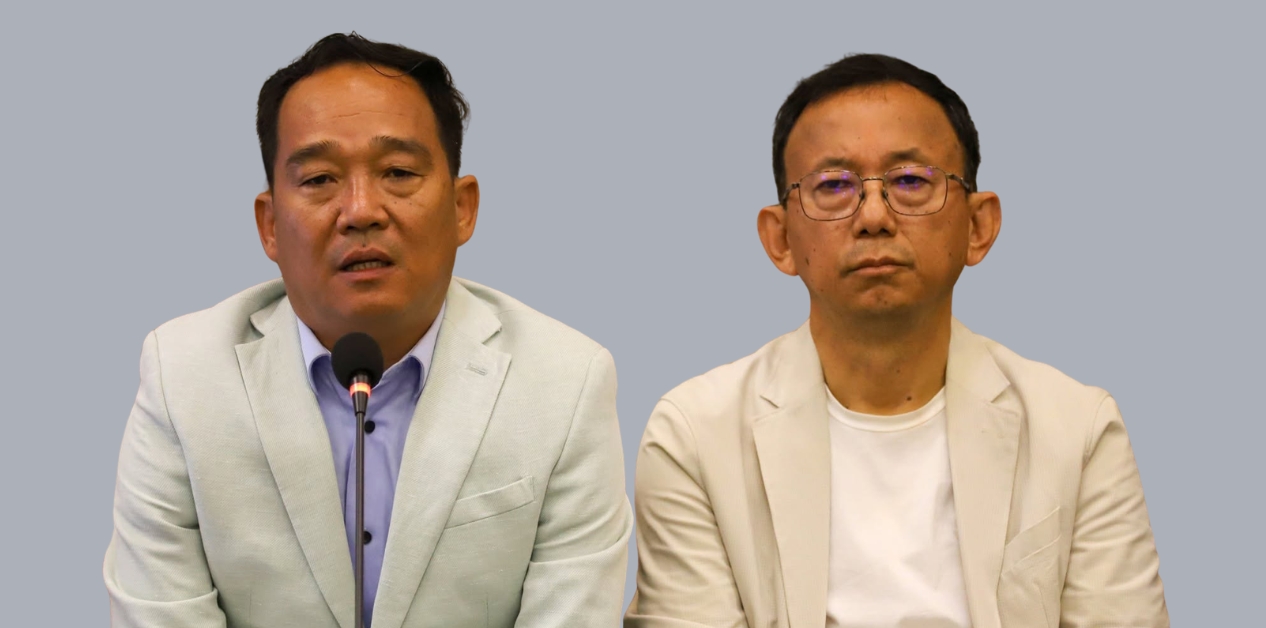
Respectively, ANFA General Secretary Kiran Rai and President Pankaj Bikram Nembang. Photo Source: ANFA’s Facebook
Immigration officials reportedly halted the pair, along with several other ANFA office bearers and staff who were said to be on a wider travel restriction list, citing an active investigation into financial irregularities at the association. The exact scope and legal basis of that watch list was not made fully public at the time, and authorities offered little detailed explanation beyond confirming the officials were not allowed to depart.
The incident drew international attention because it coincided almost exactly with the start of the World Cup, turning what might otherwise have been a routine administrative travel restriction into a visible symbol of the deeper governance troubles already engulfing Nepali football just as the global game’s biggest event was getting underway.
Why could Nepali football officials not attend the 2026 World Cup as planned?
Nepal’s national team did not qualify for the expanded 2026 World Cup finals, so the trip blocked at the airport was never about playing in the tournament itself.
Instead, the two senior ANFA officials had planned to attend sideline activities tied to the World Cup, the kind of meetings, seminars, and networking events that football administrators from non qualifying nations often use to build partnerships, pursue development funding, and stay connected with global football governance during a tournament that draws nearly every major stakeholder in the sport.
The action also follows ANFA officials being stopped at the airport before they could travel to the World Cup, adding to a year already marked by court battles, an unfinished election, and growing public frustration with Nepali football’s governance.
Their travel was stopped because of the unresolved financial investigation and the broader watch list affecting numerous ANFA figures, not because of any World Cup specific restriction imposed by FIFA or the host nations.
The episode meant Nepal had no senior football administrators present at one of the sport’s largest gatherings during a period when the AFC and FIFA were already scrutinizing the country’s governance, reinforcing a perception that Nepali football was being squeezed simultaneously by domestic regulators and by its own international standing.
Who is Ganesh Thapa, and why does his name keep surfacing in ANFA’s history of controversy?
Ganesh Thapa is a former Nepali international striker who captained the national team in the 1980s and later became one of the most powerful administrators in Asian football, serving as ANFA president from 1995 for roughly two decades, as president of the South Asian Football Federation, and as a vice president of the Asian Football Confederation.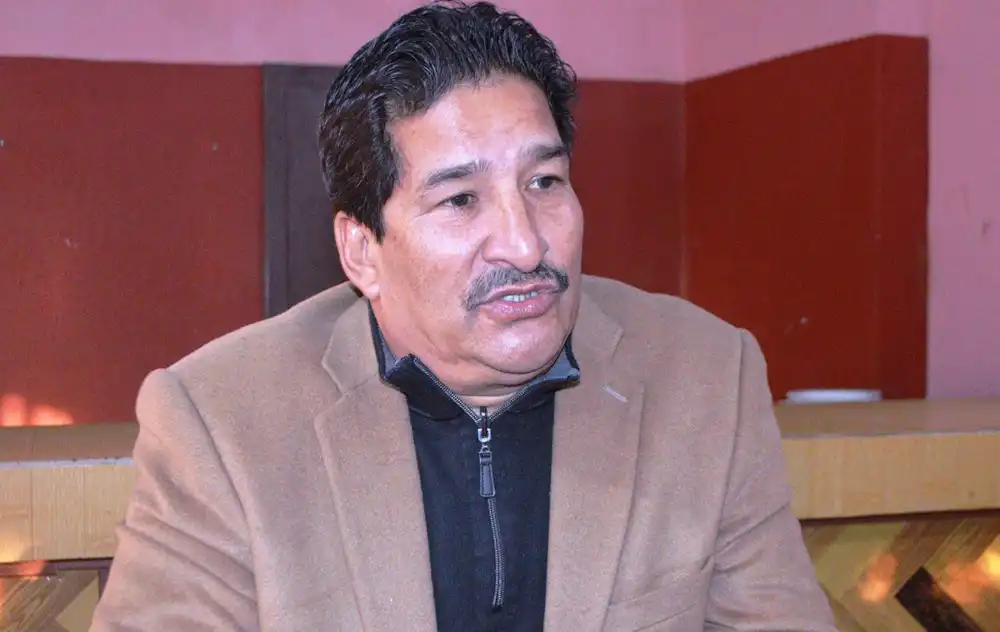
His long tenure coincided with periods of relative international success for Nepali football but also with growing allegations of financial mismanagement and personal enrichment at ANFA’s expense. He stepped down temporarily in 2014 under pressure from parliament’s Public Accounts Committee, which had asked Nepal’s anti corruption body to examine claims of financial irregularities raised by ANFA’s own vice presidents.
Although that domestic probe was eventually shelved for lack of sufficient evidence, a parallel and far more consequential international investigation by FIFA’s ethics committee was already underway, and it would ultimately end his football career through one of the most significant sanctions ever imposed on a Nepali sports official.
What were the corruption accusations against Ganesh Thapa?
FIFA’s ethics committee investigation, which drew on a forensic audit code named Project Play and on broader reporting about corruption inside the Asian Football Confederation, found that Thapa had solicited and accepted cash payments from another senior football official in connection with the 2009 and 2011 elections to FIFA’s Executive Committee held at AFC congresses.
Investigators concluded these payments benefited Thapa personally and his family, rather than reflecting any legitimate transaction. Separately, ANFA itself had been the subject of an unsatisfactory external financial audit covering 2012, which uncovered unexplained cash movements, and Thapa was accused of keeping the existence of that FIFA ordered audit hidden from most of his own executive committee, including the vice presidents who later complained that they only learned about it through international media reporting rather than from their own president.
These combined findings painted a picture of a long serving administrator who used his control over ANFA’s finances and his influence within continental football politics for private gain while limiting internal oversight of the association’s accounts.
What was FIFA’s verdict against Thapa, and what happened immediately afterward?
In November 2015, the adjudicatory chamber of FIFA’s independent ethics committee banned Ganesh Thapa for ten years from all football related activity at national and international level and fined him twenty thousand Swiss francs.
The committee found him guilty of violating several articles of the FIFA Code of Ethics covering general conduct, loyalty, disclosure obligations, conflicts of interest, the acceptance of gifts, and bribery and corruption. FIFA said the sanction took effect immediately.
Thapa publicly rejected the findings, stating he did not believe justice had been served and indicating he intended to seek the full written reasoning before deciding whether to appeal, with the possibility of taking the case to the Court of Arbitration for Sport if necessary.
He did appeal internally to FIFA’s own appeal committee, but that body rejected his challenge and only partially adjusted the original ruling, leaving the ten year ban substantially intact.
With the presidency and vice presidency effectively vacant, Nepali football moved toward fresh elections the following year under court supervision, while Thapa’s ban formally ran from April 2015 through April 2025.
What happened when Thapa’s ban expired in 2025, and why did it lead to another legal fight?
When the ten year FIFA ban reached its end on April 15, 2025, Thapa announced publicly that he had been cleared and intended to return to football related activity. However, ANFA’s own Disciplinary Committee and Ethics Committee, then under the leadership of Pankaj Bikram Nembang’s executive, issued fresh decisions shortly afterward invoking a provision of ANFA’s own statute to bar Thapa from any future involvement in the association’s affairs, separate from the FIFA sanction that had already run its course.
Thapa challenged this new domestic restriction by filing a writ petition at the Patan High Court in May 2025, arguing that ANFA was effectively trying to extend a punishment for the same conduct after FIFA’s own sanction period had ended.
In August 2025, the court ruled in his favor, finding that ANFA’s statute provision was meant for serious criminal matters with formal legal sentencing and could not be reused to indefinitely extend a FIFA disciplinary ban that had already concluded.
The court ordered ANFA not to obstruct his participation, though ANFA reportedly still blocked him from entering its General Assembly even after the ruling, and it sent a notice to the club that had nominated him as a representative, suggesting resistance to his return continued informally even after the legal question was settled.
What was the four year FIFA funding restriction on ANFA between 2021 and 2025?
Separate from the Thapa case, FIFA imposed direct financial controls on ANFA in March 2021 after identifying concerns about mismanagement and a lack of transparency in how the association handled its grants. Rather than suspending ANFA’s membership, FIFA chose a narrower remedy, withholding ANFA’s direct access to its funding and instead controlling and monitoring how that money was disbursed for development programs.
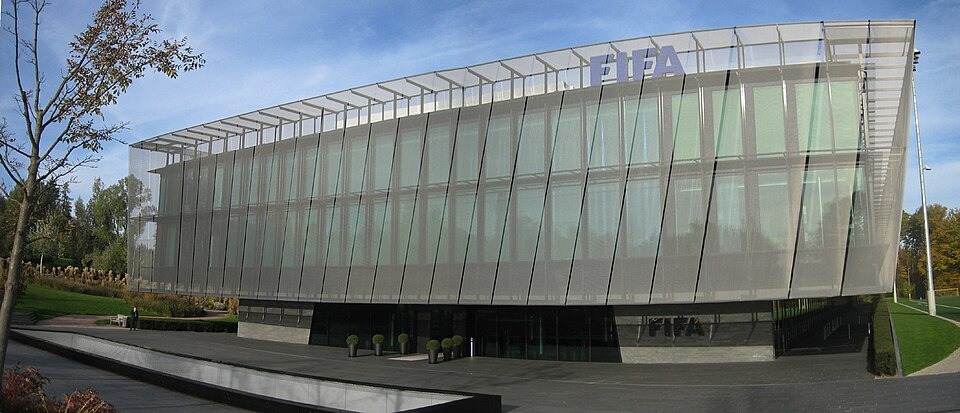
FIFA Headquarters in Zurich. Photo credit: Wikimedia Commons
This arrangement lasted four years, during which Nepali football continued to compete internationally but operated under close financial supervision from Zurich. In July 2025, FIFA’s Governance, Audit and Compliance Committee formally lifted these restrictions, citing improved financial transparency under the Nembang led leadership and crediting reforms that brought ANFA’s accounting closer to international standards.
ANFA welcomed the decision as a major milestone, noting it had also been named the AFC’s Member Association of the Year in the gold category in October 2024, and used the moment to outline plans for grassroots programs, youth leagues, and a long discussed stadium project, ironically just months before the same leadership found itself at the center of the far more serious suspension crisis of 2026.
Beyond Thapa and the funding freeze, what other major controversies has ANFA faced over the years?
Nepali football’s governance troubles extend well beyond any single president or single sanction. The country has repeatedly seen court intervention in football administration, with the Patan High Court called upon multiple times, including episodes clearing the way for elections in 2016 and, more recently, issuing interim orders in early 2026 that temporarily halted ANFA’s election process entirely, reflecting how often disputes inside the federation end up being settled, or further complicated, by the judiciary rather than by football authorities themselves.
ANFA has also faced recurring complaints from players and clubs over delayed leagues, with the National League and the Martyr’s Memorial Women’s League postponed multiple times in early 2026 due to visa issues, scheduling conflicts, and administrative shortcomings, prompting protests from the Nepal Football Players Association and hunger strikes by A Division clubs.
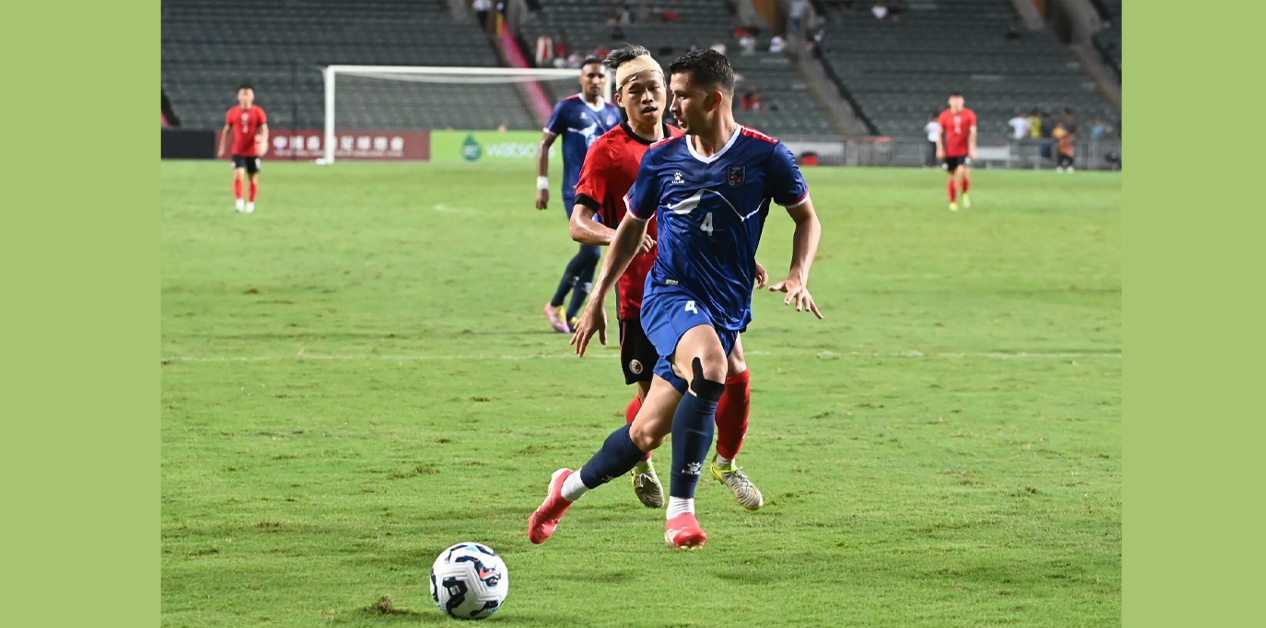
Friendly match between Hong Kong and Nepal. Photo: Hong Kong Football Association
There have also been long standing tensions between ANFA and various sports ministries over stadium access and recognition of tournaments. Taken together, these episodes show a pattern of chronic institutional instability in which leadership disputes, legal challenges, and operational failures have repeatedly undermined the consistent development of the sport at the domestic level.
What are the practical consequences of the June 24 suspension for Nepali players, coaches, and clubs?
The people most immediately affected are the athletes and staff who depend on a functioning, internationally recognized football structure for their livelihoods and careers. With the national teams unable to play official internationals, players lose match opportunities that are often central to attracting interest from clubs abroad, while younger players lose access to youth team call ups that form a pipeline toward senior football.
Domestic clubs lose any prospect of continental competition through the AFC and may also see their own leagues lose international recognition, which can affect sponsorship deals and broadcasting arrangements that are often tied to a competition’s official standing.
Coaches and referees lose access to FIFA and AFC accredited courses and assignments that are normally important for career progression and certification.
Financially, frozen development funding threatens academy programs, grassroots tournaments, and facility upgrades that rely on FIFA support, while clubs and stadium operators tied to matchday revenue face further losses on top of the disruption already caused by the months of postponed leagues earlier in 2026, compounding a difficult period for the sport’s broader economic ecosystem in Nepal.
What needs to happen for FIFA to lift the suspension, and what does the outlook look like?
FIFA suspensions of this kind are generally lifted once the federation demonstrates, to FIFA’s satisfaction, that the third party interference behind the sanction has been fully and verifiably removed and that the association can resume normal, autonomous operations, including completing any interrupted election process.
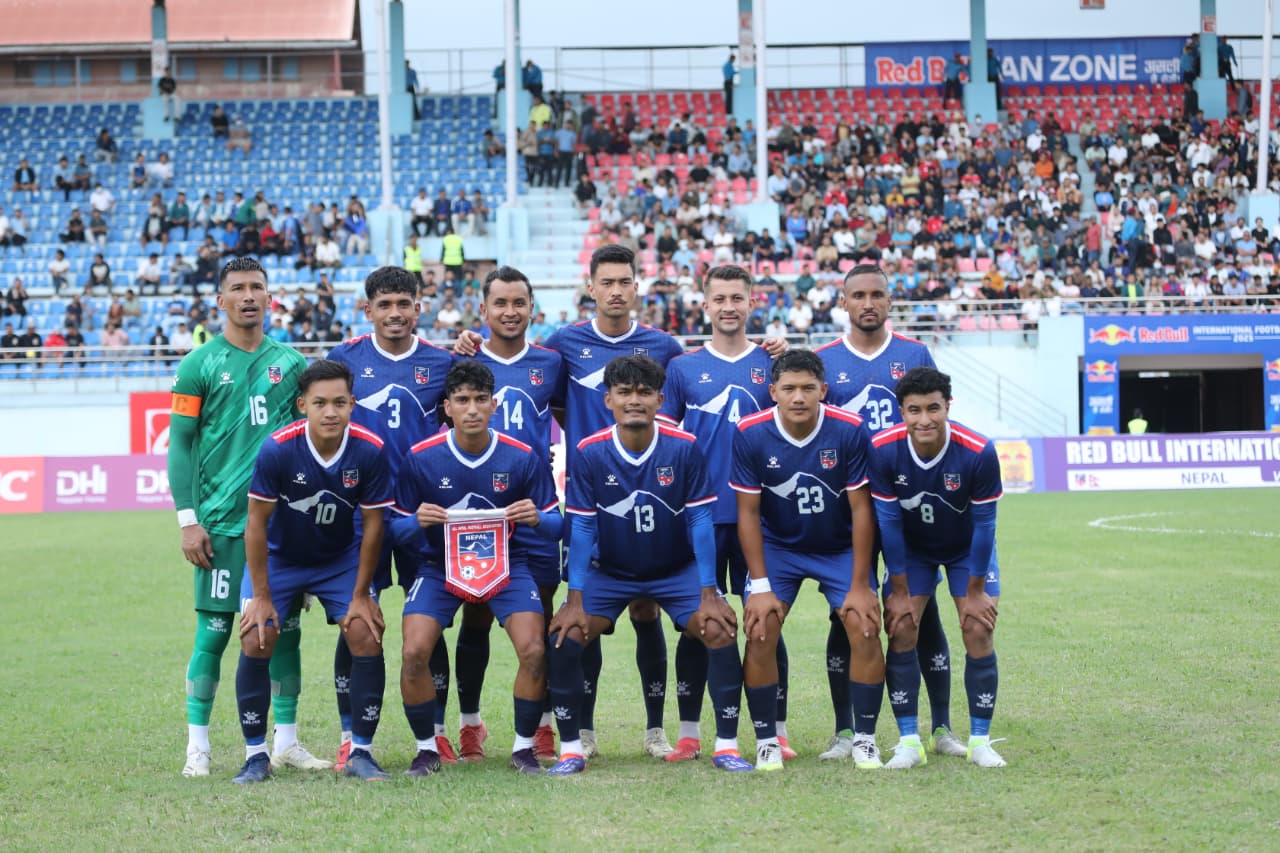
Friendly match between Nepal and Bangladesh. Photo: National Sports Council
In Nepal’s case, that would likely require the National Sports Council and any other involved government bodies to formally and unambiguously withdraw every directive connected to the March 2026 decision, including the disputed statute amendment requirements and district election preconditions that FIFA said remained unresolved even after the council’s May reversal, followed by written confirmation acceptable to FIFA and the AFC.
Given how often earlier deadlines in this saga were missed or only partially met, resolution may take considerable time and renewed negotiation between the football authorities, the sports ministry, and ANFA’s leadership. Analysts and former officials have already warned that prolonged isolation could cause lasting damage to talent development, sponsorship confidence, and Nepal’s regional standing in South Asian football.
The episode also leaves open questions about accountability for the unresolved financial investigation linked to the airport travel restrictions, meaning even a lifted suspension may not fully settle the broader governance crisis surrounding ANFA.