Kathmandu
Thursday, June 25, 2026





While the world is celebrating the FIFA World Cup, Nepali football has fallen under a FIFA suspension.
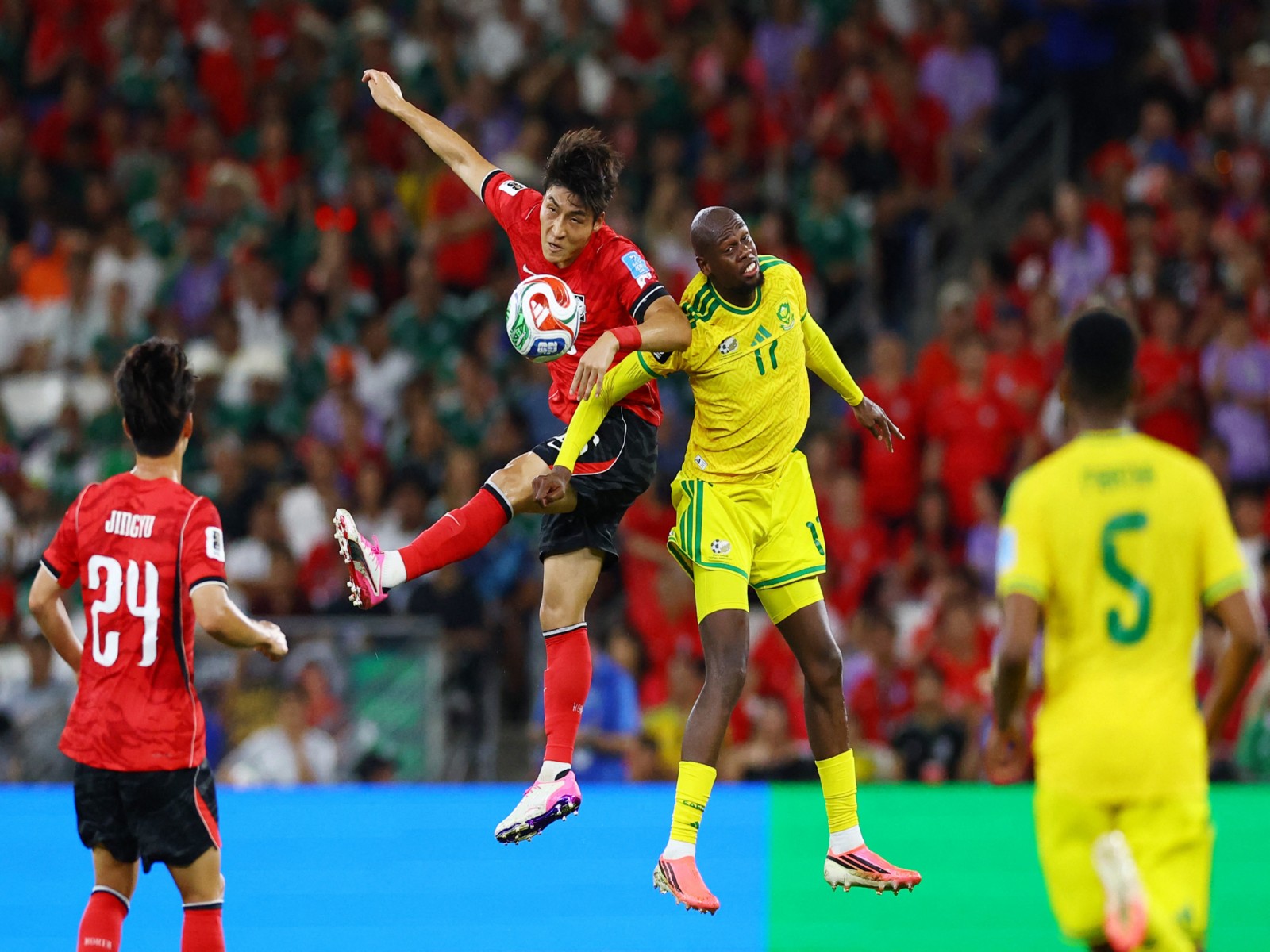
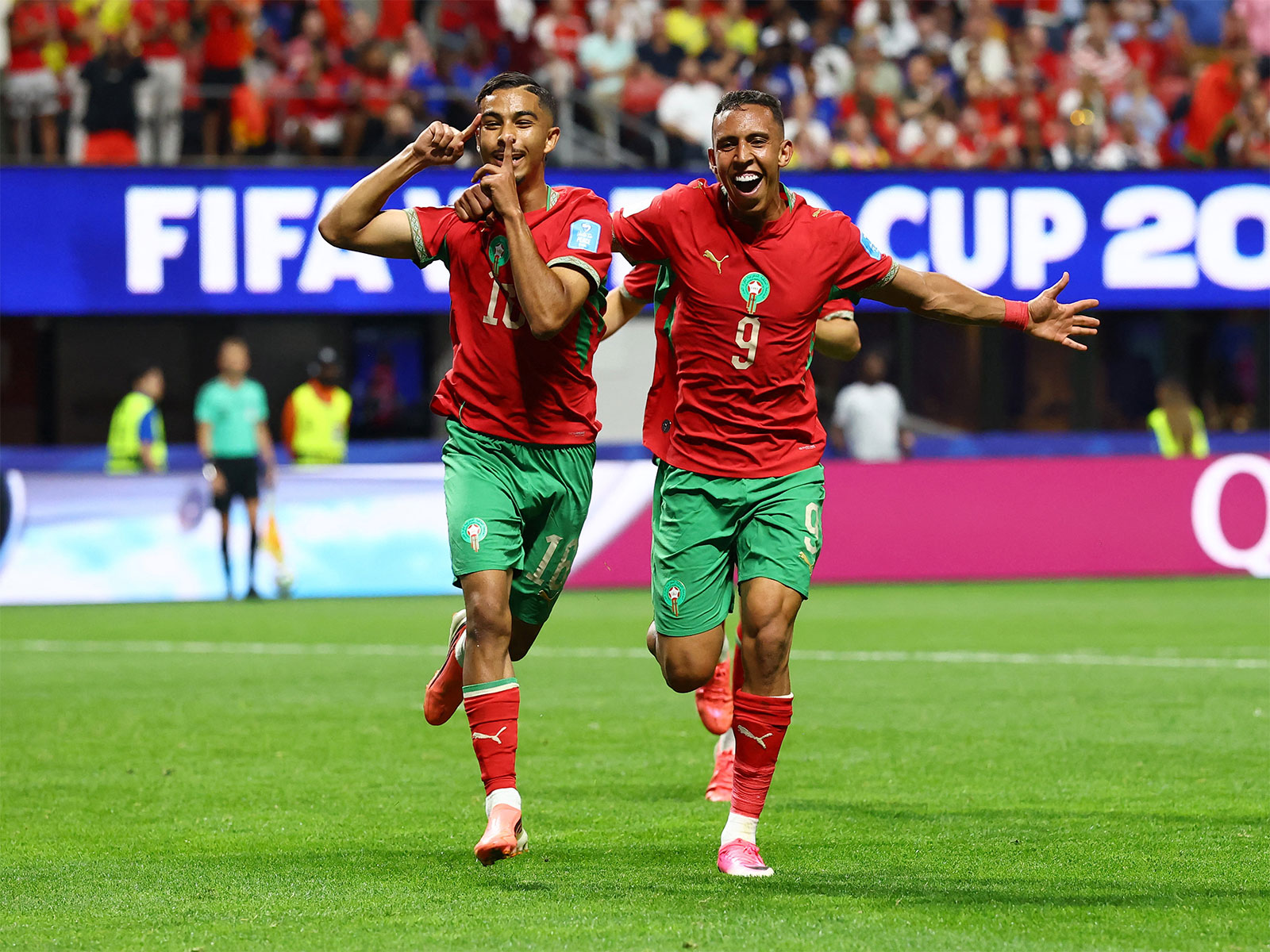
KATHMANDU: In the ongoing World Cup, the equalizer scored by Central Asian nation Uzbekistan’s Abbosbek Fayzullaev against South American nation Colombia on June 18, 2026, was not merely a single point added to the scoreboard. It was the first-ever World Cup goal of a dream they had been harboring for more than three decades.
Following the collapse of the Soviet Union in 1991, an independent Uzbekistan secured its spot in this World Cup for the first time after seven qualification struggles. Along with them, another Asian nation, Jordan, has also made its debut on the world stage. Therefore, supporters of these two nations are celebrating this World Cup moment as a national festival.
But where is the football of Nepal, which once competed alongside Uzbekistan and Jordan? In the context of the World Cup, this is the very question currently unsettling us.
However, just a few hours before the publication of this news, information has arrived: the International Federation of Association Football (FIFA) has suspended the All Nepal Football Association (ANFA). With this, Nepal will neither receive any assistance from FIFA nor will it be allowed to play any international matches. Football activities in the country will virtually drop to zero.
FIFA has cited third-party interference as the reason for this, pointing specifically to the National Sports Council (NSC). In straightforward terms, FIFA has rejected the recent government meddling in ANFA’s activities.
Why the chaos?
Had activities proceeded according to ANFA’s plan, the atmosphere of Nepali football would be entirely different by now. The National League would have already concluded. Along with this, more than 40 players from 17 clubs would have been watching the World Cup currently being hosted in the United States, Mexico, and Canada, while preparing for the Nepal Super League (NSL) scheduled to begin this coming August/September. ANFA officials would also have been preparing for elections for the future leadership amidst the excitement of the World Cup.
Instead, the ANFA Complex in Satdobato, Lalitpur, lies deserted. ANFA President Pankaj Bikram Nembang and General Secretary Kiran Rai, along with 24 officials who were supposed to attend the World Cup, are now forced to content themselves with watching the matches on their television screens at home.
Earlier, on June 9, under pressure from the NSC, the government humiliatingly prevented President Nembang and General Secretary Rai from attending the opening ceremony of the FIFA World Cup. Immigration officials at Tribhuvan International Airport turned them back in a degrading manner, stating they did not have permission for foreign travel. The reason behind this was the clash between ANFA and the supreme body of Nepali sports, the National Sports Council (NSC).
In the general assembly held at Park Village Resort in Budhanilkantha on June 20, 2022, Nembang was elected to lead ANFA by defeating Karma Tsering Sherpa by a margin of 6 votes. In the preceding term, Sherpa was the president and Nembang was the senior vice-president. The four-year term of the executive committee led by Nembang was set to expire on June 20.
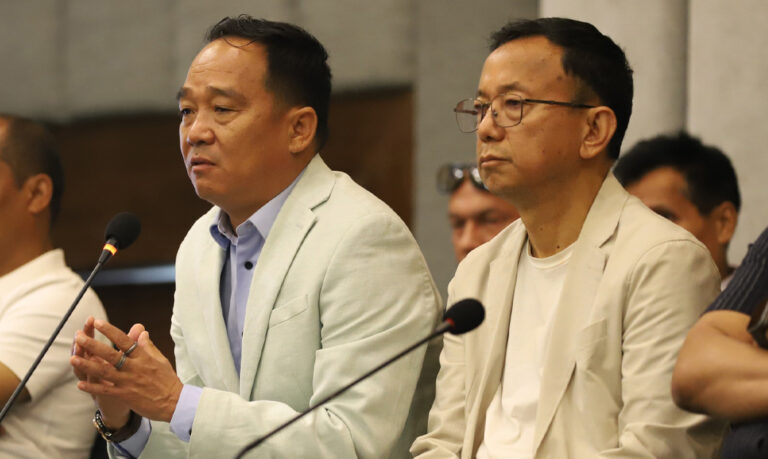
ANFA General Secretary Kiran Rai and President Pankaj Bikram Nembang (left). Photo: ANFA
However, with five months remaining in their term, on December 31, 2025, the ANFA executive committee meeting decided to hold early elections in Jhapa on February 11, 2026. According to ANFA General Secretary Rai, this decision was made because a majority of the executive committee members brought forward a proposal to hold early elections. “Stating that it had been difficult to work since the new executive committee took charge, the majority of members proposed going to elections before the completion of the four-year term. The meeting approved that proposal,” Rai told Nepalnews.
Indeed, Senior Vice-President Bir Bahadur Khadka, Vice-President Virat Jung Shahi, central committee members Rabin Chand and Rupesh Adhikari, among others, had been pressuring for immediate elections. They leveled allegations such as apathy toward sensitive issues, disregard for stakeholders, weaknesses in conducting leagues, failure in the effective management of international tournaments, financial opacity, and a lack of player incentives.
All these circumstances pushed President Nembang toward holding early elections. However, this very decision led to the downfall of the ANFA leadership.
An ANFA executive committee meeting held on March 24–25, 2025, regarding the election of the upcoming executive committee (2026–2030), had decided to hold tier-by-tier elections for member associations followed by the central election. This was subsequently endorsed by the general assembly held in Dhulikhel, Kavre, on May 9, 2025. ANFA Central Committee Member Rupesh Adhikari states that when the leadership tried to move forward without implementing that decision, some executive committee members approached the NSC and the court, leading to ANFA being suspended for nearly two months. “It is natural for dissatisfaction to arise when you try to bypass the decisions of the general assembly,” he says.
Most recently, the ANFA elections were announced to be held on March 27, 2026. However, the NSC cautioned ANFA, stating that prior approval had not been obtained for any of these processes. Through a letter sent on January 6, 2026, the NSC gave clear directives that ANFA’s statute must be amended in accordance with the National Sports Development Act, 2020 and its Regulations, 2022. The letter mentioned that definitions, the preamble, the structure, and electoral provisions within ANFA’s statute must be modified according to prevailing laws. Furthermore, it stipulated that provisions requiring elections to be completed every four years through a democratic process, holding the general assembly within three months of the end of the fiscal year, and obtaining Council approval prior to elections must be integrated into the statute itself.
Similarly, the NSC emphasized that the structure of provincial and district associations must be reorganized according to the Act to ensure representation through tier-by-tier elections, the names of provinces must be explicitly mentioned, and all necessary amendments must be made per prevailing laws.
ANFA, on the other hand, maintained its stance that prior approval from the NSC was unnecessary, claiming it is an autonomous body operating under the guidance of the supreme bodies of football, FIFA and the Asian Football Confederation (AFC). The dispute between the two parties escalated further over this issue.
When ANFA attempted to move forward with the election process unilaterally while ignoring its directives, the NSC took a stern approach. The NSC executive committee meeting on March 22, 2026, decided to demand a 24-hour clarification from ANFA. Accordingly, through a letter sent on March 23, 2026, the NSC demanded a clear explanation from ANFA as to why action should not be taken against it under Section 29 (2) of the National Sports Development Act, 2020.
The letter stated that any election conducted without approval, defying the Council’s directives and violating the regulations, would hold no legal validity. Additionally, it directed ANFA to submit a written explanation within 24 hours for defying the order to postpone the election within three days.
Before officially receiving the letter, the ANFA secretariat was closed, and officials departed for Jhapa to prepare for the election. Following this, on March 24, 2026, the NSC decided to suspend ANFA for three months, citing Section 29 (2) of the National Sports Development Act, 2020. The NSC lifted this suspension nearly one and a half months later, on May 14, 2026.
While both parties claimed the suspension was lifted unconditionally, Vikram Lama, President of the Nepal Football Players Association, claims otherwise. He asserts that the suspension against ANFA was lifted on the condition that they would seek permission from FIFA, call an executive committee meeting within two weeks, and announce tier-by-tier elections. “ANFA has not fulfilled that condition. Instead of calling an ANFA executive committee meeting, resuming halted matches, and focusing on serious matters including the conditions set by the NSC, they seemed intent on extending their tenure and traveling abroad,” he says. “On the contrary, the ANFA leadership even went so far as to offer government officials trips to the United States, Mexico, and Switzerland under the pretext of holding talks with FIFA.”
Government Preparations
According to Ram Charitra Mehta, the Acting Member-Secretary of the NSC, the decision to suspend ANFA was made in line with legal provisions after concluding that the ministry’s directives were not being followed.
Immediately after the Gen Z protest, clubs and players approached the then Sports Minister Bablu Gupta with their grievances. The then Sports Minister himself visited ANFA and directed them to conduct the league. Mehta was serving as the Joint Secretary at the Ministry of Youth and Sports at that time.
Clubs and players had long been dissatisfied with ANFA, accusing it of failing to run the league and lacking institutional governance. Driven by this dissatisfaction, players had even locked down ANFA. The ministry had repeatedly directed the ANFA executive committee to address these demands, but ANFA chose not to implement them.
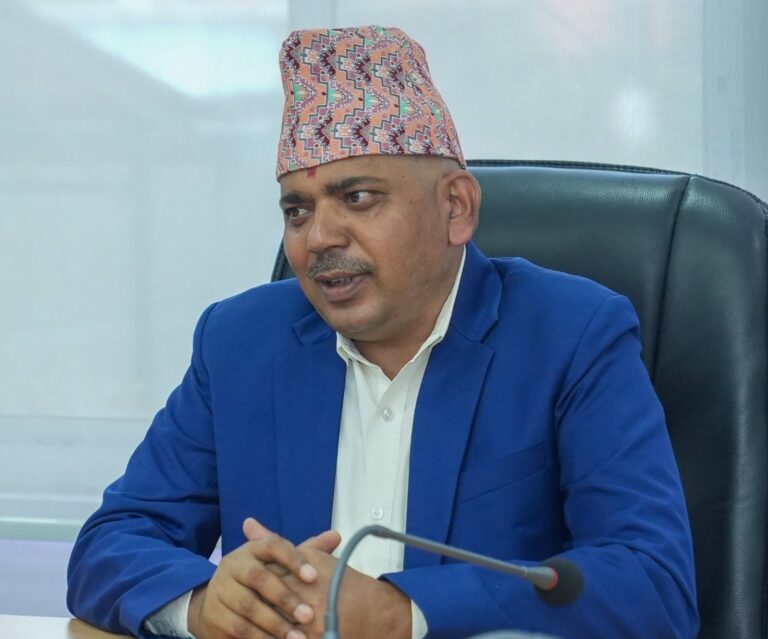
Acting Member-Secretary of the NSC, Ram Charitra Mehta. Photo: NSC
Amidst this mismanagement, the government appointed Mehta as the Acting Member-Secretary of the vacant NSC position on December 2, 2025, following the completion of Tanka Lal Ghising’s tenure. Mehta states he had been advising that central elections should only take place after completing tier-by-tier elections. However, after concluding that ANFA showed no initiative on the matter and failed to comply with the ministry’s directives, the association was suspended.
“The suspension is not permanent. An association can be suspended under prevailing laws. There is a provision that if the concerned association submits an application within three months and the government or the National Sports Council deems it necessary, the suspension can be lifted. We lifted it accordingly,” he says.
ANFA had also submitted an application to lift the suspension. A review was conducted based on the conditions specified during the suspension and commitments for reform. He states that the decision to lift the suspension was made after evaluating those aspects. However, some crucial issues, including tier-by-tier elections, have still not been fully resolved.
“Even now, ANFA does not seem ready to go into tier-by-tier elections. It has also failed to conduct the league. On the other hand, since Pankaj Bikram Nembang’s tenure has ended, the government is preparing to form an ad-hoc committee,” he had stated in a conversation with Nepalnews.
Former ANFA President Karma Tsering Sherpa laments that ANFA failed to view the lifting of the suspension as another opportunity. “The condition for lifting the suspension itself included conducting tier-by-tier elections, but it was defied. Had they fulfilled the conditions they agreed to, the situation of resorting to an ad-hoc committee would not have arisen,” he says.
Sherpa sees vested interests behind the current executive committee’s reluctance to hold tier-by-tier elections. Out of 48 districts, presidents in 22 districts are serving their second terms. Among them are Bharat Budthapa of Jumla, Deepak Khatiwada of Dhading, Bikash Narayan Shrestha of Kavre, and Purushottam Thapa of Lalitpur—all of whom are also on the ANFA executive committee. They were elected during the district association elections held between February 27 and March 14, 2022. The terms for all of them expired by mid-April 2026. Sherpa alleges that because most of these individuals played a key role in bringing Nembang to leadership four years ago, they are attempting to evade tier-by-tier elections.
“ANFA’s statute states that no one can hold office for more than two terms. Therefore, new leadership would emerge in 22 to 23 districts. It appears they are avoiding tier-by-tier elections out of fear of losing the individuals who previously supported them and subsequently losing the election,” he says.
The misfortune of an ‘Ad-Hoc’ committee
ANFA Spokesperson Suresh Shah rejects the claims made by Vikram Lama, Karma Tsering Sherpa, and Ram Charitra Mehta. Shah, who accompanied President Nembang and General Secretary Rai in the meeting prior to the lifting of the suspension, claims that the NSC did not place any conditions on lifting it. He states that an understanding was reached during the meeting to hold a joint session between FIFA, the NSC, and ANFA to find a way forward.
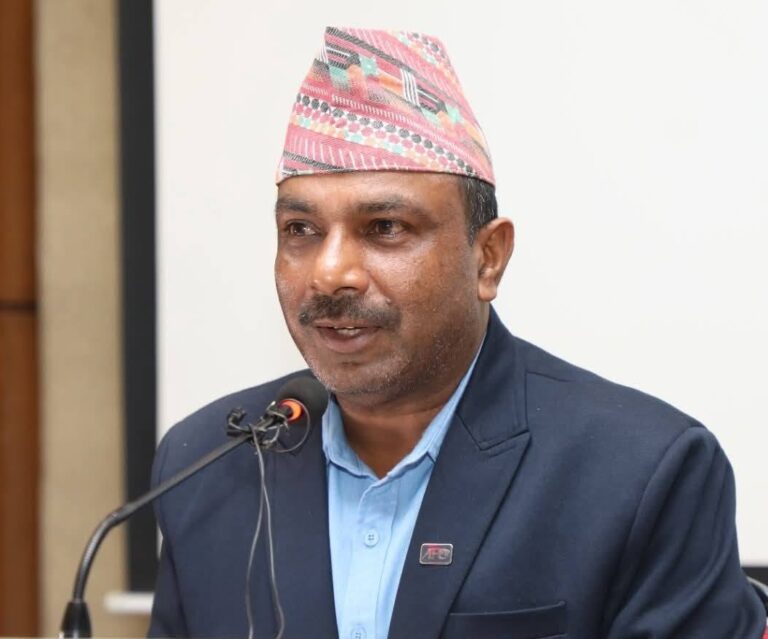
ANFA Spokesperson Suresh Shah. Photo: ANFA
Spokesperson Shah states that the root cause of the dispute is the NSC’s refusal to accept that ANFA is an autonomous body. Maintaining that ANFA’s statute is approved by the NSC and that the organization’s activities must run based on that very statute, he says, “The fundamental question is whether ANFA is an autonomous organization or not. The question is whether it has the right to work independently according to its statute, participate in international meetings, and represent Nepali football.”
“The government has the right to make its own decisions. However, the main question is not whether the government forms an ad-hoc committee, but how FIFA perceives it,” Shah had stated. “If an ad-hoc committee is formed through government intervention, whether FIFA recognizes it or not is what becomes critical.”
However, before the NSC could even form an ad-hoc committee, FIFA stepped in and suspended ANFA.