Kathmandu
Thursday, June 25, 2026





Berlin’s rare diplomatic protest suggests the controversy is no longer about passports alone, but about whether Nepal’s institutions can withstand political pressure while upholding due process and the rule of law.
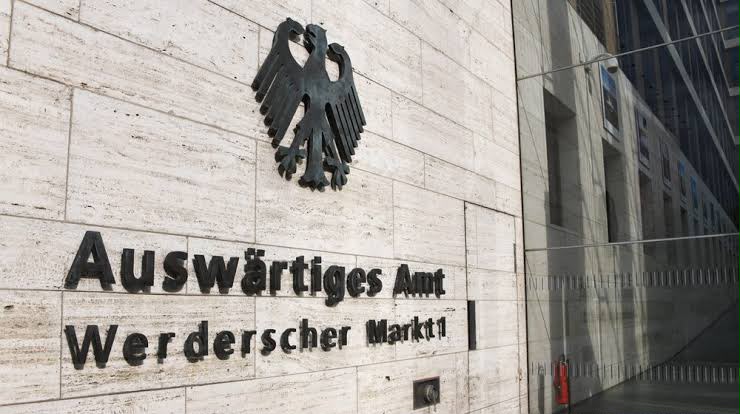
KATHMANDU: A corruption case involving Nepal’s passport procurement project has escalated into a rare diplomatic dispute with Germany, exposing deeper questions about governance, due process and the credibility of Nepal’s public institutions.
What began as an investigation into the procurement of 6.4 million electronic passports has now drawn a formal protest from the German government, concerns from foreign investors and renewed scrutiny of how Nepal investigates large public contracts.
The immediate controversy revolves around two German companies-Veridos GmbH, partly owned by the German government, and Mühlbauer ID Services-which won international tenders to supply critical components of Nepal’s e-passport system.
The Commission for the Investigation of Abuse of Authority (CIAA) has accused officials from the Department of Passports, representatives of the two German companies and local agents of involvement in alleged corruption during the procurement process. The anti-graft body CIAA’s claim of Rs 10.13 billion in losses has raised eyebrows because the amount broadly reflects the value of the contract itself, not the money paid out under it. The project had yet to enter full-scale operation, and only a small portion of the contract had reportedly been disbursed.
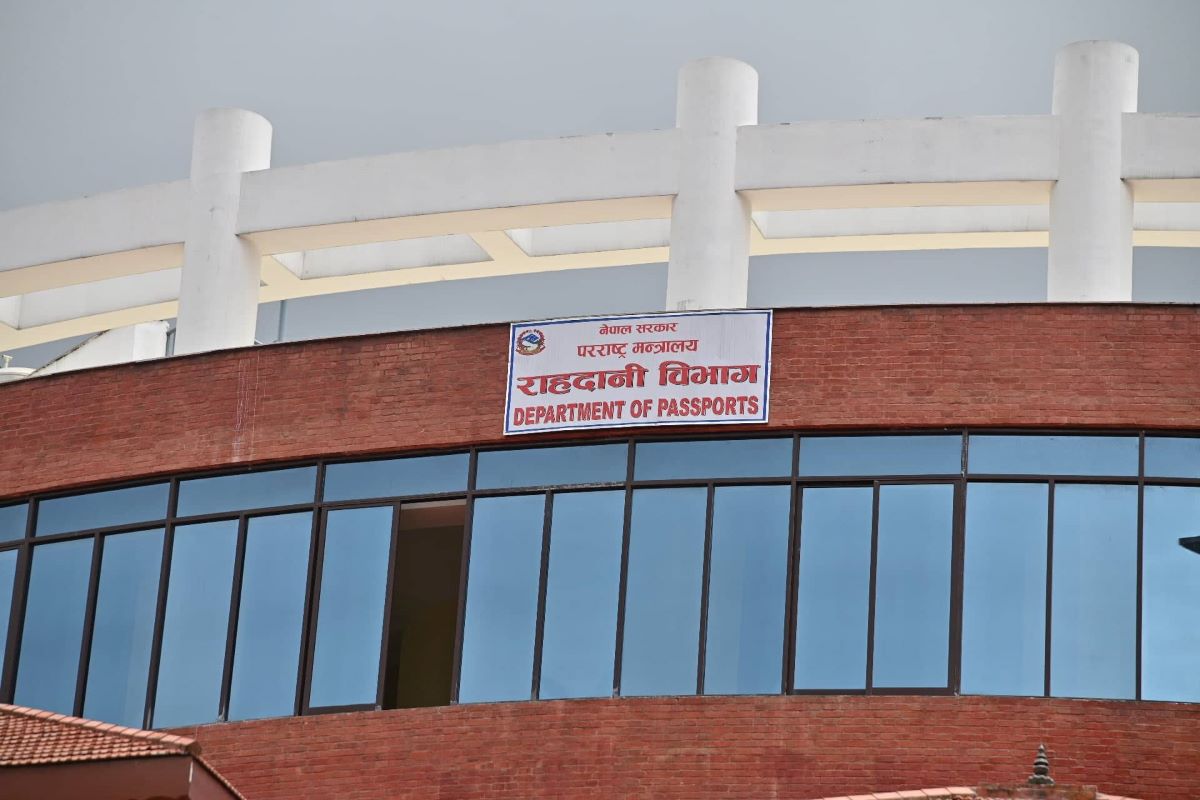
Department of Passports
The German firms maintain that they were prepared to implement the project and cooperate with investigators. Instead, charges were filed before key statements were recorded, following what critics describe as unusual pressure from the Prime Minister’s Office on an ostensibly independent constitutional body. The result is that a passport procurement case is now being scrutinised not only in Kathmandu but also in Berlin, where concerns extend beyond the contract itself to the integrity of Nepal’s investigative and governance institutions.
According to diplomatic and government sources to Nepal News, Berlin has formally communicated its concerns to Nepal, arguing that the allegations against the German companies are not supported by evidence contained in the indictment and that the reputations of both the companies and their employees have been damaged.
The dispute has now evolved beyond a procurement disagreement. It has become a test of Nepal’s commitment to due process, the rule of law and the independence of institutions that are supposed to operate free from political influence.
Germany’s unusual intervention
Diplomatic protests or raising the formal concerns between friendly countries are not uncommon. But, public disputes involving government-owned companies are rare.
Sources say Germany’s Foreign Ministry summoned Nepal’s Chargé d’Affaires in Berlin and handed over a written diplomatic note expressing serious concerns about the passport case. German officials reportedly objected to several aspects of the investigation.
First, they questioned the absence of direct evidence proving corrupt conduct by the German firms.
Second, they objected to the public naming of company officials before any court determination of wrongdoing.
Third, they raised concerns about the treatment of company representatives during the investigation process.
Germany is known for attaching extraordinary importance to due process, privacy rights and the protection of personal and professional reputations. In German legal culture, public accusations unsupported by proven evidence are viewed with considerable caution.
From Berlin’s perspective, the issue is not whether Nepal should investigate corruption allegations. Every sovereign state has the right and obligation to investigate suspected wrongdoing. The concern is whether the investigation met basic standards of procedural fairness before serious criminal allegations were filed.
The question of evidence
One of the most controversial aspects of the CIAA’s case concerns the evidence presented against the German companies.
The anti-corruption body has argued that the companies should never have qualified for the contract because they allegedly failed to meet certain technical requirements.
Investigators claim the companies proposed equipment and services different from those specified in the tender documents. They further argue that the companies did not commit to supplying the required number of printers.
The CIAA also alleges that officials failed to properly assess existing passport-printing infrastructure before issuing a new international tender, thereby causing financial losses to the state.
Yet legal experts criticized the investigation argue that many of these allegations relate to procurement interpretation and technical evaluation rather than direct evidence of bribery or corruption. This distinction is important.
Procurement disputes often involve disagreements over specifications, qualifications and contract interpretation. Corruption allegations require proof of dishonest intent, collusion, bribery or unlawful benefit. Germany’s protest reportedly centres on the belief that the indictment does not bridge that gap.
A case filed without statements?
Perhaps the most troubling issue concerns Veridos itself. According to documents and correspondence, Veridos responded to the CIAA after being informed of the investigation.
The company informed investigators that it took the inquiry seriously and was willing to cooperate fully. Because of the short notice provided, company officials said it would be difficult to travel immediately to Nepal and proposed virtual meetings instead.
Veridos reportedly suggested specific dates and times for virtual discussions and indicated its willingness to provide information relevant to the investigation.
Those meetings never took place. The CIAA did not conduct the proposed virtual interviews and ultimately filed criminal charges without recording statements from key representatives of the company. That decision has become one of the strongest points of criticism against the investigation.
Even individuals who support a robust anti-corruption campaign acknowledge that the failure to obtain statements from a principal accused party creates the appearance of an incomplete investigation.
The question naturally arises: if investigators considered the company important enough to prosecute, why was it not important enough to question?
The shadow of political pressure
The passport investigation has also generated controversy because of direct political involvement.
For nearly a year after complaints were filed, the investigation reportedly made little visible progress. Then events accelerated dramatically.
Chief commissioners, commissioners and senior officials from the CIAA met members of the Prime Minister’s team at Singha Durbar. Soon afterward, arrests followed and the corruption case moved rapidly toward prosecution.
The sequence of events has triggered concerns among legal observers and governance experts.
The CIAA is constitutionally designed to operate as an independent anti-corruption institution.
Its legitimacy depends not only on fighting corruption but also on maintaining visible independence from political actors. Even the perception that executive pressure influenced investigative decisions can damage public confidence.
The issue is particularly sensitive because constitutional watchdog bodies are expected to act according to evidence and legal standards, not political urgency.
The political pressure was visibile. The greater damage, however, may be what it reveals about Nepal’s institutions. The CIAA-an agency mandated to hold the prime minister, cabinet and public officials accountable-has instead raised serious concerns about its own independence after targeting German companies in a corruption case without presenting convincing evidence. The episode has fuelled perceptions that anti-corruption bodies are being used to advance political objectives rather than uphold the rule of law.
The arithmetic problem
Another controversial element concerns the amount of alleged loss.
The CIAA has claimed losses exceeding Rs 10 billion. Yet the amount reportedly paid to contractors so far is approximately Rs 184 million. Critics argue that established legal precedents generally measure corruption-related losses according to actual damage suffered by the state rather than the total value of a contract.
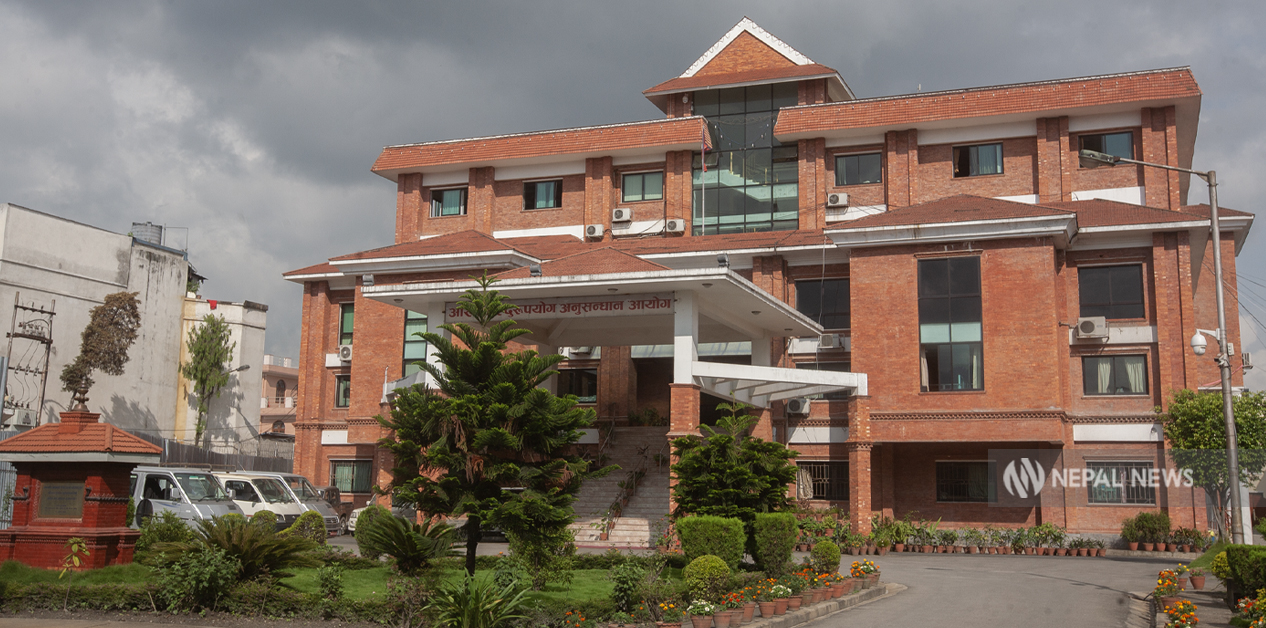
CIAA Office. Photo: Bikram Rai/ Nepal News
The difference is significant. If only a small fraction of the contract value has been paid, questions naturally arise regarding how the alleged loss was calculated.
Legal experts note that corruption cases involving procurement contracts often depend heavily on demonstrating actual financial damage rather than hypothetical future losses. This issue is likely to become a major battleground during court proceedings.
A passport crisis looms
The timing of the dispute could hardly be worse.
Officials within the Ministry of Foreign Affairs reportedly acknowledge that Nepal’s existing passport inventory may be sufficient for only a limited period.
Every day, few thousand of Nepalis apply for passports. For migrant workers, students, tourists and business travellers, passports are not optional documents. They are essential tools of mobility and economic opportunity. Any disruption to supply could quickly become a public-service crisis.
The uncertainty surrounding the future of the contracts therefore extends beyond legal proceedings. It affects the government’s ability to ensure uninterrupted passport services for citizens.
What is really at stake
The immediate legal question is whether corruption occurred in the passport procurement process.
The courts will ultimately decide that. But the broader issue extends far beyond the guilt or innocence of any individual or company.
Germany’s protest highlights concerns about due process. The allegations of executive involvement raise concerns about institutional independence. The uncertainty surrounding evidence raises concerns about investigative quality.
The passport shortage risk raises concerns about state capacity. Taken together, they point to a larger challenge confronting Nepal.
International investors are willing to accept regulatory scrutiny and anti-corruption enforcement. What they require is predictability, procedural fairness and confidence that decisions are based on evidence rather than politics.
When foreign companies believe contracts can become criminal cases without a transparent and comprehensive investigative process, investor confidence suffers.
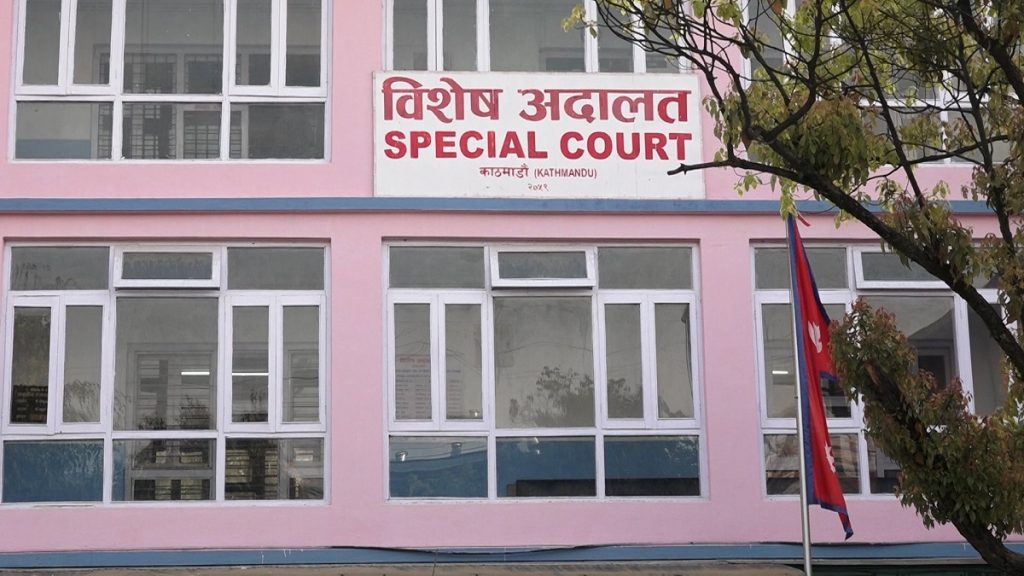
The passport dispute may eventually be resolved in special court. The damage to perceptions of governance, however, could last much longer.
For Nepal, the real challenge is not simply proving whether corruption occurred. It is demonstrating that the institutions tasked with uncovering corruption can do so independently, professionally and credibly. That may ultimately matter more than the passport contract itself.
Nepal’s government came to power promising renewal. Instead, it has left both investors and foreign capitals guessing.
India remains cautious, China unconvinced, Washington confused, and now Germany openly concerned. The ruling Rastriya Swatantra Party speaks of “development diplomacy”, yet its foreign policy remains difficult to decipher.
As foreign partners call for a more predictable investment climate, the government has focused on pursuing high-profile businessmen, raising questions about due process, institutional independence and policy consistency. Markets have taken notice. Investor confidence has weakened, and four trillions of Nepali rupees have been wiped from market value within three months of new government.
Governments can afford to be disruptive. They cannot afford to be directionless. Nepal’s challenge is no longer to attack the old order, but to convince the world it has a credible plan for the future.
![Celebrations erupt as RSP central committee election results unveiled [Photo Feature]](https://english.nepalnews.com/wp-content/uploads/2026/06/Rasopa-general-convention-day-5-Nepal-photo-library-07.jpg)