Kathmandu
Tuesday, June 16, 2026





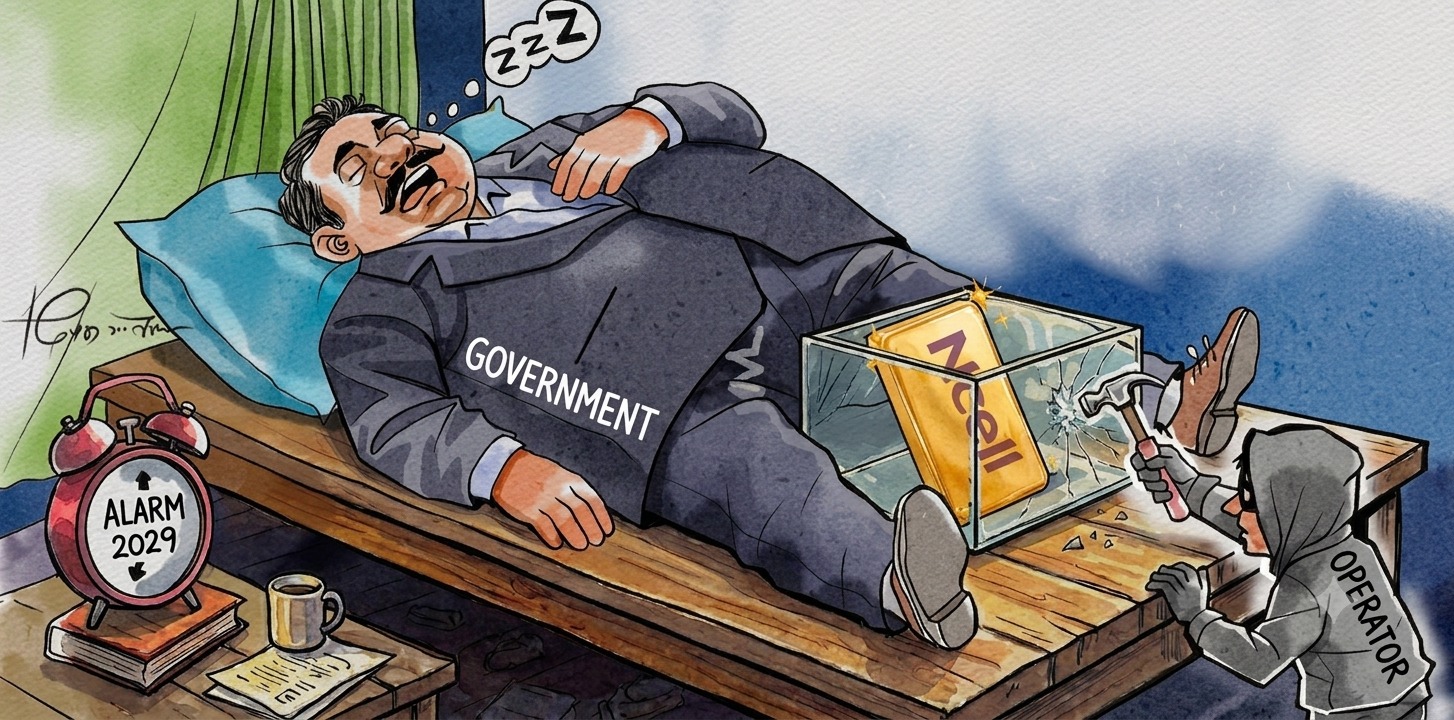
From disputed procurement decisions and allegations of bid manipulation to the arrest of the passport chief and controversy over passports issued to the Deuba family, the scandal has exposed deep flaws in Nepal's travel document system.
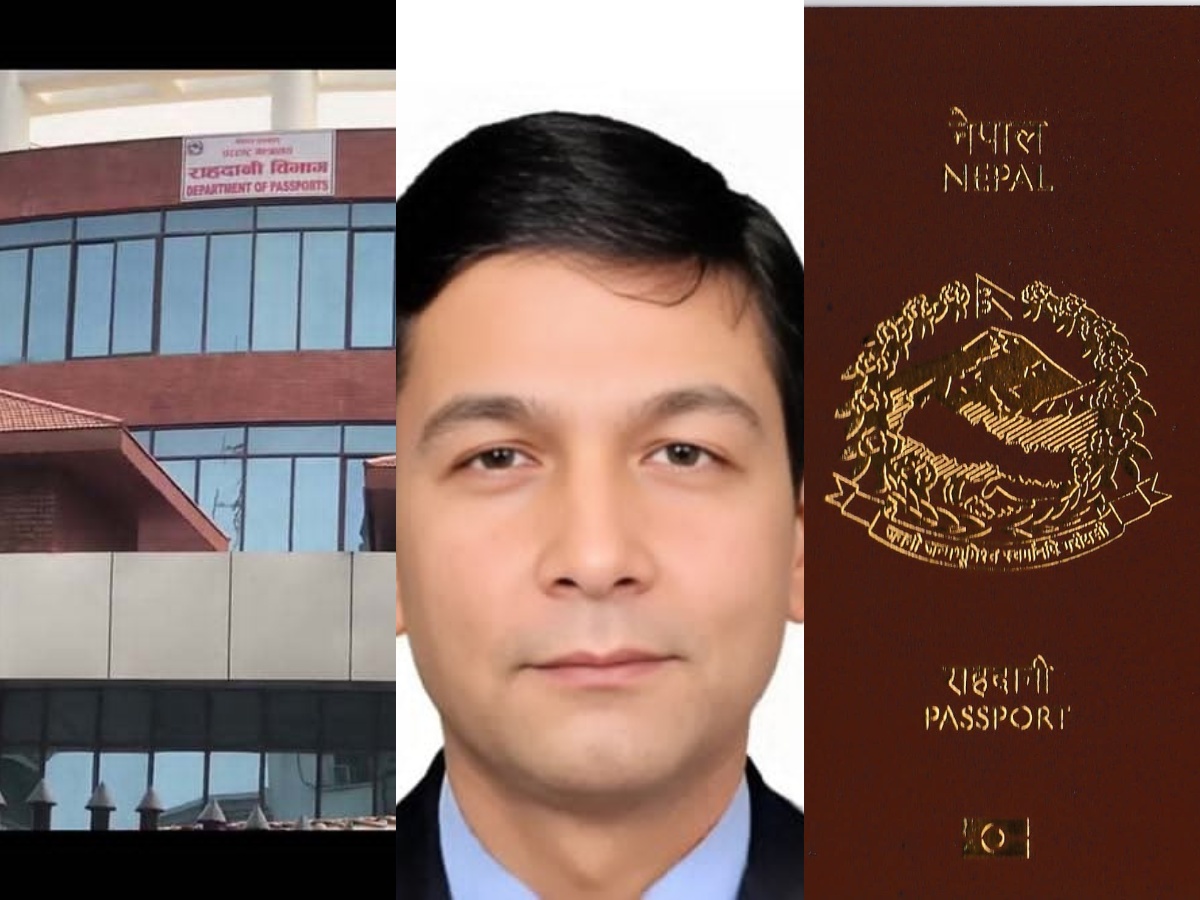
KATHMANDU: The Department of Passports, operating under the Ministry of Foreign Affairs from its headquarters in Tripureshwar, Kathmandu, is Nepal’s sole authority for issuing travel documents.
Established on January 26, 2012, it issues roughly 5,000 passports each day. Nepal has been procuring e-passports from abroad since 2022, having failed to develop domestic printing capacity.
The department’s latest procurement, a five-year contract worth approximately Rs 7.66 billion awarded to two German firms, triggered a prolonged legal and regulatory battle before culminating in the arrest of the department’s own director general on June 15, 2026.
Who was detained and when did the arrest take place?
The Commission for the Investigation of Abuse of Authority detained Tirtha Raj Aryal, Director General of the Department of Passports, on Monday (June 15). The arrest was carried out by a CIAA team as part of a widening investigation into irregularities surrounding Nepal’s e-passport procurement.
Alongside Aryal, the CIAA also took businessman Siddhartha Thapa into custody. Security sources confirmed that Thapa was held by plain-clothes police officers and brought in for questioning. Siddhartha Thapa is the son of Sunil Bahadur Thapa, who serves as a National Assembly member representing Koshi Province after being elected unopposed in January 2026, and who is himself a son of Nepal’s five-time Prime Minister Surya Bahadur Thapa.

Tirtha Raj Aryal, Director General of the Department of Passports
Similarly, IT Director of the Department Sunil Kumar KC was also reported to have been taken into custody around the same time.
The CIAA confirmed that all detentions were directly connected to the investigation into the passport procurement case.
What is the Commission for the Investigation of Abuse of Authority and why is it handling this case?
The Commission for the Investigation of Abuse of Authority, commonly referred to as the CIAA, is Nepal’s apex constitutional anti-corruption body established on February 11, 1992. Its core mandate is to investigate, prosecute, and take action against public officials accused of corruption, abuse of authority, or maladministration.
As a constitutional body, it functions independently of the executive branch and has the power to detain, investigate, and file cases directly before the Special Court. The passport procurement case falls squarely within the CIAA’s jurisdiction because the accused is a senior government official, the Department of Passports Director General, who allegedly overrode established legal procedures in the awarding of a multi-billion-rupee public contract.
The CIAA had already been monitoring the passport department for over a year, having previously raided the department and seized documents related to both the e-passport server hacking incident and the procurement controversy.
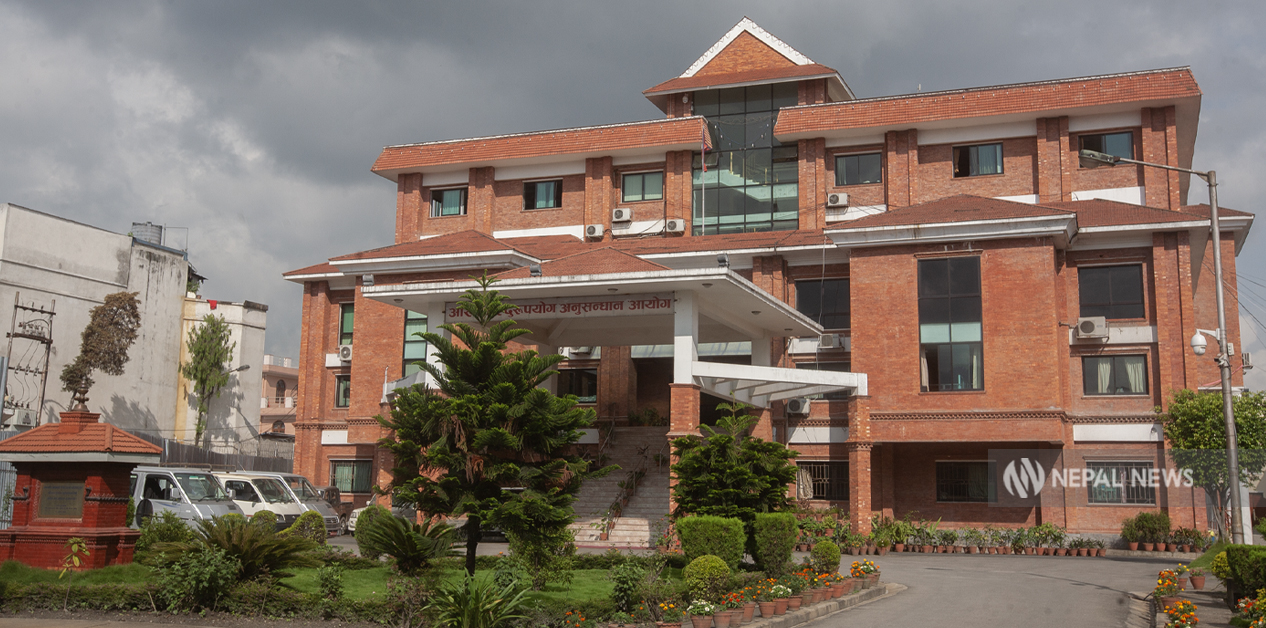
CIAA Office. Photo: Bikram Rai/ Nepal News
The current arrest marks the most significant enforcement action the CIAA has taken in relation to the passport file.
What is the e-passport procurement at the center of this case?
At the heart of the case is Nepal’s most recent e-passport supply contract, a two-package deal worth approximately Rs 7.66 billion awarded to two German companies.
The Ministry of Foreign Affairs approved a procurement plan on September 16, 2024, and an international tender was floated on November 28, 2024. The first package, valued at Rs 1.55 billion, covered pre-enrollment systems, biometric data processing, and the distribution infrastructure across all 77 districts and diplomatic missions abroad. This was awarded to Muehlbauer ID Services GmbH.
The second package, worth Rs 6.11 billion, covered the physical biometric passport booklets and personalization technology, and went to Veridos GmbH. Under the new arrangement, 6.4 million e-passports would be supplied over five years, with the first delivery required within 240 days of contract signing.
The department calculated the unit cost of a 34-page passport under the new arrangement at under USD 8.62, lower than the previous rate of USD 10.13 per unit under the French company IDEMIA, which had supplied Nepal’s MRP passports since 2010.
What specific procurement violations have been alleged against Aryal?
Multiple sources and regulatory investigations identified serious procedural breaches attributed directly to Director General Tirtha Raj Aryal’s conduct during the evaluation process. Aryal chaired a five-member evaluation committee that was supported by a 12-member technical sub-committee.
The technical sub-committee found that Muehlbauer’s bid for both packages failed to meet the required technical criteria. Specifically, in Package 1, Muehlbauer did not satisfy any of the 238 required technical specifications. In Package 2, the company fell short of 50 of 297 listed technical requirements.
Despite these findings, the evaluation committee overrode the technical sub-committee’s recommendations and allowed Muehlbauer to advance to the financial round. This directly contradicts Nepal’s Public Procurement Act, which mandates that only technically compliant bids may proceed. One member of the technical sub-committee withdrew his signature from the final evaluation report two weeks after it was submitted, indicating internal dissent within the department’s own review process.
Critics and legal petitioners argued that Aryal used his position as committee chair to manipulate the outcome.
Why did Aryal face controversy over issuing passports to the Deuba family on a public holiday?
Tirtha Raj Aryal drew sharp public criticism after diplomatic passports were issued to former Prime Minister and Nepali Congress President Sher Bahadur Deuba and his wife, former Foreign Minister Arzu Deuba Rana, on September 19, 2025, a public holiday marking Nepal’s Constitution Day, when government offices were officially closed. The timing was particularly charged because the passports were processed just ten days after a violent attack on the Deuba residence in Budhanilkantha on September 9, 2025, during which the home was vandalized and set on fire and the couple was physically assaulted before being rescued by the Nepal Army and taken for medical treatment.
At the time, the Department of Money Laundering Investigation was still collecting evidence from the burned premises, including foreign currencies reportedly recovered from the site. Against that backdrop, the rapid issuance of new diplomatic passports and the subsequent acquisition of Thai visas fueled public speculation that the Deuba family was preparing to leave Nepal.
Critics questioned why passport services were extended on a holiday and why special arrangements were made without requiring the couple to appear at the passport office in person. Officials from the Ministry of Foreign Affairs and the Department of Passports defended the decision, arguing that diplomatic passport services are classified as essential services and may be provided on holidays when circumstances require it.

Deuba couple. File photo
Aryal maintained that the process followed established procedures, stating that a mobile service team was dispatched to collect the Deubas’ photographs and biometric data at their location, citing their status as distinguished public figures and their ongoing medical condition. Despite the public criticism and allegations that the passports could facilitate the couple’s departure to Thailand under the pretext of medical treatment, the Sushila Karki-led government took no formal action against Aryal over the incident.
How had IDEMIA, the previous supplier, been connected to earlier controversies?
IDEMIA, a French firm that supplied Nepal’s e-passports and Machine Readable Passports (MRPs) for approximately 15 years starting in 2010, was deeply entangled in earlier phases of the department’s procurement troubles.
When the Department of Passports floated its tender in late November 2024, IDEMIA’s local representative Siddhartha Pandey was identified as having influenced the preparation of the tender document. Investigations found that after a malware attack paralyzed the department’s server in late November 2024, IDEMIA representatives pressured department staff by suggesting the passport system could not function without their involvement.
This pressure allegedly led to the inclusion of a specific clause in the tender, labeled point 9, which effectively restricted competition in favor of the incumbent. The CIAA had previously taken interest in what it characterized as the department’s financial dealings with IDEMIA’s local agent.
Earlier in the department’s history, a separate procurement in 2013 for 2.5 million machine-readable passport booklets was awarded to Oberthur Technologies, the predecessor entity to IDEMIA, without a competitive bidding process, and the Office of the Auditor General flagged that case for financial irregularity.
What role did the technical panel play and why was its rejection significant?
The technical sub-committee formed to evaluate the e-passport tender proposals comprised 12 members chaired by IT Director Sunil Kumar K.C. The sub-committee was responsible for verifying each bidder’s compliance against exhaustive technical specifications: 238 criteria for Package 1 and 297 for Package 2.
Under Nepal’s procurement law for goods tenders, any bid that fails to satisfy the technical criteria must be declared non-responsive and excluded from the financial round. The sub-committee found Muehlbauer non-responsive in both packages.
However, Evaluation Committee chairman Aryal overruled those findings and allowed the technical non-compliance to be set aside, clearing Muehlbauer for financial evaluation. This step was what critics described as the critical moment of illegality.
One sub-committee member’s decision to withdraw his signature from the final evaluation report after the fact was seen as a public dissent against the override, and it brought the irregularity into sharper focus for investigators and the media. The move appeared to contradict the Public Procurement Act.
What legal challenges reached the Supreme Court over this procurement?
The e-passport contract was challenged in multiple legal forums. Before the contract was finalized, IDEMIA filed a formal complaint with the Public Procurement Review Committee on June 22, 2025, alleging breaches of the Public Procurement Act, Procurement Rules, and specific terms laid out in the tender documents.
Separately, advocate Kusum Kishor Koirala filed a public interest litigation before the Supreme Court, arguing that the department had violated procurement law and that the Security Printing Centre should handle passport production instead.
The Supreme Court declined to issue an interim stay order on July 15, 2025, allowing the procurement to proceed. The Public Procurement Review Committee subsequently rejected IDEMIA’s challenge, finding its allegations of irregularity to be unsupported, and ordered the company to forfeit a USD 560,000 bid security to Nepal’s Inland Revenue Office.
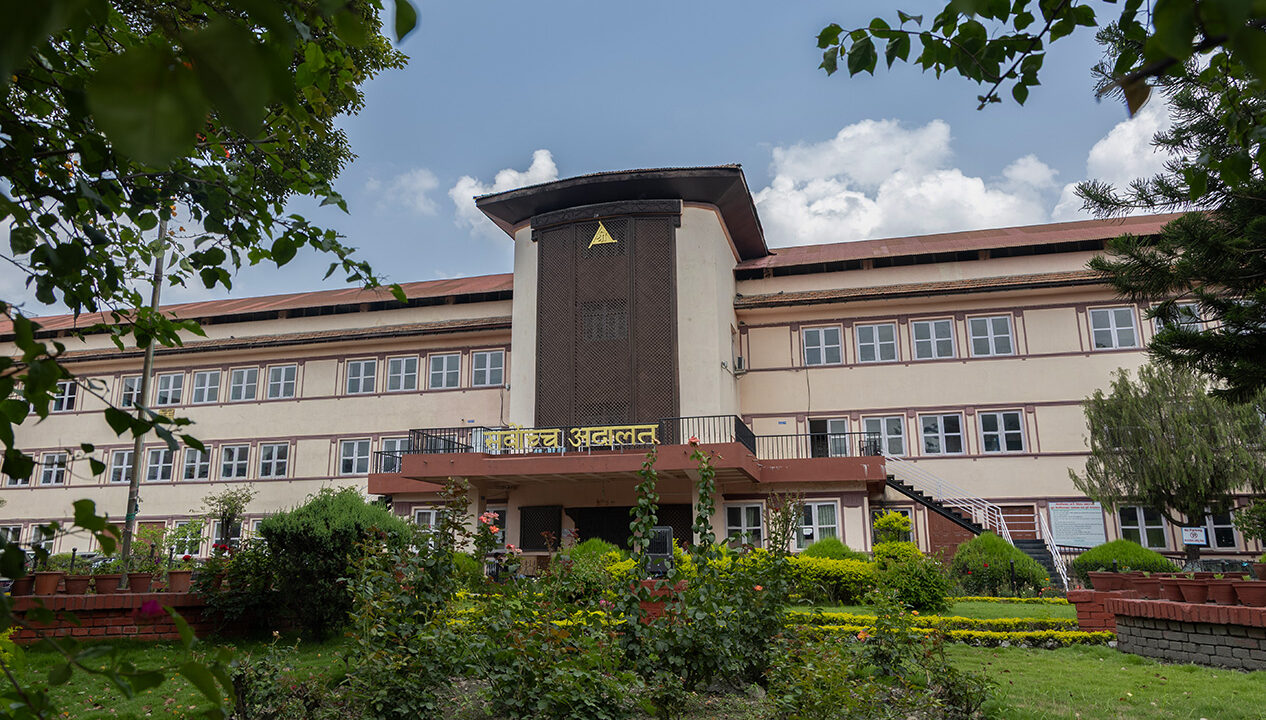
Supreme Court. Photo: Bikram Rai
Letters of award were formally issued to Veridos and Muehlbauer on July 22, 2025, and contracts were signed in August 2025.
What was the CIAA raid on the Department of Passports before the arrest?
Before Tuesday’s detention of Director General Aryal, the CIAA had already conducted a raid on the Department of Passports. That raid, which took place in December 2024, was triggered by two connected concerns: the malware attack that brought down the department’s passport distribution system, and broader questions about weaknesses in e-passport printing arrangements.
CIAA investigators seized all relevant documents during the raid. The department had failed to formally notify the Cyber Security Center or the Information Technology Center about the server breach, though it had sought informal help.
Sources at the time reported that department employees were found to have distributed passports after receiving payments from an agent of the private technology company managing the system.
The Office of the Auditor General’s 2023 annual report also separately flagged a financial irregularity from September 2022, when the department paid for an additional 300,000 passports through a variation order at the old contract rate without a new competitive process.
How has Nepal’s passport procurement history been marked by corruption?
Nepal’s history of passport procurement is a repeated pattern of irregularity and scandal. The first attempt to procure e-passports was made in August 2019 but the tender was cancelled due to procedural flaws.
A second tender in February 2020 was also scrapped. The government eventually began distributing electronic passports in 2022 under a contract with IDEMIA. Even before the current controversy, a 2013 contract amendment added a new lamination provision that the Office of the Auditor General later flagged as a breach of public procurement rules.
Going further back, an attempt to build a domestic Security Printing Centre in Panauti, Kavrepalanchok, ended in another corruption conviction: the then executive director of that facility was found guilty by the Special Court of procurement-related corruption, sentenced to two years in prison, and fined more than Rs 254 million, with three others also convicted. The facility remains incomplete.
The department has since 2022 purchased a total of 5.1 million e-passports from abroad, with each successive procurement cycle generating fresh allegations.
Who is Siddhartha Thapa and why is his detention politically sensitive?
Siddhartha Thapa is a businessman and the son of Sunil Bahadur Thapa, a senior politician currently serving as a National Assembly member from Koshi Province. Sunil Bahadur Thapa was elected unopposed in January 2026 and belongs to the Nepali Congress.
Sunil Bahadur Thapa is himself a well-known political figure, having previously served as a cabinet minister in Sher Bahadur Deuba’s government as Minister of Commerce and Supplies in 2017, and he is also the son of Nepal’s five-time Prime Minister Surya Bahadur Thapa.
Siddhartha Thapa was held by plain-clothes police officers alongside the Department of Passports chief. His arrest gives the case a significant political dimension because it draws a connection between a senior business figure with close political family ties and the alleged corruption surrounding a multi-billion-rupee state procurement.
Security sources confirmed that the detentions were linked to the passport procurement investigation and that further investigation was underway at the time of reporting.
What was the malware attack on the passport system and how did it relate to the procurement?
In November 2024, the Department of Passports discovered malware in its server systems, an intrusion that forced the department to shut down distribution entirely. Director General Aryal publicly stated the system had been taken offline to prevent further damage and announced plans to restore services by around November 25, 2024, a deadline the department struggled to meet.
Passport distribution was halted indefinitely during that period, causing severe disruption for citizens. Reports at the time pointed to the possibility that IDEMIA, the company then managing the department’s software infrastructure, was connected to the breach.
Investigations suggested that the disruption gave IDEMIA representatives leverage to pressure department staff and resulted in the inclusion of tender conditions that critics said would have locked in IDEMIA’s participation in any new procurement.
The CIAA had separately been examining financial transactions between department officials and IDEMIA’s local representative during this period. The entire sequence, the server attack, the subsequent tender launched on November 28, 2024, and the tender’s allegedly favorable conditions for IDEMIA, was part of the investigative trail that eventually led to Aryal’s detention.
What did the Office of the Auditor General flag in relation to the passport department?
The Office of the Auditor General, Nepal’s supreme audit body, specifically cited the Department of Passports for financial irregularities in its 2023 annual report. The report highlighted a decision taken on September 8, 2022, in which the department approved the purchase of an additional 300,000 passport booklets at the old contracted rate, applying a 15 percent variation provision to a base order of 20 million passports.
This essentially meant the department bought additional booklets without running a new competitive tender, keeping the previous supplier in place under a variation order mechanism.
The Auditor General characterized this as a financial irregularity. Audit reports in Nepal are tabled in parliament and form part of the public accountability record, and the CIAA takes cognizance of Auditor General findings when opening investigations.
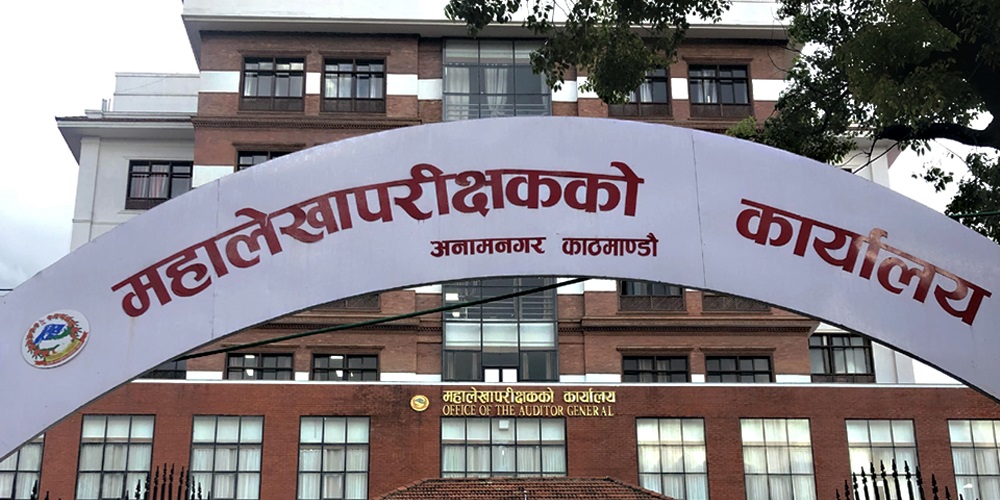
Office of the Auditor General
The flagged variation-order transaction from 2022 formed one strand of the investigative background that CIAA officials were working with when they raided the department in late 2024 and again when they detained its director general on June 16.
What are the implications for passport services and how many passports does Nepal issue?
The Department of Passports issues roughly 5,000 passports daily, serving a country where labor migration is a dominant economic feature and travel demand remains high. The department serves citizens from its Tripureshwar headquarters as well as through District Administration Offices across all 77 districts.
Fees for a 34-page passport range from Rs 5,000 when processed through a district office to Rs 12,000 at the department directly, with 66-page booklets priced higher.
The new five-year contract with Veridos and Muehlbauer was supposed to cover 6.4 million e-passports starting delivery from March 9, 2026, but repeated disruptions in the procurement timeline created supply concerns.
By November 2025, then Prime Minister Sushila Karki had personally intervened, opening talks with the German ambassador to accelerate the German firms’ delivery schedule.
With the Director General now under arrest, the department faces an immediate leadership vacuum at a critical transition moment, and any further disruption to the supply chain could directly affect hundreds of thousands of citizens awaiting travel documents.
What is the broader pattern of CIAA action against passport and immigration officials?
The arrest of the passport department chief is part of a broader wave of CIAA enforcement against immigration and travel-document officials. In May 2025, the CIAA detained Joint Secretary Tirtha Raj Bhattarai, the then chief immigration officer at Tribhuvan International Airport, directly from the Ministry of Home Affairs premises after he was transferred away from his airport posting.
Bhattarai faced allegations of systematically collecting bribes from Nepali citizens traveling to Dubai and elsewhere on visit visas during his tenure from October 9, 2024 to May 16, 2025.
In December 2025, the CIAA filed corruption and money laundering charges against Bhattarai and six others at the Special Court, alleging they had taken money from 257 travelers through a coded bribery arrangement involving travel agency operators.
The total illicit amount listed against Bhattarai in that charge sheet was Rs 79.8 million.
The current case against passport Director General Aryal suggests the CIAA is conducting a systematic audit of the entire travel-document ecosystem, from immigration counters at the airport to the office responsible for printing and issuing the passports themselves.
What happens next in the investigation and what are the likely legal proceedings?
The investigation has now entered a more critical phase after the Special Court granted the Commission for the Investigation of Abuse of Authority (CIAA) permission to keep Department of Passports Director General Tirtha Raj Aryal and Director Sunil Kumar KC in custody for four days beginning Monday.
The detention period allows investigators to conduct detailed questioning, collect documentary evidence, examine procurement records, and verify statements obtained from the accused and other witnesses.
The CIAA is expected to continue interrogating all individuals linked to the e-passport procurement controversy, including Aryal, KC, and procurement consultant Siddhartha Thapa.
Investigators will likely scrutinize procurement decisions, communication records, bid evaluations, contract implementation documents, and the role of various officials involved in the process.
If the CIAA concludes that sufficient evidence exists to establish corruption, abuse of authority, or procurement-related irregularities, it can file a formal charge sheet before the Special Court.
Under Nepal’s constitutional and legal framework, corruption cases investigated by the CIAA are prosecuted directly at the Special Court rather than through the ordinary court system.
If charges are filed and the accused are eventually convicted, they could face imprisonment, fines, confiscation of illegally obtained benefits, and other penalties prescribed under the Prevention of Corruption Act.
The severity of punishment would depend on the nature of the offenses and the amount of financial loss or unlawful gain established during trial.
The four-day detention order does not imply guilt. It is an investigative measure that allows the CIAA to gather evidence and determine whether criminal charges are warranted. The agency may also seek extensions of custody if it argues that additional time is necessary to complete the investigation.
Meanwhile, the separate public-interest litigation pending at the Supreme Court challenging the legality and transparency of the Rs 7.66 billion e-passport contract remains unresolved. As a result, the procurement process itself continues to face judicial scrutiny independent of the CIAA’s criminal investigation.
Given the scale of the contract and the seniority of the officials involved, the outcome of the case could have far-reaching implications for accountability in public procurement and may reveal broader links among bureaucrats, consultants, contractors, and political actors involved in Nepal’s passport management system.