Kathmandu
Saturday, June 27, 2026





"It is inner restlessness that fuels a writer; ignore life’s deficiencies and dedicate yourself to your expression"
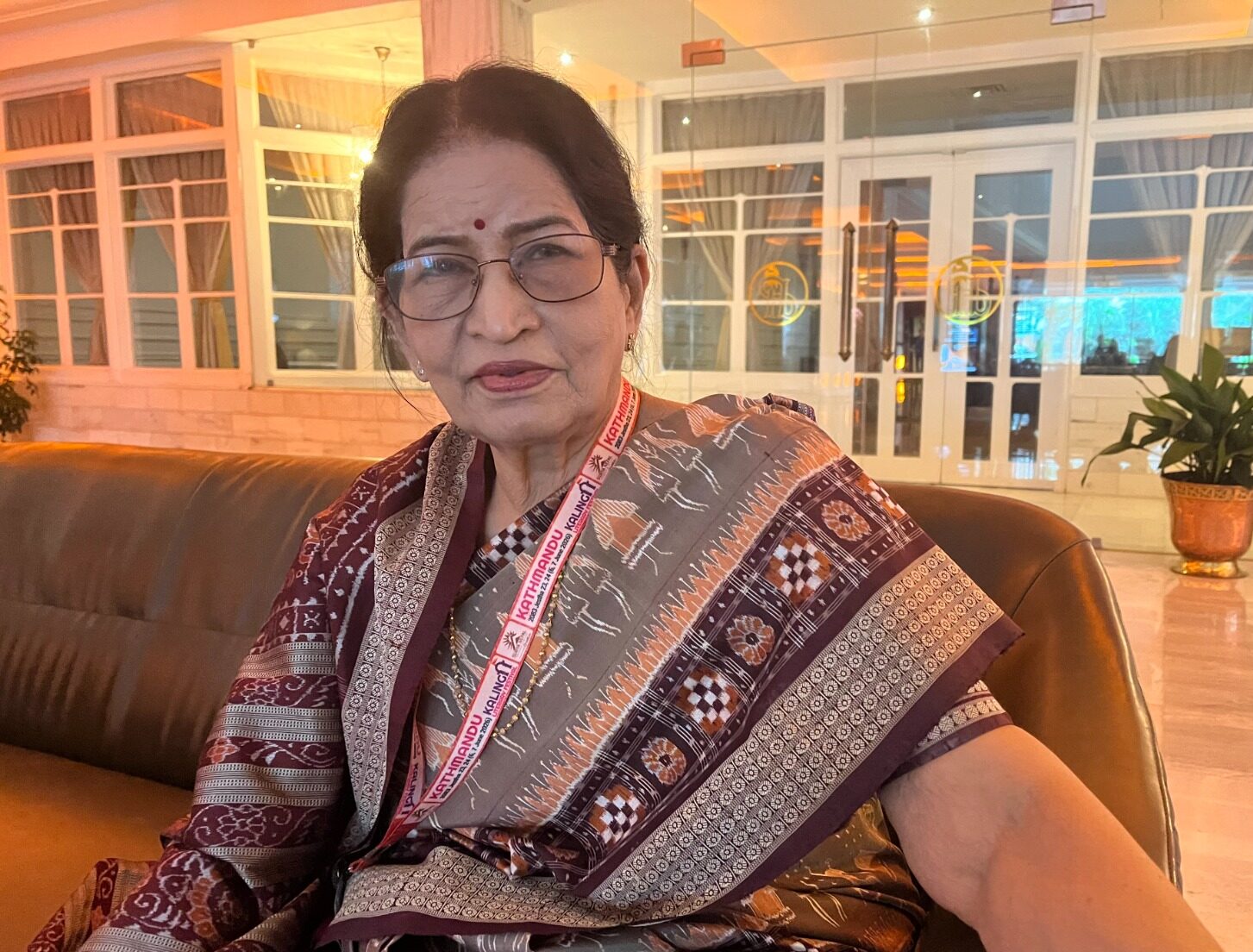
Pratibha Ray is a famous Indian writer. Writing in the Odia language, Ray writes on various subjects such as Hindu mythology, history, and contemporary life from a woman’s perspective. She has recently published her 25th book about the destruction caused by Emperor Ashoka in Odisha, India, about 2,300 years ago, and she frequently writes in her books against such injustice, tyranny, and oppression. Ray, who has received India’s prestigious Indian Padma Shri award, Padma Bhushan honor, and Moortidevi Award, has had her various books translated into more than 30 languages. A conversation between the 83-year-old Ray and Sewa Bhattarai during her visit to Kathmandu for the Kalinga Literary Festival on June 6 and 7 this month:
You are now in your 80s. At a time when few women could study, how did you get the opportunity to get an education?
My father was an educationist. He was far ahead of his time. Dreaming of making me a doctor, he had me enrolled in medical education, but I did not like that subject. Without telling him at all, I changed my subject and started studying botany. However, since my childhood, I have had a greater interest in society and literature.
Despite being a science student, what is the reason behind your interest in literary writing?
I have been writing since I was very young. If I saw something beautiful or if something stirred my heart, I would write. That inner turmoil is what made me write. Whatever I wrote became a poem. A poem I wrote when I was in grade seven was published in a magazine. Such things encouraged me, and I began to write even more.
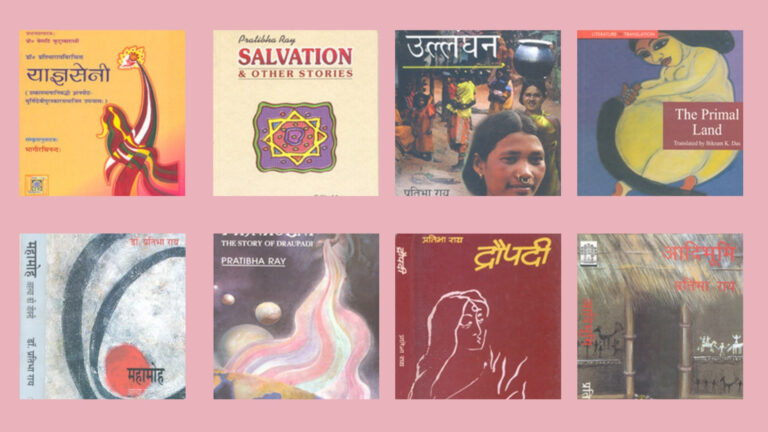
A photo collage of books written by Pratibha Ray
Does that mean inner turmoil makes someone a writer?
Yes, one must experience inner turmoil. For example, in many of my books, I have written against the injustice and tyranny perpetrated by landlords or the oppression of indigenous people. This is because those things I witnessed in my childhood deeply stirred me. Perhaps I did not fully understand those things during childhood, but as an adult, the desire to express them kept inspiring me to write.
Your acclaimed book Yajnaseni retells the Mahabharat from Draupadi’s perspective. Why do you think these ancient tales still resonate in today’s modern world?
Once I wrote it, this story did not remain merely ancient. The situation in which a woman was placed was extremely terrible. Draupadi is not a weak character; she is powerful. My protest, my rebellion, was for this very reason. That is why I wrote Yajnaseni.
Draupadi is routinely vilified as the root cause of the Mahabharata or dismissed as weak, which reeks of misogyny. Why did you choose to subvert this by giving her a completely opposite portrayal?
Draupadi is blamed as the cause of the Mahabharat, and I wrote this to oppose that narrative. I wanted to show that the cause of the Mahabharat was not Draupadi but the greed of men.
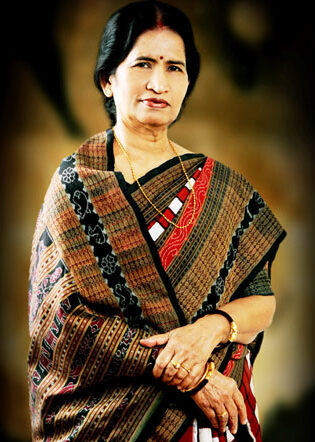
Pratibha Ray. Photo: YouTube/Screenshot
What can women do about misogynistic portrayals in literature?
Shed the label of just being a ‘woman.’ You are a human being; try to become a good human being. Everyone needs to become a good human being. There is no question of man or woman in this. And one must protest against the injustice and oppression committed against women.
What kind of place do you find for women in ancient Hindu myths?
In our Hindu myths and ancient stories, we turn women into goddesses, but in real life, we turn them into servants. I write in opposition to this very practice.
Your books beautifully depict women’s romantic desires. When women write about romance, their work is often dismissed as “chick lit,” or they face slut-shaming. Why does society penalize female writers for exploring these themes?
Yes, fingers are pointed at the character of a woman who loves. A woman’s character is considered so fragile that a stain attaches to it over every little thing. We must change this. We must become good human beings with eternal human values, regardless of whether one is a man or a woman.
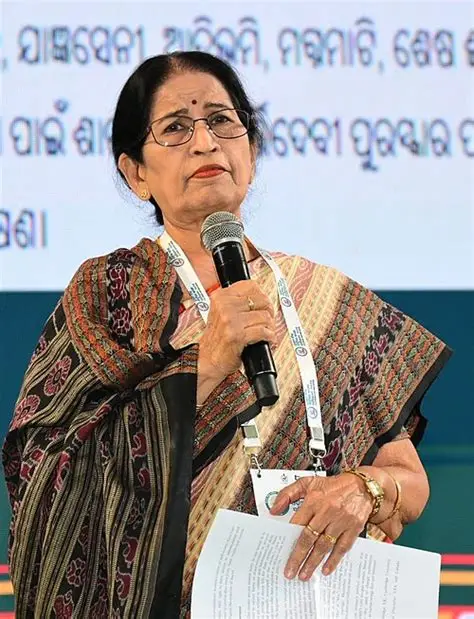
Pratibha Ray. Photo courtesy: Wikipedia
Does that mean it is acceptable for women to love and express that love as well?
Love is a spontaneous thing. Feelings of love arise in a woman’s heart as well, but they cannot express them openly. Perhaps society views this by linking it to wantonness. Wantonness is wrong, but there is a difference between wantonness and independence. Men and women must all be independent and express love in a free manner. The control over a woman’s expression must be changed.
Despite being a science student, your language is beautiful and elegant. How did you bring such sweetness into your writing?
Yes, I am a science student, but I love to write literature. A writer does not write merely by reading literature or by being inspired by it; it comes from within. I am very sensitive about language. Wherever I go, I listen carefully and note down how people use language. My rural upbringing has also probably helped in this. I grew up in a village, and during my childhood, I mingled with rural people. I remembered their speaking style. Those things are still inside me. This enriches the language.
People talk about the language of my novels. I say this is not my language, it is the character’s language. One must write in the exact language that matches the character. The language belonging to the specific time period in which the book is set must be used.
Although you write in Odia, I read your work in English. How critical is translation for allowing us in South Asia to share our literature cross-border and project it onto the global stage?
Translation is like a bridge. There must be a bridge between languages because there are so many languages, and there is so much diversity in South Asia alone. The core essence of all literature is the same: human values, love, and compassion. However, stories based on different contexts are found in every language. Therefore, translation is extremely important for us to read each other’s literature and understand society. Translation is not given as much importance as it deserves.
How difficult of a task is it for women, who handle household responsibilities along with outside work, to write literature or create any art?
I even held a full-time job; I taught for 35 years. I had three children. In our society, a man’s role is limited only to earning money and resting at home. Women do everything. Moreover, if she is an educated mother, there are even more responsibilities, such as which college the child should study in, how to get them admission there, how to help them in their career, etcetera, etcetera. I had to do all of this too. My personal time started only after 11 o’clock at night. The children would be asleep, the household chores would be finished, the preparation for what to eat tomorrow morning would be done, and then I would find peace. Only after that would the characters surround me. They would say to me, “Think a little about us too. Then, I would start writing.
How can these difficulties faced by women be reduced?
The only way is that work must be shared inside the home. A son must also be taught household chores from childhood. If there is a son and a daughter inside the house, and the daughter does everything while the son does nothing, that is not right. Both the son and the daughter must be made equally responsible.
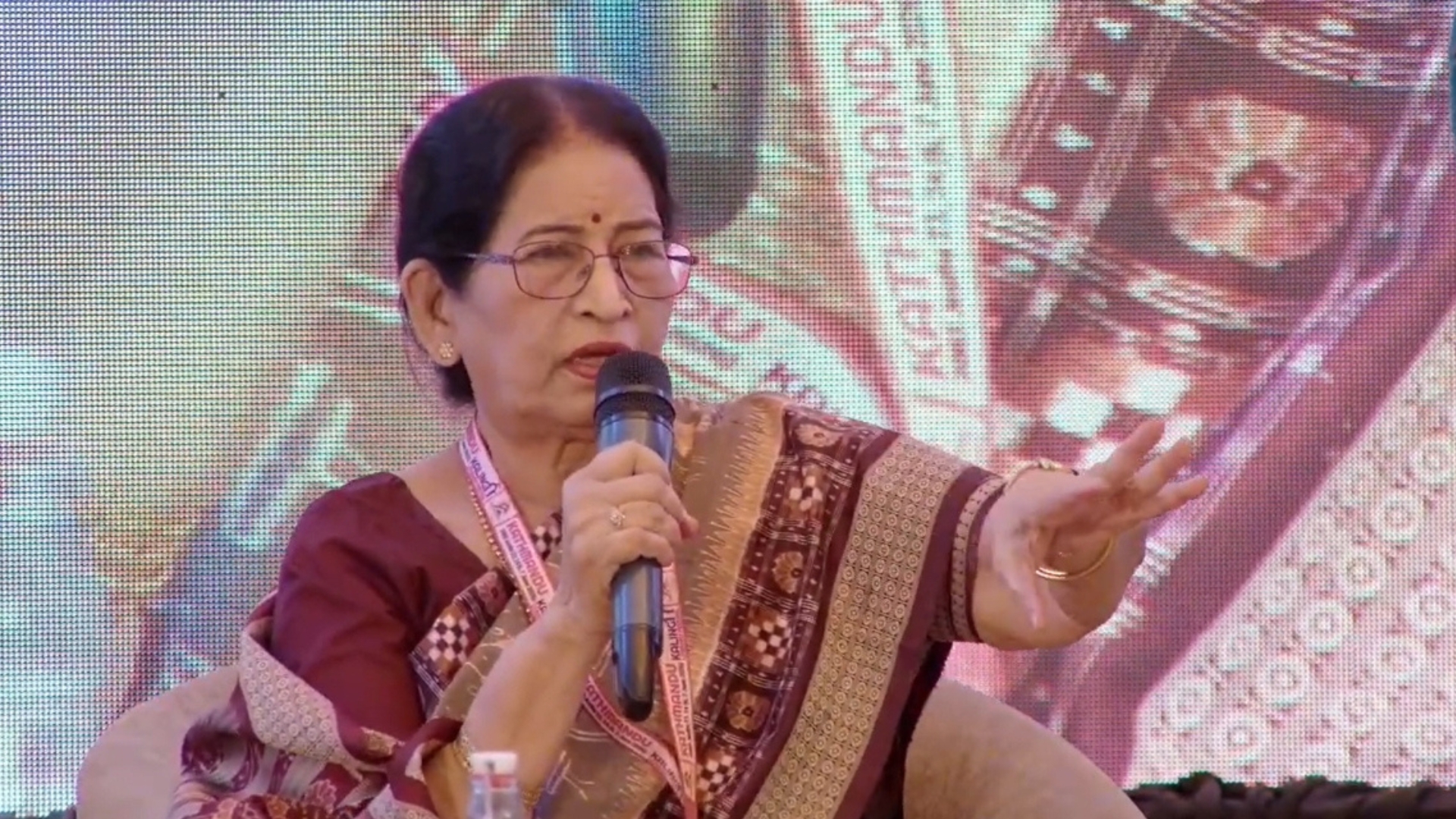
Pratibha Ray. Photo: YouTube/Screenshot
Facing so many difficulties, is the literature or art that women create any different from mainstream literature or men’s writing?
The writing of every writer is different. One writer cannot be compared with another writer. A woman is also a writer, so every woman writes differently. However, I do not think writing is different simply because one is a woman.
In today’s time, what are women writing in South Asia, and how well are they writing?
Women are writing on important issues as well. But when looking at the ratio of women’s writing to men’s writing, women are still lagging behind. This is because they are not getting opportunities. Opportunities must be created for women, and it must start from the home. From childhood, sons and daughters must be raised in the exact same manner.
In closing, what message do you share with women who handle demanding domestic roles but still yearn to create art?
Embrace the chaos and get even busier. The restlessness of a hectic life is precisely what makes a writer great. Art is rarely born from comfort.
Hurdles will emerge, but they are the very things that force you to write. Do not fixate on what your life lacks; focus on what you want to put on paper. If you want to write, write. Ignore outside noise and criticism, and protect your own expression.

![Crepe myrtle beauty spilled across the streets of Bharatpur [Photo feature]](https://english.nepalnews.com/wp-content/uploads/2026/06/flower-cover.jpg)