Kathmandu
Friday, June 26, 2026





RSP’s developmental work—which fails to keep people at the center and is increasingly turning inhumane toward its citizens—stands in direct contradiction to the party's own political ideology.
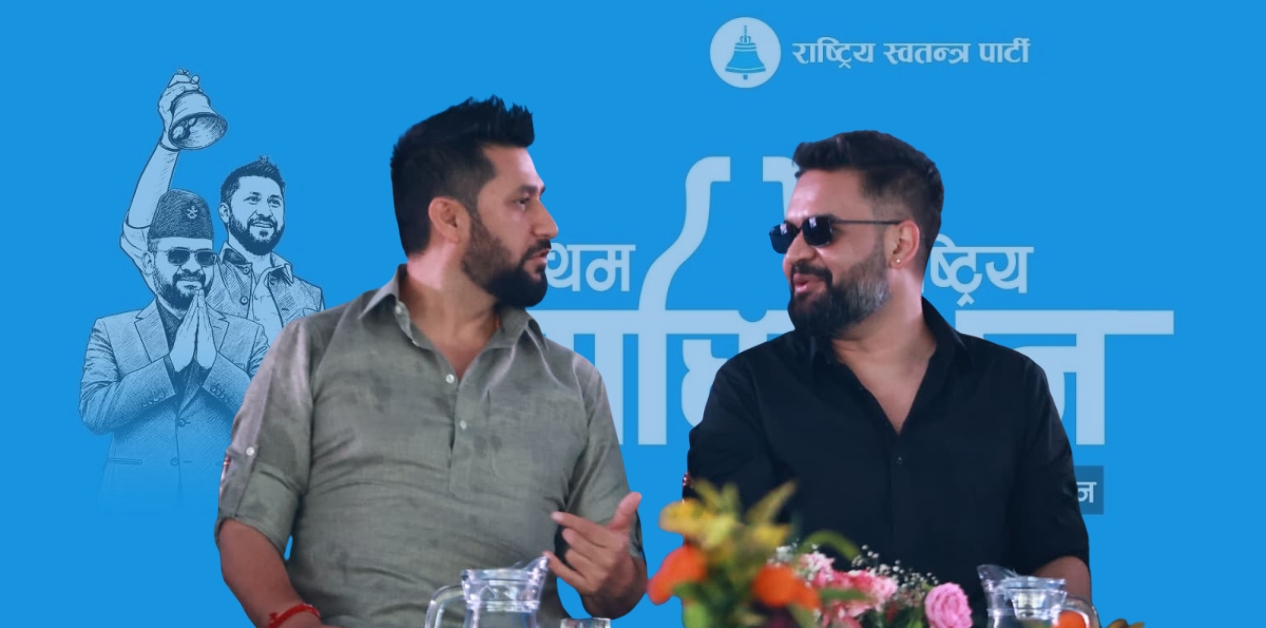
KATHMANDU: In several past speeches, Rabi Lamichhane, the chairman of the Rastriya Swatantra Party (RSP), mentioned that many of the party’s leaders and cadres entered politics out of sheer compulsion rather than through deliberate thought. Because the party is heavily populated by leaders and cadres from diverse backgrounds who lack long-standing political struggle and vision, there was internal confusion and external skepticism regarding the party’s true commitment to the existing system, democracy, and constitutional provisions.
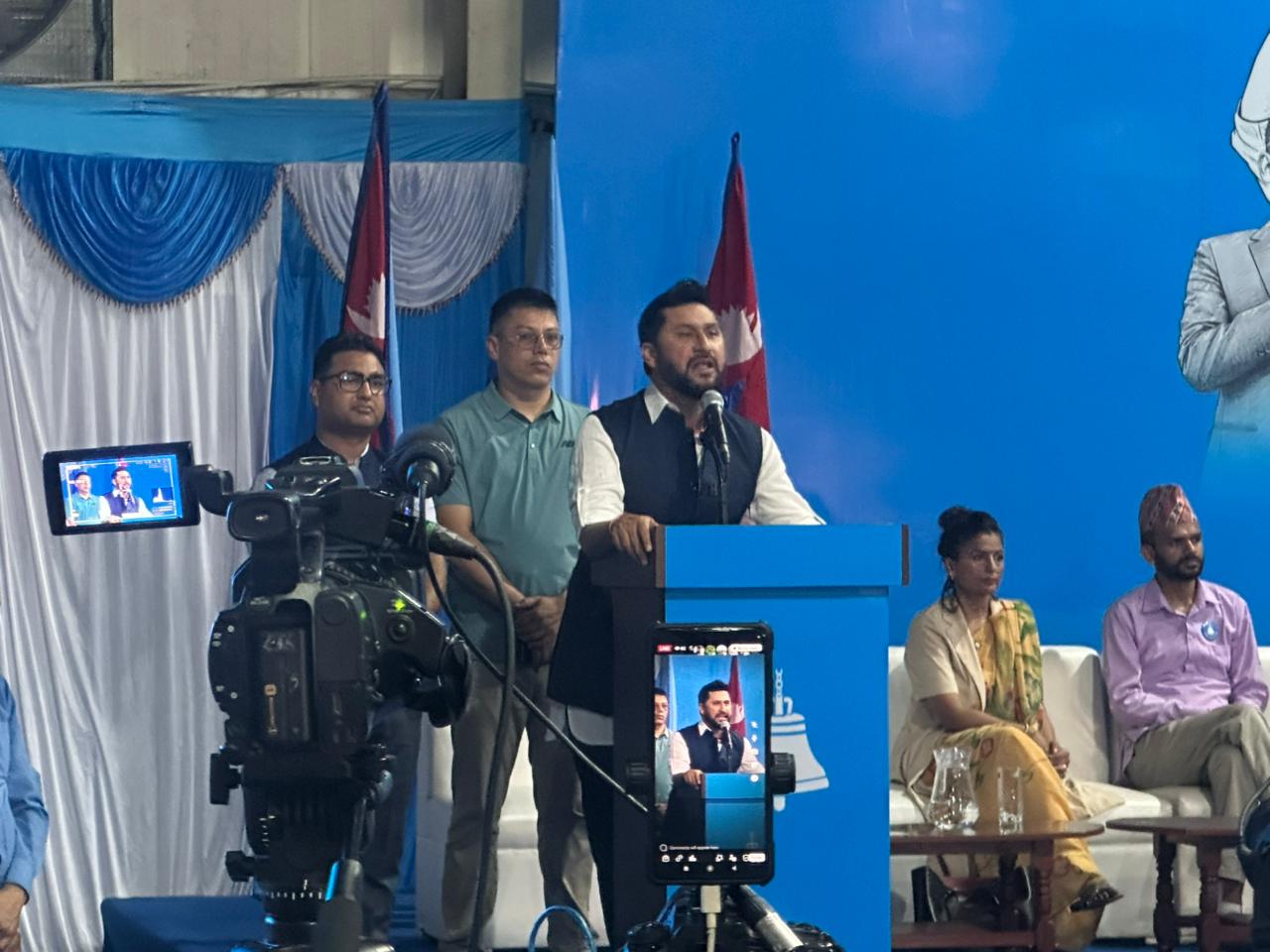
In the political report presented by Chairman Lamichhane at the ongoing RSP general convention in Chitwan, commitments have been made toward democracy alongside several other issues. Facing accusations of being ideology-less since its inception, the RSP unexpectedly emerged as a major force in the parliamentary elections following last year’s Gen Z protest. Given the rebellious nature of the movement that propelled it to power, there was widespread skepticism about how the party would treat the existing system. In this context, its commitment to certain fundamental principles is a positive step.
In the report, the RSP has adopted “Social Democracy” as its core political ideology. When the party was initially founded, it considered “Constitutional Socialism” as its guiding principle. While the shift toward social democracy is welcome, it must be analyzed from two distinct angles.
First, the practical application of any political ideology adopted by a party is what truly matters. The preamble of the Constitution of Nepal, 2015, states that the country’s political system is “oriented toward socialism.” This implies that parties adhering to the constitution must operate in a socialism-oriented manner. However, the very parties involved in drafting the constitution have neither appeared socialism-oriented nor shown genuine commitment to the fundamental needs of society. In the past, regardless of what ideological philosophy any party claimed to follow, there were no concrete programs or investments aimed at promoting collectivism or transforming state assets and institutions for the public good. In other words, they failed to act according to their own ideologies.
If the RSP claims to be a party committed to social democracy, this must be reflected in the policies, programs, and budgets introduced by the RSP government. Priority must be given to actions that align with this principle. The RSP even enjoys the advantage of a near two-thirds majority. The budget for the upcoming year must carry the tenets of social democracy. Yet, this year’s budget focuses more on promoting the market rather than enhancing social welfare.
The RSP cannot simply speak of political ideology in broad strokes. What are their specific, nuanced plans for social welfare under social democracy? Unless we clearly see how this reflects in their programs and how the government distributes resources, repeating the rhetoric of social democracy remains nothing more than a rote chant.
The second angle relates to political perspective. The biggest problem facing Nepal is not governance failure and corruption, as the RSP seems to understand. There is a much larger issue at play: regardless of the ideology or principles of the parties that have come to power, they have consistently failed to translate revenues and resources into public welfare. The responsibility to break this cycle of failure and work in a way that benefits the common citizens now rests heavily on the shoulders of the RSP, which sits in the seat of governance. It remains to be seen how it will work to transform the country’s resources for the benefit of the citizenry as a whole.
Our past experiences have already taught us that grand talk of physical infrastructure development alone is not enough. When discussing physical development, the primary focus must be on how communities will benefit from it. Only when development is carried out with the people and their socio-economic rights at the center can communities reap the rewards of public resources. There is a sharp question as to how sensitive and reflective the RSP will be on this matter. This is because the ruthless and immature manner in which this government has handled squatter management shows exactly what happens to the social and human aspects when focus is placed solely on infrastructure. Infrastructure development and preservation projects that ignore the community end up placing infrastructure on one side and alienating the people on the other. This model of development is a mockery of social democracy itself.
Ideologically speaking, social democracy means conceptualizing, working, thinking, and governing democracy with society at its center. Although society is central to this theory, the RSP’s understanding of the character of Nepali society remains unclear. Until the RSP articulates nuanced specifics regarding the collective character of our society, the broad concepts they preach will remain nothing but illusory talk.
The issue of social character can be understood through the language of development itself. Let us look at an example through what Prime Minister Balendra Shah has consistently referred to as development. Even if we look solely at the Sustainable Development Goals and the Human Development Index, they explicitly address multidimensional poverty. This is an admission that societal structures perpetuate multidimensional discrimination. If discrimination stems from multidimensional structures, it must also be addressed through multidimensional approaches. This means attention must be paid to all aspects, including human resources and overall development.
Until a political vision is adopted where investments in the country’s infrastructure development holistically elevate the human development index of the local community, social democracy will remain a hollow slogan. Our understanding and practice of development still focus heavily on infrastructure while keeping people at a distance or completely ignoring them. In reality, true development places people, not infrastructure, at its center.
Thus far, “people” are invisible in the RSP’s understanding of development. Balendra’s development model consists of chasing the poor off the streets without creating minimum state employment, and talking about parks and infrastructure while making no preparations for the permanent housing of displaced squatters. Claiming that it would properly manage the squatters, the government rapidly drove bulldozers into their settlements. The displaced individuals were taken and kept in temporary shelters called “holding centers.” However, they have now suddenly been given a few days’ ultimatum and told to leave these centers as well. The government must first recognize food, shelter, and clothing as fundamental rights for all citizens, and it must stop employing inhumane methods under the guise of addressing these issues. The government’s current actions further prove that it lacks any solid relocation plan while uprooting squatter settlements.
A development model stripped of humanity cannot be called social democracy. Until the RSP places human development, housing, and livelihoods at the core, it can claim to have achieved the most ambitious and grand milestones, but social democracy will be entirely absent from it. “Social” pertains to the community; it is about developing human beings holistically with collective welfare in mind. What blueprint does the RSP government possess to achieve that kind of development? If the RSP intends to pursue development in the coming days under the shadow of police batons and army guns, and maintain good governance solely through police force, then the rhetoric of social democracy must be understood as mere talk.
A dangerous governance path to avoid
The RSP’s report puts forward a proposal for a directly elected executive head. In a country like Nepal, our governance issue is not at all about a direct executive or stability. At the center of our governance failure lies a persistent tendency among rulers to practice personalized governance rather than building institutions or allowing them to grow strong. This tendency has created a mindset that an individual’s actions are everything, while institutions and processes mean nothing. The very problem previously seen in KP Sharma Oli is now dominant in Balendra Shah.
It is a characteristic of our society to resist institution-building and to elevate individuals above institutions. This practice has rendered institutions impotent, making it impossible for the system to perform even basic tasks. Consequently, public trust in institutions has eroded, and people are contemplating a governance system dominated by a single individual. We are suffering from one disease but seeking a cure for another.
When we strengthen institutions, make them paramount, subject every individual to their authority, and move toward a process guided by laws and systems, our governance will naturally improve. To achieve this, we must think of governance methods that place institutions at the center, not a directly elected executive head.
Transitioning to a directly elected executive increases the likelihood of an autocrat emerging in Nepal, as such a ruler will center everything around themselves rather than the institutions. A governance model that strengthens our existing, interconnected institutions is what serves Nepal best.
In our context, the problem lies in the governing mindset and character rather than the governance model itself. The welfare of the people and the community has been absent from the rulers’ thoughts. There has been a lack of priority, contemplation, and action regarding how to utilize the entire resources of the state for the community’s benefit. This becomes possible only when we transition into a governance practice that strengthens institutions regardless of which specific individual or party comes to power. Until we can enter such a practice, we will remain entangled in the misery of declaring one model a failure, bringing in another, and then seeking yet another alternative claiming that the new one failed too.
The country is being turned into a scapegoat through various forms of experimentation. The overall standard of the people can never advance under such methods. Therefore, a model that keeps the people at the center and strengthens institutions is the one appropriate for Nepal. The RSP’s report does not seem to have paid attention to this aspect at present.
The underlying intent of non-partisan structures
The RSP has also proposed making local elections and the National Assembly non-partisan. For any political party in Nepal to advocate for a partyless system is ridiculous. When a party claims that transitioning to a non-partisan practice would be wonderful, the underlying intent is to say that things are fine if it involves their own party, but not if it involves others. It is an indirect way of speaking only about themselves. In the past, the CPN (UML) and the Nepali Congress did not advocate for a partyless system, but they behaved as if their respective parties were everything and supreme. By advocating for a non-partisan structure today, the RSP is essentially saying that whatever exists, they alone represent it.
A political party advocating for non-partisan structures poses a danger to Nepal’s democracy as well as to social democracy. The RSP’s proposal to field non-partisan candidates in local elections is an experiment Nepal already conducted during the Panchayat era. Elections took place back then too, but they were ultimately controlled by the King.
The failure of making local levels non-partisan can be observed through the experience of our neighboring country, India. In India’s Gram Panchayat elections, representatives are chosen from among non-partisan candidates. Yet, many anomalies and problems persist within their local governments, and corruption continues to thrive. Therefore, the assumption that local problems will automatically be solved simply by having non-partisan candidates is deeply flawed.
(Based on a conversation with political scientist Gautam, conducted by Mani Dahal)