Kathmandu
Friday, June 26, 2026





Capital gains tax from share trading dropped to Rs 9.54 billion between mid-July 2025 and mid-June 2026, compared with Rs 15.27 billion in the same period last year, as a volatile secondary market and weak investor profits cut into government revenue despite a new budget provision meant to encourage trading.
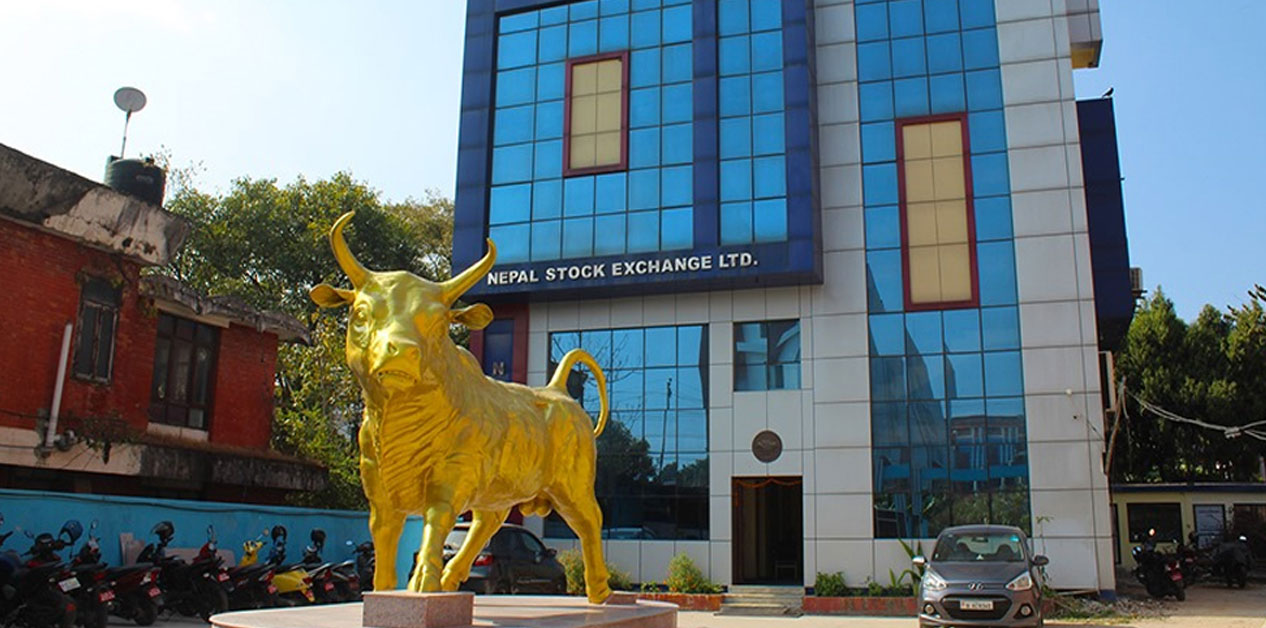
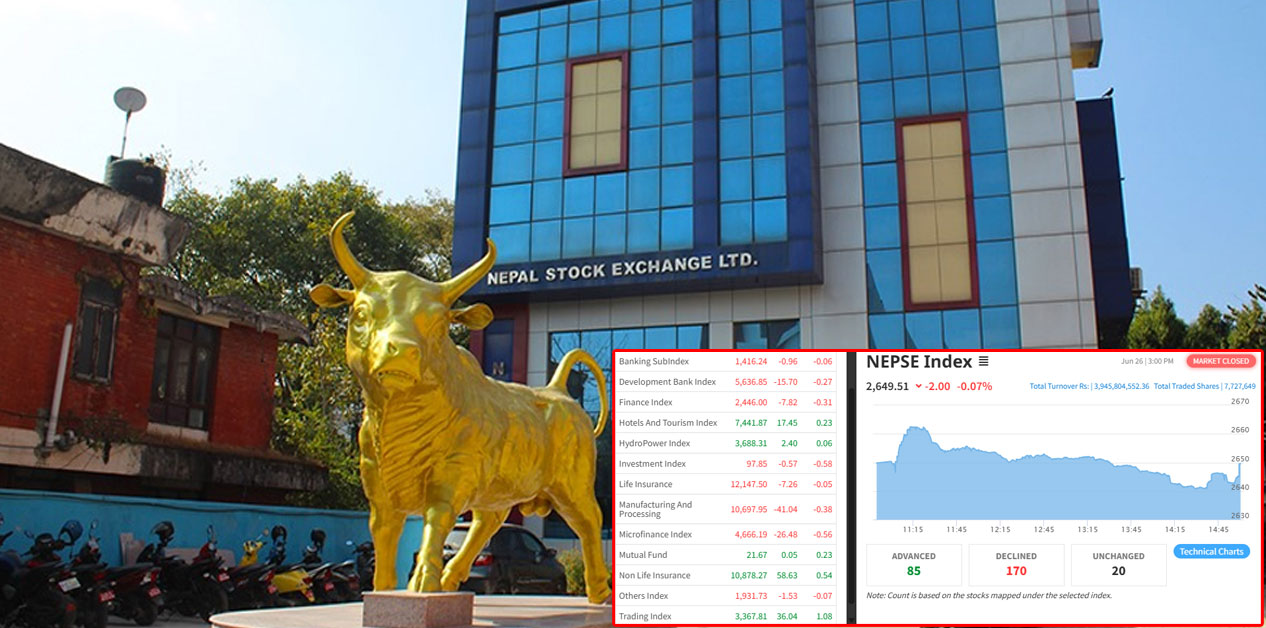
KATHMANDU: Nepal’s stock market has struggled to regain momentum for most of the current fiscal year 2025/26, with the NEPSE index hovering around the 2,700 point mark for extended stretches.
Capital gains tax, collected by brokers at the point of sale through CDS and Clearing Limited, depends directly on whether investors book profits.
Last fiscal year’s bullish run pushed collections to a historic high. This year’s volatility, compounded by political transition and weak corporate earnings, has pulled monthly revenue down sharply, even after the May 2026 budget tried to make the tax simpler and more predictable for investors.
How much capital gains tax has the government collected from the share market so far this fiscal year?
Between mid-July 2025 and mid-June 2026, covering the first eleven months of fiscal year 2025/26, the government collected Rs 9.54 billion in capital gains tax from share transactions on the Nepal Stock Exchange.
This figure comes from data maintained by CDS and Clearing Limited, the depository and settlement agency that processes share trades and deducts the tax at source whenever an investor sells shares at a profit. The amount represents a sharp drop compared to the Rs 15.27 billion collected during the same eleven month window of the previous fiscal year.
Because capital gains tax is deducted only on net profit and not on the full value of a transaction, this number is a fairly direct signal of how profitable trading has been for investors this year. The scale of the decline, more than a third lower than last year, reflects just how subdued market activity and investor returns have been through most of the fiscal year.
By what percentage did capital gains tax collection fall compared to last year?
Capital gains tax collection fell by 37.5 percent during the first eleven months of the current fiscal year compared to the same period last year. This means that for every roughly three rupees collected last year, the government received less than two rupees this year from the same source.
The decline did not happen evenly across the year. Some months saw revenue fall by far more than the average, while a few months actually performed better than the corresponding month last year. The overall percentage drop captures the cumulative effect of a market that opened the fiscal year on a stronger note before losing steam through the middle months and again toward the end.
Since capital gains tax depends on actual realized profits rather than total trading volume, a 37.5 percent fall suggests that investors collectively booked far smaller gains this year than during the comparable period of the previous fiscal year.
How did last fiscal year’s total capital gains tax collection compare to this year’s pace?
Last fiscal year, 2024/25, the government collected a record Rs 16.54 billion in capital gains tax for the full twelve months, the highest amount ever collected from the stock market in Nepal’s history. That record was achieved because the market entered a strong bullish phase that carried through to a high closing point around mid-July 2024, encouraging heavy trading and large realized profits.
This year’s pace, with only Rs 9.54 billion collected in eleven months, is running well below even the pro-rated equivalent of last year’s record performance.
If the final month follows the recent trend of declining collections, the full year total for 2025/26 is likely to fall considerably short of the previous year’s record, marking a sharp reversal after the market’s best fiscal year on record for tax contribution from share transactions.
What does the month by month breakdown show about capital gains tax collection this fiscal year?
The monthly figures show a highly uneven pattern. The fiscal year opened strongly in mid-July to mid-August, 2025 at Rs 2.15 billion, the best month of the year, before falling steeply to Rs 601.4 million in mid-August to mid-September.
Collection then dropped to its lowest point of Rs 243.6 million in mid-September to mid-October, before edging up to Rs 380.5 million the following month. Revenue improved gradually over the following months, reaching Rs 629.8 million and then Rs 584.3 million, before jumping unexpectedly to Rs 1.29 billion in mid-January to mid-February.
It eased again to Rs 551.5 million the following month, then surged to Rs 1.73 billion in mid-March to mid-April, the second highest month of the year.
Collection then declined to Rs 936.1 million and finally to just Rs 431.8 million in the most recent month, mid-May to mid-June, the latest data available.
Which month recorded the highest and lowest capital gains tax collection this fiscal year?
The highest monthly collection this fiscal year came in the very first month, mid-July to mid-August, 2025, when the government collected Rs 2.15 billion. This early peak reflected residual momentum from the bullish market conditions that had prevailed at the close of the previous fiscal year, when the index was at a relatively high level and investors who had bought earlier were able to sell at a profit.
The lowest monthly collection came two months later, in mid-September to mid-October, 2025 when revenue fell to just Rs 243.6 million. This sharp dip coincided with reduced trading activity and a period when the market had not yet found a new direction.
The contrast between these two figures, a drop of nearly 90 percent within two months, illustrates how quickly and dramatically capital gains tax revenue can swing depending on short term market sentiment and realized investor profits.
How does the latest month’s collection compare to the same month last year?
In the most recent month for which data is available, mid-May to mid-June, the government collected Rs 431.8 million in capital gains tax. During the same month last year, collection stood at Rs 1.17 billion, meaning this year’s figure is less than half of what was collected twelve months earlier.
This particular month is significant because it is the final full month before the fiscal year closes, and it often reflects whether investors are locking in profits or losses as the year winds down.
A weaker performance in this month, especially after a relatively strong showing in the previous month at Rs 936.1 million, suggests that market sentiment deteriorated again toward the end of the eleven month period covered by the data.

This pattern is consistent with the broader story of a market that has struggled to sustain any positive momentum for more than a month or two at a time this fiscal year.
What has been happening to the NEPSE index during this period?
Throughout much of the current fiscal year, the NEPSE index has remained range bound and has recently turned downward, currently trading around the 2,700 point mark. This is well below the all time high above 3,000 points reached in 2021 and reflects a market that has been unable to sustain any meaningful rally despite several developments that investors had hoped would boost confidence.
Neither the formation of a new government nor the presentation of a new national budget managed to lift the index meaningfully. In fact, the market continued to slide even after the budget addressed several long standing investor demands.
This sustained weakness in the benchmark index is directly connected to the fall in capital gains tax revenue, since a stagnant or declining index generally means fewer investors are able to sell shares at a profit, which in turn reduces the amount of tax collected at the point of sale.
How is capital gains tax actually calculated and collected on share transactions in Nepal?
Capital gains tax in Nepal’s share market is deducted at source by the broker at the time an investor sells shares, and it applies only to the net profit earned on that specific transaction, not to the total value of the sale.
If an investor sells shares for less than the purchase price, no tax is owed on that transaction, and any loss can in some cases be carried forward to offset future gains.
The broker calculates the gain using the weighted average cost of the shares held, accounts for the holding period to determine whether the long term or short term rate applies, and then remits the deducted tax to the government through the depository system managed by CDS and Clearing Limited.
Because the tax is tied so closely to actual realized profit rather than trading volume, it serves as a fairly accurate barometer of how successful investors have been at making money from the market in any given period.
What changes did the latest national budget make to capital gains tax rates?
The national budget presented on May 29, 2026 made capital gains tax the final withholding tax on share transactions, meaning individual investors no longer need to account for these gains separately in their personal income tax returns or face additional tax liability based on their income bracket.
This was a long-standing demand from the investment community, since it removes uncertainty about how share profits would ultimately be taxed. At the same time, the budget raised the tax rates themselves.
The long term capital gains tax, applicable to shares held for more than one year, went up from 5 percent to 7.5 percent. The short term rate, applied to shares sold within a year of purchase, rose from 7.5 percent to 10 percent.
This combination of simplified rules but higher rates created a mixed reaction among market participants, who welcomed the clarity but were less enthusiastic about the increased tax burden on their gains.
Did the tax changes in the new budget help boost the market or tax collection?
So far, the changes have not produced the positive effect that many investors and market watchers had hoped for. Although the policy now offers more certainty by making the tax final rather than subject to later adjustment, the higher rates appear to have offset much of the goodwill generated by that clarity.
Trading volumes and the index itself continued to decline in the weeks following the budget announcement, and the most recent monthly tax collection figures available do not show any meaningful improvement.

Finance Minister Swarnim Wagle
Some market analysts have pointed out that the core structural issue, namely that the tax is calculated on individual transactions rather than on an investor’s overall annual portfolio performance, remains unaddressed, meaning that losses in one transaction still cannot offset gains in another within the same year.
This structural limitation, combined with weak corporate earnings across listed companies, has limited the impact of the tax finality provision on overall investor sentiment.
Why does a fall in tax revenue indicate that investors are struggling to profit from the market?
Capital gains tax is only charged on net profit from a sale, and no tax is owed when shares are sold at a loss. This design means that the total amount of tax collected each month is closely tied to how much real profit investors are actually able to realize during their trading activity, regardless of how many shares change hands.
A steady decline in monthly collections, even during months when trading volume on the exchange has not fallen dramatically, points to a situation where investors are either selling at smaller profits than before or are increasingly selling at a loss and therefore paying no tax at all.
This is different from a simple slowdown in market activity, since lower trading volume alone would not necessarily produce such a sharp percentage decline in tax revenue.
The pattern observed this fiscal year suggests that profitability for the average investor has weakened considerably compared to last year’s bullish conditions.
How significant was last fiscal year’s record collection compared to history?
Fiscal year 2024/25, which ended in mid-July 2025, produced a record Rs 16.54 billion in capital gains tax from share transactions, the highest amount ever collected from Nepal’s secondary market in a single fiscal year.
This record was driven by a sustained bullish run that pushed the market to a high closing level by the end of that fiscal year, encouraging heavy trading and allowing many investors to realize substantial profits.
Previous peak years, including the period during and after the COVID-19 pandemic when the market experienced unusually high trading activity, had produced collections in a similar high range, but last year’s figure surpassed those earlier records.
This context makes the current fiscal year’s decline all the more pronounced, since the comparison base itself was an exceptionally strong year rather than an average one, meaning part of the steep percentage drop reflects how unusually high last year’s collection was rather than only how weak this year has been.
What other factors besides tax rates have contributed to the weak performance of the market this year?
Several factors beyond the tax changes have weighed on market sentiment this fiscal year. A change in government during the year created a period of political transition that some investors viewed with caution, even though the market initially reacted positively to the new administration.
Corporate earnings across many listed companies, particularly outside the banking and hydropower sectors, have remained relatively weak, limiting the dividend payouts and profit growth that typically attract investor interest.
Broader macroeconomic conditions, including subdued business loan demand and cautious lending activity by banks and financial institutions, have also played a role in keeping market turnover lower than in previous bullish periods.
Additionally, ongoing regulatory uncertainty, including discussions around margin lending rules and the holding period requirements for institutional investors, has added to a general sense of caution among traders.
Together, these factors help explain why the market has remained stuck in a relatively narrow range rather than building sustained upward momentum during the year.
What does this trend suggest for the government’s revenue planning going forward?
A sustained decline in capital gains tax revenue from the share market has implications for the government’s broader revenue planning, since this tax has in recent years become a meaningful contributor to overall fiscal collections.
If the current fiscal year closes with total collection well below last year’s record, the government will need to rely more heavily on other revenue sources to meet its targets, particularly given that the budget for the upcoming fiscal year was framed partly with the expectation that simplifying the capital gains tax regime would help sustain or grow collections from this source.
The experience this year also offers a practical lesson for future revenue forecasting, since it shows how closely this particular tax tracks market sentiment rather than economic activity more broadly.
Going forward, policymakers may need to factor in this volatility more explicitly when projecting capital market related revenue, rather than assuming that a single strong year sets a stable baseline for years to come.
Is there any indication of how the final month of the fiscal year might perform?
The most recent available data runs through mid-June 2026, leaving only the final month of the fiscal year, which closes in mid-July, still to be recorded. Based on the trend visible in the data, where collection fell from Rs 936.1 million to just Rs 431.8 million in the most recent month, momentum entering the final month appears weak rather than strengthening.
The NEPSE index has also continued to trend downward into mid-June, trading around the 2,700 point level without showing a clear sign of reversal. Unless there is a notable improvement in trading activity or a meaningful rally in share prices during the final weeks of the fiscal year, the eventual full year total for capital gains tax collection in fiscal year 2025/26 is likely to remain substantially below last year’s record of Rs 16.54 billion.
Market watchers will be looking closely at trading patterns in the final month to see whether any late recovery can narrow the gap before the fiscal year officially closes.