Kathmandu
Sunday, June 28, 2026





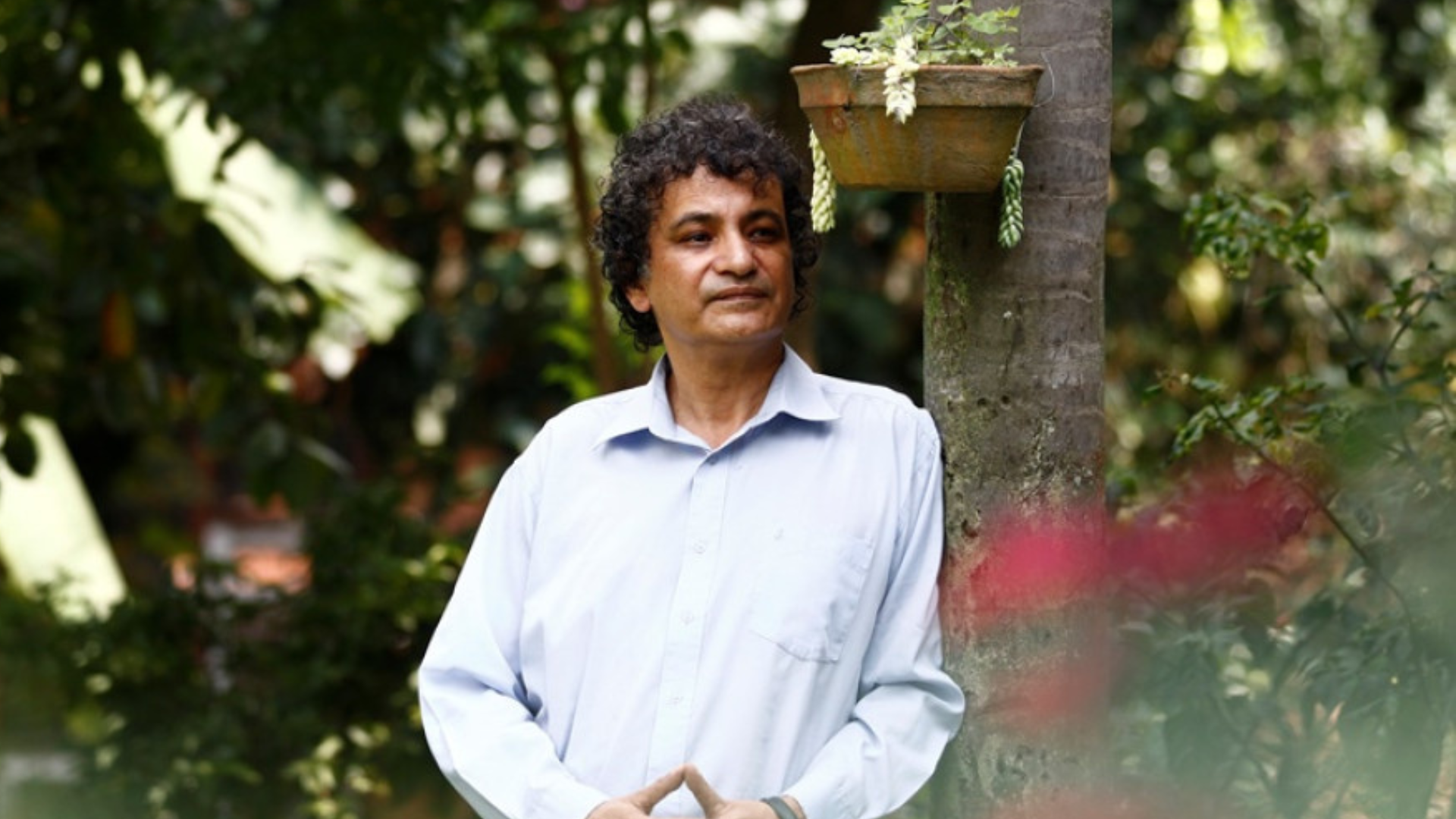
Along with his literary creation and academic work, Sanjeev Uprety is a familiar face found at the forefronts of civic movements. The creator of the fictions Ghanachakkar and Hansa, Uprety has also published a non-fiction work titled Siddhantaka Kura (Matters of Theory). Writing and speaking on diverse topics as a cultural critic and political analyst, Uprety is an advocate for an egalitarian society and social justice. Associated with the Brihat Nagarik Andolan (Broad Citizen’s Movement), he has been consistently raising his voice against various issues of structural discrimination.
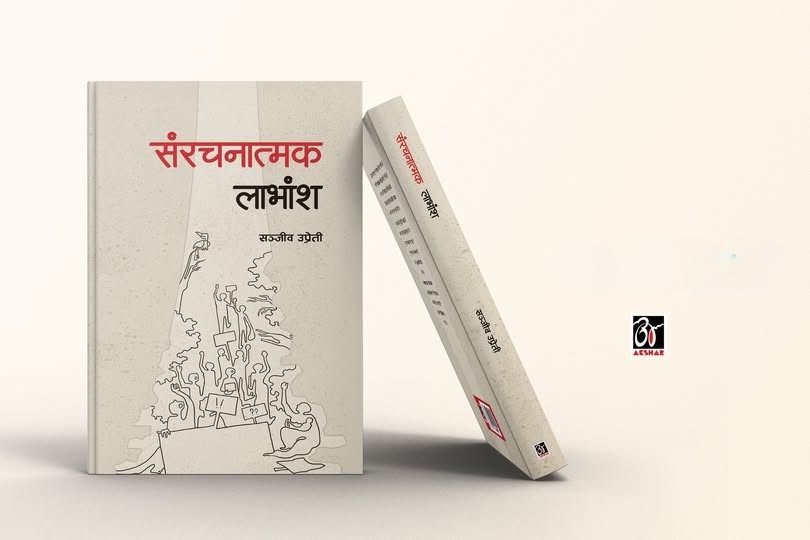
Uprety’s new book, Sanrachanatmak Labhansha (Structural Dividend), is being released today. Through this book, described as self-critical non-fiction, the author attempts to examine discrimination based on caste, gender, class, race, religion, and sexuality in Nepali society from a personal-political angle. This is the first book under the ‘Devendra Raj Pandey Lecture Series,’ published by Akshar Creations. Prabhaakar Gautam conversed with author-activist Uprety around his new book, Sanrachanatmak Labhansha:
What kind of a concept is ‘Structural Dividend’?
In society, almost everyone has access to some form of dividend or another—based on caste, class, gender, geography, language, physical ability, and technological access. People do not have to work hard to obtain these dividends; they come attached to the coincidence of birth. This does not mean denying that people achieve success in life through a combination of hard work and talent. Hard work is important, and talent is equally significant. However, besides hard work and talent, an individual’s achievements are continually aided by various types of structural dividends.
Why is this concept important in Nepal’s current political context?
We say we live in a country that embraces democracy and social justice. But while democracy seems to function perfectly fine for some people, words like ‘democracy’ and ‘social justice’ have become hollow for many others. Looking at society while participating in the Broad Citizen’s Movement, I understood that justice is not equally available to all. Even when big fish involved in corruption crimes are caught, they are often released quickly. Many predatory lenders enjoy political protection. Conversely, ensuring the guarantees of democracy and social justice is extremely difficult for the victims of predatory lending, the landless, and other marginalized communities.
In other words, the more structural dividend someone possesses, the easier it is for them to attain justice. It is also much easier for them to secure the promises of democracy. When the Congress, Maoist, and UML governments were in power, their leaders merely gave speeches about socialism, democracy, and justice. Even the current new government appears elitist. Leaders show no awareness of the various privileges they have been receiving, nor do they possess empathy for those who do not receive such dividends. A true practice of democracy will happen only when this type of awareness and empathy develops not just in leaders, but in all citizens. Only then will every citizen experience a just democratic practice.
You have called this book a self-critical non-fiction. Why did you find it necessary to question yourself publicly?
The very problem of today’s so-called modern societies (not just in Nepal) is the fading capacity for self-criticism. We hurry to criticize others, but hesitate to ask ourselves uncomfortable questions. Since I am an educated man born into a middle-class, so-called high caste and living in Kathmandu, I have received numerous dividends regarding class, caste, geography, and gender. If I had not received those dividends, I would have had to struggle a lot more in life. The landless, the victims of predatory lending, and the women and Dalit community members who came from Nepalgunj seeking justice—whom I met during the movements—were no less hardworking than me. Perhaps they all had their own natural talents as well. But why must they always remain at the bottom of the socio-political structure? And why should ladders of success be easily available to the likes of me?
The true practice of self-criticism begins only when one starts asking oneself such questions. Otherwise, one develops a habit of self-criticizing while staying within a ‘comfort zone.’ This kind of ‘easy self-criticism’ might provide a ‘liberal kick,’ but it cannot become a vehicle for self-transformation. After getting involved in the movements, I felt that this is not just my personal experience, but the story of everyone who believes in social justice and democracy. That is why I began questioning myself publicly.
Why is it necessary for academics and activists, who view others with a critical eye, to look at themselves with that same gaze?
Senior leaders of all major political parties in Nepal were associated with some movement or another. Some of them even shared the dream of revolution while leading armed rebellions. They later reached the government and became parliamentarians, ministers, and even prime ministers. However, even after the promulgation of the new constitution in the country, the situation of women, Dalits, Madheshis, and Indigenous Nationalities (Adivasi-Janajati) could not change according to the promises made by the leaders. It remains difficult for many grassroots citizens to get justice even today. The web of corruption spread across the country. Although ensuring 33 percent representation of women in all state organs was guaranteed in the constitution, with few exceptions, women’s representation was made merely as a token. So-called ‘high caste’ men continued to occupy the seats of decision-makers. Even when Dalit youths were mass-murdered in Rukum, leaders possessing structural dividends expressed their insensitivity in the public sphere. Among various reasons for all this, one was that those termed ‘high’—who receive abundant structural dividends tied to caste, class, geography, and gender—did not or did not want to develop a self-critical consciousness regarding those who receive fewer or no structural dividends.
All of this indicates that the storm of the movement could not blow inside the hearts of the leaders who led movements and rebellions in the world. They considered the movement merely as an external tool to transform the world. Because the ideology of patriarchy and feudalism remained deeply rooted in the world of their inner minds, the correct practice of democracy and social justice could not take place. Due to the presence of democratic practices, structures, and institutions—including a multi-party system, periodic elections, an ‘independent judiciary,’ parliament, and commissions—the facade of democracy remained, but as Devendra Raj Pandey said, the ‘consecration of life’ (prana-pratishtha) of democracy vanished.
To understand this aspect and remain conscious of a solution, activists must be continuously aware of their various dividends. If we write and speak in favor of social justice, it is essential to change our behavior by being aware of what kind of dividends we ourselves are enjoying and how those dividends helped us reach the position to write and speak. In other words, it is necessary to run the movement not just on the streets, but within our own minds and behaviors. It is necessary to keep shaking ourselves up through the application of a self-critical consciousness.
Following the acknowledgment of structural dividends, what kind of transformation do you expect within yourself as a writer or activist?
At one time, I was very active in the citizen’s movement. Although we were clear that a citizen’s movement should not have any formal leader, from a practical standpoint, someone or another had to step forward. After Yuga Pathak got involved in other works and Narayan Wagle became busy with an agricultural farm in Tanahun, I ended up becoming more active.
Later, I started questioning myself—why was it easy for men like Narayan and me, who belong to a so-called high caste and middle class, to remain active in the movement? Why was it difficult for friends from Dalit, women, and other marginalized groups to show continuous activism? Was this also not because of the various structural dividends we had been receiving? It was after this that we brought the concept of ‘passing the mic’ into practice, putting forward friends from marginalized groups including women, Janajatis, and Dalits, while practicing remaining in a supportive role ourselves. This path is not easy because inequality is embedded in the very structure of society. Therefore, our efforts could achieve only partial success. However, some positive scenarios have appeared after the Gen-Z movement. Many young friends have started taking leadership.
As a citizen, I am striving to walk on the path of transformation. Today, I do not claim that all my structural insensitivities have ended and that I have become completely ‘free.’ My insensitivities may still exist. I am in the process of trying to understand and resolve them. Sanrachanatmak Labhansha was not written by sitting on some pinnacle of absolute knowledge. It was written while walking along the changing paths of thoughts, life experiences, and expressions.
While writing the book, did a moment come when you had to reconsider any of your preconceived notions?
Many such moments arrived. Since the book combines a structural dividend (a theoretical concept) and a self-critical consciousness (a methodology or approach), there was a need to point the lens of analysis not just toward the external world, but toward my own life experiences. There was a need to constantly question the self-identities attached to my own class, caste, gender, and geography. I even had to question the words I used. Sometimes, language itself becomes an expression of structural insensitivity. At one time, I used to use the phrase ‘structural blindness’ instead of ‘structural insensitivity.’ But during a program in Surkhet, a visually impaired woman questioned me—doesn’t the terminology ‘structural blindness’ that you used do an injustice to those who cannot see?
I found her point correct. The word chosen in the process of explaining structural insensitivity was actually reflecting my own insensitivity.
In today’s digital age that encourages self-praise, what are the challenges of intellectual debate accompanied by self-criticism?
In today’s algorithmic digital age, people are becoming even more self-centered. A person who sits counting ‘likes,’ ‘retweets,’ and ‘followers’ on social media hurls plenty of abuse at others online, but does not self-criticize. If I think I know everything, I don’t have to question myself at all. If I think that what I know is partial and incomplete, and that my views can change over time, it reduces personal ego and makes a person humble. The acknowledgment of the limitations of one’s knowledge creates the right ground even for intellectual debate. If I think I have understood all the mysteries from the beginning to the infinity of this universe, and that my opinion is timeless, unchangeable, and superior, then an intellectual debate cannot happen at all.
And another thing, our thoughts are often not original but are constructed by various narratives or ideologies operating in society. In this context, I would like to quote the final lines of my book Siddhantaka Kura, published in 2011: ‘Only by understanding what kind of ideologies are internally directing our emotions and so-called original thoughts can we truly be free. An attempt to confront oneself can be made only if the layers of ideology are peeled off one by one, like the layers of an onion. The emptiness created as the layers of established thoughts and beliefs peel away might cause terror. It might also breed the fear of disrupting one’s class, caste, gender, and institutional identity. However, that emptiness can also become the first step in the effort to find oneself. Perhaps, across the horizon of terror, lies the possibility of freedom’ (2068 BS : 330). Intellectual debate accompanied by self-criticism begins from this very point.
Who are the target readers of this book? Do you have any expectations from those readers?
This book is for everyone committed to the ideal of social justice. I feel that concepts like structural dividend, structural insensitivity, and self-critical consciousness will become even more relevant in the future. As newer technologies develop, new types of dividends will also emerge. I have discussed this somewhat in the book under sub-headings like ‘Cultural and Digital Capital’ and ‘Technological Dividend at the Margins of the Global Economy.’
I believe that the correct practice of democracy ultimately depends on self-critical citizens. A citizen who does not consider their own experience as the absolute truth. One who can identify their dividend and accept their limitations. For democracy, such citizens are no less important than leaders and parliamentarians. Institutions give structure to democracy. But civic consciousness gives democracy its soul.



![Crepe myrtle beauty spilled across the streets of Bharatpur [Photo feature]](https://english.nepalnews.com/wp-content/uploads/2026/06/flower-cover.jpg)