Kathmandu
Saturday, July 4, 2026





Faster exams, digital classrooms and cleaner university governance mark early progress. Transforming what Nepali students actually learn remains the harder task. Building a system that delivers better learning, stronger rural schools and globally competitive graduates remains the unfinished challenge.
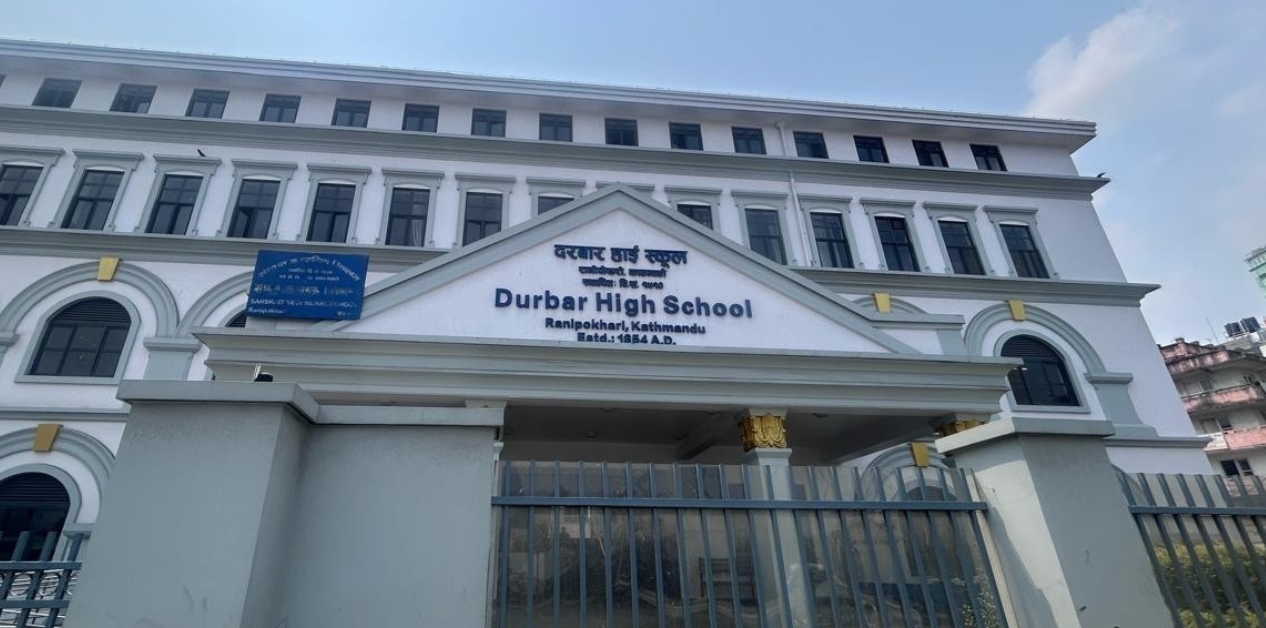
KATHMANDU: Education reform has become one of the most ambitious pillars of Prime Minister Balendra Shah’s first 100 days in office. Rather than announcing large infrastructure projects or sweeping increases in public spending, the government has concentrated on governance: accelerating examination results, digitising public services, reducing political interference in universities and modernising curriculum design. The emphasis reflects a broader philosophy running through the administration’s reform agenda-that improving institutions may matter more than expanding them.
There have been measurable administrative gains. For the first time in Nepal’s history, the results of the Secondary Education Examination (SEE) were published just 29 days after the examinations concluded, a dramatic improvement over the traditional three-month wait. Grade 12 results followed within 39 days, demonstrating that bureaucratic inertia can be overcome when administrative priorities align. Although such reforms may appear procedural, they reduce uncertainty for hundreds of thousands of students whose academic and career decisions often hinge on delayed examination schedules.
The government has also moved to rethink assessment itself. From the next academic year, internal examinations up to Grade 5 are set to be abolished in favour of continuous and child-friendly assessment methods. The policy reflects growing international evidence that excessive testing at an early age can undermine learning and place unnecessary psychological pressure on children. Curriculum authorities have already issued implementation guidelines, suggesting that the reform is moving beyond policy announcements.
Digitalisation has become another defining feature of the ministry’s agenda. The national digital learning platform, Sikai Chautari, now offers textbooks, videos, quizzes and interactive learning materials accessible even in low-bandwidth environments. Administrative reforms—including online No Objection Certificates (NOC) for students studying abroad, digital signatures, complaint-management systems and electronic verification of academic certificates—have reduced paperwork while improving efficiency.
The administration has also targeted one of Nepal’s most entrenched institutional problems: the politicisation of universities. For decades, university campuses have functioned as extensions of national political parties, with student organisations occupying offices, influencing appointments and frequently disrupting academic life. The government’s decision to replace partisan structures with non-political student councils represents one of the boldest attempts in years to depoliticise higher education. Tribhuvan University and several other public institutions have already begun removing party-affiliated organisational infrastructure from campuses.
Faster examination results improve administration, but they do not necessarily improve what students learn. Nepal continues to struggle with low learning achievement, weak foundational literacy and numeracy, teacher absenteeism and wide disparities between urban and rural schools. None of these structural challenges has yet been addressed through a comprehensive national strategy.
Governance reforms extend further. Universities are introducing more transparent procedures for senior appointments, while authorities have launched investigations into the long-standing abuse of paid study leave by academic staff. Hundreds of millions of rupees have already been recovered from lecturers who failed to return after overseas study, highlighting weaknesses in institutional oversight that previous governments largely ignored.
Curriculum reform is also gathering momentum. A high-level committee has begun redesigning Nepal’s national curriculum from early childhood education through Grade 12. The review aims to integrate technological change, artificial intelligence, entrepreneurship and evolving labour-market demands while consulting educators, businesses and students. Simultaneously, the government plans to amend legislation governing all fifteen public universities, potentially creating a more coherent framework for university governance and leadership appointments.
Taken together, these initiatives represent perhaps the most comprehensive administrative reform programme the education sector has seen in recent years.
Yet administrative efficiency should not be confused with systemic transformation.
The government’s agenda remains notably stronger on governance than on educational outcomes. Faster examination results improve administration, but they do not necessarily improve what students learn. Nepal continues to struggle with low learning achievement, weak foundational literacy and numeracy, teacher absenteeism and wide disparities between urban and rural schools. None of these structural challenges has yet been addressed through a comprehensive national strategy.
Perhaps the most striking omission is the absence of a clear rural education strategy. Thousands of community schools in remote districts continue to face declining enrolment, teacher shortages, inadequate digital connectivity and deteriorating infrastructure. Migration has emptied classrooms across many hill and mountain communities, while urban schools face growing overcrowding. Although digital platforms offer new opportunities, they cannot compensate for schools lacking reliable electricity, internet access or qualified teachers.
Administrative reforms can improve efficiency, but they cannot fully substitute for investment.
Teacher reform remains another unfinished agenda. Nepal has yet to introduce a comprehensive framework linking teacher recruitment, professional development, classroom performance and accountability. The long-delayed School Education Bill-which would redefine teacher management, school governance and the respective responsibilities of federal, provincial and local governments—remains unresolved. Without clarity on these institutional questions, many reforms risk remaining fragmented.
Higher education faces equally profound challenges. Nepal continues to produce graduates whose skills often fail to match labour-market demand, contributing to high levels of youth migration. The government has proposed curriculum reform and university governance changes, but it has yet to articulate a broader strategy linking universities with research, innovation, industry and employment. World-class universities are not built through legislative amendments alone; they require sustained investment in faculty, research funding, international collaboration and academic freedom.
Financing also remains a concern. Despite the government’s reform narrative, education spending remains constrained, leaving limited fiscal space for expanding school infrastructure, improving laboratories, modernising vocational education or upgrading teacher training institutions. Administrative reforms can improve efficiency, but they cannot fully substitute for investment.
Nor has the government announced any genuinely transformative flagship project comparable to the education reforms undertaken by several fast-growing Asian economies. There is no nationwide strategy to dramatically improve English proficiency, STEM education, technical and vocational training, artificial intelligence education or digital skills at scale. Such initiatives are increasingly central to international competitiveness but remain largely absent from Nepal’s current reform agenda.
The government also faces the challenge of balancing educational reform with political reality. Removing partisan influence from universities is institutionally desirable, but implementation will inevitably face resistance from established political organisations whose influence on campuses has been built over decades. Sustaining reform will require consistent political commitment beyond the enthusiasm of the administration’s first 100 days.
For now, Nepal’s education system has gained momentum. It has yet to acquire a long-term strategy capable of fundamentally reshaping the country’s human capital.
Perhaps the greatest test lies not in policy design but in implementation. Nepal has historically produced no shortage of education commissions, strategic roadmaps and curriculum revisions. Many have delivered thoughtful recommendations that ultimately faded amid bureaucratic inertia, political turnover and weak execution. The current administration’s credibility will depend on whether its reforms survive beyond ministerial announcements and become embedded within educational institutions themselves.
Even so, the government’s first 100 days have shifted the conversation. Rather than focusing exclusively on budgets and infrastructure, policymakers are increasingly discussing governance, accountability, curriculum relevance and institutional performance. That is a meaningful change.
Whether it proves to be the beginning of a genuine educational transformation-or merely another cycle of administrative reform-will depend on the government’s willingness to confront the deeper structural problems it has so far only begun to address. For now, Nepal’s education system has gained momentum. It has yet to acquire a long-term strategy capable of fundamentally reshaping the country’s human capital.