Kathmandu
Saturday, July 4, 2026





Backed by an unprecedented public mandate, the Balen-led government began with bold ambitions, but its first 100 days have also been marked by serious controversies and growing concerns over governance, constitutional restraint and institutional accountability.
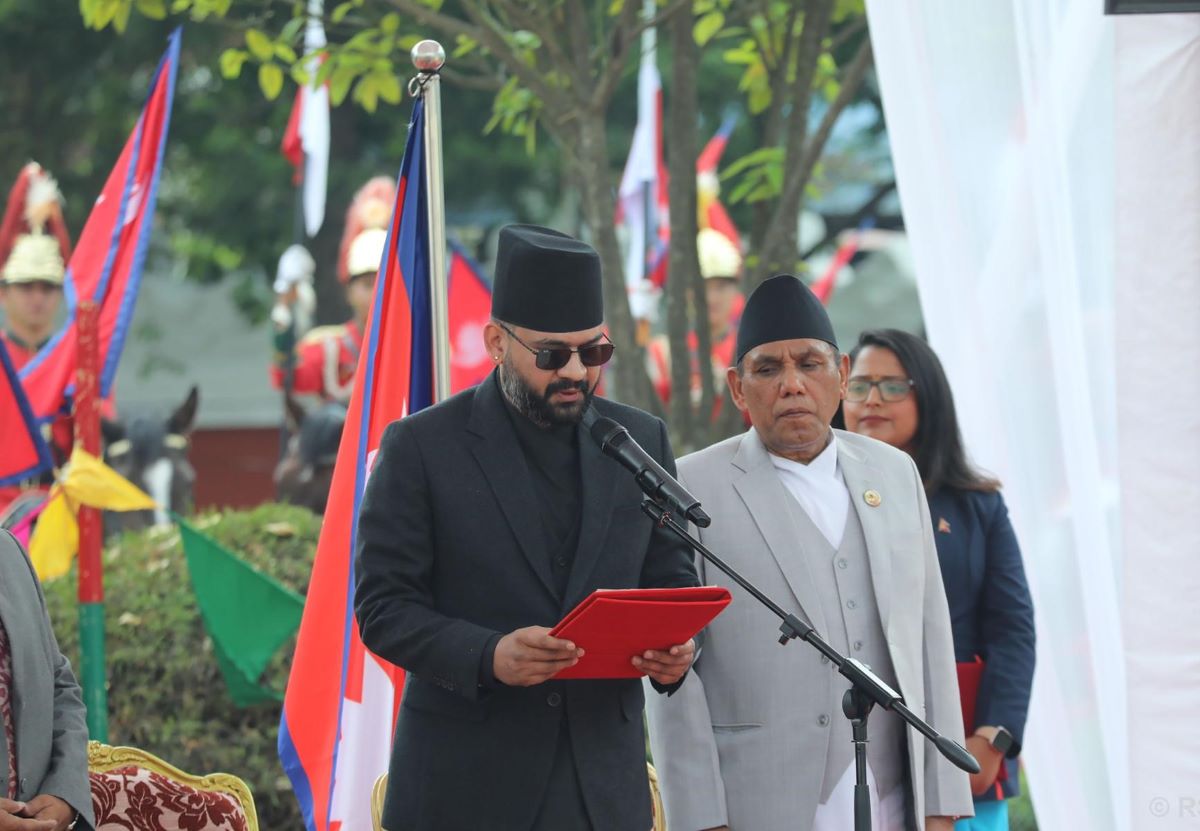
KATHMANDU: Few governments in Nepal have entered office with expectations as high as those confronting Prime Minister Balen Shah. His overwhelming electoral mandate represented more than a routine change of administration. It embodied a popular revolt against decades of entrenched political parties, patronage networks, bureaucratic inertia and chronic impunity. Voters were not merely replacing one government with another; they were demanding a fundamentally different way of governing.
Such moments create extraordinary political capital. They also impose extraordinary responsibility. The first hundred days of the Shah government therefore deserve examination not simply as a symbolic milestone, but as the government’s first serious test of whether an insurgent political movement can successfully transform itself into a functioning state.
The verdict remains mixed. The government has undoubtedly displayed ambition. It has attempted to challenge long-standing bureaucratic practices, promised cleaner governance, embraced digital reforms and projected an image of decisiveness rarely associated with Nepal’s governments. Yet the same period has also been marked by administrative inexperience, constitutional controversies, centralisation of decision-making and an increasingly confrontational governing style that has raised questions extending far beyond routine political criticism.
The government’s greatest challenge is no longer winning public support. It is preventing that support from slowly eroding.
Controversy and the limits of disruption
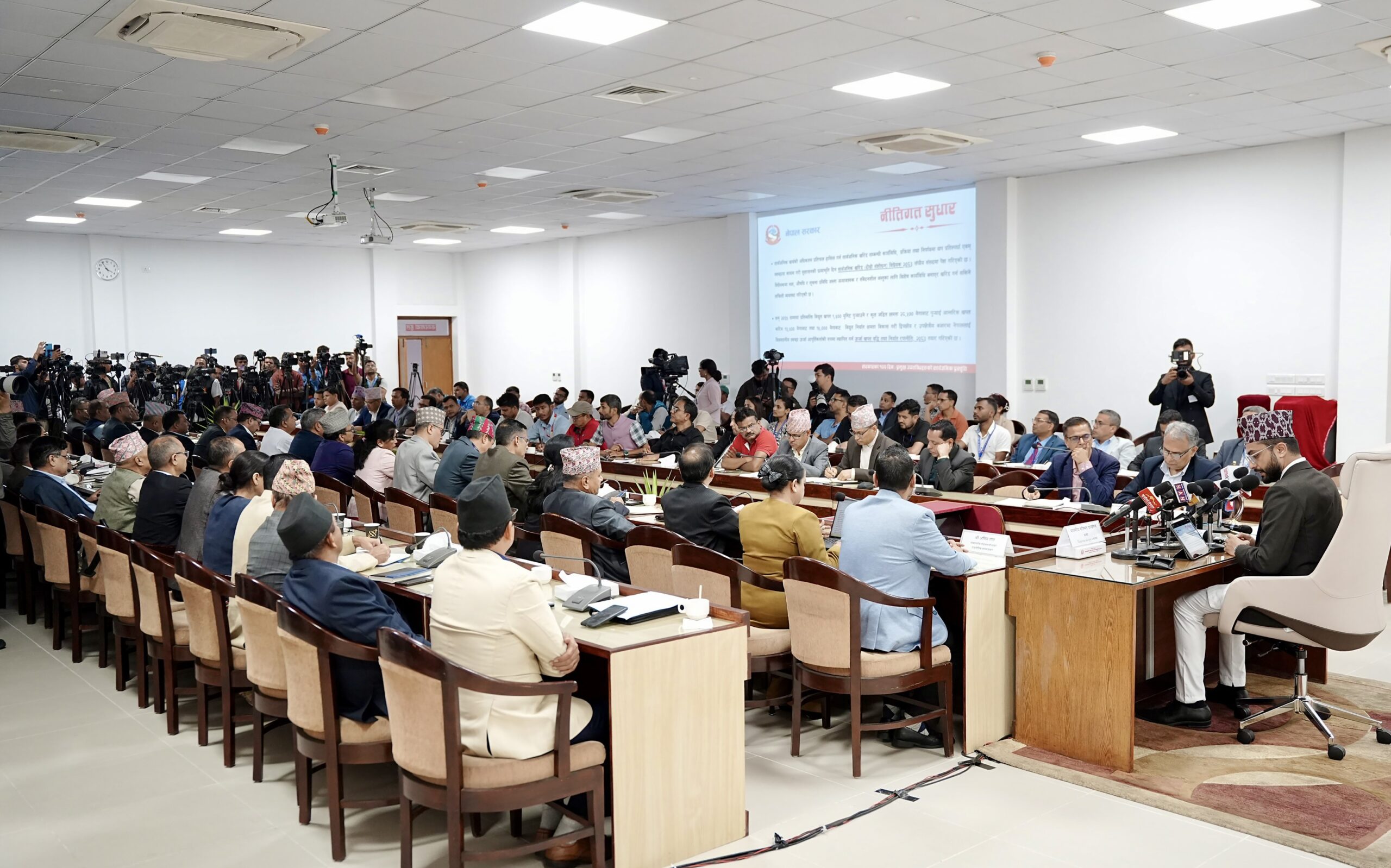
Prime Minister Balendra Shah’s government entered office promising an ambitious programme of institutional renewal. Alongside the swearing-in of the new cabinet, it unveiled a 100-point governance agenda to be implemented within its first 100 days-an unusually detailed blueprint that sought to signal urgency, administrative discipline and a break from Nepal’s incremental politics.
Many of those commitments have either been implemented or are in various stages of execution, according to government officials. The agenda included commitments to prepare a discussion paper on constitutional amendment, establish a task force to forge a common national agenda based on political parties’ election manifestos, depoliticise the civil service, and accelerate long-delayed governance reforms.
Yet the government’s first 100 days have also exposed a recurring tension between speed and process. While the administration has projected itself as an energetic reformer, critics argue that several of its most consequential decisions have raised concerns about constitutional restraint, institutional accountability and the rule of law.
One early pledge remains notably unfulfilled: the government’s commitment to establish a high-level commission of inquiry within a week to investigate the events of September 9, 2025. The delay has fuelled questions about whether political commitments are translating into institutional action with equal urgency.
The government’s decision to abolish trade unions within the civil service was welcomed by many who viewed the move as reducing entrenched political influence inside the bureaucracy. Yet the reform has produced an irony of its own. While one form of partisan interference may have been removed, critics argue that a new layer of political influence has emerged through the rapid expansion of the Prime Minister’s Secretariat and advisory teams, whose growing role in day-to-day administration has prompted concerns about informal centres of power operating alongside the permanent civil service. Some former bureaucrats argue that the increasingly active advisory structure has weakened bureaucratic morale and blurred lines of administrative authority.
The government’s legislative approach has generated similar debate. Although it initially promised to introduce a comprehensive Federal Civil Service Bill within 45 days, it later opted to amend key provisions through ordinances instead of parliamentary legislation. For supporters, the decision reflected administrative urgency; for critics, it reinforced concerns that executive expediency was taking precedence over parliamentary deliberation.
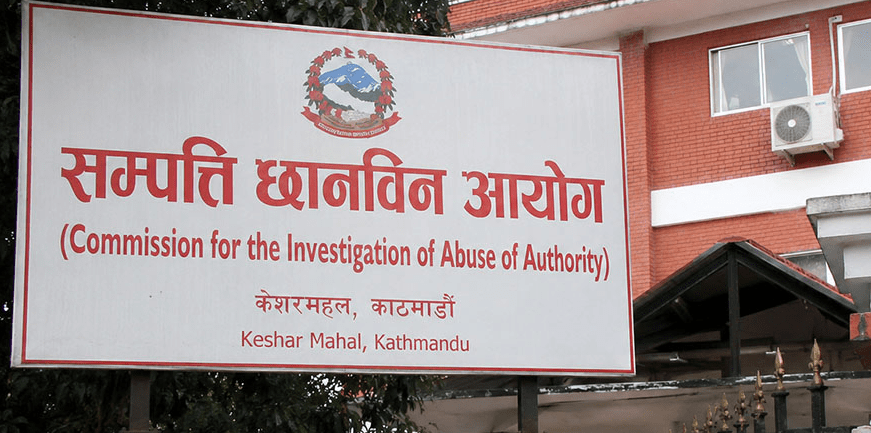
Questions over institutional independence intensified after the Prime Minister suggested that his government would “consult” the Commission for the Investigation of Abuse of Authority (CIAA) regarding alleged misuse of public property. The remarks came amid reports alleging that officials within the Prime Minister’s Secretariat had sought to exert pressure on the anti-corruption agency over the passport printing controversy. Constitutional experts argued that a body accountable to Parliament cannot be directed or informally instructed by the executive, warning that even rhetorical suggestions of executive influence risk undermining confidence in Nepal’s constitutional oversight institutions.
The publication of ministers’ asset declarations-initially delayed before eventually being released under mounting public pressure-produced another political controversy. Rather than strengthening perceptions of transparency, the disclosures triggered widespread scrutiny after several ministers reported substantial wealth, extensive landholdings, valuable real estate and significant quantities of gold. Social media was flooded with questions over the origins of the assets, while opposition voices demanded stronger verification of declared wealth.
Foreign policy also produced one of the administration’s most politically damaging controversies. Responding to questions in Parliament regarding the disputed territories of Kalapani, Lipulekh and Limpiyadhura, the Prime Minister remarked that he had learned after assuming office that Nepal had also encroached upon Indian territory in several places. The statement provoked immediate political backlash across Parliament, civil society and social media, where critics accused the government of weakening Nepal’s long-standing diplomatic position on one of its most sensitive sovereignty issues.
The government subsequently issued multiple clarifications. Cabinet ministers, the government spokesperson and the Ministry of Foreign Affairs argued that the Prime Minister had been referring not to sovereign territorial claims but to cross-border land occupation and cultivation arising from fixed river boundaries and local boundary management practices along the Nepal-India frontier. The clarification eased some diplomatic concerns but failed to prevent the episode from becoming one of the defining communication failures of the government’s opening months.
Domestic enforcement measures have also proved contentious. Among the government’s most contentious early decisions was the eviction of informal settlements along Kathmandu Valley’s riverbanks. Within a month of assuming office, Prime Minister Balendra Shah carried out a policy that he had been unable to implement during his tenure as Mayor of Kathmandu: the removal of squatter communities occupying public land along river corridors. While the administration argued that the operation was necessary to restore public land, improve environmental management and reduce disaster risks, the evictions exposed the government’s difficulty in balancing legal enforcement with social protection.
Demolition operations in Thapathali, Gairigaun and the Manohara river corridor displaced hundreds of landless families living in hazardous conditions. Security forces were deployed to clear the settlements, and bulldozers demolished homes despite the absence of comprehensive rehabilitation or alternative housing arrangements. Human rights advocates and social policy experts argued that the state had enforced the law without adequately addressing the humanitarian consequences, turning one of the government’s most visible governance interventions into one of its most polarising.
The government’s activist governing style has also generated mixed reactions. Several ministers have made unannounced visits to infrastructure projects, publicly confronting contractors over delays and poor performance. Supporters have welcomed the approach as evidence of a government determined to enforce accountability after years of weak project oversight. Critics, however, argue that public reprimands cannot substitute for predictable contract management, stronger procurement systems and institutional supervision.
Economic policy has likewise produced regional discontent. The government’s decision to impose customs duties on goods valued above Rs. 100 brought across the Indian border has proved particularly unpopular in the Madesh-Tarai, where cross-border trade forms part of everyday economic life. Opponents argue that the measure disproportionately burdens ordinary households and small-scale traders, illustrating the tension between revenue mobilisation and the realities of Nepal’s open border economy.
Education has emerged as another arena of policy friction. Disputes over school admission schedules and enrolment fees have exposed differences between the federal government, local governments and private school operators regarding regulatory authority and implementation. The disagreements have underscored the broader challenge of coordinating education policy across Nepal’s federal structure, where overlapping jurisdictions continue to complicate governance and reform.
The administration’s confrontational governing style has also drawn mixed reactions. Ministers have publicly confronted contractors at project sites over delays, projecting an image of impatience with bureaucratic inertia. Supporters have praised the direct intervention as overdue political accountability; critics argue that such public confrontations risk substituting administrative systems with personalised executive oversight.
Several structural reforms have simultaneously attracted both support and resistance. The government’s decisions to abolish student political organisations in universities and employee trade unions across public institutions have been welcomed by those seeking depoliticised public institutions but criticised by others as restrictions on organised representation and democratic participation.
The establishment of a commission to investigate the assets of former public office holders-including former prime ministers, former chief justices, constitutional office bearers and thousands of senior officials-has become another politically sensitive initiative. While anti-corruption advocates welcomed the effort to scrutinise unexplained wealth accumulated by political elites, legal experts questioned the commission’s mandate, jurisdiction and constitutional authority, warning that poorly defined investigative powers could themselves become vulnerable to legal challenge.
Implementation has remained the recurring test of the government’s reform agenda. Disagreements between the federal government, local governments and private schools over admission schedules and enrolment fees have exposed continuing tensions over regulatory authority. Likewise, the government’s decision to require all hospitals to reserve 10% of beds free of charge for eligible patients has been widely welcomed in principle. Yet healthcare providers and policy analysts alike continue to question whether adequate financing, monitoring and enforcement mechanisms exist to ensure that the policy moves beyond political announcement into sustainable practice.
The first 100 days reveal a government willing to challenge entrenched interests, centralise executive authority and pursue rapid institutional change. But they also reveal the inherent risks of governing through disruption. Political momentum has often outpaced institutional consensus, while administrative ambition has repeatedly collided with constitutional constraints, implementation capacity and the demands of democratic accountability. The result is an administration that has undoubtedly altered the pace of governance-but has yet to demonstrate that accelerated reform can consistently coexist with durable institutions and the rule of law.
The burden of an extraordinary mandate
Large electoral victories often create an illusion of unlimited political authority. In reality, they increase the obligation to govern cautiously.
In parliamentary democracies, overwhelming majorities are expected not merely to pass legislation more easily but to strengthen institutional norms. The stronger the mandate, the greater the expectation that governments will demonstrate restraint, transparency and respect for constitutional processes.
That transition has proved difficult. Unlike previous coalition governments assembled through fragile parliamentary arithmetic, Shah’s administration enjoys an unusually comfortable majority in the House of Representatives. It stands largely independent of coalition bargaining and legislative uncertainty-the strongest single-party government Nepal has witnessed in decades.
Yet numerical strength has not translated into administrative maturity. Many ministers entered office with little or no executive experience. While fresh faces were central to the government’s electoral appeal, governing has exposed the steep learning curve separating political campaigning from statecraft. The administration has frequently appeared more comfortable disrupting institutions than managing them.
A honeymoon that ended almost immediately
Conventionally, new governments are granted an informal political grace period before sustained criticism begins. That convention barely survived the Shah government’s first month.
Within weeks, two cabinet ministers had already left office under dramatically different circumstances-one dismissed, another compelled resigned and came back.
Even more controversial was the government’s very first Cabinet meeting. It announced implementation of selected recommendations from the Gauri Bahadur Karki Commission before the report itself had been formally released to the public. Acting upon an unpublished investigative report immediately generated questions about procedural legitimacy and selective enforcement.
The following morning witnessed one of the government’s most contentious decisions: the arrests of former Prime Minister KP Sharma Oli and former Home Minister Ramesh Lekhak.
Politically, the arrests energised the opposition almost overnight, allowing street protests to emerge virtually from the government’s first day in office.
Legally, matters became more problematic when Nepal’s Supreme Court later ordered their release, raising serious doubts about the legal foundation of the arrests themselves.
The same pattern subsequently repeated itself.
Several prominent political figures and business leaders/including provincial politicians and leading businessmen-were detained amid corruption investigations. Yet many were later released by court order, reinforcing perceptions that headline-grabbing arrests had outpaced prosecutorial preparation. Rather than strengthening confidence in the rule of law, repeated judicial reversals risked creating the impression of politically dramatic but legally fragile enforcement.
Governance through confrontation
Perhaps the defining characteristic of the government’s first hundred days has been its preference for confrontation over consensus.
Instead of building coalitions across institutions, the administration has increasingly positioned itself against them.
Relations with Parliament have deteriorated.
Relations with local governments have become strained.
Relations with sections of the bureaucracy have grown increasingly tense.
Relations with private media have become openly adversarial.
Even parts of civil society that initially welcomed political change have begun expressing concern about the government’s governing style.
The result is not merely political friction. It reflects a deeper shift towards increasingly centralised executive decision-making.
Centralisation at odds with federalism
One of the earliest examples emerged in education policy.
Despite Nepal’s Constitution clearly assigning many school-management responsibilities to local governments, the federal Education Ministry issued directives on nationwide student enrolment campaigns directly from Kathmandu.
The policy itself sounded administratively sensible. Its constitutional implications were considerably less so.
Local governments openly challenged the federal directive, with many proceeding according to their own schedules. What could have become a coordinated national initiative instead exposed the persistent tensions within Nepal’s federal system.
The episode illustrated a recurring weakness throughout the administration’s first hundred days: policy objectives often appeared reasonable, but implementation frequently neglected constitutional boundaries and institutional consultation.
Decisiveness without preparation
The government’s decision to introduce a two-day weekend following rising global fuel prices offered another illustration.
Officials justified the measure primarily as an energy-saving initiative.
Yet Nepal had already experimented unsuccessfully with the same policy years earlier before abandoning it.
This time, implementation again arrived with little preparation.
Hospitals, public services and administrative offices experienced widespread disruption. Citizens requiring urgent services frequently encountered delays, while the anticipated fuel savings remained uncertain.
The controversy was less about the policy itself than about the absence of serious planning before implementation.
Throughout its first hundred days, the administration has repeatedly displayed a willingness to move quickly but not always a willingness to prepare thoroughly.
The media question
Perhaps no decision generated greater concern among democratic institutions than the government’s directive instructing public bodies to publish official notices and advertisements primarily through state-owned media.
The stated objective appeared defensible: strengthening public broadcasting institutions.
The broader implications proved far more contentious.
Private media organisations argued that the measure threatened their financial sustainability while concentrating government communication within state-controlled channels.
Critics warned that democratic governments have an obligation to maximise—not restrict—the public’s access to official information across diverse media platforms.
Coverage by Nepal’s state broadcasters remains geographically uneven. Large sections of the country continue relying predominantly upon private newspapers, radio stations and digital outlets for public information.
Reducing government advertising across those platforms risks weakening precisely the pluralistic media environment essential to democratic accountability.
Journalist organisations consequently portrayed the policy as moving uncomfortably close to state-directed media control rather than public-sector reform.
Economic confidence still missing
The government has introduced an expansive budget and articulated ambitious economic objectives.
Yet confidence within the private sector remains fragile.
Market activity has not accelerated as anticipated. Investment sentiment remains cautious. Businesses continue questioning policy predictability. Meanwhile, several fiscal decisions have generated additional controversy.
The government has been criticised for imposing new taxes on education and healthcare while failing to demonstrate corresponding improvements in service quality. Amendments to tax rates after the budget had already been tabled in Parliament, alongside substantial discretionary budget allocations, have further raised concerns about fiscal transparency.
The administration’s own hundred-point programme also remains only partially implemented.
The contrast between ambitious announcements and slower execution has become increasingly apparent.
Border communities and unintended consequences
Some of the administration’s most politically costly decisions have attracted relatively little attention inside Kathmandu.
New customs restrictions limiting goods that residents may bring across the Indian border have particularly affected communities living along Nepal’s southern frontier.
For decades, cross-border shopping has formed an integral part of everyday economic life in these regions, reflecting geography rather than smuggling.
The government framed tighter restrictions as part of a broader strategy to promote domestic production and self-reliance.
Yet implementation has disproportionately burdened ordinary households rather than transforming industrial competitiveness.
The policy has attracted criticism not only from opposition parties but also from voices within the governing political movement itself.
Participation without consultation
Good governance ultimately depends not only upon efficient administration but also upon meaningful participation.
Here, the government’s record appears increasingly uneven.
The administration has succeeded in cultivating considerable support among younger voters through social media and direct public messaging.
Institutional consultation has proved considerably weaker.
Major policy decisions have often emerged from highly centralised executive processes involving limited engagement with local governments, provincial administrations, civil society organisations or subject-matter experts.
The resulting perception is that governance has become increasingly concentrated within Singha Durbar, with key decisions emerging from closed executive circles rather than broad institutional deliberation.
Such centralisation risks weakening precisely the decentralised federal architecture that Nepal’s Constitution was designed to create.
The limits of executive authority
Questions surrounding parliamentary accountability have become equally significant.
In parliamentary democracies, executive legitimacy depends not only upon winning elections but upon maintaining continuous accountability before Parliament.
That principle has frequently appeared secondary during the government’s first hundred days.
The Prime Minister has often been criticised for limited parliamentary attendance, reluctance to engage opposition scrutiny and an increasing preference for governing through ordinances rather than regular legislative procedures despite commanding a commanding parliamentary majority.
The government’s reliance on ordinance-making-including constitutional amendments relating to the Constitutional Council-has reinforced concerns that executive convenience is gradually replacing parliamentary deliberation.
Such practices may accelerate decision-making. They also weaken the institutional balance between executive and legislature upon which parliamentary democracy depends.
Rule of law versus political momentum
The government deserves recognition for several genuine reform initiatives. Digital office management systems, electronic invoicing to improve revenue transparency and proposals to strengthen financial accountability within political parties all represent constructive institutional reforms.
Yet these positive measures have been overshadowed by concerns over procedural fairness. More than 1,500 political appointees were removed through ordinance without individual legal review or meaningful opportunities to respond.
The government’s objective-depoliticising state institutions-may command broad public support. Its chosen method has generated profound legal concerns. Natural justice requires due process even for politically appointed officials.
Governments committed to strengthening the rule of law cannot afford to weaken legal safeguards in pursuit of administrative efficiency.
Popularity is not governance
Perhaps the greatest risk confronting the Shah administration lies not in opposition criticism but in confusing popularity with institutional capacity.
Political movements frequently win elections by promising disruption. Governments succeed by building institutions capable of delivering durable reform.
These are fundamentally different tasks. The administration’s anti-corruption agenda remains widely popular. Its determination to reduce political patronage and improve public administration reflects legitimate public demands.
Yet lasting governance cannot be achieved through executive centralisation, governing by ordinance, strained relations with Parliament, anxious bureaucracies or decision-making increasingly dependent upon informal advisory networks rather than established constitutional institutions.
A bureaucracy governed primarily through fear eventually produces passive resistance rather than energetic implementation. Investors, development partners and civil servants alike ultimately require predictability more than spectacle.
The next hundred days matter more
The first hundred days rarely determine the fate of a government. They do, however, establish governing habits.
For Balen Shah’s administration, those habits remain unsettled. The government possesses political legitimacy, parliamentary strength and considerable public goodwill-advantages few predecessors have enjoyed.
Whether those advantages become the foundations of lasting institutional reform or merely another cycle of political disappointment will depend upon the administration’s willingness to evolve.
Its honeymoon period is over. The next phase requires less disruption and more governance; less confrontation and more institution-building; fewer symbolic victories and greater administrative competence. The public did not vote merely for change. It voted for a state capable of governing differently.