Kathmandu
Thursday, July 9, 2026





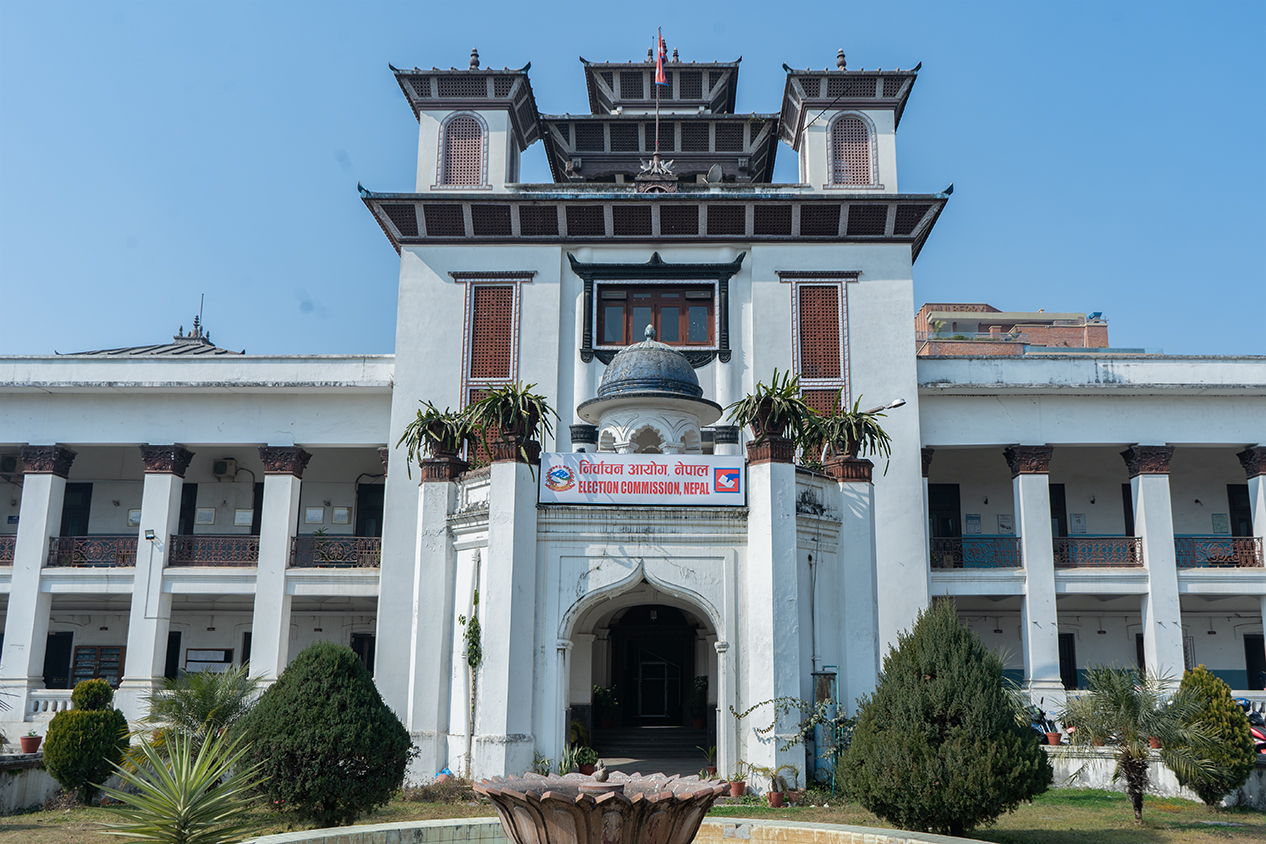
Nepal Police have arrested three more individuals connected to the Nepal Children's Organization, popularly known as Bal Mandir, on accusations of embezzling money that was meant to feed, shelter and educate some of the country's most vulnerable children, reopening a scandal that has already produced a separate Rs 603 million land-fraud case still working its way
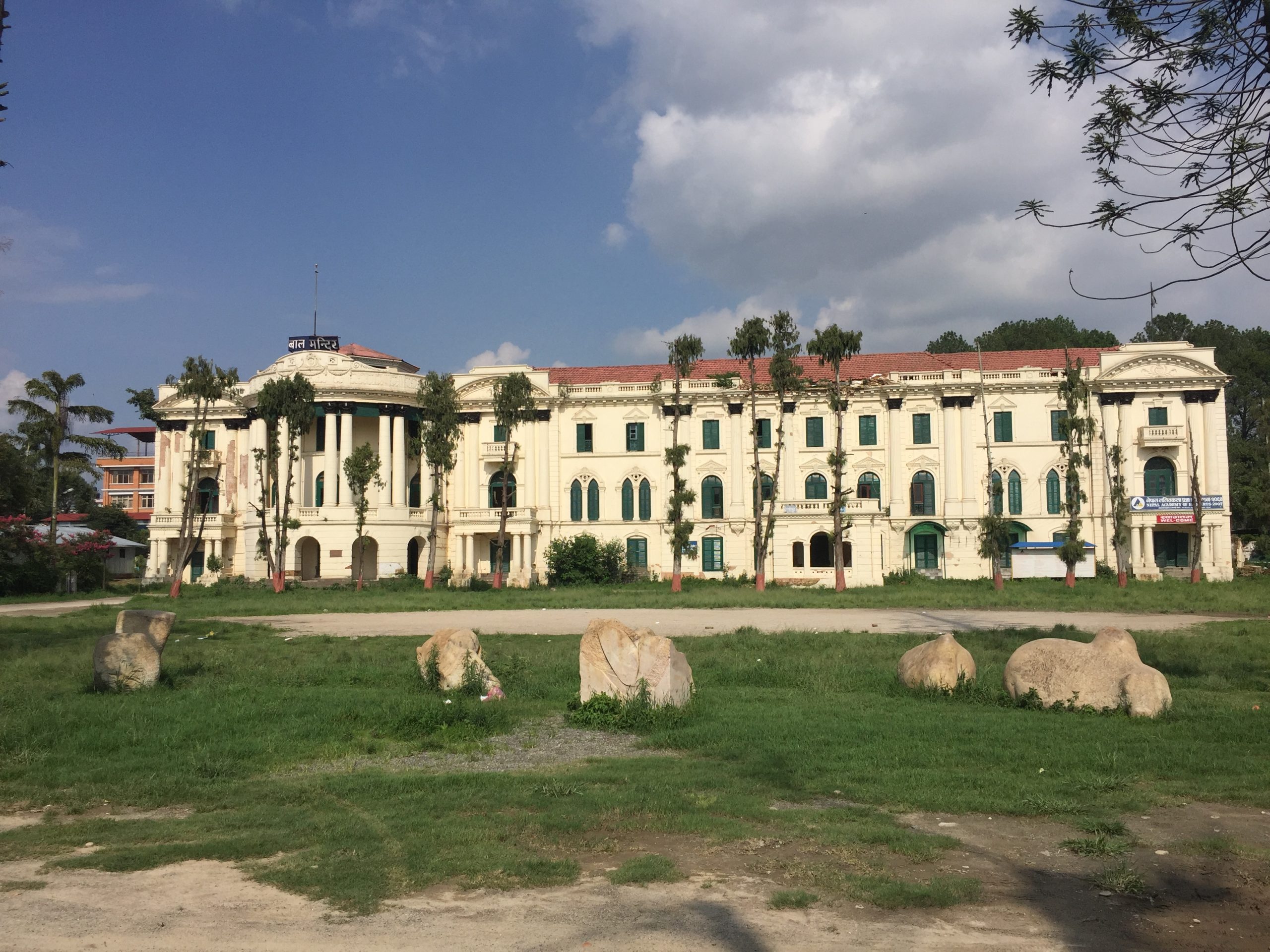
KATHMANDU: The Bal Mandir scandal has resurfaced after Nepal Police arrested three former office-bearers of the Nepal Children’s Organization over the alleged embezzlement of funds meant for orphaned and vulnerable children.
The arrests open a new chapter in a long-running investigation that had previously focused on the organization’s controversial leasing of prime Kathmandu land, a case involving alleged losses of more than Rs 603 million.
Together, the cases have exposed decades of alleged financial mismanagement, weak oversight and abuse of a charity created to protect children.
What happened today, and who has been arrested?
Nepal Police’s Central Investigation Bureau took three people into custody for questioning in connection with alleged financial embezzlement at the Nepal Children’s Organization in Naxal, Kathmandu. A senior CIB official confirmed that those detained are 51-year-old Rajendra Kumar Shrestha, 62-year-old Om Krishna Shrestha and 54-year-old Asha Shrestha, all of whom previously sat on the organization’s working committee, with one of them having served as its secretary.
The three are accused of misusing money that had been collected and allocated for feeding, sheltering and educating children under the organization’s care. Their detention stems directly from the findings of the High-Level Inquiry Commission of 2019, whose report on Bal Mandir had documented financial irregularities alongside its now more widely known findings on the organization’s land dealings.
Police said the three would be questioned further as the investigation proceeds, and additional individuals connected to the working committee could face scrutiny depending on what the inquiry uncovers.
Beyond land and money, what else did the same inquiry commission uncover about Bal Mandir?
The High-Level Inquiry Commission, chaired by former appellate court judge Hari Babu Bhattarai and formed by the Cabinet in late 2019, did not confine its findings to land leases. Its report also documented that, over roughly three decades, the organization had facilitated sending 948 children abroad for adoption, arrangement typically used to link children with foreign guardians, yet records existed for only 72 of them.
Investigators found that money collected from the new guardians of these children had also gone missing from the organization’s accounts, suggesting a pattern of financial mismanagement that ran parallel to the undervalued leasing of the charity’s land.
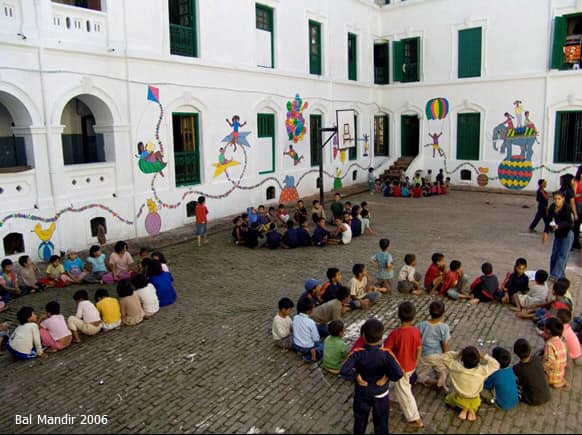
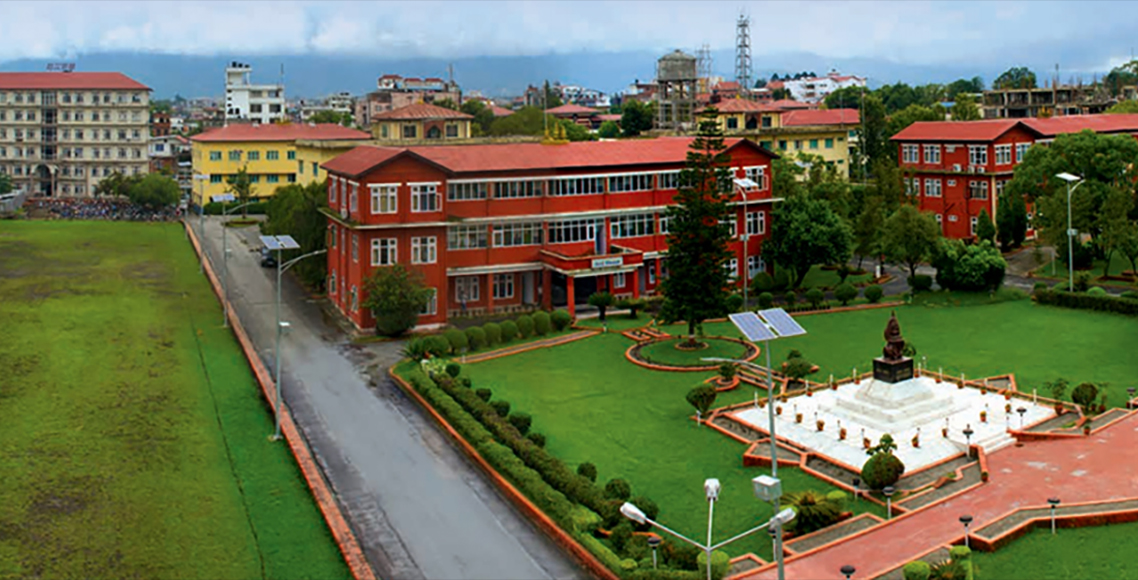
Kid’s playground inside the Nepal Children’s Organization, popularly known as Bal Mandir. File photo
The commission’s report was submitted in mid-2020 but was effectively shelved for years before Prime Minister Balendra Shah’s government revived it in 2026, forwarding it first to the Home Ministry and then to Nepal Police, and later ordering it published through the federal parliament secretariat’s library so the public could examine its full findings.
What is the Bal Mandir case overall, and why does it keep resurfacing?
At its core, the Bal Mandir case describes years of alleged self-dealing inside a state-backed charity meant to shelter orphaned and destitute children, involving both the improper leasing of the organization’s valuable land and, as today’s arrests show, direct misappropriation of funds meant for child welfare.
The Nepal Children’s Organization was handed a large plot of government land in Naxal, Kathmandu decades ago specifically so it could generate income to sustain its mission. Instead, a succession of office-bearers is accused of turning that land, and eventually the organization’s cash flows as well, into a private financial resource.
The case resurfaces repeatedly because the same underlying commission report keeps generating fresh leads: first the 2025 fraud charges over the land lease, and now a distinct set of arrests tied to alleged embezzlement of child-welfare funds, showing investigators are working through the report’s findings in stages rather than all at once.
Who founded the Nepal Children’s Organization, and how did it acquire its Naxal land?
The Nepal Children’s Organization was established in 1964 under the National Guidance Act of 1962, with Queen Ratna Rajya Laxmi Devi Shah, who drew inspiration from a 1963 visit to the United Kingdom, serving as its principal driving force.
During the Panchayat era the institution carried royal patronage and became known internationally as Bal Mandir, or Children’s Temple. To give it a permanent, self-sustaining base, the government acquired a property known as Sita Bhawan, formerly belonging to the family of Rana Prime Minister Bhim Shamsher, and registered roughly 61,000 square meters of land in Naxal in the organization’s name.

A portrait of then Rana Prime Minister Bhim Shamsher. Photo courtesy: Wikimedia Commons
The land was valuable even then and has since become some of the most sought-after real estate in Kathmandu. It was meant to generate income for children’s welfare, not to enrich private schools or the officials entrusted with managing it.
Who was Rita Singh Vaidya, and what role did she play in the scandal?
Rita Singh Vaidya was the central figure in the Bal Mandir land affair. She was the daughter of Ganeshman Singh, one of Nepal’s most respected democratic leaders, and the elder sister of Prakash Man Singh, a senior Nepali Congress figure who served as deputy prime minister in the Congress-UML coalition government of 2024-25.
Appointed president of the Nepal Children’s Organization in 1992 under the government of Girija Prasad Koirala, she held the post for nearly 27 years before being removed by the KP Sharma Oli government in 2020. Her family’s political standing appears to have shielded years of institutional irregularities from consequence.
Soon after taking charge, she had the organization’s statutes amended to permit leasing and selling its land, then oversaw a series of agreements with a private school that a later government inquiry found were struck without competitive bidding and on terms heavily favorable to the tenant.
She died in December 2024, months before formal fraud charges were filed in the land case in 2025, meaning she will never stand trial.
How did the leasing of Bal Mandir’s land to Brihaspati Vidyasadan actually unfold?
The process moved in stages that individually looked routine but cumulatively handed over a large share of the organization’s most valuable asset. In 1992, months after Vaidya took charge, the organization first leased roughly 4,580 square meters of land and structures to Brihaspati Vidyasadan, a private boarding school in Naxal.
Further agreements in 2001 and 2002 added more land, eventually bringing the total under lease to close to 14,900 square meters. None of these deals went through open bidding or public notice, as transparent management of public assets would require. Each carried unusually generous terms for the tenant, including rent-free grace periods and minimal escalation clauses.
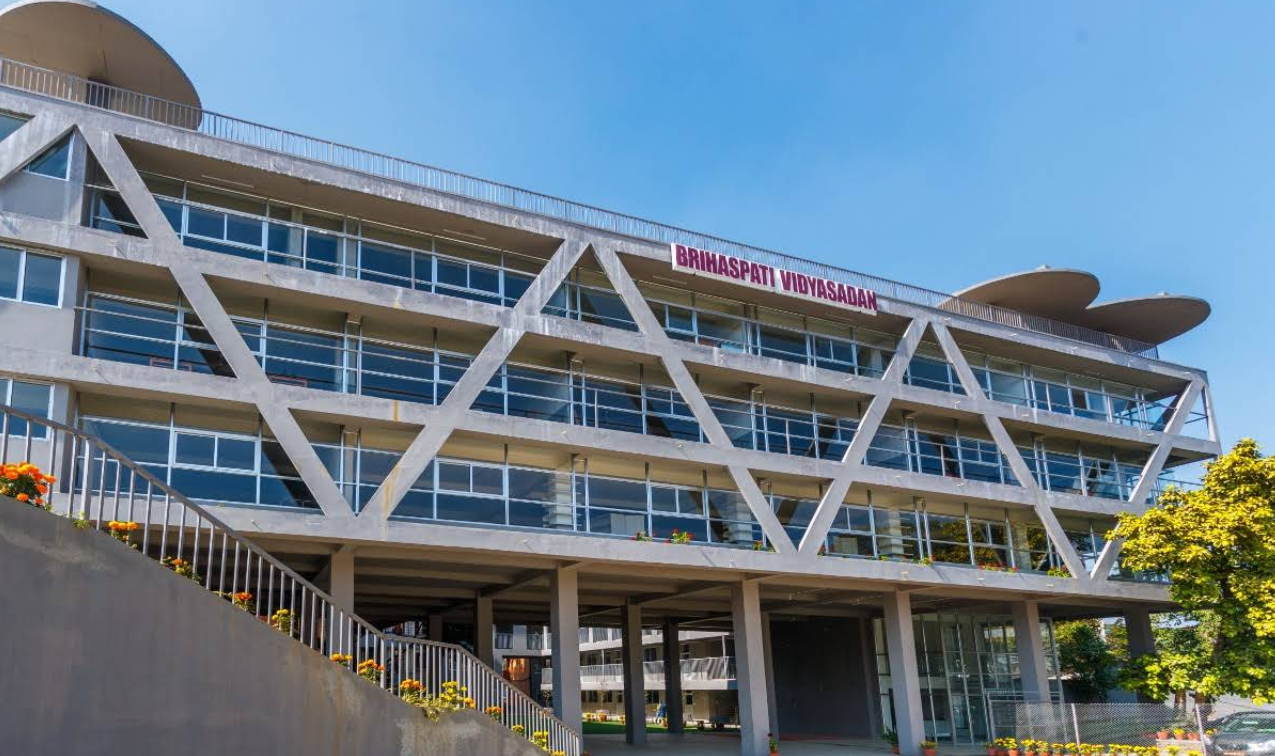
Brihaspati Vidyasadan. File photo
Investigators later found that Brihaspati itself was earning roughly Rs 6 million a year by subletting about 2,540 square meters of that land to Rai School, an institution affiliated with India’s Central Board of Secondary Education, while paying the children’s organization only a fraction of that for its far larger holding.
What was the 2015 supplementary agreement, and why has it drawn so much scrutiny?
The supplementary agreement signed in June 2015 is widely regarded as the most damaging single act in the entire affair. At the time, the existing lease still had years to run before an expiry around 2032. Despite this, then-president Rita Singh Vaidya signed a new deal that not only reaffirmed the existing arrangement but extended it decades further, pushing the effective expiry out to 2075 in the Gregorian calendar.
Rent was fixed at close to Rs 900,000 a month, a rate investigators and market observers described as far below what similar land in one of Kathmandu’s most desirable neighborhoods should fetch.
Notably, the Commission for the Investigation of Abuse of Authority had already ordered the organization in 2009 to cancel an earlier version of this lease. Investigators concluded the 2015 deal was a deliberate maneuver, engineered through a court settlement, to sidestep that order.
Did any regulatory body try to stop this over the years?
Oversight existed, but it was repeatedly outmaneuvered. As early as 2009, the Commission for the Investigation of Abuse of Authority acted on complaints about the undervalued lease and directed the organization to cancel its existing agreement with Brihaspati.
The organization formally passed a resolution to do so, but the two sides then jointly approached the courts, and in 2015 they reached a settlement inside the court system that not only restored Brihaspati’s hold on the land but extended it on even more generous terms, effectively nullifying the anti-corruption body’s directive.
Separately, records show that roughly 26,450 square meters of Bal Mandir land had at some point been mortgaged to a bank, with little clarity on how the borrowed funds were used. Parliament’s Public Accounts Committee had flagged concerns as far back as 2011, yet no decisive action followed for well over a decade.
What triggered the formal criminal investigation into the land lease?
A combination of media exposure and internal complaints eventually forced action. In early 2021, a detailed investigative report in the Nepali press exposed the scale of the land misuse, generating public outrage. The organization’s current leadership, under president Bidya Neupane, subsequently filed a formal complaint with the Central Investigation Bureau.
The CIB opened its probe in 2024 after receiving multiple complaints about systemic misuse of the charity’s assets, and in the same year the organization’s board formally declared its lease with Brihaspati void.
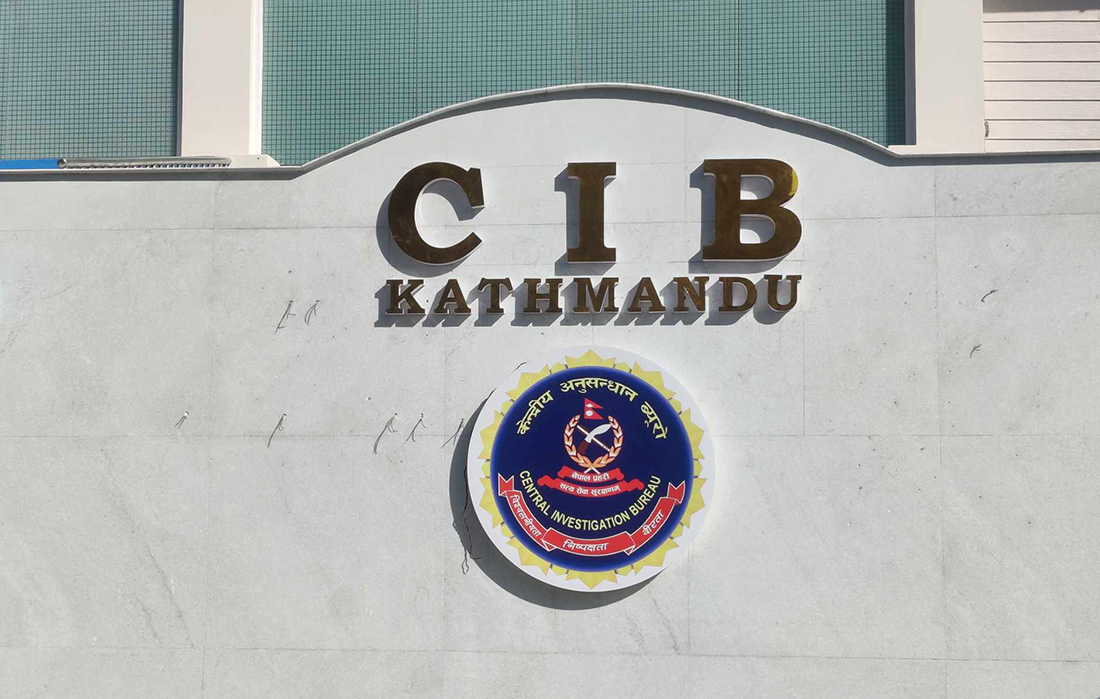
Central Investigation Bureau. File photo
The CIB then obtained arrest warrants from the Kathmandu District Court against 20 individuals in May 2024. Following further investigation through the rest of that year, the District Government Attorney’s Office formally filed fraud charges against 17 individuals at the Kathmandu District Court in May 2025, setting the stage for the court proceedings that are still ongoing.
Who are the 17 people charged in the land fraud case?
The charge sheet filed in May 2025 names individuals from both sides of the lease arrangement.
From the Nepal Children’s Organization, the accused include Rita Singh Vaidya, its former president, who has since died; former vice-presidents Tulsi Narayan Shrestha and Yogendra Bahadur Shahi; former general secretary Ganesh Bhakta Shrestha; several other former general secretaries including Shyam Kumar Ale, Subash Kumar Pokharel, Prachanda Raj Pradhan and Ram Kaji Gurung Kone; and former member Krishna Shankar Sah.
From the Brihaspati Vidyasadan side, those charged include Purushottam Raj Joshi, Prabin Raj Joshi, Murari Nidhi Tiwari, Shraddha Sanghai, Abhinav Singhaniya, Siddharth Kedia and Kirti Prasad Pandey.
Three of the twenty originally named in the 2024 arrest warrants, Chiranjeevi Tiwari, Manohar Gopal Shrestha and Suman Shakya, were excluded from the final charge sheet because they had died before it was filed. Three of those charged, Singhaniya, Kedia and Pandey, are Indian nationals.
What charges have been filed, and what punishment could the accused face?
The land case has been filed under the fraud provisions of Nepal’s Penal Code, with total damages claimed at just over Rs 603.9 million. Under the relevant provision, a conviction at this scale can carry up to seven years in prison along with a fine.
The charge sheet frames the conduct as a coordinated scheme that caused major financial harm to a public charitable institution by leasing its land far below market value without competitive bidding, and by later extending that arrangement for decades under terms that overwhelmingly benefited the private school at the charity’s expense.
Notably, the Attorney General’s Office overruled an initial recommendation from the district attorney against prosecution and directed that the case proceed to trial, a decision that effectively kept the matter alive after it had briefly stalled inside the bureaucracy.
What happened to Rita Singh Vaidya before and after the case was filed?
Rita Singh Vaidya died in December 2024, several months before the formal fraud case was registered in May 2025, meaning she will never appear in court and the charges against her have effectively lapsed, though her name remains part of the official case record.
Three of the individuals charged in the fraud case, Abhinav Singhaniya, Siddharth Kedia and Kirti Prasad Pandey, are Indian nationals with permanent addresses in Delhi, Jaipur and Bengaluru respectively, and are listed as directors or operators connected to the school.
During her lifetime, the CIB had sought her arrest along with 19 others in May 2024, but authorities chose not to detain her or fellow accused Yogendra Bahadur Shahi at that time, citing their advanced age and declining health.
Both were nonetheless still listed as absconding in the investigation file when the charge sheet was later prepared. Before the case was formally filed, Vaidya had given a statement to the inquiry commission acknowledging that she had received money from the lease arrangements, which she said had gone toward the organization’s operating costs, though investigators found no matching deposits in its accounts.
What role did Brihaspati Vidyasadan and its Indian-linked directors play?
Brihaspati Vidyasadan, a private boarding school that operated inside the Bal Mandir compound in Naxal, was the direct beneficiary of the undervalued leases. It went on to sublet a portion of that land to Rai School, an Indian-curriculum institution, collecting substantially more in annual rent from that sub-tenant than it paid the children’s organization for the entire holding.
Three of the individuals charged in the fraud case, Abhinav Singhaniya, Siddharth Kedia and Kirti Prasad Pandey, are Indian nationals with permanent addresses in Delhi, Jaipur and Bengaluru respectively, and are listed as directors or operators connected to the school.
Their presence among the accused raises cross-border legal questions, including how Nepali courts will serve notices and enforce rulings against foreign nationals who have been living in Kathmandu for business purposes.
How much land does Bal Mandir hold overall, and who else has been using it?
The Nepal Children’s Organization’s total landholding in Naxal comes to roughly 61,000 square meters, one of the largest tracts of prime urban land held by any charity in Kathmandu. The parcel leased to Brihaspati, covering somewhere between 14,400 and 14,900 square meters depending on the agreement referenced, was only part of the broader problem.
Other sections have been occupied by various government bodies over the years: the Nepal Metropolitan Police’s Kamalpokhari circle reportedly expanded a swimming pool complex onto about 2,540 square meters, more than 25,400 square meters has reportedly been used, without formal ownership, by the Nepal Lalitkala Pragya Pratisthan, whose offices sit inside the compound, and the Ministry of Education’s nutrition programme has used roughly 2,100 square meters free of charge.
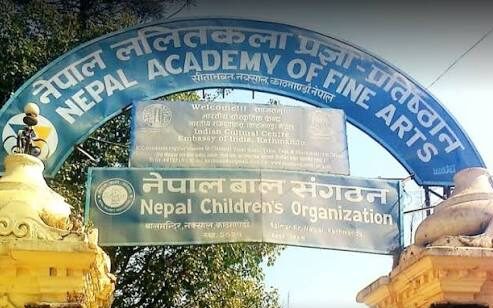
Nepal Academy of Fine Arts. File photo
These examples suggest the organization’s land problems extend well beyond the Brihaspati lease and reflect a broader pattern of institutional encroachment that remains only partly addressed.
What has the Balen Shah government done about the case, and how does today’s arrest fit in?
Prime Minister Balendra Shah, who took office in March 2026 after the Rastriya Swatantra Party’s landslide election win, made anti-corruption accountability a defining theme of his government from the outset. His administration revived the long-dormant Bhattarai Commission report, forwarding it to the Home Ministry and then to Nepal Police, with the Prime Minister’s Office reportedly requesting progress updates every few days in the weeks after.
Nepal Police has continued studying that report alongside the ongoing land fraud case, and today’s arrests of three former working-committee members over embezzled child-welfare funds appear to be a direct continuation of that same enforcement push, this time targeting the financial-mismanagement findings in the commission’s report rather than the land-lease findings that produced the 2025 charges.

Cabinet meeting/file photo
Officials have indicated further action is possible as investigators work through the remainder of the report.
What is the current status of the overall case, and what happens next?
The land fraud case against 17 individuals remains registered at the Kathmandu District Court, moving through the standard stages of a major fraud prosecution: examination of the charge sheet, responses from the accused, evidence hearings, and eventually a verdict. With Rita Singh Vaidya’s death, proceedings against her are effectively closed.
Tulsi Narayan Shrestha was briefly arrested in 2024 and released after giving a statement, while Ganesh Bhakta Shrestha was arrested and later released on bail. The three Indian nationals among the accused continue to present a logistical complication for the court.
Separately, the Brihaspati lease has already been formally cancelled by the organization’s current leadership, and the school’s structures inside the Bal Mandir compound are slated for removal.
With today’s fresh arrests opening a parallel track focused on misappropriated child-welfare funds, the case is expanding rather than winding down, and it remains to be seen whether either track will produce the kind of accountability that seven years of a shelved commission report failed to deliver.