Kathmandu
Saturday, July 11, 2026





Born out of local necessity and customer demand in Dharan, the original Alu Nimki has expanded from the eastern region to become a beloved fast food staple across Nepal and international markets
KATHMANDU: Travel came to an abrupt halt at Ranitar on the banks of the Sunkoshi River, where passengers were ordered to disembark. With ferry services currently halted across the Sunkoshi, commuters face a mandatory trek across a local suspension bridge to board connecting vehicles stationed on the opposite side.
We had started early in the morning in this vehicle from the Lahureko Khoj Resort located in Belaka Municipality of Udayapur, 3 kilometers west of Chatara. Speeding through paved and unpaved roads from the bank of the Saptakoshi, the vehicle dropped us off on the bank of the Sunkoshi. This small market, Ranitar, actually falls under Chaudandigadhi Municipality of Udayapur. Across lies Bhojpur, Aamchowk Rural Municipality. It was that very rural municipality we had to reach, but our destination was Balankha, the administrative center of the rural municipality.
There were still three to four hours of road travel left in the vehicle. It was exactly time to eat rice. After going across, who knows what would happen? Entering the only hotel in front of the vehicle stopping place that had facilities ranging from passenger resting to eating food, we started eating rice swiftly. Lentils, rice, vegetable greens, and one pickle. Although it looked ordinary when served, the food was actually above average. On top of that, the Akabare chili, also known as Dalle Khursani locally, is an indigenous, cherry-sized pepper from Nepal provided after being chopped was helping to make the rice appetizing. While eating, someone informed, “The vehicle is ready across the Sunkoshi, they say go quickly.” It became a task of grabbing a mouthful and running.
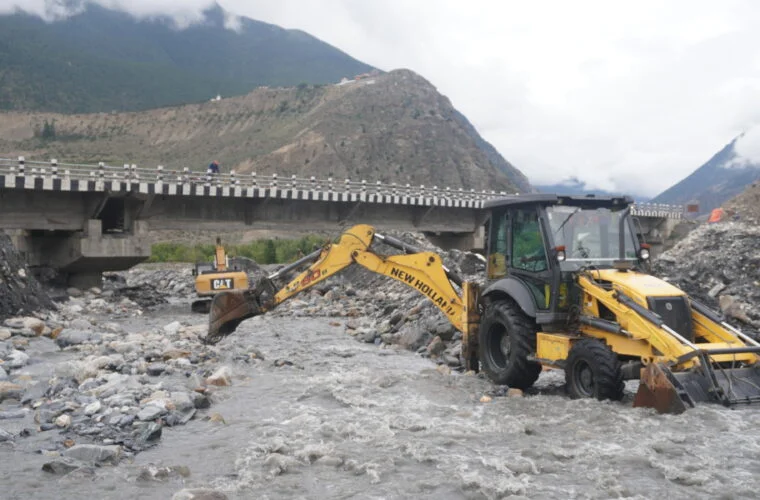
Carrying bags and luggage, we started crossing the suspension bridge built over the Sunkoshi. On the side stood something like the skeleton of a concrete bridge. While conversing with regular travelers of this route, it was learned that the responsibility to build this bridge belonged to the Rasuwa Swachchhanda SNS Pappu (JV) Joint Venture. It had signed a contract agreement in 2016 stating it would complete the construction in three years at a cost of Rs 250 million. After the technology with which the bridge was supposed to be built turned out to be useless, another agreement was made after changing the design in 2024. Because this concrete bridge, which was supposed to be completed in just three years, had been left stranded for the past 10 years, no one had hoped that the work would happen soon.
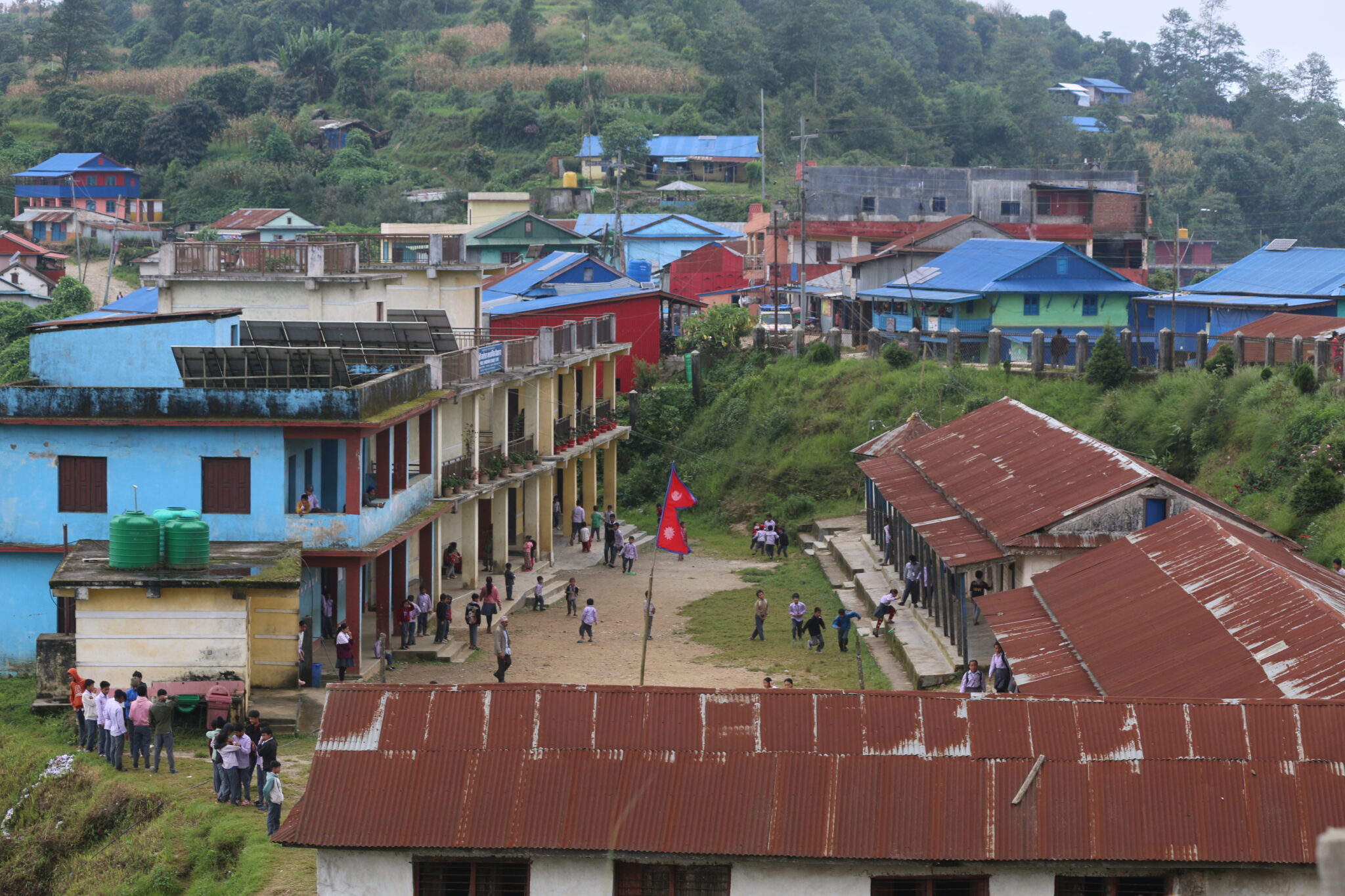
Balankha School and Market
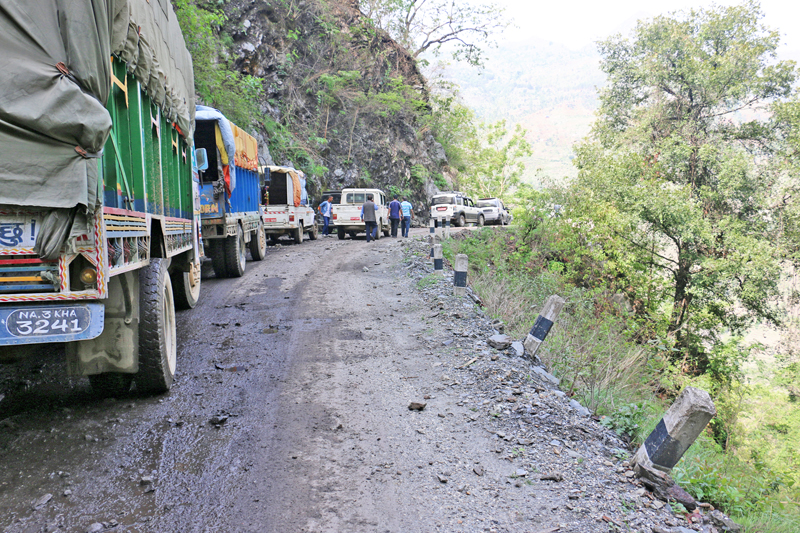
The other side was reached. Vehicles were sitting in a queue on the difficult, sloped road. Because leaves had been added to easily drive on the unpaved road, the vehicles were slightly taller than ordinary ones. In Nepal, to drive off-road, the height is increased by placing additional leaves (spring leaves) in the suspension. It is said that this makes the vehicle tall so that it does not touch the ground and also increases the load-carrying capacity of the vehicle. Bag and baggage were put into the designated vehicle, and after a brief wait, we headed toward Balankha, the center of Aamchowk Rural Municipality.
By the time we reached Balankha and finished the initial work, the morning rice had already left our side. We had no clue what to eat in the evening. Then, we started scanning around the market area. Right then, a slightly clean-looking shop was spotted, complete with tables and chairs. A teenage girl, seeing new people, arrived folding her hands and greeted us then” We asked, “Is there anything to eat available?” She said, “Tea and Aalu Nimki.”
For a body exhausted by travel, both things would be refreshing. “First tea and then ‘Aalu Nimki,’ okay,” the friend said. It was going to be an excellent snack. At a time when it had become cold due to rain, the tea would make us warm, and then the sharp Aalu Nimki would make us red and hot. This evening was going to go in the name of ‘Aalu Nimki’ itself.
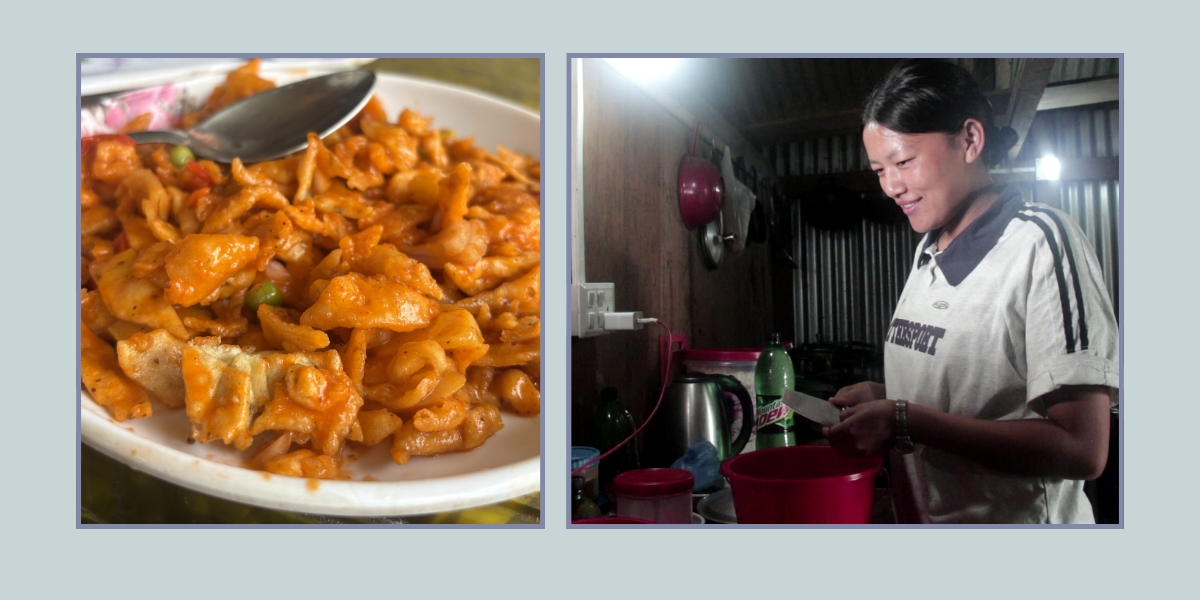
Aalu Nimki is a wildly popular, crunchy, and tangy Nepali street food. It is made by tossing crispy fried nimkis in a thick, savory, and spicy potato-besan gravy, then topping it with fresh vegetables, chaat masala, and bhujiya.
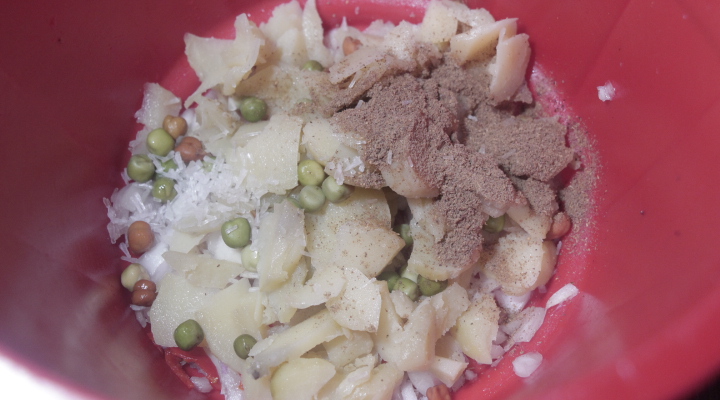
That teenage girl of Balankha’s name turned out to be Sushma Chamling Rai; the shop, however, belonged to her elder sister, and she was a younger sister who had come to help her elder sister. In a few moments, Sushma gave the tea. Then, she started making Aalu Nimki in a bucket that could hold about one and a half liters. All items for this dish are already prepared. A little bit of time goes into chopping. Otherwise, this is our definite ‘fast food.’ Green peas if not then any boiled grams, soaked black chickpeas, boiled potatoes, Nimki kept in a container, onion, tomato, green chili, sour extract, green coriander, salt, and a sauce made by oneself. That’s it, mixed it and then served it. Rai says, “The external spice that we add is only chat masala.”
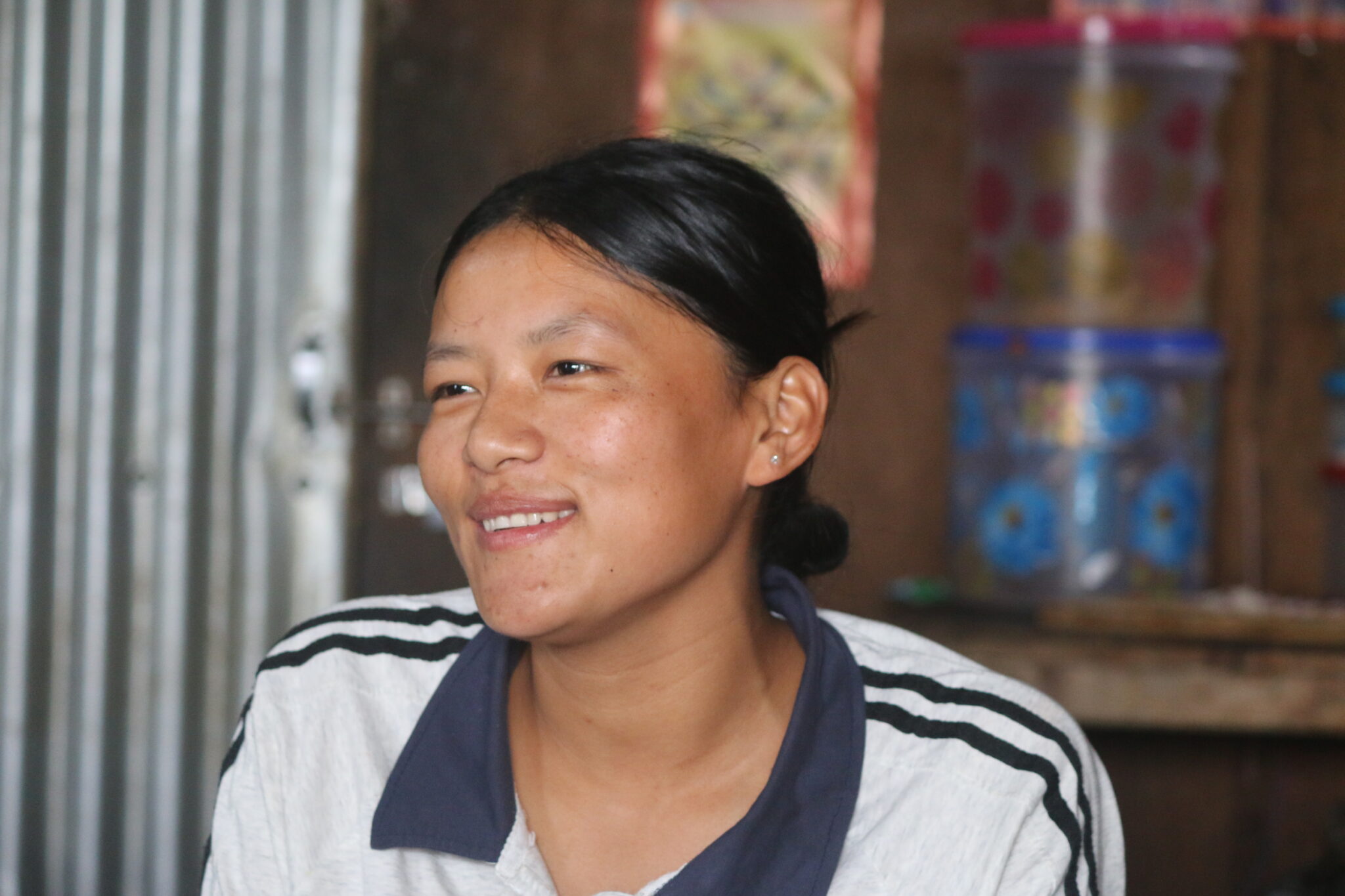
Sushma Chamling Rai
“If we make 4 kilograms of all-purpose flour Nimki, it lasts us three to four days. It’s just about making a sauce of all-purpose flour itself by adding food color,” Rai said while swiftly cutting with a knife held in one hand while keeping a boiled potato in the other hand as if her work were effortless.
For our fast food Aalu Nimki, three tasks have to be done. The first is the task of making Nimki. Dough kneaded by adding all-purpose flour, carom seeds (some also add nigella seeds for a distinct taste), ghee, and salt is allowed to ‘rest’ for a few moments. After that, the dough is rolled out, cut into a diamond shape, and fried in oil until it becomes hard. The second task, however, is to make the sauce. This very sauce gives the main taste of Aalu Nimki. A thick paste is made by dissolving chickpea flour or all-purpose flour in water and adding tomato, turmeric, chili, black salt, sugar, and lemon juice or sour extract. For an attractive color, red or orange food coloring is also added. After that, the item needed are a mixture of vegetables, including potatoes boiled and chopped into tiny pieces, finely chopped onion, green chili, and green coriander. Remaining is the method of making or mixing. First of all, boiled potato, chopped onion, chili, and coriander are placed in a large vessel. In that, the prepared sauce and salt/chat masala according to taste are added. At the very end, the crunchy Nimkis are added and immediately mixed, and it is ‘served’ after garnishing from above with coriander or peanuts. After mixing the Nimki in the ‘gravy sauce,’ it should not be kept for a long time; otherwise, its crunchiness disappears. Therefore, it must be eaten as soon as it is made.
Sushma also brought it in the same manner. We too started eating, being delighted. That evening, we surrendered to Aalu Nimki. The stomach was lightly filled, but the mind was not filled. Telling Sushma to make it again, we ate again. As soon as Aalu Nimki was remembered, that evening, Balankha market and younger sister Sushma Chamling also became a memory for us. However, the special relationship of Aalu Nimki turned out to be with Dharan instead.
The hotel management coordinator of UN College in Dharan, Gagan Man Shrestha, who is researching about food, indigenous food researcher Chef Ingwa Subba, and Chef Pushpa’s team have made public the story of the beginning of Aalu Nimki through social media. This team of researchers had met Gopal Chaudhary, the creator of the Dharane Aalu Nimki. According to researcher Gagan Man Shrestha, Aalu Nimki had already been created in the year 1975/1977. However, it became popular only around the very end of the late 1990s.
Gopal Chaudhary used to sell chatpate. To add to the chatpate, he also used to keep Nimki. The customers themselves asked to make it by adding only Aalu Nimki without adding puffed rice. According to that, the Aalu Nimki dish kept being made. Developing gradually, it came to today’s form. Gopal Chaudhary had sold Aalu Nimki for Rs 3 by keeping it on paper during his time. Currently, when giving it on a plate along with a spoon, they charge Rs 60.
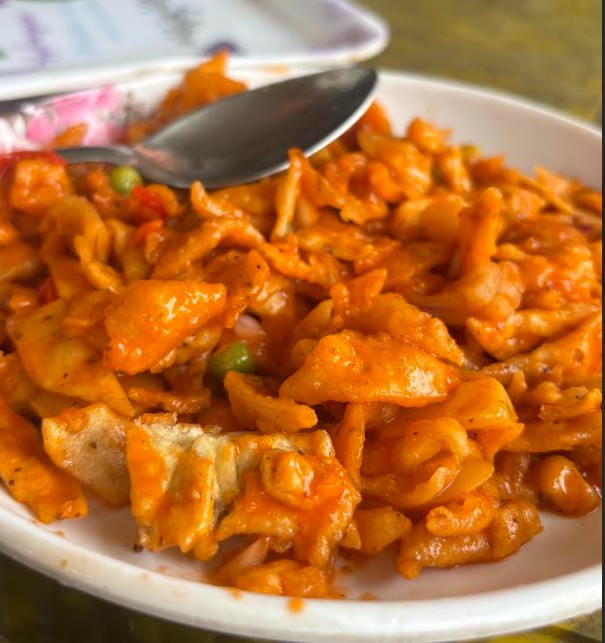
Aalu Nimki
Driven by local necessity, regional production, and consumer demand, Aalu Nimki has evolved into a uniquely original dish. Although it originated in Dharan, the popular snack has since spread from the eastern region across Nepal and even abroad. The next time you prepare or enjoy Aalu Nimki, remember its roots in Dharan and credit its original creator, Gopal Chaudhary.