Kathmandu
Friday, July 10, 2026





Rather than treating the tragedy as an isolated incident, Nepal must examine how economic hardship, administrative decisions, and public policies shape citizens' lives—and, in some cases, deepen their despair.
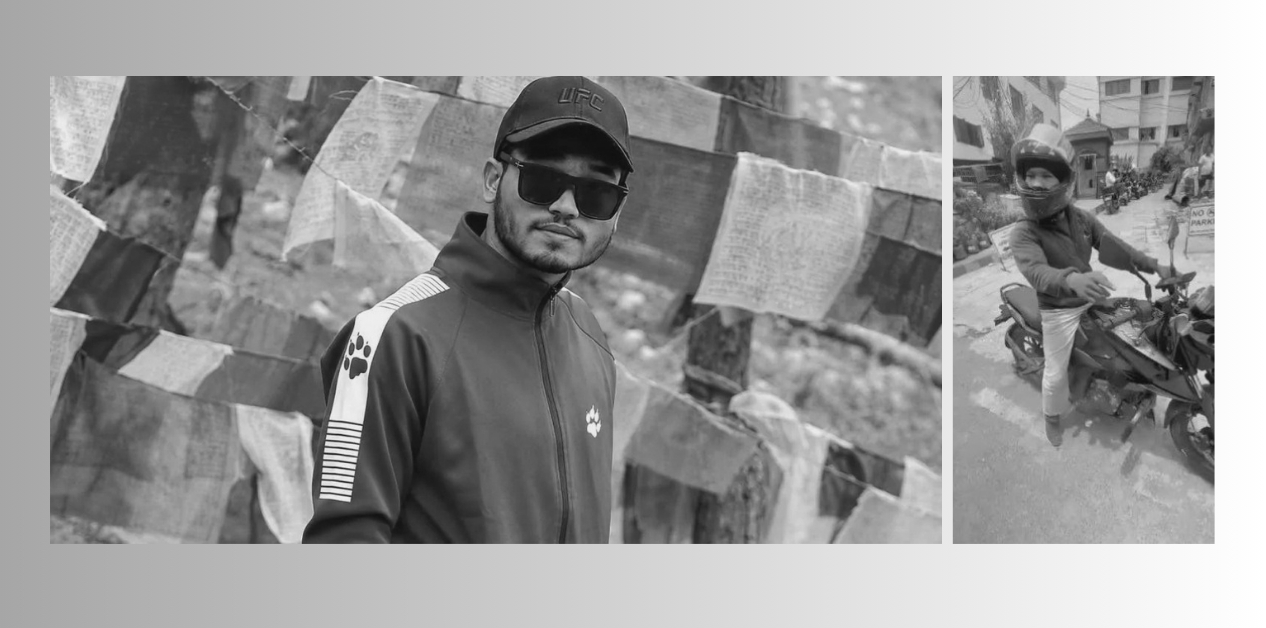
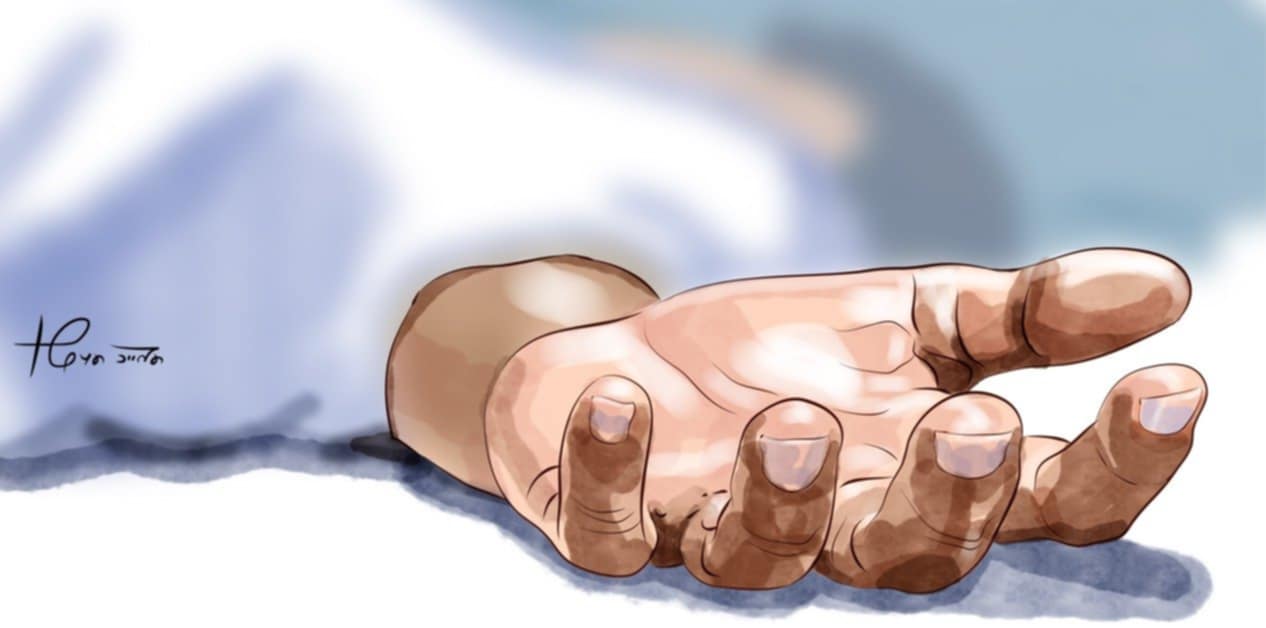
KATHMANDU: Ganesh Nepali, a resident of Soru Rural Municipality-1 in Mugu, passed away while undergoing treatment at Bir Hospital in Kathmandu on today mmorning at 11:20 AM. The 25-year-old Nepali was the center of hope not only for his family but for his entire community. Having arrived in Kathmandu carrying numerous life dreams, he chose self-immolation out of deep dissatisfaction with state policies and lost his life.
This is not just the story of Ganesh Nepali’s death; it is the collective narrative of citizens being choked by the tight noose of state policies.
In theory, the government is supposed to be the guardian of the people. However, instead of fulfilling this paternal responsibility, certain rulers lash out at the public with the brutal whip of the law. Citizens writhe in unbearable agony, yet the state remains deaf to their voices. The consequences of such neglect and insensitivity are sometimes irreversible. Ganesh Nepali fell victim to this very fate. Therefore, the government cannot entirely absolve itself of responsibility for his death.
For the opposition parties, this incident might become a tool to criticize the government. The government will likely defend itself and offer some financial relief to the victim’s family. However, no amount of relief or material value can ever make up for a mother’s lap left empty, a woman’s sindoor (Red powder worn by married Hindu women) wiped clean, or an innocent toddler left without a protector.
German philosopher Jürgen Habermas argues that modern political and economic policies colonize the lifeworld of citizens, weakening human values, norms, and reciprocal relationships. He posits that the mechanisms of the state and the market systematically control citizens under various pretexts, gradually shrinking their lived environments.
Looking at the contemporary global community, many countries have taken a path that imposes extra economic burdens on citizens under various guises and utilizes legislation to regulate diverse aspects of their lives. The current government appears to be heading down this exact path.
Ganesh Nepali’s tragedy is not an isolated or accidental occurrence; there are past examples of citizens being pushed into severe crises by policy and financial pressures. It cannot be guaranteed that such incidents will not happen again in the future. This is because millions of Nepalis are forced to live helpless lives amidst poverty, unemployment, debt, insecurity, and state neglect.
Incidents of citizens facing severe crises due to government policies are not unique to Nepal; they have occurred across various nations. In neighboring India, several studies have shown that state policies and economic frameworks play a major role in the background of farmer suicides. Data from India’s National Crime Records Bureau and research on farmer suicides point not only to debt but also to crop failure, market prices, climate hazards, income volatility, and mental stress as the primary drivers.
These factors are directly or indirectly linked to government policies. To solve these issues, India did introduce programs like crop insurance, loan waivers, irrigation support, and Farmer Credit Cards. However, because these programs remained limited and failed to reach all farmers, the core problem remains unresolved.
Following the 2008 financial crisis, Greece implemented strict economic austerity measures based on the advice and conditions of donor agencies, including the International Monetary Fund, the European Union, and the European Central Bank. Under this framework, government spending, salaries, pensions, and welfare program budgets were slashed while taxes were increased. As a result, economic insecurity, unemployment, and poverty skyrocketed. Various studies have shown that after the implementation of these austerity policies, the suicide rate in Greece surged by up to 35.7%.
The Government of Nepal has similarly advanced policies in the name of cutting public expenditure, such as changing pension provisions, introducing mandatory retirement at 55 years, and levying taxes on health and education. These policies mirror the situation in Greece. A rigorous evaluation is required to understand how these measures will impact the social security and lives of citizens.
In South Korea as well, studies indicate that government policies and economic crises elevated the risk of suicide. Following the 1997 Asian Financial Crisis, South Korea’s labor market faced a severe crunch. Unemployment and intense competition grew rapidly. Small business owners drowned in debt. Excessive personal debt and social insecurity added immense psychological pressure on citizens, driving up suicide rates.
The economic crisis witnessed in Sri Lanka in 2021 and 2022 was also the byproduct of various policy decisions. That crisis eventually triggered mass popular protests and a change in government. At a time when foreign exchange reserves were dwindling, the then-government banned the import of chemical fertilizers in 2021. This directly harmed farmers and agricultural yields. As production plummeted, food prices soared, and the country suffered one economic problem after another. Studies have revealed that suicide rates spiked in these circumstances due to escalating economic and mental distress.
A government’s policy may not directly incite someone to commit suicide. However, inappropriate policies introduced without proper research and a lack of understanding of public aspirations can amplify economic insecurity, humiliation, stress, and despair among citizens. Looking at the examples of Greece, India, South Korea, and Sri Lanka, policies introduced to make citizens’ lives easier or implemented under the guise of economic reform have, in many cases, pushed citizens deeper into crisis. Multiple published studies show that when citizens see no alternative to escape mental stress and hardship, they feel compelled to choose the path of suicide.
Nepal also has plenty of severe incidents tied to government policies, administrative conduct, and economic crises. On December 29, 2023, during a demonstration in Balkumari regarding the restriction from participating in the Korean language exam, 23-year-old Sujan Rawat of Dailekh and 22-year-old Birendra Shah of Achham lost their lives.
Prem Prasad Acharya, an entrepreneur from Ilam, self-immolated in front of the Parliament Building in Kathmandu on January 24, 2023. In the detailed statement he published prior to his act, he highlighted the problems he faced while running his business, pointing to state policies, administrative hurdles, and market inequalities.
Under the impact of the government’s policy to evict landless settlers, 17-year-old Rabin Tamang of Thapathali committed suicide, while 61-year-old Indra Bahadur Rai of Balkhu was found dead in the Bagmati River. Another squatter passed away at the Kirtipur Holding Center. Now, under the impact of the policy that sharply increased traffic fines, Ganesh Nepali attempted self-immolation and lost his life.
Laws and fines are necessary. However, their objective should never be to terrify citizens or financially cripple them. The goal must be to enforce rules and maintain public safety. When excessive penalties are set while ignoring citizens’ income, circumstances, and social realities, it creates despair, humiliation, and financial strain rather than reform.
Prior to this, the government had already displaced poor and vulnerable citizens by constructing a narrative that labeled settelers as “entitled occupants”. This is hurting the self-esteem of citizens, and their insecurity and mental stress are mounting. One cannot rule out the possibility that such conditions could lead to a more severe humanitarian crisis in the future.
In this context, the recurring incidents of self-immolation in Nepal cannot be ignored, nor can they be brushed aside as merely an individual’s private decision. The underlying economic, social, administrative, and policy-related reasons must be investigated. When a citizen is stranded abroad in distress, it is considered the government’s duty to bring them home, even if it costs millions. Similarly, it is the fundamental duty of the government and the state to protect the life, property, and dignity of citizens within the country.
The state should not draft policies out of a desire to gain cheap popularity, copy another nation, or project itself as liberal and reformist. When drafting policies, an assessment must be made regarding its immediate and long-term impacts on the country and its people. The duty of the government is not to rule by squeezing the public, but to ease their lives by solving their problems.
A thorough study is required on how the rules being put forward by the government—such as squatter-related policies, civil servant regulations, public spending cuts, and traffic fines—affect different classes of society. Implementing policies without dialogue with the affected parties and without understanding their economic and social conditions may only deepen the problem.
Ganesh Nepali’s death has served as a grave warning to the government. Simply making policies and laws is not enough; the government must also be accountable for the impact their execution has on the lives of citizens.
The government cannot dismiss the Ganesh Nepali incident as a tragic anomaly and forget it. It must review the traffic fines and their enforcement process. It must engage in dialogue with the affected parties. Policies and practices that push citizens into crisis must be corrected.
(Bishwokarma is an Assistant Professor of Sociology.)