Kathmandu
Wednesday, July 15, 2026





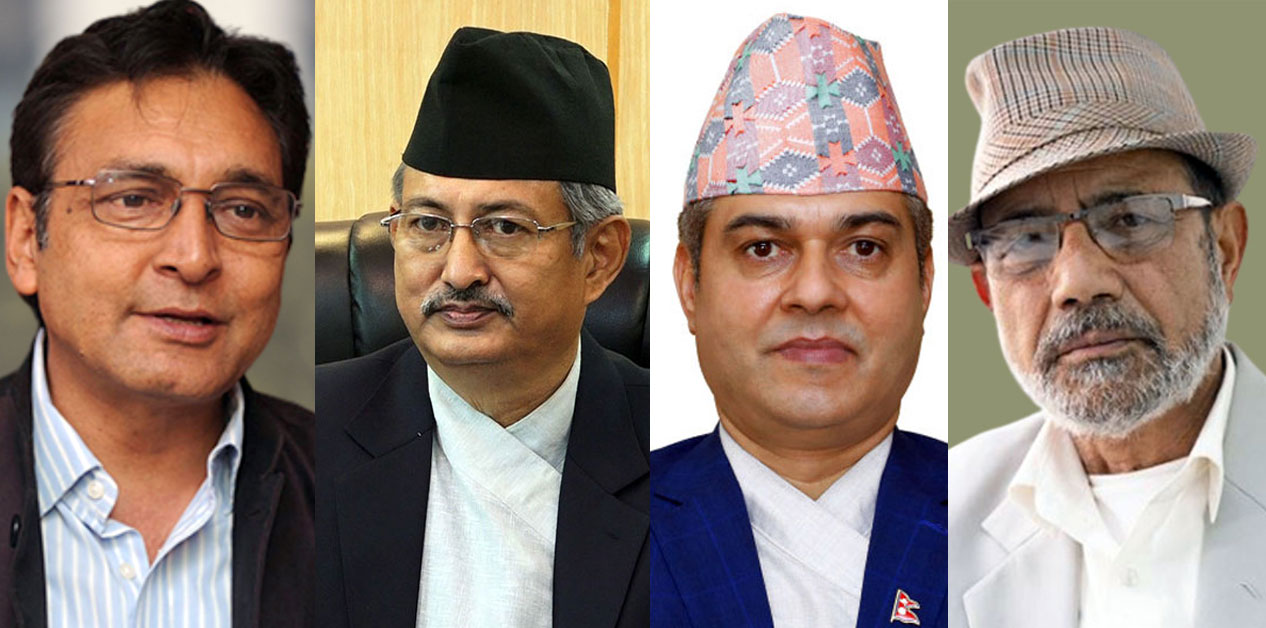
The Kathmandu District Court sentenced 15 people, including former deputy prime minister Top Bahadur Rayamajhi and former home minister Bal Krishna Khand, to prison terms of one to four years, but time spent in pre-trial detention means most have little or no jail time left to serve.
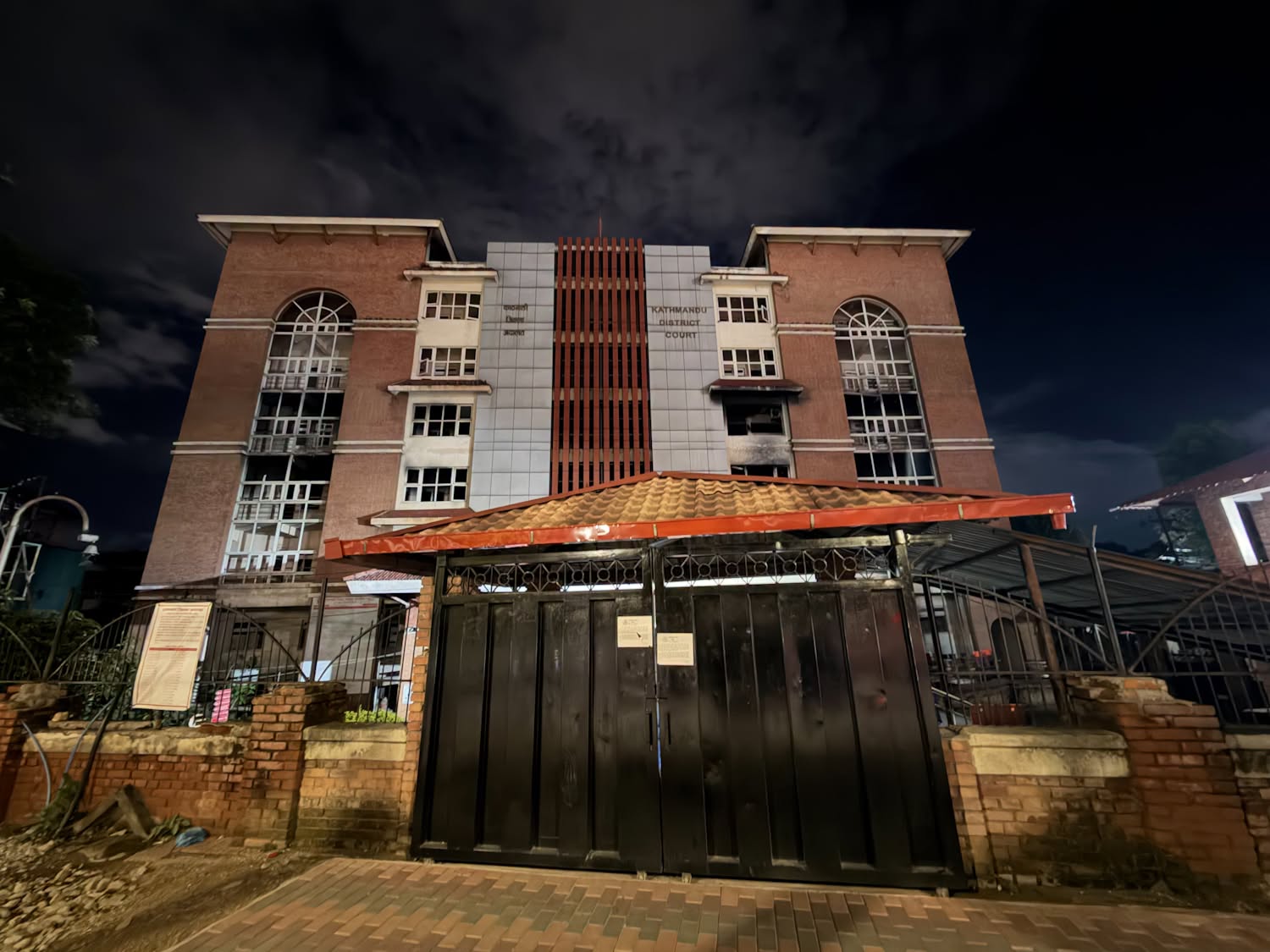
KATHMANDU: The Kathmandu District Court has sentenced 15 individuals convicted in the high-profile fake Bhutanese refugee scam to prison terms ranging from one to four years, alongside fines between Rs 10,000 and Rs 40,000.
On July 7 a bench led by District Court Judge Tej Bahadur Khadka convicted 15 individuals, including former Deputy Prime Minister Top Bahadur Rayamajhi, former Home Minister Bal Krishna Khand, and former Home Secretary Tek Narayan Pandey. Meanwhile, the court acquitted seven individuals and suspended the cases of eight absconding defendants, putting them on hold.
A week after convicting them, the court determined the specific sentences on July 14. Out of the 30 defendants in the main case, nine were established as principal offenders, while six were convicted as accomplices. In a separate but related case within the same scam, Bechan Jha was sentenced to one year in prison and fined Rs 10,000 for his attempt to commit fraud.
Four-year prison sentences for nine principal offenders
The court designated Keshav Prasad Dulal, Sanu Bhandari, Sagar Rai, Sandesh Sharma, Indrajit Rai, Govinda Kumar Chaudhary, Ang Tawa Sherpa, Tek Narayan Pandey, and Top Bahadur Rayamajhi as the principal offenders. Under integrated sentencing, they have been handed four years in prison and a fine of Rs 40,000 each.
In the charge sheet, the defendants were accused of forgery of government documents, fraud, organized crime, and offenses against the state. The court convicted Tek Nath Rial, Keshav Prasad Dulal, and Sanu Bhandari on all four charges. The remaining 12 individuals were found guilty of fraud, organized crime, and offenses against the state.
According to Dhan Bahadur Karki, the Judgment Execution Officer of the Kathmandu District Court, even though separate sentences are determined based on individual offenses, only the longest prison term arising from the same transaction or incident is executed. “Even when sentences are handed down for different offenses, only the longest single prison term is implemented for any given individual,” Karki explained. “In this case, the maximum prison term to be served is four years.”
The nine individuals sentenced to four years in prison have been in pre-trial detention since June 16, 2023. Since the time spent in custody during the trial will be deducted from their overall sentences, they will now have to serve approximately 10 more months in prison, with the exception of Indrajit Rai.
Concession for Indrajit Rai; Two years for Khand and Rijal
The court granted Indrajit Rai a 75% reduction in his prison sentence under the legal provisions concerning senior citizens. Under Nepalese law, senior citizens over the age of 75 are eligible for up to a 75% reduction in their prison sentences.
“As he has already served three years, two months, and ten days in pre-trial detention out of his four-year sentence, he must now serve the remaining two months and thirteen days in prison and pay the fine of Rs 40,000,” states the brief sentence determination verdict issued by the court.
The court convicted former Home Minister Khand and Bhutanese refugee leader Tek Nath Rijal as accomplices, sentencing them to two years in prison and a fine of Rs 20,000 each. Narendra KC, Shamsher Miya, Haribhakta Maharjan, and Niranjan Kumar Kharel were also convicted as accomplices and sentenced to one year in prison and a fine of Rs 10,000 each.
The Kathmandu District Court had previously sent six of these individuals to judicial custody pending trial. However, the High Court later released them on bail. Those convicted can appeal to the High Court once the full text of the verdict is made available. Whether those currently out on bail will be allowed to appeal while remaining out of custody depends on the specific orders of the court.
Seven acquitted, Bechan Jha released
The prosecution of this case followed allegations that Nepalese citizens were swindled out of large sums of money under the pretext of being turned into fake Bhutanese refugees to be resettled in the United States. The scam involved high-profile figures, including former ministers, former secretaries, security officials, and middlemen.
The District Government Attorney’s Office in Kathmandu had filed charges against 30 individuals on May 24, 2023, for fraud, forgery of government documents, organized crime, and offenses against the state. The charge sheet demanded the recovery of approximately Rs 280 million in claims. In delivering its verdict, the court also took into account the damage caused by the crime to the country’s international reputation and national security.
The court ruled that the charge of forging government documents against Sagar Rai and Ang Tawa Sherpa could not be proven. Despite being acquitted of the forgery charge, they were still convicted of fraud, organized crime, and offenses against the state.
A supplementary charge sheet had also been filed against them, seeking the recovery of Rs 21,792,000, over accusations of collecting money in installments by promising to send people to the United States as fake Bhutanese refugees.
The court acquitted Ram Sharan KC, Tanka Kumar Gurung, Sandeep Rayamajhi, Pratik Thapa, Laxmi Maharjan, Keshav Tuladhar, and Ashish Budhathoki, ruling that the charges against them could not be proven.
The cases against eight other accused individuals—Ashok Pokharel, Dhiren Rai, Deepa Humagain, Neeraj Rai, Rajesh Aryal, Mohan Raj Rai, Binita Limbu, and Sunil Budhathoki—who remain at large, have been suspended by the court. The proceedings against them will resume once they are arrested or present themselves before the court.
Dulal and Bhandari’s involvement in the fake report
According to the court, Sunita Gautam, wife of one of the informants, Ram Kumar Regmi, had submitted a forged report of the task force led by the then Joint Secretary of the Ministry of Home Affairs, Bal Krishna Panthi, to the investigating officers.
The forged report had ten annexes, with the addition of Annexes 9 ‘A’ and ‘B’. It claimed that 875 individuals from 581 families living both inside and outside the refugee camps had applied for registration as omitted refugees and for third-country resettlement.
The verdict also notes that forms were filled out, biometrics taken, and identity cards issued in the name of fake refugees between the fiscal years 2017/18 and 2022, well before former Home Minister Khand and former Home Secretary Pandey took office.
The court ruled that the original copy of the Panthi task force report held in the archives of the Ministry of Home Affairs was not forged.
“It cannot be argued that the report of the Bal Krishna Panthi task force in the archives of the Ministry of Home Affairs was forged,” reads the brief verdict issued on July 7. The court concluded that Keshav Prasad Dulal and Sanu Bhandari were involved in creating the fake version of the report.
The court found Bechan Jha guilty of the attempt to commit fraud, sentencing him to one year in prison and a fine of Rs 10,000. Jha had been accused of receiving a check of Rs 20 million from Ram Sharan KC. He was also charged with forging government documents, organized crime, and offenses against the state.
But because the check he received was never cashed at the bank, the court ruled that the act of fraud was not fully executed. Consequently, he was convicted of attempting to commit fraud rather than completing the act of fraud. Jha was released from Sundhara Prison on July 15. Having been in custody since June 28, he did not have to serve any additional prison time, as his pre-trial detention exceeded his sentence. Following his release, he must complete legal formalities with the Department of Money Laundering Investigation and the Commission for the Investigation of Abuse of Authority (CIAA) while remaining on bail.